« back
08.26.21 | Arts & Culture

Bronzeville Spotlight: Ida B. Wells & The Light of Truth National Monument

The neighborhood of Bronzeville, where our 4108 and 4112 S. King Drive properties are located, is home to a variety of monuments and structures honoring legends from the community. Today, we’re spotlighting one of the neighborhood’s newest additions: The Light of Truth Ida. B. Wells National Monument.  

Ida B. Wells

Wells was born into slavery during the Civil War in 1862, Holly Springs, Mississippi. She wrote for newspapers – under the pen name Iola – attacking Jim Crow policies, criticizing education in Black schools, and most notably exposing the lynchings of many Black citizens in and around her community. After establishing herself as a force in the journalism world, Wells became an editor and co-owner of The Free Speech and Headlight – a Black-owned newspaper based at the Beale Street Baptist Church in Memphis.

In 1893, Wells moved to Chicago and furthered her activism as a leader for Black feminism. She continued publishing famous works like Southern Horrors and The Red Record for the anti-lynching campaign and suffrage movement. Wells later participated in the National Afro-American Council and the founding of the National Association for the Advancement of Colored People and was awarded a posthumous Pulitzer Prize in 2020 for her reporting.
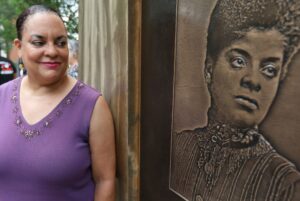
Ida. B Wells great-granddaughter Michelle Duster stands next to a plaque of her at The Truth of Light monument.
Michelle Duster stands next to a plaque of her great-grandmother Ida B. Wells at The Truth of Light National Monument, Photo by Antonio Perez of the Chicago Tribune

The Monument

Officially titled The Light of Truth Ida B. Wells Monument, the impressive structure honors the outstanding legacy of its namesake and is the first monument in Chicago to honor a Black woman. It is the work of brilliant Chicago-native artist Richard Hunt, a legendary force who has  broken barriers in the art world throughout his career and is known as the foremost African-American abstract sculptor and artist of public sculpture in America. You can view more of Hunt’s exemplary work here

The 20-foot structure was dedicated in July 2021. It has three bronze columns shooting from the ground and supports an intertwining of braided bronze metal resembling flames at its top. The site where the monument lives is located just outside of Ellis (Samuel) Park at 37th Street and South Langley Avenue. It was the former home of Chicago public housing project (the Ida B. Wells Homes) in the 1930s, which was taken down in 2011 and replaced with new apartment complexes.

Organizers hope the new monument can be a gathering spot for neighbors and visitors alike and will serve as a backdrop for the future of the Bronzeville community. Be sure to check out the remarkable sculpture for yourself before Chicago’s winter approaches!
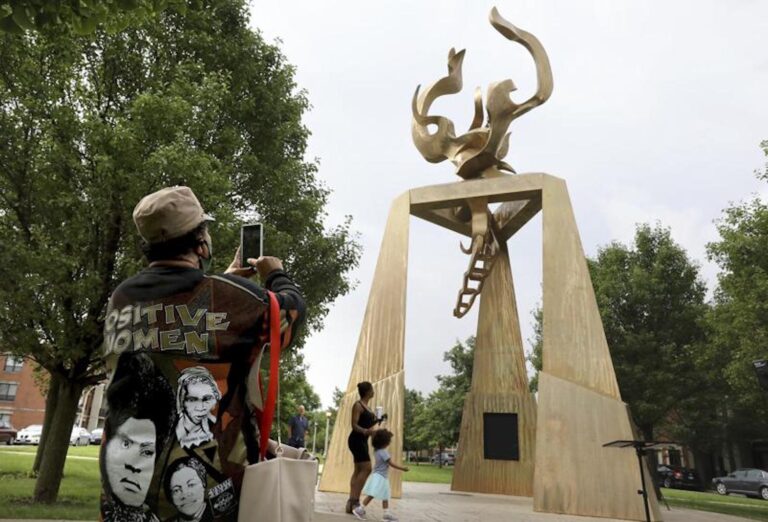
The photo is of Richard Hunt's: The Light of Truth Ida B. Wells National Monument. Three golden steel pillars hold up twists of braided gold steel sitting on a platform above them.
The Truth of Light Ida B. Wells Monument, Photo by Antonio Perez of the Chicago Tribune
› Back to top
« back
08.24.21 | Community

The power of collective impact

Sage Collective was founded in 1978 as the Tabernacle Senior Citizens Project, Inc. (You can learn more about our story here.)  As the focus of our work has evolved over time, we took the opportunity to rebrand as Sage Collective in 2019.

Sage refers to the great wisdom and spiritual connection we strive to claim. Collective defines the sense of community engagement and interaction we seek, but it means much more than that. 

When we say “collective,” we make reference to the positive ways we can address the systemic challenges and inequities in our society — by forging connections among people and ideas. Joined together, we function as catalysts for change to lighten individual burdens, creating stronger and more purposeful communities along the way.

Moving forward from the essential meaning of “collective,” we embrace the powerful idea of collective impact, which recognizes the diverse strengths and weaknesses of communities, while working with neighborhood leaders and resources to achieve a more just and equitable future … particularly for older adults.  We are always seeking to align ourselves with conceptual frameworks and organizations that are taking bold and efficacious approaches to transformative change through collective impact. We believe that Together Chicago is such an organization:

Together Chicago came into being in 2017 as a mix of local leaders in business, faith, nonprofit and government questioning how they could do more to address the root cause of violence the city was experiencing.

The organization’s vision is to prevail as a catalyst of change and inspire hope within underserved and underrepresented Chicago communities. Together Chicago has five main areas of focus for creating change through the methodology of collective impact: economic development, education, violence reduction, gospel justice and faith community mobilization. Concentrating on these different areas, Together Chicago partners with a variety of local businesses, nonprofits, churches and schools to achieve equitable justice and further their mission of collective impact.

If you’re out and about the last weekend in August, Together Chicago is participating in Chicago Peace Week’s Peach Walk & Festival, to be held at the Dusable Museum of African American History on Saturday, August 28. The event will start at 9 a.m. at the museum’s sculpture garden with a gathering of faith leaders throughout the city for a Peace Walk, directly followed by the Peace Festival. You can learn about the Peace Walk & Festival here.

Collective impact is more of a movement than it is a phrase, providing a roadmap for communities to enable change by inviting everyone to take action together. And as we have seen in communities across our country and around the world, empowering and uplifting all voices is critical to ensuring the success of a collective goal.

Functioning as more than just part of our name, the term “collective” celebrates our rich identity and codifies our beliefs into a framework of mutual engagement for an equitable future.

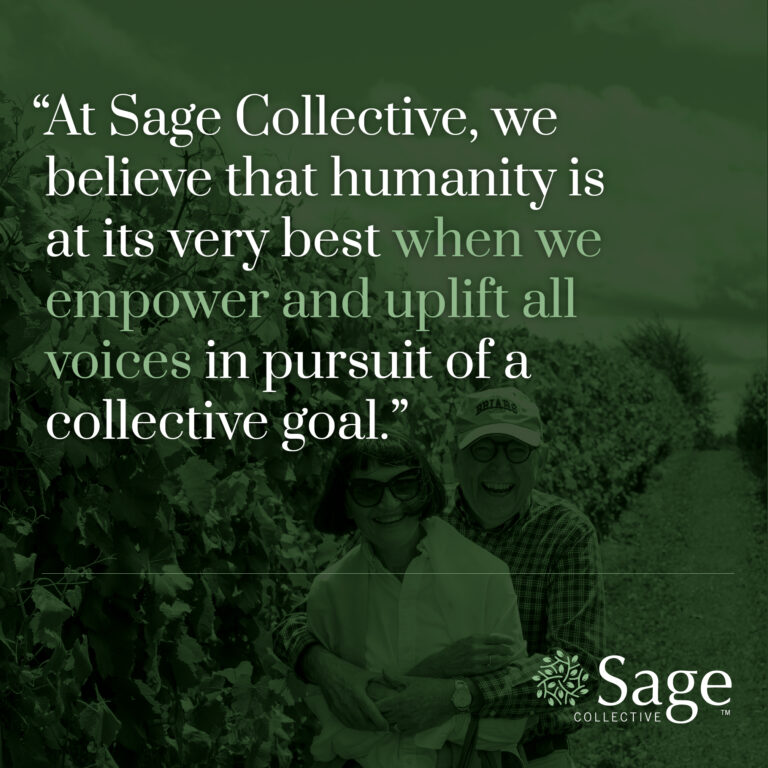
Text overlay reads "At Sage Collective, we believe that humanity is at its very best when we empower and uplift all voices in pursuit of a collective goal."
› Back to top
« back
08.19.21 | Community

Find the future of efficient workouts in “exercise snacks”

As part of our 9 Ways of Vibrant Living, Sage Collective advocates for moderate and regular physical activity. Developed in pandemic times when it was challenging to find ways to stay active, “exercise snacks” — a new and effective set of movements was born, and has become increasingly popular among older adults. Interestingly, research is demonstrating these snippets of exercise are equally or more effective than traditional workouts!

How to perform exercise snacks

“Exercise snacks” are short bursts of movement anyone can perform throughout the day, allowing people to arrange exercise as their time permits. Because the movements don’t require a fixed or dedicated location to “work out” as we normally define the act of exercising, you can find a host of spaces in your home or office to do squats, sit-ups, walking in place, lunges and more.  

Professor of Kinesiology Dr. Martin Gibala, argues that these brief bursts of exercise throughout the day can trigger the same reaction from our bodies that traditional workouts produce. In his study published by the International Journal of Exercise Science, Gibala and his partners introduced an 11-minute workout consisting of walking and running in place, lunges and other light calisthenics that improve cardiovascular health. One of the many thrilling findings was that the conditioning improved cardiovascular fitness by 7% for those who participated. 

Gibala explains that being rigorous with each movement is fundamental for exercise snacks. It is essential, however, to remember to cater to what works best for your body. 

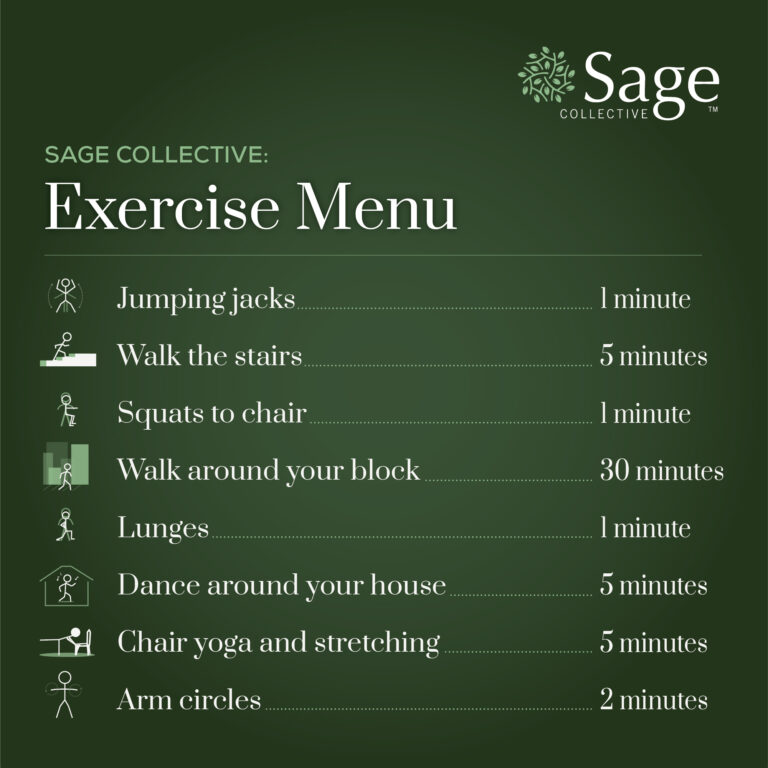
Sage Collective believes that incorporating exercise snacks into the lives of older adults and anyone looking to fulfill fitness needs can be a fundamental – and easy – way to live vibrantly. That’s why we produced our exercise snack menu based on Dr. Gibala’s workout plan below!


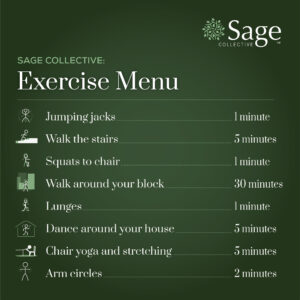
A graphic titled "Sage Collective: Exercise Menu" lists eight different "exercise snacks" and times allotted for people to take part in throughout their days.

A graphic titled "Sage Collective: Exercise Menu" lists eight different "exercise snacks" and times allotted for people to take part in throughout their days.
Sage Collective: Exercise Menu
› Back to top
« back
08.17.21 | Community

Our Vision for 4108 and 4112 King Drive: A Conversation with Dwain Kyles

As we continue the renovation of the Sage Collective properties at 4108 and 4112 S King Drive, side-by-side buildings in Chicago’s historic Bronzeville neighborhood, we sat down with Board Member and VP for Legal & Development, Dwain Kyles, to understand the project and how it contributes to Sage’s vision for the future. 

Location is everything

Having owned and operated residential property in the Bronzeville neighborhood for more than 40 years, Kyles understands that these buildings were in the perfect location for Sage Collective..

Intending to add to the great cultural history that King Drive represents, Kyles imagines these properties will also foster secure, welcoming environments for the development and enhancement of intergenerational relationships in the future. 

“We want to be very intentional about building community, and we think that King Drive has an appeal of its own. What we hope to do is add to that appeal by providing tangible, beneficial places for gathering, along with programming that will ultimately strengthen the self-image and empowerment of older adults in the community,” says Kyles.

While the neighborhood itself is a large part of the appeal, the buildings’ adjacency to the historic Metropolitan (Apostolic) Community Church also generated interest and inspiration for the properties’ future. “Given the importance of a spiritual basis for the work we are doing, reflected in our 9 Ways of Vibrant Living, the proximity to this iconic church was a good sign for us,” says Kyles, “and felt like more than just a coincidence.”

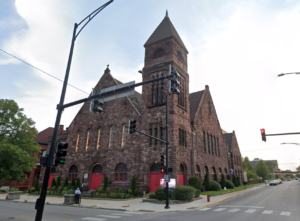
The Metropolitan Apostolic Community Church is brightly lit in sunlight on the corner of S. King Drive and E. 41 St.
The Metropolitan Apostolic Community Church, adjacent to the 4108 and 4112 S King Drive properties

Introducing vibrant, high-quality, affordable living within these properties

“Rehabbing the two properties is no small undertaking,” explains Kyles. “Using our passion for vibrant, high-quality, affordable housing as a focus (a topic you can read more about here) we are putting incredible thought and care into the design and build out of the interior spaces. With the support of our board member Mary Frances De Rose, a renowned architectural gerontologist, we have been able to include accessible and supportive living enhancements for future residents of our properties that traditional housing for older adults lacks.” 

“The physical attributes of the buildings are being designed in such a way that we will accommodate some of the desires and conveniences for older adults that are often overlooked. I’m talking about lowering the light switches so someone in a wheelchair can easily reach them, ambient lighting, high-quality cabinetry that is accessible and easier to use, and bathrooms with tastefully designed safety features that will allow our older adult residents to feel both secure and at home,” reflects Kyles. 

The Bronzeville Mural located on 35th Street and State sits directly under the L line.
Bronzeville mural, located on 35th Street and State features the faces of many famous African-American icons

The vision stretches beyond the physical buildings 

Our passion for an exceptional quality of life for older adults goes beyond the physical space, however. This project, like other Sage residences for older adults in underserved communities, will come alive through the integration of interactive and exploratory programming.  

Kyles continues, “While the King Drive properties themselves are a jumping off point, we are focused on the longer-term desire for Sage Collective to serve as a catalyst for real change for our residents and neighbors, government and civic partners, and leaders in the business community by rethinking and redesigning our traditional approaches to providing housing for older adults in our black and brown communities.” 

“We tend to focus on what’s ‘new and poppin’ and what’s the hottest and the latest… while giving little care and attention to those things that have helped us to get where we are, including people. We have seen over and over again that distraction leading to deplorable outcomes and ones that have weakened the fabric of society,” explains Kyles.

Kyles continues, “Our vision for these properties on King Drive — along with all of our ambitious plans for the future — center around creating communities that are rich with diverse ages, families, cultures and experiences. By having the ability to rework the structural barriers hindering intergenerational and cultural interaction and progress, we are capable of establishing environments where there is an appreciation for people of all backgrounds and ages. And when we succeed, we’re stronger as a community, we’re stronger as a neighborhood, we’re stronger as a family,” and most important, we’re stronger as a collective.”

A headshot of Sage Collective's Board of Directors member Dwain Kyles
Board Member and VP for Legal & Development, Dwain Kyles
› Back to top
« back
08.12.21 | Community

Strengthening Communities Through Community Gardens

With summer slowly fading and the harsh months of winter in the distance, the magnetic appeal of growing one’s own vegetables and herbs is more important than ever for many of us. Previously, we’ve talked about the health benefits of gardening and how to raise indoor houseplants, but one hobby we haven’t mentioned is community gardening. 

Community gardens begin as collective spaces managed as a collaborative effort that leverage the expertise, time and energy of fellow gardeners who come together to provide fruits, vegetables and all varieties of fresh produce for anyone in the neighborhood to enjoy. And by their very nature, community gardens also add green space and vibrant beauty to city blocks that may be defined by asphalt and concrete.

With people working closely — literally and figuratively — community gardens improve personal well-being through social connections and have even been found to decrease violence in some neighborhoods. 

Zoe Hansen-DiBello, program manager and visionary at Grow Education, helps promote healthy food access in neighborhoods by implementing community gardens. At TedxNewBedford, Hansen-DiBello explains the all-around engagement and respect that community gardens helped to encourage in a neighborhood close to her. Watch Hansen-DiBello’s talk below. 

Gardens galore in Bronzeville

The popularity of urban farming and the adoption of community gardens can be seen throughout neighborhoods in large cities across the country — including our very own Bronzeville. 

Situated at 4148-4156 S. Calumet Avenue, the Bronzeville Neighborhood Farm connects those living in the neighborhood with the use of green spaces and gardens. Managed by the Bronzeville Alliance and protected by NeighborSpace, the garden is a hub for community members to forge meaningful relationships built on the experience of working together towards a common purpose — tending the gardens and sharing the rich yield of fresh fruits and vegetables with each other and with the community writ large.

The neighborhood is also home to the Bronzeville Community Garden, located at 343 E. 51st Street. Supported by Build Bronzeville, the garden hosts many community events throughout the year including Volunteer Days and Crochet & Conversation meetups. Along with urban farming, the Garden is home to public art projects that enhance the outdoor spaces and provide additional reasons for neighbors to stop.

Starting your own garden

Thinking about starting your own community garden? One of the best places to start, The American Community Gardening Association provides a comprehensive education and resource platform for starting a garden of your own, along with a map of community gardens located across the country. 

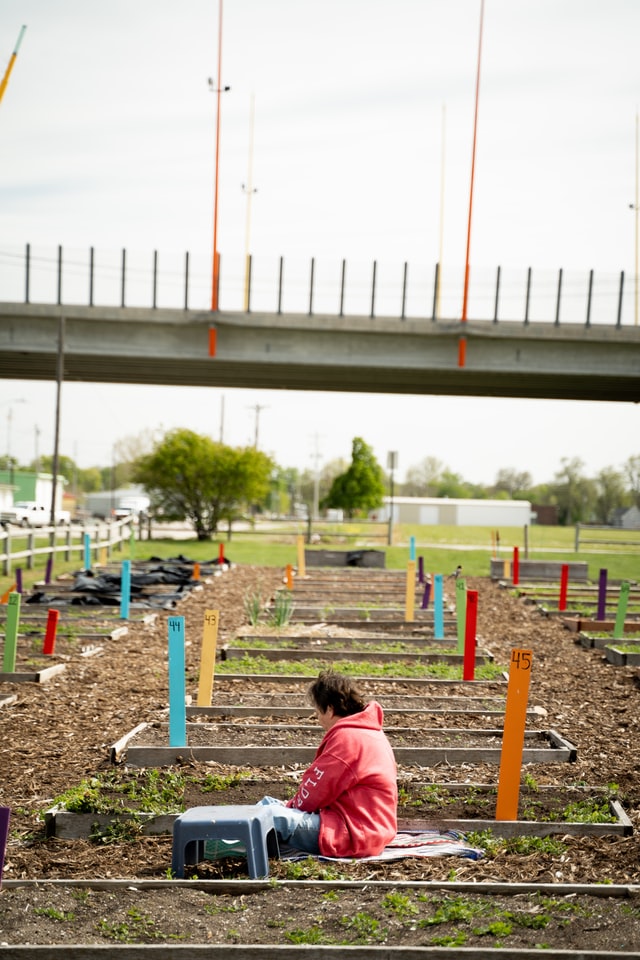
A person sits next to a foot stool in a large lot filled with community garden plots. Out of each plot sticks a brightly colored stakes that are numbered. Above the person appears a concrete bridge either for walking or driving.
› Back to top
« back
08.10.21 | Community

Embracing the cultural process of aging

As we articulate in the Sage Vibrant Living Manifesto, cultural perceptions of aging have an enormous impact on individuals and their communities. As we continue to fight ageism and the traditional American notions of aging that many of us still experience today, we look to the wisdom of others to share new ways of thinking and doing.

Carl Honoré, writer and activist, argues that in order to age better we must feel better about the process. Learning how to age better in a world where aging is presented in a negative frame can be extremely hard, but it only takes a few minutes to change your perspective. In his TED Talk, Honoré explains how to embrace the aging process. Honoré also delves into his method for combating ageist traditions and practices within our lives. Watch below to learn more:

A quote sits on top of an image of two older adults laughing. The quote reads "We need to feel better about aging in order to age better," and is attributed to Carl Honore. The sage logo sits in the bottom right corner.
› Back to top
« back
07.29.21 | Sage Advice®

Performing Arts Center comes to old Marshall Fields Building in Bronzeville

As we’ve seen with the initiative to restore The Forum and the persistent preservation of Black and African-American history through the Bronzeville’s Historical Society, new projects continue to emerge across the Bronzeville neighborhood, including a renovation of the former Marshall Field Warehouse. 

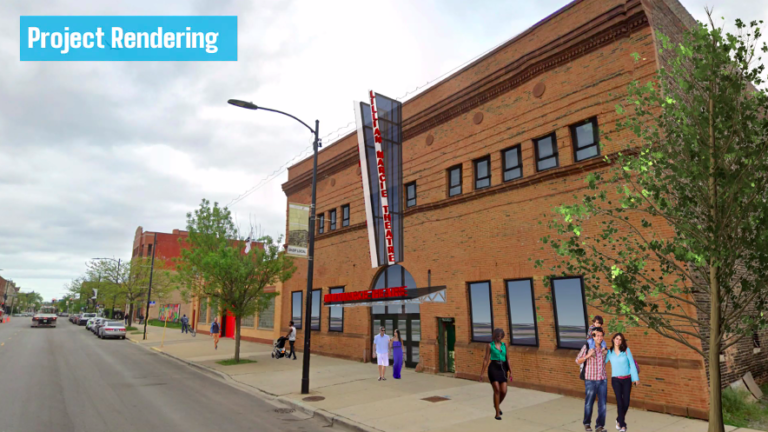
The warehouse, located at 4343 S. Cottage Grove Avenue, will be reimagined as a performing arts center and museum. The original building was erected in 1915 by Marshall Field and had a sister building located in Lakeview — now also a theatre. 

The building will continue to hold great significance as home to the future African American Museum of Performing Arts (AAMPA). This “living” museum will house an archive of African American performance art and allow visitors to experience, participate and witness an abundance of performance art. You can learn more about the AAMPA here on their website

The planned theatre, to be known as the Lillian Marcie Theatre, will include a 350-seat main theatre, a 100-seat black box theatre, dressing rooms, rehearsal areas and a roof deck. The theatre’s name originates from the nonprofit group overseeing the project, Lillian Marcie Legacy Company. Actor Harry Lenox, who is part of the all-star team developing the project alongside Keith and Aaron Giles and Michael Worldlaw, named the nonprofit after his mother, Lillian, and longtime mentor, Marcella “Marcie” Gillie. 

The Chicago Community Development Commision voted in mid-July to recommend $3 million in tax increment financing (TIF) be set aside by the City Council to help finance the project in Bronzeville. Along with TIF, the nonprofit also seeks to take advantage of other tax benefits in order to develop the future project contracted by Ujamaa Construction. 

With plans to start construction in January 2022 and complete the work in early 2023, the Lillian Marcie Legacy Company and Bronzeville neighborhood have yet another exciting development to look forward to as the community’s entertainment and cultural offerings continue to flourish.

A rendering of the future Lillian Marcie Theatre and museum in Bronzeville
Courtesy of the Chicago Department of Planning and Development
› Back to top
« back
07.27.21 | News

Celebrating Bronzeville’s historic Pearl’s Place

The feeling of an enriched shared experience is something we at Sage Collective advocate for ourselves as well as for the community around us. That’s why we love to highlight some of the most culturally rich and lively locations in the neighborhood near our future King Drive properties.

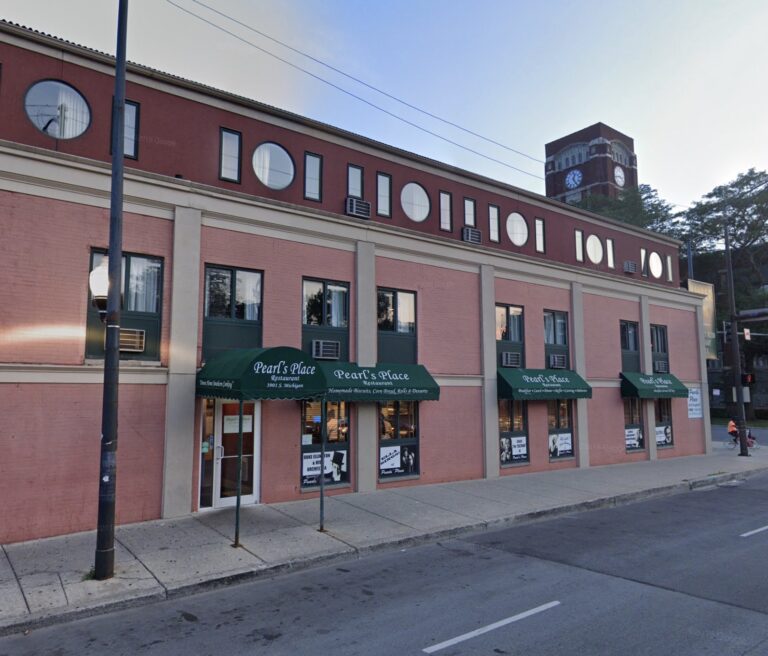
One of these locations is Pearl’s Place; a food staple that is often voted one of the best restaurants in the neighborhood — and has secured its place as one of the most beloved spots for large gatherings and some of the most delicious meals in Bronzeville. From being featured on Windy City Live with Carla Hall to being chosen as a top 5 soul food locations by Midwest Living, their feel-good food and welcoming atmosphere say it all. 

Having been owned and operated by community leaders and running successfully for more than 30 years, Pearl’s has become the heart of the neighborhood in many ways. It’s a perfect place to stop for their legendary buffet after visiting Bronzeville’s numerous art galleries, shopping at local boutiques or leaving a church service.

The dining environment has always been a huge part of Bronzeville’s culture and landscape — read more on that and Bronzeville’s history here — and Pearl’s is a big part of that tradition. Whether they are celebrating the neighborhood’s history or offering their southern-style soul food classics, Pearl’s is proud of their cozy environment that’s meant for everyone to enjoy.

Not only does Pearl’s show passion towards the success of the Bronzeville community in ways like hiring locally and within the neighborhood, but they also offer sponsorship for local events. Pearl’s continues to support the neighborhood’s deep roots as one of the most vibrant epicenters for Black culture and history, and never ceases to give back to the community all while looking towards our future. For all this and more, Pearl’s Place has earned a special place in the community. Pearl’s Place is open seven days a week for breakfast, lunch and dinner from 8 a.m. to 7 p.m. and located at 3901 S Michigan Ave, Chicago, IL 60653.

A picture of Pearl's Place in Bronzeville
Bronzevile's Historic Pearl's Place
› Back to top
« back
07.22.21 | Sage Advice®

Bronzeville Spotlight: Victory Monument

As we continue to develop our properties at 4108 S King Drive and 4112 S King Drive, we enjoy putting the spotlight on landmark locations in our historic Bronzeville neighborhood to celebrate and dig more into its rich history. Today, we’re exploring one of the city’s best-known and respected monuments, especially in Chicago’s Black communities, the Victory Monument. 

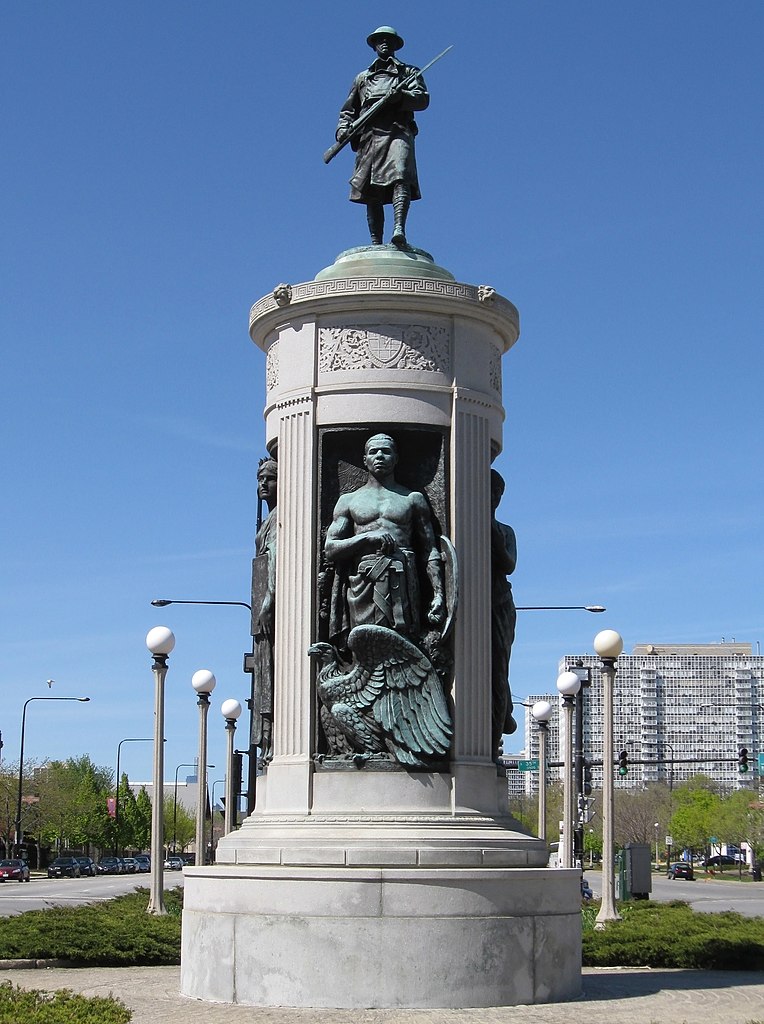
Chicago’s Victory Monument, which stands near the intersection of King Drive and East 35th Street, was built in 1927 in honor of the all-Black, Eighth Infantry Regiment of The Illinois National Guard, whose members served during WWI under the French. Created by the French American sculptor, Leonard Crunelle, the monument’s main structure was built in white granite with a bronze doughboy (common nickname for American soldiers during WWI) figure standing on top. That figure of the soldier was added almost ten years after the original construction.

There are three bronze panels around the sides of the monument, each representing elements of Black culture and history of Black soldiers through life-sized figures. The first panel, the Victory Panel, presents a cloaked female figure representing motherhood and holding a branch that symbolizes victory. The second panel, the Columbia Panel, displays another female figure with a helmet on her head holding a tablet engraved with a list of battles that Black soldiers fought in. The last panel, the African-American Soldier Panel, depicts a Black soldier from the Eighth Regiment with an eagle standing at his feet. A fourth bronze panel facing north holds the names of the 137 total members from the Eighth Infantry that lost their lives fighting in WWI. 

The monument was added to the National Register of Historic Places in 1986 and labeled a Chicago Landmark in 1998. The monument is also home to many annual celebrations and observances including its Memorial Day ceremony and the starting location of the historic, and largest Black parade in the world, the Bud Billiken Parade. 

Having been in place for almost 100 years, Victory Monument continues to illuminate and commemorate an important part of history, and is just one of the many special landmarks located in our historic Bronzeville neighborhood.

Photograph of Victory Monument in Bronzeville
› Back to top
« back
07.08.21 | Arts & Culture

Visiting the Obama Portraits at the Art Institute of Chicago

This summer, the beautiful and inspiring Obama portraits – depicting 44th president of the United States, Barack Obama, and first lady, Michelle Obama – will be gracing the walls of the Art Institute of Chicago for just eight brief weeks. With such a limited viewing period, below we’re outlining how to plan your visit to see these seminal works of art ASAP!

Visiting the Portraits

Access to viewing The Obama Portraits is included in General Admission for all Art Institute visitors. However, the exhibition does have a capacity-limit, and entry is first-come, first-served.

Tickets must be reserved in advance online, and entry to the exhibit on the day of your visit will be managed via virtual lines. General Admission tickets are being released in limited, timed batches, as outlined below:

  • Tickets for July 1–15 will be available on June 24.
  • Tickets for July 16–31 will be available on July 8.
  • Tickets for August 1–8 will be available on July 22.
  • Tickets for August 9–15 will be available on August 2.

A limited quantity of tickets will also be available onsite for qualifying groups. Learn more about free admission guidelines at the Art Institute of Chicago here.

Remarkable Works

While many other Presidential Portraits in the Smithsonian National Portrait Gallery have been traditional, head-and-shoulders portraits painted in classical styles, President Barack Obama took a notably different approach.

Barack Obama commissioned Kehinde Wiley to create his portrait. Wiley is an American portrait artist known for his placement of contemporary (typically African American) figures in the guise of powerful historical figures. Meanwhile, Michelle Obama commissioned Amy Sherald to create her portrait. Sherald is an American artist known for her arresting, otherworldly portraits that document the contemporary African-American experience.

Wiley and Sherald are the first African Americans to be commissioned by the National Portrait Gallery to create official portraits of a president or first lady. The resulting works are remarkably contemporary.

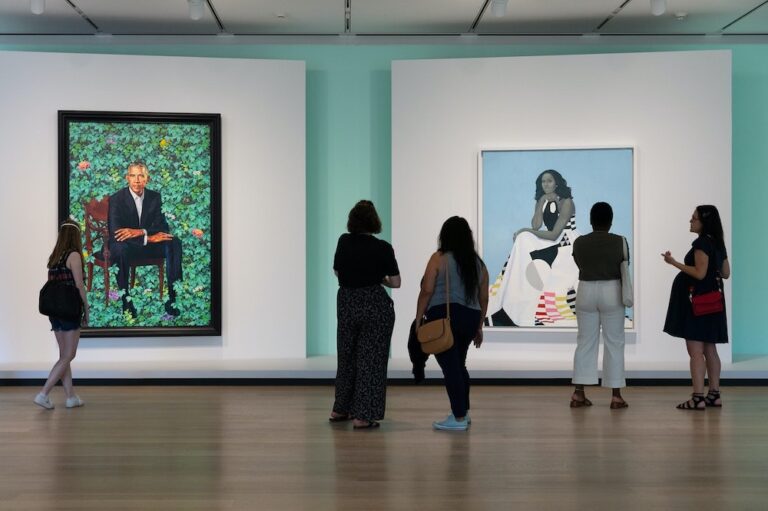
In the larger-than-life, head-to-toe portrait created by Wiley, a seated Obama is set against a backdrop of lush greenery. Each plant in the background holds a special significance, including chrysanthemums, the official flower of Chicago. The portrait of Michelle Obama, created by Sherald, was based on a posed photograph and is intentional down to every last detail, from the grey-scaling of Michelle’s skin to the intensity of her direct gaze.

You can visit the Obama Portraits at the Art Institute of Chicago now through August 15, 2021; tickets are available for purchase here.

And for those interested in a fascinating, rich conversation between Michelle Obama and Amy Sherald, hosted by The Studio Museum of Harlem Director + Chief Curator Thelma Golden, you’ll find it here.


Photo of Obama Portraits
(L) Kehinde Wiley. Barack Obama, 2018. Oil on canvas. (R) Amy Sherald. Michelle LaVaughn Robinson Obama (detail), 2018. Oil on linen. Photo courtesy of the Art Institute of Chicago.
› Back to top