« back
08.17.21 | Sage Advice®

Our Vision for 4108 and 4112 King Drive: A Conversation with Dwain Kyles

As we continue the renovation of the Sage Collective properties at 4108 and 4112 S King Drive, side-by-side buildings in Chicago’s historic Bronzeville neighborhood, we sat down with Board Member and VP for Legal & Development, Dwain Kyles, to understand the project and how it contributes to Sage’s vision for the future. 

Location is everything

Having owned and operated residential property in the Bronzeville neighborhood for more than 40 years, Kyles understands that these buildings were in the perfect location for Sage Collective..

Intending to add to the great cultural history that King Drive represents, Kyles imagines these properties will also foster secure, welcoming environments for the development and enhancement of intergenerational relationships in the future. 

“We want to be very intentional about building community, and we think that King Drive has an appeal of its own. What we hope to do is add to that appeal by providing tangible, beneficial places for gathering, along with programming that will ultimately strengthen the self-image and empowerment of older adults in the community,” says Kyles.

While the neighborhood itself is a large part of the appeal, the buildings’ adjacency to the historic Metropolitan (Apostolic) Community Church also generated interest and inspiration for the properties’ future. “Given the importance of a spiritual basis for the work we are doing, reflected in our 9 Ways of Vibrant Living, the proximity to this iconic church was a good sign for us,” says Kyles, “and felt like more than just a coincidence.”
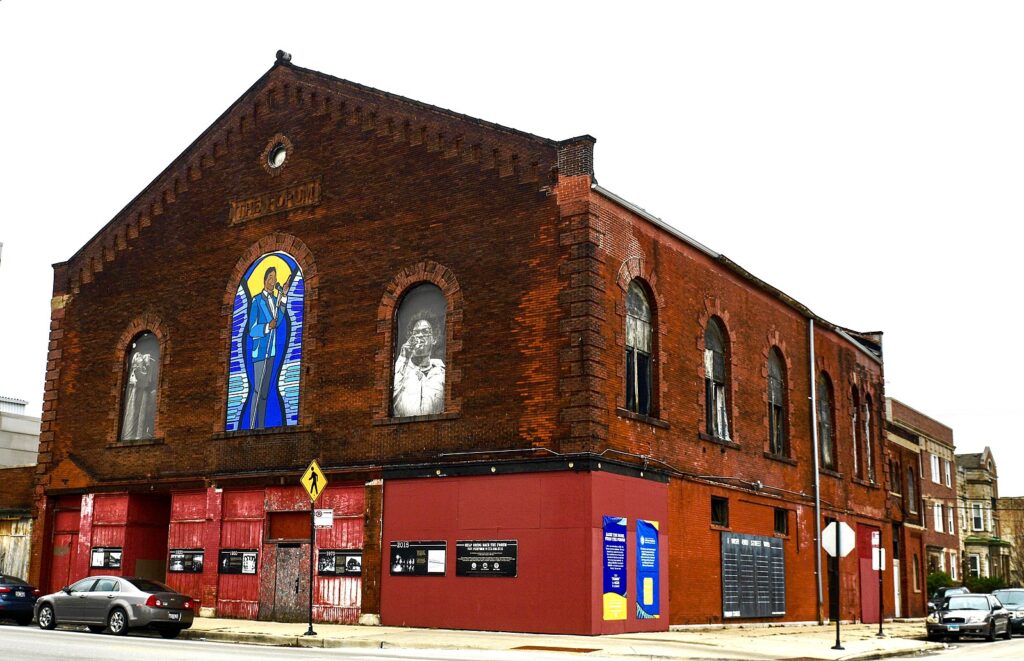
The Metropolitan Apostolic Community Church is brightly lit in sunlight on the corner of S. King Drive and E. 41 St.
The Metropolitan Apostolic Community Church, adjacent to the 4108 and 4112 S King Drive properties

Introducing vibrant, high-quality, affordable living within these properties

“Rehabbing the two properties is no small undertaking,” explains Kyles. “Using our passion for vibrant, high-quality, affordable housing as a focus (a topic you can read more about here) we are putting incredible thought and care into the design and build out of the interior spaces. With the support of our board member Mary Frances De Rose, a renowned architectural gerontologist, we have been able to include accessible and supportive living enhancements for future residents of our properties that traditional housing for older adults lacks.” 

“The physical attributes of the buildings are being designed in such a way that we will accommodate some of the desires and conveniences for older adults that are often overlooked. I’m talking about lowering the light switches so someone in a wheelchair can easily reach them, ambient lighting, high-quality cabinetry that is accessible and easier to use, and bathrooms with tastefully designed safety features that will allow our older adult residents to feel both secure and at home,” reflects Kyles. 

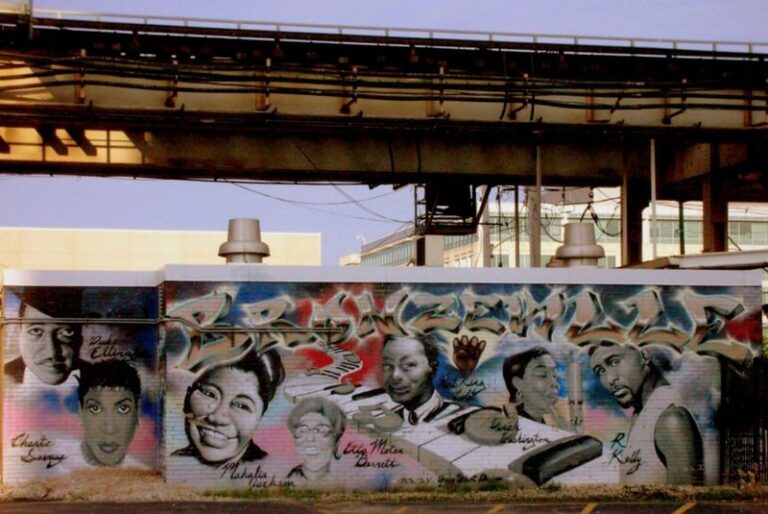
The Bronzeville Mural located on 35th Street and State sits directly under the L line.
Bronzeville mural, located on 35th Street and State features the faces of many famous African-American icons

The vision stretches beyond the physical buildings 

Our passion for an exceptional quality of life for older adults goes beyond the physical space, however. This project, like other Sage residences for older adults in underserved communities, will come alive through the integration of interactive and exploratory programming.  

Kyles continues, “While the King Drive properties themselves are a jumping off point, we are focused on the longer-term desire for Sage Collective to serve as a catalyst for real change for our residents and neighbors, government and civic partners, and leaders in the business community by rethinking and redesigning our traditional approaches to providing housing for older adults in our black and brown communities.” 

“We tend to focus on what’s ‘new and poppin’ and what’s the hottest and the latest… while giving little care and attention to those things that have helped us to get where we are, including people. We have seen over and over again that distraction leading to deplorable outcomes and ones that have weakened the fabric of society,” explains Kyles.

Kyles continues, “Our vision for these properties on King Drive — along with all of our ambitious plans for the future — center around creating communities that are rich with diverse ages, families, cultures and experiences. By having the ability to rework the structural barriers hindering intergenerational and cultural interaction and progress, we are capable of establishing environments where there is an appreciation for people of all backgrounds and ages. And when we succeed, we’re stronger as a community, we’re stronger as a neighborhood, we’re stronger as a family,” and most important, we’re stronger as a collective.”

A headshot of Sage Collective's Board of Directors member Dwain Kyles
Board Member and VP for Legal & Development, Dwain Kyles
› Back to top
« back
07.29.21 | Sage Advice®

Performing Arts Center comes to old Marshall Fields Building in Bronzeville

As we’ve seen with the initiative to restore The Forum and the persistent preservation of Black and African-American history through the Bronzeville’s Historical Society, new projects continue to emerge across the Bronzeville neighborhood, including a renovation of the former Marshall Field Warehouse. 

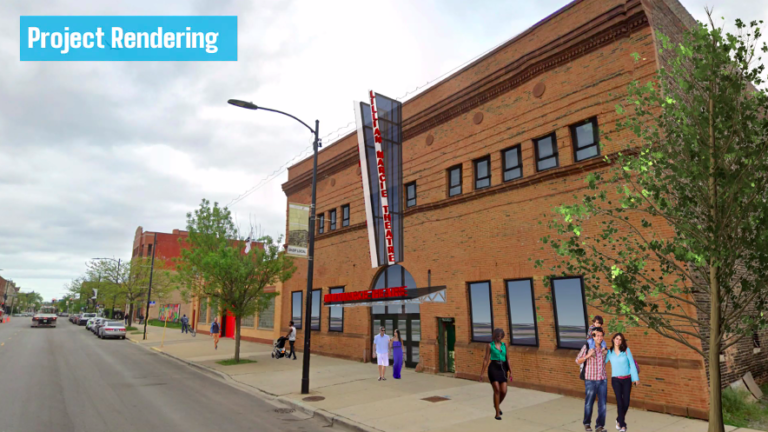
The warehouse, located at 4343 S. Cottage Grove Avenue, will be reimagined as a performing arts center and museum. The original building was erected in 1915 by Marshall Field and had a sister building located in Lakeview — now also a theatre. 

The building will continue to hold great significance as home to the future African American Museum of Performing Arts (AAMPA). This “living” museum will house an archive of African American performance art and allow visitors to experience, participate and witness an abundance of performance art. You can learn more about the AAMPA here on their website

The planned theatre, to be known as the Lillian Marcie Theatre, will include a 350-seat main theatre, a 100-seat black box theatre, dressing rooms, rehearsal areas and a roof deck. The theatre’s name originates from the nonprofit group overseeing the project, Lillian Marcie Legacy Company. Actor Harry Lenox, who is part of the all-star team developing the project alongside Keith and Aaron Giles and Michael Worldlaw, named the nonprofit after his mother, Lillian, and longtime mentor, Marcella “Marcie” Gillie. 

The Chicago Community Development Commision voted in mid-July to recommend $3 million in tax increment financing (TIF) be set aside by the City Council to help finance the project in Bronzeville. Along with TIF, the nonprofit also seeks to take advantage of other tax benefits in order to develop the future project contracted by Ujamaa Construction. 

With plans to start construction in January 2022 and complete the work in early 2023, the Lillian Marcie Legacy Company and Bronzeville neighborhood have yet another exciting development to look forward to as the community’s entertainment and cultural offerings continue to flourish.

A rendering of the future Lillian Marcie Theatre and museum in Bronzeville
Courtesy of the Chicago Department of Planning and Development
› Back to top
« back
07.27.21 | Sage Advice®

Celebrating Bronzeville’s historic Pearl’s Place

The feeling of an enriched shared experience is something we at Sage Collective advocate for ourselves as well as for the community around us. That’s why we love to highlight some of the most culturally rich and lively locations in the neighborhood near our future King Drive properties.

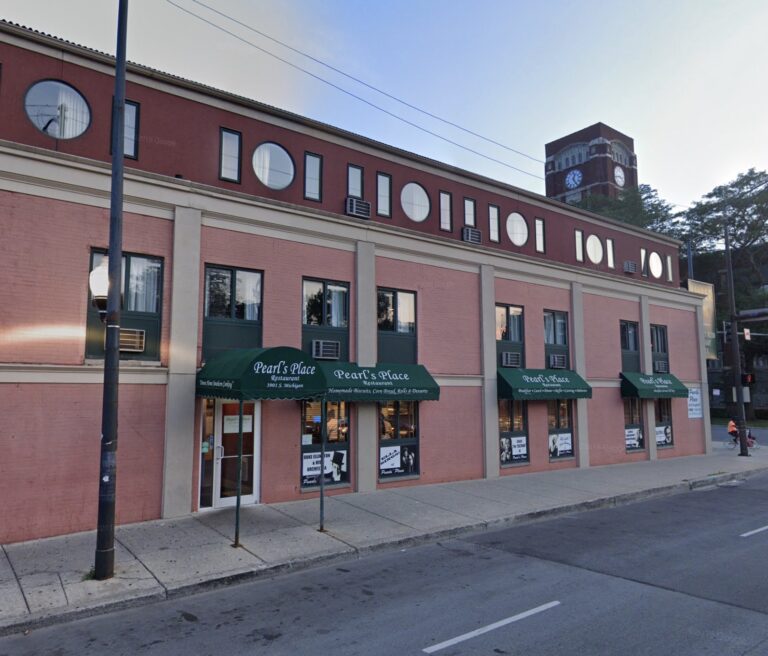
One of these locations is Pearl’s Place; a food staple that is often voted one of the best restaurants in the neighborhood — and has secured its place as one of the most beloved spots for large gatherings and some of the most delicious meals in Bronzeville. From being featured on Windy City Live with Carla Hall to being chosen as a top 5 soul food locations by Midwest Living, their feel-good food and welcoming atmosphere say it all. 

Having been owned and operated by community leaders and running successfully for more than 30 years, Pearl’s has become the heart of the neighborhood in many ways. It’s a perfect place to stop for their legendary buffet after visiting Bronzeville’s numerous art galleries, shopping at local boutiques or leaving a church service.

The dining environment has always been a huge part of Bronzeville’s culture and landscape — read more on that and Bronzeville’s history here — and Pearl’s is a big part of that tradition. Whether they are celebrating the neighborhood’s history or offering their southern-style soul food classics, Pearl’s is proud of their cozy environment that’s meant for everyone to enjoy.

Not only does Pearl’s show passion towards the success of the Bronzeville community in ways like hiring locally and within the neighborhood, but they also offer sponsorship for local events. Pearl’s continues to support the neighborhood’s deep roots as one of the most vibrant epicenters for Black culture and history, and never ceases to give back to the community all while looking towards our future. For all this and more, Pearl’s Place has earned a special place in the community. Pearl’s Place is open seven days a week for breakfast, lunch and dinner from 8 a.m. to 7 p.m. and located at 3901 S Michigan Ave, Chicago, IL 60653.

A picture of Pearl's Place in Bronzeville
Bronzevile's Historic Pearl's Place
› Back to top
« back
07.22.21 | Sage Advice®

Bronzeville Spotlight: Victory Monument

As we continue to develop our properties at 4108 S King Drive and 4112 S King Drive, we enjoy putting the spotlight on landmark locations in our historic Bronzeville neighborhood to celebrate and dig more into its rich history. Today, we’re exploring one of the city’s best-known and respected monuments, especially in Chicago’s Black communities, the Victory Monument. 

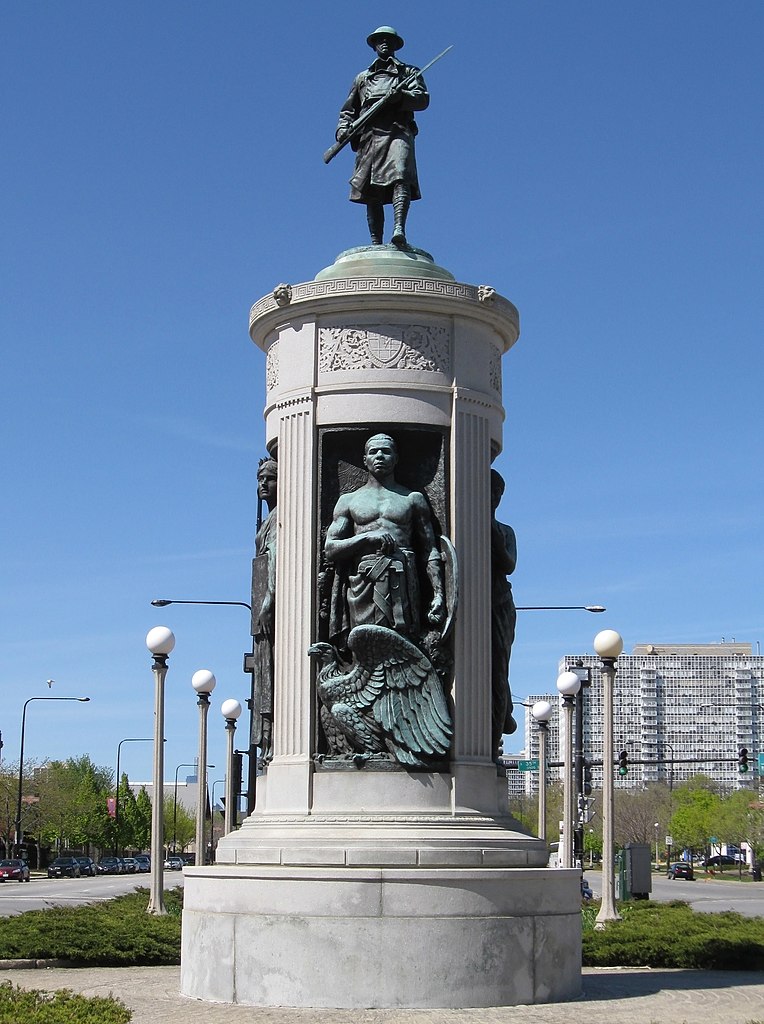
Chicago’s Victory Monument, which stands near the intersection of King Drive and East 35th Street, was built in 1927 in honor of the all-Black, Eighth Infantry Regiment of The Illinois National Guard, whose members served during WWI under the French. Created by the French American sculptor, Leonard Crunelle, the monument’s main structure was built in white granite with a bronze doughboy (common nickname for American soldiers during WWI) figure standing on top. That figure of the soldier was added almost ten years after the original construction.

There are three bronze panels around the sides of the monument, each representing elements of Black culture and history of Black soldiers through life-sized figures. The first panel, the Victory Panel, presents a cloaked female figure representing motherhood and holding a branch that symbolizes victory. The second panel, the Columbia Panel, displays another female figure with a helmet on her head holding a tablet engraved with a list of battles that Black soldiers fought in. The last panel, the African-American Soldier Panel, depicts a Black soldier from the Eighth Regiment with an eagle standing at his feet. A fourth bronze panel facing north holds the names of the 137 total members from the Eighth Infantry that lost their lives fighting in WWI. 

The monument was added to the National Register of Historic Places in 1986 and labeled a Chicago Landmark in 1998. The monument is also home to many annual celebrations and observances including its Memorial Day ceremony and the starting location of the historic, and largest Black parade in the world, the Bud Billiken Parade. 

Having been in place for almost 100 years, Victory Monument continues to illuminate and commemorate an important part of history, and is just one of the many special landmarks located in our historic Bronzeville neighborhood.

Photograph of Victory Monument in Bronzeville
› Back to top
« back
07.15.21 | Arts & Culture

Radical ways to repair harm: restorative vs. transformative justice

The last year and a half marked a breaking point in the status quo. The combined stresses of a global pandemic, as well as increased national awareness of police brutality and racial injustice in America, made one thing clear: we need to radically reimagine our communal approach to safety and care.

As we collectively look to create a future where all people feel safe, longtime organizers and activists are pushing for two solutions: a turn towards restorative justice or transformative justice. These human-centric methods for addressing harm dispel the idea that people are disposable beings, or that punishment should be carceral. Learn more about the concepts, and what makes them different from one another, below:

Restorative Justice

Restorative justice acknowledges that when crime occurs, it causes harm to those that are involved. Rather than focusing solely on punishing the perpetrator of the crime, restorative justice is concerned with addressing the harm caused and the impact of that harm.

This is addressed by facilitating dialogue between all parties involved. Ideally, a conversation will be collectively held by all parties, including: the person who has caused the harm, the person who has been directly harmed, and the community where the harm occurs.

During this conversation, the person who has caused the harm should take accountability for their actions and make amends. The person who has been directly harmed may outline what they need in order to heal.

The community is an integral part of this process as well, because as the process of restorative justice seeks to route a path towards forgiveness and healing, its end goal is ultimately to reintegrate the person who has caused harm back into society, where they will have a second chance.

Transformative justice

In an article from Novel Hand examining the difference between restorative and transformative justice, and how transformative justice digs one step deeper, writing:

“…restorative justice attempts to restore to the condition before the harm took place. However, usually, that original condition is itself one that has a number of injustices built into it. Transformative justice aims to dig deeper: how can we also address the root causes of injustice and move toward an even stronger community?”

Essentially, restorative justice acknowledges the failings of our current carceral state, where the prison industrial complex puts people away for crime in a way that feels disposable rather than healing. But furthermore, transformative justice takes its critique of current systems further and acknowledges the failings of our current system to also address racism, sexism, ableism, and classism – and how these conditions contribute to where crime occurs, from whom it occurs, and how treatment/punishment differs across the spectrum.

Peace and Conflict scholar Anthony Nocella says on this subject: “Transformative justice…is about looking for the good within others while also being aware of complex systems of domination.”

This cursory overview of restorative and transformative justice is just the tip of what’s been said and what there is to learn about radically reimagining the ways we repair harm in our society. To learn more, we recommend reading the full article by Novel Hand and conducting your own research from there!


Illustration of outstretched hands
› Back to top
« back
07.08.21 | Sage Advice®

Visiting the Obama Portraits at the Art Institute of Chicago

This summer, the beautiful and inspiring Obama portraits – depicting 44th president of the United States, Barack Obama, and first lady, Michelle Obama – will be gracing the walls of the Art Institute of Chicago for just eight brief weeks. With such a limited viewing period, below we’re outlining how to plan your visit to see these seminal works of art ASAP!

Visiting the Portraits

Access to viewing The Obama Portraits is included in General Admission for all Art Institute visitors. However, the exhibition does have a capacity-limit, and entry is first-come, first-served.

Tickets must be reserved in advance online, and entry to the exhibit on the day of your visit will be managed via virtual lines. General Admission tickets are being released in limited, timed batches, as outlined below:

  • Tickets for July 1–15 will be available on June 24.
  • Tickets for July 16–31 will be available on July 8.
  • Tickets for August 1–8 will be available on July 22.
  • Tickets for August 9–15 will be available on August 2.

A limited quantity of tickets will also be available onsite for qualifying groups. Learn more about free admission guidelines at the Art Institute of Chicago here.

Remarkable Works

While many other Presidential Portraits in the Smithsonian National Portrait Gallery have been traditional, head-and-shoulders portraits painted in classical styles, President Barack Obama took a notably different approach.

Barack Obama commissioned Kehinde Wiley to create his portrait. Wiley is an American portrait artist known for his placement of contemporary (typically African American) figures in the guise of powerful historical figures. Meanwhile, Michelle Obama commissioned Amy Sherald to create her portrait. Sherald is an American artist known for her arresting, otherworldly portraits that document the contemporary African-American experience.

Wiley and Sherald are the first African Americans to be commissioned by the National Portrait Gallery to create official portraits of a president or first lady. The resulting works are remarkably contemporary.

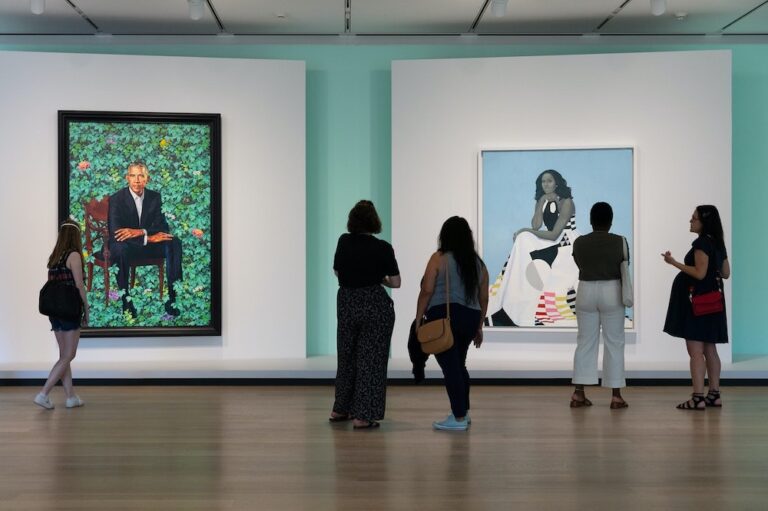
In the larger-than-life, head-to-toe portrait created by Wiley, a seated Obama is set against a backdrop of lush greenery. Each plant in the background holds a special significance, including chrysanthemums, the official flower of Chicago. The portrait of Michelle Obama, created by Sherald, was based on a posed photograph and is intentional down to every last detail, from the grey-scaling of Michelle’s skin to the intensity of her direct gaze.

You can visit the Obama Portraits at the Art Institute of Chicago now through August 15, 2021; tickets are available for purchase here.

And for those interested in a fascinating, rich conversation between Michelle Obama and Amy Sherald, hosted by The Studio Museum of Harlem Director + Chief Curator Thelma Golden, you’ll find it here.


Photo of Obama Portraits
(L) Kehinde Wiley. Barack Obama, 2018. Oil on canvas. (R) Amy Sherald. Michelle LaVaughn Robinson Obama (detail), 2018. Oil on linen. Photo courtesy of the Art Institute of Chicago.
› Back to top
« back
07.06.21 | Community

What we mean when we say “vibrant, high-quality, affordable housing”

There’s a lot of language we use at Sage Collective that’s uncommon for the world of senior living. For example, we prefer to use the phrase “older adults” rather than “seniors” – more on that in this blog post here. When discussing our vision for Sage Collective’s residences, we also use the phrase “vibrant, high-quality, affordable housing.” But just what exactly does that mean?

Everything we do at Sage Collective – from the partners we choose, the programming we design, to the residences we develop – is built upon our foundational philosophy: 9 Ways of Vibrant Living. Read more about this philosophy and how we intend to bring it to older adults in our Vibrant Living Manifesto here. Ultimately, we believe that older adulthood is just another in a series of life’s chapters, and that seniors deserve to live just as joyfully, vibrantly, and fully as their intergenerational counterparts.

Too often, senior housing lacks the passion and joy of this belief we hold so dear. Based on limited resources, and often bogged down by limited imagination, affordable senior housing is all too commonly not the enjoyable experience that it should be. We’re here to rewrite that narrative.

At Sage Collective, we encourage our residents and neighbors to experience the freedom and joy of choice by providing them with wellness support, cultural exploration, and spiritual enrichment. We’re in a privileged position to deliver on this promise based on the legacy we come from – more on that in this blog post here. From our past experience, we’ve learned the powerful impact that a strong vision and an even stronger culture has on the services and housing products we’re able to provide.

We can’t wait to share this vision with you. Our first residences, 4108 and 4112 South King Drive in the Bronzeville community on Chicago’s Southside, will bring affordable and market competitive housing units to our community, and will be set apart by our vibrant living philosophy and attention to detail and quality. Stay tuned for more details to come.


Photo of contemporary residential interior
› Back to top
« back
06.17.21 | Arts & Culture

Juneteenth Officially Declared a National Holiday

After the protests in June 2020 that followed the murder of George Floyd, a national reckoning with racial justice has dominated conversations in governments, workplaces, schools, neighborhoods and homes alike. As part of that reckoning, America as a whole is asking itself: how do we better support, celebrate and uplift African Americans and African American culture? One way: making Juneteenth a recognized holiday.

Juneteenth – also known as Freedom Day, Jubilee Day, Liberation Day, and Emancipation Day – is a holiday celebrating the emancipation of those who had been enslaved in the United States. It’s an occasion that’s been long celebrated in African American communities, but now attention is being brought to the holiday at the national, state and local level.

In 2020, Cook County officially recognized Juneteenth as a paid holiday for its government employees. Cook County is the largest county in Illinois, and became the largest county in the country to make such a declaration. After this milestone event, the state of Illinois wanted to be the next to follow. 

Legislation was unanimously approved by the Illinois House and the state Senate to make June 19th a paid holiday off for all state employees, as well as a school holiday. The legislation states that if June 19th falls on a Saturday or Sunday, the holiday will be observed on the following Monday. After J.B. Pritzker officially signed off on the bill on June 16th, it became official. Juneteenth is an official state holiday in Illinois, beginning on January 1, 2022. Unfortunately, Juneteenth falls on a Sunday in 2022, and the holiday will have its first chance to be formally recognized in 2023 as a paid day off for state employees as well as a holiday off from school. 

The Illinois bill was first sponsored by Representative La Shawn Ford. He’s also sponsored similar legislation in the past, but told the Chicago Tribune, there “wasn’t an appetite” for passing the legislation previously. He then told the Tribune that all changed after the murder of George Floyd by a white police officer in Minnesota, saying, “Now, post-George Floyd, this is the time,” Ford said. “Some would say this is an African American holiday, but it’s an American holiday.”

Illinois isn’t the only one taking action. On Tuesday night (June 15th), The Senate unanimously passed a resolution on Tuesday establishing June 19 as Juneteenth National Independence Day, a US holiday commemorating the end of slavery in the United States.

The recognition of Juneteenth was a long time coming and hopefully marks a turning point in how the United States – on local, state, and national levels – begins to reckon with its history and present, and create a better future for all.

From Sage Collective to you and yours, Happy Juneteenth!

A photo of an African American woman in a dashiki with the African flag draped over her shoulders. She's walking down the street triumphantly. Text over the image reads Happy Juneteenth, with the Sage Collective logo
› Back to top
« back
06.15.21 | Community

Two Initiatives Celebrating the Historic Legacy of Bronzeville Today

Sage Collective has begun the process of renovating our first two new acquisitions, 4108 S King Drive and 4112 S King Drive, side-by-side buildings in Chicago’s historic Bronzeville neighborhood. We envision this development as providing tangible benefits to this community by providing high quality, affordable housing programmed to ensure safe, comfortable living there, as well as celebrating and uplifting Bronzeville’s dynamic history, current-day culture and residents alike – and we’re not alone in this effort.

Bronzeville has a long and storied history as the heart and soul of African American culture and vibrancy in Chicago. Contemporaneously, many organizations are doing incredible work on the ground to continue that legacy today. Here are two such initiatives:

The Forum in Bronzeville

Restoration of The Forum

The Forum is a historical South Side building that was once the epicenter of Bronzeville nightlife, dating all the way back to the 19th century. Built in 1897 in the heart of the city’s blues district, the venue has hosted everything from concerts by names like Nat King Cole and Muddy Waters, to movement meetings in the 1970s.

The building, located at the corner of 43rd and Calumet in Bronzeville at 318 E. 43rd St, was previously zoned for residential use. Now, as part of recent renovation efforts, investors are rallying to rezone the project for commercial use. At the head of the initiative is Bernard Loyd, an entrepreneur and the founder of Urban Juncture, which focuses on community development work in Bronzeville.

Lloyd bought The Forum in 2011 days before the city planned to demolish it. Now, his vision is to restore the space as an “incubator space for Black creatives” and an overall cultural destination.

Archives of the Bronzeville Historical Society

The Bronzeville Historical Society has been preserving the stories, history and heritage of African American history and culture in Chicago since its founding in 1999. Led by South Side historian Sherry Williams, the Bronzeville Historical Society originally began with just Williams, her mother, and her daughter on task. 

They first set their sights on highlighting notable Bronzeville residents, publishing the book “100 Notable People and Places in Bronzeville – (Black Chicago)” in that same year. In the two decades since, the society’s archival work has expanded exponentially, despite challenges over the years.

Their collection includes records of 180,000 Chicago resident burials from the Jackson Funeral Home, gifted by the state of Illinois. From those records, volunteers from the African American Genealogy and Historical Society helped to reconfigure each person’s history, including their hometowns, church, and club affiliations. Bronzeville Historical Society also holds hundreds of photographs of Chicago from 1930-2000, documenting the architecture, landscape, and neighborhoods over the years. 

Sage Collective is proud to be part of the Bronzeville community and to live, work, and play side-by-side with so many other organizations doing the great work of preserving and celebrating our neighborhood’s great cultural legacy.

A mural in Bronzeville Chicago showcasing famous figures throughout history
› Back to top
« back
06.10.21 | Community

Sage Collective Partner Spotlight: Chicago Commons

At Sage Collective, our name serves as an indicator of how we work. We’re a collective because what we do, we do together. As part of our holistic approach, we work with local social service organizations and health and wellness professionals to create a vibrant ecosystem where resources, ideas and successes are shared. Since the beginning of this new era in our development, Chicago Commons has been a key partner and collaborator. In celebration of that partnership, today’s spotlight highlights their organization’s own important mission and work.

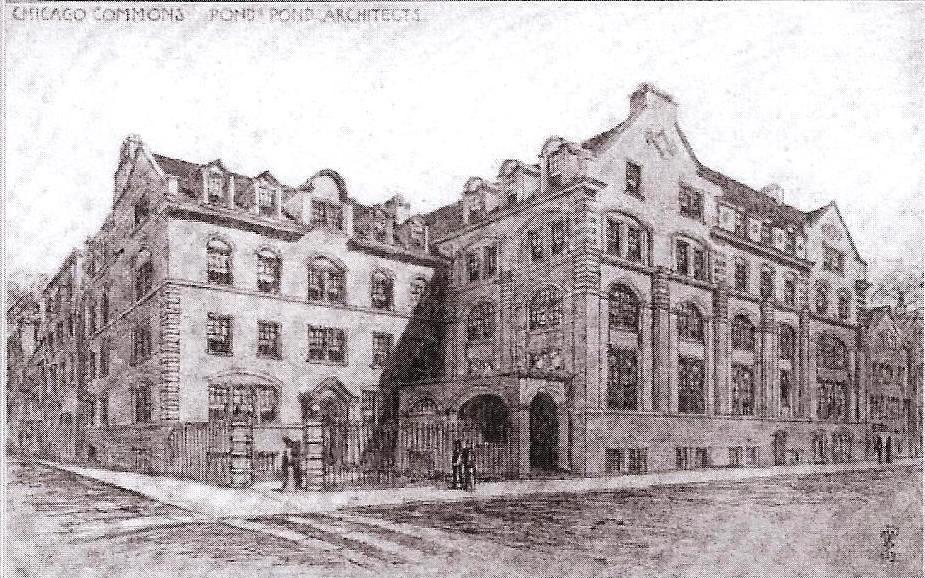
Architectural drawing, "Chicago Commons," Pond and Pond architects
Architectural drawing, “Chicago Commons,” Pond and Pond architects

Deep Community Roots

Chicago Commons has been serving residents of their community for over 125 years. Founded in 1894 by Graham Taylor, a Minister and key social reformer in Chicago. Originally, Chicago Commons began as a settlement house serving immigrants on Chicago’s northwest side. Its model was inspired by progressive social reformer and activist Jane Addams’ own Hull House – the two houses even shared the same architect, Pond & Pond.

Traditionally, settlement houses provided services such as daycare, education, and healthcare, with the goal of bringing equity and social connectedness to their communities. They had brought one of the earliest kindergartens to Chicago in 1897, and also provided programs for individuals of all ages through clubs and classes, and an open-forum discussion platform for local community events.

Graham Taylor was succeeded in 1922 by his eldest daughter and long term settlement house resident, Lea Demarest Taylor, who carried on his legacy. Even when local calls for segregation began during the racial strife of the 1940s, Taylor resisted and stood adamant that the organization’s services and programs would continue to serve all races.

Two African American women embrace and smile. One is an adult and one is an older adult
Photo courtesy of Chicago Commons website

Chicago Commons Today

Today, Chicago Commons carries on the historic legacy of settlement houses and stands as a leading provider of early childhood education, family centered adult education, and senior services on the South and West sides of Chicago. Their mission is to empower individuals, families, and communities to overcome poverty and systemic barriers, embrace opportunities, and thrive across generations.

Over the past 125+ years, their services (and reach) in Chicago have greatly expanded to include centers in Bucktown, Englewood, New City, West Humboldt Park, Back of the Yards, and of course, their headquarters in Bronzeville. 

During COVID-19, Chicago Commons has also partnered with leading health organizations and local institutions to bring informational, online events to their communities addressing common misconceptions and questions regarding the virus. Sage Collective was a proud partner in bringing one of these live Q&As to life – learn more about the past event here

You can also learn more about Chicago Commons, including how to get involved, on their website here

Chicago Commons logo
› Back to top