« back
08.31.21 | Sage Advice®

The art of meditation and how you can benefit from it

In today’s fast-paced society, rife with uncertainty and change, devoting time to self-care and introspection is more important than ever. At Sage Collective, we support and encourage participating in spiritual or religious experiences as part of our 9 Ways of Vibrant Living. Meditating can be one such practice, revealing a sense of discovery and heightened mindfulness. 

What is meditation?

Meditation is an ancient technique used by many for more than 3,500 years; historians have traced its utilization back to the formation of many world religions. The purpose of meditation is to help train oneself in practicing mindfulness while learning to better understand feelings and emotions to create a healthy perspective. 

Meditating can feel uncomfortable and challenging at first, since it uses techniques that may be unfamiliar. However, this ancient tradition can lead to immense personal growth and understanding for those who find their groove in the routine.

Health benefits

Research suggests that meditating can have enormous positive effects on managing symptoms of anxiety and depression and reducing stress. Other conditions that can benefit from meditation include chronic pain, insomnia, high blood pressure and IBS. And while experts have yet to completely understand how meditation works, research clearly demonstrates the holistic impact it has on one’s health and well-being.    

Tips for how to meditate 

  • Get comfortable. Find a place to sit upright with legs crossed instead of laying down, as it can be easy to find yourself falling asleep. However, comfort is key for meditation, so avoid positions that may prove uncomfortable after several minutes.
  • Keep a timer. It can be easy to worry about time as you start meditating; setting a timer for small increments of 5 to 10 minutes of meditation can be an easy way to avoid that. Scheduling a specific time of the day to meditate can also help with consistency — leading to more beneficial results. 
  • Focus on breathing. It can be an easy way to get into the flow of meditation. As you breathe, observe what it feels like as air enters your body and then leaves it. 
  • Be open-minded. As a new experience, it may be hard to empty your mind during meditation. Emotions and feelings that might be uncomfortable may arise, but don’t ignore them; acknowledge their presence and slowly bring your focus back to breathing. 
  • Don’t give up. It’s also important to remember that meditating takes time and practice to build as a habit, and expecting too much too fast can lead to disappointment. Hang in there, and discover just how much of a life-changer meditation can be!

There is no “right way” to meditate — it is a practice meant to be personalized for each individual and will feel different for everyone. For those looking to become more mindful, self-aware and gain better control over feelings such as anxiety and stress, meditation may be the technique for you. 

If the art of meditation interests you, check out the video below. The 10-minute tutorial guides beginners through their first meditation and is narrated by a mindfulness coach and teacher,  John Davisi.


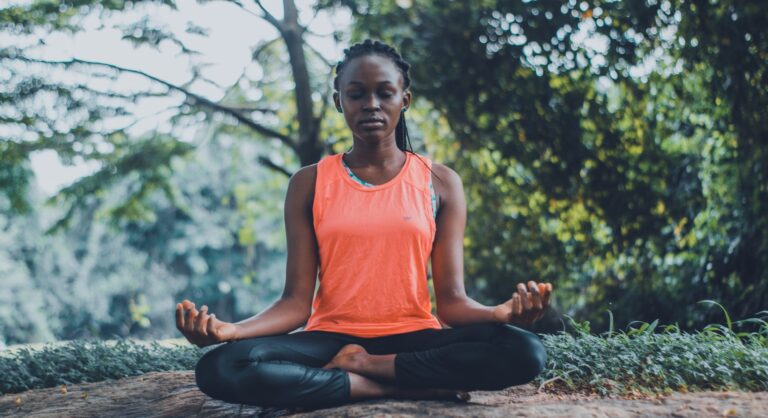
A woman sits cross legged with her hands resting on the top of her legs – meditating.
› Back to top
« back
08.03.21 | Community

The Science of Laughter

Laughing is something we do numerous times a day without a second thought. Whether we are with friends, watching a funny movie or simply reacting to something that catches us off guard. There is much more behind the infectious response than the loud, quirky and eccentric sounds that come with it. The power of incorporating laughter into your day-to-day routine has huge implications for the quality of your life in the broadest sense. Let’s look further.

Recognizing the impact of laughter’s effects on things such as stress, happiness and health, we at Sage Collective appreciate its importance, especially in relation to our 9 Ways of Vibrant Living

Why do we laugh?

Throughout history, laughter has been seen as a social signal. There are many factors that can affect what we find humorous including age, gender, culture or community. Laughter presents itself in most human interactions as the presence of connectivity, comfortability and the strengthening of a shared or mutual relationship. Furthermore, research shows that the more laughter that is present in those relationships, the stronger those connections or bonds become.

The prevailing theory is that there are three types of scenarios that make us laugh: incongruity, superiority and relief. Incongruity theory is rooted in the idea of expecting one outcome, and receiving a totally different one — resulting in laughter. Superiority theory explains that we might find someone else’s weaknesses or mistakes humorous, making us feel superior to them in the moment. Last, relief theory is the use of comedy in tough or uncomfortable situations in order to relieve stress or tension. If you reflect back on what made you laugh today, do you see the reasons falling into one of these categories?

The health benefits of laughing

There are tangible health and wellness benefits for individuals and communities when we all spend more time laughing. From a purely biological perspective, when we laugh, our bodies reduce the levels of stress hormones, in turn lowering our physical stress and anxiety. At the same time, the action also releases serotonin, which leaves us feeling euphoric. As stress hormones diminish, we lower blood pressure and increase blood flow — which directly leads to the oxygenation of our blood to provide us with more energy. 

Incorporating more laughter in your life

Wondering how to add laughter to your life? Start by considering the concept of humor and its relationship to laughter.

Merriam-Webster defines humor as “the mental faculty of discovering, expressing, or appreciating the ludicrous or absurdly incongruous: the ability to be funny or to be amused by things that are funny.” However, because humor is so subjective, it’s nearly impossible to give it a clear-cut definition. Let’s just say that laughter is the direct reaction or acknowledgment that someone has found something humorous.

For some, laughter may come easy. For others, it might be more difficult to find humor in life. Either way, here are some tips for learning to laugh more. 

One of the easiest ways to find laughter is to surround yourself with people who you find funny and entertaining, but with whom you already have a comfortable and strong relationship. Discovering things that make you laugh throughout your daily life and experiencing them more is also a great way to easily find humor. This might be found in the radio station you listen to on your daily drive, or a television show you play in the background while you do chores at home. And if laughter doesn’t come easily for you, consider laughter therapy — it’s a new form of searching for a chuckle by training yourself to look for humor in uncomfortable and difficult situations, rooted in laughter’s relief theory. There are lots of resources available online, and even apps you can download to your phone!

So even if you aren’t the traditional joking type of person or you find it hard to see the comedy in hard situations, dig deep and look for the laughter in your life. You won’t regret it.

A group of people stand around each other looking at a phone and laughing
› Back to top
« back
07.01.21 | Community

Vibrant Living Breakdown: Engagement in Social Life

Nine Ways of Vibrant Living is Sage Collective’s innovative model that champions more meaningful, engaged lives for older adults, and that serves as the backbone of our philosophy. We celebrate and uplift components of vibrant living that span from health and wellness, to arts and culture, to spiritual enrichment — but what makes all these life experiences truly shine is our ability to share them with others. That’s why our ninth component is engagement in social life.

Older adults in particular are a population at high risk of experiencing social isolation. The flip side of that risk – and the negative impacts it has on one’s physical and mental well being – means that older adults who are more socially connected often report a better quality of life all around.

The benefits of healthy social connection for older adults are all encompassing and include disease prevention, fewer physical health problems, longevity/length of life, improved cognitive function, better self-esteem, sense of belonging, and maintained purpose of life.

Therefore, at Sage Collective, we strive to provide daily opportunities for social connection and community engagement, whether that’s through our programming or residences. We intend to partner with a host of community organizations, including but not limited to: churches, schools, businesses, and cultural institutions, to provide co-teaching, educational, entrepreneurial and employment opportunities that both enrich and empower our residents.


Stay tuned for all these opportunities and more, and in the meantime, you can stay connected with us and our community online through our social media via Facebook, Instagram, Twitter, and LinkedIn.

Friends gathering to socialize and paint
› Back to top
« back
06.29.21 | Community

Harness the power of awe by taking “awe walks”

Vibrant life encompasses a variety of experiences, from healthy eating to regular fitness to engaging with the world around us. One particularly effective – and unusual – way to pursue vibrant living is to take “awe walks.” The end-goal of these walks is simple:  to simply inspire awe in those who participate. Let’s dig in.

How to take awe walks

“Awe walks” are a more intentional way to approach something as simple as a stroll around the block. The idea is to go for a walk and seek to experience awe along the way. How the walker chooses to experience awe is entirely up to them. Awe can be found in even the smallest of everyday moments, such as appreciating the flight path of a v of migrating geese above, or marveling at the many colors that make up fall foliage.

The study of awe – how it’s inspired, and the impact it has on a person’s wellbeing – has been a primary area of focus for psychologists since the early 2000s. Just recently, a 2020 study was published in the journal Emotion examining the impact of awe walks on a population of older adults.

In the study, sixty older adults took 15-minute awe walks for a period of eight weeks. Perhaps the most exciting finding of the study was the increasing feelings of compassion and gratitude in the control group that took such awe walks. Compared to the normal-walk-talking counterparts, the awe walkers were much more focused on observing the world around them.

“One of the key features of awe is that it promotes what we call ‘small self,’ a healthy sense of proportion between your own self and the bigger picture of the world around you,” explained Dr. Virginia Sturm, lead investigator and associate professor of neurology and psychiatry and behavioral sciences at the University of California at San Francisco.

You can trust the science – or you can just as easily try it out for yourself and see what awe you uncover.

View from above of people taking a walk
› Back to top
« back
06.08.21 | Arts & Culture

Where to go for scenic walks on Chicago’s South Side

We’ve previously shared how incorporating a 30-minute walk into your daily routine brings with it a surprising array of health benefits. While you enjoy those healthful benefits on your walk, why not enjoy a good view too? Some days it’ll be easier to take a walk around the block, but for those days where you want to elevate “taking a walk” into a special occasion: here is Sage Collective’s guide to the best scenic walks on Chicago’s South Side.

Japanese Garden, part of Jackson Park in Woodlawn, Chicago.

Jackson Park – Woodlawn

Jackson Park is a sprawling 551-acre park on Chicago’s South Side with an impressive history. Designed by the same names behind New York’s Central Park, and once home to the World’s Columbian Exposition, Jackson Park continues to bring exciting seasonal events and features to the Woodlawn community. Just this spring, the park’s 160-tree grove of cherry blossoms bloomed for the first time ever, attracting locals and tourists alike to see the beautiful display. 

The park is the perfect place for a short jaunt or longer “hike,” with landmarks like the lushly landscaped Japanese Garden and winding Bobolink Meadows lagoon-side trail serving as your backdrop.

View of the Chicago skyline from 31st Street Beach in Bronzeville, Chicago. Photo via Flickr.

31st Street Beach – Bronzeville

While most people know it as 31st Street Beach, the beach’s formal name became Margaret T. Burroughs Beach in 2015. Named for the accomplished artist, arts advocate, poet, teacher, civic leader, historian, and founder of the DuSable Museum of African American History, the beach’s official name serves as an homage to the history and vibrancy of both Burroughs herself, and the Bronzeville neighborhood overall.

The beach, which is nestled next to 31st Street Harbor, boasts sweeping views of Chicago’s city skyline, and invites swimmers, joggers and walkers alike to enjoy the beautiful scenery.  

When it comes time to plan your next weekend excursion, we hope these parks provide some inspiration and an exciting backdrop. After all, nothing makes a regular, leisurely workout more vibrant like a little bit of good scenery. 

Burnham Nature Sanctuary. Photo courtesy of Chicago Park District
Burnham Nature Sanctuary. Photo courtesy of Chicago Park District.

Burnham Nature Sanctuary – Kenwood

Located at 1600 E 47th Street, Burnham Nature Sanctuary is just one serene pocket of a larger stretch known as the Burnham Wildlife Corridor. The corridor is a 100-acre ribbon of urban wilderness running through Burnham Park.

The sanctuary itself is the perfect location for novice and expert birdwatchers alike as they meander through the woodlands. These woodlands, full of native plants, attract many forms of wildlife for visitors to enjoy, from birds, to caterpillars, to butterflies. Beyond the woodland path, there’s also a boardwalk that winds through a hill and swale grassland. Overall, Burnham Nature Sanctuary is the perfect way to reconvene with nature all while remaining in the close confines of the city. 

Japanese Garden, part of Jackson Park in Woodlawn, Chicago.
› Back to top
« back
05.20.21 | Community

Can faking a smile really make you happier?

Throughout our lifetime, we’ve all heard the old sayings like “turn that frown upside down” and “fake it till you make it.” But does the simple act of smiling really provide a mood boost? Science says yes.

Facial Feedback Hypothesis

Over two centuries ago, Charles Darwin was the first to suggest that the facial expressions you make have an impact on your overall disposition. This theory, dubbed “facial feedback hypothesis” by scientists, states that the contraction of facial muscles not only communicates what a person is feeling to those around them, but also communicates what that person is feeling to themself, too. Ergo: by contracting your facial muscles into a smile, this physical act will communicate to your brain not just that it should feel happy, but that it is.

As the Studies Suggest

In an early study, published in 1988, testing the facial feedback hypothesis, participants were made to hold a pen between their teeth (thus mocking the muscle contractions of smiling without being told what they were doing was indeed smiling in order to remove cognitive bias). From those whose pen helped them to mock smiling, to those whose pen helped them to mock scowling, the results demonstrated that those smiling did indeed report more pleasant emotions.

Other studies conducted since then have replicated these findings. A recent study, published in 2020, also asked participants to hold a pen between their teeth (once again mocking the musculature of smiling) and yielded similar results — those that smiled were indeed happier. In fact, one study published in 2009 even suggested that botox users — due to their inability to frown — were happier than those without fillers, who naturally have more facial elasticity.

The Health Benefits of Smiling

Scientists have also suggested that, in addition to lifting your mood, smiling can also lower stress, boost your immune system and possibly even prolong your life. That’s because when you smile, your brain releases neuropeptides, which help fight off stress, and neurotransmitters, such as dopamine, serotonin and endorphins, all of which play a critical role in emotional regulation.

And while smiling no doubt has a positive impact on your own disposition, it also has the added benefit of positively impacting those around you. Afterall, smiling is contagious. American spiritual teacher, Peace Pilgrim, famously said: “Life is like a mirror: Smile at it and it smiles back at you.”

There’s an old myth that while it takes 43 muscles to frown, it only takes 17 to smile. So next time you’re feeling down in the dumps, give these scientific hypotheses a try — if we see you around, we’ll be sure to smile right back!

An African American woman smiling in a leopard print dress and black jacket smiles while holding up her cell phone to take a picture; she's contrasted against the red wall behind her.
› Back to top
« back
05.04.21 | Mental Wellbeing

The Health Benefits of Gardening

At Sage Collective, our philosophy of vibrant living encompasses everything from engaging in moderate, regular physical activity to eating a primarily plant-based diet and having an active social life. Interestingly enough, gardening touches on all three of these facets of vibrant living at once. Adopting gardening as a hobby brings a wide array of health benefits and beyond — let’s take a look:

Physical Health Benefits

Naturally, spending time outdoors gardening leads to higher levels of Vitamin D exposure. Adequate Vitamin D exposure is particularly important for older adults, as it increases calcium levels, therefore improving bone health and providing a boost to your immune system. The act of gardening is also an accessible, aerobic form of exercise that aids in increased flexibility, strength and stamina. Additionally, if you’re growing a vegetable, fruit or herb garden, all that fresh food is great for your diet! 

Mental Health Benefits

Growing and nurturing a living garden brings with it a deep sense of accomplishment, pride and self confidence. Just look at what you can do with your own two hands! Gardening is also believed to help reduce symptoms of anxiety and depression. In fact, one scientific study even posits that inhaling M. vaccae, a healthy bacteria that lives in the soil, can increase levels of serotonin – the key hormone that stabilizes our mood, feeling of well-being, and overall happiness.

Social and Cultural Benefits

While it can be a solo activity, gardening is also a great way to spend time with family, friends or neighbors. Community gardens in particular help many older adults to combat loneliness, all while contributing to the greater good of their neighborhood. Gardening has long been a way for communities to come together, to nurture each other, and to practice healing, sovereignty and even resistance

At Sage Collective, we advocate for older adults to adopt gardening as part of their lifestyles for all these reasons and more. In support of this belief, we will continue to promote the adoption of community gardens in the residential environments in which we engage older adults (including our own residents currently in development in Bronzeville), as well as bringing farmers’ markets to such communities. Stay tuned for more!

An older African American woman smiling while holding flowers she is about to plant in her garden
› Back to top
« back
03.09.21 | Community

Vibrant Living Breakdown: Engagement in Family Life

Nine Ways of Vibrant Living is Sage Collective’s innovative model that champions more meaningful, engaged lives for older adults, and that serves as the backbone of our philosophy. We celebrate and uplift components of vibrant living that span from health and wellness, to arts and culture, to spiritual enrichment — but tying it all together is an underlying feeling of connectedness, care and love. That’s why our eighth component is engagement in family life.

We believe in the deeply transformative power of being part of a community. At Sage Collective, we are committed to providing a genuine sense of community for everyone involved with us, from program participants to building residents to our partners and beyond. Family doesn’t just refer to the bloodlines you’re born into; it also incorporates the loving connections you make throughout a lifetime and the people that you choose to surround yourself with. 

When it comes to our plan for programming and housing, we want to take an active role in developing meaningful friendships and embracing existing family ties. To do so, we intend to provide opportunities such by creating camaraderie-generating participant activities, offering family support activities and policies for our residents as well as the incorporating intergenerational teaching, learning and cultural activities.

The latter piece of this, intergenerational teaching, is particularly important to us when we think about engagement in family and community life. Older adults have a wealth of wisdom and experience to pass onto younger generations — but in the other direction, so too do the youth have much to teach their elders. We believe that honoring and encouraging relationships across generations is the key to creating more unified, meaningful lives for all.

From interpersonal family dynamics, to a more expansive view of community, we’re excited to begin fostering these relationships with and for our participants.

A young African American woman embraces an older African American woman who wears a silk headscarf
› Back to top
« back
03.04.21 | Sage Advice®

Vibrant Living Breakdown: Engagement in Spirituality or Religion

At Sage Collective, we believe in meaningful and engaged lives for older adults. Nine Ways of Vibrant Living is our innovative model that champions just that. Our model incorporates everything from health and wellness to cultural immersion to spiritual enrichment — and today, we’re diving deep into the last of those three key elements. Take a closer look at our seventh component of vibrant living, engagement in spirituality or religion:

Religious Roots

Religion is part of our history. You can read our full story here, but before we were Sage Collective, we were Tabernacle Senior Citizens Project (TSCP). TSCP was started in 1978 by Reverend Louis Rawls, founder and pastor of Tabernacle Missionary Baptist Church on Chicago’s South Side. Rev. Rawls founded both Willa Rawls Manor (a high-quality housing development for older adults) and TSCP in an effort to better support the aging members of his congregation. Today, we carry on his legacy and tradition by continuing to build upon his concern and care for the community. 

The Impact of Engagement

As Rev. Rawls demonstrated, the church is the center of many African American communities. It’s not just a place to practice worship; it’s also a vital hub for civic engagement, for participating in and finding community and for discovering meaningful connections with one another.

Engagement in spirituality or religion touches on all parts of vibrant living. It brings with it life purpose, inner peace and a greater sense of connection to both the people and the world around you. In fact, studies have shown that those who engage in spiritual or religious activities live longer — some claiming even up to four years longer.

For all these reasons and more, we’ve included engagement in spirituality or religion in our Nine Ways of Vibrant Living. We support and encourage participation in spiritual and religious experiences for followers of all faiths residing in Sage facilities, or involved in Sage programs. 

The inside of a church, with rows of pews before large stained glass windows
› Back to top
« back
02.19.21 | Community

Resilience is a Skill You Can Build — Here’s How

Throughout a lifetime, everyone experiences trauma, grief, failures, challenges and setbacks. Resilience is the essential skill needed to help us overcome these experiences. Some people have a better grip on the skill than others, but luckily resilience is something we’re all capable of building — today, we’ll take a look at how:

Understanding Resilience

At Sage Collective, we recognize that everyone faces adversity in life, and that stress is a natural component of the human experience. Rather than the complete elimination of stress (which would be unrealistic), we take a more pragmatic approach, advocating for stress reduction as part of our 9 Ways of Vibrant Living. Resilience is an essential tool for stress reduction. 

According to the American Psychological Association, psychologists define resilience as “the process of adapting well in the face of adversity, trauma, tragedy, threats, or significant sources of stress—such as family and relationship problems, serious health problems, or workplace and financial stressors.” Resilience isn’t just about getting through a challenge, but about emerging on the other side feeling more confident and empowered in your ability to cope and overcome adversity. 

Building Your Resilience

There are four core components that build resilience. 

The first component is easy enough to tackle: take care of your physical wellness. Often, when we take care of our body, our mind will follow suit. Taking care of your physical wellness includes maintaining a healthy diet, participating in moderate, regular physical activity and getting a good night’s sleep. If you incorporate these physical wellness habits into your daily lifestyle, you’ll begin experiencing elevated energy levels and improved moods, both of which will help you become more resilient.

The second component that follows suit is: take care of your mental wellness too. When building resilience, it’s important to both get in touch with your emotions and to learn how to control them. Mindfulness practices such as meditation, yoga and breathing exercises can help with this. Practicing gratitude, developing a self-care routine and engaging in activities you love are all great ways to restore balance and wellbeing to your mind.

The third component that will help you build resilience: seek out connection. You don’t have to go through trials and tribulations alone. Rather than isolating yourself, instead build a network of trusted friends, family and community members that you rely on to validate the troubles you’re going through and to help uplift you when needed. You can also find a sense of connection and support in more structured environments such as support groups, civic groups or faith-based organizations.

And finally, the fourth component: find meaning. Going through a traumatic experience often overwhelms us with negative feelings like despair and hopelessness. Combatting these feelings with a sense of life purpose helps us maintain our groundedness and to hold onto hope and optimism. Whether you’re driven by a desire to help others or to pursue opportunities for self-discovery and improvement, finding meaning through your life purpose — and taking the steps needed to reach your goals and objectives — helps us maintain the problem-solving, motivation and drive that’s key to resilience.

Challenges will continue to come our way. With these tools to help build resilience, we hope you’re left feeling more prepared for the next time adversity comes your way.

Two hands reach out from a bright yellow field of flowers
› Back to top