« back
07.01.21 | Health & Wellness

Vibrant Living Breakdown: Engagement in Social Life

Nine Ways of Vibrant Living is Sage Collective’s innovative model that champions more meaningful, engaged lives for older adults, and that serves as the backbone of our philosophy. We celebrate and uplift components of vibrant living that span from health and wellness, to arts and culture, to spiritual enrichment — but what makes all these life experiences truly shine is our ability to share them with others. That’s why our ninth component is engagement in social life.

Older adults in particular are a population at high risk of experiencing social isolation. The flip side of that risk – and the negative impacts it has on one’s physical and mental well being – means that older adults who are more socially connected often report a better quality of life all around.

The benefits of healthy social connection for older adults are all encompassing and include disease prevention, fewer physical health problems, longevity/length of life, improved cognitive function, better self-esteem, sense of belonging, and maintained purpose of life.

Therefore, at Sage Collective, we strive to provide daily opportunities for social connection and community engagement, whether that’s through our programming or residences. We intend to partner with a host of community organizations, including but not limited to: churches, schools, businesses, and cultural institutions, to provide co-teaching, educational, entrepreneurial and employment opportunities that both enrich and empower our residents.


Stay tuned for all these opportunities and more, and in the meantime, you can stay connected with us and our community online through our social media via Facebook, Instagram, Twitter, and LinkedIn.


Friends gathering to socialize and paint
› Back to top
« back
06.29.21 | Mental Wellbeing

Harness the power of awe by taking “awe walks”

Vibrant life encompasses a variety of experiences, from healthy eating to regular fitness to engaging with the world around us. One particularly effective – and unusual – way to pursue vibrant living is to take “awe walks.” The end-goal of these walks is simple:  to simply inspire awe in those who participate. Let’s dig in.

How to take awe walks

“Awe walks” are a more intentional way to approach something as simple as a stroll around the block. The idea is to go for a walk and seek to experience awe along the way. How the walker chooses to experience awe is entirely up to them. Awe can be found in even the smallest of everyday moments, such as appreciating the flight path of a v of migrating geese above, or marveling at the many colors that make up fall foliage.

The study of awe – how it’s inspired, and the impact it has on a person’s wellbeing – has been a primary area of focus for psychologists since the early 2000s. Just recently, a 2020 study was published in the journal Emotion examining the impact of awe walks on a population of older adults.

In the study, sixty older adults took 15-minute awe walks for a period of eight weeks. Perhaps the most exciting finding of the study was the increasing feelings of compassion and gratitude in the control group that took such awe walks. Compared to the normal-walk-talking counterparts, the awe walkers were much more focused on observing the world around them.

“One of the key features of awe is that it promotes what we call ‘small self,’ a healthy sense of proportion between your own self and the bigger picture of the world around you,” explained Dr. Virginia Sturm, lead investigator and associate professor of neurology and psychiatry and behavioral sciences at the University of California at San Francisco.

You can trust the science – or you can just as easily try it out for yourself and see what awe you uncover.

View from above of people taking a walk
› Back to top
« back
05.11.21 | Community

Announcing Sage Collective’s Vibrant Living Manifesto

Sage Collective is thrilled to unveil our Vibrant Living Manifesto. This manifesto lays clear our approach to vibrant living, and invites all those who think and do similarly to join us. Read the full manifesto below: 

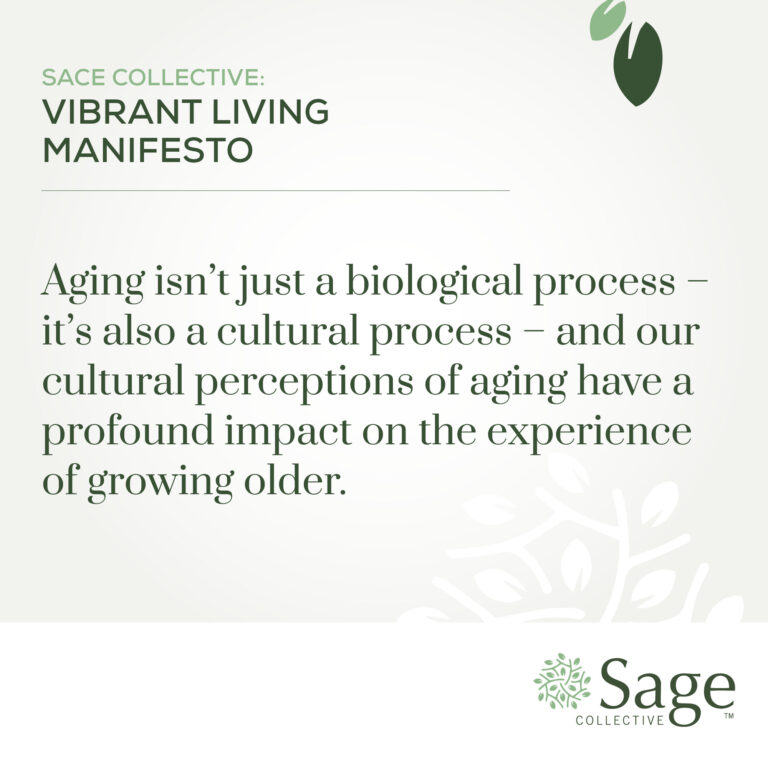
Aging isn’t just a biological process — it’s also a cultural process. Our cultural perceptions of aging have a profound impact on the experience of growing older.

We rebuke the traditional American model of valuing novelty and youth above age, experience and wisdom. We instead call upon other exemplary models for inspiration: Native Americans herald their elders as the keepers of tradition and storytelling, and in many Eastern civilizations, filial piety (to be good to one’s parents) is deemed an essential duty. 

At Sage Collective, we believe that humanity is at its very best when we connect and engage with one another. We believe that elders have boundless knowledge to share with youth, and vice versa — because we believe that life is a constant, collaborative journey for all ages. 

So we’re here to disrupt the status quo, to catalyze change in the way people understand the role of older adults in society. We’re here to create an innovation lab — to test new ideas, processes and products and expand our ways of thinking and doing — as a way of establishing a radical new framework where older adults are valued and engaged, where they experience a life lived vibrantly.

Freedom, flexibility and joy… access to high-quality, affordable and vibrant living… We believe these are rights, not privileges. That’s why Sage Collective is providing residences, programming and ancillary services to manifest our vision. 

As with any vision, ours is nothing without the support that translates ideas into action. We need residents and participants who share our commitment to vibrant living and want to be a part of it. If you’re a collaborator, a disruptor, a changemaker, a change-seeker… we invite you to do better, for ourselves and others, to live more vibrantly, to be a part of the collective.

Graphic reads: Sage Collective Vibrant Living Manifesto. Aging isn't just a biological process — it's also a cultural process — and our cultural perceptions of aging have a profound impact on the experience of growing older.
› Back to top
« back
05.04.21 | Sage Advice®

The Health Benefits of Gardening

At Sage Collective, our philosophy of vibrant living encompasses everything from engaging in moderate, regular physical activity to eating a primarily plant-based diet and having an active social life. Interestingly enough, gardening touches on all three of these facets of vibrant living at once. Adopting gardening as a hobby brings a wide array of health benefits and beyond — let’s take a look:

Physical Health Benefits

Naturally, spending time outdoors gardening leads to higher levels of Vitamin D exposure. Adequate Vitamin D exposure is particularly important for older adults, as it increases calcium levels, therefore improving bone health and providing a boost to your immune system. The act of gardening is also an accessible, aerobic form of exercise that aids in increased flexibility, strength and stamina. Additionally, if you’re growing a vegetable, fruit or herb garden, all that fresh food is great for your diet! 

Mental Health Benefits

Growing and nurturing a living garden brings with it a deep sense of accomplishment, pride and self confidence. Just look at what you can do with your own two hands! Gardening is also believed to help reduce symptoms of anxiety and depression. In fact, one scientific study even posits that inhaling M. vaccae, a healthy bacteria that lives in the soil, can increase levels of serotonin – the key hormone that stabilizes our mood, feeling of well-being, and overall happiness.

Social and Cultural Benefits

While it can be a solo activity, gardening is also a great way to spend time with family, friends or neighbors. Community gardens in particular help many older adults to combat loneliness, all while contributing to the greater good of their neighborhood. Gardening has long been a way for communities to come together, to nurture each other, and to practice healing, sovereignty and even resistance

At Sage Collective, we advocate for older adults to adopt gardening as part of their lifestyles for all these reasons and more. In support of this belief, we will continue to promote the adoption of community gardens in the residential environments in which we engage older adults (including our own residents currently in development in Bronzeville), as well as bringing farmers’ markets to such communities. Stay tuned for more!

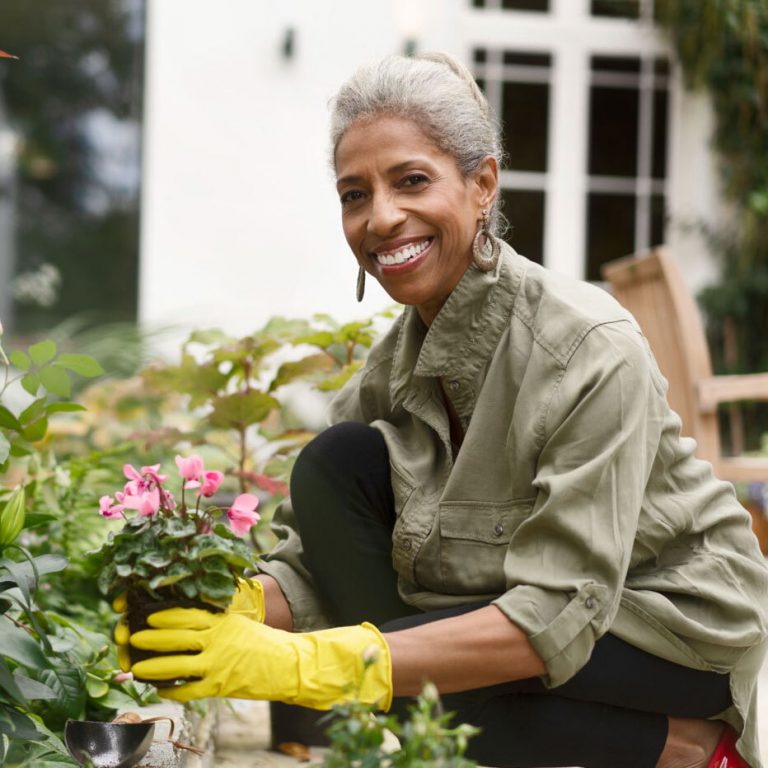
An older African American woman smiling while holding flowers she is about to plant in her garden
› Back to top
« back
03.09.21 | Health & Wellness

Vibrant Living Breakdown: Engagement in Family Life

Nine Ways of Vibrant Living is Sage Collective’s innovative model that champions more meaningful, engaged lives for older adults, and that serves as the backbone of our philosophy. We celebrate and uplift components of vibrant living that span from health and wellness, to arts and culture, to spiritual enrichment — but tying it all together is an underlying feeling of connectedness, care and love. That’s why our eighth component is engagement in family life.

We believe in the deeply transformative power of being part of a community. At Sage Collective, we are committed to providing a genuine sense of community for everyone involved with us, from program participants to building residents to our partners and beyond. Family doesn’t just refer to the bloodlines you’re born into; it also incorporates the loving connections you make throughout a lifetime and the people that you choose to surround yourself with. 

When it comes to our plan for programming and housing, we want to take an active role in developing meaningful friendships and embracing existing family ties. To do so, we intend to provide opportunities such by creating camaraderie-generating participant activities, offering family support activities and policies for our residents as well as the incorporating intergenerational teaching, learning and cultural activities.

The latter piece of this, intergenerational teaching, is particularly important to us when we think about engagement in family and community life. Older adults have a wealth of wisdom and experience to pass onto younger generations — but in the other direction, so too do the youth have much to teach their elders. We believe that honoring and encouraging relationships across generations is the key to creating more unified, meaningful lives for all.

From interpersonal family dynamics, to a more expansive view of community, we’re excited to begin fostering these relationships with and for our participants.

A young African American woman embraces an older African American woman who wears a silk headscarf
› Back to top
« back
03.04.21 | Sage Advice®

Vibrant Living Breakdown: Engagement in Spirituality or Religion

At Sage Collective, we believe in meaningful and engaged lives for older adults. Nine Ways of Vibrant Living is our innovative model that champions just that. Our model incorporates everything from health and wellness to cultural immersion to spiritual enrichment — and today, we’re diving deep into the last of those three key elements. Take a closer look at our seventh component of vibrant living, engagement in spirituality or religion:

Religious Roots

Religion is part of our history. You can read our full story here, but before we were Sage Collective, we were Tabernacle Senior Citizens Project (TSCP). TSCP was started in 1978 by Reverend Louis Rawls, founder and pastor of Tabernacle Missionary Baptist Church on Chicago’s South Side. Rev. Rawls founded both Willa Rawls Manor (a high-quality housing development for older adults) and TSCP in an effort to better support the aging members of his congregation. Today, we carry on his legacy and tradition by continuing to build upon his concern and care for the community. 

The Impact of Engagement

As Rev. Rawls demonstrated, the church is the center of many African American communities. It’s not just a place to practice worship; it’s also a vital hub for civic engagement, for participating in and finding community and for discovering meaningful connections with one another.

Engagement in spirituality or religion touches on all parts of vibrant living. It brings with it life purpose, inner peace and a greater sense of connection to both the people and the world around you. In fact, studies have shown that those who engage in spiritual or religious activities live longer — some claiming even up to four years longer.

For all these reasons and more, we’ve included engagement in spirituality or religion in our Nine Ways of Vibrant Living. We support and encourage participation in spiritual and religious experiences for followers of all faiths residing in Sage facilities, or involved in Sage programs. 

The inside of a church, with rows of pews before large stained glass windows
› Back to top
« back
02.02.21 | Sage Advice®

What We Mean When We Say “Older Adults”

You’ve probably noticed that at Sage Collective, we use the term older adults to describe our audience. But if you’ve ever wondered why exactly we use the term older adults, today we’ll take a closer look at the language and what it means to us.

Contentious debate surrounds the usage of alternative phrases like seniors, senior citizens, elders and elderly. For example, what do you think when you hear the word elderly? For most, it conjures images of someone frail and dependent. While one older adult could have health that renders them bedridden, another older adult could just as easily be ready to run a marathon. Weighted terms like elderly render such distinctions meaningless. 

Overall, the term elderly is outdated and ageist. The word has created a stereotype around aging that negatively influences the way older adults are perceived and therefore treated in our society. Consider too, the implications of words like seniors and senior citizens — we don’t call the younger generation juniors or junior citizens, right? 

Older adults aptly captures that this is indeed a population that is older — but without the hard underscore of the word old. Categorically, the phrase also leaves room for the many nuances of older adults’ varied experiences. There is no implication or preconceived notions of health, disposition, etc., attached; it’s simply a way of classifying an age group overall.

We also use the term older adults to celebrate the next chapter in aging adults’ lives. We believe that like any stage in life, older adulthood brings with it exciting and unique opportunities to learn, grow and thrive. The phrase brings with it a liberty and freedom for older adults to divine their own fate and lifestyle — and to embrace a life of vibrant living (if they should so choose). 

We want to hear from you too — what do you think of the term older adults? What does it mean to you? Let us know over at Sage Collective’s profiles on Facebook, Twitter, Instagram and LinkedIn.

An older adult woman holds a DSLR camera with a hooded zoom lens up to her face, in the act of taking a photo
› Back to top
« back
01.26.21 | Sage Advice®

Vibrant Living Breakdown: Plant-Based Diet

9 Ways of Vibrant Living is Sage Collective’s guidebook to a full, happy and high-quality life. Building off our fourth component, moderate caloric intake, the fifth component of vibrant living is a plant-based diet. Notice we didn’t use the word “vegetarian.” That’s because the key to a plant-based diet is practicing moderation. We’ll discuss more below.

As we discussed in Healthy Eating Tips for Seniors, older adults require fewer calories, but the same, if not more, nutrients to maintain wellbeing. That’s why a nutrient-dense diet is more important than ever for those 55+. Foods like fresh fruit, vegetables and legumes constitute the basis of a healthy diet. 

While meat is a good source of protein, iron and vitamin B12, red meat in particular is often guilty of being high in saturated fat. Consuming saturated fat contributes to higher blood pressure and increased risk of heart disease. Meat products, therefore, are a double-edged sword. Depending on the cut of meat one chooses and the methods of cooking, that daily source of protein has the potential to do more harm than help. 

Meanwhile, plant-based alternatives to meat, such as beans, lentils, nuts, seeds and soy provide fiber and prebiotics (good for gut health) in addition to containing sustainable carbohydrates and healthy fats. The latter helps to balance blood sugars and lower the risk of heart and cardiovascular disease. While the old plant-based classics, such as tofu, tempeh, beans and lentil are all good choices, recent innovations in the plant-based meat industry have introduced options like plant-based burgers that “bleed”. With the right recipes and supplies, plant-based eating can be delicious and nutritious.

At Sage Collective, in addition to our programmatic focus on health and wellness, we aim to develop and curate culinary programs (such as nutrition education, cooking experiences and group dining experiences at our facility) that focus on fresh, healthy, primarily plant-based diets. While meat is welcome to remain a small part of the menu, we seek to prioritize diet, portion control and alternative (and delicious) plant-based options. 

Whether for dinner or in spirit, we invite you to join us on our journey to intentional, plant-based eating. Start small, like with meatless Mondays, and we’ll go from there together.

A bowl of couscous, tomatoes, greens and other delicious veggies sits on a marble background
› Back to top
« back
01.07.21 | Sage Advice®

Vibrant Living Breakdown: Moderate Caloric Intake

9 Ways of Vibrant Living is Sage Collective’s guidebook to a full, happy and high-quality life. Our fourth component of vibrant living is moderate caloric intake. Healthy eating is an integral part to ensuring both our bodies and minds are at their best. Today, we’re taking a closer look at how to embrace this component in your own life and why it’s so important.

Diet Requirements for Older Adults

According to the Estimated Energy Requirements (EER) from the Institute of Medicine Dietary Reference Intakes macronutrients report, older adults (ages 55+) require less calories than the average adult. For moderately active women 55+, the recommended amount is 1,800 calories daily, while for moderately active men 55+, the recommended amount is 2,200-2,400 calories daily. (For less active individuals, the EER recommends 1,600 calories daily for women and 2,000 calories daily for men). However, requirements can vary with respect to height, weight and other factors. 

Older adults require less calories as they age due to dropping basal metabolic rates and decreasing muscle mass. Though as we discussed before, while older adults require less calories than the average adult, they still require the same (if not more) nutrients. That’s why eating fresh, healthy meals is more important than ever as we age. 

Vibrant Living Through Fresh, Healthy Eating

At Sage Collective, we believe in helping older adults learn how to prepare and eat more fresh, healthy food in order to get ample nutrients and consume less calories. In the vision for our residential campus, we intend to incorporate trained nutritionists and nutrition aids to provide seminars and other educational activities to help our older adult residents establish these healthy eating habits.

Fresh, healthy eating and moderate caloric intake is important for older adults for numerous reasons. Naturally, health is one of them. Eating well provides your body with the necessary energy and nutrients to do its job. It also helps regulate weight and can even aid in the prevention of diseases such as osteoporosis, high blood pressure, heart disease, type 2 diabetes, and certain cancers. Eating well is also great for the mind, leading to a better night’s sleep, the mediation of moods and even the inhibition of pain. Try eating clean for just two weeks and see the impact it has! 

For those looking to practice moderate caloric intake at home, we’ve put together this guide to healthy eating for seniors. Like any goal, change to your diet doesn’t happen overnight, but making small, conscious decisions regarding what you eat daily will build up to have a great impact.

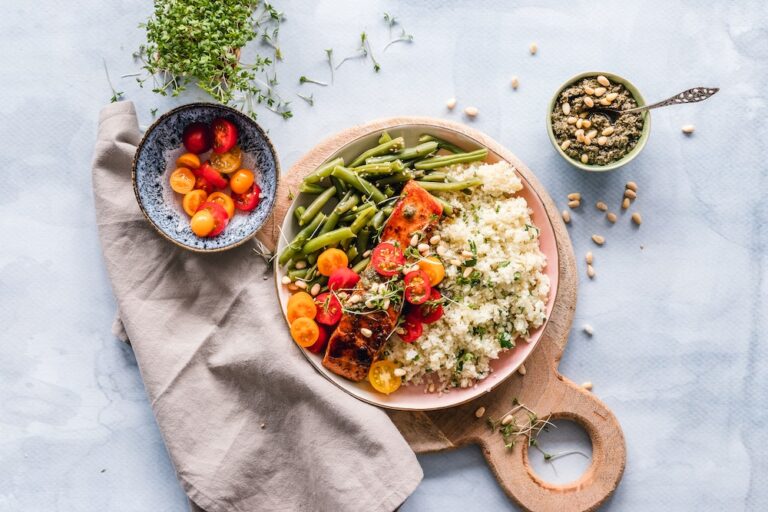
A spread of food demonstrating moderate caloric intake, including rice with tomato, green beans and fish
› Back to top