« back
10.05.21 | Community

How to Become an Active Participant in Your Life

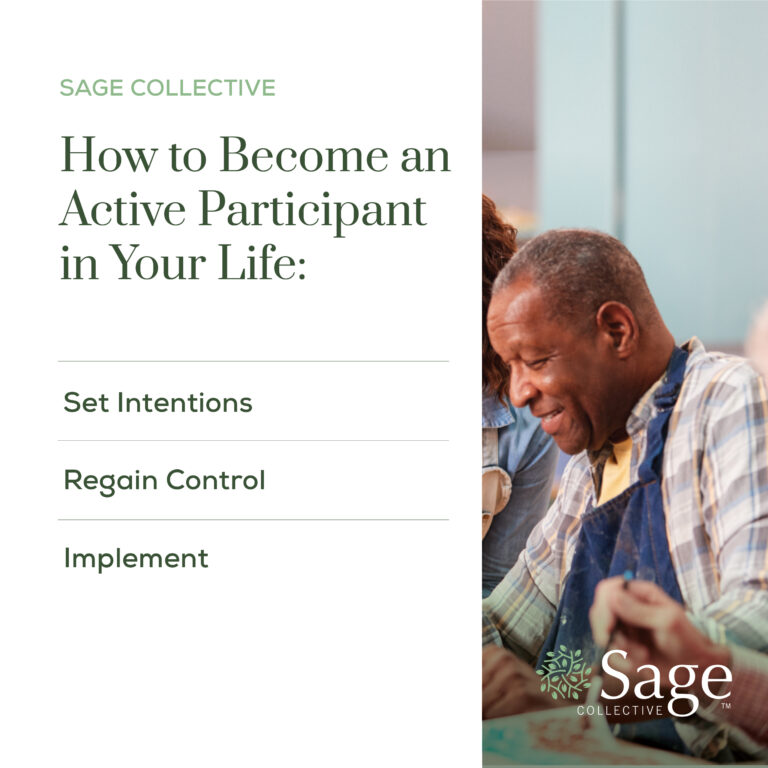
For many older adults, feeling like they’re losing control of their lives is all too common. While this can be a normal reaction to aging, it can also leave people feeling overwhelmed when confronted with the stigma of getting older. Actively participating in your life is a powerful way to combat these feelings and stigmas, leading to a more vibrant life. So, how can you learn to become an active participant in your life? Let’s take a look. 

Set Intentions

First, set goals to transition from a passive participant to an active participant in life. It can be challenging to reflect on what aspects of life might be obstructing your progress, but it’s imperative for regaining control. Your intentions and goals act as a foundation for the rest of the process for becoming active participants. So, honesty with yourself is essential.

To keep yourself motivated and engaged, write down each of your intentions and keep them in a place you will regularly see. Remember, each person’s intentions are unique to their own personal experience and goals. 

Regain Control

Adjusting your thought process to become less passive can be challenging, but the more you do it, the easier it becomes. By believing in yourself and your words, you regain control and take power away from negative thoughts.

Again, writing down your thoughts is an effective resource for change. Make a list of words that come to mind that diminish your power, confidence or ability. Once you have a few written down, modify the language to become active and uplifting. The next time you feel control shrinking, revisit the list and remind yourself that you have the power to enact change in any way.

Implement

It’s easier to enact change once you set intentions and understand that you can control involuntary thoughts. If wanting to go back to school is on your list, enroll in your first class. If eating more nutritious meals is your goal, start researching recipes with healthier foods. At first, taking steps to live actively may feel uncomfortable and daunting, but remember that years of passive living are being dismantled. 

While being an active participant in life is the ultimate goal, it’s important to be kind to yourself on the journey. Even if your path changes, the experiences and tools you learned along the way are something of which you can  be proud.

At Sage Collective, we believe actively participating in your life is an aspect of vibrant living that helps find purpose, shepherd confidence, and inspires goals for older adults. It’s never too late to become active participants in our lives.

› Back to top
« back
09.30.21 | Community

The Importance of Checking In

It’s easy to assume that someone may be happy just from the smile on their face. However, behind closed doors, many people are dealing with heightened feelings of isolation, anxiety and depression. At Sage Collective, we believe that connection, engagement and shared relationships are vital to our health and well-being, as well as that of many other folks in our community. Checking in on friends, family and neighbors can be an effective way of looking out for one another and fostering those connections.  

Checking in on someone you haven’t seen in a while, who works remotely or who recently lost a loved one is a powerful gift. The simplest way of checking in is just asking how someone is doing. Reaching out can be done in person, through text, email or phone, and these small efforts can go a long way to show support and invite them to share more with you.

Words are meaningful, but in many circumstances, actions can be even more powerful. Delivering meals is a thoughtful way of checking in during difficult times or extending a hand to those who may have trouble accessing healthy foods. Whether it’s some of your own leftovers or cookies you’ve baked, your thoughtfulness will bring joy and comfort. Offering a form of mutual aid, a topic we talk more about here, is another inspirational way to foster engagement and check in on neighbors, since we know that extending aid to others by sharing knowledge and skills is a great way to develop ‘care webs’ — an element of mutual aid — in the community.

It’s essential that while checking in on those around you, you do not forget about yourself. It can be dangerous to ignore your physical and mental health while helping others. Valuable practices to utilize for checking in on yourself include asking yourself how you are feeling, meditating and taking advantage of other mindful habits that benefit your health and happiness.

Cropped shot of a cheerful elderly woman hugging her husband who's in a wheelchair at home during the day
› Back to top
« back
09.16.21 | Community

Why It’s Never Too Late to Go Back to School

As part of Sage Collective’s 9 Ways of Vibrant Living, we encourage everyone to take advantage of their unique talents and interests to help others in meaningful ways. However, for some, finding a purpose and exploring interests can be overwhelming or somehow inaccessible. Going back to school is one effective way for older adults to discover purpose, increase knowledge and realize a dream.

Today, the typical college student is starting to look less like a 20-year-old running late to class after a night out and more like a middle-aged adult seriously interested in furthering their education. In fact, according to the Lumina Foundation, almost half of the undergraduates from for-profit institutions and one in five undergraduates from four-year universities are over the age of 30. 

Flexibility is one of the key reasons why older adults are choosing now to return to school. Encouraged by COVID-19, many universities have adopted and significantly improved their online learning programs. Often, online programs encourage their students to take classes and earn their degrees at their own pace.

Furthering their education isn’t always the main reason older adults choose to go back to school. Changing career directions, cultivating purpose and interests, and even retaining a sharp brain are all motives for older adults to go back to school. Research has shown that continued intellectual engagement for seniors, like going back to school, can help protect them from certain cognitive disabilities like dementia. 

Going back to school for older adults is also more affordable than ever. Many states are now offering free or low-cost opportunities for older adults to access academic classes. AARP has assembled a list of financial assistance offered by each state that you can learn more about here

Universities across the country are welcoming older populations with open arms now more than ever enabling these ‘new’ students to experience the rewarding and self-validating experience of revisiting education. Whether you’re looking to further a career, explore your purpose, or want to learn something new, it is never too late to go back to school.

A group of older adults celebrate with high fives around a table.
› Back to top
« back
09.09.21 | Sage Advice®

5 Books You Have to Pick Up This Fall

Autumn is a perfect time to revisit books you may have forgotten about while enjoying the warm summer months — or to pick up a few new books that may be on your radar. Reading is an excellent opportunity to escape the world around us, discover a new interest, de-stress and find enjoyment in others’ stories. Whether you’re a fan of poetry, memoirs, mysteries or romance, we have some picks that you might enjoy.

Poet Warrior by Joy Harjo

Poet Warrior, Joy Harjo 

As the first Native American to hold the U.S. Poet Laureate, Joy Harjo returns to her roots with Poet Warrior, sharing her relationship with poetry and music. Her new memoir is a mix between eloquently written poetry and intimately written prose. Harjo explores the music and stories that she grew up hearing and reflects on the connections poetry, her ancestry and her community share with each other. For lovers of poetry, introspection and culture, this book is a great read for you.

Unbound by Tarana Burke

Unbound: My Story of Liberation and the Birth of the Me Too Movement, Tarana Burke

Burke dissects her childhood, from growing up as a Black girl in the Bronx to becoming one of the most influential people in America as the founder of the Me Too movement. The personal memoir exposes parts of the trauma Burke experienced after being sexually assaulted. However, her story is largely positive as she shares how she used this experience to create positive change. Anyone looking for motivation and inspiration will find it in this book.

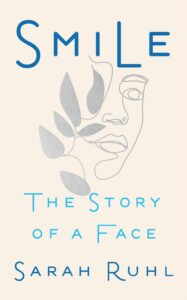
Smile: The Story of A Face by Sarah Ruhl

Smile: The Story of a Face, Sarah Ruhl

After giving birth to her twins, author, and playwright Sarah Ruhl realized that she couldn’t move half of her face. Ruhl later discovered she had developed Bell’s palsy. Smile is Ruhl’s intimate story of learning to live with a disability later in life. Ruhl’s emotional essays offer insights into what it feels like to learn to maneuver through the difficulties of life. Smile is a fabulous read for anyone wanting to learn more about the deeply personal relationships humans have with their bodies.

The Sentence by Louise Erdrich

The Sentence, Louise Erdrich

The Pulitzer Prize and National Book Award-winning author’s new darkly humorous story takes place in Minneapolis in 2020. The Sentence follows a previously-incarcerated Indigenous woman working at a bookstore haunted by one of their most annoying customers. The worker tries to solve the haunting mystery while exploring the difficulties of racism and corruption that infests the city. The Sentence is a fantastic choice for those looking to smile at a story reflecting on the year of racial injustice in a dark, comical style. 

Five Tuesdays In Winter by Lily King

Five Tuesdays in Winter: Stories, Lily King

Five Tuesdays in Winter examines the good and bad of human connection. Lily writes about meaningful relationships that can form from the most minute of bonds. The book of stories — formulated with previously published and new work — finds characters grappling with change, all yearning to be loved. Five Tuesdays in Winter is a terrific choice for those interested in learning more about the power and importance of human connection. 

Whether you prefer reading alone, with a companion or in a book club, don’t hesitate to pick one or two of these books up for yourself this fall. You can find them at your neighborhood libraries, local bookstore or online. And as with all good reads, spread the word to friends and family when you finish a book you really love!

› Back to top
« back
09.07.21 | Arts & Culture

The Cognitive Benefits of Scrapbooking

What might seem like an old-fashioned and outdated mode of documenting the past, scrapbooking is a pastime that can celebrate and relive memories while getting one’s creative juices flowing — especially for older adults. It is also a great way to curate family heirlooms for all to appreciate. Today, we’re sharing how immensely beneficial scrapbooking can be for improving cognitive function and reinforcing relationships. 

Scrapbooking provides a wealth of mental, emotional and physical benefits for older adults. Research has shown that the process of scrapbooking helps expand new neural pathways in the brain, a process called neuroplasticity. The hobby is a fantastic way for those suffering from dementia or memory loss to train their brains to be grounded in the present while still reflecting on the past. 

Scrapbooking is also a creative outlet, allowing participants to express emotions they might usually refrain from expressing. It permits people to revisit their past experiences, relieving their  negative emotions and regaining a sense of purpose. Scrapbooking also offers advantages for relieving stress as cognitive abilities deteriorate. 

Scrapbooking can also be fun to do with others. As a social experience, it fosters communication, lightening the effects of loneliness and creating the opportunity to explore common interests with others. Scrapbooking is also a marvelous way to bring families together and engage in an intergenerational activity that strengthens bonds. By helping older adults sort through the memorabilia of the past — photos, letters, drawings, etc. — to build scrapbooks from their own documented memories, younger generations also have the opportunity to establish their own connections to their family histories that will last long after the scrapbook is finished. 

When looking for engaging, emotionally-rich and creative activities to keep your mind active and revel in the past, put scrapbooking at the top of the list!

If you want to learn more about how to scrapbook, check out the video below.


A table is laid out with material used for scrapbooking.
› Back to top
« back
09.02.21 | Sage Advice®

6 “superfoods” you can incorporate to boost your health

As we continue to change with age, eating healthy can be a vital step in caring for your future self. Taking inspiration from our 9 Ways of Vibrant Living, which you can read more about here, we compiled a list of our favorite “superfoods” you can easily introduce into your diet. These highly nutritious items can be added to a larger meal or snack to boost your health and help to achieve a balanced diet.

Tea

Not only is tea low in calories, it is also a refreshing alternative to coffee, soda and other beverages. Notably high in antioxidants, tea can be a tool for weight management and has anti-inflammatory and anti-carcinogenic (cancer-suppressing) benefits. One study suggested that the regular consumption of white and green teas resulted in a vast reduction of stress for most participants.

Avocados

Avocados are much more than the brunch staple or spread for toast that they’ve become over the last decade. As a great addition to a salad, guacamole or being eaten simply with a pinch of salt and pepper, avocados provide numerous health benefits. Rich in fiber and and healthy fats, avocados can be a great substitute for eggs, mayonnaise, sour cream and even butter.. 

Mushrooms

Mushrooms have been used in Eastern medicine and culture for millennia. They are known to increase the health of the immune system through their many therapeutic properties. After much scientific research, we are learning more about the dramatic positive effects mushrooms can have on preventing cancer, lowering blood pressure and overall increasing well-being. You can incorporate mushrooms into your diet by cooking them along with other vegetables, adding them to salads and pasta or simply frying them with healthy oil. Some of the most popular mushrooms you should look out for at the farmer’s market or grocery store are Portabella, Shiitake, Buttons, Oyster, Enoki and Lion’s Mane. 

Dark Leafy Greens & Cruciferous Vegetables

There is a wide consensus among nutritionists that vibrant green vegetables and those in the cabbage family offer some of the best nutrients and vitamins. These include arugula, kale, collard greens, kohlrabi, radishes and turnips. Most of these are full of zinc, calcium, iron, magnesium, vitamin C, fiber, and what seems like a never-ending list of enriching minerals that can reduce the chances of heart disease and diabetes while lowering blood pressure and preventing some cancers. 

Salmon

Salmon is both tasty and full of healthy protein, B vitamins, potassium and omega-3 fatty acids. Because of its abundance of rich nutrients, salmon has more health benefits compared to other animal products and is known to help prevent heart disease and diabetes. One way you can enjoy this hearty fish is by baking it with lemons, herbs and a healthy (oil, avocado or sesame).  

Garlic

Garlic packs a punch in flavor and delivers huge nutritional benefits, too. Each clove of garlic contains magnesium, vitamin C and fiber, which are all essential to a balanced diet. Research indicates its effectiveness to support the immune system while reducing cholesterol and blood pressure. One study even found that garlic provides antibacterial and antiviral characteristics. 

However you incorporate these superfoods into your meal planning and cooking regimen, they offer delicious and easy ways to boost your overall health and well-being.

A dinner plate contains salmon, mushrooms, tomatoes, broccoli, and a mix of other vegetables and sauce.
› Back to top
« back
08.19.21 | Community

Find the future of efficient workouts in “exercise snacks”

As part of our 9 Ways of Vibrant Living, Sage Collective advocates for moderate and regular physical activity. Developed in pandemic times when it was challenging to find ways to stay active, “exercise snacks” — a new and effective set of movements was born, and has become increasingly popular among older adults. Interestingly, research is demonstrating these snippets of exercise are equally or more effective than traditional workouts!

How to perform exercise snacks

“Exercise snacks” are short bursts of movement anyone can perform throughout the day, allowing people to arrange exercise as their time permits. Because the movements don’t require a fixed or dedicated location to “work out” as we normally define the act of exercising, you can find a host of spaces in your home or office to do squats, sit-ups, walking in place, lunges and more.  

Professor of Kinesiology Dr. Martin Gibala, argues that these brief bursts of exercise throughout the day can trigger the same reaction from our bodies that traditional workouts produce. In his study published by the International Journal of Exercise Science, Gibala and his partners introduced an 11-minute workout consisting of walking and running in place, lunges and other light calisthenics that improve cardiovascular health. One of the many thrilling findings was that the conditioning improved cardiovascular fitness by 7% for those who participated. 

Gibala explains that being rigorous with each movement is fundamental for exercise snacks. It is essential, however, to remember to cater to what works best for your body. 

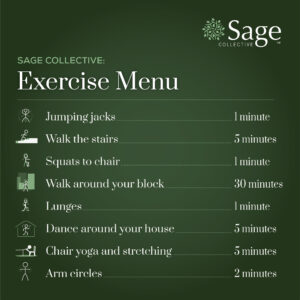
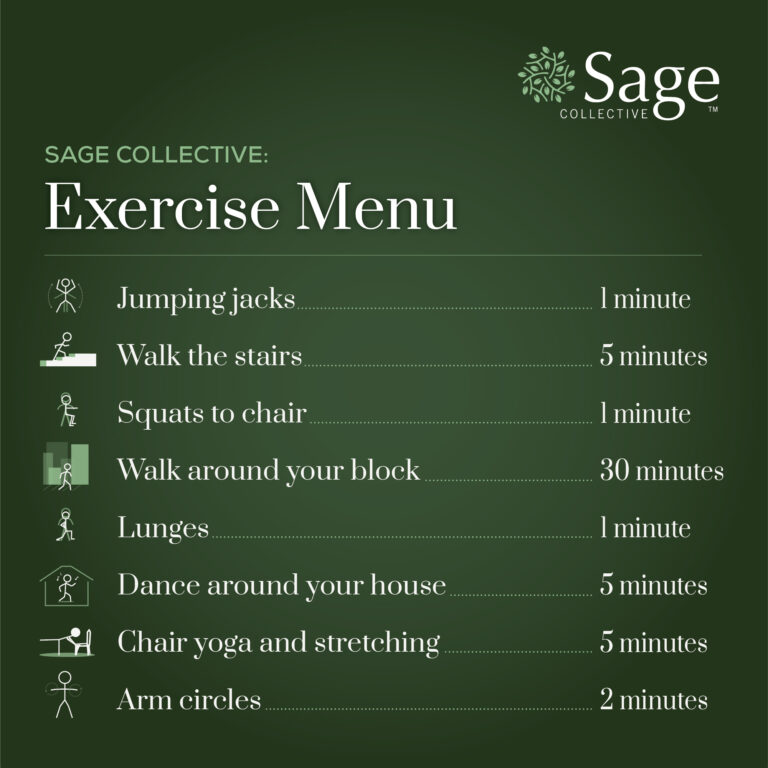
Sage Collective believes that incorporating exercise snacks into the lives of older adults and anyone looking to fulfill fitness needs can be a fundamental – and easy – way to live vibrantly. That’s why we produced our exercise snack menu based on Dr. Gibala’s workout plan below!


A graphic titled "Sage Collective: Exercise Menu" lists eight different "exercise snacks" and times allotted for people to take part in throughout their days.

A graphic titled "Sage Collective: Exercise Menu" lists eight different "exercise snacks" and times allotted for people to take part in throughout their days.
Sage Collective: Exercise Menu
› Back to top
« back
08.17.21 | Community

Our Vision for 4108 and 4112 King Drive: A Conversation with Dwain Kyles

As we continue the renovation of the Sage Collective properties at 4108 and 4112 S King Drive, side-by-side buildings in Chicago’s historic Bronzeville neighborhood, we sat down with Board Member and VP for Legal & Development, Dwain Kyles, to understand the project and how it contributes to Sage’s vision for the future. 

Location is everything

Having owned and operated residential property in the Bronzeville neighborhood for more than 40 years, Kyles understands that these buildings were in the perfect location for Sage Collective..

Intending to add to the great cultural history that King Drive represents, Kyles imagines these properties will also foster secure, welcoming environments for the development and enhancement of intergenerational relationships in the future. 

“We want to be very intentional about building community, and we think that King Drive has an appeal of its own. What we hope to do is add to that appeal by providing tangible, beneficial places for gathering, along with programming that will ultimately strengthen the self-image and empowerment of older adults in the community,” says Kyles.

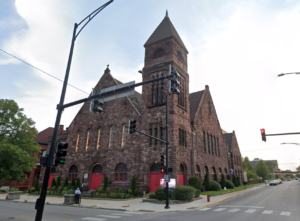
While the neighborhood itself is a large part of the appeal, the buildings’ adjacency to the historic Metropolitan (Apostolic) Community Church also generated interest and inspiration for the properties’ future. “Given the importance of a spiritual basis for the work we are doing, reflected in our 9 Ways of Vibrant Living, the proximity to this iconic church was a good sign for us,” says Kyles, “and felt like more than just a coincidence.”

The Metropolitan Apostolic Community Church is brightly lit in sunlight on the corner of S. King Drive and E. 41 St.
The Metropolitan Apostolic Community Church, adjacent to the 4108 and 4112 S King Drive properties

Introducing vibrant, high-quality, affordable living within these properties

“Rehabbing the two properties is no small undertaking,” explains Kyles. “Using our passion for vibrant, high-quality, affordable housing as a focus (a topic you can read more about here) we are putting incredible thought and care into the design and build out of the interior spaces. With the support of our board member Mary Frances De Rose, a renowned architectural gerontologist, we have been able to include accessible and supportive living enhancements for future residents of our properties that traditional housing for older adults lacks.” 

“The physical attributes of the buildings are being designed in such a way that we will accommodate some of the desires and conveniences for older adults that are often overlooked. I’m talking about lowering the light switches so someone in a wheelchair can easily reach them, ambient lighting, high-quality cabinetry that is accessible and easier to use, and bathrooms with tastefully designed safety features that will allow our older adult residents to feel both secure and at home,” reflects Kyles. 

The Bronzeville Mural located on 35th Street and State sits directly under the L line.
Bronzeville mural, located on 35th Street and State features the faces of many famous African-American icons

The vision stretches beyond the physical buildings 

Our passion for an exceptional quality of life for older adults goes beyond the physical space, however. This project, like other Sage residences for older adults in underserved communities, will come alive through the integration of interactive and exploratory programming.  

Kyles continues, “While the King Drive properties themselves are a jumping off point, we are focused on the longer-term desire for Sage Collective to serve as a catalyst for real change for our residents and neighbors, government and civic partners, and leaders in the business community by rethinking and redesigning our traditional approaches to providing housing for older adults in our black and brown communities.” 

“We tend to focus on what’s ‘new and poppin’ and what’s the hottest and the latest… while giving little care and attention to those things that have helped us to get where we are, including people. We have seen over and over again that distraction leading to deplorable outcomes and ones that have weakened the fabric of society,” explains Kyles.

Kyles continues, “Our vision for these properties on King Drive — along with all of our ambitious plans for the future — center around creating communities that are rich with diverse ages, families, cultures and experiences. By having the ability to rework the structural barriers hindering intergenerational and cultural interaction and progress, we are capable of establishing environments where there is an appreciation for people of all backgrounds and ages. And when we succeed, we’re stronger as a community, we’re stronger as a neighborhood, we’re stronger as a family,” and most important, we’re stronger as a collective.”

A headshot of Sage Collective's Board of Directors member Dwain Kyles
Board Member and VP for Legal & Development, Dwain Kyles
› Back to top
« back
08.12.21 | Community

Strengthening Communities Through Community Gardens

With summer slowly fading and the harsh months of winter in the distance, the magnetic appeal of growing one’s own vegetables and herbs is more important than ever for many of us. Previously, we’ve talked about the health benefits of gardening and how to raise indoor houseplants, but one hobby we haven’t mentioned is community gardening. 

Community gardens begin as collective spaces managed as a collaborative effort that leverage the expertise, time and energy of fellow gardeners who come together to provide fruits, vegetables and all varieties of fresh produce for anyone in the neighborhood to enjoy. And by their very nature, community gardens also add green space and vibrant beauty to city blocks that may be defined by asphalt and concrete.

With people working closely — literally and figuratively — community gardens improve personal well-being through social connections and have even been found to decrease violence in some neighborhoods. 

Zoe Hansen-DiBello, program manager and visionary at Grow Education, helps promote healthy food access in neighborhoods by implementing community gardens. At TedxNewBedford, Hansen-DiBello explains the all-around engagement and respect that community gardens helped to encourage in a neighborhood close to her. Watch Hansen-DiBello’s talk below. 

Gardens galore in Bronzeville

The popularity of urban farming and the adoption of community gardens can be seen throughout neighborhoods in large cities across the country — including our very own Bronzeville. 

Situated at 4148-4156 S. Calumet Avenue, the Bronzeville Neighborhood Farm connects those living in the neighborhood with the use of green spaces and gardens. Managed by the Bronzeville Alliance and protected by NeighborSpace, the garden is a hub for community members to forge meaningful relationships built on the experience of working together towards a common purpose — tending the gardens and sharing the rich yield of fresh fruits and vegetables with each other and with the community writ large.

The neighborhood is also home to the Bronzeville Community Garden, located at 343 E. 51st Street. Supported by Build Bronzeville, the garden hosts many community events throughout the year including Volunteer Days and Crochet & Conversation meetups. Along with urban farming, the Garden is home to public art projects that enhance the outdoor spaces and provide additional reasons for neighbors to stop.

Starting your own garden

Thinking about starting your own community garden? One of the best places to start, The American Community Gardening Association provides a comprehensive education and resource platform for starting a garden of your own, along with a map of community gardens located across the country. 

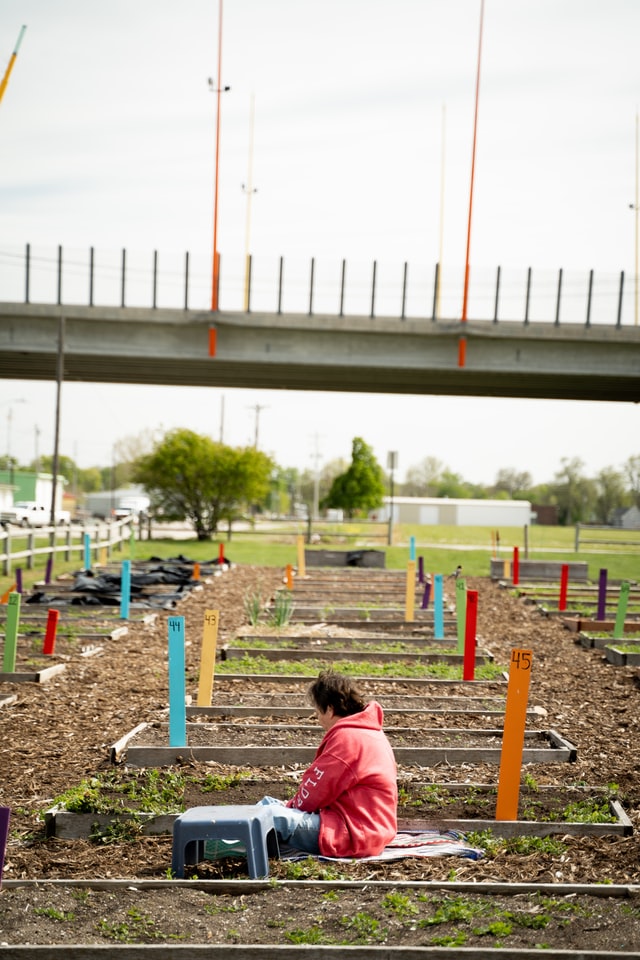
A person sits next to a foot stool in a large lot filled with community garden plots. Out of each plot sticks a brightly colored stakes that are numbered. Above the person appears a concrete bridge either for walking or driving.
› Back to top
« back
08.10.21 | Community

Embracing the cultural process of aging

As we articulate in the Sage Vibrant Living Manifesto, cultural perceptions of aging have an enormous impact on individuals and their communities. As we continue to fight ageism and the traditional American notions of aging that many of us still experience today, we look to the wisdom of others to share new ways of thinking and doing.

Carl Honoré, writer and activist, argues that in order to age better we must feel better about the process. Learning how to age better in a world where aging is presented in a negative frame can be extremely hard, but it only takes a few minutes to change your perspective. In his TED Talk, Honoré explains how to embrace the aging process. Honoré also delves into his method for combating ageist traditions and practices within our lives. Watch below to learn more:

A quote sits on top of an image of two older adults laughing. The quote reads "We need to feel better about aging in order to age better," and is attributed to Carl Honore. The sage logo sits in the bottom right corner.
› Back to top