« back
03.25.26 | Community

Intergenerational Living: Connection, Cognition & Community

Across cultures and centuries, the idea of generations living and growing together wasn’t unusual — grandparents raising grandchildren, cousins playing on shared porches, aunts and uncles dropping by after school. In modern Western societies, however, aging and housing have often been treated as separate stages, siloed into retirement communities or care facilities far from younger generations.

At Sage Collective®, we are seeing a new trend emerge. As more people live longer and rates of social isolation rise, researchers and community innovators are revisiting what it means to live with other generations. And the findings suggest that intergenerational living is not just a cultural value but a neurological, psychological, and social strategy for thriving as we age.

The Benefits Go Beyond Nostalgia
Research consistently shows that older adults with meaningful intergenerational connections, whether through daily life or structured programs, experience better mental health and overall life satisfaction than those without them. Social contact with younger people reduces loneliness, boosts mood, and has been associated with improved psychological well-being.

Intergenerational programming — where older adults interact with children, teens, or young adults in shared activities — has been linked to better physical health, social inclusion, and community cohesion.

Cognitive Engagement & Communication Matters
Studies examining long-term intergenerational connections suggest that regular communication and social engagement with adult children and other younger family members can positively influence cognitive function in middle-aged and older adults. Importantly, the quality and frequency of communication seem to matter more than sheer proximity.

Shared Living as a Social and Economic Strategy
Multigenerational or intergenerational household arrangements, where older adults co-reside with adult children, grandchildren, or unrelated younger people, have become more common in recent years, partly due to economic pressures and housing costs. Beyond financial benefits like shared expenses, these living arrangements often provide emotional support, companionship, and shared daily purpose for older adults, which correlates with greater life satisfaction and lower risk of negative health outcomes tied to isolation.

Two Generations, Two Directions of Influence
The value of intergenerational living isn’t one-way. While older adults gain companionship, the younger generations benefit too:

  • Children exposed to older adults often develop more nuanced views of aging, reduced ageism, and improved empathy.
  • Grandchildren of involved grandparents may have better emotional well-being and healthier lifestyle influences throughout development.
  • Young adults living with older mentors report gains in emotional support, life skills, and even academic outcomes.

This bidirectional exchange deepens meaning for all involved and fosters communities rich in wisdom and energy.

Quality of Relationship Eclipses Mere Proximity
Research also highlights that the quality of intergenerational connection matters. Frequent contact with a single family member in a strained or conflict-laden context may not confer the same cognitive or emotional benefits as broader, balanced, and harmonious interactions with multiple relatives. This nuance suggests that intergenerational living isn’t inherently beneficial, but how these relationships are nurtured and supported are the factors that lead to an enriched quality of life.

Designing for Intergenerational Connection
Thought leaders in architecture, urban planning, and community design are now integrating intergenerational principles into housing and public space:

  • Purpose-built developments that house seniors alongside families or students.
  • Shared common spaces that encourage daily interaction across ages.
  • Community programs linking senior centers with schools, arts programs, and mentoring opportunities.

These approaches recognize that connection is a structural issue and that built environments can either reinforce isolation or promote flourishing cross-generational life.

A Future of Shared Lives
As demographics shift, with populations aging and younger generations facing economic pressures, intergenerational living offers a compelling path forward. It marries practical needs with deep human truths: belonging nourishes the brain, shared purpose enriches emotional life, and relationship is central to resilient communities.

At Sage Collective®, we’re reminded that thriving isn’t reserved for any single stage of life. It is co-created through laughter across ages, lessons exchanged, stories shared, and daily rhythms woven between generations.

› Back to top
« back
03.18.26 | Arts & Culture

Purpose & Second-Act Living: The Power of Reinvention After 60

For generations, aging was framed as a narrowing — a period marked by fewer roles, fewer options, and fewer firsts. That narrative is now dissolving. More adults over 60 are launching businesses, returning to school, writing books, mentoring others, organizing communities, traveling, and exploring long-deferred creative pursuits. What once may have been imagined as a closing chapter is increasingly being understood as a period of renewed possibility.

At Sage Collective®, we see this shift clearly. Aging is not an ending. It is a new act — one shaped by depth, choice, and expansion, not diminishment.

The Second Act Is Not a Repeat
A second act isn’t simply a replay of the first. It is informed by everything that came before it, but it is not confined to it. Experience brings pattern recognition. Loss brings perspective. Achievement brings a clearer sense of what matters and what no longer does.

That is why second-act living often centers less on ambition alone and more on alignment. The questions begin to change. What do I care about now? Where does my energy feel most alive? What kind of contribution feels truly meaningful at this stage of life?

Purpose doesn’t expire with age. It evolves, becoming more personal, more intentional, and often more grounded in values than in external validation.

Encore Careers and Creative Expansion
The rise of encore careers reflects both economic realities and personal choice. Some people seek continued income. Others seek impact, stimulation, or a renewed sense of usefulness. For many, it is both. Yet purpose does not have to be professional in order to be powerful. It is less about a title than about a direction.

That direction can take many forms: mentorship, community leadership, artistic exploration, lifelong learning, advocacy, storytelling, or even grandparenting practiced with deep intention. In each case, the common thread is not prestige, but engagement — the sense that one’s time, gifts, and attention are being invested in something that matters.

Neuroplasticity and Reinvention
Modern neuroscience continues to affirm what many older adults already know from experience: the brain retains its capacity to learn, adapt, and grow throughout life. New experiences stimulate neural activity. Novel challenges strengthen cognitive flexibility. Reinvention is not only emotionally meaningful; it is neurologically beneficial.

When we pursue something new — even on a modest scale — the brain responds. Curiosity awakens. Engagement increases. Dopamine rises. Motivation returns. The future begins to feel open rather than foreclosed. In this sense, hope is more than a feeling. It is a cognitive resource, helping sustain attention, energy, and forward movement.

Anti-Ageism as Liberation
Second-act living also pushes back against cultural ageism. When older adults claim space as creators, leaders, innovators, and learners, they do more than redefine their own lives; they begin to reshape society’s assumptions about what aging looks like.

Reinvention, in this way, becomes an act of liberation. It refuses the idea that later life is defined only by retreat or decline. It insists that growth remains possible, that contribution remains valuable, and that becoming does not end at a certain age. Decline is not destiny, and age does not cancel relevance.

Designing a Purpose Practice
Purpose rarely arrives all at once, fully formed and unmistakable. More often, it emerges through experimentation, attention, and repeated acts of participation. It begins by noticing what pulls us forward.

What conversations energize me? What skills do I want to pass forward? What problems do I feel compelled to address? What creative impulse have I postponed?

These questions do not demand immediate answers. They simply open a door. Second acts are often built through small beginnings: a class, a volunteer commitment, a writing group, a community initiative. What matters is not the scale of the first step, but the willingness to take it. Momentum tends to grow through participation, and purpose often becomes clearer in motion.

Expansion, Not Reduction
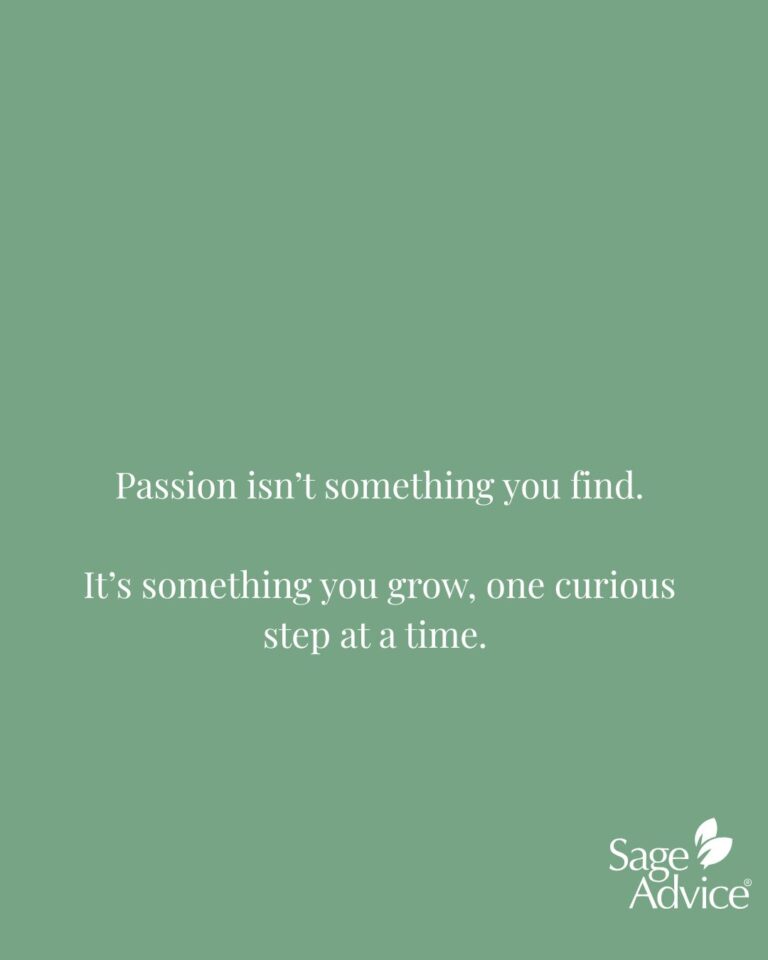
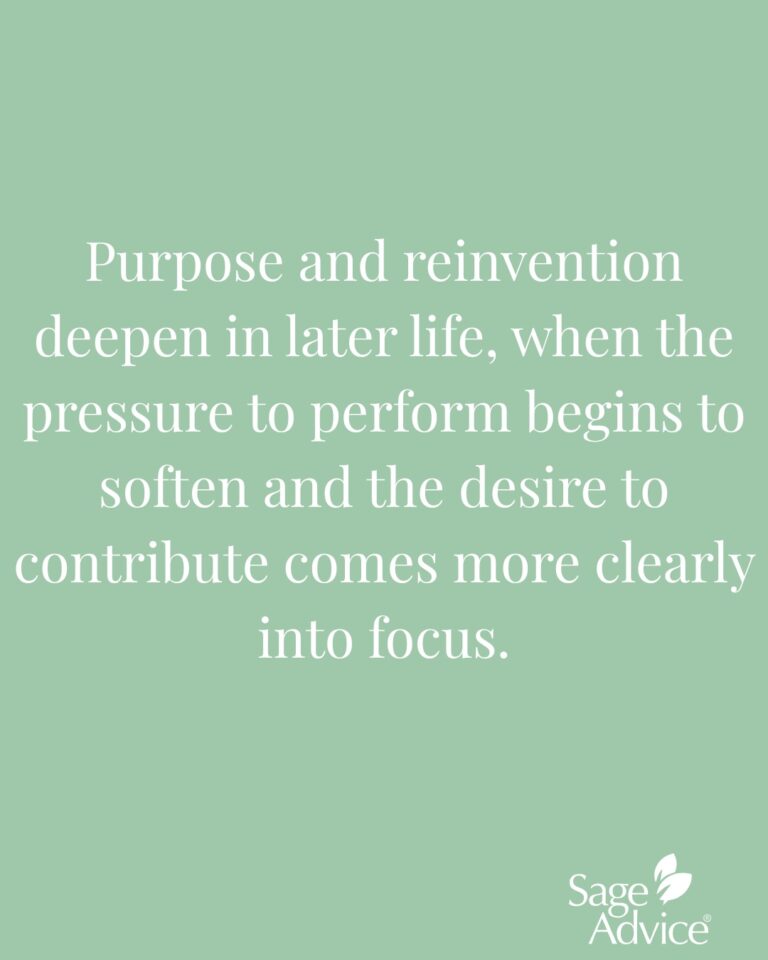
At Sage Collective®, we believe life expands with age. Purpose and reinvention are not reserved for youth; they may, in fact, deepen later in life, when the pressure to perform begins to soften and the desire to contribute comes more clearly into focus.

Lifespan gives us time. Healthspan gives us capacity. Purpose gives us direction. And direction has the power to transform aging from a waiting room into a workshop — a place of making, discovery, and continued becoming.

› Back to top
« back
02.18.26 | Arts & Culture

It’s Never Too Late to Tell Your Story

There comes a moment in life when you realize that your story is not behind you—it is within you. Every lesson learned, every obstacle overcome, every joy experienced, and every unexpected turn has shaped a narrative unlike any other. At Sage Collective®, we believe that telling your story is one of the most powerful acts of vibrant living. And perhaps most importantly, it’s never too late to begin.

For older African Americans, storytelling carries an even deeper significance. For generations, stories have been a way to preserve truth, transmit wisdom, and affirm identity in a world that did not always document—or honor—those lived experiences. Stories were shared at kitchen tables, on front porches, in barbershops, in beauty salons, and in places of worship. They carried history forward when history books did not.

Your story is part of that continuum.

Your Story Has Value—Right Now
It is easy to assume that storytelling belongs to the past—that it is something reserved for professional writers, public figures, or historians. But storytelling is not about performance. It is about presence. It is about honoring your life as it has been lived. You do not need to have lived a famous life to have lived a meaningful one.

The courage it took to navigate segregation. The pride of building a career or raising a family. The quiet reinventions. The risks taken. The losses endured. The dreams pursued. These experiences are rich with wisdom—not only for younger generations, but for yourself. Telling your story allows you to see your life more clearly. It reveals patterns of resilience, growth, and strength that may have been invisible while you were busy living them. And sometimes, in the act of telling, we discover that our story is still unfolding.

Storytelling Is an Act of Legacy
When you tell your story, you offer a gift that extends beyond your lifetime. Your children, grandchildren, and community members may never fully know what it was like to live in your time—to witness the changes you witnessed, to carry the responsibilities you carried, or to experience the world through your eyes. Your story becomes a bridge between generations. It preserves not only what happened, but how it felt.

This is how legacy is built—not only through accomplishments, but through reflection, honesty, and voice.

And storytelling today takes many forms. It can be spoken, written, recorded, or shared through conversation. Some people journal. Others record video messages. Some participate in oral history projects or simply share memories during family gatherings. There is no single right way to begin. There is only the decision to start.

Telling Your Story Strengthens Your Sense of Self
Storytelling is not only about looking back—it is about understanding who you are now. When you reflect on your life, you reconnect with your strength. You remember how much you have overcome. You reclaim moments that shaped you. You honor the younger version of yourself who kept going, even when the path was uncertain. This process can bring clarity, healing, and renewed purpose.

It can also inspire others. Your story may give someone else permission to persevere. To begin again. To believe that growth does not end with age.

Your Voice Matters
At Sage Collective®, we believe that vibrant living includes honoring your voice and your lived experience. Your story is not complete simply because time has passed. In many ways, it becomes more powerful with age—tempered by wisdom, perspective, and truth.

You do not need to wait for the “right time.” You do not need perfect words. You only need to begin. Because it’s never too late to tell your story, and the world is better when you do.

› Back to top
« back
10.29.25 | Community

The Grace in Grit: A Reflection on Resilient Living

In the language of vibrant living, grittiness is not about being hard or unyielding. It’s about staying soft enough to keep growing, steady enough to keep moving, and brave enough to keep beginning again. At Sage Collective®, we believe that living vibrantly isn’t about avoiding friction — it’s about finding meaning and movement within it.

Redefining Grit
Psychologist Angela Duckworth, a University of Pennsylvania professor and 2013 MacArthur “Genius Grant” recipient, popularized the concept of grit through her groundbreaking research and her 2016 book, Grit: The Power of Passion and Perseverance. Her studies explored why success so often depends not on raw talent, but on sustained effort — on the ability to stay committed to long-term goals even in the face of difficulty.

But within the context of aging and community, grit takes on a more soulful dimension. It’s less about ambition and achievement, and more about endurance — the quiet, daily persistence that allows us to continue living with purpose, even when life’s terrain becomes steep or uncertain.

For older adults, grit can mean returning to watercolor painting after years away from a studio, walking daily despite arthritis, or learning to navigate new technology to stay connected with family. These acts may seem ordinary, but they are, in truth, acts of courage — small, repeated commitments to staying engaged in life.

Grit and Grace
At Sage Collective®, we see grit and grace as twin forces that shape the experience of vibrant living. Grace provides the softness that tempers determination; grit gives structure to hope. Together, they allow us to persist with compassion — toward ourselves and others.

In our community, we often see how these qualities intertwine: when someone finds new purpose through volunteering, returns to a beloved craft after loss, or steps back into connection after a season of solitude. These moments reveal the essence of grit — not stoicism, but re-engagement. Not merely endurance, but renewal.

The Everyday Practice of Grit
Grittiness can also be cultivated through daily habits that reinforce purpose and connection. In community gardens, residents learn patience with the soil and the seasons. In movement or yoga classes, they rediscover balance through repetition and release. In book clubs or creative workshops, they flex mental and emotional resilience — staying open to new ideas, new people, and new ways of seeing.

Grit doesn’t always roar. Sometimes, it whispers — “keep going.” It shows up in consistency, in curiosity, in the willingness to show up for oneself and for community, even on days when energy feels low. It’s persistence paired with perspective, a refusal to let difficulty define the horizon.

The Texture of Vibrant Living
Vibrancy, after all, isn’t a glossy state of perpetual joy. It’s a textured one — full of contrast, light and shadow, rest and renewal. Grittiness gives that texture its depth. It helps transform obstacles into opportunities for growth and creativity. It keeps us engaged with life’s dynamic rhythms, and reminds us that living fully means participating in the full spectrum of experience — the easy and the hard, the known and the unknown.

At Sage Collective®, we often say that vibrant living is a choice. Grit makes that choice sustainable. It allows us to meet the moment — whatever it brings — with heart, humor, and faith in our own capacity to adapt and thrive.

Closing Thought
Grit, then, is not about hardening. It’s about fortifying — strengthening our inner life so that we can continue to live outwardly with vibrancy, curiosity, and joy. It is the quiet strength behind every act of creative resilience, every step toward connection, every renewed commitment to live life fully — no matter our age.

› Back to top
« back
10.23.25 | Arts & Culture

Growing Into What You Love: How Interests Evolve at Every Age

At Sage Collective®, we often say that vibrant living isn’t about staying busy—it’s about staying engaged. The difference lies in depth. True engagement grows when curiosity meets purpose, when we give time and attention to what sparks our minds and hearts. This idea aligns beautifully with what psychologists call the growth theory of interests—the belief that our passions aren’t simply discovered; they’re developed over time.

From “finding” to “cultivating”
For many years, people were encouraged to “find their passion,” as if it were a treasure waiting to be unearthed. But research led by Stanford psychologist Carol Dweck and her colleagues shows that interests are not fixed traits—they grow through experience. The growth theory of interests suggests that we develop enthusiasm for activities by exploring them, practicing them, and allowing ourselves to be challenged.

This shift in mindset is liberating—especially for older adults. It reminds us that our interests don’t have an expiration date. We can fall in love with new ideas, art forms, technologies, and communities at any stage of life. In fact, later life often offers the freedom and perspective to explore them more deeply than ever before.

The courage to begin again
Vibrant living, at its core, is about embracing growth—physically, mentally, emotionally, and creatively. The growth theory of interests gives us permission to begin again, to approach new hobbies or learning experiences not with pressure to “be good” right away, but with openness to become. Whether it’s learning a new language, picking up watercolor painting, joining a local choir, or experimenting with virtual reality travel, the key is to start small and stay curious.

That first step might feel uncertain—but that’s exactly where growth begins. Each moment of discovery strengthens the neural pathways that make us feel alive and connected to the world around us.

Interest as a lifelong practice
Developing new interests also nurtures well-being in ways that align closely with Sage Collective®’s vision of vibrant living. Research shows that engaging in personally meaningful activities can improve mood, sharpen cognition, and increase longevity. Interests bring structure to our days, connection to our communities, and energy to our spirits.

Consider this: an interest in gardening can become a meditation on patience and renewal. A fascination with local history can blossom into volunteering at a museum. Curiosity about health and movement might evolve into a shared yoga practice. Each interest, no matter how modest at first, holds the potential to expand our sense of meaning and belonging.

A vibrant future of our own making
The growth theory of interests reminds us that becoming ourselves is a lifelong project. Passion is not something we outgrow—it’s something we continue to grow into. At Sage Collective®, we believe that each new curiosity is an invitation to vitality.

So instead of asking, “What am I passionate about?” try asking, “What am I willing to explore?”

› Back to top
« back
10.16.25 | Community

Embracing Wabi-Sabi: Lessons in Vibrant Living

In a world that often celebrates perfection, speed, and constant growth, the Japanese tradition of wabi-sabi offers a refreshing alternative. Rooted in Zen philosophy, wabi-sabi is the art of finding beauty in imperfection, transience, and simplicity. It’s a way of seeing the world that celebrates authenticity over polish, and presence over perfection.

At Sage Collective®, we see wabi-sabi as deeply aligned with our vision of vibrant living. By embracing its principles, we invite more acceptance, mindfulness, and joy into daily life—qualities that enrich our experience as we grow older.

What is Wabi-Sabi?
Wabi-sabi can be understood as both an aesthetic and a philosophy. It finds beauty in the natural cycle of growth and decay, in weathered wood, uneven pottery, or the golden repair lines of kintsugi ceramics. More than just a visual style, it’s an attitude of humility and appreciation, reminding us that life is always in motion, always changing.

Lessons for Vibrant Living

  • Embrace Imperfection. Wabi-sabi teaches us that flaws don’t detract from beauty—they add depth and character. The same is true in our lives. Our wrinkles, our stories, and even our missteps are part of what makes us whole. Accepting imperfection allows us to release unrealistic standards and embrace self-compassion.
  • Honor Transience. Autumn leaves falling, flowers wilting, daylight fading—wabi-sabi reminds us to appreciate the fleeting nature of life. For older adults, this perspective can be liberating, encouraging us to live in the present moment and savor its richness without clinging to permanence.
  • Find Joy in Simplicity. Wabi-sabi encourages us to pare back to what matters most. Simplicity is not about lack, but about clarity—making space for meaningful relationships, mindful practices, and daily rituals that nourish us.
  • See Beauty in the Everyday. From a crack in a well-loved teacup to the quiet of a morning walk, wabi-sabi teaches us that beauty doesn’t have to be grand or flawless. It’s often found in the ordinary, waiting for us to notice.

A Wabi-Sabi Practice
Cultivating wabi-sabi in daily life doesn’t require drastic changes. Instead, it’s about small shifts in perception and practice:

  • Pause to notice: Take a few minutes each day to appreciate something simple—a breeze, a stone, a handwritten note.
  • Practice gratitude: Write down imperfections you’re thankful for—quirks, scars, or even challenges that shaped you.
  • Simplify your space: Surround yourself with items that bring meaning, even if they’re weathered or worn.
  • Celebrate change: Create seasonal rituals that honor life’s natural cycles.

Living Vibrantly, the Wabi-Sabi Way
At its heart, wabi-sabi invites us to live more gently—with ourselves, with others, and with the world around us. By embracing imperfection, honoring transience, and finding beauty in the everyday, we open ourselves to a fuller, more vibrant life.

This perspective resonates with Sage Collective®’s belief in living deeply and joyfully at every age. For when we learn to see through the lens of wabi-sabi, we discover that life’s cracks and changes are not shortcomings, but the very places where beauty—and wisdom—shine through.


› Back to top
« back
10.08.25 | Lifestyle

Everyday Awe: Finding Wonder in Autumn

As the season shifts, autumn brings with it a sense of transformation—crisp mornings, golden light, and leaves that burst into fiery hues before falling softly to the earth. For many of us, these subtle but profound changes spark something deeper: a feeling of awe. And in embracing awe, we invite ourselves into a more mindful, joyful way of living.

At Sage Collective®, we believe that awe isn’t reserved for rare, extraordinary experiences. It can be found in everyday moments, waiting quietly for us to notice. This perspective aligns with our vision of vibrant living, where wonder, creativity, and reflection are woven into the fabric of daily life.

The Science of Awe
Research has shown that experiencing awe—even in small, everyday doses—can improve mood, lower stress, and even enhance physical health. Psychologists describe awe as a state that expands our sense of perspective, helping us feel more connected to the world around us. For older adults, awe is more than a fleeting emotion—it’s a tool for cultivating resilience, gratitude, and vitality.

Everyday Invitations to Awe
Autumn offers countless ways to experience awe without having to travel far:

  • Nature’s Palette: Watch the leaves shift from green to amber to crimson, and notice the textures and patterns in their details.
  • Crisp Air: Step outside on a brisk morning, take a deep breath, and feel the vitality of the season.
  • Harvest Season: From farmer’s markets to your own kitchen, celebrate the abundance of apples, squash, and spices that mark fall’s arrival.
  • Golden Hour Walks: Wander at dusk, when the light is warm and fleeting, and notice how the world transforms around you.

Each of these experiences invites us to pause, slow down, and reconnect—with ourselves, with others, and with the beauty of the natural world.

Awe as a Daily Practice
Awe doesn’t have to be accidental. It can be cultivated intentionally through simple habits:

  • Keep an Awe Journal: Jot down one moment of wonder each day.
  • Practice Mindful Observation: Choose one thing—a tree, a sunset, even a teacup—and look at it closely, as if for the first time.
    Share Awe with Others: Call a friend or family member to tell them about something that amazed you. In sharing, the wonder grows.

Living Vibrantly with Awe
At Sage Collective®, we recognize that vibrant living comes from engaging fully with the present moment and finding joy in life’s transitions. Autumn is a reminder that change itself can be beautiful—and awe is the lens through which we see that beauty more clearly.

So this fall, let us challenge ourselves to seek awe not just in grand moments, but in the everyday: the leaf that drifts across your path, the laughter of a neighbor, the warmth of a cup of tea on a cool morning. Because when we live with awe, we live more deeply, more gratefully, and more vibrantly.

Photo by Al Imran on Unsplash
› Back to top
« back
09.18.25 | News

Q&A with Olivia Matongo, Alzheimer’s Association® on Brain Health, Equity, and Community

Sage Collective® and the Alzheimer’s Association® share a powerful common ground: helping older adults live vibrantly with knowledge, connection, and care. Ahead of our Facebook Live conversation with Olivia Matongo, Vice President of the Alzheimer’s Association® Illinois Chapter on September 23, 2025 at 7:00PM CT, we sat down with Olivia about a number of subjects, including how to make brain-healthy living more accessible, equitable, and actionable for our community.

In your role, what does a “good day” look like—and who benefits most from your work?
My team leads community outreach and engagement—we’re the ones executing the mission in the field. That means raising awareness about the disease and about our resources, building relationships with community leaders and organizations, and making sure people who are struggling can access care and support.

How did the relationship with Sage Collective® come to be?
We met at a community meeting and started talking about ways to partner. After follow-up conversations, we landed on doing a session focused on brain health—sharing who we are, what we do, and how we can support Sage Collective®’s community.

Many people ask how to distinguish normal, age-related memory lapses from early warning signs of Alzheimer’s. How do you explain the difference?
Normal aging isn’t disruptive—you might occasionally forget something and then remember it later. Dementia involves memory loss that interferes with daily life, like getting lost on a familiar route or struggling with tasks you used to manage easily. It affects the individual and those around them as loved ones notice changes and step in with more support.

We’re hearing more about new blood tests entering the diagnostic toolkit. What should families know?
Diagnosis is never one single test—clinicians use a number of tools in the diagnostic process, including cognitive and behavioral assessments. Blood-based tools are emerging to help detect biomarkers associated with Alzheimer’s, which can make the path to answers less invasive and help families plan and prepare sooner in consultation with their clinicians.

What daily habits do you encourage for better brain health?
At the Alzheimer’s Association®, our public health team recently launched “10 Healthy Habits for Your Brain” grounded in research. Highlights include moving your body, not smoking, managing blood pressure and diabetes, getting enough sleep, keeping your brain learning new things, and following the MIND diet (leafy greens, berries, nuts, lean proteins, and less butter, cheese, and red meat). Doing several of these together can meaningfully reduce risk over time.

Sage Collective®’s “9 Ways of Vibrant Living” align closely with your recommendations.
Exactly. Engagement and purpose are powerful. When partners like Sage Collective®help us reach people with practical, everyday ways to take care of brain and body, the impact multiplies.

How is the Alzheimer’s Association® building trust and access in communities that have been underserved?
We’ve invested for years in focused DEI efforts—partnering with organizations already rooted in Black, Brown, and rural communities. In Chicago, for example, we co-create annual conferences with community planning committees—one on the South Side centered on African American communities and one on the West Side centered on Hispanic communities—so that education, resources, and support truly reflect community needs.

What does a strong partnership with Sage Collective® look like to you?
Access and trust. Being invited in to educate and support your community is huge—and it’s reciprocal. We also ask, “How can we serve Sage Collective®’s goals?” As our organizations continue talking, the partnership can evolve in ways that make sense for both missions.

Join us live
Don’t miss our Facebook Live with the Sage Collective® team and Olivia Matongo from the Alzheimer’s Association®, taking place on Tuesday, September 23rd at 7 PM CT/8 PM ET. We’ll dig deeper into early signs, new diagnostic tools, everyday prevention, and community resources. Bring your questions—and invite a friend or care partner. Go to the Sage Collective® website to reserve your spot!


› Back to top
« back
08.07.25 | Fitness & Activity

Joyspan: Measuring Life in Moments, Not Years

At Sage Collective®, we believe that vibrant living isn’t measured solely by how many years we have—but by how fully we live in those years. Just as we talk about lifespan and healthspan, there’s another equally essential, if less frequently named, concept: joyspan.

Joyspan is the measure of how much joy we experience and sustain throughout our lives. It’s not about momentary happiness or fleeting pleasures. It’s about the deep, sustaining joy that comes from meaningful connections, a sense of purpose, curiosity, and the freedom to be our full selves—especially as we age.

Beyond Lifespan and Healthspan
Modern medicine and lifestyle changes have helped extend our lifespan—the number of years we live—and increasingly, our healthspan—the number of those years we live in good health. But neither of those measures captures the richness of human experience. That’s where joyspan comes in.

Joyspan is qualitative, not quantitative. It invites us to ask, Am I making space for joy in my life? What fills me up? What lifts my spirit?

 Joy Matters—Especially As We Age
We live in a world that often underestimates the emotional and creative lives of older adults. There’s a quiet but damaging narrative that says joy belongs to the young. But we know from experience—and from the beautiful lives of those in our communities—that joy can flourish at any age. In fact, many people report a renewed sense of joy in their later years, when priorities shift, distractions fall away, and we’re finally able to savor what matters most.

Joy isn’t frivolous—it’s foundational. Research shows that joy supports mental health, bolsters our immune system, and helps build resilience. It improves relationships, sharpens cognitive function, and even enhances longevity. But beyond the science, joy connects us to our humanity. It allows us to experience gratitude, wonder, and awe.

Cultivating Joyspan: Daily Practices
Unlike lifespan, which is out of our control, joyspan is something we can grow—intentionally and continuously. Here are a few practices we encourage at Sage Collective®:

  • Savor small pleasures: A cup of tea, the bloom of a flower, a warm sunbeam on your shoulder. Joy is often tucked into the ordinary.
  • Stay curious: Explore new interests, revisit old passions, take a class, or start a creative project. Curiosity opens the door to joy.
  • Connect deeply: Spend time with people who see you, love you, and make you laugh. Whether it’s family, friends, or community, joy grows in connection.
  • Practice gratitude: Take a moment each day to reflect on what brings you peace or pleasure. Gratitude enhances awareness of joy.
  • Move your body: Gentle movement, walking, dancing—these are not just physical exercises but expressions of life and aliveness.

A Joyspan Philosophy
At Sage Collective®, we are reimagining aging by prioritizing wellness, creativity, and community. Embracing joyspan means honoring the emotional dimension of wellness. It invites us to be present, to celebrate beauty in the everyday, and to believe that joy doesn’t have to fade—it can deepen.

Our joyspan is not determined by the absence of hardship, but by how often we can return to joy, even amidst challenge. As we age, joy becomes not just a possibility, but a practice. And in that practice, we find hope.

So we invite you to ask yourself—not how many years you’ve lived, or even how many healthy ones—but how much joy you’ve let in. Because joy is not the icing on life—it’s the nourishment that makes life worth living.

› Back to top
« back
06.25.25 | Fitness & Activity

It’s Never Too Late to Dance

At Sage Collective®, we believe that aging is not about slowing down, but about embracing the sources that bring meaning, joy, and vitality to our lives. Among those sources, few are as universally joyful as dance. Whether it’s a graceful sway with a loved one to a soulful tune or an eccentric twirl in the bathroom, dance is a celebration of the present moment. And yet, too often, society tells us that with age comes a limitation of what kind of movement our bodies can enjoy. We wholeheartedly disagree. This is your invitation to reclaim the dance floor to rediscover the freedom that comes when you let your body move in harmony with your creative, open self. Because the truth is simple and powerful: you’re never too old to dance.

Dance Is for Everyone
Dance belongs to all of us; we celebrate dance as a personal expression available to anyone—at any age, in any body, and at any pace. Whether it’s ballet or line dancing, chair-based movement or hip hop in your living room, there is no right way to appreciate the creative bones in your body. The beauty of dance is that all you need is your own body and a delight for the act.

There is no need to be a classically trained dancer who is extremely young to produce the art form that is dance. While many focus on the technique of the movement, there is a love and passion that is imperative to have in order to not only do the art form, but enjoy it as well.

Physical and Mental Benefits of Dancing as You Age
At Sage Collective®, we know that movement is one of the most powerful ways we honor our bodies and its story. Dancing, in particular, is a joyful form of movement that nurtures body, mind, and psyche. As we age, regular dance can support balance, flexibility, and coordination—helping us move with greater confidence and stability. It strengthens the heart, encourages better posture, and promotes circulation. And perhaps just as importantly, it’s fun. So often, exercise feels like something we should do while dance is something we want to do.

But the benefits of dance go far beyond the physical. When we dance, we stimulate the brain by learning new steps and challenging our memory, responding to rhythm by carefully listening to the music accompanying our steps, making split-second decisions about where and how to move, and even taking risks by presenting ourselves in a new but vulnerable position. This keeps our minds sharp, engaged, and confident. Dancing also uplifts our emotional well-being by reducing stress, easing feelings of loneliness, and reconnecting us with a sense of youthful play. It can connect us to a community or connect us back to ourselves, it can be social and it can be deeply personal. The simple act of moving to music can remind us: we are still growing, still vibrant, still alive with endless potential.

Real-Life Inspirations
Take Ida Keeling, she was known to break records in sprinting by running a 100-meter dash in 1 minute and 17.33 seconds in the women’s ages 100-104. Part of her training and warm ups for these impressive athletic triumphs were dancing exercises. She quickly became known for her joyful dancing that was a symbol for resilience.

Then there is Dawn Hampton. She had a full career as a jazz musician and then delved into the world of dance. She became reacquainted with her love of dancing in her 60s and 70s, becoming a swing teacher and dancer, performing all over the world.

Getting Started
Whether you’re returning to dance after many years or trying it for the very first time, remember: there is no right way to begin, only your way.

Here are a few simple ways to get started:

  • Start with music you love. Put on a favorite song and allow your body to respond naturally. Even a head nod or toe tap counts, whatever is enjoyable and expressive for you.
  • Dance in the privacy of your home. If stepping into a public space feels too big right now, start in your living room, kitchen, or in front of the mirror.
  • Try chair dancing. Start swaying and moving your arms to start a gentle movement. It is a beautiful way to connect with rhythm and is perfect for those with limited mobility.
  • Set a small goal. Whether it’s dancing for one song a day or attending a weekly class, consistency matters more than intensity.
  • Be proud of yourself. It is not easy starting something new, especially when society is telling you it’s impossible. Appreciate your ability to continue your growth process.

No matter our age or ability, we are all capable of letting loose and dancing to our favorite song. In these spaces, there are no wrong steps, only authentic ones.

› Back to top