« back
09.23.21 | Sage Advice®

Bronzeville’s Renaissance

Bronzeville’s dynamic history is ever-shifting as time progresses. Originating in the early 20th century, the neighborhood became an epicenter for Black culture, a topic you can read more about here. Today, Bronzeville is experiencing a renaissance, and Sage Collective is proud to be a part of it. The community is growing in numbers that haven’t been seen for decades and it’s welcoming businesses that add a breath of fresh air to the neighborhood’s enduring culture.

Data provided by the 2020 Census show that while the larger city of Chicago continues to grow at slow rates, neighborhoods in and around Bronzeville are embracing populations at much faster rates. Between 2010 and 2020, Bronzeville and its surrounding communities increased their populations by nearly 15%. And while Black populations in Chicago decreased by nearly 10% over the decade, there is a resurgence of Black middle class communities contributing to the population boom in neighborhoods like Bronzeville. 

It’s not hard to understand why both individuals and families are choosing to make Bronzeville their next home. The epicenter of culture and arts not only continues to celebrate its historic roots through revitalization projects like the transformation of the old Marshall Fields Building, but it also welcomes new businesses, developments and organizations with open arms. Sage Collective, as an organization with deep roots in Bronzeville, is excited about this trend, even as upscale, luxury housing moves steadily into the neighborhood, our goal remains the same — providing vibrant, high-quality living through affordable housing for older adults.

Unprecedented developments like Hatch 41, a new coworking space, and future projects like Bronzeville Lakefront act as catalysts for the neighborhood’s expansion. And with each new development, the intersecting goals of exploration, enrichment and celebration are present. 

As we shepherd new families, entrepreneurs, artists and changemakers back to Bronzeville, our values remain clear; we are a neighborhood where relationships are nurtured, community thrives and culture prevails. The renaissance of Bronzeville is upon us, and Sage Collective is proud to be a leader in it, inspiring neighbors and residents alike to participate in our movement.


A sign reads, "Welcome to Bronzeville"
› Back to top
« back
09.16.21 | Community

Why It’s Never Too Late to Go Back to School

As part of Sage Collective’s 9 Ways of Vibrant Living, we encourage everyone to take advantage of their unique talents and interests to help others in meaningful ways. However, for some, finding a purpose and exploring interests can be overwhelming or somehow inaccessible. Going back to school is one effective way for older adults to discover purpose, increase knowledge and realize a dream.

Today, the typical college student is starting to look less like a 20-year-old running late to class after a night out and more like a middle-aged adult seriously interested in furthering their education. In fact, according to the Lumina Foundation, almost half of the undergraduates from for-profit institutions and one in five undergraduates from four-year universities are over the age of 30. 

Flexibility is one of the key reasons why older adults are choosing now to return to school. Encouraged by COVID-19, many universities have adopted and significantly improved their online learning programs. Often, online programs encourage their students to take classes and earn their degrees at their own pace.

Furthering their education isn’t always the main reason older adults choose to go back to school. Changing career directions, cultivating purpose and interests, and even retaining a sharp brain are all motives for older adults to go back to school. Research has shown that continued intellectual engagement for seniors, like going back to school, can help protect them from certain cognitive disabilities like dementia. 

Going back to school for older adults is also more affordable than ever. Many states are now offering free or low-cost opportunities for older adults to access academic classes. AARP has assembled a list of financial assistance offered by each state that you can learn more about here

Universities across the country are welcoming older populations with open arms now more than ever enabling these ‘new’ students to experience the rewarding and self-validating experience of revisiting education. Whether you’re looking to further a career, explore your purpose, or want to learn something new, it is never too late to go back to school.

A group of older adults celebrate with high fives around a table.
› Back to top
« back
09.09.21 | Sage Advice®

5 Books You Have to Pick Up This Fall

Autumn is a perfect time to revisit books you may have forgotten about while enjoying the warm summer months — or to pick up a few new books that may be on your radar. Reading is an excellent opportunity to escape the world around us, discover a new interest, de-stress and find enjoyment in others’ stories. Whether you’re a fan of poetry, memoirs, mysteries or romance, we have some picks that you might enjoy.

Poet Warrior by Joy Harjo

Poet Warrior, Joy Harjo 

As the first Native American to hold the U.S. Poet Laureate, Joy Harjo returns to her roots with Poet Warrior, sharing her relationship with poetry and music. Her new memoir is a mix between eloquently written poetry and intimately written prose. Harjo explores the music and stories that she grew up hearing and reflects on the connections poetry, her ancestry and her community share with each other. For lovers of poetry, introspection and culture, this book is a great read for you.

Unbound by Tarana Burke

Unbound: My Story of Liberation and the Birth of the Me Too Movement, Tarana Burke

Burke dissects her childhood, from growing up as a Black girl in the Bronx to becoming one of the most influential people in America as the founder of the Me Too movement. The personal memoir exposes parts of the trauma Burke experienced after being sexually assaulted. However, her story is largely positive as she shares how she used this experience to create positive change. Anyone looking for motivation and inspiration will find it in this book.

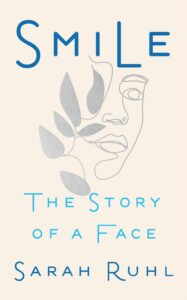
Smile: The Story of A Face by Sarah Ruhl

Smile: The Story of a Face, Sarah Ruhl

After giving birth to her twins, author, and playwright Sarah Ruhl realized that she couldn’t move half of her face. Ruhl later discovered she had developed Bell’s palsy. Smile is Ruhl’s intimate story of learning to live with a disability later in life. Ruhl’s emotional essays offer insights into what it feels like to learn to maneuver through the difficulties of life. Smile is a fabulous read for anyone wanting to learn more about the deeply personal relationships humans have with their bodies.

The Sentence by Louise Erdrich

The Sentence, Louise Erdrich

The Pulitzer Prize and National Book Award-winning author’s new darkly humorous story takes place in Minneapolis in 2020. The Sentence follows a previously-incarcerated Indigenous woman working at a bookstore haunted by one of their most annoying customers. The worker tries to solve the haunting mystery while exploring the difficulties of racism and corruption that infests the city. The Sentence is a fantastic choice for those looking to smile at a story reflecting on the year of racial injustice in a dark, comical style. 

Five Tuesdays In Winter by Lily King

Five Tuesdays in Winter: Stories, Lily King

Five Tuesdays in Winter examines the good and bad of human connection. Lily writes about meaningful relationships that can form from the most minute of bonds. The book of stories — formulated with previously published and new work — finds characters grappling with change, all yearning to be loved. Five Tuesdays in Winter is a terrific choice for those interested in learning more about the power and importance of human connection. 

Whether you prefer reading alone, with a companion or in a book club, don’t hesitate to pick one or two of these books up for yourself this fall. You can find them at your neighborhood libraries, local bookstore or online. And as with all good reads, spread the word to friends and family when you finish a book you really love!

› Back to top
« back
09.07.21 | Sage Advice®

The Cognitive Benefits of Scrapbooking

What might seem like an old-fashioned and outdated mode of documenting the past, scrapbooking is a pastime that can celebrate and relive memories while getting one’s creative juices flowing — especially for older adults. It is also a great way to curate family heirlooms for all to appreciate. Today, we’re sharing how immensely beneficial scrapbooking can be for improving cognitive function and reinforcing relationships. 

Scrapbooking provides a wealth of mental, emotional and physical benefits for older adults. Research has shown that the process of scrapbooking helps expand new neural pathways in the brain, a process called neuroplasticity. The hobby is a fantastic way for those suffering from dementia or memory loss to train their brains to be grounded in the present while still reflecting on the past. 

Scrapbooking is also a creative outlet, allowing participants to express emotions they might usually refrain from expressing. It permits people to revisit their past experiences, relieving their  negative emotions and regaining a sense of purpose. Scrapbooking also offers advantages for relieving stress as cognitive abilities deteriorate. 

Scrapbooking can also be fun to do with others. As a social experience, it fosters communication, lightening the effects of loneliness and creating the opportunity to explore common interests with others. Scrapbooking is also a marvelous way to bring families together and engage in an intergenerational activity that strengthens bonds. By helping older adults sort through the memorabilia of the past — photos, letters, drawings, etc. — to build scrapbooks from their own documented memories, younger generations also have the opportunity to establish their own connections to their family histories that will last long after the scrapbook is finished. 

When looking for engaging, emotionally-rich and creative activities to keep your mind active and revel in the past, put scrapbooking at the top of the list!

If you want to learn more about how to scrapbook, check out the video below.


A table is laid out with material used for scrapbooking.
› Back to top
« back
09.02.21 | Sage Advice®

6 “superfoods” you can incorporate to boost your health

As we continue to change with age, eating healthy can be a vital step in caring for your future self. Taking inspiration from our 9 Ways of Vibrant Living, which you can read more about here, we compiled a list of our favorite “superfoods” you can easily introduce into your diet. These highly nutritious items can be added to a larger meal or snack to boost your health and help to achieve a balanced diet.

Tea

Not only is tea low in calories, it is also a refreshing alternative to coffee, soda and other beverages. Notably high in antioxidants, tea can be a tool for weight management and has anti-inflammatory and anti-carcinogenic (cancer-suppressing) benefits. One study suggested that the regular consumption of white and green teas resulted in a vast reduction of stress for most participants.

Avocados

Avocados are much more than the brunch staple or spread for toast that they’ve become over the last decade. As a great addition to a salad, guacamole or being eaten simply with a pinch of salt and pepper, avocados provide numerous health benefits. Rich in fiber and and healthy fats, avocados can be a great substitute for eggs, mayonnaise, sour cream and even butter.. 

Mushrooms

Mushrooms have been used in Eastern medicine and culture for millennia. They are known to increase the health of the immune system through their many therapeutic properties. After much scientific research, we are learning more about the dramatic positive effects mushrooms can have on preventing cancer, lowering blood pressure and overall increasing well-being. You can incorporate mushrooms into your diet by cooking them along with other vegetables, adding them to salads and pasta or simply frying them with healthy oil. Some of the most popular mushrooms you should look out for at the farmer’s market or grocery store are Portabella, Shiitake, Buttons, Oyster, Enoki and Lion’s Mane. 

Dark Leafy Greens & Cruciferous Vegetables

There is a wide consensus among nutritionists that vibrant green vegetables and those in the cabbage family offer some of the best nutrients and vitamins. These include arugula, kale, collard greens, kohlrabi, radishes and turnips. Most of these are full of zinc, calcium, iron, magnesium, vitamin C, fiber, and what seems like a never-ending list of enriching minerals that can reduce the chances of heart disease and diabetes while lowering blood pressure and preventing some cancers. 

Salmon

Salmon is both tasty and full of healthy protein, B vitamins, potassium and omega-3 fatty acids. Because of its abundance of rich nutrients, salmon has more health benefits compared to other animal products and is known to help prevent heart disease and diabetes. One way you can enjoy this hearty fish is by baking it with lemons, herbs and a healthy (oil, avocado or sesame).  

Garlic

Garlic packs a punch in flavor and delivers huge nutritional benefits, too. Each clove of garlic contains magnesium, vitamin C and fiber, which are all essential to a balanced diet. Research indicates its effectiveness to support the immune system while reducing cholesterol and blood pressure. One study even found that garlic provides antibacterial and antiviral characteristics. 

However you incorporate these superfoods into your meal planning and cooking regimen, they offer delicious and easy ways to boost your overall health and well-being.

A dinner plate contains salmon, mushrooms, tomatoes, broccoli, and a mix of other vegetables and sauce.
› Back to top
« back
08.19.21 | Community

Find the future of efficient workouts in “exercise snacks”

As part of our 9 Ways of Vibrant Living, Sage Collective advocates for moderate and regular physical activity. Developed in pandemic times when it was challenging to find ways to stay active, “exercise snacks” — a new and effective set of movements was born, and has become increasingly popular among older adults. Interestingly, research is demonstrating these snippets of exercise are equally or more effective than traditional workouts!

How to perform exercise snacks

“Exercise snacks” are short bursts of movement anyone can perform throughout the day, allowing people to arrange exercise as their time permits. Because the movements don’t require a fixed or dedicated location to “work out” as we normally define the act of exercising, you can find a host of spaces in your home or office to do squats, sit-ups, walking in place, lunges and more.  

Professor of Kinesiology Dr. Martin Gibala, argues that these brief bursts of exercise throughout the day can trigger the same reaction from our bodies that traditional workouts produce. In his study published by the International Journal of Exercise Science, Gibala and his partners introduced an 11-minute workout consisting of walking and running in place, lunges and other light calisthenics that improve cardiovascular health. One of the many thrilling findings was that the conditioning improved cardiovascular fitness by 7% for those who participated. 

Gibala explains that being rigorous with each movement is fundamental for exercise snacks. It is essential, however, to remember to cater to what works best for your body. 

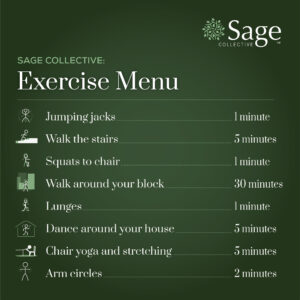
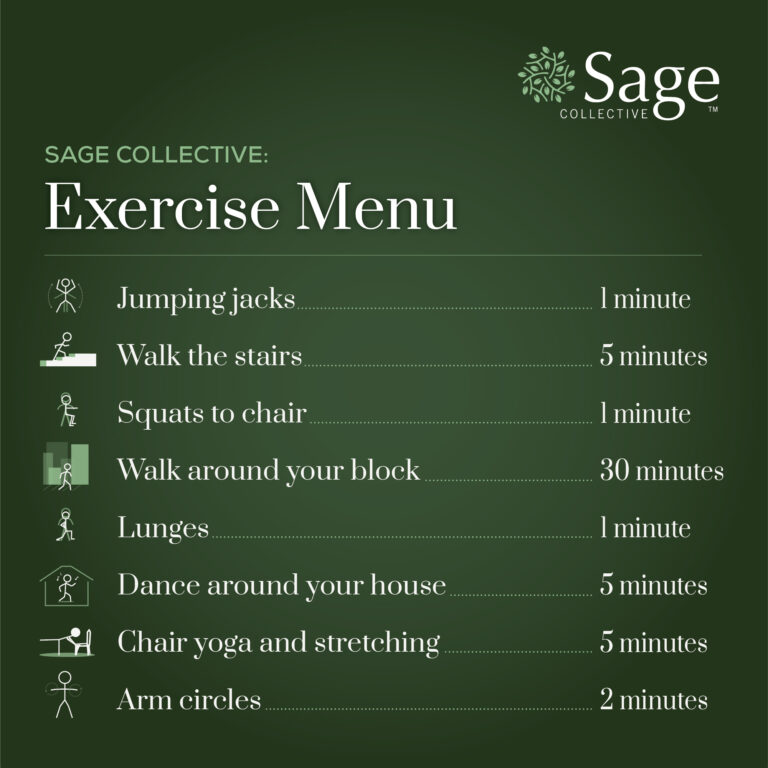
Sage Collective believes that incorporating exercise snacks into the lives of older adults and anyone looking to fulfill fitness needs can be a fundamental – and easy – way to live vibrantly. That’s why we produced our exercise snack menu based on Dr. Gibala’s workout plan below!


A graphic titled "Sage Collective: Exercise Menu" lists eight different "exercise snacks" and times allotted for people to take part in throughout their days.

A graphic titled "Sage Collective: Exercise Menu" lists eight different "exercise snacks" and times allotted for people to take part in throughout their days.
Sage Collective: Exercise Menu
› Back to top
« back
08.17.21 | Community

Our Vision for 4108 and 4112 King Drive: A Conversation with Dwain Kyles

As we continue the renovation of the Sage Collective properties at 4108 and 4112 S King Drive, side-by-side buildings in Chicago’s historic Bronzeville neighborhood, we sat down with Board Member and VP for Legal & Development, Dwain Kyles, to understand the project and how it contributes to Sage’s vision for the future. 

Location is everything

Having owned and operated residential property in the Bronzeville neighborhood for more than 40 years, Kyles understands that these buildings were in the perfect location for Sage Collective..

Intending to add to the great cultural history that King Drive represents, Kyles imagines these properties will also foster secure, welcoming environments for the development and enhancement of intergenerational relationships in the future. 

“We want to be very intentional about building community, and we think that King Drive has an appeal of its own. What we hope to do is add to that appeal by providing tangible, beneficial places for gathering, along with programming that will ultimately strengthen the self-image and empowerment of older adults in the community,” says Kyles.

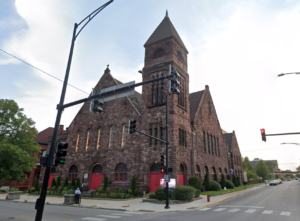
While the neighborhood itself is a large part of the appeal, the buildings’ adjacency to the historic Metropolitan (Apostolic) Community Church also generated interest and inspiration for the properties’ future. “Given the importance of a spiritual basis for the work we are doing, reflected in our 9 Ways of Vibrant Living, the proximity to this iconic church was a good sign for us,” says Kyles, “and felt like more than just a coincidence.”

The Metropolitan Apostolic Community Church is brightly lit in sunlight on the corner of S. King Drive and E. 41 St.
The Metropolitan Apostolic Community Church, adjacent to the 4108 and 4112 S King Drive properties

Introducing vibrant, high-quality, affordable living within these properties

“Rehabbing the two properties is no small undertaking,” explains Kyles. “Using our passion for vibrant, high-quality, affordable housing as a focus (a topic you can read more about here) we are putting incredible thought and care into the design and build out of the interior spaces. With the support of our board member Mary Frances De Rose, a renowned architectural gerontologist, we have been able to include accessible and supportive living enhancements for future residents of our properties that traditional housing for older adults lacks.” 

“The physical attributes of the buildings are being designed in such a way that we will accommodate some of the desires and conveniences for older adults that are often overlooked. I’m talking about lowering the light switches so someone in a wheelchair can easily reach them, ambient lighting, high-quality cabinetry that is accessible and easier to use, and bathrooms with tastefully designed safety features that will allow our older adult residents to feel both secure and at home,” reflects Kyles. 

The Bronzeville Mural located on 35th Street and State sits directly under the L line.
Bronzeville mural, located on 35th Street and State features the faces of many famous African-American icons

The vision stretches beyond the physical buildings 

Our passion for an exceptional quality of life for older adults goes beyond the physical space, however. This project, like other Sage residences for older adults in underserved communities, will come alive through the integration of interactive and exploratory programming.  

Kyles continues, “While the King Drive properties themselves are a jumping off point, we are focused on the longer-term desire for Sage Collective to serve as a catalyst for real change for our residents and neighbors, government and civic partners, and leaders in the business community by rethinking and redesigning our traditional approaches to providing housing for older adults in our black and brown communities.” 

“We tend to focus on what’s ‘new and poppin’ and what’s the hottest and the latest… while giving little care and attention to those things that have helped us to get where we are, including people. We have seen over and over again that distraction leading to deplorable outcomes and ones that have weakened the fabric of society,” explains Kyles.

Kyles continues, “Our vision for these properties on King Drive — along with all of our ambitious plans for the future — center around creating communities that are rich with diverse ages, families, cultures and experiences. By having the ability to rework the structural barriers hindering intergenerational and cultural interaction and progress, we are capable of establishing environments where there is an appreciation for people of all backgrounds and ages. And when we succeed, we’re stronger as a community, we’re stronger as a neighborhood, we’re stronger as a family,” and most important, we’re stronger as a collective.”

A headshot of Sage Collective's Board of Directors member Dwain Kyles
Board Member and VP for Legal & Development, Dwain Kyles
› Back to top
« back
08.10.21 | Community

Embracing the cultural process of aging

As we articulate in the Sage Vibrant Living Manifesto, cultural perceptions of aging have an enormous impact on individuals and their communities. As we continue to fight ageism and the traditional American notions of aging that many of us still experience today, we look to the wisdom of others to share new ways of thinking and doing.

Carl Honoré, writer and activist, argues that in order to age better we must feel better about the process. Learning how to age better in a world where aging is presented in a negative frame can be extremely hard, but it only takes a few minutes to change your perspective. In his TED Talk, Honoré explains how to embrace the aging process. Honoré also delves into his method for combating ageist traditions and practices within our lives. Watch below to learn more:

A quote sits on top of an image of two older adults laughing. The quote reads "We need to feel better about aging in order to age better," and is attributed to Carl Honore. The sage logo sits in the bottom right corner.
› Back to top
« back
08.05.21 | Sage Advice®

Understanding Mutual Aid: How It Can Support Community Success

At Sage Collective, we strive to foster feelings of value, engagement and community. One of the most impactful ways these shared values can be attained is through the action of practicing mutual aid in our everyday lives. 

The concept of mutual aid is something not talked about enough, specifically in shared environments. Looking back on the events of the past 18 months, the practice of mutual aid is more important than ever to the continued success and survival of communities like ours all around the world. 

What is it?

Mutual aid (often referred to as care webs)  is a form of public and political participation for neighborhoods, organizations and groups of all sizes. They provide an avenue for looking after and tending to each other’s health and well-being to create more livable, sustainable environments.

The process and goal of mutual aid is to create accessible and collective care by accepting and sharing mutual responsibility within one’s community space. 

Why is it important?

One of the most important reasons why enacting mutual aid in these spaces is such a key to survival is because it helps foster community engagement and social relationships through responsible, collective action. The more people who perform mutual aid in a shared community or group, the greater its tangible benefits spread.

The concept of mutual aid also parallels other values that we hold at Sage Collective, since it lessens the strain on individuals by strengthening the collective will and ability to ensure the success of all. Think about the expression “a rising tide lifts all boats.” That’s mutual aid in a nutshell.

How to practice it?

There are many ways to practice mutual aid in everyday life. Some may practice it in routine activities and others may spend time waiting for an event or specific cause they feel comfortable supporting. The most important thing to remember about mutual aid is that you shouldn’t feel pressured to offer more than you are capable of providing for yourself or your community.

Here are some examples of how to apply mutual aid in your own life:

Offering a space to share information, organizations and resources such as access to healthcare and food services, as well as transportation accessibility. 

Taking political action locally by volunteering for campaigns and vocally supporting policies that may help those in your community, or actively supporting movements, protests and funds that help benefit those in your care web.

Practicing mindfulness and sharing resources for anything from mediation guides to suggestions for dealing with anxiety, grief or anger.

Providing communication skills such as being open to offering translation services, if you are multilingual, to those in need. You can also help others with different technology devices and platforms you might better understand, or training and learning techniques in bystander intervention and/or steps for nonviolent communication. 

These are all ways in which we can help to foster a sense of connectedness and community among your neighbors and friends in support of uplifting the collective.  Everyone has something that they can share with those who could use a little help in the community.  Sage encourages you to engage your friends and family to initiate activities that provide others a chance to share their skills and experience with those in need.  This isn’t a new concept, it’s simply one that could use a little refreshing.

A group of people holding each other.
› Back to top
« back
08.03.21 | Community

The Science of Laughter

Laughing is something we do numerous times a day without a second thought. Whether we are with friends, watching a funny movie or simply reacting to something that catches us off guard. There is much more behind the infectious response than the loud, quirky and eccentric sounds that come with it. The power of incorporating laughter into your day-to-day routine has huge implications for the quality of your life in the broadest sense. Let’s look further.

Recognizing the impact of laughter’s effects on things such as stress, happiness and health, we at Sage Collective appreciate its importance, especially in relation to our 9 Ways of Vibrant Living

Why do we laugh?

Throughout history, laughter has been seen as a social signal. There are many factors that can affect what we find humorous including age, gender, culture or community. Laughter presents itself in most human interactions as the presence of connectivity, comfortability and the strengthening of a shared or mutual relationship. Furthermore, research shows that the more laughter that is present in those relationships, the stronger those connections or bonds become.

The prevailing theory is that there are three types of scenarios that make us laugh: incongruity, superiority and relief. Incongruity theory is rooted in the idea of expecting one outcome, and receiving a totally different one — resulting in laughter. Superiority theory explains that we might find someone else’s weaknesses or mistakes humorous, making us feel superior to them in the moment. Last, relief theory is the use of comedy in tough or uncomfortable situations in order to relieve stress or tension. If you reflect back on what made you laugh today, do you see the reasons falling into one of these categories?

The health benefits of laughing

There are tangible health and wellness benefits for individuals and communities when we all spend more time laughing. From a purely biological perspective, when we laugh, our bodies reduce the levels of stress hormones, in turn lowering our physical stress and anxiety. At the same time, the action also releases serotonin, which leaves us feeling euphoric. As stress hormones diminish, we lower blood pressure and increase blood flow — which directly leads to the oxygenation of our blood to provide us with more energy. 

Incorporating more laughter in your life

Wondering how to add laughter to your life? Start by considering the concept of humor and its relationship to laughter.

Merriam-Webster defines humor as “the mental faculty of discovering, expressing, or appreciating the ludicrous or absurdly incongruous: the ability to be funny or to be amused by things that are funny.” However, because humor is so subjective, it’s nearly impossible to give it a clear-cut definition. Let’s just say that laughter is the direct reaction or acknowledgment that someone has found something humorous.

For some, laughter may come easy. For others, it might be more difficult to find humor in life. Either way, here are some tips for learning to laugh more. 

One of the easiest ways to find laughter is to surround yourself with people who you find funny and entertaining, but with whom you already have a comfortable and strong relationship. Discovering things that make you laugh throughout your daily life and experiencing them more is also a great way to easily find humor. This might be found in the radio station you listen to on your daily drive, or a television show you play in the background while you do chores at home. And if laughter doesn’t come easily for you, consider laughter therapy — it’s a new form of searching for a chuckle by training yourself to look for humor in uncomfortable and difficult situations, rooted in laughter’s relief theory. There are lots of resources available online, and even apps you can download to your phone!

So even if you aren’t the traditional joking type of person or you find it hard to see the comedy in hard situations, dig deep and look for the laughter in your life. You won’t regret it.

A group of people stand around each other looking at a phone and laughing
› Back to top