« back
08.17.21 | News

Our Vision for 4108 and 4112 King Drive: A Conversation with Dwain Kyles

As we continue the renovation of the Sage Collective properties at 4108 and 4112 S King Drive, side-by-side buildings in Chicago’s historic Bronzeville neighborhood, we sat down with Board Member and VP for Legal & Development, Dwain Kyles, to understand the project and how it contributes to Sage’s vision for the future. 

Location is everything

Having owned and operated residential property in the Bronzeville neighborhood for more than 40 years, Kyles understands that these buildings were in the perfect location for Sage Collective..

Intending to add to the great cultural history that King Drive represents, Kyles imagines these properties will also foster secure, welcoming environments for the development and enhancement of intergenerational relationships in the future. 

“We want to be very intentional about building community, and we think that King Drive has an appeal of its own. What we hope to do is add to that appeal by providing tangible, beneficial places for gathering, along with programming that will ultimately strengthen the self-image and empowerment of older adults in the community,” says Kyles.

While the neighborhood itself is a large part of the appeal, the buildings’ adjacency to the historic Metropolitan (Apostolic) Community Church also generated interest and inspiration for the properties’ future. “Given the importance of a spiritual basis for the work we are doing, reflected in our 9 Ways of Vibrant Living, the proximity to this iconic church was a good sign for us,” says Kyles, “and felt like more than just a coincidence.”
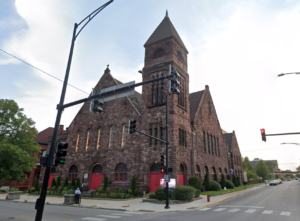
The Metropolitan Apostolic Community Church is brightly lit in sunlight on the corner of S. King Drive and E. 41 St.
The Metropolitan Apostolic Community Church, adjacent to the 4108 and 4112 S King Drive properties

Introducing vibrant, high-quality, affordable living within these properties

“Rehabbing the two properties is no small undertaking,” explains Kyles. “Using our passion for vibrant, high-quality, affordable housing as a focus (a topic you can read more about here) we are putting incredible thought and care into the design and build out of the interior spaces. With the support of our board member Mary Frances De Rose, a renowned architectural gerontologist, we have been able to include accessible and supportive living enhancements for future residents of our properties that traditional housing for older adults lacks.” 

“The physical attributes of the buildings are being designed in such a way that we will accommodate some of the desires and conveniences for older adults that are often overlooked. I’m talking about lowering the light switches so someone in a wheelchair can easily reach them, ambient lighting, high-quality cabinetry that is accessible and easier to use, and bathrooms with tastefully designed safety features that will allow our older adult residents to feel both secure and at home,” reflects Kyles. 

The Bronzeville Mural located on 35th Street and State sits directly under the L line.
Bronzeville mural, located on 35th Street and State features the faces of many famous African-American icons

The vision stretches beyond the physical buildings 

Our passion for an exceptional quality of life for older adults goes beyond the physical space, however. This project, like other Sage residences for older adults in underserved communities, will come alive through the integration of interactive and exploratory programming.  

Kyles continues, “While the King Drive properties themselves are a jumping off point, we are focused on the longer-term desire for Sage Collective to serve as a catalyst for real change for our residents and neighbors, government and civic partners, and leaders in the business community by rethinking and redesigning our traditional approaches to providing housing for older adults in our black and brown communities.” 

“We tend to focus on what’s ‘new and poppin’ and what’s the hottest and the latest… while giving little care and attention to those things that have helped us to get where we are, including people. We have seen over and over again that distraction leading to deplorable outcomes and ones that have weakened the fabric of society,” explains Kyles.

Kyles continues, “Our vision for these properties on King Drive — along with all of our ambitious plans for the future — center around creating communities that are rich with diverse ages, families, cultures and experiences. By having the ability to rework the structural barriers hindering intergenerational and cultural interaction and progress, we are capable of establishing environments where there is an appreciation for people of all backgrounds and ages. And when we succeed, we’re stronger as a community, we’re stronger as a neighborhood, we’re stronger as a family,” and most important, we’re stronger as a collective.”

A headshot of Sage Collective's Board of Directors member Dwain Kyles
Board Member and VP for Legal & Development, Dwain Kyles
› Back to top
« back
08.10.21 | Community

Embracing the cultural process of aging

As we articulate in the Sage Vibrant Living Manifesto, cultural perceptions of aging have an enormous impact on individuals and their communities. As we continue to fight ageism and the traditional American notions of aging that many of us still experience today, we look to the wisdom of others to share new ways of thinking and doing.

Carl Honoré, writer and activist, argues that in order to age better we must feel better about the process. Learning how to age better in a world where aging is presented in a negative frame can be extremely hard, but it only takes a few minutes to change your perspective. In his TED Talk, Honoré explains how to embrace the aging process. Honoré also delves into his method for combating ageist traditions and practices within our lives. Watch below to learn more:

A quote sits on top of an image of two older adults laughing. The quote reads "We need to feel better about aging in order to age better," and is attributed to Carl Honore. The sage logo sits in the bottom right corner.
› Back to top
« back
08.05.21 | Sage Advice®

Understanding Mutual Aid: How It Can Support Community Success

At Sage Collective, we strive to foster feelings of value, engagement and community. One of the most impactful ways these shared values can be attained is through the action of practicing mutual aid in our everyday lives. 

The concept of mutual aid is something not talked about enough, specifically in shared environments. Looking back on the events of the past 18 months, the practice of mutual aid is more important than ever to the continued success and survival of communities like ours all around the world. 

What is it?

Mutual aid (often referred to as care webs)  is a form of public and political participation for neighborhoods, organizations and groups of all sizes. They provide an avenue for looking after and tending to each other’s health and well-being to create more livable, sustainable environments.

The process and goal of mutual aid is to create accessible and collective care by accepting and sharing mutual responsibility within one’s community space. 

Why is it important?

One of the most important reasons why enacting mutual aid in these spaces is such a key to survival is because it helps foster community engagement and social relationships through responsible, collective action. The more people who perform mutual aid in a shared community or group, the greater its tangible benefits spread.

The concept of mutual aid also parallels other values that we hold at Sage Collective, since it lessens the strain on individuals by strengthening the collective will and ability to ensure the success of all. Think about the expression “a rising tide lifts all boats.” That’s mutual aid in a nutshell.

How to practice it?

There are many ways to practice mutual aid in everyday life. Some may practice it in routine activities and others may spend time waiting for an event or specific cause they feel comfortable supporting. The most important thing to remember about mutual aid is that you shouldn’t feel pressured to offer more than you are capable of providing for yourself or your community.

Here are some examples of how to apply mutual aid in your own life:

Offering a space to share information, organizations and resources such as access to healthcare and food services, as well as transportation accessibility. 

Taking political action locally by volunteering for campaigns and vocally supporting policies that may help those in your community, or actively supporting movements, protests and funds that help benefit those in your care web.

Practicing mindfulness and sharing resources for anything from mediation guides to suggestions for dealing with anxiety, grief or anger.

Providing communication skills such as being open to offering translation services, if you are multilingual, to those in need. You can also help others with different technology devices and platforms you might better understand, or training and learning techniques in bystander intervention and/or steps for nonviolent communication. 

These are all ways in which we can help to foster a sense of connectedness and community among your neighbors and friends in support of uplifting the collective.  Everyone has something that they can share with those who could use a little help in the community.  Sage encourages you to engage your friends and family to initiate activities that provide others a chance to share their skills and experience with those in need.  This isn’t a new concept, it’s simply one that could use a little refreshing.

A group of people holding each other.
› Back to top
« back
07.20.21 | Sage Advice®

How to Become a Better Listener

Becoming an engaged listener can give you the power to strengthen relationships, validate feelings and empower others. It takes more than just sitting down with someone and hearing what they say to become a better listener, however. Listening is a skill that takes time to practice and master in order to fully appreciate its influence and capability within conversations.

The three C’s of effective listening: compassion, curiosity and courage 

When practicing to become better and more effective listeners, many follow a guide focusing on three main components: compassion, curiosity and courage. The ingredients in this recipe work independently as well as collectively to strengthen the skills needed to become a better listener. Let’s take a closer look.

One of the most important things to show when listening to others in an open and safe environment is compassion. Showing things such as empathy and understanding for someone’s situation—  instead of apathy or disregard — welcomes the opportunity for those sharing to feel more comfortable with the listener, but with their own story and experience, as well.

The presence of curiosity within conversation is also key for displaying interest and affection. Showing your interest and craving to learn more from those speaking can further the feeling of validation and in turn encourage them to continue being open and vulnerable.

You might be wondering how courage comes into play when practicing listening and instead may think it’s more important for speaking. Yet, having the courage to effectively listen to someone often require courage and vulnerability, more so than sharing your own voice. In fact, Winston Churchil famously once said, Courage is what it takes to stand up and speak; courage is also what it takes to sit down and listen.”

Beyond the three C’s, we should also all aim to apply compassionate witnessing and active listening to become a better and more effective listener.

Compassionate witnessing

Compassionate witnessing, an essential element in effective listening, goes one step beyond being empathetic and compassionate.

Compassionate witnesses understand the act of understanding as key to being a better listener. As a listener, your role isn’t to judge, interrupt or share your thoughts. Your main goal is to create a connecting and welcoming environment where you make the other person feel seen and important. By including compassionate witnessing into your listening environment, feelings and reactions of validity start becoming more familiar to all.

It is also important to enact compassionate witnessing techniques into how we treat ourselves. By making ourselves and others’ words visible and important, we have the opportunity to mold and revolutionize all relationships.

Active listening

Although being a compassionate witness and including the three C’s into your listening habits help you become a better listener, it isn’t enough to just simply sit and listen. Active listening is being fully engaged in the conversation you are a part of, going beyond being a compassionate witness.

There are many aspects of being an active listener, including the use of engaging body language. Opening your body up (not crossing arms and legs, for example) and showing assurance by leaning forward, nodding your head and smiling can all be signs to the speaker you are actively engaging and listening to them.

Another aspect of actively listening includes clarifying and paraphrasing without interrupting the speaker. Clarifying involves asking the speaker for additional information related to what you find interesting or unique in what they are sharing. And in the process of paraphrasing, you have the opportunity to summarize what was said in order to get confirmation and demonstrate that you are understanding the content of the conversation in real time. Both of these techniques are helpful and engaging for those listening, but for the speaker as well.

One of the last things you can offer as an active listener is giving feedback, especially if the person you’re conversing with is open to this kind of change. If they are looking for feedback, it’s important to actively share your thoughts, feelings and constructive advice if you have any.

Becoming a better listener is an ongoing process of building a toolkit of skills and actions, and continuing to draw upon these tools in ways that are uniquely appropriate to any given conversation. And as your listening improves, you’ll come to internalize the mechanics and have endless opportunities to experience the power of reciprocity — the simple pleasure of giving and receiving.

› Back to top
« back
07.13.21 | Community

How to become a “joyspotting” expert

Similar to taking an awe walk, joyspotting is the intentional act of going out into the world to look for things that spark joy in you. While the word may sound unusual, it’s actually amassed quite a cult following – with entire online groups dedicated to sharing in joyspotting (and their subsequent findings) together. Even if you’re not ready to join an online group just yet, find out how to become a joyspotting expert using our tips below.

The Origins of Joyspotting

Joyspotting is a term first coined by Ingrid Fetell Lee. As a designer, Lee began to notice the relationship between one’s surroundings and their mental health. For example: living in a home filled with bright prints and patterns provides an immediate mood booster. Lee knew this was a counterintuitive principle. So often, society tells us not to derive joy from the things that surround us, but from what’s within us.

In contradiction to this view, Lee sheds light on the relationship between our environment and our emotions, and shares inspiration and resources for living a more joyful life through design in her book, The Aesthetics of Joy. She has also created a website dedicated to this viewpoint, that shares the same name. There is also an online Facebook group that we referenced above, The Joyspotters’ Society.

As Lee became more and more tuned into what caused her joy from her surroundings, she began to develop the habit of intentionally seeking out – or looking to consciously observe – these causes of joy. And hence, joyspotting was born. As she says, “The world seemed to be teeming with tiny, joyful surprises. All I had to do was look for them… It was like I had a pair of rose-colored glasses, and now that I knew what to look for, I was seeing it everywhere. It was like these little moments of joy were hidden in plain sight.” Instead of seeing the world around us as beset with distractors, joyspotting is a way of creating a reservoir of positivity.

Twelve Ways of Joyspotting

To become an avid joyspotter is simple. Look around you and determine something that causes you joy. It could be a pair of colorful, patterned socks worn by the man next to you on the train, or the unexpected sidewalk chalk drawings on a walk around the block. But just in case you need a little bit of help getting started, Lee put together The Joyspotter’s Guide, which outlines her twelve tips for joyspotting. Below, we offer a brief description of those tips.

Look up. Joy often comes from things that float or fly in the sky, whether that’s shapes you find in the clouds, or a stray red balloon. Look down. Maybe you discover a rainbow in a puddle, or a vibrant pair of shoes on a passing pair of feet. Keep an eye out for color. What flashes of blue catch your eye? How does an abundance of green transform the environment? Follow the curve. Life is full of hardness, so where do things get soft around the edges?

Go where the wild things are. There’s always joy to be found in nature, whether it’s enjoying the smell of a rosebush, or listening to birdsong. Seek out symmetry. Where there are mirror patterns, there’s often a surprising sensation of randomness or harmony. Search for signs of abundance. Where do things feel lush and full? It could be a fruit bowl on a family member’s kitchen counter, or a few too many Christmas lights at the neighbor’s house. Joy has a way of spilling over. Watch for weirdness. Where are things out of place, or just out of the ordinary? It’s those standout details that often feel most special.

Zoom in. Focus your attention on the tiniest of details. Notice the invisible. What joy surrounds you that can be felt or heard, but not seen? These sightless observations hold a magic of their own. Similarly, use all your senses! And finally, take the scenic route. The paths you wouldn’t normally take often hold the most surprises, and within those, there’s much joy to discover.


Photo of man looking through a spotting scope
› Back to top
« back
07.06.21 | Sage Advice®

What we mean when we say “vibrant, high-quality, affordable housing”

There’s a lot of language we use at Sage Collective that’s uncommon for the world of senior living. For example, we prefer to use the phrase “older adults” rather than “seniors” – more on that in this blog post here. When discussing our vision for Sage Collective’s residences, we also use the phrase “vibrant, high-quality, affordable housing.” But just what exactly does that mean?

Everything we do at Sage Collective – from the partners we choose, the programming we design, to the residences we develop – is built upon our foundational philosophy: 9 Ways of Vibrant Living. Read more about this philosophy and how we intend to bring it to older adults in our Vibrant Living Manifesto here. Ultimately, we believe that older adulthood is just another in a series of life’s chapters, and that seniors deserve to live just as joyfully, vibrantly, and fully as their intergenerational counterparts.

Too often, senior housing lacks the passion and joy of this belief we hold so dear. Based on limited resources, and often bogged down by limited imagination, affordable senior housing is all too commonly not the enjoyable experience that it should be. We’re here to rewrite that narrative.

At Sage Collective, we encourage our residents and neighbors to experience the freedom and joy of choice by providing them with wellness support, cultural exploration, and spiritual enrichment. We’re in a privileged position to deliver on this promise based on the legacy we come from – more on that in this blog post here. From our past experience, we’ve learned the powerful impact that a strong vision and an even stronger culture has on the services and housing products we’re able to provide.

We can’t wait to share this vision with you. Our first residences, 4108 and 4112 South King Drive in the Bronzeville community on Chicago’s Southside, will bring affordable and market competitive housing units to our community, and will be set apart by our vibrant living philosophy and attention to detail and quality. Stay tuned for more details to come.


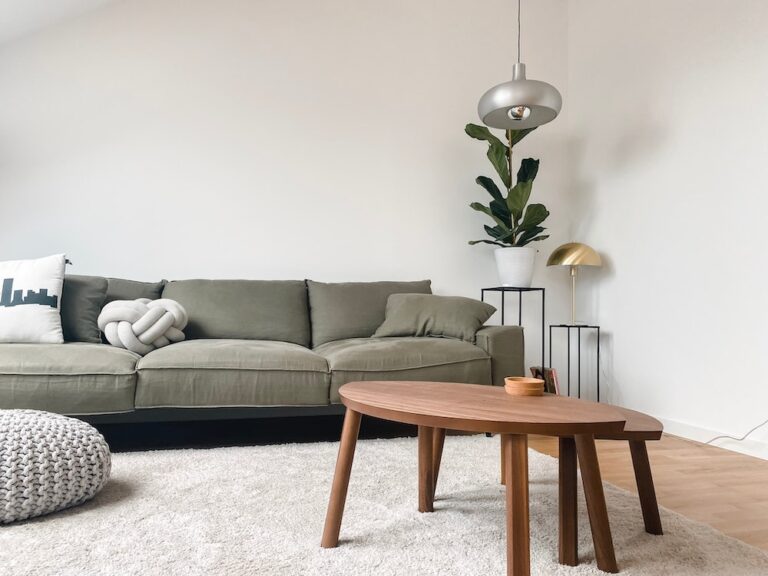
Photo of contemporary residential interior
› Back to top
« back
10.06.20 | Community

Sage Collective: A Distinguished Model

Sage Collective is a fiercely nimble, adaptable and, above all else, intentional player in the field of older adult living. To illuminate just what makes the Sage Collective model so distinctive, from framework to funding, we sat down with Marc J. Lane, a nationally recognized business and tax attorney, pioneer behind the Advocacy Investing® approach to socially responsible and mission-related investing, and member of the Sage Collective Leadership Team

What sets Sage Collective’s approach to affordable housing apart from others?

ML: For Sage Collective, It’s not just about housing it’s about life enrichment, life extension and living better longer. So from architectural design to programming to wraparound services, Sage Collective is developing a unique and unprecedented program to serve older adults, looking at housing as healthcare that focuses not just on health, but on the whole person. That framework therefore expands and includes arts and culture: dance, yoga, massage, computer skills, gardening. You name it, whatever contributes to the lifestyle and wellbeing of the residents, it will be there. 

Not only will there be services of the highest quality, but the residents themselves will have an advocate. Sage Collective will pursue public policy initiatives, setting themselves up as a trusted advisor, convener, collaborator and catalyst to ensure that older adults get the best possible treatment across the entire board, with an impact that goes far beyond what Sage Collective themselves implements.

Image reads Sage Collective is synergetic, it's innovative, it's disruptive over an image of elderly hands

How does Sage Collective fall into the category of a mission-driven venture?

ML: Every nonprofit is mission-driven by law, but not every nonprofit is a mission-driven venture. Sage Collective is not (and will not be) wholly dependent upon philanthropy, government contracts and grants. It’s pursuing market-based strategies to be self-reliant and financially sustainable. Sage Collective relies largely on earned revenue, delivering market-based solutions driven by the older adult audience Sage serves what they need, what they want and how they receive the support that’s being provided. The resulting wraparound living services have a wide scope, from campus-style residences to intergenerational programming to research, data-sharing and advocacy. And underscoring every single one of those offerings is Sage’s desire to serve its older adult population and promote vibrant, engaged living. 

Simultaneously, Sage Collective values leveraging its thought leadership and collaborating with other nonprofits, for-profits, investors and even government agencies whose interests and values align with those of the organization. So Sage Collective is synergetic, it’s innovative, it’s disruptive.

As a nonprofit with 40+ years under its belt, how do you see the mission of Sage Collective as being highly evolved?

ML: There’s an extraordinary history here. Donna Gaines and Dwain Kyles, who lead the board, were intimately involved in the management of Sage Collective’s affordable housing community, Willa Rawls Manor. There were lessons learned, but having sold that asset, they now have the rare opportunity to reimagine their vision guided by that experience. Donna and Dwain (along with the other members of the board) have decades of experience and expertise that is unmatched anywhere else. The population they serve will be empowered by virtue of that commitment and the compassion they have demonstrated over these decades.

And about the Sage Collective board: Donna and Dwain put together a national leadership team which is highly unusual, if not unique, bringing together experts in all of the relevant disciplines — gerontology, medicine, law, finance, customer experience and others. With that kind of collective knowledge, experience, relationships and the platform all of those folks leverage, Sage Collective will set the standard to which other affordable housing initiatives will aspire. 

How is Sage Collective’s model built to scale, and be replicable nationally?

ML: Market-driven decisions, when done right, are driven by evidence and by data. For Sage Collective, data will be used not only to determine effectiveness of programming and services — ensuring these services are impactful and well-received by the target population — but data will also be deployed for the public good. Yielding its expertise in data development, translation and deployment, Sage Collective will be able to scale up.

So when it comes to creating measurable social impact as a social venture, this data and its deployment also ensure Sage is held accountable to the financial returns on investment and the social returns on investment, too. When Sage Collective’s findings are made available to a wide range of other parties, public and private, then with a powerful bottom line: the older adult population will be the beneficiary of all those better-informed decisions now being made within society. This becomes an all-hands-on-deck venture, a movement where Sage Collective is the spearhead, and in which all of us benefit, because all of us are touched by the older adults in our lives; how they live and how successful they are.

MARC LANE
Marc J. Lane
› Back to top
« back
10.01.20 | Sage Advice®

Understanding the Role of Smart Design in Our Lives

As a leader in older adult living, Sage Advice prides itself on cultivating an extensive library of knowledge on relevant trends and best practices in the field of senior living and wellness. One such trend, smart design, is a uniquely adaptable, constantly evolving concept that grows with new findings daily. Today, we’re exploring what exactly smart design is, what role it plays in older adults’ lives and how its unique adaptability makes it suitable for any home.

What is it and who is it for?

Smart design is anything that combines research, technology and creativity to develop devices that improve user experience. Although a prevalent tool used to provide solutions for older adults, smart design is not limited to one specific age group — it is just coincidental that many challenges smart design seeks to address are ones that come with age. 

Smart design is employed in private residences and communal homes alike. In both, smart design (which often involves smart technology) creates an environment that is safer and more accessible for its residents, often focusing on challenging areas such as kitchens and bathrooms. Design solutions can be as simple as installing grab bars or shower benches, or as complex as wearable, data-tracking technology. 

Ultimately, resident (and caregiver) preferences determine which smart design solutions are a best fit for each unique situation. Everyone’s physical, cognitive, financial and emotional needs vary, and smart design solutions can be made custom to match.

The end goal

Meanwhile, why we pursue smart design is quite nuanced. Smart design seeks to address a broad continuum of unique challenges: from basic physical safety and functionality needs, to more high level goals such as mental wellbeing and the ability to flourish and be happy in one’s environment. 

Smart design pursues these end results in a triage-like manner. In following the hierarchy of needs, safety needs are always the first to be addressed. If a person is not fundamentally safe in their environment, nothing else matters initially. Once those safety needs are met, then concerns can move up the scale to address things such as mental wellness. At this stage, it becomes a question of how smart design can enhance a person’s quality of life, from their ability to remain connected and engaged to even how their environment influences their self-image. 

Smart design, technology and the future

Naturally, smart design evolves in parallel with technology. These days, smart design can do everything from remotely controlling lighting to providing video surveillance to utilizing data sensors to predict fall risks or other health factors. The ability of smart design tech to transfer information to caretakers streamlines many previously archaic processes and provides increased security and protection but with it comes potential privacy concerns. 

Voice-activated smart technology (like Amazon Echo and Alexa) can provide increased capability and convenience. Smartphone assistants like Siri also give access to incredibly handy apps able to assist with shopping, banking and making appointments. While this technology has benefits, it is not without its challenges. Some smart design users are tech averse and prefer not to go this route, while for others still this type of tech is inaccessible or unaffordable. There are also concerns that a person’s reliance on tech can potentially decrease their independence. 

When looking towards the future of smart design, these will be the field’s biggest challenges: retaining balance, and overcoming issues of equity and spatial justice. But in the world of smart design, where every solution is person-specific, that flexibility provides degrees of freedom and space for inventive thought as we continually seek how to live our best lives and support best lives for others. 

As Sage Collective continues to pursue its mission of building a vibrant, affordable housing campus on Chicago’s South Side, smart design will become integral to our vision of comfortable, convenient and inclusive homes. Whether a resident of our future community or a follower of our vibrant living manifesto, we’ll always champion best-in-class knowledge and practices to be shared with our audience.

Graphic reads "Smart design is anything that combines research, technology and creativity to develop devices that improve user experience."
› Back to top