« back
07.01.21 | Community

Vibrant Living Breakdown: Engagement in Social Life

Nine Ways of Vibrant Living is Sage Collective’s innovative model that champions more meaningful, engaged lives for older adults, and that serves as the backbone of our philosophy. We celebrate and uplift components of vibrant living that span from health and wellness, to arts and culture, to spiritual enrichment — but what makes all these life experiences truly shine is our ability to share them with others. That’s why our ninth component is engagement in social life.

Older adults in particular are a population at high risk of experiencing social isolation. The flip side of that risk – and the negative impacts it has on one’s physical and mental well being – means that older adults who are more socially connected often report a better quality of life all around.

The benefits of healthy social connection for older adults are all encompassing and include disease prevention, fewer physical health problems, longevity/length of life, improved cognitive function, better self-esteem, sense of belonging, and maintained purpose of life.

Therefore, at Sage Collective, we strive to provide daily opportunities for social connection and community engagement, whether that’s through our programming or residences. We intend to partner with a host of community organizations, including but not limited to: churches, schools, businesses, and cultural institutions, to provide co-teaching, educational, entrepreneurial and employment opportunities that both enrich and empower our residents.


Stay tuned for all these opportunities and more, and in the meantime, you can stay connected with us and our community online through our social media via Facebook, Instagram, Twitter, and LinkedIn.

Friends gathering to socialize and paint
› Back to top
« back
06.29.21 | Community

Harness the power of awe by taking “awe walks”

Vibrant life encompasses a variety of experiences, from healthy eating to regular fitness to engaging with the world around us. One particularly effective – and unusual – way to pursue vibrant living is to take “awe walks.” The end-goal of these walks is simple:  to simply inspire awe in those who participate. Let’s dig in.

How to take awe walks

“Awe walks” are a more intentional way to approach something as simple as a stroll around the block. The idea is to go for a walk and seek to experience awe along the way. How the walker chooses to experience awe is entirely up to them. Awe can be found in even the smallest of everyday moments, such as appreciating the flight path of a v of migrating geese above, or marveling at the many colors that make up fall foliage.

The study of awe – how it’s inspired, and the impact it has on a person’s wellbeing – has been a primary area of focus for psychologists since the early 2000s. Just recently, a 2020 study was published in the journal Emotion examining the impact of awe walks on a population of older adults.

In the study, sixty older adults took 15-minute awe walks for a period of eight weeks. Perhaps the most exciting finding of the study was the increasing feelings of compassion and gratitude in the control group that took such awe walks. Compared to the normal-walk-talking counterparts, the awe walkers were much more focused on observing the world around them.

“One of the key features of awe is that it promotes what we call ‘small self,’ a healthy sense of proportion between your own self and the bigger picture of the world around you,” explained Dr. Virginia Sturm, lead investigator and associate professor of neurology and psychiatry and behavioral sciences at the University of California at San Francisco.

You can trust the science – or you can just as easily try it out for yourself and see what awe you uncover.

View from above of people taking a walk
› Back to top
« back
06.21.21 | Sage Advice®

Can going to church or the art museum extend your life expectancy?

At Sage Collective, we champion 9 Ways of Vibrant Living, an inspired model that champions a full, happy and high-quality life. And while we’re focused on the quality of life, it’s possible that the quantity of life (aka life expectancy) is also intrinsically linked to it. So when we talk about components to vibrant living such as engagement in spirituality or religion and engagement in social life, can these components really bring about a longer life? Science says yes.

A Swedish study in 1996 of more than 12,000 people in Sweden found that “attending cultural events correlated with increased survival, while people who rarely attended cultural events had a higher risk of mortality.” A follow-up study in 2000 reported similar findings, stating: “We found a higher mortality risk for those people who rarely visited the cinema, concerts, museums, or art exhibitions compared with those visiting them most often.”

You can also find a comprehensive list of studies conducted to test similar hypotheses on the impact of social connectedness and cultural immersion on an individual’s health and overall mortality rate here. These studies include considerations of social and cultural immersion across a broad swath of types – including number of relationships, depth of social support, types of activities and their social involvement. 

However, the findings ring the same across the broad spectrum of social and cultural involvement: all these things are truly good for one’s health and life expectancy. As strong believers in the power of vibrant living, we’re not surprised. It is vitally important to live a life filled with curiosity, purpose, joy, and love. Participating in cultural events such as going to the museum or attending church regularly provide all these things and more – and they just might provide a boost to your overall health, too.

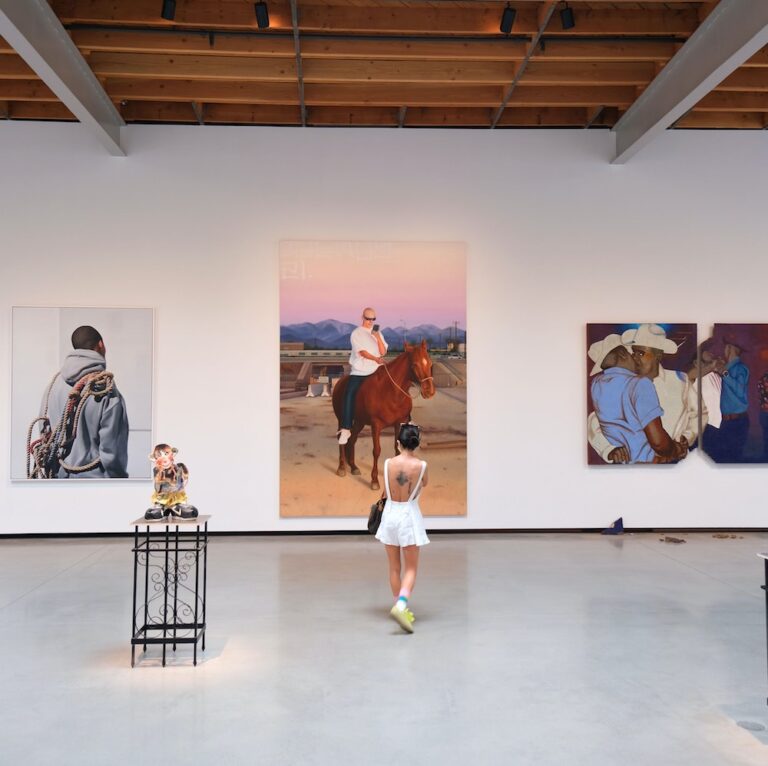
A girl stands in front of a series of paintings on a gallery wall
› Back to top
« back
06.01.21 | Health & Wellness

Starting an indoor herb garden is easy — here’s how

It’s easiest to eat healthy when you cook delicious, fresh, and flavorful food — and incorporating fresh herbs into your home cooking is a great way to add that extra burst of flavor. Lucky for us, you don’t need an advanced green thumb or even a backyard to grow these fresh, delicious herbs yourself, right from the comfort of your own kitchen – here’s how.

Picking Your Plants

There’s a wide array of herbs that will grow and thrive indoors all year round. These plants include basil, chives, lemon balm, marjoram, mint, oregano, parsley, rosemary, sage, and thyme. Decide which flavors are your favorite to incorporate in your cooking, and start off with 3-4 different plants. Each plant’s needs will vary slightly, so be sure to plant each herb in its own separate pot so you can adjust your care routine accordingly. 

You’ll often find herb plants, such as basil, available to you in your local grocery store’s produce department. Alternatively, visit your local garden center (Home Depot, Lowes, and Menards are all great resources for this) for a wider array of herb plants to choose from.

The Right Conditions

There are several things that any plant needs to thrive. Before you begin the process of purchasing and planting your fresh herbs, you should determine where in your household the herbs will live. Herbs prefer a lot of sunlight — six hours of full sunlight each day is ideal. Therefore, you should choose the sunniest spot in your home as the location of your herb garden, prioritizing locations that are close to the window, rather than the center of the room. For example: window sills are the perfect spot for an indoor herb garden! Once that’s settled, you can move onto actually planting your herbs.

First you’ll need the right pot. For indoor herbs, be sure to choose a container with ample drainage. You can tell which pots have appropriate drainage by checking for holes in the bottom of the container; these holes will allow water to escape the soil as needed.

Second, it’s important to choose the right soil for your herb. Most herbs do best with a standard indoor potting mix, and will be even happier if that mix is one that advertises good drainage. 

As we mentioned above, be sure to plant all your herbs in separate, individual containers. This ensures that when it comes time to water, you can check the soil of each pot and only water the plants that are in need of added moisture at that time. Because most herbs live in loose, fast-draining soil, you should check your plant’s soil every day (or every other day) to see how much moisture it has retained. Herb plants do best when their soil is slightly moist, but not soggy. Too much watering, and you’ll drown your plant.

When it comes time to harvest and enjoy your fresh herbs, always take in moderation. Regular pruning is good for your plants, but too much at once, and your plant won’t be happy. 

Overall, the more time you spend caring for your herb garden, the better you’ll learn to understand your plants needs. And as you care for your plants, they’ll care for you too, by providing healthy and fresh flavor to all your meals!

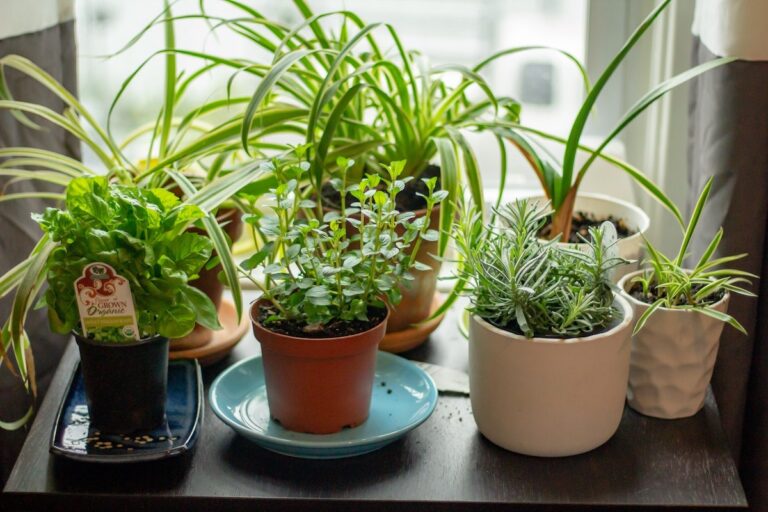
A window sill herb garden
› Back to top
« back
05.27.21 | Community

Four Ways to Help Maintain Healthy Bones

As we age, bone health becomes increasingly important. Older adults often experience bone loss (low bone density that makes the bones weaker), which leads to increased risk of fractures. Luckily, to help combat this risk, there are habits and behaviors you can adopt to help protect your bone health. Here’s four ways for older adults to help maintain healthy bones:

Include physical activity in your daily routine

Those that are physically inactive are at higher risk of osteoporosis (a condition in which the bones become weak and brittle) compared to those that are more physically active. To help promote new bone growth and maintain existing bone density, doctors recommend physical activities, such as strength training and weight bearing exercises. For older adults, this translates to incorporating walking (whether leisurely or at a brisk pace) and using light dumbbells if possible.

Eat high-calcium foods throughout the day

Calcium is the main mineral in your bones, and the most important mineral for bone health. A diet low in calcium contributes to diminished bone density, early bone loss and an increased risk of fractures. Therefore, it’s important to eat high-calcium foods throughout the day. For men ages 51-70, the Recommended Dietary Allowance (RDA) is 1,000 milligrams (mg) of calcium a day. That recommendation increases to 1,200 mg a day for women age 51 and older and for men age 71 and older.

Maintain a stable, healthy weight

People who are underweight have a higher risk of developing bone disease, while excess body weight places added stress on a person’s bones. Dieting — and regularly gaining or losing weight — also places undue stress on your bone health. Additionally, low body weight is the main contributing factor for reduced bone density and bone loss in postmenopausal women, due to the loss of the bone-protecting effects of estrogen. This is why the best way to maintain healthy bones is to maintain a stable, healthy weight for your body.

Get plenty of Vitamin D and Vitamin K

Vitamin D and Vitamin K are both important when it comes to building strong bones. Vitamin D helps the body absorb calcium, while Vitamin K-2 aids in reducing calcium loss and helping minerals bind to the bone. You can get Vitamin D with plenty of sunlight exposure, as well as through a diet full of oily fish, mushrooms, eggs and fortified foods, such as milk and cereal. You can get Vitamin K-2 from foods such as dairy products (especially hard cheeses), fermented foods such as sauerkraut, natto (a Japanese soybean product), egg yolks, and chicken. You can also consult your doctor about taking vitamin supplements. 

With the right adjustments to your regular routine, you can help maintain healthy bones and enjoy the perks of a healthier fitness and food regimen. 

A dinner plate with salmon and a vibrant assortment of toppings and seasonings
› Back to top
« back
05.20.21 | Mental Wellbeing

Can faking a smile really make you happier?

Throughout our lifetime, we’ve all heard the old sayings like “turn that frown upside down” and “fake it till you make it.” But does the simple act of smiling really provide a mood boost? Science says yes.

Facial Feedback Hypothesis

Over two centuries ago, Charles Darwin was the first to suggest that the facial expressions you make have an impact on your overall disposition. This theory, dubbed “facial feedback hypothesis” by scientists, states that the contraction of facial muscles not only communicates what a person is feeling to those around them, but also communicates what that person is feeling to themself, too. Ergo: by contracting your facial muscles into a smile, this physical act will communicate to your brain not just that it should feel happy, but that it is.

As the Studies Suggest

In an early study, published in 1988, testing the facial feedback hypothesis, participants were made to hold a pen between their teeth (thus mocking the muscle contractions of smiling without being told what they were doing was indeed smiling in order to remove cognitive bias). From those whose pen helped them to mock smiling, to those whose pen helped them to mock scowling, the results demonstrated that those smiling did indeed report more pleasant emotions.

Other studies conducted since then have replicated these findings. A recent study, published in 2020, also asked participants to hold a pen between their teeth (once again mocking the musculature of smiling) and yielded similar results — those that smiled were indeed happier. In fact, one study published in 2009 even suggested that botox users — due to their inability to frown — were happier than those without fillers, who naturally have more facial elasticity.

The Health Benefits of Smiling

Scientists have also suggested that, in addition to lifting your mood, smiling can also lower stress, boost your immune system and possibly even prolong your life. That’s because when you smile, your brain releases neuropeptides, which help fight off stress, and neurotransmitters, such as dopamine, serotonin and endorphins, all of which play a critical role in emotional regulation.

And while smiling no doubt has a positive impact on your own disposition, it also has the added benefit of positively impacting those around you. Afterall, smiling is contagious. American spiritual teacher, Peace Pilgrim, famously said: “Life is like a mirror: Smile at it and it smiles back at you.”

There’s an old myth that while it takes 43 muscles to frown, it only takes 17 to smile. So next time you’re feeling down in the dumps, give these scientific hypotheses a try — if we see you around, we’ll be sure to smile right back!

An African American woman smiling in a leopard print dress and black jacket smiles while holding up her cell phone to take a picture; she's contrasted against the red wall behind her.
› Back to top
« back
05.13.21 | Sage Advice®

Formulating an Innovation Lab with Kathy Watkins-Richardson

“Getting things off the ground” is often a nonlinear process. As Sage Collective continues to expand its service offerings to include virtual and in-person programming, we’re learning, reflecting, and adapting as we go along. This ability to remain agile and constantly innovate is how we operate — and what will ultimately set us apart as a “Model for Social Innovation.”

In this installment of our Interview with an Expert series, we talk to Sage Collective’s latest team member, Program Coordinator Kathy Watkins-Richardson. We are thrilled to have Kathy Watkins-Richardson as part of our team, and to celebrate her pivotal role in making this progress happen. Let’s dive in:


With your extensive background in marketing and strategic planning, what aspects of your experience and skills do you anticipate bringing to your work with Sage Collective? 

KWR: I have always leaned toward challenges in every aspect of my life. Sage Collective presented itself to me more than a year ago, when I operated as a facilitator for an annual meeting. I was at the time, and still am, working on my PhD in conflict resolution studies, which really lends itself to the whole mission for Sage. I recall being so impressed with the leadership present at that weekend workshop, and I was greatly inspired by what Sage (Tabernacle) has done and aspires to do.

Donna Gaines and I continued to stay in touch and late in 2020, she asked me to come on board as a contractor to assist with multiple projects. Having been in this role for several months, I am now finding great use for that marketing and strategic planning background, as well as aspects of conflict resolution that relate to issues of equity in underserved communities. In combining my skills, 27+ years’ experience, and interests, I find I am driven by the challenge and desire to help Sage achieve its goals.

We are carving out new paths that require an eye toward identifying the appropriate goals and building execution plans that will get us there. Conflict skills and relevant theories deepen my perspective—and inform strategy, as well. My marketing comes in handy in that we write a good amount of material, so I must use creative words to convey our meaning and to inspire or persuade the given audience. So, I guess you might say this is a great fit.


You were a pivotal player in planning and executing Sage Collective’s latest live, virtual roundtable discussion on COVID-19. What was that process like — from initial concepting, to executing the event, to the follow-up with event attendees? What lessons have you learned from the process, and how do you plan to apply these new insights to future programming at Sage Collective?

KWR: To operate in Sage’s entrepreneurial environment, one must be flexible. From the initial idea of launching a COVID campaign, to having two experts discuss vaccination perceptions and issues relevant to our audience, to the day of the event, things were evolving rather fast in the national arena.

President Biden was in major gear to accelerate vaccination. We had secured our moderator, Monique Caradine, and panelists, Dr. James Galloway, and Dr. Joseph West, early. Working with our speakers, we designed content to portray a story “from virus to vaccine.” Questions were crafted for their expert response. But as the planning proceeded, national issues of vaccine access and how to sign up to get vaccinated changed to “vaccine hesitancy.”

It may seem difficult to understand, but that was a major shift of the narrative, so as we plan future webinars and events we want to make sure that we are in a position to stay on top of the changing landscape, and that we are delivering on the promise of representing the needs of our community with the most credible sources of information.

I can say, too, that I have gone back to an old marketing adage: let’s build one customer at a time, so we will slowly cultivate our audience. That is, while we are delivering great virtual discussions, we also must get known, so people will come. This requires the follow-through you mentioned—the thanking of our attendees—and much multitasking as we continue to develop programming.


How do you see the arc of that experience — implementing a program, learning as you go, and coming away more experienced and informed than before — as being reflective of Sage Collection’s larger “Model for Social Innovation”? In that same vein, can you give us a brief overview of what it means for Sage Collective to be an “innovation lab”?

When the idea arose of comparing Sage Collective to an innovation lab, I must tell you that it took me back to the time I worked in the aerospace field. Major manufacturers were designing innovation labs and think tanks in the 1980s to foster high technology competition—spaceships, unmanned aerial vehicles, supersonic jet engines.

However, I did my research and found that a “social innovation lab” is something unique, and something with which academia is quite familiar. Thinking of Sage as this kind of entity requires a visionary mindset that enables experimentation, ability to move quickly, and perception of failure as a way forward. Success isn’t bad either, don’t get me wrong!

Further, a social innovation lab is not necessarily going to produce tangible objects (like rocket engines), but holistic concepts intended to evolve (in our case) into housing as health, social enterprises, social movements, and eventual policy impact. We are shaping Sage into a model for social innovation that has the potential to create change.

The lab mindset emphasizes the need to strive for ways to get better, to value timing and learning, and to enable the organization freedom and responsibility for choice between feasible options. So we shall conduct intentional experimentation, as we’ve come to call it, that requires ideation, evaluation, and validation. The word Collective in our name is key to our effort, as it portrays Sage’s invitation to a host of organizations to participate in the challenge with us—thus manifesting a certain culture for innovation and change that can have greater impact.

Headshot of Kathy Watkins-Richardson
› Back to top
« back
05.11.21 | Community

Announcing Sage Collective’s Vibrant Living Manifesto

Sage Collective is thrilled to unveil our Vibrant Living Manifesto. This manifesto lays clear our approach to vibrant living, and invites all those who think and do similarly to join us. Read the full manifesto below: 

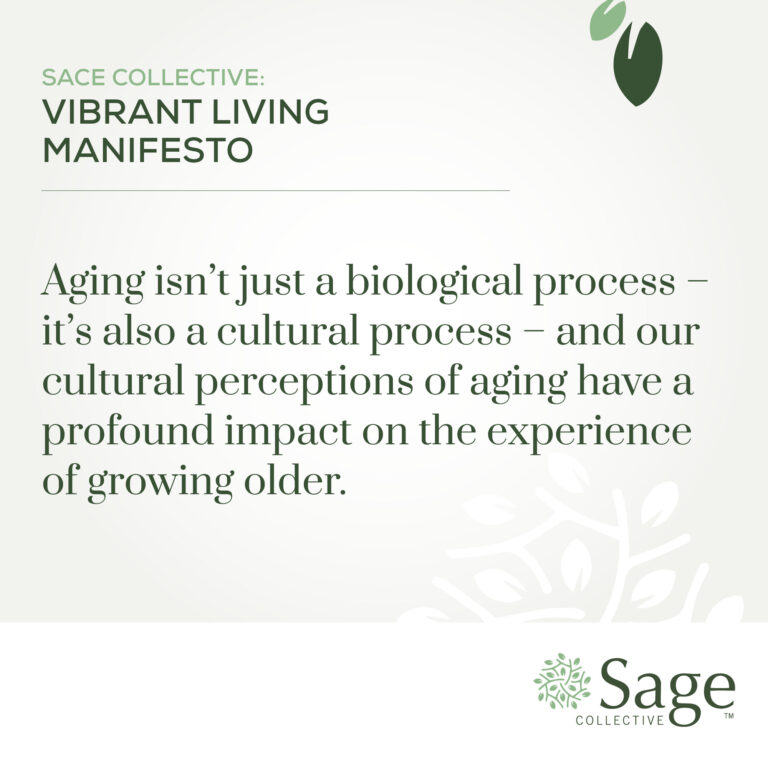
Aging isn’t just a biological process — it’s also a cultural process. Our cultural perceptions of aging have a profound impact on the experience of growing older.

We rebuke the traditional American model of valuing novelty and youth above age, experience and wisdom. We instead call upon other exemplary models for inspiration: Native Americans herald their elders as the keepers of tradition and storytelling, and in many Eastern civilizations, filial piety (to be good to one’s parents) is deemed an essential duty. 

At Sage Collective, we believe that humanity is at its very best when we connect and engage with one another. We believe that elders have boundless knowledge to share with youth, and vice versa — because we believe that life is a constant, collaborative journey for all ages. 

So we’re here to disrupt the status quo, to catalyze change in the way people understand the role of older adults in society. We’re here to create an innovation lab — to test new ideas, processes and products and expand our ways of thinking and doing — as a way of establishing a radical new framework where older adults are valued and engaged, where they experience a life lived vibrantly.

Freedom, flexibility and joy… access to high-quality, affordable and vibrant living… We believe these are rights, not privileges. That’s why Sage Collective is providing residences, programming and ancillary services to manifest our vision. 

As with any vision, ours is nothing without the support that translates ideas into action. We need residents and participants who share our commitment to vibrant living and want to be a part of it. If you’re a collaborator, a disruptor, a changemaker, a change-seeker… we invite you to do better, for ourselves and others, to live more vibrantly, to be a part of the collective.

Graphic reads: Sage Collective Vibrant Living Manifesto. Aging isn't just a biological process — it's also a cultural process — and our cultural perceptions of aging have a profound impact on the experience of growing older.
› Back to top
« back
05.04.21 | Community

The Health Benefits of Gardening

At Sage Collective, our philosophy of vibrant living encompasses everything from engaging in moderate, regular physical activity to eating a primarily plant-based diet and having an active social life. Interestingly enough, gardening touches on all three of these facets of vibrant living at once. Adopting gardening as a hobby brings a wide array of health benefits and beyond — let’s take a look:

Physical Health Benefits

Naturally, spending time outdoors gardening leads to higher levels of Vitamin D exposure. Adequate Vitamin D exposure is particularly important for older adults, as it increases calcium levels, therefore improving bone health and providing a boost to your immune system. The act of gardening is also an accessible, aerobic form of exercise that aids in increased flexibility, strength and stamina. Additionally, if you’re growing a vegetable, fruit or herb garden, all that fresh food is great for your diet! 

Mental Health Benefits

Growing and nurturing a living garden brings with it a deep sense of accomplishment, pride and self confidence. Just look at what you can do with your own two hands! Gardening is also believed to help reduce symptoms of anxiety and depression. In fact, one scientific study even posits that inhaling M. vaccae, a healthy bacteria that lives in the soil, can increase levels of serotonin – the key hormone that stabilizes our mood, feeling of well-being, and overall happiness.

Social and Cultural Benefits

While it can be a solo activity, gardening is also a great way to spend time with family, friends or neighbors. Community gardens in particular help many older adults to combat loneliness, all while contributing to the greater good of their neighborhood. Gardening has long been a way for communities to come together, to nurture each other, and to practice healing, sovereignty and even resistance

At Sage Collective, we advocate for older adults to adopt gardening as part of their lifestyles for all these reasons and more. In support of this belief, we will continue to promote the adoption of community gardens in the residential environments in which we engage older adults (including our own residents currently in development in Bronzeville), as well as bringing farmers’ markets to such communities. Stay tuned for more!

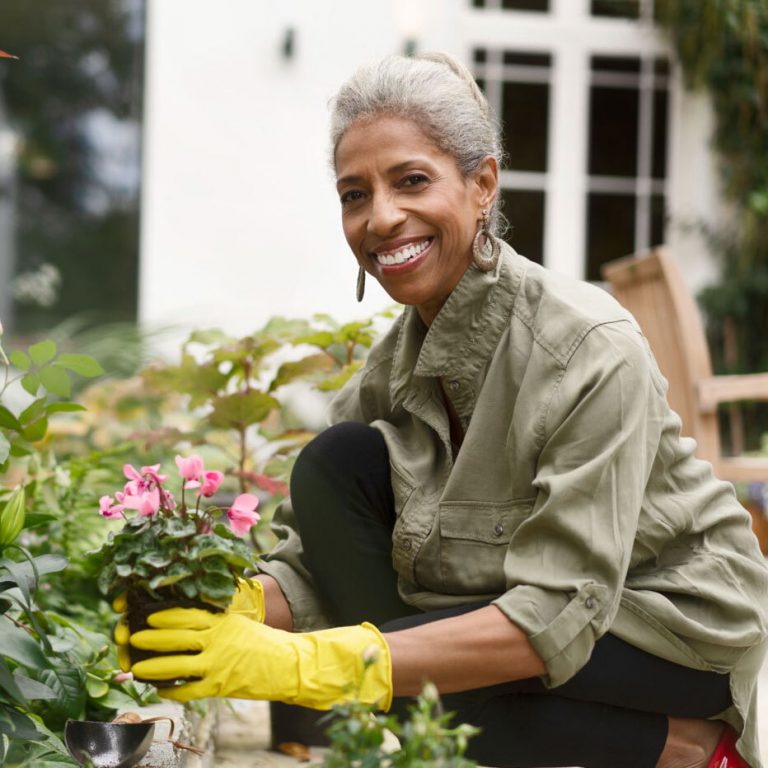
An older African American woman smiling while holding flowers she is about to plant in her garden
› Back to top
« back
04.22.21 | Sage Advice®

Chicago COVID-19 Vaccination: Where We’re At Now

As part of Sage Collective’s ongoing campaign to provide vital information regarding the COVID-19 virus, variants and vaccine to our community, we’re taking a closer look COVID-19 vaccination in Chicago, and where things stand today.

Open Eligibility

After a presidential decree stating that all U.S. adults should be eligible to receive the COVID-19 vaccine on April 19th, Chicago made it happen. This past Monday, Chicago joined the rest of Illinois (and the nation), opening vaccination appointments to all residents 16+ years of age. 

This move came just a week after Governor Pritzker announced that all Chicagoans were welcome to travel out to the suburbs to receive a vaccination dose, starting on Monday, April 12th, if they weren’t yet eligible in the city. 

Finding Your Shot

Now, Chicagoans are in a position where they can turn to local city vaccination sites to receive their shot — or they have the option to travel out to a nearby suburb if appointments in the city are hard to come by. 

To find a vaccine appointment in Chicago, you can use the city’s vaccine finder here. For those that are less inclined to use online technology, you also have the option of calling the city’s COVID-19 Help Line at 312-746-4835. Vaccine appointments can also be made at Costco Pharmacies, CVS, Jewel Osco, Mariano’s, and Walgreens. 

To find a vaccine appointment in Illinois, you can use the state’s vaccine finder here. You can also call the Illinois Department of Health Hotline at 833-621-1284 for assistance booking your appointment.

A Quick Word on Johnson & Johnson

With distrust of the vaccine already widespread, many were alarmed when distribution of the Johnson & Johnson vaccine was temporarily halted by the CDC and FDA. However, the number of those that experience side effects is slim, and the CDC and FDA continue to closely monitor the situation out of an abundance of caution. The City of Chicago’s official statement reads: 

“As of April 12, more than 6.8 million doses of the Johnson & Johnson (J&J) vaccine have been administered in the U.S. CDC and FDA are reviewing 6 cases of a rare and severe type of blood clot in individuals after receiving the J&J vaccine. We are monitoring the situation and in communication with federal partners. As we wait to learn more, we are not administering or scheduling the J&J appointments. We will continue to update as more information is available.” 

Where We’re At Now

Nearly 40% of Chicago residents 18 and older have received at least one dose. Meanwhile, that statistic falls to just 25% of all Black Chicagoans. As COVID-19 cases continue to spike in Chicago, the dangerous and disproportionate impact of COVID-19 on the Black community persists — while the city’s test positivity rate sat at 5.5% as of Tuesday, that number rises to 7.9% among Black Chicagoans.

As city and state officials continue to urge all residents to receive their vaccine, it becomes necessary for those officials to make a concerted effort to provide information and resources to communities of color, and to remain cognizant of the justifiable mistrust our nation’s history of public health inequity has sowed. 

At Sage Collective, we remain committed to keeping our community up-to-date with the latest information and insights. Stay tuned for more.

Orange traffic cones line a curb, with signs tied to them reading "Covid vaccine clinic parking only."
› Back to top