« back
11.19.25 | Community

Seven Meaningful Questions to Ask the Older Adults You Love

When we ask our aging parents or loved ones how their day was, we often get a familiar answer: “Oh, fine.” But beneath that simple reply, there’s often a world of thought, emotion, and memory waiting to be invited into conversation.

At Sage Collective®, we believe vibrant living isn’t just about activity—it’s about connection. The right questions can turn everyday exchanges into moments of empathy, reflection, and joy. Inspired by therapist Amy Morin’s advice for parents seeking deeper dialogue with their children, we’ve adapted her wisdom for a different kind of relationship: the one between adult children and their aging parents.

Here are seven questions that go beyond “How was your day?”—each designed to spark meaningful conversation and strengthen emotional connection.

  1. What was the best part of your day?
    This simple question invites gratitude. When older adults reflect on moments of joy—whether it’s a morning cup of coffee, a friendly call, or a walk in the sun—it helps strengthen optimism and well-being. You might share your own, too: “The best part of my day was catching up with you.”
  2. What’s something that made you think today?
    Curiosity doesn’t fade with age—it deepens. Asking this question encourages engagement with the world, whether through a news story, a book, or a passing conversation. It reminds your loved one that their insights matter and that you value their perspective.
  3. Who made you smile today?
    This brings relationships into focus. It celebrates social connection—an essential ingredient for emotional health—and can open the door to stories about neighbors, caregivers, or longtime friends. It’s also an opportunity to notice and nurture community.
  4. What challenged you today—and how did you handle it?
    Aging can bring daily obstacles, both big and small. Asking about them with genuine curiosity (not concern) honors resilience. It shows trust in your loved one’s problem-solving and reinforces their sense of agency and self-efficacy.
  5. Who did you help—or who helped you—today?
    Giving and receiving help are both acts of connection. This question reframes independence as interdependence, highlighting the reciprocity that defines healthy relationships. It also provides insight into what support feels meaningful to your loved one.
  6. What’s something new you’d like to try?
    Encouraging experimentation—whether it’s a new recipe, a class, or a simple change in routine—helps keep the spirit of growth alive. It reminds your loved one that curiosity has no age limit and that new experiences remain within reach.
  7. What are you looking forward to tomorrow?
    Hope is a powerful motivator. This question shifts focus toward anticipation and purpose—helping older adults maintain a sense of rhythm, continuity, and excitement about the days ahead.

Small questions can make a big difference. Each one is an act of care, a signal that you’re not just checking in—you’re truly listening. And when we listen deeply, we help the people we love stay connected not only to us, but also to themselves.
› Back to top
« back
11.13.25 | Health & Wellness

Plug-in to Care: Honoring National Family Caregivers Month 2025

Each November, we pause to honor the millions of family caregivers whose compassion, patience, and daily dedication sustain loved ones across generations. This year’s National Family Caregivers Month theme—“Plug-in to Care”invites all of us to connect more deeply: to one another, to resources, and to the networks that make caregiving more supported and sustainable.

At Sage Collective®, we believe that vibrant living thrives on connection. Our mission has always been to inspire older adults to live more fully—through community, creativity, and conscious care of mind, body, and spirit. The “Plug-in to Care” theme beautifully echoes those values, reminding us that no one should walk the caregiving journey alone.

The Meaning Behind “Plug-in to Care”
Caregiving today is more interconnected than ever before. The phrase “plug-in” highlights both the digital and human aspects of connection—using technology, education, and community to empower caregivers and reduce isolation. Whether that means joining a virtual support group, exploring a caregiving app, or simply reaching out for a conversation, the act of plugging in reinforces that support is available and community is near.

At its heart, this year’s theme is about recognition: seeing caregivers not only as helpers, but as vital members of our health and social ecosystems. When caregivers are equipped with tools and support, everyone benefits—from the person receiving care to the broader community around them.

Connection in Action
To “plug-in to care” means finding—and offering—connection in many forms:

  • Access tools and knowledge. Online workshops, educational videos, and caregiving platforms can offer practical skills, emotional reassurance, and inspiration.
  • Tap into networks. Community centers, local nonprofits, and organizations like Sage Collective® create spaces—both virtual and in-person—where caregivers can share stories, advice, and encouragement.
  • Seek emotional and spiritual nourishment. Caregiving can be as emotionally demanding as it is rewarding. Mindfulness, journaling, and meditation—practices we regularly explore at Sage Collective—can restore balance and resilience.
  • Celebrate the caregivers themselves. Recognition matters. Whether through a heartfelt note, shared meal, or public acknowledgment, expressing gratitude honors the humanity and strength behind caregiving.

Join Us: Caregiving & Self-Care — Finding Balance in the Journey
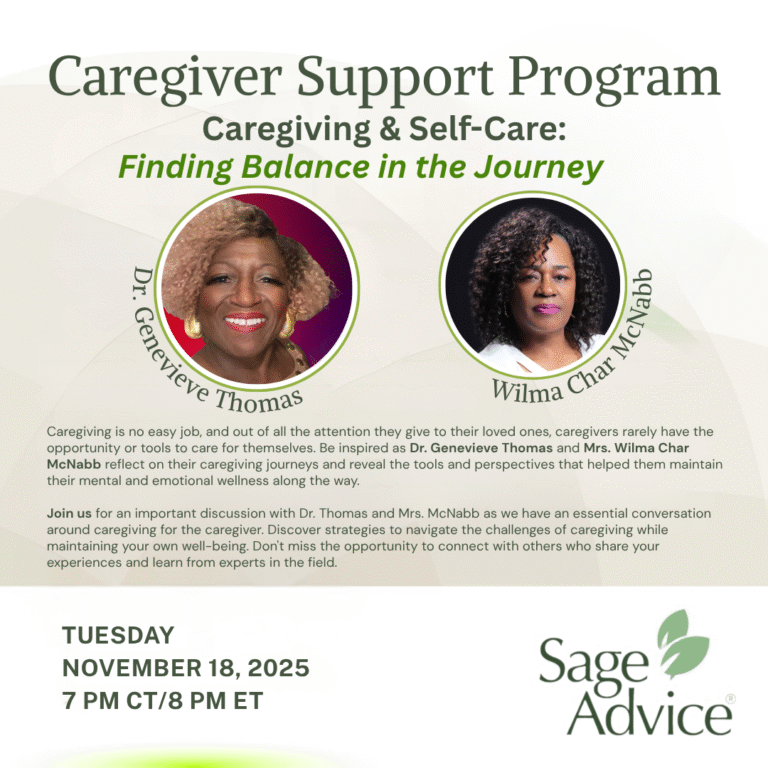
In honor of National Family Caregivers Month, Sage Collective® is hosting a special Facebook Live event: “Caregiving & Self-Care: Finding Balance in the Journey,” on November 18, 2025, at 7:00 PM CT / 8:00 PM ET.

Caregiving is no easy job, and out of all the attention they give to their loved ones, caregivers rarely have the opportunity or tools to care for themselves. Be inspired as Dr. Genevieve Thomas and Mrs. Wilma Char McNabb reflect on their caregiving journeys and share the tools and perspectives that helped them maintain mental and emotional wellness along the way.

Together, we’ll explore how caregivers can sustain their own health while caring for others—learning strategies for managing stress, fostering resilience, and nurturing a balanced sense of self. It’s an evening of connection, understanding, and encouragement—an essential conversation around caregiving for the caregiver.

Don’t miss the opportunity to connect with others who share your experiences and learn from experts in the field. RSVP today to join us for this meaningful dialogue on reflection, balance, and well-being.

Living the Message
Family caregivers are the quiet heroes who hold our communities together. “Plug-in to Care” reminds us that support, learning, and connection are not luxuries—they’re lifelines. This month and beyond, let’s honor caregivers by extending compassion, sharing knowledge, and building community.

At Sage Collective®, we celebrate caregivers as living embodiments of vibrant living—people whose strength, grace, and generosity reflect the very best of us all.

This November, and in every season that follows, may we each find new ways to plug in—to care, and to one another.

› Back to top
« back
11.06.25 | Community

Honoring Memory, Inspiring Hope: National Alzheimer’s Disease Awareness Month 2025

Every November, we pause to recognize National Alzheimer’s Disease Awareness Month—a time dedicated to shining light on one of the most profound health challenges of our time. Established in 1983 by President Ronald Reagan, this national observance encourages understanding, compassion, and collective action for the millions of individuals and families affected by Alzheimer’s disease.

At Sage Collective®, where we champion the pursuit of vibrant living at every age, this month holds special meaning. We see awareness not just as acknowledgment, but as a call to empowerment—an opportunity to learn, connect, and nurture the wellbeing of both mind and community.

Understanding the Challenge
Today, more than six million Americans live with Alzheimer’s disease, and that number is projected to rise significantly in the coming decades. Alzheimer’s is the most common form of dementia, characterized by progressive changes in memory, thinking, and behavior that interfere with daily life. But behind the statistics are real lives—families, friends, and communities who navigate these changes with courage and care.

For many older adults, the diagnosis can bring fear or isolation. Yet, awareness opens the door to early detection, meaningful support, and a deeper sense of connection. At Sage Collective®, we believe that knowledge is care—and that understanding Alzheimer’s helps each of us respond with empathy, intention, and love.

Living Vibrantly in the Face of Memory Loss
While there is not yet a cure for Alzheimer’s, emerging research continues to highlight how lifestyle factors—nutrition, exercise, sleep, and social engagement—may help protect and strengthen brain health.

That’s why Sage Collective®’s philosophy of vibrant living is so essential:

Each of these elements isn’t just good practice—they’re acts of hope. They remind us that even in the presence of cognitive change, purpose and vitality remain within reach.

Supporting Caregivers and Community
Equally important are the caregivers—the family members, friends, and professionals who devote their days to supporting those living with Alzheimer’s. This month serves as a reminder to honor their compassion and endurance. Offering respite, sharing a meal, or simply listening are powerful ways to show gratitude and solidarity.

At Sage Collective®, we often emphasize that vibrant living is not an individual pursuit—it’s a shared one. Community care is a form of collective strength. Whether you’re volunteering, donating to research, or lending a hand to a neighbor, your participation helps sustain a culture of dignity and understanding.

A Month for Reflection and Action|
Throughout November, we encourage everyone to take part in Alzheimer’s Awareness Month by:

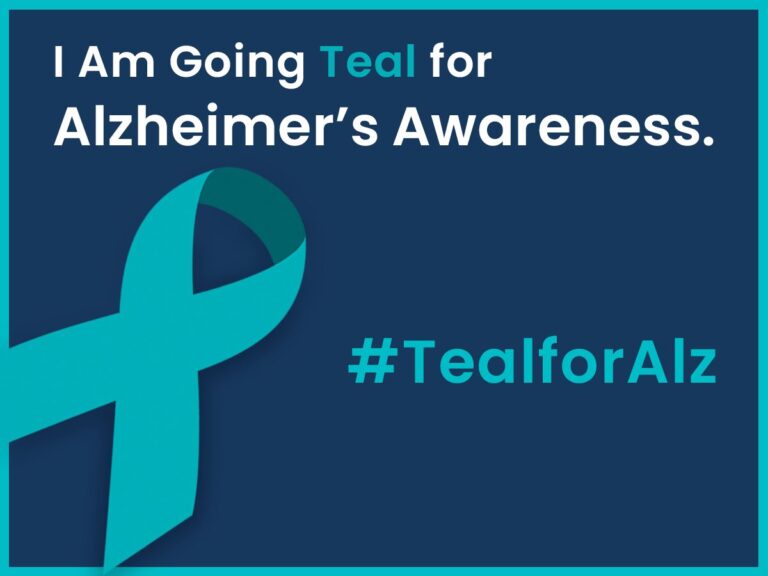
  • Wearing teal, the color of awareness and calm support.
  • Learning the early signs of Alzheimer’s to help friends and family access care sooner.
  • Sharing your story to reduce stigma and inspire others.
  • Supporting local organizations that provide resources, respite, and advocacy.

At Sage Collective®, we believe awareness is the first step toward transformation. By turning compassion into action, we build a future where aging is met not with fear, but with grace, understanding, and vibrant possibility.

Remembering the Heart of It All
Alzheimer’s disease affects memory—but it cannot erase meaning. The bonds we form, the love we give, and the communities we nurture endure far beyond the boundaries of memory.

As we observe National Alzheimer’s Disease Awareness Month, let us recommit to living with empathy, mindfulness, and purpose. In doing so, we honor not just those who remember, but all who are remembered.

› Back to top
« back
10.29.25 | Arts & Culture

The Grace in Grit: A Reflection on Resilient Living

In the language of vibrant living, grittiness is not about being hard or unyielding. It’s about staying soft enough to keep growing, steady enough to keep moving, and brave enough to keep beginning again. At Sage Collective®, we believe that living vibrantly isn’t about avoiding friction — it’s about finding meaning and movement within it.

Redefining Grit
Psychologist Angela Duckworth, a University of Pennsylvania professor and 2013 MacArthur “Genius Grant” recipient, popularized the concept of grit through her groundbreaking research and her 2016 book, Grit: The Power of Passion and Perseverance. Her studies explored why success so often depends not on raw talent, but on sustained effort — on the ability to stay committed to long-term goals even in the face of difficulty.

But within the context of aging and community, grit takes on a more soulful dimension. It’s less about ambition and achievement, and more about endurance — the quiet, daily persistence that allows us to continue living with purpose, even when life’s terrain becomes steep or uncertain.

For older adults, grit can mean returning to watercolor painting after years away from a studio, walking daily despite arthritis, or learning to navigate new technology to stay connected with family. These acts may seem ordinary, but they are, in truth, acts of courage — small, repeated commitments to staying engaged in life.

Grit and Grace
At Sage Collective®, we see grit and grace as twin forces that shape the experience of vibrant living. Grace provides the softness that tempers determination; grit gives structure to hope. Together, they allow us to persist with compassion — toward ourselves and others.

In our community, we often see how these qualities intertwine: when someone finds new purpose through volunteering, returns to a beloved craft after loss, or steps back into connection after a season of solitude. These moments reveal the essence of grit — not stoicism, but re-engagement. Not merely endurance, but renewal.

The Everyday Practice of Grit
Grittiness can also be cultivated through daily habits that reinforce purpose and connection. In community gardens, residents learn patience with the soil and the seasons. In movement or yoga classes, they rediscover balance through repetition and release. In book clubs or creative workshops, they flex mental and emotional resilience — staying open to new ideas, new people, and new ways of seeing.

Grit doesn’t always roar. Sometimes, it whispers — “keep going.” It shows up in consistency, in curiosity, in the willingness to show up for oneself and for community, even on days when energy feels low. It’s persistence paired with perspective, a refusal to let difficulty define the horizon.

The Texture of Vibrant Living
Vibrancy, after all, isn’t a glossy state of perpetual joy. It’s a textured one — full of contrast, light and shadow, rest and renewal. Grittiness gives that texture its depth. It helps transform obstacles into opportunities for growth and creativity. It keeps us engaged with life’s dynamic rhythms, and reminds us that living fully means participating in the full spectrum of experience — the easy and the hard, the known and the unknown.

At Sage Collective®, we often say that vibrant living is a choice. Grit makes that choice sustainable. It allows us to meet the moment — whatever it brings — with heart, humor, and faith in our own capacity to adapt and thrive.

Closing Thought
Grit, then, is not about hardening. It’s about fortifying — strengthening our inner life so that we can continue to live outwardly with vibrancy, curiosity, and joy. It is the quiet strength behind every act of creative resilience, every step toward connection, every renewed commitment to live life fully — no matter our age.

› Back to top
« back
09.25.25 | Arts & Culture

Older AND Wiser

There’s a particular kind of light that comes with time. It’s not the flash of a first or the dazzle of a debut. It’s steadier, warmer—a glow made of miles traveled, questions asked, lessons learned, and love given freely. At Sage Collective®, we honor that light and the people who carry it. We call the result vibrant living.

Being older doesn’t mean shrinking your life to fit a smaller box. It means right-sizing your days to fit your truest self. In the Sage Collective® community, that looks like choosing practices that nourish body, mind, and spirit—because well-being is holistic and joy is a daily habit. We edit our priorities, clarify our values, and discover that happiness multiplies when we say yes to what matters—and no to what doesn’t. That discernment is freedom.

We know the difference between urgency and importance. We’ve learned that a slow morning with coffee and a good book can be a radical act of happiness. We understand that listening—really listening—often changes more than speaking. And we’ve seen how a thoughtful pause can turn conflict into connection, and a setback into a new path.

Mindfulness is one of our favorite tools for that freedom. A quiet moment with breath and gratitude can reframe the whole day. Mindfulness slows the world just enough for us to notice the good that’s already here: the warmth of a mug, the way light lands on a plant, the voice on the other end of a phone call. With presence, we listen more than we speak, respond rather than react, and turn conflict into connection. Wisdom thrives in that space between stimulus and response.

We also believe in lifelong learning—curiosity that never retires. Accumulated wisdom makes us better learners, not just better teachers. We ask sharper questions, mix curiosity with compassion, and bring context to every conversation. Pick up a new language, take a workshop, explore a museum, try a tech tool, or enroll in a community class. Every new skill is a vote for your future self. And when we learn together, we strengthen belonging—the heartbeat of vibrant living.

Art and culture are fuel, too. Creative expression—whether journaling, watercolor, choral singing, or the elegant focus of calligraphy—offers healing and delight. It’s not about mastery; it’s about meaning. When we make or experience art, we practice seeing the world (and ourselves) with fresh eyes. That fresh seeing reignites wonder.

Movement anchors the whole picture. A walk at sunset, a gentle stretch, a dance in the kitchen—these are small rituals of agency. They remind us that vitality isn’t a number; it’s a relationship with our own energy. Rest counts, too. Rest is a skill, and practicing it is an act of self-respect.

And then there’s contribution. Wisdom wants company. Mentoring a neighbor, volunteering for a cause, reading with a grandchild, or sharing a favorite recipe—these gestures turn experience into impact. Each time we share what we’ve learned, we strengthen the fabric of community and remind ourselves that our presence still moves the needle.

Joy, at this stage, isn’t loud for the sake of loud. It’s confident. It’s the joy of knowing our own rhythm, recognizing the seasons of our lives, and trusting that renewal is always possible. We hold both things at once: gratitude and grief, tradition and change, ambition and ease. That both/and mindset is the quiet superpower Sage Collective® celebrates every day.

Most of all, we understand that wisdom compounds. A single insight gained years ago—“call when you think of them,” “always carry water,” “take the walk”—keeps paying dividends. We’re not chasing the next thing; we’re choosing the right things. And in that choosing, we make room for wonder.

So here’s to being older and wiser: to curiosity that never retires, to courage that keeps expanding our horizons, to grace for ourselves and others, and to the everyday rituals that make life feel deeply, deliciously alive. The chapters ahead aren’t an afterthought. They’re a testament—to how far we’ve come, how much we’ve learned, and how joyful it is to keep growing.

› Back to top
« back
09.10.25 | Community

Savoring the Seasons: Simple Ways to Welcome Change

At Sage Collective®, we believe vibrant living is a practice—rooted in mindfulness, cultural arts, and lifelong learning. The turning of the seasons offers a natural rhythm to support that practice. Rather than bracing against change, we can welcome it with small rituals that enrich body, mind, and community.

Notice before you name it
Begin with attention. Step outside and simply observe: the angle of light, the feel of air on your skin, the scent of rain or cut grass. Try a “five-sense scan”—name one thing you can see, hear, smell, taste, and touch. This gentle check-in is a quick way to ground yourself and build gratitude for what the season brings. Consider keeping a brief seasonal journal—three lines a day tracking the sky, your energy, and one thing that made you smile.

Move with the weather
Let each season suggest how you move. In cooler months, think steady, warming motion—indoor walking circuits, light strength work, or chair yoga by a sunny window. In warmer months, try early-morning strolls, gentle cycling, or stretching on a shaded porch. The aim isn’t intensity; it’s consistency. Pair movement with a cue you already do—after brewing tea, take a ten-minute walk, or after lunch, do a few standing balance exercises. Your future self will thank you for the routine.

Eat what the season offers
Seasonal foods are flavorful, budget-friendly, and nourishing. Build bright salads in spring, juicy berries and tomatoes in summer, roasted squash and soups in fall, and citrus and hearty greens in winter. Turn mealtime into a mini adventure: explore a farmers market, swap recipes with a neighbor, or host a simple “taste of the season” potluck. Cooking in community supports social connection and keeps experimentation fun and low-pressure.

Refresh routines and spaces
As the light shifts, refresh your daily rhythm. Rotate a new stack of library books, queue up a seasonal playlist, or set a small creative goal—a watercolor postcard, a poem, or a family history vignette. At home, make tiny changes with outsized impact: a softer throw for late-autumn evenings, a vase of spring branches, a bowl of lemons on the table. Clear a surface or two; a little open space helps your mind breathe, too.

Share the moment
Seasons are meant to be shared. Plan low-effort, high-delight outings: a neighborhood leaf walk, a matinee concert, a museum afternoon, or a cozy film night with friends. If mobility or weather complicate plans, bring the season to you—invite a grandchild to teach you a new app, host a tea tasting, or start a phone tree to swap “today’s small joys.” Belonging grows when we make room for others to belong with us

Be gentle with shifting needs
Changing weather can change how we feel. Dress in layers, hydrate, and check footwear for good traction. If shorter days affect your mood, sit near a bright window in the morning, schedule a friendly call, or plan something pleasant to anticipate each week. Ask for help when you need it—wisdom includes knowing you don’t have to do everything alone.

At its heart, enjoying the change of seasons isn’t about doing more—it’s about noticing more. It’s choosing a pace that suits your energy, savoring what’s fresh and available, and staying connected to people who make life richer. That’s vibrant living, the Sage Collective® way: mindful, creative, curious, and grounded in community—no matter what the calendar says.

Photo by Justin Cron on Unsplash
› Back to top
« back
08.07.25 | Healthy Eating

Joyspan: Measuring Life in Moments, Not Years

At Sage Collective®, we believe that vibrant living isn’t measured solely by how many years we have—but by how fully we live in those years. Just as we talk about lifespan and healthspan, there’s another equally essential, if less frequently named, concept: joyspan.

Joyspan is the measure of how much joy we experience and sustain throughout our lives. It’s not about momentary happiness or fleeting pleasures. It’s about the deep, sustaining joy that comes from meaningful connections, a sense of purpose, curiosity, and the freedom to be our full selves—especially as we age.

Beyond Lifespan and Healthspan
Modern medicine and lifestyle changes have helped extend our lifespan—the number of years we live—and increasingly, our healthspan—the number of those years we live in good health. But neither of those measures captures the richness of human experience. That’s where joyspan comes in.

Joyspan is qualitative, not quantitative. It invites us to ask, Am I making space for joy in my life? What fills me up? What lifts my spirit?

 Joy Matters—Especially As We Age
We live in a world that often underestimates the emotional and creative lives of older adults. There’s a quiet but damaging narrative that says joy belongs to the young. But we know from experience—and from the beautiful lives of those in our communities—that joy can flourish at any age. In fact, many people report a renewed sense of joy in their later years, when priorities shift, distractions fall away, and we’re finally able to savor what matters most.

Joy isn’t frivolous—it’s foundational. Research shows that joy supports mental health, bolsters our immune system, and helps build resilience. It improves relationships, sharpens cognitive function, and even enhances longevity. But beyond the science, joy connects us to our humanity. It allows us to experience gratitude, wonder, and awe.

Cultivating Joyspan: Daily Practices
Unlike lifespan, which is out of our control, joyspan is something we can grow—intentionally and continuously. Here are a few practices we encourage at Sage Collective®:

  • Savor small pleasures: A cup of tea, the bloom of a flower, a warm sunbeam on your shoulder. Joy is often tucked into the ordinary.
  • Stay curious: Explore new interests, revisit old passions, take a class, or start a creative project. Curiosity opens the door to joy.
  • Connect deeply: Spend time with people who see you, love you, and make you laugh. Whether it’s family, friends, or community, joy grows in connection.
  • Practice gratitude: Take a moment each day to reflect on what brings you peace or pleasure. Gratitude enhances awareness of joy.
  • Move your body: Gentle movement, walking, dancing—these are not just physical exercises but expressions of life and aliveness.

A Joyspan Philosophy
At Sage Collective®, we are reimagining aging by prioritizing wellness, creativity, and community. Embracing joyspan means honoring the emotional dimension of wellness. It invites us to be present, to celebrate beauty in the everyday, and to believe that joy doesn’t have to fade—it can deepen.

Our joyspan is not determined by the absence of hardship, but by how often we can return to joy, even amidst challenge. As we age, joy becomes not just a possibility, but a practice. And in that practice, we find hope.

So we invite you to ask yourself—not how many years you’ve lived, or even how many healthy ones—but how much joy you’ve let in. Because joy is not the icing on life—it’s the nourishment that makes life worth living.

› Back to top
« back
07.10.25 | Community

The Power of Porch Sitting: Mindfulness, Memory, and Connection in the Summertime

At Sage Collective®, we believe in the beauty of everyday rituals—those simple acts that slow us down, bring us joy, and connect us more deeply to ourselves and our communities. One of summer’s most beloved, and often overlooked, rituals is porch sitting.

For older African Americans especially, porch sitting is more than a seasonal pastime—it’s a cultural tradition, a space of wisdom-sharing, and a quiet act of resistance in a world that moves too fast. In this season of sunshine and stillness, we invite you to revisit this powerful practice and reflect on what it offers us today.

Porch Sitting as a Form of Mindfulness
Mindfulness doesn’t always have to look like meditation. Sometimes, it looks like a rocking chair, a warm breeze, and the hum of cicadas in the distance. It looks like watching the light change on the sidewalk, or simply sitting with no agenda.

Porch sitting slows time. It allows us to be present—noticing the color of the sky, the rustle of leaves, the smell of jasmine on the wind. This sensory engagement grounds us in our bodies and our breath, fostering a kind of meditative clarity. In a world that often glorifies productivity, porch sitting is an intentional choice to savor stillness. And that, in itself, is healing.

A Cultural Touchstone of Community and Wisdom
In many Black communities, the front porch has long been a stage for storytelling, music, debate, and neighborly connection. It’s where kids learned how to play spades, where grown folks talked politics, and where elders passed down history and advice. The porch has always been a place of belonging.

For older adults, it can continue to serve as a sacred gathering place—whether that means reconnecting with neighbors, hosting grandchildren, or simply waving to passersby. These everyday interactions build trust, keep us socially engaged, and offer moments of lightness that nourish emotional well-being.

At Sage Collective®, we celebrate the importance of such intergenerational spaces. They are places where the past, present, and future meet—where wisdom is not just shared, but lived out loud.

Porch Sitting as Self-Care
Too often, we think of self-care as something extravagant or out of reach. But true self-care is simple. It’s allowing yourself to pause. To rest your body. To ease your thoughts. To sit without the pressure of fixing or doing or solving.

Porch sitting reminds us that peace is available to us in the quiet moments. A cool drink in hand. A favorite song playing low. A conversation that doesn’t need to go anywhere. This kind of intentional rest helps regulate our nervous systems, reduces stress, and fosters gratitude. Especially in older age, these practices are vital to vibrant living.

Creating Your Summer Sanctuary
Whether you have a traditional porch, a balcony, a stoop, or even a windowsill, you can create your own summer sanctuary. Add a comfortable chair, a potted plant, a wind chime or candle—anything that brings you ease. Make it a place you return to each day, even if just for 10 minutes. Bring a journal, a book of poetry, or simply your presence. Let this be a season of pausing. Of listening to the world around you—and to yourself.

At Sage Collective®, we know that vibrant living isn’t about doing more—it’s about living well. Porch sitting reminds us that joy and wellness don’t always require movement. Sometimes, they require stillness. And presence. And the courage to simply be.

So, this summer, we invite you to step outside. To sit. To breathe. And to let the power of porch sitting reconnect you with what matters most.

Untitled Photo by Dorothea Lange, 1939 July. http://hdl.loc.gov/loc.pnp/fsa.8b33923
› Back to top
« back
07.09.25 | Lifestyle

Beyond Fireworks: What the Fourth of July Can Still Teach Us

At Sage Collective®, we believe in embracing all of life’s complexities—holding joy and pain, celebration and struggle, side by side. As the 4th of July approaches, we invite our community to reflect on what this day promises, and also what it has yet to deliver. While many mark the occasion with picnics and fireworks, for older African Americans and others who have carried the weight of this country’s unfinished promises, the day can stir layered emotions.

Yes, the 4th of July commemorates the birth of American independence. But who has had access to that freedom—and who still struggles for it—remains an ongoing question. That’s why, each year, we take time not only to celebrate but to reflect. To ask: How do we, as a community rooted in cultural appreciation, vibrant living, and lifelong learning, make room for truth, memory, and forward movement?

Radical Hope in the Face of History
Hope, in the tradition of Black resistance, is not naïve optimism—it’s radical. It’s the kind of hope that propelled Frederick Douglass to demand accountability in 1852, when he asked, “What to the Slave is the Fourth of July?” It’s the kind of hope that allows us, even now, to hold pride in our cultural contributions while remaining critical of the structures that still need to change.

This radical hope is not passive; it’s grounded in the belief that change is possible, and that we are agents of that change, even in our later years. For the elders in our community—those who’ve marched, taught, raised generations, and kept our stories alive—this kind of hope is deeply earned.

The Right to Belong
Belonging is a powerful word. It is one thing to live in a country; it is another to feel of it. Many African Americans have wrestled with this duality for generations: loving a country that has not always loved them back. On July 4th, we reflect on what it means to both critique and claim. To declare that we are part of this nation’s fabric—not just as spectators to its history, but as authors of it.

At Sage Collective®, we believe aging deepens this sense of authorship. You’ve lived enough to know the contradictions. And you’ve lived enough to imagine something better.

Living with Complexity
Our elders teach us that holding complexity is a form of wisdom. You can grill with your family and still talk about injustice. You can sing along to a patriotic tune and still recognize its limits. You can love the idea of liberty while acknowledging that liberty has not yet been extended to all. At Sage Collective®, we hold space for all of it—the contradictions and the beauty.

Legacy and Citizenship
What does it mean to be an active citizen in your later years? It might mean voting. It might mean telling your story. It might mean mentoring, creating art, or simply refusing to be silent. We honor the idea that freedom isn’t something we receive once and for all—it’s something we continue to work for, together. Our elders’ participation in civic life is a gift that enriches communities and keeps the spirit of democracy alive.

This Fourth of July
So as we prepare to celebrate, we also remember. We honor the legacy of Frederick Douglass and so many others who demanded more of this country. We honor the legacy of our own lives—marked by resilience, creativity, and care. And we ask ourselves: What does freedom mean to me now?

At Sage Collective®, we believe it’s never too late to reflect, reimagine, and participate. This Fourth of July, let’s gather in all our truth—and step forward with radical hope.

› Back to top
« back
03.13.25 | Fitness & Activity

Launching the Sage Collective® Caregiver Support Program: A Lifeline for Those Who Care

Caregiving is an act of love, resilience, and dedication—but it can also be overwhelming. Many caregivers, especially those in underserved communities, find themselves navigating immense physical, emotional, and financial challenges with little support. Recognizing this, Sage Collective® is proud to launch the Caregiver Support Program, an initiative dedicated to empowering and uplifting caregivers through education, community, and self-care.

A Program Built for Caregivers
At Sage Collective, we understand that caregiving doesn’t come with an instruction manual. From managing a loved one’s medical needs to balancing work and personal responsibilities, caregivers often carry an invisible yet significant burden. The Sage Collective Caregiver Support Program is designed to provide the resources, tools, and emotional support caregivers need to thrive—not just survive—in their roles.

This program offers:

  • Educational workshops on caregiving techniques, stress management, and self-care
  • Support groups facilitated by professionals, providing a safe space for sharing experiences and advice
  • Access to community resources like healthcare services, respite care, and financial planning
  • Online forums and virtual support to ensure accessibility for all caregivers, no matter their location or schedule
  • Advocacy efforts aimed at influencing policy changes that benefit caregivers, particularly African American caregivers who play a vital role in family and community care

Through this holistic approach, caregivers gain the tools they need to provide the best care for their loved ones while also prioritizing their own well-being.

Join Us for the Caregiver Support Program Launch Event
To celebrate this new initiative, we invite you to our official launch event on March 18, 2025, at 7:00 PM. This evening will focus on Navigating the Emotional Challenges of Caregiving—a crucial conversation that acknowledges the stress, guilt, and exhaustion many caregivers experience.

Featured Speaker: Dr. Genevieve Thomas. Dr. Thomas will lead a discussion on how to manage the emotional weight of caregiving, offering strategies for building resilience, reducing stress, and maintaining a sense of self amid caregiving responsibilities.

Guided Meditation & Yoga Session: Maile Wicklander. To help caregivers reconnect with themselves, certified yoga and meditation instructor Maile Wicklander will guide a low-impact yoga and mindfulness session, providing techniques for relaxation and stress relief.

This free event is open to caregivers, family members, and anyone supporting a loved one through aging or illness. Attendees will leave with practical tools to improve their well-being and a stronger sense of community.

Why Caregivers Need Support Now More Than Ever
Caregiving can be isolating. Many caregivers report feeling overwhelmed, underappreciated, and stretched thin, often neglecting their own needs. Studies show that caregivers are at higher risk for stress-related illnesses, anxiety, and depression, yet many don’t seek support because they feel they “should” be able to handle it all alone.

At Sage Collective®, we believe no caregiver should have to navigate this journey alone. By offering access to community, expert guidance, and wellness practices, we are building a stronger, healthier network of caregivers who feel supported, informed, and valued.

Be Part of This Transformative Movement
If you are a caregiver—or know someone who is—this program is for you. Whether you attend workshops, join a support group, or take part in online discussions, you’ll gain the tools, confidence, and community you need to navigate caregiving with strength and grace.

Connect with fellow caregivers who understand your experiences. Gain valuable insights and strategies to help reduce stress and avoid burnout. Together, we can redefine what it means to care—not just for others, but for ourselves.

RSVP today to secure your spot for the launch event on March 18, 2025.
Visit our website for more details on Sage Collective’s Caregiver Support Program.

› Back to top