« back
03.04.21 | Sage Advice®

Vibrant Living Breakdown: Engagement in Spirituality or Religion

At Sage Collective, we believe in meaningful and engaged lives for older adults. Nine Ways of Vibrant Living is our innovative model that champions just that. Our model incorporates everything from health and wellness to cultural immersion to spiritual enrichment — and today, we’re diving deep into the last of those three key elements. Take a closer look at our seventh component of vibrant living, engagement in spirituality or religion:

Religious Roots

Religion is part of our history. You can read our full story here, but before we were Sage Collective, we were Tabernacle Senior Citizens Project (TSCP). TSCP was started in 1978 by Reverend Louis Rawls, founder and pastor of Tabernacle Missionary Baptist Church on Chicago’s South Side. Rev. Rawls founded both Willa Rawls Manor (a high-quality housing development for older adults) and TSCP in an effort to better support the aging members of his congregation. Today, we carry on his legacy and tradition by continuing to build upon his concern and care for the community. 

The Impact of Engagement

As Rev. Rawls demonstrated, the church is the center of many African American communities. It’s not just a place to practice worship; it’s also a vital hub for civic engagement, for participating in and finding community and for discovering meaningful connections with one another.

Engagement in spirituality or religion touches on all parts of vibrant living. It brings with it life purpose, inner peace and a greater sense of connection to both the people and the world around you. In fact, studies have shown that those who engage in spiritual or religious activities live longer — some claiming even up to four years longer.

For all these reasons and more, we’ve included engagement in spirituality or religion in our Nine Ways of Vibrant Living. We support and encourage participation in spiritual and religious experiences for followers of all faiths residing in Sage facilities, or involved in Sage programs. 
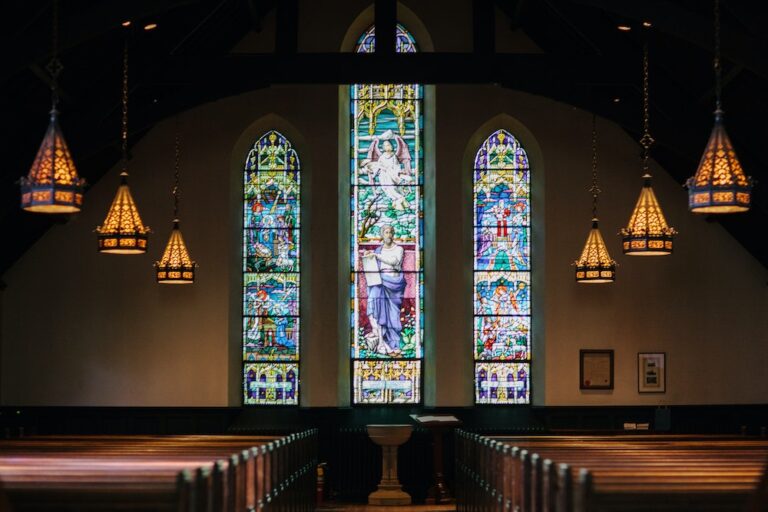
The inside of a church, with rows of pews before large stained glass windows
› Back to top
« back
02.18.21 | Community

Community Spotlight: Groups Making a Difference

The second half of our name, collective, is important to us — we’re a collective because what we do, we do together. It’s part of our DNA to share resources, ideas and successes with everyone in our ecosystem. That’s why today, we’re sharing a community spotlight to celebrate groups making a difference in our neighborhood, Bronzeville, and the surrounding areas. Here’s just a few:

Bright Star Community Outreach

Bright Star Community Outreach (BSCO) is proud of its nine-year history and by-us-for-us roots. They’re led by founder and CEO, Pastor Chris Harris Sr., who grew up in Bronzeville and saw a need to address systematic problems impacting the neighborhood — problems like “violence in our communities, poor economic opportunities, inadequate mental health services, homelessness, child safety, and drug abuse.” Through resource development and collaborative partnerships, BSCO is empowering Bronzeville residents to share in the responsibility of building community. You can learn more about BSCO programs here.

My Block, My Hood, My City

The second group in our community spotlight, My Block, My Hood, My City, also known as M3, was started by Jahmal Cole in 2015 with a mission to “break down the social and emotional barriers of segregation, empower people to meet and serve their neighbors, and inspire Chicagoans to pursue their dreams.” M3 has been nimble in its approach, providing everything from youth education to engaging adult programming. Just one example: as part of their Viral Response, M3 performs Senior Wellness Calls, where volunteers perform senior wellness checks to help provide proper PPE and even just to chat with older adults to help combat social isolation. You can visit their website to learn more about their efforts (and get involved) here.

Sacred Keepers Sustainability Lab + Bronzeville/Kenwood Mutual Aid Network

Food deserts are an ongoing concern on the South Side of Chicago, and as many faced food scarcity like never before during the pandemic, things got even worse when some grocery stores temporarily closed after the George Floyd protests in June. Seeing the need for increased access to resources, two Bronzeville organizations joined forces: Sacred Keepers Sustainability Lab and Bronzeville/Kenwood Mutual Aid Network. Since the summer, their efforts have continued to stay strong and to have meaningful impact on the neighborhood; you can read more at Block Club Chicago here

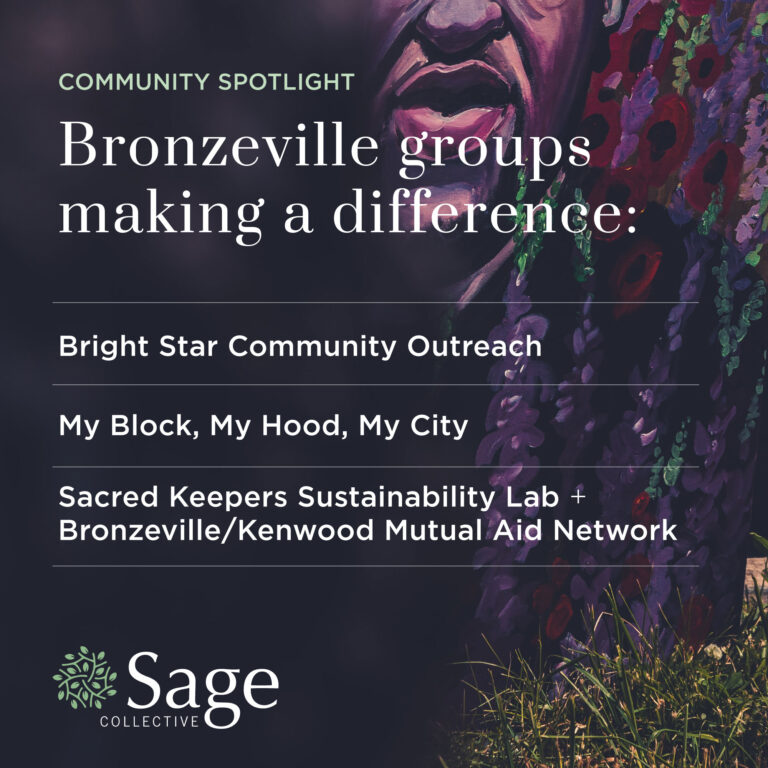
Text graphic reading: Community spotlight: Bronzeville groups making a difference: Bright star community outreach, my block, my hood, my city and sacred keepers sustainability lab + bronzeville/kenwood mutual aid network
› Back to top
« back
02.09.21 | Sage Advice®

A Brief History of Bronzeville

Sage Collective has begun the process of renovating the first two properties we acquired, since selling Willa Rawls Manor, a 123-unit property we owned and operated for more than 40 years. The two properties are located at  4108 S King Drive and 4112 S King Drive. With the buildings located side-by-side in Chicago’s historic Bronzeville neighborhood, it will provide a tangible benefit to the community by celebrating and uplifting Bronzeville’s dynamic history, current-day culture and residents alike. In honor of this effort and of Black History Month, today we take a moment to look at a brief history of Bronzeville.

Becoming Bronzeville

With the Great Migration beginning in 1916, African Americans fled lynchings and oppression in the rural South for brighter opportunities in cities in the North. Though segregation was outlawed after the Civil War, racist practices in hiring and housing practices remained steadfast. Many African Americans in Chicago landed in what became the Bronzeville area, there facing higher rent prices and population density (at its highest reaching 300,000 residents strong). 

Despite this, true to the African principle of ujamaa, Bronzeville residents created a tight-knit community that boasted a network of black-owned institutions and a cultural vivacity that, in its prime from the 1920s-1950s, even rivaled Harlem.

The community had been growing, but the name Bronzeville only entered the scene in the 1930s, suggested by theater editor for the Chicago Bee (an African American-led daily newspaper with national reach), James Gentry. Gentry posited that African American skin was closer to bronze than black, and selected the name as an empowering alternative to racist nicknames for the neighborhood that had emerged.

Center of Culture

Though the official boundaries of Bronzeville are often contested as spanning anywhere from 18th and 67th Street north-south to the Dan Ryan and Lake Michigan west-east, the pulsing heart of Bronzeville landed somewhere in the middle.

Dining, shopping, dance halls and nightclubs abounded. Jazz, blues and gospel were the sounds of Bronzeville, and when the Regal Theater opened in the 1920s, it attracted the country’s most glamorous and talented Black entertainers. Bronzeville also boasts being the home of renowned African American artists and intellectuals like journalist and social activist Ida B. Wells, jazz musician Louis Armstrong, poet Gwendolyn Brooks, women’s aviation pioneer Bessie Coleman, sociologist Horace Clayton and dancer Katherine Dunham.

WTTW put it best when they said businesses and community institutions like Provident Hospital (where Daniel Hale Williams, an African American, pioneered open-heart surgery), the Wabash YMCA (which established the first Black History Month), the George Cleveland Hall Library, Parkway Community House, Binga Bank (Chicago’s first Black-owned life insurance, realty, and financial institution), and more, “were more than alternatives to racially restricted establishments downtown”. They were pillars of the community which helped to instill pride and contribute to the upward mobility of African Americans.”

Through our vision for vibrant, high-quality and affordable housing for older adults, Sage Collective is proud to contribute to the legacy of African American culture, community and success that is the heart and soul of Bronzeville. 

Mural under the “El” tracks in Bronzeville
› Back to top
« back
12.17.20 | Sage Advice®

A Vibrant Living Guide to Aging in Place

How does vibrant living play into aging in place? “Aging in place” describes the process of growing older at home. It’s a process rooted in independence and comfort; a way for older adults to maintain normalcy and their sense of community.

We recently spoke with Angela Higginbotham about her expertise on aging in place, learned from assisting her 93-year-old mother at her mother’s home. Higginbotham is a CPS educator, Lead Speech Pathologist and a member of the Sage Collective Board of Directors.

Maintaining Independence 

“First off, I feel grateful to have the opportunity to care for my mom,” reflects Higginbotham. “I saw the sacrifices she made for my family growing up and I’m happy it’s my turn to do that now. As for how our caretaking occurs: it’s a family affair where my mother is directly involved in the decision-making process. My brother, sister, mother and I all sit down and have a conversation about how she’s feeling, what her needs are and how we can support her as long as we can in an independent setting.” 

Though aging in place isn’t a viable option for everyone, it’s important for older adults with the mental and physical capacity to maintain that level of independence. “As long as people are able to take care of themselves, they’ll be able to take care of themselves longer,” explains Higginbotham. “So helping older adults to age in place, when possible, is essential to sustaining a vibrant life. Because I believe that once people stop maintaining their independence, it affects them psychologically and emotionally.” 

Text over a green background, with quotation marks at the top and the Sage Collective logo at the bottom. Text reads: Helping older adults to age in place, when possible, is essential to sustaining a vibrant life.

Staying Engaged Through Community

“My mom still has her driver’s license — she’s smart about it and only drives between 10-2, when everyone else is at work and when it’s safest — but she still goes to church and out to see friends,” says Higginbotham. For older adults, social isolation and loneliness are often big hurdles to overcome. Staying engaged with family, friends and community members, then, plays a vital role in supporting a more vibrant lifestyle.

Higginbotham goes on to say: “My mom also personally knows many of my friends. From time to time, they’ll give her a phone call or even go and visit, which is something I so appreciate. It means she’s connecting with people and that’s so important.” Though maintaining independence is a large part of aging in place, it is these moments of human connection and care that help the experience feel even more comfortable and warm.

Staying Engaged Through Culture

Social engagement is one thing — but finding things to do for oneself is vital, too. We’ve emphasized before the importance of older adults discovering activities they love. Higginbotham reinforces this perspective, sharing: “One of my mom’s favorite hobbies is quilting. In the spring, we’ll also go to the nursery and pick out plants for both her place and my place together. I’ll keep her company at her house while she plants hers and then she’ll come over while I do mine. We also — pre-COVID times, of course — loved to go to the theater. We’d get lunch or dinner and see different plays across the city. It gave my mom something to talk about, too, because she’d go back and tell her girlfriend all about it.” 

Higginbotham reflects on this, saying, “It’s important for people to get out and see what’s going on in the world. As people age, their ability to transport themselves to new places is limited, and they know about, what they know about. But, if there are people around who can expose them to new experiences, it enriches their lives.” 

Aging in place is just one way to live a more vibrant life. But, whether at a personal home or a care facility, both experiences share a commonality: community and cultural experiences have the ability to engage older adults and enrich them, leading to more vibrant living for all.

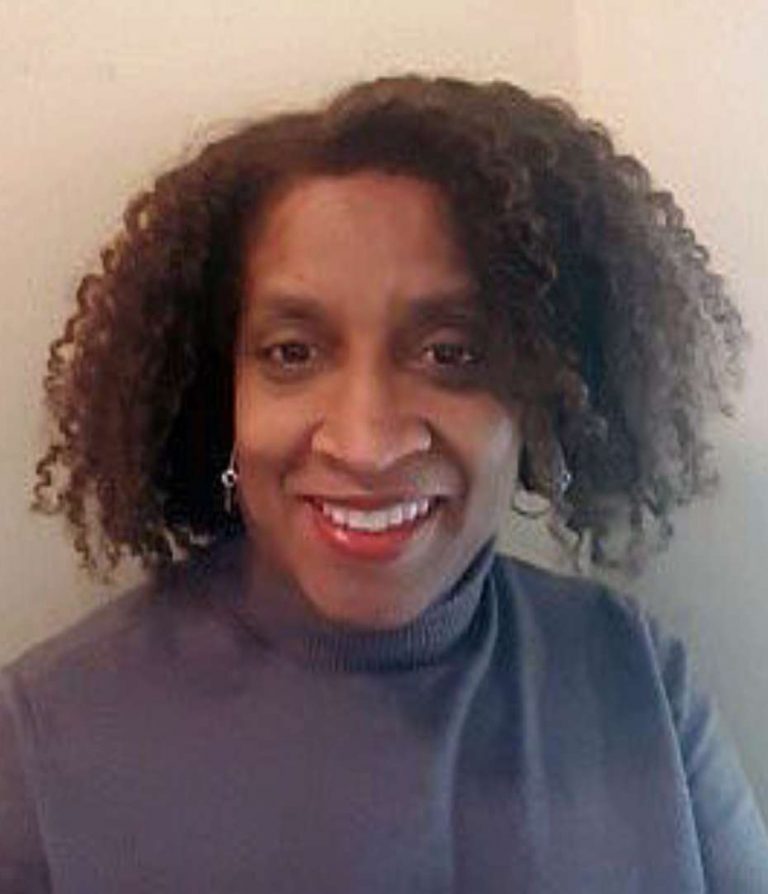
Angela Higginbotham
› Back to top
« back
12.08.20 | Sage Advice®

Understanding the South African Philosophy of Ubuntu

Words from other cultures often encapsulate grand ideas that our own language simply struggles to communicate so succinctly, just like the Japanese concept of tsundoku, which describes having more books than one could ever read. Similarly, the Nguni Bantu term ubuntu is hard to even translate into English, though roughly it means “humanity.” Today, we’re exploring ubuntu and all that the word encompasses.

What It Means

The word ubuntu combines the root ntʊ̀, or “person/human being” with the abstract-noun-forming prefix ubu-, which is why the word is sometimes translated to mean “humanity” or, more extensively, “humanity towards others” and “I am because we are.” The Zulu phrase “Umuntu ngumuntu ngabantu” literally means that a person is a person through other people. Ubuntu encapsulates ideas of human kindness, mutual caring, connection, community and oneness. 

The word dates back as early as 1846 in South Africa, though first became popular during the period of decolonization in the mid 20th century. Ubuntu at that time was described as a form of African humanist philosophy, a moral compass for how we should behave towards one another. 

How Ubuntu Has Been Used

In the late 20th century, Desmond Tutu further popularized the term and brought it to Western audiences. He described it by saying, “My humanity is caught up, is inextricably bound up, in what is yours.” In truly ubuntu, or humanistic form, Tutu advocated that a democratic South Africa could reconcile from apartheid through restorative justice. Both oppressor and oppressed needed to have their humanity restored, to return to ubuntu and a more just, mutualistically caring society, together.

Nelson Mandela himself famously described ubuntu saying, “A traveller through a country would stop at a village and he didn’t have to ask for food or for water. Once he stops, the people give him food, entertain him. That is one aspect of Ubuntu but it will have various aspects.” Mandela embodied ubuntu by leading South Africa out of apartheid with compassion and understanding, rather than vengeance. 

We could all benefit from incorporating ubuntu into our vocabulary and philosophy. At Sage Collective, we believe in the power of humanity, community and kindness — and we celebrate all that ubuntu embodies.

A group of dark human figures are gathered, and their silhouettes are reflected on the ground below them
› Back to top