« back
05.27.21 | Community

Four Ways to Help Maintain Healthy Bones

As we age, bone health becomes increasingly important. Older adults often experience bone loss (low bone density that makes the bones weaker), which leads to increased risk of fractures. Luckily, to help combat this risk, there are habits and behaviors you can adopt to help protect your bone health. Here’s four ways for older adults to help maintain healthy bones:

Include physical activity in your daily routine

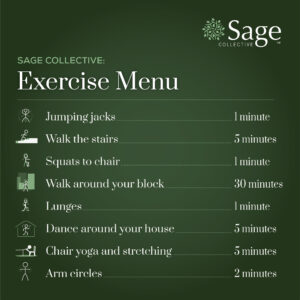
Those that are physically inactive are at higher risk of osteoporosis (a condition in which the bones become weak and brittle) compared to those that are more physically active. To help promote new bone growth and maintain existing bone density, doctors recommend physical activities, such as strength training and weight bearing exercises. For older adults, this translates to incorporating walking (whether leisurely or at a brisk pace) and using light dumbbells if possible.

Eat high-calcium foods throughout the day

Calcium is the main mineral in your bones, and the most important mineral for bone health. A diet low in calcium contributes to diminished bone density, early bone loss and an increased risk of fractures. Therefore, it’s important to eat high-calcium foods throughout the day. For men ages 51-70, the Recommended Dietary Allowance (RDA) is 1,000 milligrams (mg) of calcium a day. That recommendation increases to 1,200 mg a day for women age 51 and older and for men age 71 and older.

Maintain a stable, healthy weight

People who are underweight have a higher risk of developing bone disease, while excess body weight places added stress on a person’s bones. Dieting — and regularly gaining or losing weight — also places undue stress on your bone health. Additionally, low body weight is the main contributing factor for reduced bone density and bone loss in postmenopausal women, due to the loss of the bone-protecting effects of estrogen. This is why the best way to maintain healthy bones is to maintain a stable, healthy weight for your body.

Get plenty of Vitamin D and Vitamin K

Vitamin D and Vitamin K are both important when it comes to building strong bones. Vitamin D helps the body absorb calcium, while Vitamin K-2 aids in reducing calcium loss and helping minerals bind to the bone. You can get Vitamin D with plenty of sunlight exposure, as well as through a diet full of oily fish, mushrooms, eggs and fortified foods, such as milk and cereal. You can get Vitamin K-2 from foods such as dairy products (especially hard cheeses), fermented foods such as sauerkraut, natto (a Japanese soybean product), egg yolks, and chicken. You can also consult your doctor about taking vitamin supplements. 

With the right adjustments to your regular routine, you can help maintain healthy bones and enjoy the perks of a healthier fitness and food regimen. 

A dinner plate with salmon and a vibrant assortment of toppings and seasonings
› Back to top
« back
05.20.21 | Community

Can faking a smile really make you happier?

Throughout our lifetime, we’ve all heard the old sayings like “turn that frown upside down” and “fake it till you make it.” But does the simple act of smiling really provide a mood boost? Science says yes.

Facial Feedback Hypothesis

Over two centuries ago, Charles Darwin was the first to suggest that the facial expressions you make have an impact on your overall disposition. This theory, dubbed “facial feedback hypothesis” by scientists, states that the contraction of facial muscles not only communicates what a person is feeling to those around them, but also communicates what that person is feeling to themself, too. Ergo: by contracting your facial muscles into a smile, this physical act will communicate to your brain not just that it should feel happy, but that it is.

As the Studies Suggest

In an early study, published in 1988, testing the facial feedback hypothesis, participants were made to hold a pen between their teeth (thus mocking the muscle contractions of smiling without being told what they were doing was indeed smiling in order to remove cognitive bias). From those whose pen helped them to mock smiling, to those whose pen helped them to mock scowling, the results demonstrated that those smiling did indeed report more pleasant emotions.

Other studies conducted since then have replicated these findings. A recent study, published in 2020, also asked participants to hold a pen between their teeth (once again mocking the musculature of smiling) and yielded similar results — those that smiled were indeed happier. In fact, one study published in 2009 even suggested that botox users — due to their inability to frown — were happier than those without fillers, who naturally have more facial elasticity.

The Health Benefits of Smiling

Scientists have also suggested that, in addition to lifting your mood, smiling can also lower stress, boost your immune system and possibly even prolong your life. That’s because when you smile, your brain releases neuropeptides, which help fight off stress, and neurotransmitters, such as dopamine, serotonin and endorphins, all of which play a critical role in emotional regulation.

And while smiling no doubt has a positive impact on your own disposition, it also has the added benefit of positively impacting those around you. Afterall, smiling is contagious. American spiritual teacher, Peace Pilgrim, famously said: “Life is like a mirror: Smile at it and it smiles back at you.”

There’s an old myth that while it takes 43 muscles to frown, it only takes 17 to smile. So next time you’re feeling down in the dumps, give these scientific hypotheses a try — if we see you around, we’ll be sure to smile right back!

An African American woman smiling in a leopard print dress and black jacket smiles while holding up her cell phone to take a picture; she's contrasted against the red wall behind her.
› Back to top
« back
05.04.21 | Sage Advice®

The Health Benefits of Gardening

At Sage Collective, our philosophy of vibrant living encompasses everything from engaging in moderate, regular physical activity to eating a primarily plant-based diet and having an active social life. Interestingly enough, gardening touches on all three of these facets of vibrant living at once. Adopting gardening as a hobby brings a wide array of health benefits and beyond — let’s take a look:

Physical Health Benefits

Naturally, spending time outdoors gardening leads to higher levels of Vitamin D exposure. Adequate Vitamin D exposure is particularly important for older adults, as it increases calcium levels, therefore improving bone health and providing a boost to your immune system. The act of gardening is also an accessible, aerobic form of exercise that aids in increased flexibility, strength and stamina. Additionally, if you’re growing a vegetable, fruit or herb garden, all that fresh food is great for your diet! 

Mental Health Benefits

Growing and nurturing a living garden brings with it a deep sense of accomplishment, pride and self confidence. Just look at what you can do with your own two hands! Gardening is also believed to help reduce symptoms of anxiety and depression. In fact, one scientific study even posits that inhaling M. vaccae, a healthy bacteria that lives in the soil, can increase levels of serotonin – the key hormone that stabilizes our mood, feeling of well-being, and overall happiness.

Social and Cultural Benefits

While it can be a solo activity, gardening is also a great way to spend time with family, friends or neighbors. Community gardens in particular help many older adults to combat loneliness, all while contributing to the greater good of their neighborhood. Gardening has long been a way for communities to come together, to nurture each other, and to practice healing, sovereignty and even resistance

At Sage Collective, we advocate for older adults to adopt gardening as part of their lifestyles for all these reasons and more. In support of this belief, we will continue to promote the adoption of community gardens in the residential environments in which we engage older adults (including our own residents currently in development in Bronzeville), as well as bringing farmers’ markets to such communities. Stay tuned for more!

An older African American woman smiling while holding flowers she is about to plant in her garden
› Back to top
« back
04.22.21 | Health & Wellness

Chicago COVID-19 Vaccination: Where We’re At Now

As part of Sage Collective’s ongoing campaign to provide vital information regarding the COVID-19 virus, variants and vaccine to our community, we’re taking a closer look COVID-19 vaccination in Chicago, and where things stand today.

Open Eligibility

After a presidential decree stating that all U.S. adults should be eligible to receive the COVID-19 vaccine on April 19th, Chicago made it happen. This past Monday, Chicago joined the rest of Illinois (and the nation), opening vaccination appointments to all residents 16+ years of age. 

This move came just a week after Governor Pritzker announced that all Chicagoans were welcome to travel out to the suburbs to receive a vaccination dose, starting on Monday, April 12th, if they weren’t yet eligible in the city. 

Finding Your Shot

Now, Chicagoans are in a position where they can turn to local city vaccination sites to receive their shot — or they have the option to travel out to a nearby suburb if appointments in the city are hard to come by. 

To find a vaccine appointment in Chicago, you can use the city’s vaccine finder here. For those that are less inclined to use online technology, you also have the option of calling the city’s COVID-19 Help Line at 312-746-4835. Vaccine appointments can also be made at Costco Pharmacies, CVS, Jewel Osco, Mariano’s, and Walgreens. 

To find a vaccine appointment in Illinois, you can use the state’s vaccine finder here. You can also call the Illinois Department of Health Hotline at 833-621-1284 for assistance booking your appointment.

A Quick Word on Johnson & Johnson

With distrust of the vaccine already widespread, many were alarmed when distribution of the Johnson & Johnson vaccine was temporarily halted by the CDC and FDA. However, the number of those that experience side effects is slim, and the CDC and FDA continue to closely monitor the situation out of an abundance of caution. The City of Chicago’s official statement reads: 

“As of April 12, more than 6.8 million doses of the Johnson & Johnson (J&J) vaccine have been administered in the U.S. CDC and FDA are reviewing 6 cases of a rare and severe type of blood clot in individuals after receiving the J&J vaccine. We are monitoring the situation and in communication with federal partners. As we wait to learn more, we are not administering or scheduling the J&J appointments. We will continue to update as more information is available.” 

Where We’re At Now

Nearly 40% of Chicago residents 18 and older have received at least one dose. Meanwhile, that statistic falls to just 25% of all Black Chicagoans. As COVID-19 cases continue to spike in Chicago, the dangerous and disproportionate impact of COVID-19 on the Black community persists — while the city’s test positivity rate sat at 5.5% as of Tuesday, that number rises to 7.9% among Black Chicagoans.

As city and state officials continue to urge all residents to receive their vaccine, it becomes necessary for those officials to make a concerted effort to provide information and resources to communities of color, and to remain cognizant of the justifiable mistrust our nation’s history of public health inequity has sowed. 

At Sage Collective, we remain committed to keeping our community up-to-date with the latest information and insights. Stay tuned for more.

Orange traffic cones line a curb, with signs tied to them reading "Covid vaccine clinic parking only."
› Back to top
« back
04.15.21 | Sage Advice®

Chicago Commons COVID-19 Live Q&A, Part 2

Sage Collective is thrilled to have recently partnered with Chicago Commons to bring a live, virtual Q&A event to their community of older adults. The purpose of the event was to address both facts and myths regarding the COVID-19 virus and vaccination. 

The live Q&A session, which was part of Chicago Commons’ Adult Day Service (ADS) Program, featured questions from the audience, answered by Rear Admiral (Ret.) James M. Galloway, MD, FACP, FACC, with Monique Caradine serving as moderator.

You can read Part 1 of the Event Roundup here. In Part 2, Dr. Galloway tackles skepticism about the vaccine head on. With respect to the history of medical inequity in Black and Brown communities, and the distrust it has sowed, Dr. Galloway explains the safety of the vaccine and why it remains a critical solution to the ongoing pandemic.


MC: What would you say to those that are nervous about how quickly this vaccine was able to be developed? Usually, vaccine development takes several years, and this occurred over the course of just one year.

JG: Both Moderna and Pfizer are mRNA protein vaccines, and we’ve been working with this type of vaccine structure for decades. We already had a foundation in place before the need for this vaccination, so those developing the vaccine were able to rapidly ramp up the studies and production in a safe way with that knowledge already in place. 


MC: Another question that came in from an attendee: what if I decide not to get vaccinated? Some people are considering this option based on what they’ve heard about the potential severity of side effects from the vaccination. Can you speak to that?

JG: Yes, I can. We’ve heard rumors about side effects of the vaccination. To be clear: the side effects of this vaccine are quite mild. You may experience soreness, swelling or redness in/on your arm where the vaccine was injected. Other mild side effects include headache, fever, muscle pain or nausea. But, it’s important to note that these side effects only last a few hours, if they even occur at all. 

And despite the hype, serious side effects are very rare. The number of people who do have severe side effects is infinitesimally small, and those effects have been treated when they occur. Meanwhile, if you decide not to get vaccinated because of these concerns, let’s compare the risk of severe side effects to the risk of a severe COVID-19 infection: COVID-19 is causing severe infections and hospitalizations, and in the US alone, one death every 28 seconds! 

The side effects of the vaccine are uncommon — and mild if they occur — compared to the severity of the impact of COVID-19 infection. Personally, I think that makes the value of the vaccine abundantly clear.


MC: There are many in the community that think, I’m young and I maintain a healthy lifestyle. Do I really need the vaccine?

DG: The lack of the vaccine, no matter how healthy you are, makes you much more susceptible to the virus. We’ve also seen that the virus can cause long term complications, even in young people, and we’ve seen the death toll. We also know that if you get it, you endanger all those around you — your family members, the folks who live in the home with you and any folks you come into contact with regularly. So there is, in both my mind and from the CDC’s perspective, no alternative that comes close to the protection of a vaccine.


MC: Another question from an audience member — a controversial one, which speaks to the distrust in the African American community around vaccines: How can I be sure that they are giving people in Black and Brown communities the actual COVID-19 vaccination? 

JG: It’s a reasonable question, and one that underscores the longstanding issues of trust bred by historically racist and dangerous health policies, and clinical experiments in vulnerable Black and Brown communities. That history, combined with the current political perspectives swirling around, and some of the more chaotic messaging from multiple social media platforms and media outlets about the vaccine — of course there is distrust. It’s clear there is not a lot of trust in the medical profession or in healthcare in general.

I’d like to give you my perspective of the development and distribution of this vaccine. First and foremost, the vaccine is produced in large quantities and these manufacturing plants are under close supervision and control, without knowledge of where in which communities the vaccine is going to be distributed. So large lots of the vaccine are developed, and the vaccine is placed in small bottles which are sealed and shipped in bulk to states and cities, and these bottles are only opened when ready for use at the local level.

I myself have worked at a vaccine delivery site. When shipments are received, there are multiple individuals in a group overseeing the administration of the vaccine — from the pharmacist who oversees the opening of the containers, the calculation and measuring the dosages, the filling of the syringes and the actual administration of the vaccine. Many, many parties are in the area for safety concerns and traffic concerns.

I say this all to reassure you that it would be difficult for anyone to infiltrate the system and preferentially administer an ineffective or incorrect vaccine to any particular community or persons. 

However, I will say, ensuring that the vaccine is distributed equitably between communities of color and white communities is a serious and real issue. With the data in place to backup these inequities, it is more important than ever for us to be outspoken and to work diligently with our local leaders in the arena of social justice and health equity in order to improve the fairness of distribution and ensure there is transparency around the process. 


MC: In closing, where can people turn to for credible information and facts about the vaccine?

JG: CDC.gov is my number one, go-to place. Many public health directors at the state and local level go to the CDC for guidance and redistribute that information on their own websites as well. Certainly, your doctor or healthcare professional is also a good resource. Those would be my top three: the CDC, local governments and medical professionals.


And if you’re eager for more Q&A sessions on COVID-19 fact and fiction, Sage Collective is planning another event with Dr. Galloway, this time in conversation with Joseph West, PhD. Click here for more details and to RSVP. 

Text on graphic reads: Talking COVID-19. Dr. James M. Galloway talks COVID-19 Facts & Fiction Part 2. Graphic includes the Sage Collective logo, the Chicago Commons logo, and a headshot of James Galloway
› Back to top
« back
04.13.21 | Sage Advice®

COVID-19 Vaccine Testimonial: James M. Galloway

As part of our ongoing campaign to encourage and ramp up vaccination in Black communities across America, Sage Collective is creating testimonials that showcase why people have chosen to receive the coronavirus vaccine, and what the experience was like. To start, we’re engaging our own Board of Directors and Leadership Team to share their stories. 

After sharing the experience of Sage Collective’s own Donna Gaines and Dwain Kyles, this week we interviewed Rear Admiral (Ret.) James M. Galloway, MD, FACP, FACC, a United States medical doctor and Public Health physician, and member of the Sage Collective Leadership Team.


Why did you personally take the COVID-19 vaccine? Did you have any reservations or questions? Do you feel you had all the information you needed to take the decision to be vaccinated? What /who were your sources of information and guidance?   

As a physician and a public health professional, as well as a pandemic preparation lead under President Obama, I felt comfortable with vaccine safety in general but, of course, I had to do my diligent research into these COVID vaccines and the science behind them before being satisfied that they were safe and effective. I researched and reviewed the studies themselves as well as looked to the CDC and FDA for their evaluations and data. After these reviews, I felt very comfortable with receiving the vaccine. 


When did you receive your COVID-19 vaccine and from what company (Moderna, Pfizer, etc.)? What was the experience of signing up/scheduling? Have you received both shots? Where did you have to go to get your vaccinations? What was the experience like of getting into the chair and actually receiving the shot? (If you’ve received both shots, you can break this down by each experience).

As a vaccination center volunteer, I received my first Moderna vaccine in late February and the second in early March. At our vaccination center, in Arizona, sign up was on a website and obtaining the vaccine shot was simple and straightforward, with no untoward effects.


How did you feel after receiving the vaccine, physically or otherwise? Did you experience any side effects?  

I had no side effects from either shot. My wife, a nurse who worked at the center as well, had some mild fatigue that evening and went to bed early – and felt fine the next day.


What is your doctor saying about how COVID-19 vaccination fits into your long term health plan? Are you taking any aftercare measures — if so, what?  

The risk of COVID for me was much greater than the risk of the vaccine and provides me with a sense of relief I have not felt in a year. It remains critically important, even after vaccination, to wear a mask and maintain social distancing in public and around those who have not been vaccinated as well as continuing to avoid large gatherings. However, within our household and among our close relatives, all have been vaccinated now – and you cannot believe the wonder of hugging my 5 year old granddaughter again after a year! 


Are you serving as a guide to others who are seeking information and reassurance about being vaccinated?  

Absolutely. I have spoken with a great number of people who were hesitant about getting the vaccine due to concerns about its safety. After I had the chance to share with them the results of my research and study, many of these individuals proceeded to get their vaccinations. 


Overall, what do you believe makes COVID-19 vaccination so important to society writ large, and in your specific community?  

It is imperative that we protect our families and community members by getting OUR vaccine! It is also important for us as a nation and a community to get back towards normal, to open our schools, our businesses, our communities and our homes. 

Text overlay reads: "The risk of COVID for me was much greater than the risk of the vaccine and provides me with a sense of relief I have not felt in a year."
› Back to top
« back
04.08.21 | Health & Wellness

Join a Roundtable Discussion About COVID-19 Vaccination

With Biden recently announcing all adult Americans will be eligible to receive the COVID-19 vaccine by April 19th, many are preparing their arms for the shot. But access aside — what if you still don’t want the vaccine or are questioning whether to receive your dose? 

We’re here to listen to your concerns. Tell us how you feel about these issues at our live, virtual roundtable discussion:

Tuesday, April 20, 2021 at 1:00 p.m. CST

During the roundtable, we invite our community members to discuss their decision to receive (or not receive) the COVID-19 vaccine. What makes you hesitant to receive the shot? What are the questions you want answered? Whether you have questions, or you know someone who could benefit from this discussion, all are welcome! 

We’ll be joined by our Leadership Team members Rear Admiral (Ret.) James M. Galloway, MD, FACP, FACC and Dr. Joseph West, experts in the fields of medicine and epidemiology, who will share their sage advice. 

Interested in attending? Please RSVP here


This live roundtable discussion is part of Sage Collective’s robust campaign to begin conversations about COVID-19 vaccination within our community, paying particular attention to older African Americans. 

As we seek to increase awareness of how the COVID-19 vaccine works and why it is important, we recognize that historic and systemic medical inequities in Black communities have bred justifiable mistrust. That’s why we must have meaningful conversations about our communities’ viewpoints on, and relationship to, the COVID-19 vaccination — so that we may find a solution that promotes health, safety and comfort for everyone moving forward.

Image text reads: I can get the COVID-19 vaccine, but I don't want it. Now what? Join us for a live virtual roundtable discussion Tuesday April 20, 2021, 1:00 PM CST. Image includes a photo of a vaccine vial and the Sage Collective logo
› Back to top
« back
04.06.21 | Sage Advice®

COVID-19 Vaccine Testimonial: Marc Lane

As part of our ongoing campaign to encourage and ramp up vaccination in Black communities across America, Sage Collective is creating testimonials that showcase why people have chosen to receive the coronavirus vaccine, and what the experience was like. To start, we’re engaging our own Board of Directors and Leadership Team to share their stories. 

After sharing the experience of Sage Collective’s own Donna Gaines and Dwain Kyles, this week we interviewed Marc J. Lane, a nationally recognized business and tax attorney, pioneer behind the Advocacy Investing® approach to socially responsible and mission-related investing, and member of the Sage Collective Leadership Team


Why did you personally take the COVID-19 vaccine? Did you have any reservations or questions? Do you feel you had all the information you needed to take the decision to be vaccinated? What /who were your sources of information and guidance?   

I closely followed – and continue to follow — the publicly available medical information about COVID-19 and the vaccine, and felt fully informed to move ahead with confidence.


When did you receive your COVID-19 vaccine and from what company (Moderna, Pfizer, etc.)? What was the experience of signing up/scheduling? Have you received both shots? Where did you have to go to get your vaccinations? What was the experience like of getting into the chair and actually receiving the shot? 

I’ve been fully vaccinated since late February. The signup at Rush-Presbyterian-St. Luke’s Medical Center was easy and so was each experience. The team was efficient, helpful and friendly, answering any questions anyone might have had.  My wife and I were in and out within a half hour.


How did you feel after receiving the vaccine, physically or otherwise? Did you experience any side effects?   

I felt relieved and gratified to be moving back to a normal life. The side effects were a small price to pay for my own protection and the protection of family, friends and others with whom I can now interact.


What is your doctor saying about how COVID-19 vaccination fits into your long term health plan? Are you taking any aftercare measures — if so, what?  

My doctor was always reassuring, endorsing my own view that the vaccine is our best way to mitigate COVID risk, for ourselves and others.


Are you serving as a guide to others who are seeking information and reassurance about being vaccinated?  

Absolutely! I enthusiastically encourage anyone who raises the question to get vaccinated as soon as they can.


Overall, what do you believe makes COVID-19 vaccination so important to society writ large, and in your specific community?  

The vaccine is our ticket back to normal … for all of us. There’s simply no valid argument to the contrary.

Text reads: "I felt relieved and gratified to be moving back to a normal life. The side effects were a small price to pay for my own protection and the protection of my family, friends and others with whom I can now interact." Marc Lane on getting the COVID-19 vaccine
› Back to top
« back
04.01.21 | Sage Advice®

Chicago Commons COVID-19 Live Q&A, Part 1

Sage Collective is thrilled to have recently partnered with Chicago Commons to bring a live, virtual Q&A event to their community of older adults. The purpose of the event was to address both facts and myths regarding the COVID-19 virus and vaccination. 

The live Q&A session, which was part of Chicago Commons’ Adult Day Service (ADS) Program, featured questions from the audience, answered by Rear Admiral (Ret) James M. Galloway, MD, FACP, FACC, with Monique Caradine serving as moderator.

Rear Admiral (Ret) James M. Galloway, MD, FACP, FACC is a former Assistant Surgeon General for the United States and a public health physician, as well as a member of the Sage Collective Leadership Team. You can find his full bio here. Monique Carradine is a professional broadcaster, author, podcastor, and certified money coach for women leaders and entrepreneurs with over two decades of experience.

In Part 1 of the Event Roundup, we review questions (and answers) related to deciding to receive the vaccine, and how the process works. For the sake of this recap, questions and answers have been edited for clarity and brevity. 


MC: Let’s start with this question from an audience member — should I consult with my doctor first, before I get the vaccine?

JG: Generally, it’s not necessary to check with your physician unless you have a severe allergy to the vaccine or its components. However, if you’re hesitant or worried about getting the vaccine, and the vaccine’s relationship to your health and safety, it’s a great idea to talk to a trusted physician. 

Groups who should absolutely consult with a physician to determine if vaccination is right for them include those with multiple sclerosis, those who are immunocompromised, those who are on blood thinners or who have a bleeding disorder, as well as pregnant or breastfeeding women.


MC: Another question we received — which of the vaccinations is “the best”? We know there are two pharmaceutical companies manufacturing vaccines (Moderna and Pfizer). Is there one that’s better than the other?

JG: Pfizer has been shown to be 95% effective in blocking symptomatic COVID-19. Moderna on the other hand has been proven to be 94% effective in the same area. So within the range of error described there, they’re equal, and no, one isn’t better than the other.

But I’d like to explain a little bit more about what that effectiveness means. You know, 95% effective — what does that mean? You can think about it as being that you are 95% protected from getting symptomatic COVID-19. But even more importantly, if you’re in the small 5% of vaccinated people who do get the disease, it’ll be mild, and present more like a cold or common flu. So essentially, this vaccine is 100% effective in preventing serious illness or death from COVID-19. 

So if you go to a vaccination location, and they offer you a choice between these two vaccine companies, you can receive either vaccine with confidence, knowing that you will have an appropriate level of protection from both.


MC: Here’s another good question, which is about the fact that there are two shots required. Can you talk about why that is? And what happens if a person gets the first shot and perhaps waits longer than recommended to get the second one? 

JG: Many of our immunizations, particularly childhood immunizations, require two or three shots. The reasoning behind that is when you get the first shot, it’s the first time the body is encountering or is exposed to what’s called an “antigen”, or that particular virus piece that we’re trying to immunize against. So there’s a mobilization, where the body’s immune system begins to work to develop a response to the newly introduced antigen. And the body will begin to develop a number of mechanisms to fight off that virus — however, because just one dose was administered, those mechanisms aren’t as strong as they could be. 

So when you receive a second dose of the vaccine, you want to land in the ideal follow-up window in order to re-stimulate the immune system and to have the  most effective, full-blown, full-body response. 

But if somebody were to get one shot and not the other, for whatever reason, there is still effectiveness in just that one shot. The first shot for the COVID-19 vaccine alone produces somewhere between 50-60% coverage against serious COVID-19 symptoms. This coverage is obviously better than not having any protection — and it does provide significant coverage, just not as much as having that second shot and reaching the 94-95% coverage level.

It’s also important to note that you should receive both shots from the same vaccine company, whether that’s Moderna or Pfizer. 


MC: The next question is: when are you fully vaccinated against COVID-19? The key word there is “fully” vaccinated — is there such a thing as being fully vaccinated?

JG: Right now, it’s too early to say. This is a new disease, and there’s a chance that it may become a routine seasonal infection, meaning that it will recur every year. That would mean that, much like the flu, we would need to get a shot every year. 


MC: Once someone is vaccinated, do they still have to wear a mask?

JG: I’ll refer you to current CDC guidelines here. Currently, the CDC recommends maintaining mask wearing for the foreseeable future, unless you are in a private space where everyone around you is also fully vaccinated. This is in part because of new, more contagious variants of COVID-19 becoming widespread globally, and also because while you’re immunized against the virus, there’s still a chance you can spread it to those around you who are not. So yes, it’s important to continue wearing a mask and washing your hands and following social distancing guidelines.


Stay tuned for Part 2 of the Q&A recap next week, where we’ll address the distrust of the COVID-19 in Black communities, and share more reasons why vaccination is of the utmost importance to your health and safety.

Image reads "Talking COVID-19. Dr James. M. Galloway talks COVID-19 facts and fiction, part 1." Graphic includes a headshot of Dr. Galloway and the logos for both Chicago Commons and Sage Collective
› Back to top
« back
03.30.21 | Sage Advice®

COVID-19 Vaccine Testimonial: Dwain Kyles

As part of our ongoing campaign to encourage and ramp up vaccination in Black communities across America, Sage Collective is creating testimonials that showcase why people have chosen to receive the coronavirus vaccine, and what the experience was like. To start, we’re engaging our own Board of Directors and Leadership Team to share their stories.

After sharing the experience of Sage Collective President Donna Gaines last week, this week we interviewed Dwain Kyles, an attorney and entrepreneur. He also serves as the Vice President Legal and Development of Sage Collective and a member of our Board of Directors. 


Why did you personally take the COVID-19 vaccine? Did you have any reservations or questions? Do you feel you had all the information you needed to make the decision to be vaccinated? What /who were your sources of information and guidance? 

I got the vaccine because I have chronic health conditions that make me a person that might not survive a COVID infection. I’m not ready to die.

I was skeptical at first because the politicization of the whole issue, as well as the historical timeframe required for developing and testing new vaccines, left me doubtful that a vaccine could be developed in such a short time. I am an avid news junkie, and as I saw more and more news reports and interviews with African American doctors and scientists who participated in the development and testing of the vaccine, I learned that the underlying technology involved in the vaccine has been around for more than a decade, they simply didn’t have the concentrated resources and demand to bring the vaccine to fruition.

I was also persuaded by the high profile public officials in healthcare, science and government that were getting the vaccine in front of the whole world.  They wouldn’t do that if they were afraid that they would have adverse reactions or if they thought the shots wouldn’t work.


When did you receive your COVID-19 vaccine and from what company (Moderna, Pfizer, etc.)? What was the experience of signing up/scheduling? Have you received both shots? Where did you have to go to get your vaccinations? What was the experience like of getting into the chair and actually receiving the shot? 

I got the Moderna vaccine last week. That was the soonest we could get it. It was my first shot. We were fortunate to have been signed up by a friend who is a public official. We were called about a week after he signed us up. We were in line in our car for about an hour and a half in the parking lots of a church that was not too far from where we live here in Florida. I simply rolled up my sleeve, after filling out my data sheet and handing it to the healthcare worker who gave me the shot. The shot itself was quick and pretty painless.  


How did you feel after receiving the vaccine, physically or otherwise? Did you experience any side effects?

I did have soreness at the injection site for a few days afterward, but other than that, I have had no side effects at all.


What is your doctor saying about how COVID-19 vaccination fits into your long term health plan? Are you taking any aftercare measures — if so, what?

Frankly, my doctor doesn’t know enough to speculate about how long the vaccine will last or when I might need to get another shot. We have agreed to continue to talk about it, so that as he learns more, he can share more.


Are you serving as a guide to others who are seeking information and reassurance about being vaccinated?

I’m sure that anyone who knows me knows that I am an advocate for getting this shot as soon as you can. If you want to get back to some semblance of a normal life, then this vaccine is essential.  Remember, it won’t necessarily keep you from catching COVID, but it significantly enhances your chances of surviving an infection without serious illness, or death, being a likely outcome.


Overall, what do you believe makes COVID-19 vaccination so important to society writ large, and in your specific community?

My community is disproportionately impacted by the most serious negative outcomes from COVID, as well as most other chronic diseases. Accordingly, if we are to survive this pandemic and reclaim anything like the lives we had, it simply cannot happen if we don’t vaccinate as many of our people as we possibly can, as soon as we can … period.

Image reads "If we are to survive this pandemic and reclaim anything like the lives we had, it simply cannot happen if we don't vaccinate as many of our people as we possibly can, as soon as we can, period." -Dwain Kyles on why he got the COVId-19 vaccine
› Back to top