« back
11.16.21 | Community

The Magnitude of Mentorship as an Older Adult

While reflecting on the past, fortunate people will immediately recall someone who made a lasting impact on their lives. It may have been a coach, a teacher, a parent or a neighbor, but one throughline is shared by all:  the powerful and lasting influence of having a mentor. The process of mentoring and sharing guidance is a valuable and life-changing experience for mentees and can be just as significant for mentors. 

Intergenerational mentoring is a mutually beneficial way to provide both youth and older adults with new perspectives and opportunities for happier and healthier lives. For older adults, sharing life experiences and critical advice with young people can help dismantle generational barriers while fulfilling a sense of purpose many desire. 

We often think that loneliness and isolation are the exclusive domain of older adults, forgetting that young people experience these same emotions. With mentorship, the generations can come together to create a sense of belonging and stability. Youth who receive mentorship, specifically from older adults, have higher self-esteem, improved leadership and communication skills and often find themselves more willing to explore new ways to learn and grow. 

Among its many benefits, mentoring is a great way to diminish ageism and educate younger people about the aging process, expanding their empathy and strengthening their understanding of what others are experiencing. While mentees benefit from improved self-awareness, respect for their elders and other insightful perspectives, mentors gain invaluable knowledge themselves, creating a dynamic, elastic system for communities to thrive together. 

Anyone can be a mentor. The process is uniquely flexible and can be as easy as offering advice and creating a safe space for younger family or community members to visit if they ever need assistance or support. For those who prefer more structure, there are numerous mentorship programs in Bronzeville and around Chicago that anyone can join.

AmeriCorps Seniors Foster Grandparents Program, offered through the Chicago Department of Family & Support Services, allows volunteers age 55 and up to care for and guide Chicago’s youth, enriching the lives of everyone involved. The program actively serves 3,500 Illinois children and provides everything from educational support to essential care some may need. To learn more about their program and how to become involved, visit their website here

Mentorship is a critical asset to youth, older adults and communities that shapes positive outcomes in all directions. For older adults aspiring to empower others and share their essential voices, mentoring is the opportunity you’ve been seeking.

› Back to top
« back
11.04.21 | Community

Practicing Empathy: How it Can Create a More Vibrant World

Empathy is a universal tool for understanding. By definition, it’s a way of emotionally recognizing and validating what someone else is feeling. At Sage Collective, we approach all of our work with empathy, and believe that with practice, exhibiting empathy improves communication, heightens creativity and enhances appreciation.

What the Science Says

Empathy has always been an essential skill for communication and understanding. However, it’s more important now than ever, in light of the enormous levels of stress many confront today. Displaying empathy serves as an antidote for burnout and anxiety — producing beneficial effects on wellbeing and supporting positive social interactions for individuals and groups alike.

According to a recent study published by the Journal of Social and Personal Relationships, empathy in older adults may play a sizable role in shaping the regularity and types of support they exchange within social networks and the ramifications associated with the exchanges. The study concludes that empathetic older adults grant emotional and instrumental support more often than older adults who display less empathy. Furthermore, those who are more empathetic enjoy greater levels of emotional comfort from their networks and uphold more positive moods throughout the day, producing significant exchanges of care and more powerful controls over temperament. 

Practicing Empathy

Because empathy is a crucial element for collective support, everyone can benefit from improving their skills, whether practicing empathy comes naturally or must be learned. However, with time, an empathetic approach to all situations becomes instinctive. Here are three kinds of empathy that a person may encounter and should strive to understand:

Cognitive empathy consists of putting yourself in someone else’s situation to try and
comprehend what they might be going through at that moment. Even if it involves
something unfamiliar, the effort of understanding can transform anyone’s perspective. 

Somatic empathy requires the ability to experience someone else’s feelings. It usually
includes physical reactions to situations like feeling sick, sweating or blushing.

Active listening is a large part of being empathetic, but taking action and giving appropriate feedback takes the skill a step further. Affective empathy entails understanding the emotion someone else is feeling and answering accordingly. The awareness establishes personal connections and leads to a more profound concern for others’ feelings. 

As more and more people recognize the power of using empathetic techniques, a mutual understanding and compassion will blossom, empowering our communities to become more vibrant and rich in emotional support.

› Back to top
« back
11.02.21 | Community

Why You Should Start Journaling if You Aren’t Already

As part of our 9 Ways of Vibrant Living at Sage Collective, we are proponents of any activity that reduces stress and increases overall wellbeing. Burnout and stress are familiar to many of us, and it’s imperative to find someone or something to help manage, control and minimize these feelings. Journaling is one delightful distraction that diminishes those anxieties and comes with a handful of other benefits, particularly for older adults.

 Along with functioning as a means to escape the world around you, journaling is an enjoyable way to pass the time and alleviate any stressors that come with life. It’s difficult to separate the positive and negative experiences that happen to us daily. Conveying thoughts by putting pen to paper is one way to help release emotions while granting your mind and body relaxation from the tension you may have been feeling.

Many people who journal will often follow guides and roadmaps that help steer their process, but the brilliant thing about journaling is that the quality and subject of your writing are less important than the actual act. Having the opportunity to write about anything from daily stressors and positive affirmations to poetry increases creativity, along with numerous other cognitive benefits.

For many older adults, cultivating a routine can combat negative sleeping habits and feelings of isolation. Like any new habit, we recommend journaling at the same time each day to help create a routine, whether you start your day with a few morning pages or reflect before going to bed.

Along with improving sleep and reducing loneliness, jotting down experiences, emotions and everything in between helps older adults preserve their memories and sharpen their minds. Journaling acts as a memory aid and, with time, can generate more effective recollections for older adults.

Whether you prefer to write in a notebook or favor typing on your phone, journaling is a fantastic way to reduce the stressors of your daily life and sharpen your memory and mind. If you want to learn more about how to begin journaling or need a boost of creativity to start the process, check out the video below.

› Back to top
« back
10.19.21 | Arts & Culture

How Museums Might Reduce Your COVID-19 Stress

One of the largest challenges in modern-day life is finding a treatment for the frequent burnout that most of us feel daily. At Sage Collective, one of our most cherished beliefs is that wellness, health and empowerment should be made priorities in every community. That’s why today, we’re exploring how museums might be the perfect answer to your post-pandemic stress and burnout. 

Many individuals, especially older adults, have faced higher stress levels over the past year and a half than ever before. Feelings of uncertainty and unpredictability due to COVID-19 have also led to many feeling alone, anxious and burnt out, with little reprieve. However, there is growing research that offers tangible steps toward alleviating these negative feelings. 

Often in the present day, many feel like time is limited, and burnout is constant. However, solace can be found in the relaxing and revitalizing spaces of a museum. For many, the knowledge that curated spaces of art and history can provide a wealth of benefits for mental and physical health is new.

Recently, doctors in Belgium received permission to prescribe museum visits to combat the mental health crisis in their country, and similar actions have been implemented in Canada. Patients who get the prescriptions can go anywhere from an intimate art gallery to a fashion exhibition at a history museum. 

The goal behind the three-month-long trial is to promote an engaging learning experience and shift people away from the stress of their daily routines in hopes of having a positive impact on mental and physical health. The museums and exhibitions act as safe and welcoming places for patients to unwind from their day-to-day responsibilities and explore new ideas and areas of interest. Not only does the time off allow patients to catch their breath and spend time with loved ones, but it also acts as a moment of respite from the harsh realities of the pandemic. 

Instead of relying on drug therapies, this mode of enrichment has the possibility to be expanded to other areas of mental health beyond pandemic-related stress and anxiety to alleviating symptoms of depression, psychiatric disorders, anxiety and more. 

Numerous museums, galleries and art centers around Bronzeville present the perfect opportunity for anyone looking to combat stress and relax — in person or virtually. The South Side Community Arts Center, Gallery Guichard, Smart Museum of Art, DuSable Museum of African American History, and Chicago’s Museum of Science and Industry are all wonderful choices to spend an afternoon enhancing your wellbeing and expanding your mind. 

Furniture and a crowd of people fill a bright museum interior.
› Back to top
« back
10.12.21 | Health & Wellness

Benefits of Owning a Pet

Living a vibrant life includes everything from engaging in activities that reduce stress to spending time with friends and family. One effective way to encourage vibrant living and invite joy into your life is by adopting a pet. 

The bond between humans and animals is mutually beneficial and dynamic; while humans provide shelter, food, love and much more to pets, they give back to us in so many ways. Pets offer the kind of companionship that many older adults are looking for, which helps offset feelings of loneliness and other negative emotions.

Research published by Harvard Health found that pet ownership prompts people to live a more active lifestyle and even improves their social skills. Sometimes, it can be hard to find the physical or mental motivation to leave the couch or your house. That’s where dogs and other animals that require outdoor time come in — they keep you active and can lead you to discovering new interests, people and places in your community. The responsibility and routines that come with pets can be very advantageous to vibrant living, especially for older adults.

Pets can also alleviate mental health issues such as depression and anxiety by offering valuable emotional support. A study published by the National Library of Medicine found that exposure to pets dramatically decreased participants’ blood pressure and heart rate, along with other therapeutic benefits such as stress reduction.

This October during Adopt a Shelter Dog Month, consider welcoming a four legged companion into your life. Learn more about pet adoption and animal care from Chicago’s Anti-Cruelty Society and PAWS Chicago.

A cat and dog cuddle in grass.
› Back to top
« back
09.30.21 | Community

The Importance of Checking In

It’s easy to assume that someone may be happy just from the smile on their face. However, behind closed doors, many people are dealing with heightened feelings of isolation, anxiety and depression. At Sage Collective, we believe that connection, engagement and shared relationships are vital to our health and well-being, as well as that of many other folks in our community. Checking in on friends, family and neighbors can be an effective way of looking out for one another and fostering those connections.  

Checking in on someone you haven’t seen in a while, who works remotely or who recently lost a loved one is a powerful gift. The simplest way of checking in is just asking how someone is doing. Reaching out can be done in person, through text, email or phone, and these small efforts can go a long way to show support and invite them to share more with you.

Words are meaningful, but in many circumstances, actions can be even more powerful. Delivering meals is a thoughtful way of checking in during difficult times or extending a hand to those who may have trouble accessing healthy foods. Whether it’s some of your own leftovers or cookies you’ve baked, your thoughtfulness will bring joy and comfort. Offering a form of mutual aid, a topic we talk more about here, is another inspirational way to foster engagement and check in on neighbors, since we know that extending aid to others by sharing knowledge and skills is a great way to develop ‘care webs’ — an element of mutual aid — in the community.

It’s essential that while checking in on those around you, you do not forget about yourself. It can be dangerous to ignore your physical and mental health while helping others. Valuable practices to utilize for checking in on yourself include asking yourself how you are feeling, meditating and taking advantage of other mindful habits that benefit your health and happiness.

Cropped shot of a cheerful elderly woman hugging her husband who's in a wheelchair at home during the day
› Back to top
« back
08.31.21 | Sage Advice®

The art of meditation and how you can benefit from it

In today’s fast-paced society, rife with uncertainty and change, devoting time to self-care and introspection is more important than ever. At Sage Collective, we support and encourage participating in spiritual or religious experiences as part of our 9 Ways of Vibrant Living. Meditating can be one such practice, revealing a sense of discovery and heightened mindfulness. 

What is meditation?

Meditation is an ancient technique used by many for more than 3,500 years; historians have traced its utilization back to the formation of many world religions. The purpose of meditation is to help train oneself in practicing mindfulness while learning to better understand feelings and emotions to create a healthy perspective. 

Meditating can feel uncomfortable and challenging at first, since it uses techniques that may be unfamiliar. However, this ancient tradition can lead to immense personal growth and understanding for those who find their groove in the routine.

Health benefits

Research suggests that meditating can have enormous positive effects on managing symptoms of anxiety and depression and reducing stress. Other conditions that can benefit from meditation include chronic pain, insomnia, high blood pressure and IBS. And while experts have yet to completely understand how meditation works, research clearly demonstrates the holistic impact it has on one’s health and well-being.    

Tips for how to meditate 

  • Get comfortable. Find a place to sit upright with legs crossed instead of laying down, as it can be easy to find yourself falling asleep. However, comfort is key for meditation, so avoid positions that may prove uncomfortable after several minutes.
  • Keep a timer. It can be easy to worry about time as you start meditating; setting a timer for small increments of 5 to 10 minutes of meditation can be an easy way to avoid that. Scheduling a specific time of the day to meditate can also help with consistency — leading to more beneficial results. 
  • Focus on breathing. It can be an easy way to get into the flow of meditation. As you breathe, observe what it feels like as air enters your body and then leaves it. 
  • Be open-minded. As a new experience, it may be hard to empty your mind during meditation. Emotions and feelings that might be uncomfortable may arise, but don’t ignore them; acknowledge their presence and slowly bring your focus back to breathing. 
  • Don’t give up. It’s also important to remember that meditating takes time and practice to build as a habit, and expecting too much too fast can lead to disappointment. Hang in there, and discover just how much of a life-changer meditation can be!

There is no “right way” to meditate — it is a practice meant to be personalized for each individual and will feel different for everyone. For those looking to become more mindful, self-aware and gain better control over feelings such as anxiety and stress, meditation may be the technique for you. 

If the art of meditation interests you, check out the video below. The 10-minute tutorial guides beginners through their first meditation and is narrated by a mindfulness coach and teacher,  John Davisi.


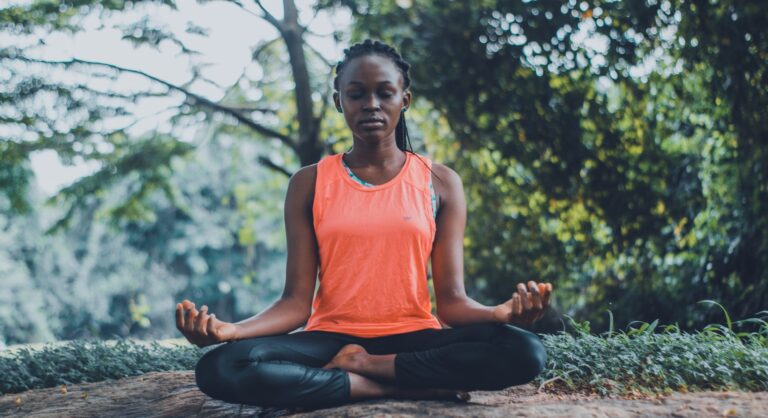
A woman sits cross legged with her hands resting on the top of her legs – meditating.
› Back to top
« back
08.03.21 | Community

The Science of Laughter

Laughing is something we do numerous times a day without a second thought. Whether we are with friends, watching a funny movie or simply reacting to something that catches us off guard. There is much more behind the infectious response than the loud, quirky and eccentric sounds that come with it. The power of incorporating laughter into your day-to-day routine has huge implications for the quality of your life in the broadest sense. Let’s look further.

Recognizing the impact of laughter’s effects on things such as stress, happiness and health, we at Sage Collective appreciate its importance, especially in relation to our 9 Ways of Vibrant Living

Why do we laugh?

Throughout history, laughter has been seen as a social signal. There are many factors that can affect what we find humorous including age, gender, culture or community. Laughter presents itself in most human interactions as the presence of connectivity, comfortability and the strengthening of a shared or mutual relationship. Furthermore, research shows that the more laughter that is present in those relationships, the stronger those connections or bonds become.

The prevailing theory is that there are three types of scenarios that make us laugh: incongruity, superiority and relief. Incongruity theory is rooted in the idea of expecting one outcome, and receiving a totally different one — resulting in laughter. Superiority theory explains that we might find someone else’s weaknesses or mistakes humorous, making us feel superior to them in the moment. Last, relief theory is the use of comedy in tough or uncomfortable situations in order to relieve stress or tension. If you reflect back on what made you laugh today, do you see the reasons falling into one of these categories?

The health benefits of laughing

There are tangible health and wellness benefits for individuals and communities when we all spend more time laughing. From a purely biological perspective, when we laugh, our bodies reduce the levels of stress hormones, in turn lowering our physical stress and anxiety. At the same time, the action also releases serotonin, which leaves us feeling euphoric. As stress hormones diminish, we lower blood pressure and increase blood flow — which directly leads to the oxygenation of our blood to provide us with more energy. 

Incorporating more laughter in your life

Wondering how to add laughter to your life? Start by considering the concept of humor and its relationship to laughter.

Merriam-Webster defines humor as “the mental faculty of discovering, expressing, or appreciating the ludicrous or absurdly incongruous: the ability to be funny or to be amused by things that are funny.” However, because humor is so subjective, it’s nearly impossible to give it a clear-cut definition. Let’s just say that laughter is the direct reaction or acknowledgment that someone has found something humorous.

For some, laughter may come easy. For others, it might be more difficult to find humor in life. Either way, here are some tips for learning to laugh more. 

One of the easiest ways to find laughter is to surround yourself with people who you find funny and entertaining, but with whom you already have a comfortable and strong relationship. Discovering things that make you laugh throughout your daily life and experiencing them more is also a great way to easily find humor. This might be found in the radio station you listen to on your daily drive, or a television show you play in the background while you do chores at home. And if laughter doesn’t come easily for you, consider laughter therapy — it’s a new form of searching for a chuckle by training yourself to look for humor in uncomfortable and difficult situations, rooted in laughter’s relief theory. There are lots of resources available online, and even apps you can download to your phone!

So even if you aren’t the traditional joking type of person or you find it hard to see the comedy in hard situations, dig deep and look for the laughter in your life. You won’t regret it.

A group of people stand around each other looking at a phone and laughing
› Back to top
« back
07.01.21 | Community

Vibrant Living Breakdown: Engagement in Social Life

Nine Ways of Vibrant Living is Sage Collective’s innovative model that champions more meaningful, engaged lives for older adults, and that serves as the backbone of our philosophy. We celebrate and uplift components of vibrant living that span from health and wellness, to arts and culture, to spiritual enrichment — but what makes all these life experiences truly shine is our ability to share them with others. That’s why our ninth component is engagement in social life.

Older adults in particular are a population at high risk of experiencing social isolation. The flip side of that risk – and the negative impacts it has on one’s physical and mental well being – means that older adults who are more socially connected often report a better quality of life all around.

The benefits of healthy social connection for older adults are all encompassing and include disease prevention, fewer physical health problems, longevity/length of life, improved cognitive function, better self-esteem, sense of belonging, and maintained purpose of life.

Therefore, at Sage Collective, we strive to provide daily opportunities for social connection and community engagement, whether that’s through our programming or residences. We intend to partner with a host of community organizations, including but not limited to: churches, schools, businesses, and cultural institutions, to provide co-teaching, educational, entrepreneurial and employment opportunities that both enrich and empower our residents.


Stay tuned for all these opportunities and more, and in the meantime, you can stay connected with us and our community online through our social media via Facebook, Instagram, Twitter, and LinkedIn.

Friends gathering to socialize and paint
› Back to top
« back
06.29.21 | Health & Wellness

Harness the power of awe by taking “awe walks”

Vibrant life encompasses a variety of experiences, from healthy eating to regular fitness to engaging with the world around us. One particularly effective – and unusual – way to pursue vibrant living is to take “awe walks.” The end-goal of these walks is simple:  to simply inspire awe in those who participate. Let’s dig in.

How to take awe walks

“Awe walks” are a more intentional way to approach something as simple as a stroll around the block. The idea is to go for a walk and seek to experience awe along the way. How the walker chooses to experience awe is entirely up to them. Awe can be found in even the smallest of everyday moments, such as appreciating the flight path of a v of migrating geese above, or marveling at the many colors that make up fall foliage.

The study of awe – how it’s inspired, and the impact it has on a person’s wellbeing – has been a primary area of focus for psychologists since the early 2000s. Just recently, a 2020 study was published in the journal Emotion examining the impact of awe walks on a population of older adults.

In the study, sixty older adults took 15-minute awe walks for a period of eight weeks. Perhaps the most exciting finding of the study was the increasing feelings of compassion and gratitude in the control group that took such awe walks. Compared to the normal-walk-talking counterparts, the awe walkers were much more focused on observing the world around them.

“One of the key features of awe is that it promotes what we call ‘small self,’ a healthy sense of proportion between your own self and the bigger picture of the world around you,” explained Dr. Virginia Sturm, lead investigator and associate professor of neurology and psychiatry and behavioral sciences at the University of California at San Francisco.

You can trust the science – or you can just as easily try it out for yourself and see what awe you uncover.

View from above of people taking a walk
› Back to top