« back
04.07.22 | Sage Advice®

The Importance of Knowing Your Family History

For many, digging into family histories may sound like a wholly worthwhile experience, while others may find it too time-consuming and extensive of a process – a common misconception. However, it’s more important than ever for all of us to learn, record and preserve the rich history connected to each of our lineages for our well-being and the well-being of future generations.

Our family histories are more than just birthdates and family tree charts; they’re full of rich information that helps each of us gain a stronger understanding of who we are. The information tied to family history has the ability to empower identities and build self-worth, especially for those who might not currently have access to information tied to their family’s past. 

As we collaborate with family, community members and other resources that may help us discover our family history, we not only build connections with people in the present but also from the past and into the future. 

Along with empowering identities, family history knowledge can have dramatic effects on your health and others in your family. Have you ever had a blank mind when the doctor asks if certain health conditions run in your family? Taking the time to reach out to family, and learn more about their medical history, is the best way to avoid this and discover what you might be at risk for. Knowing this history can help you make informed choices concerning your health to live a more vibrant life

There are countless resources online and in-person that you should take advantage of when starting your genealogical journey. The first resources everyone should look to are the ones you might already have, like family trees, scrapbooks and other family history basics. If you don’t have any yourself, connect with distant relatives to gather materials that you believe would be helpful to you. 

Websites like FamilySearch.org are perfect for those of us who want to dive even deeper into their identity and background, and it’s free to use. Another way to stay involved online is by joining the family history conversation online. Social media sites like Facebook, Twitter and blogs are perfect for making connections and expanding your resources through a network of family historians. 

Whether you already have a great deal of knowledge related to your family history or you’re new to the ancestry trend, having access to genealogy can change your life. Try taking an hour out of the day to poke around and see what you can discover for yourself.


› Back to top
« back
03.31.22 | Arts & Culture

The Art of Storytelling & Why You Should Share Your Story

At Sage Collective, we believe that everyone should feel empowered to express their unique voice. Storytelling is one of the best ways to do so while supporting vibrant living, and, has the power to inspire those exposed to it. Today, we’re highlighting the value behind the art of storytelling and why you shouldn’t hesitate from sharing your own story.

The art of storytelling is a valuable tool used by numerous cultures across the world for thousands of years. Throughout history, humans have found various ways to translate their emotions and experiences through ever-changing forms of communication. From cave drawings to spoken word to cinematography, there are countless ways we have been able to tell our stories.  

Finding Your Voice

As we’ve mentioned, sharing your story is a powerful tool that can heal trauma, create empathy, and even help those exposed to it. However, before you can tell your story, you must find your voice.

You might be asking what this means. In simple terms, discovering your voice means that you know the value behind your story. You want others to be able to hear what you want to say, and through this desire, confidence rises, and you are allowed more freedom to express yourself through whatever means. 

Finding your unique voice and sharing your story can be a daunting but rewarding challenge. One of the best ways of articulating your story is through writing or journaling. Writing is a powerful form of self-expression and allows you to communicate your voice through written word. If writing isn’t your forte, try drawing or even scribbling. 

No matter what method you use for storytelling, it’s key to remember that your voice matters. Continue to listen to yourself, be authentic and look for meaning in everything you do. You have the right to express yourself, and by doing so, you could have the power to inspire others. 

› Back to top
« back
03.24.22 | Arts & Culture

Discover Your Inner Creative With Photography

At Sage Collective, we use the philosophy of “vibrant living”, and hope we can inspire you to do the same. There are endless activities and behaviors to introduce into your life to encourage vibrant living, but today we’re shining a spotlight on photography! Photography is not only a creative outlet, but a way to reconnect with yourself, your community, and a way to increase your mindfulness (plus so much more!). Let’s talk about it: 

Photography and Mindfulness

In 2022, we’re all looking for ways to stay more in the moment. Photography is perfect for this, as the art itself forces you to be present and aware of the things going on around you in a way that’s positive and relaxing. Focusing your attention on your surroundings with photography is a way to ground yourself and also strengthen your ability to reminisce. 

With photos, sometimes it’s easy to focus on the negative, the ones that maybe didn’t turn out how we planned. Though this can detract from our mindfulness, National Geographic explains that mindful photography can best be achieved when we change our mindset to think about the great photos that we take, rather than the ones that didn’t turn out how we wanted. 

Photography and Community

In addition to general health benefits, photography is a great way to strengthen your relationships and involvement with your community. Particularly for older adults, sharing photos with loved ones can be a great boost to your social relationships and bring you closer to your circle of people. Posting your photos online and sharing your interest promotes connection, and can be a great conversation starter! 

Additionally, it gets you involved in your community as you traverse your city to capture beautiful moments and scenes. You’ll likely even notice little details in familiar places that you’ve never noticed before, giving you a deeper appreciation and a new outlook on beloved spots.

› Back to top
« back
03.10.22 | Arts & Culture

Most Beneficial Mobile Apps for Adults & Seniors

As we continue our Vibrant Living Programming, we also want to resume sharing rich content that compliments our spirited training, and this month’s theme is discovery. Because the online world is so vast, no matter how experienced your knowledge is, there’s always more to uncover. Today, we’re exploring some of the most beneficial mobile apps that every adult should consider discovering for themself. Learn more about them here:

ShopWell

One of the best ways to curate a vibrant lifestyle is by following a healthy diet that includes moderate caloric intake and plant-based eating. The ShopWell app is a great way to assist you on your journey and help you match foods to your dietary needs. After creating a profile the app will help you create a nutritious shopping list full of everything your body needs, making anyone more confident with their cooking. ShopWell is available to download for free on all IOS and Android devices. 

NPR

Along with producing one of our favorite podcasts in 2022, NPR provides instant access to all of their breaking news through their NPR and NPR One apps. The NPR application allows users to read the latest stories and listen to public radio stations from the convenience of their phones. For those who prefer audio stories, NPR’s partner app, NPR One, offers the organization’s best podcasts and shows. NPR’s mobile apps are available to download on all devices.

Lumosity

For those searching for a unique form of entertainment that can still stimulate your brain, look no further than Lumosity. This brain training app is a great way to exercise your mind with various exciting, interactive games that focus on memory, speed, flexibility and problem-solving. The app is free to download, but also comes with a paid option for anyone wanting to look for an even more challenging and rewarding experience. 

Pocket Yoga

Another beneficial way anyone can live more vibrantly is by regularly being active and reducing stress, and thankfully, practicing yoga is an excellent activity to cover both. Yoga is an extremely valuable exercise for anyone searching to improve muscle strength, balance, mobility and flexibility. My Pocket Yoga is an amazing resource for yoga lovers, providing graphics for over 200 poses and videos led by certified yoga instructors. The app is downloadable on any IOS or Android device. 

Zoom

As much as many of us love to admit we are tired of Zoom, the application has provided an accessible way for everyone, from coworkers to family members, to connect throughout the pandemic. Zoom’s mobile application is nearly identical to its computer version, so anyone familiar with its companion should have no problem feeling comfortable maneuvering through its mobile version. 

The application still remains extremely relevant today, connecting loved ones across the world. In addition to audio and video calls, Zoom conveniently also allows users to share their screens and record conversations. Zoom is free to download on all IOS and Android devices.

› Back to top
« back
02.10.22 | Arts & Culture

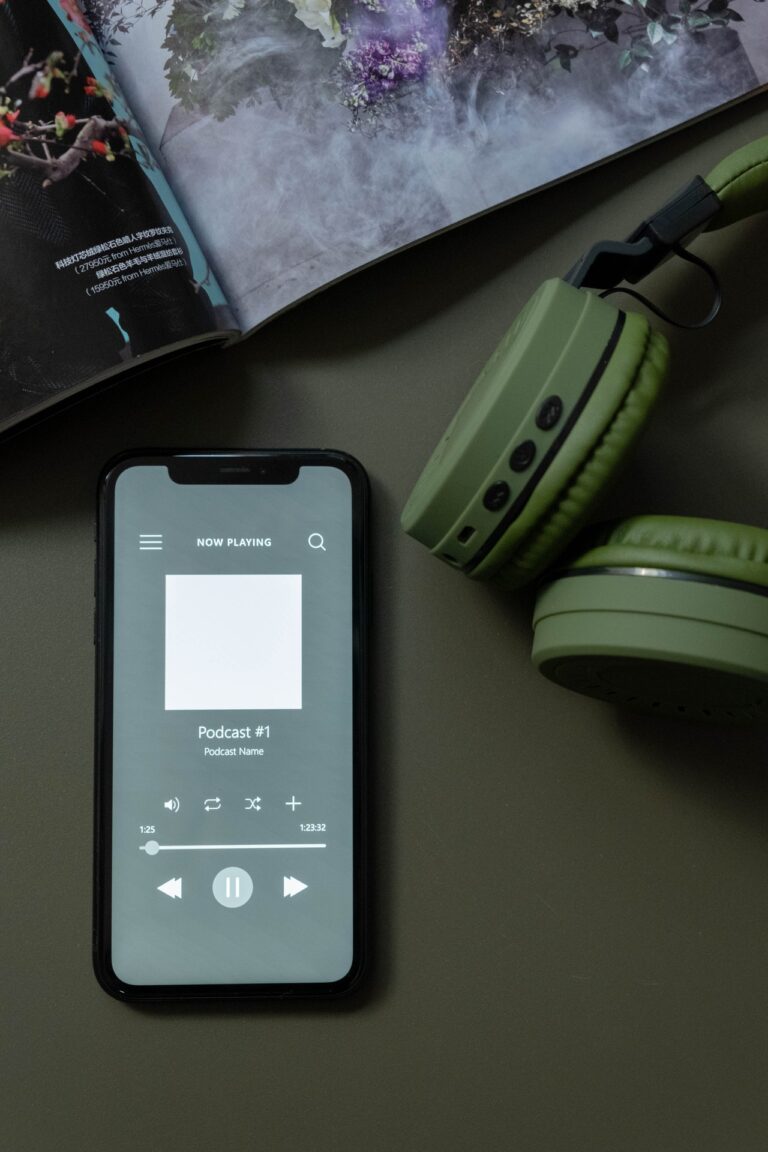
5 Podcasts to Help You Start the Year off Great

With the new year comes a plethora of rich podcasts for audiences to dive into. As our Vibrant Learning Program with Chicago Commons continues to explore the affordances of modern technology, we wanted to share a few tips of our own. Last autumn, we spotlighted five of our favorite podcasts at the time, and today, we’re spotlighting five more that are sure to bring you joy and an excess of knowledge throughout the year:

Hidden Brain

Hidden Brains

Hidden Brains prides itself on being “a conversation about life’s unseen patterns”. Each week, the stimulating show explores deep questions that lay at the heart of the changing world to help listenings not only better understand their surroundings but also themselves. Episodes range from discussions on the psychology of self-doubt, working from home, difficulties of apologizing and everything in between. Archived episodes of the beloved podcast can be found on NPR, and new episodes can be found on Spotify, Apple Podcasts and more. 

Reply All 

For some of us, the internet is an unexplored world and for others, it’s a comforting tool. And while those audiences seem distant, Reply All provides a perfect place for everyone – novice or expert – to listen and learn. The tech podcast does an amazing job of exploring stories involving complex technologies in accessible ways, explaining what they are talking about as they go. Previous episodes have included investigating online scams to the best accounts you should follow on various social media platforms. You can listen to Reply All on Spotify, Apple Podcasts and more.  

Grief Cast

While a podcast all about the process of grief might not sound fun, Grief Cast explores themes hard to find anywhere else in the podcast world. Cariad Lloyd, the podcast’s host, brings a new comedian guest to the show each week, which helps transform the discussion into a dark comedy at times. Wandering through discussions of grief, loss, and the “weirdness that happens when someone passes”, Grief Cast is a perfect podcast for anyone looking to feel a little better during a hard time. You can listen to the podcast on Spotify, Apple Podcasts and more. 

How to Fail With Elizabeth Day

With so many podcasts filled with stories of success, it’s sometimes just nice to hear how some people’s failures led to a larger impact than their largest success. How to Fail With Elizabeth Day provides just that; Day shares her platform to interview a variety of guests on how their failures have shaped who they have become today. The inspiring, comforting and relatable podcast showcases just how when we think we’ve hit rock bottom, there is always a way up. You can find the podcast on Spotify, Apple Podcasts and more. 

The Daily

Known as one of the most popular podcasts around, The Daily covers all you need to know about world news in less than 20 minutes. The New York Times produced podcast covers one in-depth news story each weekday. Michael Barbaro, journalist and the host of the show, provides listeners with the top story of the day paired with guests that include Maggie Haberman and Glenn Thrush, other acclaimed journalists. The archived episodes are easy to explore for listeners, and there are many ways to listen, including on Apple Podcasts, Amazon Echo or simply from The New York Time’s Website.  

While podcasts may be an unknown area for many, the audio stories afford amazing resources, tools and manners of entertainment for both newcomers and natives alike. You can listen to each of the podcasts on their websites, Spotify, Apple Music, Amazon Music or Google Podcasts. 

› Back to top
« back
01.20.22 | Arts & Culture

National Bills Look to Recognize Bronzeville as a National Heritage Area

At Sage Collective, Bronzeville has always held a significantly special place in our hearts and identity. And, even as we continue to expand beyond our neighborhood’s borders, one of our favorite things is to spotlight the achievements and impacts that the community leaves on Chicago and the rest of the country. Today we’re exploring our neighborhood’s latest recognition: the national bills seeking to honor Bronzeville as a National Heritage Area.

Over the past few years, Bronzeville has seen a true renaissance; welcoming new businesses, families and cultures while still showing deep respect and appreciation for its vibrant history. As one of the most thriving Black communities throughout the early 20th century, Bronzeville set itself apart as a hub for talented artists and musicians, stunning architecture, booming businesses and more. 

Introduced by US Representative Bobby Bush and Senator Dick Durban, the bills intend to identify a new national heritage site within Bronzeville because of its rich contribution to the country’s culture. Although a similar bill in 2016 proved unsuccessful in passing, the latest version is backed by extensive planning and organizing.

If passed, the exciting recognition would welcome a breath of energy to the community. With more and more developments blooming each day, the implementation of the bills would further expand the resurgence within the community. They now head to the subcommittee on National Parks, where they get reviewed before being voted on by the United States House and Senate. 

With only two other National Historic Areas in the state, Bronzeville would continue to set itself apart as a cultural landmark not only within Illinois but throughout the country. You can find updates on the progress of the House of Representatives’ bill here and the Senate’s bill here

› Back to top
« back
12.23.21 | Sage Advice®

Best Winter Day Trips Close to Chicago

While Chicago brings a variety of enjoyable activities to partake in during the winter, sometimes a break from all the bustle and noise of the city is welcome. For our fellow Bronzeville residents who might need a getaway this winter, here are the best day trips you can take to brighten your perspective with a change in scenery:  

Lake Geneva, Wisconsin

Only a 1-½ hour drive away sits the quaint city of Lake Geneva, Wisconsin. The beloved destination has been a top destination for Chicago residents for generations and offers a variety of fun-filled activities and stops for all ages. While the summer months are Geneva’s most popular tourist times, winter brings a much tamer atmosphere. 

For lovers of the outdoors, Geneva’s Lake Shore trail is the perfect opportunity to enjoy spectacular views in the brisk air. Once February arrives, the famous lake becomes filled with extraordinary ice sculptures, bonfires on the beach and more. While it is the coldest season, don’t miss your chance to experience the incredibly warm community.  

Lake Geneva’s impressive ice sculptures

Michigan City, Indiana

An adorable city located just off of Lake Michigan’s shores, Michigan City should be high on everyone’s list to visit this winter. The town is only one hour away from Chicago and is surrounded by one of America’s most stunning national wonders, the Indiana Dunes State and National Parks. While winter isn’t typically the time of year many choose to visit the lakeside landscape, witnessing the sand-swept mounds covered in layers of soft snow is sure to delight all visitors.  

While many enjoy a stroll on one of the many trails found in the park, the town offers guests a variety of other ventures, including shopping at the Lighthouse Place Premium Outlets, dazzling architecture at Barker Mansion and an array of wineries and breweries. 

Take a Joyride up Lake Shore Drive 

Sometimes the best day trip is just hopping in the car and taking a drive to enjoy your surroundings, which is exactly what Lake Shore Drive delivers. Arguably the prettiest extended urban parkway in the nation, the 18-mile expressway runs from Ardmore Street on its north end to 71st Street on its south end, and lucky for Bronzeville residents, the best place to start the journey is from the south.  

The ride is filled with recognizable Chicago landmarks that include the Museum of Science and Industry, Soldier Field, Navy Pier and Lincoln Park alongside spectacular views of Lake Michigan. However, once you reach the end of the trip, don’t be afraid to stop there. Exiting on N Sheffield Road will take you through several alluring suburbs filled with even more attractions and impressive architecture. 

Whether you’re taking a thrilling trip to a neighboring state or simply enjoying a joyride down a historic street, we hope this inspires you to find your new favorite winter getaway from the city! 

The stunning view of Lake Michigan from the Indiana Dunes near Michigan City, Indiana
› Back to top
« back
12.21.21 | Arts & Culture

A Brief History of The Chicago Bee

The promotion of Bronzeville’s rich history is something we continuously advocate for and give voice to at Sage Collective. That’s why today, we’re spreading the word about The Chicago Bee, a local paper that dominated the press for decades while distinguishing itself by its promotion of Black history.

History

The Chicago Bee, often referred to as Chicago Sunday Bee, was founded by Anthony Overton in 1925. Overton was a successful banker and manufacturer, and the first African American to lead a major conglomerate (Overton Hygienic Company, which was a cosmetics business). After its founding, the Bee moved into the now-famous Art Deco building located at 3647-55 S. State St., which is now on the U.S. National Register of Historic Places and recognized as a Chicago Landmark. 

The Bee’s staff included many esteemed members of Chicago’s community of writers and journalists at the time. Chandler Owen, a talented writer, became editor of the Bee after moving to Chicago in the 1920s and worked with other savvy editors including Ida B. Wells and Olive Diggs. During the World War II years, when men were in active military duty, the majority of the writing staff were women, which allowed them unprecedented autonomy and opportunity for advancement. 

The Bee covered a wide range of issues of the day. It was the first newspaper to support the efforts of the Brotherhood of Sleeping Car Porters, the nation’s first all-Black labor union created during conflicts at The Pullman Company. It also supported and covered the Black women’s club movement, and gained distinction from other newspapers in the Chicago press in their publicity of Black history and literature.  

Following Overton’s passing in 1946, the Bee was briefly run by his two sons but ceased operation in 1947. Even though very little of the historic newspaper has survived today, it is still recognized as one of the most influential and acclaimed papers of the 20th century. 

Through Sage Collective’s vision, we are proud to contribute to the legacy of African American culture, community and success that is, and always has been, the heart and soul of Bronzeville.

The Chicago Bee front page from May 4, 1941
The Chicago Bee Building
› Back to top
« back
12.09.21 | Health & Wellness

The Power of Music

There are many ways older adults can keep their minds sharp as they age, including scrapbooking, mentoring or even owning a pet. However, one of the most significant ways to actively exercise the brain is simply by listening to music. Many of us will play our favorite song or put background music on without any thought, but the melodic sounds have the power to stimulate our brains unlike anything else. 

Music and The Brain

If you’re seeking to retain your brain’s powerhouse abilities with age, John Hopkins Medicine affirms that listening to or playing music is an extremely powerful tool in doing so. What many don’t understand is that when we listen to music, mathematical puzzles are simultaneously being performed in our heads. With each note that passes through our ears, our brain toils to compute how it connects to each previous sound.

The unique tool can help assist in gathering memories that have felt lost in time. Sometimes a specific song will have the power to transport you to a specific moment in history; that’s because studies have discovered that music has the power to attract itself to memories, and with that, improve cognitive skills, and recognition and working memory. 

Engaging with music frequently has the ability to retrieve forgotten memories for older adults living with diseases contributing to memory loss and reduce anxiety, depression and pain in those who are battling other disabilities, like PTSD. 

The Intersection of Music and Medicine

Experts are continuously trying to understand where music fits in with medical treatment. Robert Gupta, violinist and social justice activist, has been a chameleon in both the music and medical industry nearly his whole life. Now, after realizing he can be involved in both of his passions, Gupta is finally understanding the sheer power music has in succeeding in areas where traditional western medicine isn’t able to reach, especially for vulnerable communities. Explore more in Gupta’s TED Talk here: 


Instilling Music in Your Life

Although the easiest way to integrate music into your life is by simply pressing play on your favorite album, there are numerous other ways you can reap its benefits at home and within your community. Attending concerts and musicals, in person or through a virtual environment like your television, are perfect ways to stimulate your brain while entertaining everyone in the room. 

While listening to music is just one of the ways you can engage with the effective tool, playing an instrument and singing produces even more marvel responses. Music groups are excellent ways to enjoy the sounds of music while also engaging with those around you in meaningful ways. They can be found anywhere from community-organized troops to the choir at your local church.

› Back to top
« back
11.11.21 | News

A Brief History of The South Side Community Arts Center

Widely recognized for its vibrant arts and music scenes, the Bronzeville neighborhood takes pride in its rich past. Throughout history, various venues around the neighborhood have been essential for Black artists across the community. One of Chicago’s Historic Landmarks, The South Side Community Arts Center, is one of those precious places that has had a lasting impact. 

Making History

Determined to overcome the seemingly never-ending hardships brought by the Great Depression, President Franklin Roosevelt introduced the New Deal and its Work Progress Administration (WPA) to the country. Sponsored by the WPA, The Federal Arts Project (FAP) acted as a subsidiary program to the larger workforce development effort by expanding community art centers across the country. 

In 1938, FAP agents visited Chicago in hopes of creating an arts center focused on exhibiting the work of African American artists. Progress on the center’s development advanced once South Side businessman Golden B. Darby emerged as a champion for the project. With his insistence that the center reside on Chicago’s South Side, Darby organized the Community Arts Center Committee to advocate for the center’s location. Members of the committee included local leaders and artists from the Arts and Craft Guild, the lone group for African American artists in the community, including Margaret Burroughs, Eldzier Cortor, Bernard Goss, Charles White, William Carter, Joseph Kersey and Archibald Motley, Jr. 

An exhibition at South Side Community Arts Center, Courtesy of Tony Smith

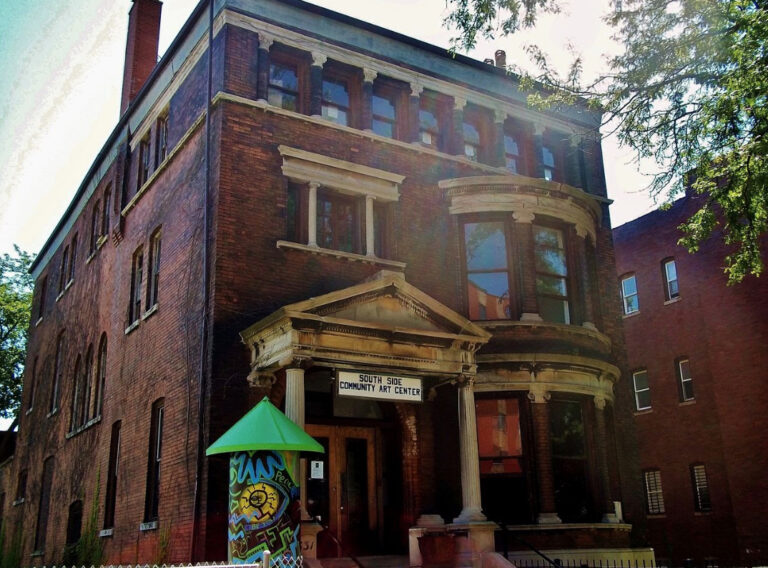
After extensive fundraising through various lavish events, including Margaret Burroughs’ famous “Mile of Dimes” and considerable philanthropy from the Bronzeville community, a property was finally secured at 3831 S Michigan Ave. Originally serving as a residence, the grand brownstone building was nearly 50 years old and in need of considerable renovations and rehabilitation. 

After years of remodeling under the careful direction of Bauhaus designers Hin Bredendieck and Nathan Lerner, the restored structure became the South Side Community Arts Center (SSCAC) and featured classrooms, performance and lecture halls and a marvelous gallery. The grand opening showcased an exhibition of the work of numerous local African American artists’ including Charles White, Eldzier Cortor and Archibald Motley Jr, — finally allowing space for artists in the community to thrive.

Following its inauguration, the SSCAC was host to numerous celebrity guests, including First Lady Elenor Roosevelt, who visited the SSCAC in May 1941 to deliver its dedication speech. The address received widespread media attention and was broadcast nationwide via CBS Radio. Less than a year later, the United States entered World War II, and funding for the FAP was significantly reduced. 

A Community Hub

Throughout The SSCAC’s history, a rich, diverse range of art has graced its famous walls. In 1944, accomplished artist Rex Goreleigh became the SSCAC’s administrative director. Goreleigh furthered the center’s programming, introducing workshops on drawing, painting, sculpture, performing arts, photography and more to the community. Famous writers, including Gwendolyn Brooks, became associated with the SSCAC’s writing center, and legendary musicians like Nat King Cole and his Trio performed there often. 

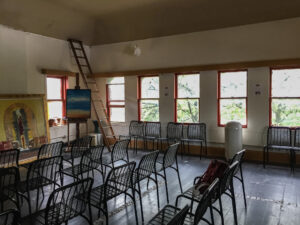
A classroom inside of The South Side Community Arts Center, Courtesy of Eric Allix Rogers

More than 80 years after the center’s founding, The SSCAC stands proud in the Bronzeville neighborhood. After countless renowned exhibitions from distinguished artists, the SSCAC continues to thrive, and has been named a National Treasure and added to the National Register of Historic Places. 

Today, The SSCAC remains the only arts center opened by the WPA centered on African American art that is still open in its original building. Permanent collections from the center’s founding artists reside alongside new artwork from emerging artists. A staple of the Bronzeville community, The SSCAC serves as an inspiration for artists and communities across the nation,  and remains vital and relevant as a very special place where connections blossom and relationships prosper. 

You can visit The South Side Community Arts Center Tuesday through Saturday from 12 to 4 p.m. Admission is free. However, donations are strongly encouraged to support the center’s future. You can also visit their website here to discover their local events, exhibitions and collections. 

Bronzeville’s South Side Community Arts Center
› Back to top