« back
10.06.22 | Sage Advice®

Storytelling: Chicago’s Essential Book List

Similar to armchair travel, one of the best ways to understand unfamiliar cultures and experiences is simply by opening a book. Numerous authors and poets have been inspired by Chicago’s neighborhoods and residents and a rich array of literature has been created detailing the Chicago experience. And, since Sage Collective’s roots lay in the Windy City, we’re no stranger to the endless amount of rich stories we believe should be shared. From soul-nourishing poetry to unforgettable thrillers, here are a few of the classics that have endured for generations and continue to illuminate the city in new ways to all readers.

Devil in the White City by Erik Larson

Erik Larson’s best-selling work of non-fiction set at the cusp of the 1893 Chicago World’s Fair follows the lives of famed architect and city planner Daniel Burnham and one of America’s most notorious serial killers, Dr. H. H. Holmes. Throughout his notorious time in Chicago, Holmes lived in multiple residences, one of which was at 1220 W. Wrightwood Ave in Lincoln Park, which has been demolished and reconstructed as a single-family home. Larson creates a portrait of two men making names for themselves in a city that, at the time, was set to be the largest metropolis in America. Devil in the White City is gripping, gives a vivid glimpse into Chicago’s boom age, and shares a historic perspective of its inhabitants and how the city came to be known as the “white city.”

The House on Mango Street by Sandra Cisneros

The House on Mango Street follows 12-year-old Esperanza Cordero growing up in Chicago’s Hispanic quarter. The novel is considered one of the modern classics of Chicano literature. Written by Sandra Cisneros, this coming-of-age masterpiece depicts the trials of being young and poor in Chicago and what it means to belong in the city as a young Chicana girl.

Sister Carrie by Theodore Dreiser

Considered the “greatest of all American urban novels,” Sister Carrie is the story of fame and aspiration in Chicago. Follow 18-year-old, dissatisfied Caroline Meeber from small-town Wisconsin as she rises to fame during the turn of the century in the big city of Chicago but continues to grapple with the loneliness and unhappiness she felt at home. Dreiser is considered one of the masters of realism, focusing on the instincts of his characters to drive the plot and presenting his characters to the reader without judgment.

The Jungle by Upton Sinclair

One of the greatest American novels of all time, Upton Sinclair’s The Jungle is perhaps one of the first books that come to mind when considering Chicago literature. Not for the faint of heart, The Jungle reveals harsh conditions and exploited lives of immigrants working in the industrial centers of cities. The Jungle does not shy away from gruesome details depicting the realities of Chicago’s stockyards in the early 1900s and caused a public uproar. 

A Street in Bronzeville by Gwendolyn Brooks

Gwendolyn Brooks writes about Chicago’s south side like nobody else. A Street in Bronzeville, Brooks’ first book of poetry, is a display of her poetic genius and an ode to the beauty and hardships of the city’s south side. The sensational work of poetry touches on her own living conditions in Chicago as a Black tenant. And, many of the poems were created at Bronzeville’s South Side Art Center.

The Coast of Chicago by Stuart Dybek

Stuart Dybek is a local legend, and The Coast of Chicago, one of Dybek’s earlier short story collections, is a testament to his genius. Dybek depicts the city in an honest, but poetic light true to his experiences growing up in Pilsen. The Coast of Chicago is an intimate portrait of the city through Dybek’s eyes, and each story in the collection is a little gem of Chicago-centric storytelling.

The main branch of the Chicago Public Library system, the Loop's Harold Washington Library
› Back to top
« back
09.29.22 | Arts & Culture

Travel the World From The Comfort of Your Home

Traveling is one of the best ways to experience new cultures and hear from other walks of life. However, because of the global pandemic, many of us haven’t had the opportunity to continue checking off bucket list locations in a few years. And although there’s nothing like stepping into a new place, new travel-like opportunities are beginning to emerge, including armchair travel.

What is Armchair Travel?

Have you ever wanted to visit a different country from the comfort of your home? Well, now you can! Armchair travel provides a sensory experience to those looking to learn about a location without going through the hassle of actually traveling. The virtual activity invokes everything from local sights and smells to mindsets and cultural conventions. 

We’ve had the pleasure of embracing the value behind armchair traveling in our Vibrant Learning Program at Chicago Commons. With the help of DeShunn Bray, our Manager of Programming and Community Engagement, participants in our Vibrant Learning Program have had the opportunity to experience everything from an African safari to a trip to Germany and Columbia. 

Participants of our Vibrant Learning Program at Chicago Commons participating in armchair travel

How to Participate 

Becoming an armchair traveler is easier than it sounds, thanks to the do-it-yourself element of the activity. Start by considering if you’d rather travel alone or gather a group of family or friends to accompany you on your journey; traveling with a group tends to spark more engaging conversations and perspectives after the activity. 

Once you’ve decided who you’re traveling with, make a list of general themes and ideas for your travels. These can include everything, from national parks and landmarks to the location of famous events or your favorite movie. Once you’ve created your list, search for resources to assist you in your travels. If you’re tech-savvy, head to YouTube or take a stroll to your local library to find even more free films and videos. Once you’ve found a video accompaniment, pair your trip with a craft activity and serve a local delicacy to complete the experience! 

So, what are you waiting for? Start planning your armchair trip now!

› Back to top
« back
08.11.22 | Arts & Culture

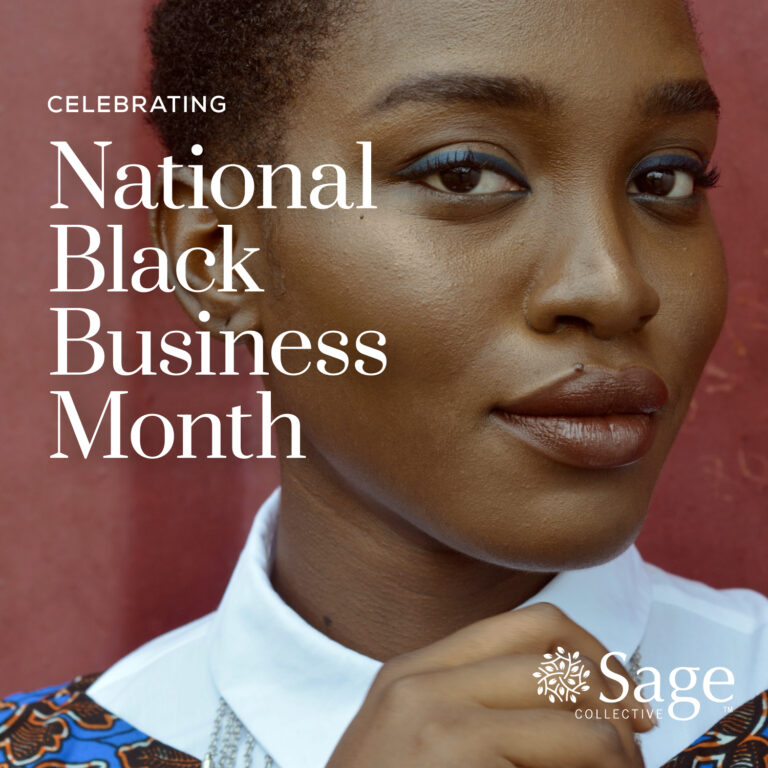
National Black Business Month

At Sage Collective, we embrace the powerful idea of collective impact and empowering those around us to achieve a more just and equitable future for everyone in our community. One aspect of this includes supporting the local businesses throughout the year, especially now, during National Black Business Month in August!

Created in 2004 by historian John William Templeton and engineer Frederick E. Jordan Sr., National Black Business Month was organized to celebrate the more than two million Black-owned businesses throughout the country. Throughout the United States, countless Black-owned businesses are essential pillars of their community and Black Business Month provides the perfect opportunity for local consumers to exhibit support. 

There are countless ways you can support your local Black-owned business; from simple tasks like leaving a positive review to discovering how you can advocate for them beyond their product. What matters most, however, is mindset and intent. 

Small businesses have always been economic drivers behind local economies, and supporting your local Black-owned business can leave an impact beyond the business’ walls. Be intentional about your support throughout the entire year; refer friends, share on social media, forge relationships with the owner or discover how you can uplift them further. 

We encourage you to support the Black businesses throughout your community no matter where you are throughout the month! To discover more Chicago Black-owned businesses head here.

› Back to top
« back
07.21.22 | Sage Advice®

Personal Statements and Manifestos

As we continue our Vibrant Living Programming, we also want to resume sharing rich content that compliments our spirited training, and this month’s theme is freedom. Along with independence and opportunity, freedom can mean many things to many people. Today, we’re exploring how independence inspires purpose, how personal manifestos can propel that purpose even further and how you can create one of your own. 

A personal manifesto performs as a declaration of what you truly want from life, which makes it the perfect tool for engaging personal independence. Traditionally, you might know manifestos as published statements declaring the intentions or beliefs of organizations, similar to our Vibrant Living Manifesto. However, manifestos are fluid and can be similarly used by individuals to act as both a statement of ethics and a call to action and are powerful in giving life meaning and direction.

Whether you’re in search of a guiding compass, a frame, a reminder of your priorities or simply inspiration, creating a personal manifesto is sure to provide your life with a foundation of additional meaning and direction. Learn how to write your own below: 

Begin your manifesto by writing down your values, beliefs, behaviors you apply to life and other areas you want to address. If you’re having trouble thinking of what to write, it might be easier to ask yourself questions about those themes. Remember, personal manifestos are exactly how they sound, personal, so yours is likely to be unique to itself. 

After creating your list, start to transform each point of interest into active, declarative statements; use powerful language, don’t worry about the length and remember to keep it uplifting and positive. When finished, make a copy and put it somewhere you will see every day; your manifesto could be the perfect tool for vibrant living, write and live it now!

› Back to top
« back
04.14.22 | Arts & Culture

Literary Art: Our Favorite Picks This Spring

With a new season comes an endless list of exciting refreshing reads. As we continue to spotlight the importance of family connection, identity and storytelling through our Vibrant Living Program, we’re thrilled to spotlight some of the latest works of literacy art that celebrate each of those themes. Here are our picks: 

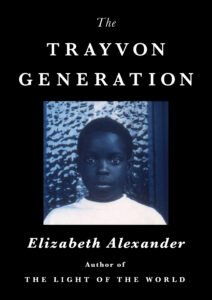
The Trayvon Generation, Elizabeth Alexander

Author Elizabeth Alexander reflects on the traumas of racism and racial violence in this passionate literature mix. Pulling soulful works from Lucille Clifton and Gwendolyn Brooks and a blend of expressive visual art, Alexander spotlights both the tragedies and hopes for what she refers to as the Trayvon Generation. Named one of New York Times’ and TIME Magazine’s most anticipated works of the year, The Trayvon Generation is an essential pick filled with eye-opening short stories and powerful lyricism. 

Because Our Fathers Lied, Craig McNamara

Families often consist of complicated relationships built from years of conflict and confusion. In his latest book, Craig McNamara shares the roots of his estranged relationship with his father, Robert S. McNamara, one of the architects of the Vietnam War. Through this courageous telling of love and neglect, McNamara captures a tale of multigenerational friction, sure to make any reader reflect on their own kindred connections.

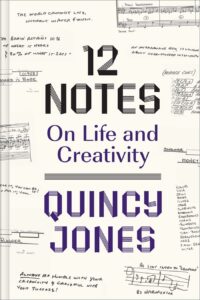
12 Notes: On Life and Creativity, Quincy Jones

Known for his legendary music, Chicago native Quincy Jones explores literacy art with his latest project, 12 Notes: On Life and Creativity. The self-reflective novel features Jones sharing his wisdom on discovering a creative muse and using it to uplift yourself and those around you. Jones unveils his intimate creative process and shares a personal guide filled with lessons intended to embolden readers.

Finding Me: A Memoir, Viola Davis

Acclaimed actress Viola Davis finds a refreshing way to share her heartening life story in her first memoir, Finding Me. Davis, who believes that sharing stories “is the most powerful empathetic tool we have,” courageously documents her journey from living in poverty and turmoil to becoming one of the biggest stars in the world. Finding Me is more than just a deep reflection of life; it’s also an empowering story of expressing oneself and discovering identity.  

Whether you prefer reading alone, with a companion or in a book club, don’t hesitate to pick one or two of these books up for yourself this spring. And as with all good reads, spread the word to friends and family when you finish a book you really love!

› Back to top
« back
04.07.22 | Community

The Importance of Knowing Your Family History

For many, digging into family histories may sound like a wholly worthwhile experience, while others may find it too time-consuming and extensive of a process – a common misconception. However, it’s more important than ever for all of us to learn, record and preserve the rich history connected to each of our lineages for our well-being and the well-being of future generations.

Our family histories are more than just birthdates and family tree charts; they’re full of rich information that helps each of us gain a stronger understanding of who we are. The information tied to family history has the ability to empower identities and build self-worth, especially for those who might not currently have access to information tied to their family’s past. 

As we collaborate with family, community members and other resources that may help us discover our family history, we not only build connections with people in the present but also from the past and into the future. 

Along with empowering identities, family history knowledge can have dramatic effects on your health and others in your family. Have you ever had a blank mind when the doctor asks if certain health conditions run in your family? Taking the time to reach out to family, and learn more about their medical history, is the best way to avoid this and discover what you might be at risk for. Knowing this history can help you make informed choices concerning your health to live a more vibrant life

There are countless resources online and in-person that you should take advantage of when starting your genealogical journey. The first resources everyone should look to are the ones you might already have, like family trees, scrapbooks and other family history basics. If you don’t have any yourself, connect with distant relatives to gather materials that you believe would be helpful to you. 

Websites like FamilySearch.org are perfect for those of us who want to dive even deeper into their identity and background, and it’s free to use. Another way to stay involved online is by joining the family history conversation online. Social media sites like Facebook, Twitter and blogs are perfect for making connections and expanding your resources through a network of family historians. 

Whether you already have a great deal of knowledge related to your family history or you’re new to the ancestry trend, having access to genealogy can change your life. Try taking an hour out of the day to poke around and see what you can discover for yourself.

› Back to top
« back
03.31.22 | Sage Advice®

The Art of Storytelling & Why You Should Share Your Story

At Sage Collective, we believe that everyone should feel empowered to express their unique voice. Storytelling is one of the best ways to do so while supporting vibrant living, and, has the power to inspire those exposed to it. Today, we’re highlighting the value behind the art of storytelling and why you shouldn’t hesitate from sharing your own story.

The art of storytelling is a valuable tool used by numerous cultures across the world for thousands of years. Throughout history, humans have found various ways to translate their emotions and experiences through ever-changing forms of communication. From cave drawings to spoken word to cinematography, there are countless ways we have been able to tell our stories.  

Finding Your Voice

As we’ve mentioned, sharing your story is a powerful tool that can heal trauma, create empathy, and even help those exposed to it. However, before you can tell your story, you must find your voice.

You might be asking what this means. In simple terms, discovering your voice means that you know the value behind your story. You want others to be able to hear what you want to say, and through this desire, confidence rises, and you are allowed more freedom to express yourself through whatever means. 

Finding your unique voice and sharing your story can be a daunting but rewarding challenge. One of the best ways of articulating your story is through writing or journaling. Writing is a powerful form of self-expression and allows you to communicate your voice through written word. If writing isn’t your forte, try drawing or even scribbling. 

No matter what method you use for storytelling, it’s key to remember that your voice matters. Continue to listen to yourself, be authentic and look for meaning in everything you do. You have the right to express yourself, and by doing so, you could have the power to inspire others. 

› Back to top
« back
03.24.22 | Community

Discover Your Inner Creative With Photography

At Sage Collective, we use the philosophy of “vibrant living”, and hope we can inspire you to do the same. There are endless activities and behaviors to introduce into your life to encourage vibrant living, but today we’re shining a spotlight on photography! Photography is not only a creative outlet, but a way to reconnect with yourself, your community, and a way to increase your mindfulness (plus so much more!). Let’s talk about it: 

Photography and Mindfulness

In 2022, we’re all looking for ways to stay more in the moment. Photography is perfect for this, as the art itself forces you to be present and aware of the things going on around you in a way that’s positive and relaxing. Focusing your attention on your surroundings with photography is a way to ground yourself and also strengthen your ability to reminisce. 

With photos, sometimes it’s easy to focus on the negative, the ones that maybe didn’t turn out how we planned. Though this can detract from our mindfulness, National Geographic explains that mindful photography can best be achieved when we change our mindset to think about the great photos that we take, rather than the ones that didn’t turn out how we wanted. 

Photography and Community

In addition to general health benefits, photography is a great way to strengthen your relationships and involvement with your community. Particularly for older adults, sharing photos with loved ones can be a great boost to your social relationships and bring you closer to your circle of people. Posting your photos online and sharing your interest promotes connection, and can be a great conversation starter! 

Additionally, it gets you involved in your community as you traverse your city to capture beautiful moments and scenes. You’ll likely even notice little details in familiar places that you’ve never noticed before, giving you a deeper appreciation and a new outlook on beloved spots.

› Back to top
« back
03.10.22 | Community

Most Beneficial Mobile Apps for Adults & Seniors

As we continue our Vibrant Living Programming, we also want to resume sharing rich content that compliments our spirited training, and this month’s theme is discovery. Because the online world is so vast, no matter how experienced your knowledge is, there’s always more to uncover. Today, we’re exploring some of the most beneficial mobile apps that every adult should consider discovering for themself. Learn more about them here:

ShopWell

One of the best ways to curate a vibrant lifestyle is by following a healthy diet that includes moderate caloric intake and plant-based eating. The ShopWell app is a great way to assist you on your journey and help you match foods to your dietary needs. After creating a profile the app will help you create a nutritious shopping list full of everything your body needs, making anyone more confident with their cooking. ShopWell is available to download for free on all IOS and Android devices. 

NPR

Along with producing one of our favorite podcasts in 2022, NPR provides instant access to all of their breaking news through their NPR and NPR One apps. The NPR application allows users to read the latest stories and listen to public radio stations from the convenience of their phones. For those who prefer audio stories, NPR’s partner app, NPR One, offers the organization’s best podcasts and shows. NPR’s mobile apps are available to download on all devices.

Lumosity

For those searching for a unique form of entertainment that can still stimulate your brain, look no further than Lumosity. This brain training app is a great way to exercise your mind with various exciting, interactive games that focus on memory, speed, flexibility and problem-solving. The app is free to download, but also comes with a paid option for anyone wanting to look for an even more challenging and rewarding experience. 

Pocket Yoga

Another beneficial way anyone can live more vibrantly is by regularly being active and reducing stress, and thankfully, practicing yoga is an excellent activity to cover both. Yoga is an extremely valuable exercise for anyone searching to improve muscle strength, balance, mobility and flexibility. My Pocket Yoga is an amazing resource for yoga lovers, providing graphics for over 200 poses and videos led by certified yoga instructors. The app is downloadable on any IOS or Android device. 

Zoom

As much as many of us love to admit we are tired of Zoom, the application has provided an accessible way for everyone, from coworkers to family members, to connect throughout the pandemic. Zoom’s mobile application is nearly identical to its computer version, so anyone familiar with its companion should have no problem feeling comfortable maneuvering through its mobile version. 

The application still remains extremely relevant today, connecting loved ones across the world. In addition to audio and video calls, Zoom conveniently also allows users to share their screens and record conversations. Zoom is free to download on all IOS and Android devices.

› Back to top
« back
02.10.22 | Arts & Culture

5 Podcasts to Help You Start the Year off Great

With the new year comes a plethora of rich podcasts for audiences to dive into. As our Vibrant Learning Program with Chicago Commons continues to explore the affordances of modern technology, we wanted to share a few tips of our own. Last autumn, we spotlighted five of our favorite podcasts at the time, and today, we’re spotlighting five more that are sure to bring you joy and an excess of knowledge throughout the year:

Hidden Brain

Hidden Brains

Hidden Brains prides itself on being “a conversation about life’s unseen patterns”. Each week, the stimulating show explores deep questions that lay at the heart of the changing world to help listenings not only better understand their surroundings but also themselves. Episodes range from discussions on the psychology of self-doubt, working from home, difficulties of apologizing and everything in between. Archived episodes of the beloved podcast can be found on NPR, and new episodes can be found on Spotify, Apple Podcasts and more. 

Reply All 

For some of us, the internet is an unexplored world and for others, it’s a comforting tool. And while those audiences seem distant, Reply All provides a perfect place for everyone – novice or expert – to listen and learn. The tech podcast does an amazing job of exploring stories involving complex technologies in accessible ways, explaining what they are talking about as they go. Previous episodes have included investigating online scams to the best accounts you should follow on various social media platforms. You can listen to Reply All on Spotify, Apple Podcasts and more.  

Grief Cast

While a podcast all about the process of grief might not sound fun, Grief Cast explores themes hard to find anywhere else in the podcast world. Cariad Lloyd, the podcast’s host, brings a new comedian guest to the show each week, which helps transform the discussion into a dark comedy at times. Wandering through discussions of grief, loss, and the “weirdness that happens when someone passes”, Grief Cast is a perfect podcast for anyone looking to feel a little better during a hard time. You can listen to the podcast on Spotify, Apple Podcasts and more. 

How to Fail With Elizabeth Day

With so many podcasts filled with stories of success, it’s sometimes just nice to hear how some people’s failures led to a larger impact than their largest success. How to Fail With Elizabeth Day provides just that; Day shares her platform to interview a variety of guests on how their failures have shaped who they have become today. The inspiring, comforting and relatable podcast showcases just how when we think we’ve hit rock bottom, there is always a way up. You can find the podcast on Spotify, Apple Podcasts and more. 

The Daily

Known as one of the most popular podcasts around, The Daily covers all you need to know about world news in less than 20 minutes. The New York Times produced podcast covers one in-depth news story each weekday. Michael Barbaro, journalist and the host of the show, provides listeners with the top story of the day paired with guests that include Maggie Haberman and Glenn Thrush, other acclaimed journalists. The archived episodes are easy to explore for listeners, and there are many ways to listen, including on Apple Podcasts, Amazon Echo or simply from The New York Time’s Website.  

While podcasts may be an unknown area for many, the audio stories afford amazing resources, tools and manners of entertainment for both newcomers and natives alike. You can listen to each of the podcasts on their websites, Spotify, Apple Music, Amazon Music or Google Podcasts. 

› Back to top