« back
10.19.21 | Arts & Culture

How Museums Might Reduce Your COVID-19 Stress

One of the largest challenges in modern-day life is finding a treatment for the frequent burnout that most of us feel daily. At Sage Collective, one of our most cherished beliefs is that wellness, health and empowerment should be made priorities in every community. That’s why today, we’re exploring how museums might be the perfect answer to your post-pandemic stress and burnout. 

Many individuals, especially older adults, have faced higher stress levels over the past year and a half than ever before. Feelings of uncertainty and unpredictability due to COVID-19 have also led to many feeling alone, anxious and burnt out, with little reprieve. However, there is growing research that offers tangible steps toward alleviating these negative feelings. 

Often in the present day, many feel like time is limited, and burnout is constant. However, solace can be found in the relaxing and revitalizing spaces of a museum. For many, the knowledge that curated spaces of art and history can provide a wealth of benefits for mental and physical health is new.

Recently, doctors in Belgium received permission to prescribe museum visits to combat the mental health crisis in their country, and similar actions have been implemented in Canada. Patients who get the prescriptions can go anywhere from an intimate art gallery to a fashion exhibition at a history museum. 

The goal behind the three-month-long trial is to promote an engaging learning experience and shift people away from the stress of their daily routines in hopes of having a positive impact on mental and physical health. The museums and exhibitions act as safe and welcoming places for patients to unwind from their day-to-day responsibilities and explore new ideas and areas of interest. Not only does the time off allow patients to catch their breath and spend time with loved ones, but it also acts as a moment of respite from the harsh realities of the pandemic. 

Instead of relying on drug therapies, this mode of enrichment has the possibility to be expanded to other areas of mental health beyond pandemic-related stress and anxiety to alleviating symptoms of depression, psychiatric disorders, anxiety and more. 

Numerous museums, galleries and art centers around Bronzeville present the perfect opportunity for anyone looking to combat stress and relax — in person or virtually. The South Side Community Arts Center, Gallery Guichard, Smart Museum of Art, DuSable Museum of African American History, and Chicago’s Museum of Science and Industry are all wonderful choices to spend an afternoon enhancing your wellbeing and expanding your mind. 
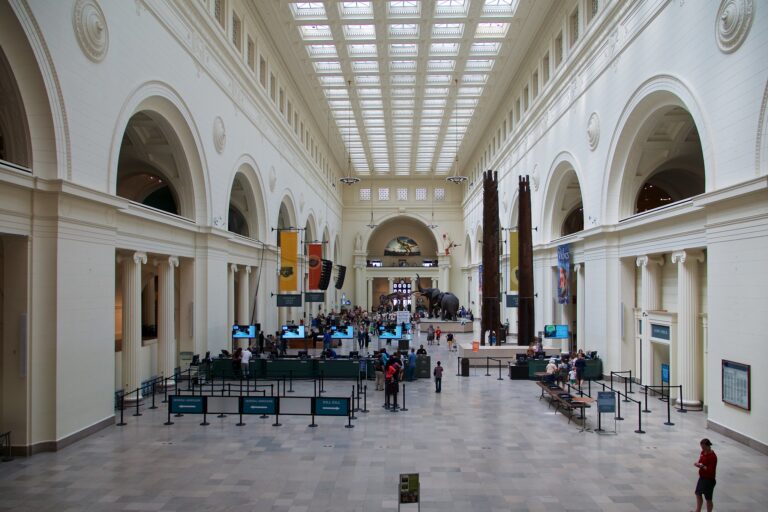
Furniture and a crowd of people fill a bright museum interior.
› Back to top
« back
10.14.21 | Health & Wellness

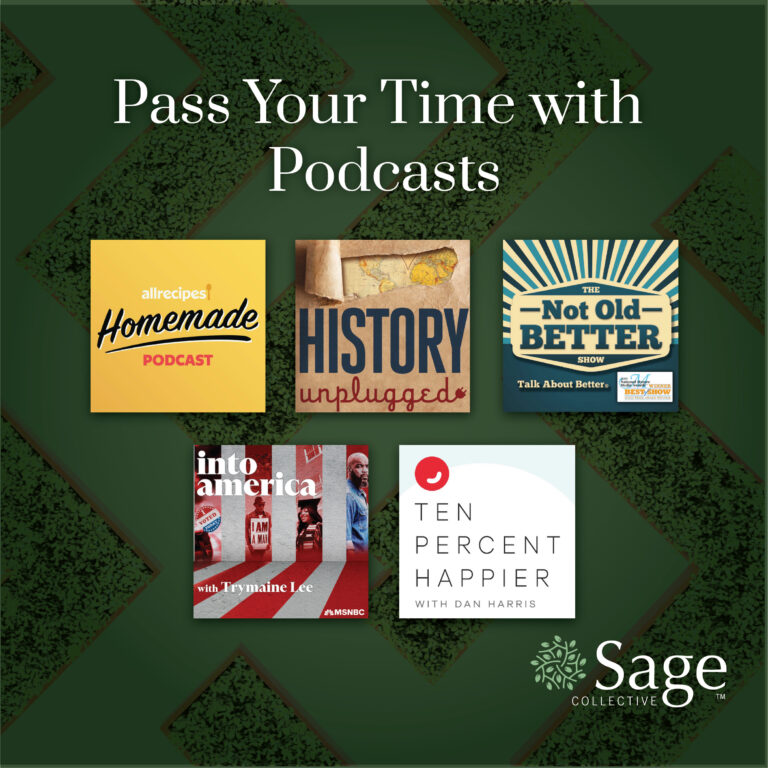
Pass Your Time With Podcasts: What You Should Be Listening to Right Now

While autumn is a favorite time for many to pick up new books and revisit forgotten ones, podcasts also serve as a great choice for those looking for a mix of entertainment, education and reflection. Podcasts are usually free to listeners and extend knowledge on everything from how to cook healthier meals to entertaining history facts to current government and public policy news. Here are the top five podcasts Sage Collective believes you should be listening to right now: 

Ten Percent Happier

Hosted by Dan Harris, a famed journalist who suffered a panic attack live on national television, Ten Percent Happier explores how keeping your spirits up is imperative to aging well. After his traumatic on-air experience, Harris discovered meditation and now invites experts on the subject, scientists and celebrities to share their own epiphanies and experiences of success. Topics on the show vary from What to do About Eco-Anxiety to Joy Vs. Happiness. Anyone interested in hearing motivational stories about coming back from what seems like life’s lowest points will enjoy this outstanding selection. 

Into America

Into America is a podcast that sheds light on what it’s like to be Black in America. Trymain Lee, Pulitzer Prize and Emmy Winning journalist hosts the enlightening show. The MSNBC-produced podcast explores how public policy and government action, and the lack thereof, affects Black Americans’ lives. Previous topics include The Vaccine Gap, Justice for Black Farmers and The Black Firefighters of 9/11. Into America produces an in-depth look into the continued injustice that Black Americans endure and what it means to hold the country to its obligations.

History Unplugged

A show that celebrates obscure historical facts and events, History Unplugged uncovers and revisits lost stories that changed the world. History buffs and amateurs alike will enjoy the unique narratives, expert interviews and call-ins that make up the podcast. Previous episodes of the show include The Japanese-Americans Who Fought Nazis in Europe, Electric City: Ford and Edison’s Vision of Creating a Steampunk Utopia and An Alternate History of the Lincoln Assassination Plot. Chocked full of amusement, myth-busting and a range of wisdom, almost everyone is guaranteed to relish over History Unplugged.

Not Old – Better

Award-winning journalist Paul Vogelzang hosts the fascinating, high-energy podcast, Not Old – Better. The inspiring show reminds its audience weekly that it is never too late to pursue your passion and purpose in life. Vogelzang invites a mix of well-known entertainers, intriguing role models and ordinary people to discuss aging and how to overcome the stereotypes and stigma that come with it. Previous guests have included actress Octavia Spencer, Dr. Anthony Fauci and activist Khary Lazarre-White. Listeners and critics alike have praised the podcast as a perfect choice for middle-aged and older adults.

Homemade

Homemade is the paramount podcast for anyone looking to explore the food world. Foodies and amateur cooks alike will enjoy the entertainment show hosted by industry insider Sabrina Medora and author Martie Duncan. Each week the hosts invite celebrated cooks from all walks of life to discuss and share their memories behind their favorite recipes. Past topics on the show include growing ingredients at home, delicious vegan options, repurposing leftovers and rethinking prep time. Get your cooking gear ready, put on your apron and prepare to join the fun with Homemade

Whether you need something to listen to on your way to work or while doing chores around the house, don’t hesitate to press PLAY on any of these wonderful podcasts. You can listen to each of the podcasts on their websites, Spotify, Apple Music, Amazon Music or Google Podcasts. 

› Back to top
« back
09.23.21 | News

Bronzeville’s Renaissance

Bronzeville’s dynamic history is ever-shifting as time progresses. Originating in the early 20th century, the neighborhood became an epicenter for Black culture, a topic you can read more about here. Today, Bronzeville is experiencing a renaissance, and Sage Collective is proud to be a part of it. The community is growing in numbers that haven’t been seen for decades and it’s welcoming businesses that add a breath of fresh air to the neighborhood’s enduring culture.

Data provided by the 2020 Census show that while the larger city of Chicago continues to grow at slow rates, neighborhoods in and around Bronzeville are embracing populations at much faster rates. Between 2010 and 2020, Bronzeville and its surrounding communities increased their populations by nearly 15%. And while Black populations in Chicago decreased by nearly 10% over the decade, there is a resurgence of Black middle class communities contributing to the population boom in neighborhoods like Bronzeville. 

It’s not hard to understand why both individuals and families are choosing to make Bronzeville their next home. The epicenter of culture and arts not only continues to celebrate its historic roots through revitalization projects like the transformation of the old Marshall Fields Building, but it also welcomes new businesses, developments and organizations with open arms. Sage Collective, as an organization with deep roots in Bronzeville, is excited about this trend, even as upscale, luxury housing moves steadily into the neighborhood, our goal remains the same — providing vibrant, high-quality living through affordable housing for older adults.

Unprecedented developments like Hatch 41, a new coworking space, and future projects like Bronzeville Lakefront act as catalysts for the neighborhood’s expansion. And with each new development, the intersecting goals of exploration, enrichment and celebration are present. 

As we shepherd new families, entrepreneurs, artists and changemakers back to Bronzeville, our values remain clear; we are a neighborhood where relationships are nurtured, community thrives and culture prevails. The renaissance of Bronzeville is upon us, and Sage Collective is proud to be a leader in it, inspiring neighbors and residents alike to participate in our movement.

A sign reads, "Welcome to Bronzeville"
› Back to top
« back
09.09.21 | Arts & Culture

5 Books You Have to Pick Up This Fall

Autumn is a perfect time to revisit books you may have forgotten about while enjoying the warm summer months — or to pick up a few new books that may be on your radar. Reading is an excellent opportunity to escape the world around us, discover a new interest, de-stress and find enjoyment in others’ stories. Whether you’re a fan of poetry, memoirs, mysteries or romance, we have some picks that you might enjoy.

Poet Warrior by Joy Harjo

Poet Warrior, Joy Harjo 

As the first Native American to hold the U.S. Poet Laureate, Joy Harjo returns to her roots with Poet Warrior, sharing her relationship with poetry and music. Her new memoir is a mix between eloquently written poetry and intimately written prose. Harjo explores the music and stories that she grew up hearing and reflects on the connections poetry, her ancestry and her community share with each other. For lovers of poetry, introspection and culture, this book is a great read for you.

Unbound by Tarana Burke

Unbound: My Story of Liberation and the Birth of the Me Too Movement, Tarana Burke

Burke dissects her childhood, from growing up as a Black girl in the Bronx to becoming one of the most influential people in America as the founder of the Me Too movement. The personal memoir exposes parts of the trauma Burke experienced after being sexually assaulted. However, her story is largely positive as she shares how she used this experience to create positive change. Anyone looking for motivation and inspiration will find it in this book.

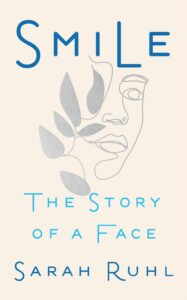
Smile: The Story of A Face by Sarah Ruhl

Smile: The Story of a Face, Sarah Ruhl

After giving birth to her twins, author, and playwright Sarah Ruhl realized that she couldn’t move half of her face. Ruhl later discovered she had developed Bell’s palsy. Smile is Ruhl’s intimate story of learning to live with a disability later in life. Ruhl’s emotional essays offer insights into what it feels like to learn to maneuver through the difficulties of life. Smile is a fabulous read for anyone wanting to learn more about the deeply personal relationships humans have with their bodies.

The Sentence by Louise Erdrich

The Sentence, Louise Erdrich

The Pulitzer Prize and National Book Award-winning author’s new darkly humorous story takes place in Minneapolis in 2020. The Sentence follows a previously-incarcerated Indigenous woman working at a bookstore haunted by one of their most annoying customers. The worker tries to solve the haunting mystery while exploring the difficulties of racism and corruption that infests the city. The Sentence is a fantastic choice for those looking to smile at a story reflecting on the year of racial injustice in a dark, comical style. 

Five Tuesdays In Winter by Lily King

Five Tuesdays in Winter: Stories, Lily King

Five Tuesdays in Winter examines the good and bad of human connection. Lily writes about meaningful relationships that can form from the most minute of bonds. The book of stories — formulated with previously published and new work — finds characters grappling with change, all yearning to be loved. Five Tuesdays in Winter is a terrific choice for those interested in learning more about the power and importance of human connection. 

Whether you prefer reading alone, with a companion or in a book club, don’t hesitate to pick one or two of these books up for yourself this fall. You can find them at your neighborhood libraries, local bookstore or online. And as with all good reads, spread the word to friends and family when you finish a book you really love!

› Back to top
« back
09.07.21 | Sage Advice®

The Cognitive Benefits of Scrapbooking

What might seem like an old-fashioned and outdated mode of documenting the past, scrapbooking is a pastime that can celebrate and relive memories while getting one’s creative juices flowing — especially for older adults. It is also a great way to curate family heirlooms for all to appreciate. Today, we’re sharing how immensely beneficial scrapbooking can be for improving cognitive function and reinforcing relationships. 

Scrapbooking provides a wealth of mental, emotional and physical benefits for older adults. Research has shown that the process of scrapbooking helps expand new neural pathways in the brain, a process called neuroplasticity. The hobby is a fantastic way for those suffering from dementia or memory loss to train their brains to be grounded in the present while still reflecting on the past. 

Scrapbooking is also a creative outlet, allowing participants to express emotions they might usually refrain from expressing. It permits people to revisit their past experiences, relieving their  negative emotions and regaining a sense of purpose. Scrapbooking also offers advantages for relieving stress as cognitive abilities deteriorate. 

Scrapbooking can also be fun to do with others. As a social experience, it fosters communication, lightening the effects of loneliness and creating the opportunity to explore common interests with others. Scrapbooking is also a marvelous way to bring families together and engage in an intergenerational activity that strengthens bonds. By helping older adults sort through the memorabilia of the past — photos, letters, drawings, etc. — to build scrapbooks from their own documented memories, younger generations also have the opportunity to establish their own connections to their family histories that will last long after the scrapbook is finished. 

When looking for engaging, emotionally-rich and creative activities to keep your mind active and revel in the past, put scrapbooking at the top of the list!

If you want to learn more about how to scrapbook, check out the video below.


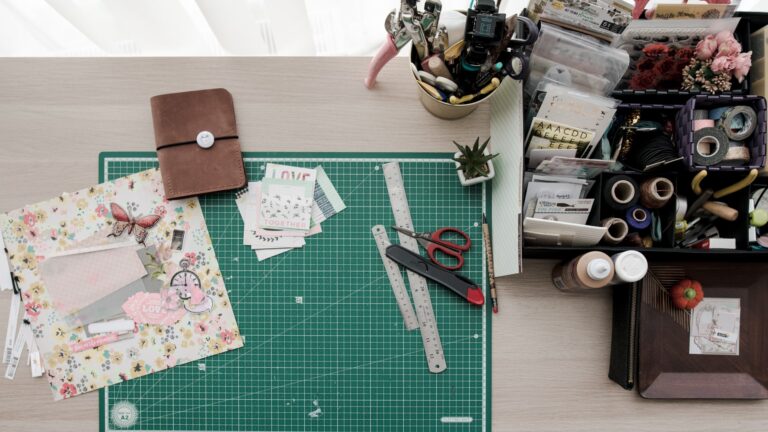
A table is laid out with material used for scrapbooking.
› Back to top
« back
08.26.21 | Sage Advice®

Bronzeville Spotlight: Ida B. Wells & The Light of Truth National Monument

The neighborhood of Bronzeville, where our 4108 and 4112 S. King Drive properties are located, is home to a variety of monuments and structures honoring legends from the community. Today, we’re spotlighting one of the neighborhood’s newest additions: The Light of Truth Ida. B. Wells National Monument.  

Ida B. Wells

Wells was born into slavery during the Civil War in 1862, Holly Springs, Mississippi. She wrote for newspapers – under the pen name Iola – attacking Jim Crow policies, criticizing education in Black schools, and most notably exposing the lynchings of many Black citizens in and around her community. After establishing herself as a force in the journalism world, Wells became an editor and co-owner of The Free Speech and Headlight – a Black-owned newspaper based at the Beale Street Baptist Church in Memphis.

In 1893, Wells moved to Chicago and furthered her activism as a leader for Black feminism. She continued publishing famous works like Southern Horrors and The Red Record for the anti-lynching campaign and suffrage movement. Wells later participated in the National Afro-American Council and the founding of the National Association for the Advancement of Colored People and was awarded a posthumous Pulitzer Prize in 2020 for her reporting.

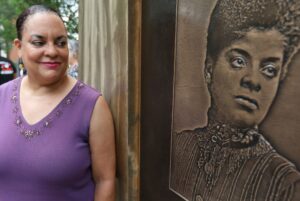
Ida. B Wells great-granddaughter Michelle Duster stands next to a plaque of her at The Truth of Light monument.
Michelle Duster stands next to a plaque of her great-grandmother Ida B. Wells at The Truth of Light National Monument, Photo by Antonio Perez of the Chicago Tribune

The Monument

Officially titled The Light of Truth Ida B. Wells Monument, the impressive structure honors the outstanding legacy of its namesake and is the first monument in Chicago to honor a Black woman. It is the work of brilliant Chicago-native artist Richard Hunt, a legendary force who has  broken barriers in the art world throughout his career and is known as the foremost African-American abstract sculptor and artist of public sculpture in America. You can view more of Hunt’s exemplary work here

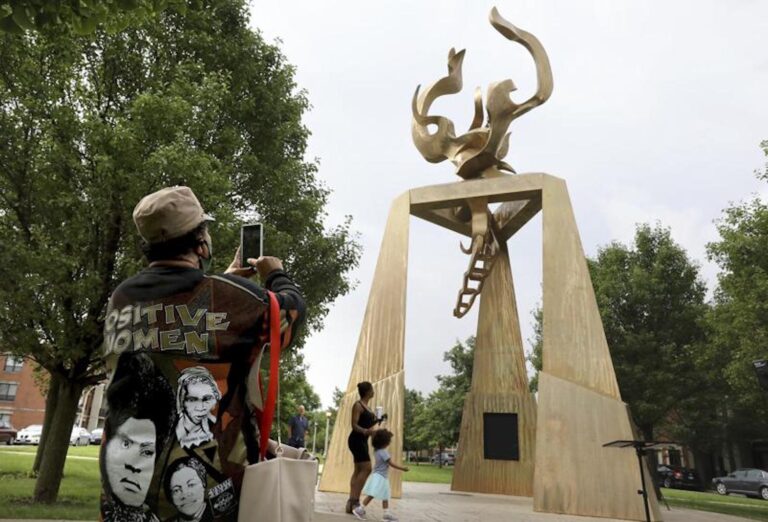
The 20-foot structure was dedicated in July 2021. It has three bronze columns shooting from the ground and supports an intertwining of braided bronze metal resembling flames at its top. The site where the monument lives is located just outside of Ellis (Samuel) Park at 37th Street and South Langley Avenue. It was the former home of Chicago public housing project (the Ida B. Wells Homes) in the 1930s, which was taken down in 2011 and replaced with new apartment complexes.

Organizers hope the new monument can be a gathering spot for neighbors and visitors alike and will serve as a backdrop for the future of the Bronzeville community. Be sure to check out the remarkable sculpture for yourself before Chicago’s winter approaches!

The photo is of Richard Hunt's: The Light of Truth Ida B. Wells National Monument. Three golden steel pillars hold up twists of braided gold steel sitting on a platform above them.
The Truth of Light Ida B. Wells Monument, Photo by Antonio Perez of the Chicago Tribune
› Back to top
« back
07.29.21 | Sage Advice®

Performing Arts Center comes to old Marshall Fields Building in Bronzeville

As we’ve seen with the initiative to restore The Forum and the persistent preservation of Black and African-American history through the Bronzeville’s Historical Society, new projects continue to emerge across the Bronzeville neighborhood, including a renovation of the former Marshall Field Warehouse. 

The warehouse, located at 4343 S. Cottage Grove Avenue, will be reimagined as a performing arts center and museum. The original building was erected in 1915 by Marshall Field and had a sister building located in Lakeview — now also a theatre. 

The building will continue to hold great significance as home to the future African American Museum of Performing Arts (AAMPA). This “living” museum will house an archive of African American performance art and allow visitors to experience, participate and witness an abundance of performance art. You can learn more about the AAMPA here on their website

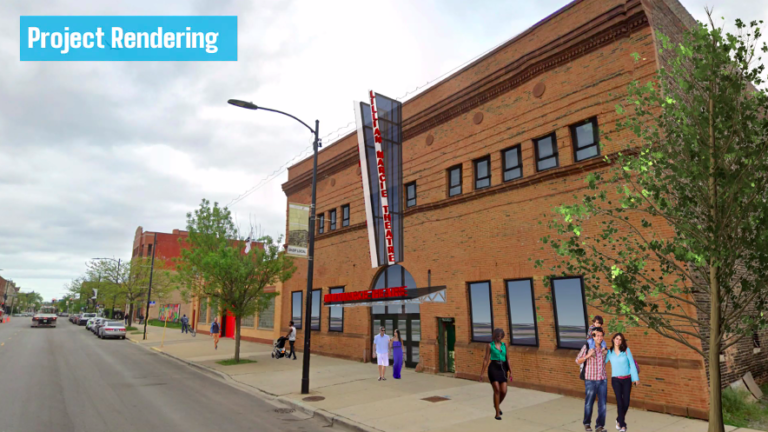
The planned theatre, to be known as the Lillian Marcie Theatre, will include a 350-seat main theatre, a 100-seat black box theatre, dressing rooms, rehearsal areas and a roof deck. The theatre’s name originates from the nonprofit group overseeing the project, Lillian Marcie Legacy Company. Actor Harry Lenox, who is part of the all-star team developing the project alongside Keith and Aaron Giles and Michael Worldlaw, named the nonprofit after his mother, Lillian, and longtime mentor, Marcella “Marcie” Gillie. 

The Chicago Community Development Commision voted in mid-July to recommend $3 million in tax increment financing (TIF) be set aside by the City Council to help finance the project in Bronzeville. Along with TIF, the nonprofit also seeks to take advantage of other tax benefits in order to develop the future project contracted by Ujamaa Construction. 

With plans to start construction in January 2022 and complete the work in early 2023, the Lillian Marcie Legacy Company and Bronzeville neighborhood have yet another exciting development to look forward to as the community’s entertainment and cultural offerings continue to flourish.

A rendering of the future Lillian Marcie Theatre and museum in Bronzeville
Courtesy of the Chicago Department of Planning and Development
› Back to top
« back
07.22.21 | Sage Advice®

Bronzeville Spotlight: Victory Monument

As we continue to develop our properties at 4108 S King Drive and 4112 S King Drive, we enjoy putting the spotlight on landmark locations in our historic Bronzeville neighborhood to celebrate and dig more into its rich history. Today, we’re exploring one of the city’s best-known and respected monuments, especially in Chicago’s Black communities, the Victory Monument. 

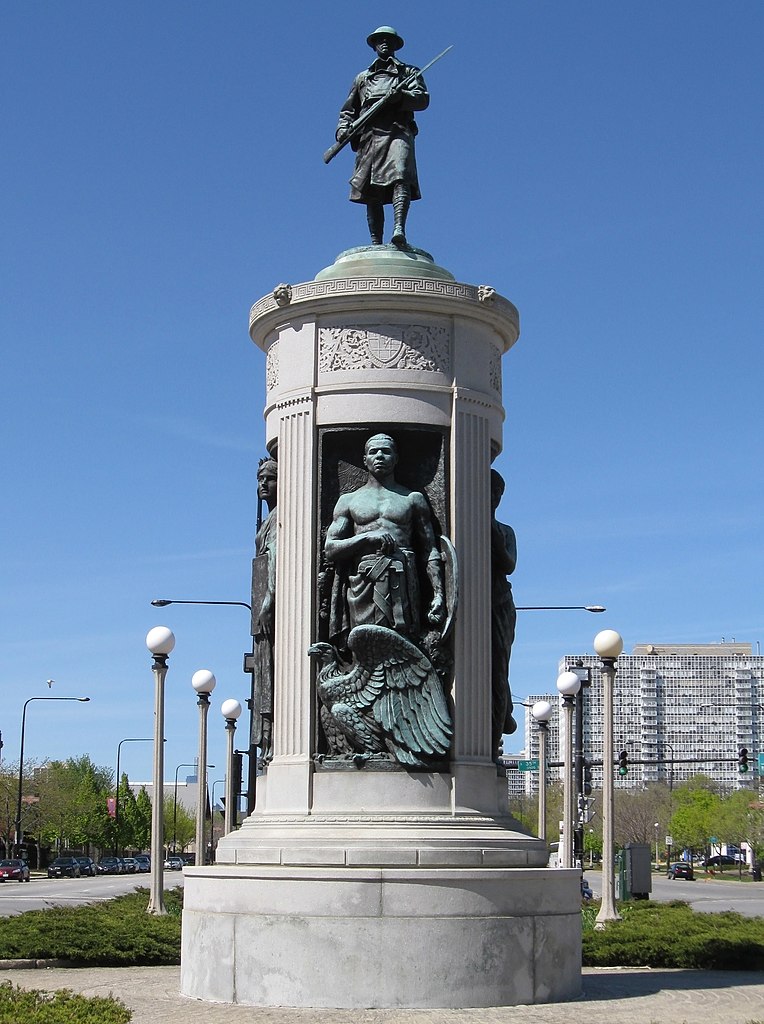
Chicago’s Victory Monument, which stands near the intersection of King Drive and East 35th Street, was built in 1927 in honor of the all-Black, Eighth Infantry Regiment of The Illinois National Guard, whose members served during WWI under the French. Created by the French American sculptor, Leonard Crunelle, the monument’s main structure was built in white granite with a bronze doughboy (common nickname for American soldiers during WWI) figure standing on top. That figure of the soldier was added almost ten years after the original construction.

There are three bronze panels around the sides of the monument, each representing elements of Black culture and history of Black soldiers through life-sized figures. The first panel, the Victory Panel, presents a cloaked female figure representing motherhood and holding a branch that symbolizes victory. The second panel, the Columbia Panel, displays another female figure with a helmet on her head holding a tablet engraved with a list of battles that Black soldiers fought in. The last panel, the African-American Soldier Panel, depicts a Black soldier from the Eighth Regiment with an eagle standing at his feet. A fourth bronze panel facing north holds the names of the 137 total members from the Eighth Infantry that lost their lives fighting in WWI. 

The monument was added to the National Register of Historic Places in 1986 and labeled a Chicago Landmark in 1998. The monument is also home to many annual celebrations and observances including its Memorial Day ceremony and the starting location of the historic, and largest Black parade in the world, the Bud Billiken Parade. 

Having been in place for almost 100 years, Victory Monument continues to illuminate and commemorate an important part of history, and is just one of the many special landmarks located in our historic Bronzeville neighborhood.

Photograph of Victory Monument in Bronzeville
› Back to top
« back
07.15.21 | Arts & Culture

Radical ways to repair harm: restorative vs. transformative justice

The last year and a half marked a breaking point in the status quo. The combined stresses of a global pandemic, as well as increased national awareness of police brutality and racial injustice in America, made one thing clear: we need to radically reimagine our communal approach to safety and care.

As we collectively look to create a future where all people feel safe, longtime organizers and activists are pushing for two solutions: a turn towards restorative justice or transformative justice. These human-centric methods for addressing harm dispel the idea that people are disposable beings, or that punishment should be carceral. Learn more about the concepts, and what makes them different from one another, below:

Restorative Justice

Restorative justice acknowledges that when crime occurs, it causes harm to those that are involved. Rather than focusing solely on punishing the perpetrator of the crime, restorative justice is concerned with addressing the harm caused and the impact of that harm.

This is addressed by facilitating dialogue between all parties involved. Ideally, a conversation will be collectively held by all parties, including: the person who has caused the harm, the person who has been directly harmed, and the community where the harm occurs.

During this conversation, the person who has caused the harm should take accountability for their actions and make amends. The person who has been directly harmed may outline what they need in order to heal.

The community is an integral part of this process as well, because as the process of restorative justice seeks to route a path towards forgiveness and healing, its end goal is ultimately to reintegrate the person who has caused harm back into society, where they will have a second chance.

Transformative justice

In an article from Novel Hand examining the difference between restorative and transformative justice, and how transformative justice digs one step deeper, writing:

“…restorative justice attempts to restore to the condition before the harm took place. However, usually, that original condition is itself one that has a number of injustices built into it. Transformative justice aims to dig deeper: how can we also address the root causes of injustice and move toward an even stronger community?”

Essentially, restorative justice acknowledges the failings of our current carceral state, where the prison industrial complex puts people away for crime in a way that feels disposable rather than healing. But furthermore, transformative justice takes its critique of current systems further and acknowledges the failings of our current system to also address racism, sexism, ableism, and classism – and how these conditions contribute to where crime occurs, from whom it occurs, and how treatment/punishment differs across the spectrum.

Peace and Conflict scholar Anthony Nocella says on this subject: “Transformative justice…is about looking for the good within others while also being aware of complex systems of domination.”

This cursory overview of restorative and transformative justice is just the tip of what’s been said and what there is to learn about radically reimagining the ways we repair harm in our society. To learn more, we recommend reading the full article by Novel Hand and conducting your own research from there!


Illustration of outstretched hands
› Back to top
« back
07.08.21 | Sage Advice®

Visiting the Obama Portraits at the Art Institute of Chicago

This summer, the beautiful and inspiring Obama portraits – depicting 44th president of the United States, Barack Obama, and first lady, Michelle Obama – will be gracing the walls of the Art Institute of Chicago for just eight brief weeks. With such a limited viewing period, below we’re outlining how to plan your visit to see these seminal works of art ASAP!

Visiting the Portraits

Access to viewing The Obama Portraits is included in General Admission for all Art Institute visitors. However, the exhibition does have a capacity-limit, and entry is first-come, first-served.

Tickets must be reserved in advance online, and entry to the exhibit on the day of your visit will be managed via virtual lines. General Admission tickets are being released in limited, timed batches, as outlined below:

  • Tickets for July 1–15 will be available on June 24.
  • Tickets for July 16–31 will be available on July 8.
  • Tickets for August 1–8 will be available on July 22.
  • Tickets for August 9–15 will be available on August 2.

A limited quantity of tickets will also be available onsite for qualifying groups. Learn more about free admission guidelines at the Art Institute of Chicago here.

Remarkable Works

While many other Presidential Portraits in the Smithsonian National Portrait Gallery have been traditional, head-and-shoulders portraits painted in classical styles, President Barack Obama took a notably different approach.

Barack Obama commissioned Kehinde Wiley to create his portrait. Wiley is an American portrait artist known for his placement of contemporary (typically African American) figures in the guise of powerful historical figures. Meanwhile, Michelle Obama commissioned Amy Sherald to create her portrait. Sherald is an American artist known for her arresting, otherworldly portraits that document the contemporary African-American experience.

Wiley and Sherald are the first African Americans to be commissioned by the National Portrait Gallery to create official portraits of a president or first lady. The resulting works are remarkably contemporary.

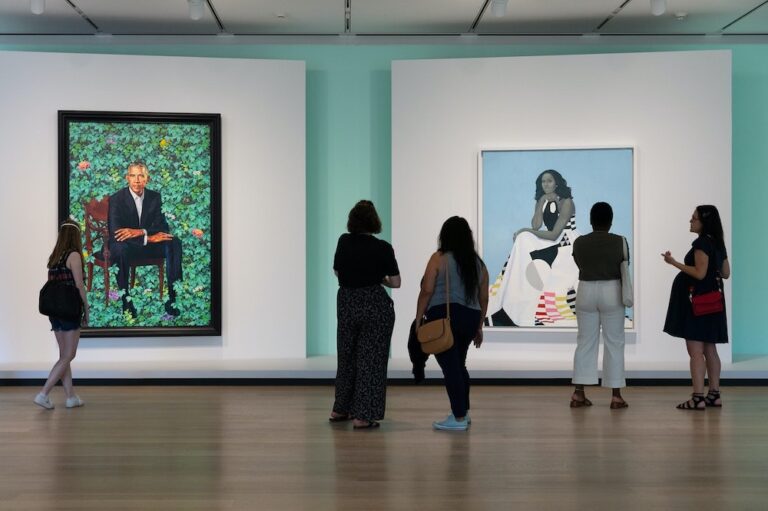
In the larger-than-life, head-to-toe portrait created by Wiley, a seated Obama is set against a backdrop of lush greenery. Each plant in the background holds a special significance, including chrysanthemums, the official flower of Chicago. The portrait of Michelle Obama, created by Sherald, was based on a posed photograph and is intentional down to every last detail, from the grey-scaling of Michelle’s skin to the intensity of her direct gaze.

You can visit the Obama Portraits at the Art Institute of Chicago now through August 15, 2021; tickets are available for purchase here.

And for those interested in a fascinating, rich conversation between Michelle Obama and Amy Sherald, hosted by The Studio Museum of Harlem Director + Chief Curator Thelma Golden, you’ll find it here.


Photo of Obama Portraits
(L) Kehinde Wiley. Barack Obama, 2018. Oil on canvas. (R) Amy Sherald. Michelle LaVaughn Robinson Obama (detail), 2018. Oil on linen. Photo courtesy of the Art Institute of Chicago.
› Back to top