« back
12.04.25 | Community

Third Spaces and the Art of Living Vibrantly

For most of our lives, we move between two primary spheres: home and work. These are our “first” and “second” spaces — familiar, structured, and essential. But as we age, and as work evolves or recedes from daily routines, a different kind of space becomes profoundly important: the third space.

Coined by sociologist Ray Oldenburg, third spaces are the places where community quietly but powerfully happens — cafés, libraries, community centers, art studios, gardens, walking paths, fitness rooms, spiritual spaces. They are the informal gathering places that sit between the private world of home and the purposeful world of work. And for older adults, they offer something indispensable: belonging, connection, and a renewed sense of possibility.

At Sage Collective®, we believe that vibrant living emerges from the interplay between individual purpose and shared experience. Third spaces are where that interplay comes alive.

A Sense of Belonging
As people move through later chapters of life, transitions — retirement, shifts in family roles, relocations, even changes in mobility — can quietly alter the contours of social life. Third spaces help counteract that by providing environments where presence alone is enough. No appointment necessary. No agenda required. You simply show up — and, over time, feel part of a place.

A familiar seat at a café. A welcoming nod at a weekly chair yoga class. The gentle camaraderie of a walking group that traces the same neighborhood path every morning. These recurring moments stitch together a sense of belonging that can anchor emotional well-being.

Micro-Connections that Matter
Third spaces invite small encounters — the kind that often seem inconsequential but shape the emotional climate of a day. A minute of laughter with someone in line. A shared comment about the weather. A compliment on a book someone is reading.

Research shows that these micro-connections boost mood, increase cognitive engagement, and reduce feelings of isolation. They keep minds stimulated and spirits buoyed. They remind us that community is not only built through deep relationships, but also through brief and meaningful human exchanges.

Spaces for Self-Expression
Third spaces offer more than social interaction — they offer pathways for creativity, curiosity, and lifelong learning. A pottery studio becomes a haven for experimentation. A local library hosts workshops that introduce a new skill or ignite a dormant interest. A community garden becomes a setting for tending not only plants, but purpose.

For many older adults, these spaces reignite passions or spark new ones, providing a sense of identity beyond traditional roles. They support resilience, growth, and joy — all hallmarks of vibrant living.

A Bridge to Wellness
Movement, mindfulness, and social engagement all play essential roles in healthy aging. Third spaces often combine these without ever calling them by name. A tai chi class in the park. A dance session at the senior center. A quiet reading nook that encourages calm and reflection. They invite older adults to stay active in ways that feel organic rather than prescriptive, and to cultivate wellness through experience rather than obligation.

Where Community and Purpose Meet
At their core, third spaces help people feel connected — to one another, to their communities, and to themselves. And connection is foundational to a fulfilling life at every age. For Sage Collective®, these spaces embody our belief that vibrant living is a holistic practice: mental, physical, emotional, and social well-being intertwined. They remind us that growth is lifelong, community is chosen as much as inherited, and purpose thrives where people gather with intention — or even with no intention at all.

Third spaces sustain us. They welcome us. And for older adults seeking to live fully, richly, and vibrantly, they offer an open door into a life of continued meaning.

› Back to top
« back
11.27.25 | Health & Wellness

Giving Tuesday 2025: The Gift of Connection, The Promise of Community

Every year, after we gather in gratitude with loved ones, Giving Tuesday invites us into a different kind of celebration—one rooted in generosity, shared purpose, and the belief that our collective actions can transform lives. Since its founding in 2012, the movement has reminded us to shift our focus from what we acquire to what we contribute. And at Sage Collective®, this message resonates deeply.

Giving Tuesday has always aligned with our mission to foster vibrant, connected communities for older African Americans. Many of the systemic challenges faced by older adults—social isolation, technological barriers, limited access to wellness resources—are not just individual circumstances but community-wide inequities. When we give, we don’t simply fund programs; we expand opportunity, dignity, and joy.

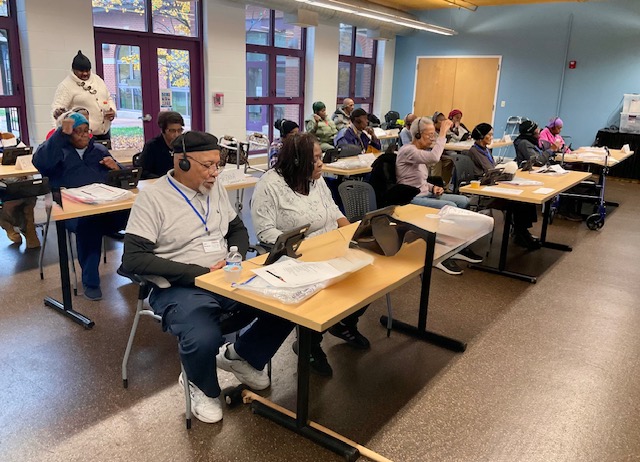
This year, we turn our focus to one of the most essential building blocks of connection: access to technology. As our Vibrant Living Program grows, so does the demand from older adults across the Chicagoland area who want to participate. We are currently at capacity, and many individuals are waiting for the tools they need to join us—tablets, training support, and, increasingly, VR headsets that will enable us to share immersive learning experiences, including at our national conference in April.

On Giving Tuesday 2025, we invite you to help us meet that need by supporting our Vibrant Living Kit Drive. Because connection shouldn’t be a privilege. It should be a pathway all older adults can walk with confidence.

The Gift of Connection: Vibrant Living Technology Toolkits
Connection is a gift that lasts beyond the season.

A Vibrant Living Technology Toolkit (tablet + case + charger + onboarding support) offers an older adult far more than a device. It opens the door to discovery, creativity, community, and conversations that nourish the spirit. For someone who may feel disconnected or unseen, it can be a lifeline.

And for us, this initiative is about more than technology. It’s about equity. It’s about ensuring older African Americans—so often excluded from digital innovation—have full access to life-enhancing tools that support health, wellness, and joyful engagement.

Because underserved does not mean undeserving.

Your Giving Tuesday Impact
Every contribution brings someone new into our community:

  • $100 —    Provides program materials and tech support for one person annually
  • $150 —     Sponsors a tablet and a case
  • $250 —    Funds a Vibrant Living Technology Kit that includes a tablet, case, program materials, and tech support
  • $500 —    Provides a Virtual Reality headset for one older adult
  • $1,000 — Supports a small-group tech workshop

Your generosity today helps ensure that when we gather this spring to share the power of VR and digital learning on a national stage, every participant who wants to be part of that moment can be.

Giving doesn’t just enrich the receiver—it uplifts the giver, too. Research shows that generosity fosters purpose, connection, and well-being. On Giving Tuesday, all of us—regardless of age—are invited into that exchange of mutual care.

A Future Rooted in Generosity
As December 2 approaches, we invite you to reflect on the enduring impact of giving: how one tablet can bridge generations, how one workshop can spark confidence, how one act of generosity can ripple outward into a more equitable future for older African Americans.

Your support ensures that vibrant living isn’t just an aspiration—it becomes a reality, shared across our community and carried forward into the year ahead.

This Giving Tuesday, help us turn connection into possibility. Join us in placing Vibrant Living Technology Toolkits  into the hands of those who are ready to learn, thrive, and belong. Click the link here to donate.

› Back to top
« back
10.29.25 | Arts & Culture

The Grace in Grit: A Reflection on Resilient Living

In the language of vibrant living, grittiness is not about being hard or unyielding. It’s about staying soft enough to keep growing, steady enough to keep moving, and brave enough to keep beginning again. At Sage Collective®, we believe that living vibrantly isn’t about avoiding friction — it’s about finding meaning and movement within it.

Redefining Grit
Psychologist Angela Duckworth, a University of Pennsylvania professor and 2013 MacArthur “Genius Grant” recipient, popularized the concept of grit through her groundbreaking research and her 2016 book, Grit: The Power of Passion and Perseverance. Her studies explored why success so often depends not on raw talent, but on sustained effort — on the ability to stay committed to long-term goals even in the face of difficulty.

But within the context of aging and community, grit takes on a more soulful dimension. It’s less about ambition and achievement, and more about endurance — the quiet, daily persistence that allows us to continue living with purpose, even when life’s terrain becomes steep or uncertain.

For older adults, grit can mean returning to watercolor painting after years away from a studio, walking daily despite arthritis, or learning to navigate new technology to stay connected with family. These acts may seem ordinary, but they are, in truth, acts of courage — small, repeated commitments to staying engaged in life.

Grit and Grace
At Sage Collective®, we see grit and grace as twin forces that shape the experience of vibrant living. Grace provides the softness that tempers determination; grit gives structure to hope. Together, they allow us to persist with compassion — toward ourselves and others.

In our community, we often see how these qualities intertwine: when someone finds new purpose through volunteering, returns to a beloved craft after loss, or steps back into connection after a season of solitude. These moments reveal the essence of grit — not stoicism, but re-engagement. Not merely endurance, but renewal.

The Everyday Practice of Grit
Grittiness can also be cultivated through daily habits that reinforce purpose and connection. In community gardens, residents learn patience with the soil and the seasons. In movement or yoga classes, they rediscover balance through repetition and release. In book clubs or creative workshops, they flex mental and emotional resilience — staying open to new ideas, new people, and new ways of seeing.

Grit doesn’t always roar. Sometimes, it whispers — “keep going.” It shows up in consistency, in curiosity, in the willingness to show up for oneself and for community, even on days when energy feels low. It’s persistence paired with perspective, a refusal to let difficulty define the horizon.

The Texture of Vibrant Living
Vibrancy, after all, isn’t a glossy state of perpetual joy. It’s a textured one — full of contrast, light and shadow, rest and renewal. Grittiness gives that texture its depth. It helps transform obstacles into opportunities for growth and creativity. It keeps us engaged with life’s dynamic rhythms, and reminds us that living fully means participating in the full spectrum of experience — the easy and the hard, the known and the unknown.

At Sage Collective®, we often say that vibrant living is a choice. Grit makes that choice sustainable. It allows us to meet the moment — whatever it brings — with heart, humor, and faith in our own capacity to adapt and thrive.

Closing Thought
Grit, then, is not about hardening. It’s about fortifying — strengthening our inner life so that we can continue to live outwardly with vibrancy, curiosity, and joy. It is the quiet strength behind every act of creative resilience, every step toward connection, every renewed commitment to live life fully — no matter our age.

› Back to top
« back
10.23.25 | Arts & Culture

Growing Into What You Love: How Interests Evolve at Every Age

At Sage Collective®, we often say that vibrant living isn’t about staying busy—it’s about staying engaged. The difference lies in depth. True engagement grows when curiosity meets purpose, when we give time and attention to what sparks our minds and hearts. This idea aligns beautifully with what psychologists call the growth theory of interests—the belief that our passions aren’t simply discovered; they’re developed over time.

From “finding” to “cultivating”
For many years, people were encouraged to “find their passion,” as if it were a treasure waiting to be unearthed. But research led by Stanford psychologist Carol Dweck and her colleagues shows that interests are not fixed traits—they grow through experience. The growth theory of interests suggests that we develop enthusiasm for activities by exploring them, practicing them, and allowing ourselves to be challenged.

This shift in mindset is liberating—especially for older adults. It reminds us that our interests don’t have an expiration date. We can fall in love with new ideas, art forms, technologies, and communities at any stage of life. In fact, later life often offers the freedom and perspective to explore them more deeply than ever before.

The courage to begin again
Vibrant living, at its core, is about embracing growth—physically, mentally, emotionally, and creatively. The growth theory of interests gives us permission to begin again, to approach new hobbies or learning experiences not with pressure to “be good” right away, but with openness to become. Whether it’s learning a new language, picking up watercolor painting, joining a local choir, or experimenting with virtual reality travel, the key is to start small and stay curious.

That first step might feel uncertain—but that’s exactly where growth begins. Each moment of discovery strengthens the neural pathways that make us feel alive and connected to the world around us.

Interest as a lifelong practice
Developing new interests also nurtures well-being in ways that align closely with Sage Collective®’s vision of vibrant living. Research shows that engaging in personally meaningful activities can improve mood, sharpen cognition, and increase longevity. Interests bring structure to our days, connection to our communities, and energy to our spirits.

Consider this: an interest in gardening can become a meditation on patience and renewal. A fascination with local history can blossom into volunteering at a museum. Curiosity about health and movement might evolve into a shared yoga practice. Each interest, no matter how modest at first, holds the potential to expand our sense of meaning and belonging.

A vibrant future of our own making
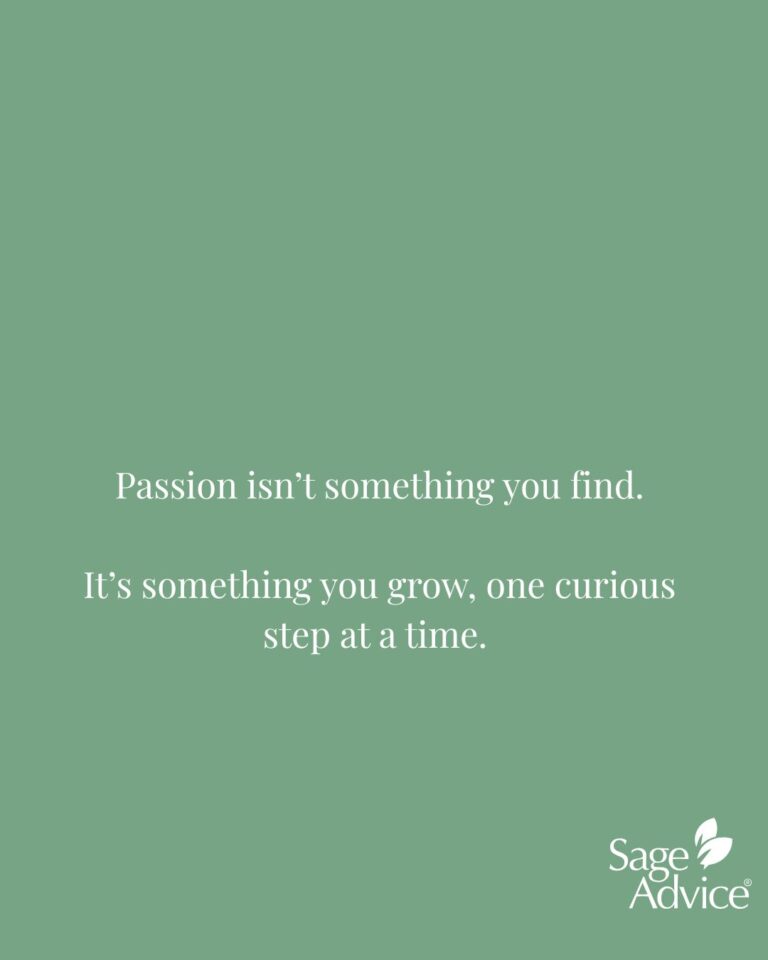
The growth theory of interests reminds us that becoming ourselves is a lifelong project. Passion is not something we outgrow—it’s something we continue to grow into. At Sage Collective®, we believe that each new curiosity is an invitation to vitality.

So instead of asking, “What am I passionate about?” try asking, “What am I willing to explore?”

› Back to top
« back
09.25.25 | Arts & Culture

Older AND Wiser

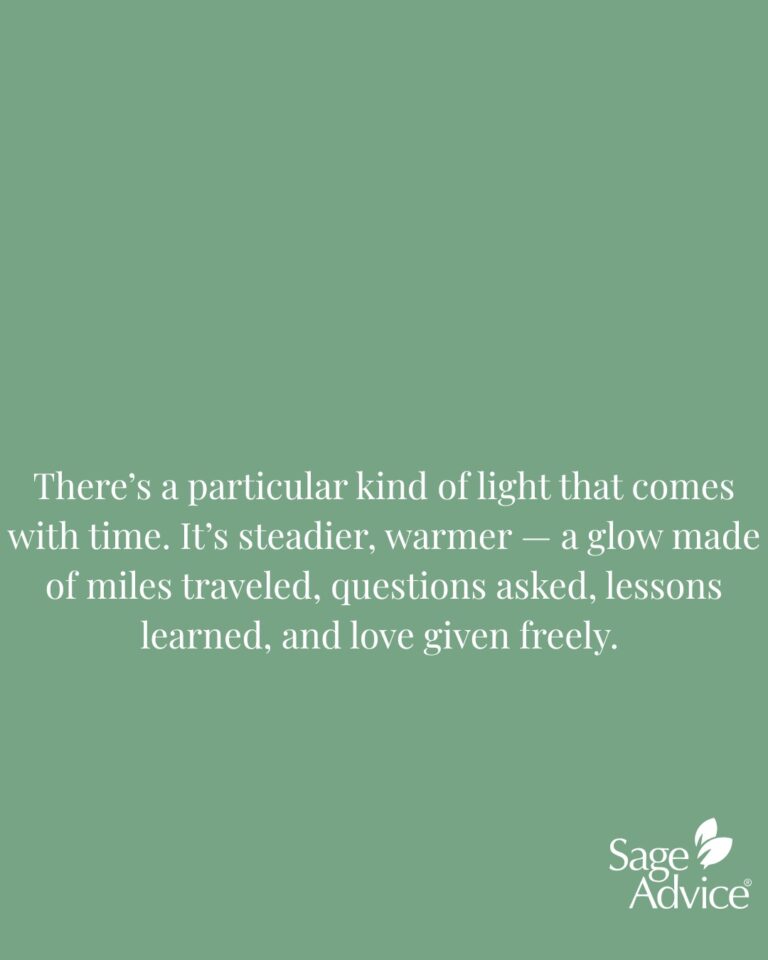
There’s a particular kind of light that comes with time. It’s not the flash of a first or the dazzle of a debut. It’s steadier, warmer—a glow made of miles traveled, questions asked, lessons learned, and love given freely. At Sage Collective®, we honor that light and the people who carry it. We call the result vibrant living.

Being older doesn’t mean shrinking your life to fit a smaller box. It means right-sizing your days to fit your truest self. In the Sage Collective® community, that looks like choosing practices that nourish body, mind, and spirit—because well-being is holistic and joy is a daily habit. We edit our priorities, clarify our values, and discover that happiness multiplies when we say yes to what matters—and no to what doesn’t. That discernment is freedom.

We know the difference between urgency and importance. We’ve learned that a slow morning with coffee and a good book can be a radical act of happiness. We understand that listening—really listening—often changes more than speaking. And we’ve seen how a thoughtful pause can turn conflict into connection, and a setback into a new path.

Mindfulness is one of our favorite tools for that freedom. A quiet moment with breath and gratitude can reframe the whole day. Mindfulness slows the world just enough for us to notice the good that’s already here: the warmth of a mug, the way light lands on a plant, the voice on the other end of a phone call. With presence, we listen more than we speak, respond rather than react, and turn conflict into connection. Wisdom thrives in that space between stimulus and response.

We also believe in lifelong learning—curiosity that never retires. Accumulated wisdom makes us better learners, not just better teachers. We ask sharper questions, mix curiosity with compassion, and bring context to every conversation. Pick up a new language, take a workshop, explore a museum, try a tech tool, or enroll in a community class. Every new skill is a vote for your future self. And when we learn together, we strengthen belonging—the heartbeat of vibrant living.

Art and culture are fuel, too. Creative expression—whether journaling, watercolor, choral singing, or the elegant focus of calligraphy—offers healing and delight. It’s not about mastery; it’s about meaning. When we make or experience art, we practice seeing the world (and ourselves) with fresh eyes. That fresh seeing reignites wonder.

Movement anchors the whole picture. A walk at sunset, a gentle stretch, a dance in the kitchen—these are small rituals of agency. They remind us that vitality isn’t a number; it’s a relationship with our own energy. Rest counts, too. Rest is a skill, and practicing it is an act of self-respect.

And then there’s contribution. Wisdom wants company. Mentoring a neighbor, volunteering for a cause, reading with a grandchild, or sharing a favorite recipe—these gestures turn experience into impact. Each time we share what we’ve learned, we strengthen the fabric of community and remind ourselves that our presence still moves the needle.

Joy, at this stage, isn’t loud for the sake of loud. It’s confident. It’s the joy of knowing our own rhythm, recognizing the seasons of our lives, and trusting that renewal is always possible. We hold both things at once: gratitude and grief, tradition and change, ambition and ease. That both/and mindset is the quiet superpower Sage Collective® celebrates every day.

Most of all, we understand that wisdom compounds. A single insight gained years ago—“call when you think of them,” “always carry water,” “take the walk”—keeps paying dividends. We’re not chasing the next thing; we’re choosing the right things. And in that choosing, we make room for wonder.

So here’s to being older and wiser: to curiosity that never retires, to courage that keeps expanding our horizons, to grace for ourselves and others, and to the everyday rituals that make life feel deeply, deliciously alive. The chapters ahead aren’t an afterthought. They’re a testament—to how far we’ve come, how much we’ve learned, and how joyful it is to keep growing.

› Back to top
« back
08.14.25 | Community

Black Genius: Tre Johnson Reclaims Brilliance in the Everyday

Tre Johnson’s newly-published Black Genius: Essays on an American Legacy is a smart‑talking, deeply felt celebration of Black ingenuity that redefines genius for the Sage Collective® audience. Across 30 polished essays, Johnson dives into the daily, the personal, the unexpected—to show us a broader American excellence rooted in Black creativity, survival, resistance, and joy.

The Genius of the Everyday
Johnson opens with a central provocation: “We’re utterly amazing, yet Black folks are… left out of conversations about genius.” Rejecting the narrow focus on recognized luminaries, he instead draws attention to the brilliance embedded in everyday experiences—from his auntie’s weekend bus trips to Atlantic City to the bold designs of ’90s airbrush tees, and the razor‑sharp, profanity‑laced monologues of Dick Gregory. These essays invite readers to ask: is this not genius too?

Cultural Critique with Humor and Heart
Johnson’s writing is chatty, witty, and fiercely observant. He moves fluidly between family reminiscence, pop culture deconstructions, and historical reflection. Whether tracing his uncle’s path from Black Trenton to the University of Pennsylvania in 1977, spotlighting the Odunde festival in Philadelphia, or exploring comic‑book narratives and streetwear trends, Johnson’s voice remains grounded, urgent, and alive.

Depth and Range
What sets Black Genius apart is the thematic cohesion across distinct essays: appropriation and cultural extraction; communal structures and Black Paranoia™ (Johnson’s coined term for racialized surveillance); institutional failure versus grassroots creativity; and generational memory as inheritance and resistance. Published reviews affirm that each piece stands alone, yet the essays build a richer tapestry when read together—“astute and deeply felt,” with “thematic threads” that elevate the collection as a whole.

A Love Letter and a Call to Action
At its heart, the book serves both as a love letter to Black brilliance and a wake‑up call to readers of all backgrounds. Johnson challenges us to expand our definitions of genius beyond metrics, accolades, and dominant culture narratives. In doing so, he invites vigilance about how culture is appropriated, how language is policed, and how Black communities define their own legacies on their own terms.

About Tre Johnson
A Philadelphia native, Tre Johnson is an acclaimed essayist and cultural critic whose work has appeared in The New York Times, Washington Post Magazine, Rolling Stone, and Vanity Fair, among others. Known for his incisive explorations of race, identity, and pop culture, Johnson rose to national prominence with his viral 2020 essay, “When Black People Are in Pain, White People Just Join Book Clubs,” published in The Washington Post. His voice is both intellectually rigorous and emotionally resonant—qualities that have earned him a devoted readership. Black Genius marks his debut as a book author, and it solidifies his place as a leading voice in the contemporary conversation around cultural justice and collective memory.

Final Take for Sage Collective® Readers
Black Genius is perfect for readers seeking thoughtful cultural criticism infused with joy, wit, and ancestral wisdom. It’s a timely riposte to exclusionary narratives—rooting genius in ordinary moments and collective memory rather than mythology. While Johnson’s perspective is steeped in Black American experience, his assertions resonate across culture, race, and academic inquiry.

Some essays close with lingering questions rather than tidy conclusions—fitting for a work that asks readers to continue the conversation rather than just receive it. For those in Sage Collective®’s audience who engage teaching, civic life, or creative work, Johnson’s reframing of intelligence and brilliance offers a powerful toolset.

In short: vibrant, thought‑provoking, and unflinchingly honest, Black Genius is exactly the kind of book you will want to discuss, reference, and carry forward.

Black Genius: Essays on an American Legacy was published by Dutton in July, 2025. You can find it in local libraries, bookstores, and online.

https://www.facebook.com/DuttonPenguin/posts/chatty-yet-profound-black-genius-by-tre-johnson-subverts-expectations-from-the-v/1138186201657053/
› Back to top
« back
08.07.25 | Arts & Culture

Joyspan: Measuring Life in Moments, Not Years

At Sage Collective®, we believe that vibrant living isn’t measured solely by how many years we have—but by how fully we live in those years. Just as we talk about lifespan and healthspan, there’s another equally essential, if less frequently named, concept: joyspan.

Joyspan is the measure of how much joy we experience and sustain throughout our lives. It’s not about momentary happiness or fleeting pleasures. It’s about the deep, sustaining joy that comes from meaningful connections, a sense of purpose, curiosity, and the freedom to be our full selves—especially as we age.

Beyond Lifespan and Healthspan
Modern medicine and lifestyle changes have helped extend our lifespan—the number of years we live—and increasingly, our healthspan—the number of those years we live in good health. But neither of those measures captures the richness of human experience. That’s where joyspan comes in.

Joyspan is qualitative, not quantitative. It invites us to ask, Am I making space for joy in my life? What fills me up? What lifts my spirit?

 Joy Matters—Especially As We Age
We live in a world that often underestimates the emotional and creative lives of older adults. There’s a quiet but damaging narrative that says joy belongs to the young. But we know from experience—and from the beautiful lives of those in our communities—that joy can flourish at any age. In fact, many people report a renewed sense of joy in their later years, when priorities shift, distractions fall away, and we’re finally able to savor what matters most.

Joy isn’t frivolous—it’s foundational. Research shows that joy supports mental health, bolsters our immune system, and helps build resilience. It improves relationships, sharpens cognitive function, and even enhances longevity. But beyond the science, joy connects us to our humanity. It allows us to experience gratitude, wonder, and awe.

Cultivating Joyspan: Daily Practices
Unlike lifespan, which is out of our control, joyspan is something we can grow—intentionally and continuously. Here are a few practices we encourage at Sage Collective®:

  • Savor small pleasures: A cup of tea, the bloom of a flower, a warm sunbeam on your shoulder. Joy is often tucked into the ordinary.
  • Stay curious: Explore new interests, revisit old passions, take a class, or start a creative project. Curiosity opens the door to joy.
  • Connect deeply: Spend time with people who see you, love you, and make you laugh. Whether it’s family, friends, or community, joy grows in connection.
  • Practice gratitude: Take a moment each day to reflect on what brings you peace or pleasure. Gratitude enhances awareness of joy.
  • Move your body: Gentle movement, walking, dancing—these are not just physical exercises but expressions of life and aliveness.

A Joyspan Philosophy
At Sage Collective®, we are reimagining aging by prioritizing wellness, creativity, and community. Embracing joyspan means honoring the emotional dimension of wellness. It invites us to be present, to celebrate beauty in the everyday, and to believe that joy doesn’t have to fade—it can deepen.

Our joyspan is not determined by the absence of hardship, but by how often we can return to joy, even amidst challenge. As we age, joy becomes not just a possibility, but a practice. And in that practice, we find hope.

So we invite you to ask yourself—not how many years you’ve lived, or even how many healthy ones—but how much joy you’ve let in. Because joy is not the icing on life—it’s the nourishment that makes life worth living.

› Back to top
« back
07.30.25 | Sage Advice®

Summer Reads: 6 New Novels by Black Authors

At Sage Collective®, we embrace the power of storytelling to inspire reflection, joy, and connection. Summer offers us a unique opportunity to slow down, seek shade, and stretch our imaginations. Whether you’re traveling or porch-sitting, a beautifully crafted novel can provide both escape and insight.

This season, we’re highlighting six compelling new works from Black authors, featured in The Guardian’s “Summer Sizzlers” list. These books span romance, family drama, queer identity, and cultural critique—offering fresh perspectives that align deeply with our values of vibrant living, cultural appreciation, and lifelong learning.

Here are six page-turners to enrich your summer:

Sweet Heat by Bolu Babalola
A radiant return from the queen of contemporary romcoms. In Sweet Heat, we reunite with Kiki and Malakai—former university lovers—now forced back into each other’s orbit as best man and maid of honor at the same wedding. Babalola masterfully explores how old flames reignite with both warmth and heat. It’s a story about second chances, emotional growth, and the vulnerability of love. For anyone who’s ever wondered what it would be like to revisit the one that got away, this novel will feel at once familiar and electrifying.

Great Black Hope by Rob Franklin
A deeply moving debut that confronts grief, class, and identity. After the death of his roommate, Smith—raised in Atlanta’s Black professional elite—retreats home, only to find solace elusive. Drawn once more into New York’s nightlife and its dangers, Smith’s story offers a searing examination of respectability politics and the myth of affluence as a buffer from pain. With sharp insight and vulnerability, Franklin invites us to consider how societal expectations shape—and sometimes distort—our grief, our choices, and our sense of self.

 Absence by Issa Quincy
A poetic, memory-rich meditation on family and loss. At the center of Quincy’s lyrical novel is a poem, shared between mother and son, that echoes across a lifetime. As letters, memories, and ghosts surface, the narrator reconstructs a life shaped by absence and fleeting connections. Quincy writes with a haunting clarity, reminiscent of Teju Cole and Rachel Cusk. This is a novel for lovers of introspective fiction—an invitation to sit with the quiet echoes of our past.

Necessary Fiction by Eloghosa Osunde
Set in Lagos, this vibrant and necessary novel explores queer identity, chosen family, and survival in a city of contradictions. Osunde, celebrated for Vagabonds!, captures the kinetic energy of a metropolis where art, struggle, and love intermingle. Through richly drawn characters navigating sexuality, spirituality, and resilience, Necessary Fiction reveals how imagination becomes essential to survival. Osunde’s storytelling is radical, affirming, and achingly beautiful.

The Catch by Yrsa Daley-Ward
Daley-Ward’s literary thriller blends family mystery with lyrical elegance. After the disappearance of their mother, twin sisters Clara and Dempsey have lived in emotional limbo. Years later, a chance sighting of a woman who looks exactly like their mother disrupts their fragile stability. Is Serene a stranger—or the return of a ghost? The Catch is an arresting exploration of grief, estrangement, and the unknowable spaces within families. With Daley-Ward’s poetic precision, each page is loaded with suspense and grace.

Sunstruck by William Rayfet Hunte
A queer summer romance meets class critique in this dazzling debut. When a mixed-heritage university student falls for his friend’s wealthy brother, he’s pulled into a sun-drenched world of affluence and allure—only to find himself disoriented by race and class tension. Set between the south of France and Notting Hill, Sunstruck captures the intoxicating thrill of desire and the ache of cultural dislocation. Smart, sexy, and psychologically astute, this novel is a beach read with bite.

From Beach Bags to Book Clubs
At Sage Collective®, we see summer reading as an act of vibrant engagement with the world around us. These six novels illuminate personal transformation, cultural identity, and the power of language to heal and stir. As you savor this season’s warmth, we invite you to dive into these powerful stories—and let them move, challenge, and inspire you.

Book selections sourced from The Guardian’s “Summer Sizzlers: Six Must-Read Books by Black Authors”.

Credit: Anne Adrian on Flickr Creative Commons (https://www.flickr.com/photos/aafromaa/3003188568). Licensed under CC BY 2.0 (https://creativecommons.org/licenses/by/2.0/deed.en)
› Back to top
« back
06.25.25 | Community

It’s Never Too Late to Dance

At Sage Collective®, we believe that aging is not about slowing down, but about embracing the sources that bring meaning, joy, and vitality to our lives. Among those sources, few are as universally joyful as dance. Whether it’s a graceful sway with a loved one to a soulful tune or an eccentric twirl in the bathroom, dance is a celebration of the present moment. And yet, too often, society tells us that with age comes a limitation of what kind of movement our bodies can enjoy. We wholeheartedly disagree. This is your invitation to reclaim the dance floor to rediscover the freedom that comes when you let your body move in harmony with your creative, open self. Because the truth is simple and powerful: you’re never too old to dance.

Dance Is for Everyone
Dance belongs to all of us; we celebrate dance as a personal expression available to anyone—at any age, in any body, and at any pace. Whether it’s ballet or line dancing, chair-based movement or hip hop in your living room, there is no right way to appreciate the creative bones in your body. The beauty of dance is that all you need is your own body and a delight for the act.

There is no need to be a classically trained dancer who is extremely young to produce the art form that is dance. While many focus on the technique of the movement, there is a love and passion that is imperative to have in order to not only do the art form, but enjoy it as well.

Physical and Mental Benefits of Dancing as You Age
At Sage Collective®, we know that movement is one of the most powerful ways we honor our bodies and its story. Dancing, in particular, is a joyful form of movement that nurtures body, mind, and psyche. As we age, regular dance can support balance, flexibility, and coordination—helping us move with greater confidence and stability. It strengthens the heart, encourages better posture, and promotes circulation. And perhaps just as importantly, it’s fun. So often, exercise feels like something we should do while dance is something we want to do.

But the benefits of dance go far beyond the physical. When we dance, we stimulate the brain by learning new steps and challenging our memory, responding to rhythm by carefully listening to the music accompanying our steps, making split-second decisions about where and how to move, and even taking risks by presenting ourselves in a new but vulnerable position. This keeps our minds sharp, engaged, and confident. Dancing also uplifts our emotional well-being by reducing stress, easing feelings of loneliness, and reconnecting us with a sense of youthful play. It can connect us to a community or connect us back to ourselves, it can be social and it can be deeply personal. The simple act of moving to music can remind us: we are still growing, still vibrant, still alive with endless potential.

Real-Life Inspirations
Take Ida Keeling, she was known to break records in sprinting by running a 100-meter dash in 1 minute and 17.33 seconds in the women’s ages 100-104. Part of her training and warm ups for these impressive athletic triumphs were dancing exercises. She quickly became known for her joyful dancing that was a symbol for resilience.

Then there is Dawn Hampton. She had a full career as a jazz musician and then delved into the world of dance. She became reacquainted with her love of dancing in her 60s and 70s, becoming a swing teacher and dancer, performing all over the world.

Getting Started
Whether you’re returning to dance after many years or trying it for the very first time, remember: there is no right way to begin, only your way.

Here are a few simple ways to get started:

  • Start with music you love. Put on a favorite song and allow your body to respond naturally. Even a head nod or toe tap counts, whatever is enjoyable and expressive for you.
  • Dance in the privacy of your home. If stepping into a public space feels too big right now, start in your living room, kitchen, or in front of the mirror.
  • Try chair dancing. Start swaying and moving your arms to start a gentle movement. It is a beautiful way to connect with rhythm and is perfect for those with limited mobility.
  • Set a small goal. Whether it’s dancing for one song a day or attending a weekly class, consistency matters more than intensity.
  • Be proud of yourself. It is not easy starting something new, especially when society is telling you it’s impossible. Appreciate your ability to continue your growth process.

No matter our age or ability, we are all capable of letting loose and dancing to our favorite song. In these spaces, there are no wrong steps, only authentic ones.

› Back to top
« back
06.05.25 | Arts & Culture

It’s Never Too Late to Change Your Mind

At Sage Collective®, we believe that aging is an opportunity to discover new depths of your evolution. One of the most liberating truths we come to understand with time is this: it’s never too late to change your mind. Whether it’s a shift in perspective, a change in attitude towards people, or a complete reinvention of self, the ability to change your mind is not a weakness but a superpower.

Because we believe that vibrant living doesn’t mean standing still, it means challenging yourself to never stop  evolving.

Why Changing Your Mind Is a Strength, Not a Weakness
We are under the impression that age equates to certainty. We expect that once we arrive at this stage in our lives we should be able to know ourselves fully, have our set beliefs that do not change, and continue to live our life exactly the same. Although, we forget that the various life stages can be the reason for growth and change.

Changing your mind does not mean you are indecisive, it means you have enough security to reevaluate certain aspects of your life. Maybe you had an opinion years ago that caused you and someone you love to drift apart, or you thought someone was your soulmate but it turns out your story ran its course, or maybe the shirt you used to be obsessed with is hideous to you now. Whatever it may be, it is emotionally intelligent to always be questioning who you are and where you stand on certain decisions. Growth can be about sticking to your guns and advocating for what you believe in but it can also be the humble act of reassessing the past.

Real-Life Examples of Late-in-Life Pivots
Nina Simone is one powerful example. Known early in her career as a classically trained pianist and acclaimed jazz and blues singer, Simone experienced a profound shift after attending the 1961 American Society of African Culture conference in Lagos, Nigeria. The trip was life-changing. It awakened a deeper connection to her identity and political purpose. From that point on, she became a fierce voice for civil rights—performing at protest rallies, writing political anthems, and lending her artistry to the movement. She changed her mind about what her platform was for—and in doing so, changed the world.

Another remarkable story is that of Iyanla Vanzant, who initially rose to public attention as a lawyer and spiritual teacher. But her true transformation came later in life. After facing personal hardships, including the death of her daughter and the dissolution of her marriage, Vanzant stepped into her power as a healer. She became a celebrated author, spiritual counselor, and host of Iyanla: Fix My Life—a role she took on in her late 50s. Her shift wasn’t just a career pivot—it was a complete reimagining of how she would use her voice.

And consider Ron Finley, the South Central Los Angeles fashion designer who, in his 50s, decided to change his life—and his neighborhood—by planting vegetables in abandoned lots. Now known as the “Gangsta Gardener,” Finley’s work has become a movement, promoting food justice, sustainability, and self-reliance. He changed his mind about where power and purpose come from, and discovered a new form of activism in the soil beneath his feet.

Reframing Your Story
There are multiple ways to stay on your feet and remain open to change:

  • Stay curious: Read books, watch films, and listen to music that challenge your thinking.
  • Embrace dialogue: Spend time with people who see the world differently.
  • Reflect often: Journal without judgment, allowing space for evolving insights.

At Sage Collective®, we believe aging is about stepping fully into your own wisdom and embracing that wisdom. Changing your mind in your later years isn’t a sign that you’ve lost your way; it’s often proof that you’ve finally found it.

We as humans make the mistake of thinking that there is a final destination when, in reality, we never stop growing. Therefore, it is our responsibility to treat that evolution with mindful reflection and openness to the change it can inflict.

You’re never too old to change your mind—because you’re never too old to grow.

The Gangsta Gardener, Ron Finley. Credit: U.S. Embassy New Zealand (https://www.flickr.com/people/46907600@N02). Wikimedia Commons, licensed under the Creative Commons Attribution 2.0 Generic license.
› Back to top