« back
06.08.21 | Community

Where to go for scenic walks on Chicago’s South Side

We’ve previously shared how incorporating a 30-minute walk into your daily routine brings with it a surprising array of health benefits. While you enjoy those healthful benefits on your walk, why not enjoy a good view too? Some days it’ll be easier to take a walk around the block, but for those days where you want to elevate “taking a walk” into a special occasion: here is Sage Collective’s guide to the best scenic walks on Chicago’s South Side.

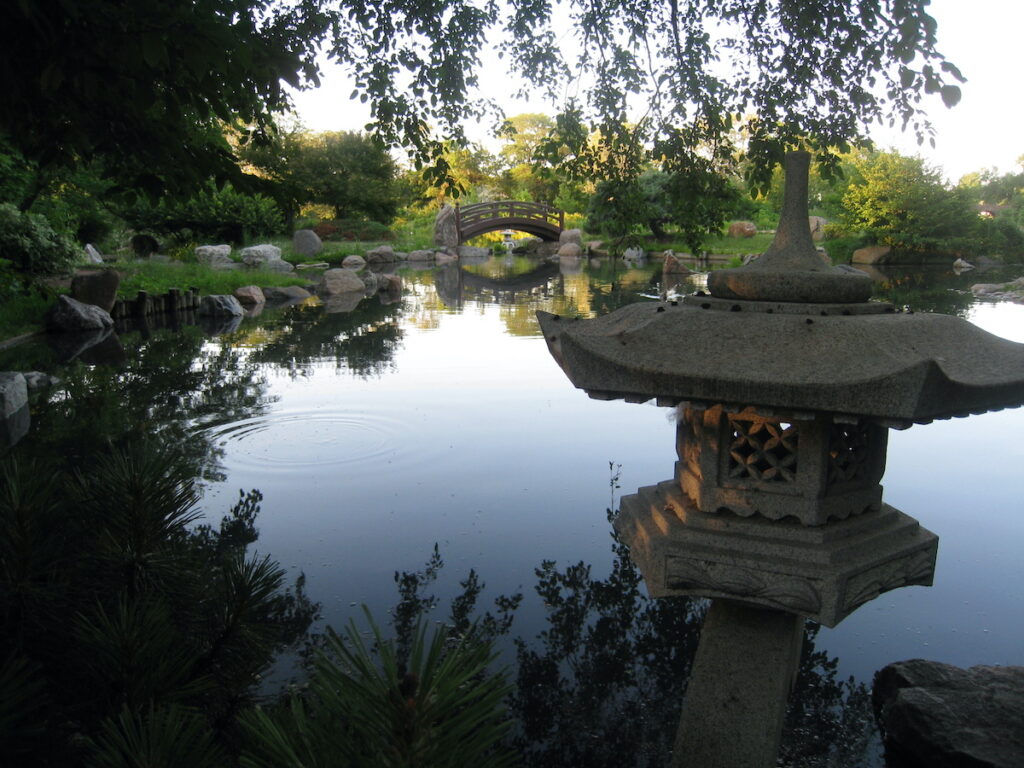
Japanese Garden, part of Jackson Park in Woodlawn, Chicago.

Jackson Park – Woodlawn

Jackson Park is a sprawling 551-acre park on Chicago’s South Side with an impressive history. Designed by the same names behind New York’s Central Park, and once home to the World’s Columbian Exposition, Jackson Park continues to bring exciting seasonal events and features to the Woodlawn community. Just this spring, the park’s 160-tree grove of cherry blossoms bloomed for the first time ever, attracting locals and tourists alike to see the beautiful display. 

The park is the perfect place for a short jaunt or longer “hike,” with landmarks like the lushly landscaped Japanese Garden and winding Bobolink Meadows lagoon-side trail serving as your backdrop.

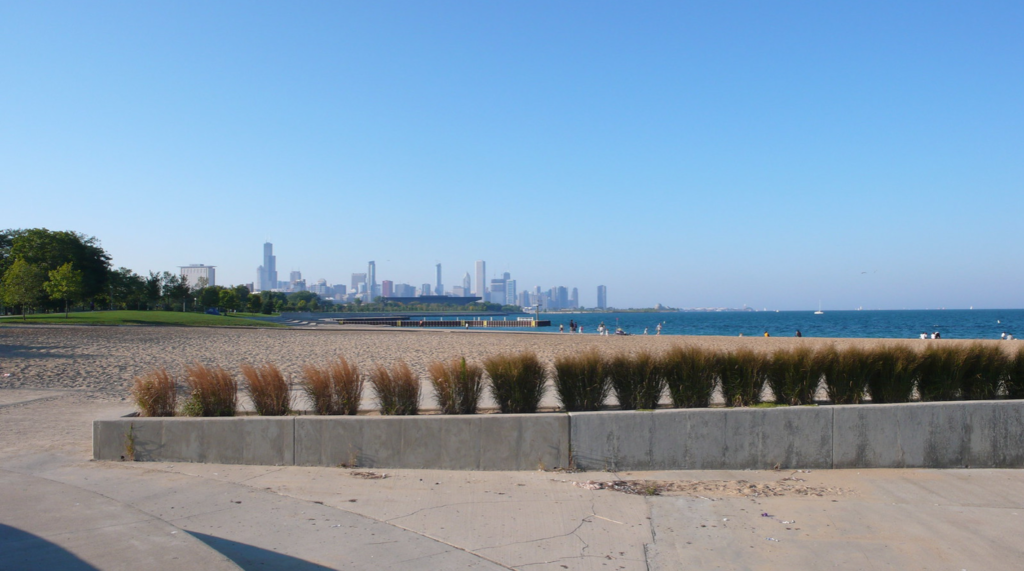
View of the Chicago skyline from 31st Street Beach in Bronzeville, Chicago. Photo via Flickr.

31st Street Beach – Bronzeville

While most people know it as 31st Street Beach, the beach’s formal name became Margaret T. Burroughs Beach in 2015. Named for the accomplished artist, arts advocate, poet, teacher, civic leader, historian, and founder of the DuSable Museum of African American History, the beach’s official name serves as an homage to the history and vibrancy of both Burroughs herself, and the Bronzeville neighborhood overall.

The beach, which is nestled next to 31st Street Harbor, boasts sweeping views of Chicago’s city skyline, and invites swimmers, joggers and walkers alike to enjoy the beautiful scenery.  

When it comes time to plan your next weekend excursion, we hope these parks provide some inspiration and an exciting backdrop. After all, nothing makes a regular, leisurely workout more vibrant like a little bit of good scenery. 

Burnham Nature Sanctuary. Photo courtesy of Chicago Park District
Burnham Nature Sanctuary. Photo courtesy of Chicago Park District.

Burnham Nature Sanctuary – Kenwood

Located at 1600 E 47th Street, Burnham Nature Sanctuary is just one serene pocket of a larger stretch known as the Burnham Wildlife Corridor. The corridor is a 100-acre ribbon of urban wilderness running through Burnham Park.

The sanctuary itself is the perfect location for novice and expert birdwatchers alike as they meander through the woodlands. These woodlands, full of native plants, attract many forms of wildlife for visitors to enjoy, from birds, to caterpillars, to butterflies. Beyond the woodland path, there’s also a boardwalk that winds through a hill and swale grassland. Overall, Burnham Nature Sanctuary is the perfect way to reconvene with nature all while remaining in the close confines of the city. 

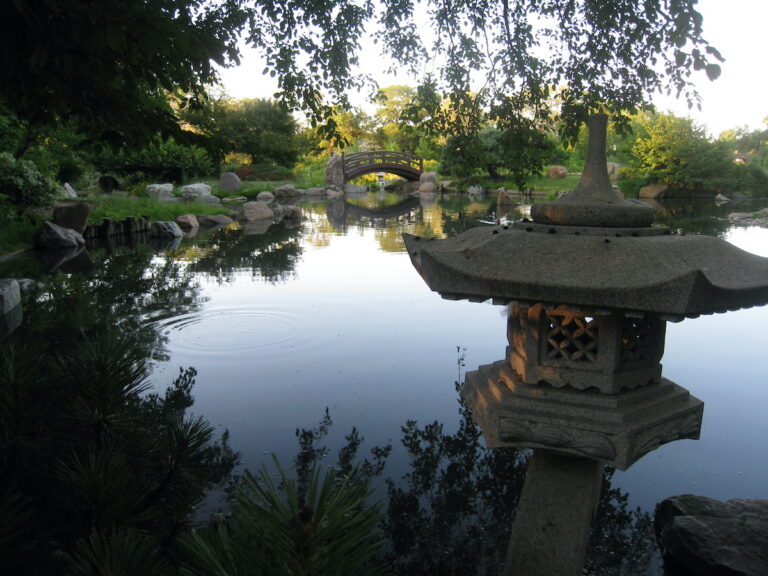
Japanese Garden, part of Jackson Park in Woodlawn, Chicago.
› Back to top
« back
02.09.21 | Community

A Brief History of Bronzeville

Sage Collective has begun the process of renovating the first two properties we acquired, since selling Willa Rawls Manor, a 123-unit property we owned and operated for more than 40 years. The two properties are located at  4108 S King Drive and 4112 S King Drive. With the buildings located side-by-side in Chicago’s historic Bronzeville neighborhood, it will provide a tangible benefit to the community by celebrating and uplifting Bronzeville’s dynamic history, current-day culture and residents alike. In honor of this effort and of Black History Month, today we take a moment to look at a brief history of Bronzeville.

Becoming Bronzeville

With the Great Migration beginning in 1916, African Americans fled lynchings and oppression in the rural South for brighter opportunities in cities in the North. Though segregation was outlawed after the Civil War, racist practices in hiring and housing practices remained steadfast. Many African Americans in Chicago landed in what became the Bronzeville area, there facing higher rent prices and population density (at its highest reaching 300,000 residents strong). 

Despite this, true to the African principle of ujamaa, Bronzeville residents created a tight-knit community that boasted a network of black-owned institutions and a cultural vivacity that, in its prime from the 1920s-1950s, even rivaled Harlem.

The community had been growing, but the name Bronzeville only entered the scene in the 1930s, suggested by theater editor for the Chicago Bee (an African American-led daily newspaper with national reach), James Gentry. Gentry posited that African American skin was closer to bronze than black, and selected the name as an empowering alternative to racist nicknames for the neighborhood that had emerged.

Center of Culture

Though the official boundaries of Bronzeville are often contested as spanning anywhere from 18th and 67th Street north-south to the Dan Ryan and Lake Michigan west-east, the pulsing heart of Bronzeville landed somewhere in the middle.

Dining, shopping, dance halls and nightclubs abounded. Jazz, blues and gospel were the sounds of Bronzeville, and when the Regal Theater opened in the 1920s, it attracted the country’s most glamorous and talented Black entertainers. Bronzeville also boasts being the home of renowned African American artists and intellectuals like journalist and social activist Ida B. Wells, jazz musician Louis Armstrong, poet Gwendolyn Brooks, women’s aviation pioneer Bessie Coleman, sociologist Horace Clayton and dancer Katherine Dunham.

WTTW put it best when they said businesses and community institutions like Provident Hospital (where Daniel Hale Williams, an African American, pioneered open-heart surgery), the Wabash YMCA (which established the first Black History Month), the George Cleveland Hall Library, Parkway Community House, Binga Bank (Chicago’s first Black-owned life insurance, realty, and financial institution), and more, “were more than alternatives to racially restricted establishments downtown”. They were pillars of the community which helped to instill pride and contribute to the upward mobility of African Americans.”

Through our vision for vibrant, high-quality and affordable housing for older adults, Sage Collective is proud to contribute to the legacy of African American culture, community and success that is the heart and soul of Bronzeville. 

Mural under the “El” tracks in Bronzeville
› Back to top
« back
01.21.21 | Sage Advice®

Why You (And Everyone Else) Should Read More Poetry

Many of us discovered poetry during mandatory school courses and our relationship with the genre ended swiftly after, never to be revisited again over the years. There’s this common misconception that poetry is in inaccessible art form, that it has to be understood to be enjoyed. But poetry is like singing — you don’t have to be good at it to do it or to enjoy it. Put simply: it’s good for the soul. That’s why today, we’re making an argument for why you (and everyone else) should read more poetry.

Why Read Poetry?

First of all, poetry is easy to incorporate into your daily schedule. A single poem doesn’t ask much of your time or attention. One Huffington post article describes how easy it is to consume poetry by saying, “You can flip through a book of poetry and eat the poems like popcorn.” In fact, you can even have the delectable treat of poetry delivered to your email daily by the Academy of American Poets’ Poem-A-Day or Poetry Foundation’s Poem of the Day

Rather than being intimidated by the idea of interpreting poetry, let’s consider how many possibilities are offered in the act of interpretation. Poetry, as an abstract language, stretches our imagination and the boundaries of what words can do. It appeals to heart logic over brain logic. Poetry shakes off literal interpretations or concreteness… the idea that there is just one way of seeing. Mirroring this logic (or lack thereof), in most arguments on why you should read poetry, instead of choosing just one reason why, the arguments simply end on the open-ended question: “well, why not?”

The Impact of a Poem

Though, of course, poems can teach us new things and offer us a new perspective, much of the beauty lies in how a person uniquely relates to the poem. In the TEDTalk “What Happens When We Read Poetry” they purport that it is this reacting-to that makes poetry so meaningful: “Though a poem doesn’t make things happen, it happens — every time someone reads it. Rather than a static item printed on a page, a poem is an event that occurs with each new reader and with each new reading.”

Further exploring the idea of what happens when we read poetry, The Cut describes a study conducted in Germany where the bodily response to poetry was measured using a “goosecam” (which shows the movement of skin and arm hairs as people listen to poetry). Participants in the study were also told to press a button each time they got chills during the reading of a poem. 40% of participants physically showed goosebumps.

But even more, the neurological impacts (those not tracked by the goosecam, but by brain scans throughout the process) showed the impacts of the slow-building pleasure of listening to poetry. The study dubbed this phenomenon, the “pre-chill,” a sensation synonymous with the buildup and anticipation of unwrapping a chocolate candy bar. Before study participants ever pressed the button indicating they had been given chills by the poem, the pre-chill had already been occurring within them.

Poetry contributes to vibrant living. And the best part about poetry: there’s something for everyone. If one poem doesn’t stir pre-chills in your heart and goosebumps on your arms, the next one most likely will.

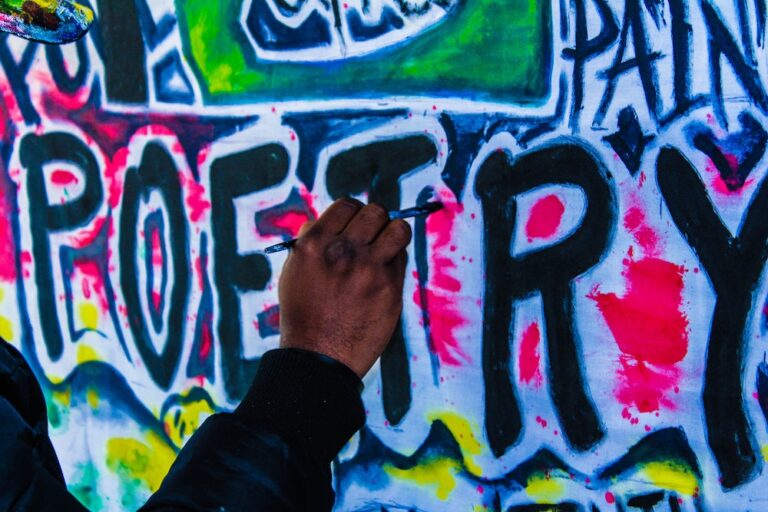
A hand writes the word poetry on a vibrant wall of graffiti
› Back to top
« back
12.23.20 | Arts & Culture

Learning From the Seven Principles of Kwanzaa

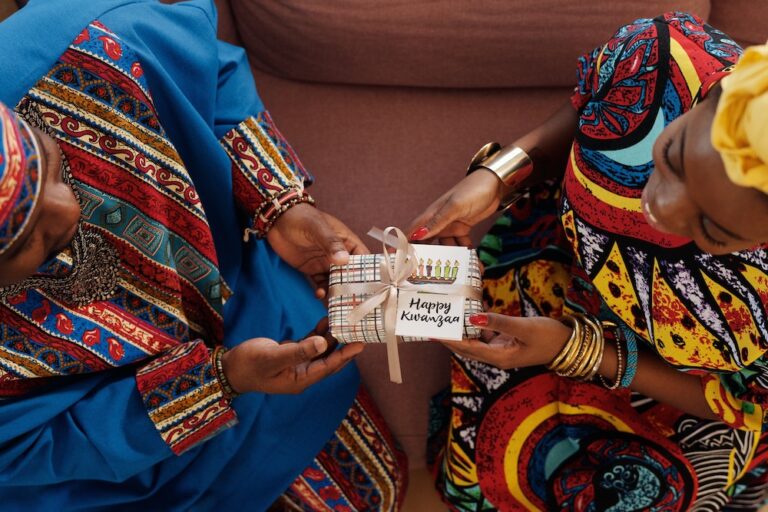
Kwanzaa is an annual African American and Pan-African holiday that brings people together globally to celebrate their cultural and ancestral roots. The holiday, created in 1966 by Dr. Maulana Karenga, derives its name from the Swahili phrase “matunday ya kwanza,” or “first fruits,” and was inspired by the harvest traditions of the Ashanti and Zulu. In honor of this culturally-rich event, today we’re exploring more of the holiday’s history and traditions.

The History of Kwanzaa

Dr. Karenga created Kwanzaa after the Watts riots in Los Angeles. As a major figure in the Black Power movement of the 1960s and 1970s, Dr. Karenga saw the celebration as a way to bring African Americans together as a community and to uplift Black Power. While the holiday began as a radical alternative to mainstream denominations, in a 1997 address, Dr. Karenga revised his stance so as not to alienate practicing Christians. Today, many African Americans celebrate Kwanzaa alongside their own religious holidays. 

The celebration of Kwanzaa takes place across a period of seven days from December 26 to January 1. Families gather to light the Kwanzaan candelabra, the Kinara, which holds seven candles, one for each night. The seven candles correspond to the seven principles of Kwanzaa, or Nguzo Saba. There are numerous other celebratory symbols and traditions in addition to the lighting of the Kinara.

The Seven Principles, Nguzo Saba

The Seven Principles, or Nguzo Saba, are reflective of important values in African culture. When lighting the Kinara each night, families reflect upon the principle that corresponds with that day. Nguzo Saba includes the following:

Umoja, or unity, means to strive for and maintain unity in the family, community, nation, and race.

Kujichagulia, or self-determination, means to define ourselves, name ourselves, create for ourselves for ourselves and speak for ourselves.

Ujima, or collective work and responsibility, means to build and maintain our community together and make our brother’s and sister’s problems our problems and to solve them together.

Ujamaa, or cooperative economics, means to build and maintain our own stores, shops and other businesses and to profit from them together.

Nia, or purpose, means to make our collective vocation the building and developing of our community in order to restore our people to their traditional greatness.

Kuumba, or creativity, means to always do as much as we can, in the way we can, in order to leave our community more beautiful and beneficial than we inherited it.

And Imani, or faith, means to believe with all our heart in our people, our parents, our teachers, our leaders and the righteousness and victory of our struggle.

As strong believers in the power of community and the collective, we at Sage Collective believe there is much to be learned from Nguzo Saba. To learn more about Kwanzaa, you can visit the website created for the holiday by Dr. Karenga here.

Two African American people wearing batik fabric hold a gift together that says Happy Kwanzaa
› Back to top
« back
12.15.20 | Arts & Culture

Celebrating the December Holiday Season Safely

The December holiday season (like everything else this year) is looking different than usual. With COVID-19 cases spiking this winter, it’s more important than ever to practice safety: always wear a mask, maintain social distance and stay home whenever possible. Traveling and large group gatherings are highly discouraged during COVID-19 — which means many of us are glumly accepting that seeing our family in person isn’t the safest option. But like every challenge this year, there are creative ways we can overcome this obstacle. Below are a few joy-filled ideas on how to celebrate the December holiday season safely:

Get Creative (and Passionate) with Baking

Nothing better fills at-home time (and our bellies) than baking. This holiday season, revisit the family cookbooks for some inspiration and whip up a feast of delicious goods. The best thing about food — it’s meant to be shared. Try organizing a cookie swap with the neighbors on your block by asking everyone to bake their favorites and to drop it off at each other’s doorsteps. Sharing food is a great way to feel like we’re together, even when we’re apart. 

Enjoy Festive Decorations

Holiday decorations are another way we share our joy and excitement with others. Take a walk or drive around the neighborhood to see how your community’s decorative cheer is being displayed. Or join in on the festivities and hang decorations around your own home to express yourself. Going to see festive decorations can also become an exciting excursion with this TimeOut list of lights to see in Chicago.

Make and Exchange Holiday Cards

Holiday cards are an exciting occasion every year, but this year especially, there’s an extra exhilaration to sending and receiving snail mail. Whether it’s a family photo, a fun drawing or a personally written note, make an event out of creating your holiday cards this year. And when they’re done, share them with friends, family and more. Veterans, children’s hospitals and incarcerated folks are also great recipients for holiday cards!

Host a Video-Chat Party

We’re no strangers to Zoom this year. Video chatting platforms are perfect for hosting virtual holiday parties safely. There’s nothing you can’t do with a well-positioned camera — cook together virtually, have dinner together virtually or just hang out. Try spicing up your virtual holiday party with activities like holiday-theme bingo, trivia or sing-alongs. 

No matter the circumstances, people will always find a way to celebrate special moments together. From the Sage Collective team to you, have a happy and safe holiday season!

An array of holiday celebration items, including handmade cards, hot chocolate and seasonal ornaments
› Back to top
« back
12.10.20 | Arts & Culture

Discover Your New Winter Hobby for Seniors

Cultivating hobbies in older adulthood is a vital part of staying enriched and engaged. We’ve spent our entire lives making others happy, from partners to kids to bosses to friends. Now is the perfect time to indulge in activities for personal happiness and enjoyment, too. That’s why today, we’re talking about the benefits of finding a hobby that suits you — and sharing a few ideas to help get you started.

Fitness Hobbies

As we’ve discussed before, it’s vital that older adults partake in regular, moderate physical activity. Hobbies such as yoga, tai chi, swimming and even gardening are great ways to get those minutes in while also enjoying the task. Choosing these forms of exercise will help transform the experience of working out from a chore to a treat. 

Social Activities

Loneliness and social isolation are major challenges older adults face. Incorporating social activities into your life is a great way to meet new people and learn new things at the same time. Consider joining a choir, a local senior bowling (or other leisurely sport) league, taking a dancing class or even getting together for a game of cards every once and awhile.

Mental Engagements

One major benefit of hobbies is the opportunity to stimulate and engage your mind. For those that love a good challenge, or like to be whisked away in a story, try picking up a good novel from your library or grappling with a puzzle in the newspaper. Mentally engaging hobbies and activities are even proven to help keep your memory sharp.

Artistic Pursuits

For those seeking to express their artistic side, there are many artist hobbies available. For those that are good with their hands, knitting, crocheting or quilting are all exciting pursuits. Painting, drawing and scrapbooking are great ways to get creative and to create keepsakes, too. And for the wordsmiths among us, writing counts as an artform too!

There’s a hobby out there for everyone. Keep looking and trying new things until you find one that’s the right fit for you!

Three African American older adults smile together, wearing aprons at a painting class
› Back to top
« back
12.08.20 | Sage Advice®

Understanding the South African Philosophy of Ubuntu

Words from other cultures often encapsulate grand ideas that our own language simply struggles to communicate so succinctly, just like the Japanese concept of tsundoku, which describes having more books than one could ever read. Similarly, the Nguni Bantu term ubuntu is hard to even translate into English, though roughly it means “humanity.” Today, we’re exploring ubuntu and all that the word encompasses.

What It Means

The word ubuntu combines the root ntʊ̀, or “person/human being” with the abstract-noun-forming prefix ubu-, which is why the word is sometimes translated to mean “humanity” or, more extensively, “humanity towards others” and “I am because we are.” The Zulu phrase “Umuntu ngumuntu ngabantu” literally means that a person is a person through other people. Ubuntu encapsulates ideas of human kindness, mutual caring, connection, community and oneness. 

The word dates back as early as 1846 in South Africa, though first became popular during the period of decolonization in the mid 20th century. Ubuntu at that time was described as a form of African humanist philosophy, a moral compass for how we should behave towards one another. 

How Ubuntu Has Been Used

In the late 20th century, Desmond Tutu further popularized the term and brought it to Western audiences. He described it by saying, “My humanity is caught up, is inextricably bound up, in what is yours.” In truly ubuntu, or humanistic form, Tutu advocated that a democratic South Africa could reconcile from apartheid through restorative justice. Both oppressor and oppressed needed to have their humanity restored, to return to ubuntu and a more just, mutualistically caring society, together.

Nelson Mandela himself famously described ubuntu saying, “A traveller through a country would stop at a village and he didn’t have to ask for food or for water. Once he stops, the people give him food, entertain him. That is one aspect of Ubuntu but it will have various aspects.” Mandela embodied ubuntu by leading South Africa out of apartheid with compassion and understanding, rather than vengeance. 

We could all benefit from incorporating ubuntu into our vocabulary and philosophy. At Sage Collective, we believe in the power of humanity, community and kindness — and we celebrate all that ubuntu embodies.

A group of dark human figures are gathered, and their silhouettes are reflected on the ground below them
› Back to top
« back
11.19.20 | Arts & Culture

An Argument for the Antilibrary

Whether you’re an avid reader or the one-novel-a-year type, being surrounded by more books than you can read is good for you and leads to a more vibrant life. The desire to stockpile a library far beyond the limits of your reading speed is in fact so universal that there’s a word for it: tsundoku

The Japanese term is defined as the “stockpiling of books that will never be consumed.” Breaking the word down into its separate components: tsunde means to stack things, oku means to leave for a while and doku means to read. Those that “suffer” from tsundoku can’t help but pick up a few extra titles at a garage sale, or to browse the bookstore if they happen to stroll past. Having a specific word for it celebrates these tendencies and points out that hoarding books is not only fun, but good for the soul.

In fact, author and statistician Nassim Nicholas Taleb takes the idea of tsundoku one step further. He advocates for building your own antilibrary, a term coined in his bestselling book The Black Swan. Before introducing the concept of antilibrary, Taleb reflects on the library of Italian writer Umberto Eco, which contained a staggering 30,000 tomes. It wasn’t Eco’s intention to ever read his entire library — in fact, he purported that the library served as a reminder of everything he didn’t (and wouldn’t ever) know. That constant reminder is what kept Eco not only humble, but also intellectually hungry and perpetually curious.

Inspired by Eco, Taleb introduces the antilibrary in The Black Swan by saying:

“A private library is not an ego-boosting appendage but a research tool. Read books are far less valuable than unread ones. The library should contain as much of what you do not know as your financial means, mortgage rates, and the currently tight real-estate market allows you to put there. You will accumulate more knowledge and more books as you grow older, and the growing number of unread books on the shelves will look at you menacingly. Indeed, the more you know, the larger the rows of unread books. Let us call this collection of unread books an antilibrary.”

Practicing a little tsundoku and building your own antilibrary serves to set a goal for yourself: to never stop seeking knowledge and growth. Like Eco, it can keep you humble, hungry and curious. So the next time you wonder whether you should buy another book that will end up just sitting on your bookshelf, the answer is yes, you should. 

A bookstore with cluttered stacks of books
› Back to top
« back
10.27.20 | Sage Advice®

The Danish Philosophy of Hygge

With cold weather upon us, we all love the feeling of a steaming mug of hot cocoa nestled between our hands, or the comfort of a good pair of slippers on a chilly Sunday morning. But nobody knows this love better than the Danish — who have actually coined their own term to help describe it: hygge. And since then, the Danish philosophy of hygge has taken the world by storm.

What’s that?

Hygge is described as “a quality of cosiness and comfortable conviviality that engenders a feeling of contentment or well-being.” Pronounced “hoo-guh,” the modern day philosophy is derived from the Sixteenth-century Norwegian term hugga, to comfort or to console. But the word has far transcended its origins to become deeply embedded in Denmark’s national behavior and disposition, inspiring others globally to follow suit.

Meik Wiking, the CEO of the Happiness Research Institute in Copenhagen, goes so far as to say hygge is “a defining feature of our cultural identity and an integral part of the national DNA. In other words, what freedom is to Americans. . . hygge is to Danes.”

Hygge has been part of Danish culture since the early 1880s. The contagious philosophy has since spread to the UK in 2016, when several books were published on the topic, making it such a buzzword that it even appeared in the Collins Words of the Year for 2016. From there, hygge made its way to popular US culture, infiltrating the Pinterest-verse and becoming an integral aesthetic to home design (think roaring fireplaces, big knit blankets). 

How to live a hygge life

Hygge, like all things fun and enjoyable, doesn’t have a ton of rules. The word itself can be an adjective or a noun — hyggebukser is a pair of pants you wouldn’t dare wear in public, but adore at home, and hyggekrog describes a cozy seat, such as your favorite recliner or a good reading nook. To introduce hygge into your own life, you simply have to embrace moments of comfort and joy. 

There are lots ofl ways to do this, like surrounding yourself with candles and throw blankets. There are also deliciously indulgent ways to do this, like baking homemade bread, cakes or pies, binging on comfort food and enjoying a hot, buttered rum.  As proponents of vibrant, engaged living, we at Sage Collective believe the best way to embrace the hygge philosophy is amongst good company. Whether it’s a morning jaunt around the neighborhood with a good friend, or a board game played in the living room with loved ones, hygge can be found in the simplest and most pleasurable of moments, if only we learn to look.

A hygge setup of a red pillow, a lit candle, a mug of hot cocoa and a fuzzy blanket nestled in a window seat
› Back to top
« back
10.22.20 | Arts & Culture

The Sage Collective Story: From TSCP to Now

Sage Collective emerged in 2019 with the intention of pursuing affordable, vibrant and high-quality living for older adults. But before we were Sage Collective, we were Tabernacle Senior Citizens Project (TSCP) — and we wouldn’t be where we are today without the history that precedes us. To unpack the TSCP legacy, we spoke with Donna Gaines and Dwain J. Kyles, founding members of the Sage Collective Board of Directors.

TSCP: Faith Leads the Way

Tabernacle Senior Citizens Project began in 1978 as the brainchild of Reverend Louis Rawls, founder and pastor of Tabernacle Missionary Baptist Church on Chicago’s South Side. “Rev. Rawls was a prolific pastor and entrepreneur,” says Dwain J. Kyles. “In his efforts to address the needs of his congregation and the broader community, he established everything from hospitals to hotels to funeral homes. As Rev. Rawls grew older, his focus turned to elderly members of the congregation; and it was then that he decided to create a housing development that would offer safe, affordable and high-quality living for seniors.” Named after his wife, Dr. Rawls built Willa Rawls Manor, a 123-unit housing development adjacent to the Church.

“To say I was connected to Rev. Rawls would be an understatement,” says Kyles. “In the mid- 1950s, my father was the first youth pastor at Tabernacle Missionary Baptist Church, and Rev. Rawls and his wife Willa were my godparents! My mother later moved to Willa Rawls Manor in her golden years.” Deeply invested in the work and its caring intentions, Kyles was quick to jump into action when he realized Rev. Rawls was becoming overwhelmed by the enormity of work required to manage all of the church’s projects in the community.. 

“Willa Rawls Manor became my passion project,” explains Kyles. “I was working pro-bono, looking to reinvest the time, energy and resources necessary to reinvigorate a building that was falling behind. Luckily, I was dating this amazing woman at the time… Donna had been President of the Board and provided operational oversight for a co-op of considerable size on the South Side, and was a person perfectly equipped to help lead the project, not just with experience, but more importantly, with a strong sense of passion and integrity.”

Willa Rawls Manor: Developing Culture

In inheriting Willa Rawls Manor, Dwain Kyles and Donna Gaines also inherited a building that was in disrepair and a team that was struggling to keep pace with inadequate resources. “I knew we could fix the building’s physical infrastructure,” says Gaines, “but it didn’t mean we could immediately fix how people felt about themselves or how they were living. With my background in social work, and being certified in change management, I knew true changemaking begins and ends with culture. And so that’s where we had to start.” 

“We worked tirelessly to get our staff invested in the work they were doing, and to get our residents engaged in the activities and efforts aimed at improving the conditions where they were living. We wanted everyone to have a voice, to feel they were contributing to a broader vision and to invest themselves in that experience. So as we made proactive investments to improve building maintenance and care, we also began to cultivate a culture of staff and residents that really believed in what we did,” tells Gaines.

The impact was tangible: “When we eventually sold Willa Rawls Manor after several decades, what remained was a new culture, one rooted in genuine mutual respect and love,” reflects Gaines. “When we had Christmas parties, rather than hightailing it out of there at five, the maintenance staff would stick around and dance with the older women. It was just pure joy. And when we built a rec room and added a flatscreen TV and nice recliners, we saw the pride residents took in having that space, and caring for it. The culture began at the top with our phenomenal Board Members, but it trickled down and permeated every part of the building — and affected every person.”

Sage Collective: An Evolved Vision

“We made the decision to sell Willa Rawls Manor because we saw a greater need. Working within the operational parameters of the Department of Housing and Urban Development limited how far our innovation could go,” explains Gaines. “We had been good stewards of TSCP’s funds and had built up a solid replacement reserve, and there was now appreciable equity in the building. We saw an opportunity to utilize these existing assets, to take the vision of Rev. Rawls to the next level and, with the money acquired from selling Willa Rawls, to design and develop the kind of housing and ancillary programming we know residents need. Having ample finances to do so gave us a greater degree of freedom to be truly expansive in our thinking, and to unleash our vision creatively, passionately and fully.” 

Thus, Sage Collective was born. Building on the legacy of TSCP and Rev. Rawls’ vision for safe, affordable, high-quality housing for older adults, Sage Collective seeks to enhance the older adult experience by introducing more vibrant ways of living and experiencing culture, while inviting intergenerational involvement for all to thrive together. 

“The intergenerational component is vital to us,” says Gaines, “because just as we continue to carry the torch for Rev. Rawls, we hope to share our gained knowledge and experience with those who follow. Legacy is important to us; people and culture are important to us; and we hope to develop a movement with Sage Collective — a movement that brings like-minded people together as a collective, and a movement that people everywhere can share in and benefit from.”

Quote reads: Legacy is important to us; people and culture are important to us; and we hope to develop a movement with Sage Collective."
› Back to top