« back
10.14.21 | Sage Advice®

Pass Your Time With Podcasts: What You Should Be Listening to Right Now

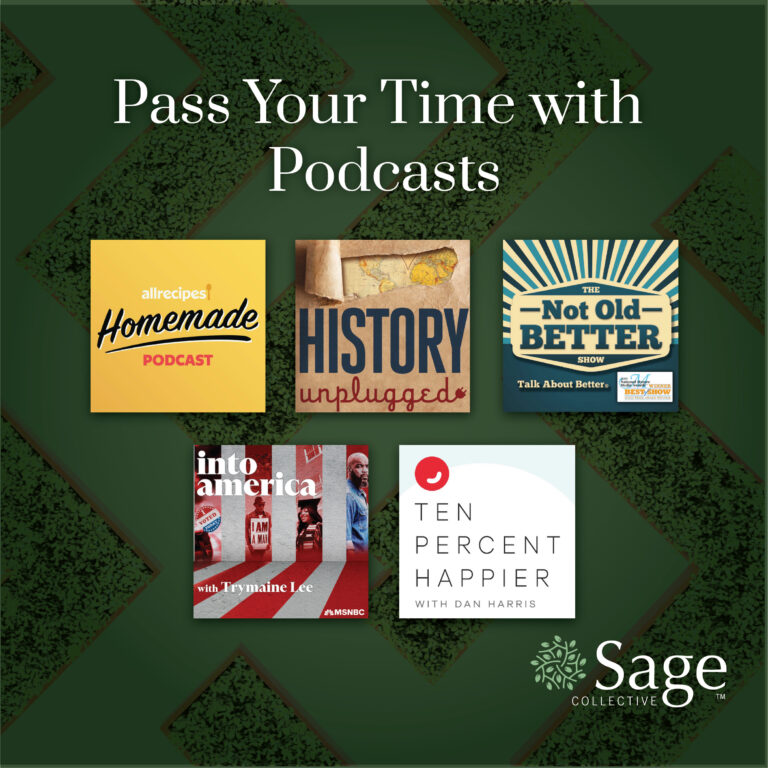
While autumn is a favorite time for many to pick up new books and revisit forgotten ones, podcasts also serve as a great choice for those looking for a mix of entertainment, education and reflection. Podcasts are usually free to listeners and extend knowledge on everything from how to cook healthier meals to entertaining history facts to current government and public policy news. Here are the top five podcasts Sage Collective believes you should be listening to right now: 
Ten Percent Happier

Hosted by Dan Harris, a famed journalist who suffered a panic attack live on national television, Ten Percent Happier explores how keeping your spirits up is imperative to aging well. After his traumatic on-air experience, Harris discovered meditation and now invites experts on the subject, scientists and celebrities to share their own epiphanies and experiences of success. Topics on the show vary from What to do About Eco-Anxiety to Joy Vs. Happiness. Anyone interested in hearing motivational stories about coming back from what seems like life’s lowest points will enjoy this outstanding selection. 

Into America

Into America is a podcast that sheds light on what it’s like to be Black in America. Trymain Lee, Pulitzer Prize and Emmy Winning journalist hosts the enlightening show. The MSNBC-produced podcast explores how public policy and government action, and the lack thereof, affects Black Americans’ lives. Previous topics include The Vaccine Gap, Justice for Black Farmers and The Black Firefighters of 9/11. Into America produces an in-depth look into the continued injustice that Black Americans endure and what it means to hold the country to its obligations.

History Unplugged

A show that celebrates obscure historical facts and events, History Unplugged uncovers and revisits lost stories that changed the world. History buffs and amateurs alike will enjoy the unique narratives, expert interviews and call-ins that make up the podcast. Previous episodes of the show include The Japanese-Americans Who Fought Nazis in Europe, Electric City: Ford and Edison’s Vision of Creating a Steampunk Utopia and An Alternate History of the Lincoln Assassination Plot. Chocked full of amusement, myth-busting and a range of wisdom, almost everyone is guaranteed to relish over History Unplugged.

Not Old – Better

Award-winning journalist Paul Vogelzang hosts the fascinating, high-energy podcast, Not Old – Better. The inspiring show reminds its audience weekly that it is never too late to pursue your passion and purpose in life. Vogelzang invites a mix of well-known entertainers, intriguing role models and ordinary people to discuss aging and how to overcome the stereotypes and stigma that come with it. Previous guests have included actress Octavia Spencer, Dr. Anthony Fauci and activist Khary Lazarre-White. Listeners and critics alike have praised the podcast as a perfect choice for middle-aged and older adults.

Homemade

Homemade is the paramount podcast for anyone looking to explore the food world. Foodies and amateur cooks alike will enjoy the entertainment show hosted by industry insider Sabrina Medora and author Martie Duncan. Each week the hosts invite celebrated cooks from all walks of life to discuss and share their memories behind their favorite recipes. Past topics on the show include growing ingredients at home, delicious vegan options, repurposing leftovers and rethinking prep time. Get your cooking gear ready, put on your apron and prepare to join the fun with Homemade

Whether you need something to listen to on your way to work or while doing chores around the house, don’t hesitate to press PLAY on any of these wonderful podcasts. You can listen to each of the podcasts on their websites, Spotify, Apple Music, Amazon Music or Google Podcasts. 
› Back to top
« back
10.07.21 | Healthy Eating

October is Eat Better, Eat Together Month

October is National Eat Better, Eat Together Month, an annual tradition that celebrates a basic human need that many of us don’t think twice about — eating. While the history behind this special day is elusive, its aim is noble, and encourages us throughout the month to share meals with family and friends, and to promote healthier eating habits. 

When was the last time you ate a meal with your family? Today, it isn’t uncommon for families to take meals separately due to busy schedules and increasing commitments. However, making the time to share a meal with family and friends is something we should all make more of an effort to do. Breaking bread with others has long been associated with improved social skills and allows you to reconnect with the people you care about. Since engaging in social life and family life are part of our 9 Ways of Vibrant Living, we encourage you to make it a priority to carve time out of your month to plan a thoughtful meal (or two) with family, friends or for your community.

Dining together is also linked to better eating habits and reduced stress levels. Preparing meals with a number of food options encourages people to fill their plates with a mixture of nutritious eats. Previously, we explored a number of “superfoods” that can easily be incorporated into any meal, which you can read about here. For those concerned about time constraints, planning preparation for multiple meals is a perfect way to produce sizable servings of healthy meals without the added pressure of making them last minute. To discover more healthy eating tips to implement this month and throughout the future, explore one of our former blogs here

This month, Sage Collective encourages you to dedicate a few nights a week to eating better and eating together. Make a meal with your family, organize a community dinner or simply clean your cupboards of unhealthy snacks and replace them with smarter alternatives.

A family sits around a dinner table serving food to one another.
› Back to top
« back
10.05.21 | Sage Advice®

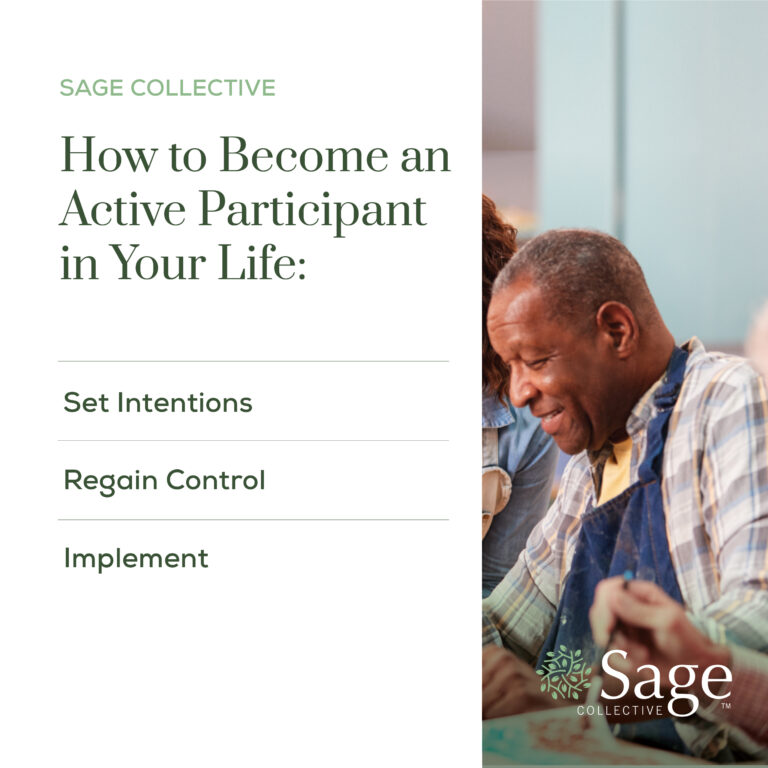
How to Become an Active Participant in Your Life

For many older adults, feeling like they’re losing control of their lives is all too common. While this can be a normal reaction to aging, it can also leave people feeling overwhelmed when confronted with the stigma of getting older. Actively participating in your life is a powerful way to combat these feelings and stigmas, leading to a more vibrant life. So, how can you learn to become an active participant in your life? Let’s take a look. 

Set Intentions

First, set goals to transition from a passive participant to an active participant in life. It can be challenging to reflect on what aspects of life might be obstructing your progress, but it’s imperative for regaining control. Your intentions and goals act as a foundation for the rest of the process for becoming active participants. So, honesty with yourself is essential.

To keep yourself motivated and engaged, write down each of your intentions and keep them in a place you will regularly see. Remember, each person’s intentions are unique to their own personal experience and goals. 

Regain Control

Adjusting your thought process to become less passive can be challenging, but the more you do it, the easier it becomes. By believing in yourself and your words, you regain control and take power away from negative thoughts.

Again, writing down your thoughts is an effective resource for change. Make a list of words that come to mind that diminish your power, confidence or ability. Once you have a few written down, modify the language to become active and uplifting. The next time you feel control shrinking, revisit the list and remind yourself that you have the power to enact change in any way.

Implement

It’s easier to enact change once you set intentions and understand that you can control involuntary thoughts. If wanting to go back to school is on your list, enroll in your first class. If eating more nutritious meals is your goal, start researching recipes with healthier foods. At first, taking steps to live actively may feel uncomfortable and daunting, but remember that years of passive living are being dismantled. 

While being an active participant in life is the ultimate goal, it’s important to be kind to yourself on the journey. Even if your path changes, the experiences and tools you learned along the way are something of which you can  be proud.

At Sage Collective, we believe actively participating in your life is an aspect of vibrant living that helps find purpose, shepherd confidence, and inspires goals for older adults. It’s never too late to become active participants in our lives.

› Back to top
« back
09.30.21 | Community

The Importance of Checking In

It’s easy to assume that someone may be happy just from the smile on their face. However, behind closed doors, many people are dealing with heightened feelings of isolation, anxiety and depression. At Sage Collective, we believe that connection, engagement and shared relationships are vital to our health and well-being, as well as that of many other folks in our community. Checking in on friends, family and neighbors can be an effective way of looking out for one another and fostering those connections.  

Checking in on someone you haven’t seen in a while, who works remotely or who recently lost a loved one is a powerful gift. The simplest way of checking in is just asking how someone is doing. Reaching out can be done in person, through text, email or phone, and these small efforts can go a long way to show support and invite them to share more with you.

Words are meaningful, but in many circumstances, actions can be even more powerful. Delivering meals is a thoughtful way of checking in during difficult times or extending a hand to those who may have trouble accessing healthy foods. Whether it’s some of your own leftovers or cookies you’ve baked, your thoughtfulness will bring joy and comfort. Offering a form of mutual aid, a topic we talk more about here, is another inspirational way to foster engagement and check in on neighbors, since we know that extending aid to others by sharing knowledge and skills is a great way to develop ‘care webs’ — an element of mutual aid — in the community.

It’s essential that while checking in on those around you, you do not forget about yourself. It can be dangerous to ignore your physical and mental health while helping others. Valuable practices to utilize for checking in on yourself include asking yourself how you are feeling, meditating and taking advantage of other mindful habits that benefit your health and happiness.

Cropped shot of a cheerful elderly woman hugging her husband who's in a wheelchair at home during the day
› Back to top
« back
09.23.21 | Sage Advice®

Bronzeville’s Renaissance

Bronzeville’s dynamic history is ever-shifting as time progresses. Originating in the early 20th century, the neighborhood became an epicenter for Black culture, a topic you can read more about here. Today, Bronzeville is experiencing a renaissance, and Sage Collective is proud to be a part of it. The community is growing in numbers that haven’t been seen for decades and it’s welcoming businesses that add a breath of fresh air to the neighborhood’s enduring culture.

Data provided by the 2020 Census show that while the larger city of Chicago continues to grow at slow rates, neighborhoods in and around Bronzeville are embracing populations at much faster rates. Between 2010 and 2020, Bronzeville and its surrounding communities increased their populations by nearly 15%. And while Black populations in Chicago decreased by nearly 10% over the decade, there is a resurgence of Black middle class communities contributing to the population boom in neighborhoods like Bronzeville. 

It’s not hard to understand why both individuals and families are choosing to make Bronzeville their next home. The epicenter of culture and arts not only continues to celebrate its historic roots through revitalization projects like the transformation of the old Marshall Fields Building, but it also welcomes new businesses, developments and organizations with open arms. Sage Collective, as an organization with deep roots in Bronzeville, is excited about this trend, even as upscale, luxury housing moves steadily into the neighborhood, our goal remains the same — providing vibrant, high-quality living through affordable housing for older adults.

Unprecedented developments like Hatch 41, a new coworking space, and future projects like Bronzeville Lakefront act as catalysts for the neighborhood’s expansion. And with each new development, the intersecting goals of exploration, enrichment and celebration are present. 

As we shepherd new families, entrepreneurs, artists and changemakers back to Bronzeville, our values remain clear; we are a neighborhood where relationships are nurtured, community thrives and culture prevails. The renaissance of Bronzeville is upon us, and Sage Collective is proud to be a leader in it, inspiring neighbors and residents alike to participate in our movement.

A sign reads, "Welcome to Bronzeville"
› Back to top
« back
09.16.21 | Community

Why It’s Never Too Late to Go Back to School

As part of Sage Collective’s 9 Ways of Vibrant Living, we encourage everyone to take advantage of their unique talents and interests to help others in meaningful ways. However, for some, finding a purpose and exploring interests can be overwhelming or somehow inaccessible. Going back to school is one effective way for older adults to discover purpose, increase knowledge and realize a dream.

Today, the typical college student is starting to look less like a 20-year-old running late to class after a night out and more like a middle-aged adult seriously interested in furthering their education. In fact, according to the Lumina Foundation, almost half of the undergraduates from for-profit institutions and one in five undergraduates from four-year universities are over the age of 30. 

Flexibility is one of the key reasons why older adults are choosing now to return to school. Encouraged by COVID-19, many universities have adopted and significantly improved their online learning programs. Often, online programs encourage their students to take classes and earn their degrees at their own pace.

Furthering their education isn’t always the main reason older adults choose to go back to school. Changing career directions, cultivating purpose and interests, and even retaining a sharp brain are all motives for older adults to go back to school. Research has shown that continued intellectual engagement for seniors, like going back to school, can help protect them from certain cognitive disabilities like dementia. 

Going back to school for older adults is also more affordable than ever. Many states are now offering free or low-cost opportunities for older adults to access academic classes. AARP has assembled a list of financial assistance offered by each state that you can learn more about here

Universities across the country are welcoming older populations with open arms now more than ever enabling these ‘new’ students to experience the rewarding and self-validating experience of revisiting education. Whether you’re looking to further a career, explore your purpose, or want to learn something new, it is never too late to go back to school.

A group of older adults celebrate with high fives around a table.
› Back to top
« back
09.02.21 | Sage Advice®

6 “superfoods” you can incorporate to boost your health

As we continue to change with age, eating healthy can be a vital step in caring for your future self. Taking inspiration from our 9 Ways of Vibrant Living, which you can read more about here, we compiled a list of our favorite “superfoods” you can easily introduce into your diet. These highly nutritious items can be added to a larger meal or snack to boost your health and help to achieve a balanced diet.

Tea

Not only is tea low in calories, it is also a refreshing alternative to coffee, soda and other beverages. Notably high in antioxidants, tea can be a tool for weight management and has anti-inflammatory and anti-carcinogenic (cancer-suppressing) benefits. One study suggested that the regular consumption of white and green teas resulted in a vast reduction of stress for most participants.

Avocados

Avocados are much more than the brunch staple or spread for toast that they’ve become over the last decade. As a great addition to a salad, guacamole or being eaten simply with a pinch of salt and pepper, avocados provide numerous health benefits. Rich in fiber and and healthy fats, avocados can be a great substitute for eggs, mayonnaise, sour cream and even butter.. 

Mushrooms

Mushrooms have been used in Eastern medicine and culture for millennia. They are known to increase the health of the immune system through their many therapeutic properties. After much scientific research, we are learning more about the dramatic positive effects mushrooms can have on preventing cancer, lowering blood pressure and overall increasing well-being. You can incorporate mushrooms into your diet by cooking them along with other vegetables, adding them to salads and pasta or simply frying them with healthy oil. Some of the most popular mushrooms you should look out for at the farmer’s market or grocery store are Portabella, Shiitake, Buttons, Oyster, Enoki and Lion’s Mane. 

Dark Leafy Greens & Cruciferous Vegetables

There is a wide consensus among nutritionists that vibrant green vegetables and those in the cabbage family offer some of the best nutrients and vitamins. These include arugula, kale, collard greens, kohlrabi, radishes and turnips. Most of these are full of zinc, calcium, iron, magnesium, vitamin C, fiber, and what seems like a never-ending list of enriching minerals that can reduce the chances of heart disease and diabetes while lowering blood pressure and preventing some cancers. 

Salmon

Salmon is both tasty and full of healthy protein, B vitamins, potassium and omega-3 fatty acids. Because of its abundance of rich nutrients, salmon has more health benefits compared to other animal products and is known to help prevent heart disease and diabetes. One way you can enjoy this hearty fish is by baking it with lemons, herbs and a healthy (oil, avocado or sesame).  

Garlic

Garlic packs a punch in flavor and delivers huge nutritional benefits, too. Each clove of garlic contains magnesium, vitamin C and fiber, which are all essential to a balanced diet. Research indicates its effectiveness to support the immune system while reducing cholesterol and blood pressure. One study even found that garlic provides antibacterial and antiviral characteristics. 

However you incorporate these superfoods into your meal planning and cooking regimen, they offer delicious and easy ways to boost your overall health and well-being.

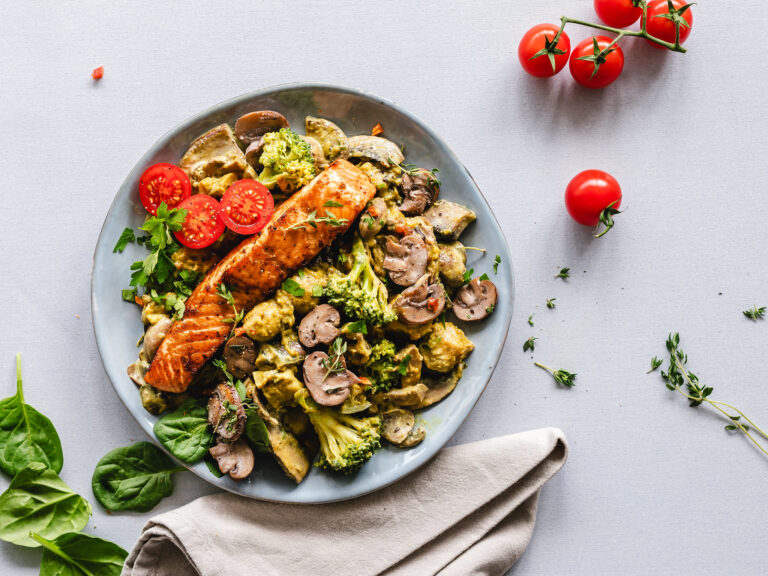
A dinner plate contains salmon, mushrooms, tomatoes, broccoli, and a mix of other vegetables and sauce.
› Back to top
« back
08.31.21 | Sage Advice®

The art of meditation and how you can benefit from it

In today’s fast-paced society, rife with uncertainty and change, devoting time to self-care and introspection is more important than ever. At Sage Collective, we support and encourage participating in spiritual or religious experiences as part of our 9 Ways of Vibrant Living. Meditating can be one such practice, revealing a sense of discovery and heightened mindfulness. 

What is meditation?

Meditation is an ancient technique used by many for more than 3,500 years; historians have traced its utilization back to the formation of many world religions. The purpose of meditation is to help train oneself in practicing mindfulness while learning to better understand feelings and emotions to create a healthy perspective. 

Meditating can feel uncomfortable and challenging at first, since it uses techniques that may be unfamiliar. However, this ancient tradition can lead to immense personal growth and understanding for those who find their groove in the routine.

Health benefits

Research suggests that meditating can have enormous positive effects on managing symptoms of anxiety and depression and reducing stress. Other conditions that can benefit from meditation include chronic pain, insomnia, high blood pressure and IBS. And while experts have yet to completely understand how meditation works, research clearly demonstrates the holistic impact it has on one’s health and well-being.    

Tips for how to meditate 

  • Get comfortable. Find a place to sit upright with legs crossed instead of laying down, as it can be easy to find yourself falling asleep. However, comfort is key for meditation, so avoid positions that may prove uncomfortable after several minutes.
  • Keep a timer. It can be easy to worry about time as you start meditating; setting a timer for small increments of 5 to 10 minutes of meditation can be an easy way to avoid that. Scheduling a specific time of the day to meditate can also help with consistency — leading to more beneficial results. 
  • Focus on breathing. It can be an easy way to get into the flow of meditation. As you breathe, observe what it feels like as air enters your body and then leaves it. 
  • Be open-minded. As a new experience, it may be hard to empty your mind during meditation. Emotions and feelings that might be uncomfortable may arise, but don’t ignore them; acknowledge their presence and slowly bring your focus back to breathing. 
  • Don’t give up. It’s also important to remember that meditating takes time and practice to build as a habit, and expecting too much too fast can lead to disappointment. Hang in there, and discover just how much of a life-changer meditation can be!

There is no “right way” to meditate — it is a practice meant to be personalized for each individual and will feel different for everyone. For those looking to become more mindful, self-aware and gain better control over feelings such as anxiety and stress, meditation may be the technique for you. 

If the art of meditation interests you, check out the video below. The 10-minute tutorial guides beginners through their first meditation and is narrated by a mindfulness coach and teacher,  John Davisi.


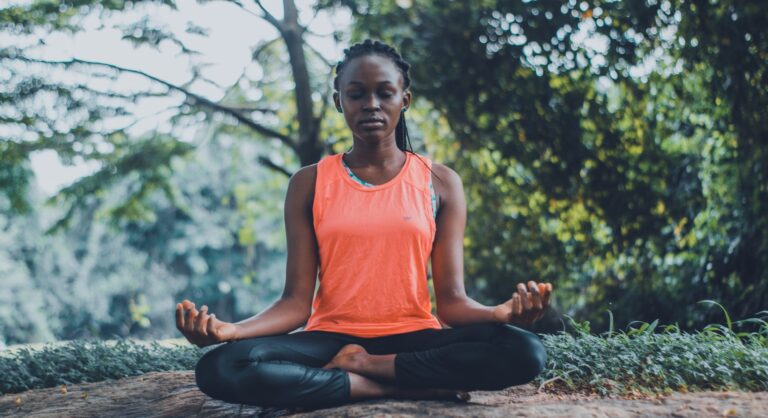
A woman sits cross legged with her hands resting on the top of her legs – meditating.
› Back to top
« back
08.24.21 | News

The power of collective impact

Sage Collective was founded in 1978 as the Tabernacle Senior Citizens Project, Inc. (You can learn more about our story here.)  As the focus of our work has evolved over time, we took the opportunity to rebrand as Sage Collective in 2019.

Sage refers to the great wisdom and spiritual connection we strive to claim. Collective defines the sense of community engagement and interaction we seek, but it means much more than that. 

When we say “collective,” we make reference to the positive ways we can address the systemic challenges and inequities in our society — by forging connections among people and ideas. Joined together, we function as catalysts for change to lighten individual burdens, creating stronger and more purposeful communities along the way.

Moving forward from the essential meaning of “collective,” we embrace the powerful idea of collective impact, which recognizes the diverse strengths and weaknesses of communities, while working with neighborhood leaders and resources to achieve a more just and equitable future … particularly for older adults.  We are always seeking to align ourselves with conceptual frameworks and organizations that are taking bold and efficacious approaches to transformative change through collective impact. We believe that Together Chicago is such an organization:

Together Chicago came into being in 2017 as a mix of local leaders in business, faith, nonprofit and government questioning how they could do more to address the root cause of violence the city was experiencing.

The organization’s vision is to prevail as a catalyst of change and inspire hope within underserved and underrepresented Chicago communities. Together Chicago has five main areas of focus for creating change through the methodology of collective impact: economic development, education, violence reduction, gospel justice and faith community mobilization. Concentrating on these different areas, Together Chicago partners with a variety of local businesses, nonprofits, churches and schools to achieve equitable justice and further their mission of collective impact.

If you’re out and about the last weekend in August, Together Chicago is participating in Chicago Peace Week’s Peach Walk & Festival, to be held at the Dusable Museum of African American History on Saturday, August 28. The event will start at 9 a.m. at the museum’s sculpture garden with a gathering of faith leaders throughout the city for a Peace Walk, directly followed by the Peace Festival. You can learn about the Peace Walk & Festival here.

Collective impact is more of a movement than it is a phrase, providing a roadmap for communities to enable change by inviting everyone to take action together. And as we have seen in communities across our country and around the world, empowering and uplifting all voices is critical to ensuring the success of a collective goal.

Functioning as more than just part of our name, the term “collective” celebrates our rich identity and codifies our beliefs into a framework of mutual engagement for an equitable future.

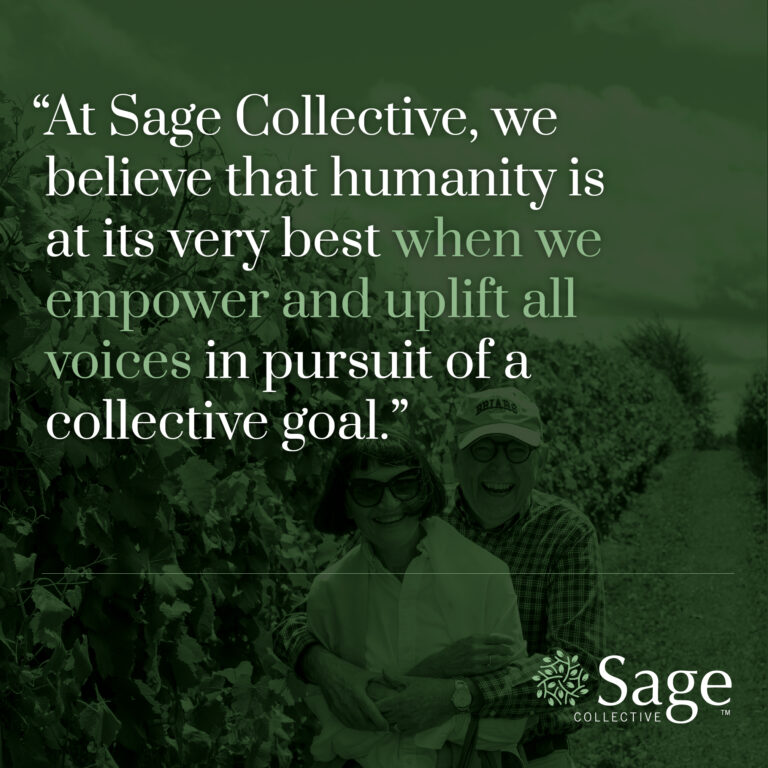
Text overlay reads "At Sage Collective, we believe that humanity is at its very best when we empower and uplift all voices in pursuit of a collective goal."
› Back to top