« back
10.21.26 | Mental Wellbeing

The Pressure We Don’t Always Feel

High blood pressure is one of those health conditions that can be easy to underestimate. It usually does not hurt. It may not make us feel sick. There may be no obvious warning that anything is wrong. And yet, over time, uncontrolled high blood pressure can quietly damage the blood vessels that nourish the heart, brain, kidneys, and other organs.

This is why hypertension is often called a “silent” condition. We can feel perfectly normal while something important is happening beneath the surface.

At Sage Collective®, we believe healthy aging begins partly with attention — not fear, not hypervigilance, but awareness. High blood pressure is a powerful example of why knowing what is happening inside the body can give us more agency in how we care for it.

Why This Matters So Much in the Black Community
Hypertension affects Black Americans at particularly high rates. Recent CDC data show that roughly 58% of non-Hispanic Black adults have high blood pressure, compared with about 45% of U.S. adults overall. Black adults had the highest prevalence among the racial and ethnic groups included in the analysis.

The disparity doesn’t have a single explanation. Family history and individual health factors can matter. But so can the conditions in which people live and age: access to healthcare, chronic stress, discrimination, neighborhood environments, food access, financial strain, opportunities for physical activity, and whether someone has had consistent preventive care across a lifetime.

For older Black adults, hypertension is therefore both a personal health issue and a broader health-equity issue.

You Cannot Always Feel Your Numbers
One of the challenges of hypertension is that how we feel and what our blood pressure is doing do not always match. A person may feel energetic, active, and well while their blood pressure remains elevated. Another person may assume that headaches, dizziness, or stress will tell them when their pressure is high.

Often, they will not, and the only reliable way to know is to measure it. Blood pressure reading gives us information about something the body may not otherwise announce.

For many older adults, checking blood pressure can become as ordinary as knowing a weight, medication list, or appointment date — not something to fear, but something useful to understand.

What Those Two Numbers Are Telling Us
A blood-pressure reading gives us two numbers.

The first, or systolic pressure, reflects the pressure in the arteries when the heart contracts.

The second, or diastolic pressure, reflects the pressure when the heart rests between beats.

These numbers help healthcare providers understand how much force the cardiovascular system is experiencing over time. Blood pressure naturally fluctuates throughout the day. Exercise, stress, sleep, medications, pain, caffeine, and even the circumstances of a medical visit can affect an individual reading.

The Cumulative Effect of Pressure
High blood pressure can influence many of the systems that support independence and quality of life as we age. Blood vessels are living tissue. When they are repeatedly exposed to elevated pressure, they can become damaged, stiffened, or narrowed. That can make the heart work harder and increase the risk of heart disease and stroke.

The effects can extend beyond the cardiovascular system. The kidneys depend on delicate blood vessels to filter waste from the body. The eyes contain tiny vessels that can also be affected. And as we explored in our recent Sage Advice® post, “Heart Health Is Brain Health,” the brain depends upon healthy circulation as well.

Researchers continue to study how hypertension contributes to changes in the brain, including damage to small blood vessels and increased risk of cognitive decline. Current federally funded research includes several studies examining whether improved blood-pressure control can help reduce cognitive decline among older adults and populations experiencing health disparities.

Knowing Your Number Is Only the Beginning
“Know your numbers” is good advice, but knowing is most valuable when it leads to conversation.

What is a healthy blood-pressure range for me?
Are my readings changing?
How often should I check?
Could one of my medications affect my blood pressure?
What changes would make the greatest difference?

These are questions worth bringing to a healthcare provider. For some people, managing hypertension involves medication. For others, treatment may also include changes in movement, nutrition, sleep, alcohol use, smoking, or stress management. Often, it involves several of these things together.

The Power of the Everyday
Hypertension can sound intimidating because its consequences are serious. But many of the practices that help support healthy blood pressure are remarkably ordinary.

Walking.
Moving throughout the day.
Eating more fruits and vegetables.
Paying attention to sodium.
Getting enough sleep.
Taking medications consistently.
Keeping medical appointments.
Finding ways to reduce chronic stress.
Checking blood pressure at home when a healthcare provider recommends it.

None of these actions needs to be dramatic to matter. Healthy aging is often built through repetition — the ordinary choices we make again and again.

Stress Belongs in the Conversation
Conversations about blood pressure often focus on diet and exercise, but stress deserves attention too.

The body responds to stress physically. Heart rate can increase. Blood vessels can constrict. Stress hormones can rise. Occasional stress is part of life. But chronic stress — the kind that continues for months or years — can make it harder to maintain healthy behaviors and can contribute to cardiovascular strain.

For Black Americans, discussions of stress also need to acknowledge the cumulative impact of racism and discrimination rather than treating stress solely as an individual problem.

Community Can Be Part of the Prescription
Blood-pressure management does not have to happen alone. Community-based efforts have increasingly brought hypertension education and monitoring into barbershops, churches, community centers, and other trusted spaces. Research and public-health programs have shown the value of culturally relevant approaches that connect people with information, healthcare professionals, and ongoing support. Health information becomes more useful when it reaches people in places where they already feel known and respected.

At Sage Collective®, we believe that community is a foundational resource for healthy aging. A walking partner, a family member who reminds us to take medication, a church wellness program, a trusted pharmacist, or a friend who asks whether we have scheduled an appointment can all become part of the network that supports well-being.

No Shame in the Number
Perhaps one of the most important things to remember about hypertension is that a blood-pressure reading is information, not a judgment. A high number doesn’t mean someone has failed. It doesn’t tell us whether they have exercised enough, eaten perfectly, managed every stressor, or made every right decision. It tells us something about the body that deserves attention. When we replace shame with curiosity, health information becomes more useful. Instead of asking, What did I do wrong? we can ask, What does my body need now?

Paying Attention to What We Cannot Feel
Vibrant living doesn’t mean pretending that aging bodies require no maintenance. Quite the opposite. It means caring enough about the life we are living to pay attention to the things that help sustain it.


› Back to top
« back
10.14.26 | Health & Wellness

Heart Health is Brain Health

We tend to think about the heart and the brain as separate territories.

We see a cardiologist for one and perhaps a neurologist for the other. We talk about heart disease in one conversation and memory loss in another. But increasingly, research is showing just how closely the two are connected.

The brain depends on a constant flow of oxygen- and nutrient-rich blood. When the heart and blood vessels are healthy, that circulation helps nourish billions of brain cells. When blood vessels become damaged by high blood pressure, diabetes, smoking, high cholesterol, or other cardiovascular conditions, the effects may eventually reach the brain as well.

At Sage Collective®, this connection reinforces an idea that runs through much of our thinking about vibrant living: health is rarely about one isolated part of the body. The systems that sustain us are deeply interconnected. And when it comes to healthy aging, taking care of the heart may also be one of the ways we care for the mind.

The Brain Is a Vascular Organ
The brain may be responsible for memory, language, movement, emotion, and thought, but it cannot perform any of those functions without blood.

Its extensive network of vessels continuously delivers oxygen and glucose while carrying away waste. When that system works well, brain tissue receives the resources it needs to function. When circulation is impaired, the consequences can range from subtle changes in thinking to stroke and vascular dementia.

High blood pressure is particularly important because, over time, it can damage and narrow blood vessels throughout the body, including those in the brain. That damage can contribute to strokes, tiny areas of brain injury, and changes in the brain’s white matter that have been associated with cognitive decline. This is one reason researchers increasingly speak about cardiovascular health and cognitive health as part of the same conversation.

What Happens in Midlife Can Matter Later
Some of the most compelling recent research focuses not just on cardiovascular health in old age, but on what happens decades earlier.

A 2026 study highlighted by the National Institutes of Health followed more than 12,000 people over three decades. Researchers found that three familiar vascular risk factors — smoking, high blood pressure, and diabetes — at age 55 were associated with fewer years of life free from dementia. The research adds to a growing body of evidence suggesting that the health of our blood vessels across adulthood can influence how the brain ages later on, giving prevention a longer horizon.

Checking blood pressure, managing diabetes, quitting smoking, moving regularly, and paying attention to cholesterol are not only about reducing the chance of a heart attack or stroke tomorrow. They may also be investments in cognitive health years from now.

Why Blood Pressure Deserves Attention

For the African American community, the relationship between cardiovascular and brain health carries particular significance. According to the American Heart Association, high blood pressure affects roughly six in ten Black adults in the United States — among the highest rates of any racial or ethnic group. Black adults also tend to develop hypertension earlier and experience more severe disease. The reasons are complex and include not only individual health factors, but also long-standing inequities in access to care, neighborhood conditions, food access, chronic stress, and other social drivers of health.

Research has consistently linked high blood pressure in midlife with a greater likelihood of cognitive decline later in life. A major NIH-supported trial also found that intensive blood-pressure treatment in adults 50 and older reduced the risk of developing mild cognitive impairment, often considered a precursor to dementia. The larger point is that blood pressure belongs in the brain-health conversation.

Beyond Alzheimer’s: Understanding Vascular Dementia
When we hear the word dementia, many of us immediately think of Alzheimer’s disease. But dementia is an umbrella term encompassing several conditions. Vascular dementia develops when problems with blood flow damage brain tissue. It can occur after a major stroke, but it may also result from smaller strokes or accumulated damage to small blood vessels over time.

The boundaries are not always neat. Older adults can have changes associated with both Alzheimer’s disease and vascular disease at the same time. This makes cardiovascular health particularly important. Managing high blood pressure, diabetes, cholesterol, and irregular heart rhythms can help reduce the risk of additional vascular damage and stroke.

Once again, the heart and brain are telling a shared story.

The Disparities Are Part of the Story
It would be far too simple to frame heart health purely as a matter of personal discipline. Health happens within environments.

Can someone easily see a doctor?
Is preventive care affordable and accessible?
Is there a safe place to walk?
Are nutritious foods readily available?
Does a person feel heard and respected by healthcare professionals?
What kinds of stress has the body been carrying for decades?

These questions sit beside the familiar recommendations about exercise and nutrition because healthy aging is shaped by both individual choices and the conditions that make those choices possible.

At Sage Collective®, we believe both deserve attention.

The Everyday Practices That Serve Both Heart and Brain
The encouraging news is that many of the habits we already associate with heart health also support overall brain health. Physical activity helps the cardiovascular system circulate blood effectively and is associated with better cognitive health. Nutritious eating patterns can support blood pressure, cholesterol, and metabolic health. Getting adequate sleep, avoiding tobacco, managing diabetes, and remaining socially and mentally engaged all contribute to a broader approach to healthy aging.

Sometimes the most powerful health practices are remarkably ordinary: taking a walk, keeping a medical appointment, taking prescribed medication consistently, cooking more often at home, checking blood pressure, calling a friend, getting enough sleep.

And we’ve learned that small actions can become meaningful when repeated over years.

Know Your Numbers — and Know Yourself
Heart health often gets translated into numbers: blood pressure, cholesterol, glucose, weight, heart rate. These measurements are useful because they help us understand what may be happening inside the body before symptoms appear. But healthy aging should never be reduced entirely to numbers. Knowing yourself matters, too.

Do you become short of breath doing something that used to feel easy? Has your energy changed? Are you having difficulty remembering medications? Do you understand why you are taking each one? Do you feel comfortable asking your healthcare provider questions?

Being an active participant in your own care is another form of prevention.

One Body, One Life
In recent decades, medicine has become extraordinarily specialized. That specialization has produced remarkable knowledge, but sometimes it can obscure an obvious truth:

We have one body.

The heart does not operate independently of the brain. The brain does not exist apart from the blood vessels that nourish it. Metabolic health, vascular health, movement, sleep, stress, and social connection interact continuously throughout a lifetime.

The latest research simply gives us more reasons to pay attention to those relationships.

Caring Today for the Mind of Tomorrow
At Sage Collective®, we believe vibrant living means remaining engaged with both the life we have now and the person we are still becoming. Caring for cardiovascular health is part of that longer view.

It may mean checking a blood-pressure reading that feels abstract today because we understand what it could mean years from now. It may mean taking a walk not simply for the heart, but for the brain. It may mean managing diabetes, taking medication, or having a difficult conversation with a doctor because our future cognitive health matters, too.

Heart health is brain health because the same circulation that keeps us moving through the world also supports our ability to remember it, understand it, connect with it, and remain ourselves within it. Caring for the heart, then, may also help us protect more of the life within those years.

› Back to top
« back
09.30.26 | Health & Wellness

Living Well With What You Carry

What does it mean to be healthy?

For much of our lives, we are taught to think of health in fairly simple terms. You are healthy or you are sick. Something is working or something is wrong. A diagnosis can begin to feel like a dividing line between the life you had before and the life you are living now.

But aging tends to complicate that picture. Many older adults live with high blood pressure, diabetes, arthritis, heart disease, chronic pain, or other ongoing conditions. Some take several medications. Some navigate limitations that require attention every day. And yet, many of those same people will tell you that they are doing well.

A recent national AARP study of African Americans aged 50 and older captures this seeming contradiction beautifully: 61% of respondents reported living with a chronic illness, while 80% rated their physical health as good or better. Perhaps those two things are not contradictory at all.

At Sage Collective®, we believe vibrant living has never required perfect circumstances. And perhaps vibrant health does not require a perfectly functioning body either.

Health Is More Than the Absence of Illness
We often define health by what is wrong: Blood pressure. Blood sugar. Cholesterol. Joint pain. A diagnosis written in a medical record. All of these things matter. Chronic conditions need attention, appropriate treatment, and ongoing relationships with healthcare providers. But they do not tell the entire story of a person’s health.

But health is also the ability to move through the world with some degree of independence. To enjoy a meal. To laugh with a friend. To sleep well. To remain curious. To participate in community. To feel useful. To experience moments of pleasure, connection, and purpose. In other words, we can carry an illness without allowing that illness to become the whole definition of who we are, and the distinction becomes increasingly important as we age.

The Reality of Living With Something
Unlike an infection that clears or an injury that heals, many conditions become companions of a sort — unwelcome ones, perhaps, but part of the landscape of everyday life. In this way, living well can require a different skill set than simply “getting better.”

It means learning your body. Knowing when something has changed. Understanding your medications. Keeping appointments. Asking questions. Adjusting routines when necessary. Paying attention to sleep, movement, nutrition, and stress.

But it also means knowing when not to think about your condition There is a life to be lived between medical appointments, and learning to manage an illness without allowing it to occupy every corner of one’s identity can itself become part of healthy aging.

Wellness Can Hold Two Truths at Once
The AARP research describes the experience of African Americans 50 and older through the idea of duality — the ability for seemingly opposing realities to exist at the same time. Its findings reveal people experiencing burdens and joy, illness and well-being, financial pressures and strong support networks simultaneously. This can be a useful way to think about health.

You can have arthritis and still love your morning walk.
You can manage diabetes and still delight in cooking.
You can have limited mobility and remain deeply engaged with friends, family, art, music, faith, or community.

Aging teaches us that two truths can live beside each other, and acceptance doesn’t mean giving up. It means seeing ourselves whole.

From Fixing the Body to Caring for It
Much of modern health culture is organized around correction. Lower this number. Lose this weight. Eliminate this symptom. Restore this function. Sometimes this approach is exactly what medicine requires. But caring for an aging body also calls for something gentler: stewardship.

Stewardship asks a different question. Not simply, How do I fix what is wrong? but How do I care well for the body I have? It might mean taking medication consistently. It may mean strength training, stretching, walking, changing how we eat, protecting sleep, or learning better ways to manage stress. It might also mean using a cane without embarrassment, asking for help when we need it, resting when the body asks for rest, or adapting an activity we love rather than abandoning it altogether.

How We Think About Aging Matters
Our perception of our own aging may also influence how we experience it. The AARP research continues to explore the connection between attitudes about aging and perceived health, while broader research has associated more positive views of aging with healthier behaviors and better well-being.  This doesn’t mean positive thinking cures illness. Nor does it mean we should ignore pain, disability, frustration, or inequities in healthcare. It means the story we tell ourselves about our bodies matters.

If every change becomes evidence that life is shrinking, we may begin withdrawing from experiences that still remain available to us. But if adaptation is understood as part of living, we can begin asking a more productive question: Given what I carry, how do I want to live?

Well-Being Is Also Social
The same AARP study found strong networks among African Americans 50 and older, with 85% reporting that they have someone they can rely on in an emergency. Family, friends, and faith communities remain important sources of support. these relationships matter. Someone who encourages us to go for a walk. A friend who notices when we have missed church. A neighbor who drives us to an appointment. A family member who understands our medical history. A group that gives us somewhere to be on Tuesday morning.

They may not look like healthcare interventions, but they are part of the ecology of well-being. A person can have excellent medical care and still be lonely. Conversely, meaningful relationships cannot replace medical treatment, but they can help make a life feel worth caring for.

Redefining What It Means to Be Well
At Sage Collective®, we often use the phrase vibrant living because it leaves room for reality. Vibrancy doesn’t mean perpetual energy, perfect health, or denying the difficulties that come with aging. It means remaining engaged with life. It means caring for ourselves while continuing to participate, and understanding our conditions without becoming our conditions.

Perhaps this is why so many older adults can live with chronic illness and still say, sincerely, I am healthy. They have learned not to wait for everything to be perfect in order to live well.

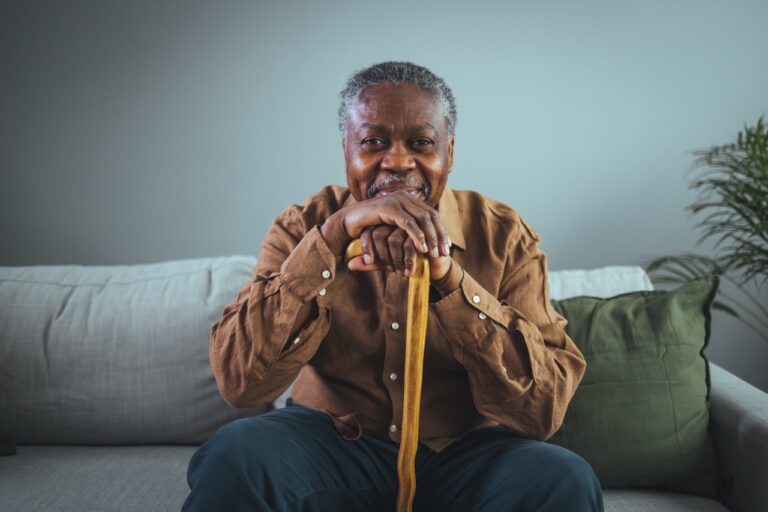
Portrait of happy senior man smiling at home while holding walking cane. Old man relaxing on sofa and looking at camera. Portrait of elderly man enjoying retirement.
› Back to top
« back
09.24.26 | Lifestyle

The Season of Enough

Autumn has a way of changing the pace. The light softens. The air sharpens. Trees begin to release what they no longer need. Gardens quiet down. Even familiar streets can feel different when the leaves turn and the days begin to shorten.

For many of us, fall carries a particular emotional weight. It is beautiful, but it is also transitional. It reminds us that change can be visible, gradual, and sometimes graceful. At Sage Collective®, where we think often about vibrant living, autumn offers a useful lesson: a full life is not always about adding more. Sometimes it is about noticing what is already here.

The Beauty of Transition
We tend to celebrate beginnings. New years. New jobs. New homes. New chapters. Autumn reminds us that transition itself can be beautiful. A tree doesn’t become less alive because its leaves are changing. The landscape does not lose value because summer has passed. The season simply asks something different of us.

Later life can feel this way, too. Roles shift. Rhythms change. Relationships evolve. What once filled our days may no longer fit in the same way. But change does not have to mean diminishment. It can also create space for a different kind of attention. Fall makes that visible.

Letting Go Without Losing
One of autumn’s most familiar images is also one of its most powerful: leaves falling from the trees. There is something reassuring in the naturalness of it. Nothing is rushed. Nothing is forced. The trees release what they have carried because the season has changed.

Human lives are more complicated, of course. Letting go is rarely simple. It can involve grief, uncertainty, or the difficult recognition that something once central to our identity has changed. But autumn offers another way to see release.

Letting go does’t erase what came before. The tree is not denying the leaf. The season is not undoing summer. It is making room for what comes next. There are things we carry because they matter. And there are things we carry because we have simply grown used to carrying them. Fall can be an invitation to notice the difference.

The Pleasure of Gathering In
If summer sends us outward, fall often brings us inward. Meals grow warmer. Rooms feel cozier. Conversation lingers. We reach for familiar recipes, sweaters, blankets, books, and the rituals that make home feel especially alive. This gathering-in can be deeply restorative.

There is value in expansiveness, but there is also value in intimacy. In a season that naturally narrows the world a little, small pleasures become easier to notice: the smell of coffee, the sound of rain, a favorite chair, a pot of soup, a walk under changing trees, an afternoon with someone we love. These things can seem modest, but they’re not. A vibrant life is built partly from our ability to recognize ordinary forms of richness.

Paying Attention to the Light
Autumn light is different. It arrives at a lower angle, casts longer shadows, and gives familiar places a new character. Photographers love it for a reason. It reveals texture. Perhaps this is one of the quiet gifts of getting older, too: we begin to notice texture.

We understand that joy and sadness can coexist. That a good life can contain disappointment. That relationships can be imperfect and still precious. That beauty can become more visible because we know it is temporary. Attention deepens when we understand that time is not unlimited, making life more vivid in the process.

A Season for Reflection
Fall naturally invites review.

What has grown this year?
What surprised you?
What are you ready to release?
What would you like to carry into the colder months?

Reflection doesn’t need to become another task. It can be as simple as taking a walk without headphones, sitting near a window, calling someone you have been thinking about, or writing down a few things you want to remember from the season that is ending.

Finding Enough
Our culture tends to encourage accumulation. More plans. More achievement. More possessions. More productivity. More experiences squeezed into whatever time remains. Autumn offers a different rhythm. It suggests that abundance can also mean enough.

Enough time to sit down.
Enough beauty to stop and look.
Enough friendship to feel connected.
Enough curiosity to keep learning.
Enough quiet to hear ourselves think.
Enough life, in this particular moment, to be grateful for what is here.

The Wisdom of the Season
At Sage Collective®, we believe vibrant living doesn’t resist the passage of time. It helps us remain fully engaged with life as it changes.

Autumn does not ask summer to stay.
It does not rush winter forward.
It simply becomes what it is.

Perhaps there is wisdom in that. To notice the season we are in. To receive what it offers. To let go of what has finished. To gather close what matters. And to understand that change, even when it asks something of us, can carry its own kind of beauty.

› Back to top
« back
09.09.26 | Fitness & Activity

The Spiritual Life of Aging

Aging changes many things: the pace of our days, the shape of our relationships, the way we understand time, even the questions we ask ourselves. For many people, it also changes the inner life.

As we grow older, spirituality can become less about certainty and more about meaning. Less about having answers and more about learning how to live with mystery. The questions may become quieter, but they often become deeper: What has mattered most? What do I believe now? What gives me peace? What am I still becoming?

At Sage Collective®, we believe vibrant living includes this interior dimension of life. Health, purpose, community, and creativity all matter, but so does the human need to make meaning of our experiences and to feel connected to something larger than ourselves.

Spirituality Takes Many Forms
For some people, spirituality is inseparable from religion. It may be expressed through prayer, worship, scripture, music, or participation in a faith community. For others, spiritual life may be found in nature, meditation, art, family traditions, service, gratitude, or moments of profound connection. Some people become more religious as they age. Others find themselves questioning beliefs they once accepted without hesitation. Still others discover new ways of understanding spirituality that feel more personal than institutional.

There is no single path. What matters is the search for meaning, connection, and a sense that life is part of something larger than the self.

Aging Can Deepen the Questions
Earlier in life, so much of our attention is directed outward. We are building careers, raising families, meeting obligations, establishing identities, and making plans for what comes next. Later life often creates more room for reflection. We begin to see our experiences not as isolated events, but as part of a larger story. Successes and disappointments take on different proportions. Relationships may matter more than accomplishments. Old grievances may feel heavier to carry. Gratitude may become more specific. Time itself can feel more precious. Spirituality can offer a way to hold these realizations without needing to resolve every contradiction, making room for both gratitude and grief, certainty and doubt, joy and regret.

Faith Can Change Without Disappearing
One of the myths about spiritual life is that faith should remain fixed. But belief can evolve just as people do. A person may find that the religion of childhood still provides comfort, but is now understood differently. Rituals that once felt habitual may acquire new meaning. Questions that seemed threatening earlier in life may become welcome companions. Loss, illness, injustice, caregiving, and mortality can also challenge long-held beliefs. These experiences may deepen faith, complicate it, or temporarily unsettle it. This doesn’t necessarily represent spiritual failure — sometimes, growth involves becoming more comfortable with not knowing.

Ritual Gives Shape to Time
Spiritual traditions have always understood the power of ritual. A prayer said each morning. A candle lit for someone who has died. Grace before a meal. Sunday worship. A favorite hymn. A walk taken at dusk. A few minutes of silence before the day begins. These practices may seem small, but repetition gives them weight. Ritual creates continuity in a life that is always changing.

For older adults especially, ritual can provide rhythm during periods of transition. Retirement, bereavement, changing health, relocation, or shifts in family life can disrupt familiar routines. A spiritual practice can become an anchor — a way of returning to what feels steady when other parts of life are in motion.

Community Matters, Too
Spiritual life may be deeply personal, but it is often strengthened through community. Faith communities have long provided much more than formal worship. They can offer friendship, mutual care, mentorship, opportunities for service, music, shared meals, and a sense of belonging across generations. This has particular significance within African American communities, where churches and other faith institutions have historically served as centers of spiritual life, cultural preservation, civic leadership, and collective care. As people age, these relationships can become especially meaningful. Being known, being needed, and having a place where one belongs are powerful forms of well-being.

Spirituality Can Make Room for Loss
Later life inevitably brings experiences of loss. We may lose people we love, physical abilities we once took for granted, familiar roles, cherished places, or assumptions about how life was supposed to unfold. And while spirituality can’t erase grief, it can provide a language for living alongside it. Prayer, ritual, music, storytelling, remembrance, and community can help us honor what has been lost without allowing loss to become the whole story.

Many spiritual traditions also teach that grief and gratitude are not opposites. We can mourn deeply and still recognize beauty. We can miss someone and remain thankful for having known them. We can experience sorrow and still feel connected to life.

Awe Has a Place in Aging
Spirituality is also about wonder. A piece of music that brings us to tears. Light moving across a room. A grandchild’s hand in ours. A tree we have watched through many seasons. A work of art that makes time seem to stop. These experiences of awe remind us that we do not need to understand everything in order to be moved by it. And perhaps that becomes one of the gifts of aging: the growing ability to notice what once passed too quickly.

› Back to top
« back
09.02.26 | Community

Work Has No Expiration Date: Rethinking Labor, Purpose, and Value as We Age

Labor Day has always been a celebration of work — of the people whose effort, skill, ingenuity, and persistence have built our communities and strengthened our country. But as the way Americans live and work continues to change, the holiday also gives us an opportunity to ask a larger question:

What happens to our understanding of work as we grow older?

For generations, the answer seemed fairly straightforward. We worked, we retired, and one stage of life gave way to another. Today, those boundaries are becoming much less distinct. Some older adults continue working because they need the income. Others stay because they enjoy their careers, want to remain engaged, or have discovered new professional ambitions. Still others leave traditional employment only to begin businesses, care for family members, mentor younger generations, volunteer, create, teach, advocate, or contribute to their communities in entirely new ways.

At Sage Collective®, we believe this expanded understanding of work belongs in the conversation about vibrant living. Our capacity to contribute does not suddenly disappear because we reach a particular birthday. Neither does our desire to be useful, engaged, challenged, or connected to something larger than ourselves.

An Older Workforce Is a Changing Workforce
Older adults are an increasingly visible part of American working life. In 2025, nearly one in five Americans age 65 and older was either working or looking for work. That represents a significant change from 2000, when fewer than 13% of adults 65 and older participated in the labor force.

The reasons are as varied as the people themselves. Financial necessity certainly plays a role, particularly as people live longer and the cost of retirement rises. But money is only part of the story.

For many older adults, work can provide structure, social connection, intellectual stimulation, identity, and purpose. Some are extending careers they already love. Others are choosing less traditional arrangements, such as consulting, part-time work, entrepreneurship, or entirely new careers that better reflect who they have become.

A longer life is beginning to create something we have not historically had at this scale: more time to evolve professionally as well as personally.

Experience Is an Asset, Not an Expiration Date
Even as older adults remain active in the workforce, ageism continues to shape their experience. Older workers can encounter assumptions that they are resistant to change, uncomfortable with technology, less ambitious, or simply waiting to retire. Those stereotypes overlook what decades of work can produce: judgment, resilience, perspective, institutional knowledge, relationships, and an ability to recognize patterns that only experience can teach.

The irony is difficult to miss. At precisely the moment when a person may possess the greatest depth of professional experience, our culture can begin questioning the value of that experience.

For older African Americans, these questions can carry additional weight. A lifetime of work may have unfolded alongside racial inequities in hiring, advancement, compensation, wealth-building, and retirement security. Recognizing the contributions of older Black workers therefore means acknowledging not only what they have accomplished, but the barriers through which many have accomplished it.

Labor Day gives us an opportunity to challenge the idea that relevance has an age limit.

Work Is Bigger Than a Paycheck
There is another limitation in the way we traditionally talk about labor: we tend to count only the work that comes with a paycheck. But much of the work that holds our society together happens outside formal employment.

An older adult caring for a spouse is working. A grandmother caring for grandchildren so their parents can go to work is contributing to the family economy. A retired professional mentoring a young person is transferring knowledge accumulated over decades. A neighbor organizing a block club, a volunteer serving meals, a church member checking on someone who lives alone, or an artist creating work that enriches the cultural life of a community is contributing something of value. These forms of labor may not appear on a résumé or a payroll report, but they matter. Perhaps one of the opportunities of a longer life is to broaden our definition of productivity itself — away from the narrow question of what someone earns and toward the richer question of what someone contributes.

The Freedom to Work — and the Freedom Not To
Celebrating older workers should never become an expectation that people must continue working indefinitely. Retirement can be a deeply earned form of freedom. After decades of employment, people should be able to rest, travel, spend time with family, pursue interests, or simply live according to a rhythm that is no longer dictated by a job.

The important word is choice. An older adult who wants or needs to work should not be pushed aside because of age. And someone who has chosen to leave the workforce should not have to prove continued productivity in order for their life to be considered meaningful. Vibrant living can include employment, but it does not depend upon it. Purpose has many expressions.

From Career to Contribution
Perhaps the most interesting shift that occurs later in life is a movement from asking, What is my career? to asking, How do I want to contribute?

For some, the answers will be the same. For others, they may be entirely different. A lifetime of skills can be redirected toward mentorship. Professional expertise can become community leadership. A long-postponed interest can become a small business. Experience can become advocacy. Knowledge can become teaching. Time can become caregiving. Curiosity can become learning. The work itself may change, but the human desire to participate remains. And sometimes later life offers something earlier adulthood could not: the freedom to choose work that is more closely aligned with meaning.

Honoring the Work That Keeps Life Moving
This Labor Day, Sage Collective® celebrates workers of every age — those beginning their careers, those at the height of them, those reinventing them, and those whose working lives have taken forms that never appeared on a timecard.

We honor the older adults whose experience continues to strengthen workplaces and communities. We honor caregivers whose labor often goes unseen. We honor mentors, volunteers, entrepreneurs, artists, organizers, teachers, and neighbors. And we honor those who have completed decades of work and earned the right to rest.

Lithograph of Labor Day Parade in Union Square, NYC, 1882.
› Back to top
« back
08.19.26 | Community

The Right to Rest: Why Respite Care Supports the Whole Family

Caregiving is often described through the language of devotion. We speak about love, duty, responsibility, patience, and sacrifice. All of those words can be true. But there is another word that belongs in the caregiving conversation just as much:

Rest.

For family caregivers, rest can be difficult to claim. When someone you love depends on you, stepping away may feel impossible. A break may feel selfish. Asking for help may feel like admitting that you cannot manage what love requires.

But rest is not a failure of care. It is one of the conditions that makes care sustainable.

At Sage Collective®, we believe caregiver support must include the well-being of the caregiver, not only the needs of the person receiving care. That is why respite care deserves more attention — not as a luxury, but as essential support for the whole family.

What Respite Care Means
Respite care provides temporary relief for family caregivers. It may take many forms: a few hours of in-home support, adult day services, short-term residential care, help from a trained volunteer, or a community-based program that gives a caregiver time to rest, work, attend appointments, run errands, or simply breathe.

The purpose is not to replace the caregiver. The purpose is to support them.

For some families, respite may mean a regular afternoon each week when a caregiver can step away. For others, it may mean a short-term arrangement after a hospitalization, during a period of caregiver illness, or when the demands of care become especially intense.

What matters is the recognition that caregiving cannot be sustained indefinitely without relief.

The Growing Need for Breaks
Across the United States, family caregiving is becoming more common, more complex, and more demanding. AARP and the National Alliance for Caregiving reported in 2025 that 63 million Americans provide ongoing care for an adult or child with a complex medical condition or disability — nearly one in four adults. The report also called for sustained action to expand supports such as respite services, paid leave, financial assistance, emotional support, and caregiver training.

AARP’s research on respite care has also found that caregivers often hesitate to use respite services because asking for help can feel like failure, and because the services may be difficult to find, afford, or trust. Yet respite has the potential to improve quality of life for both caregivers and the loved ones they support.

Public opinion is also moving toward greater recognition of respite as a necessary support. Pew Research Center’s 2026 polling found that 71% of Americans support paying for short-term care for aging adults so family caregivers can take a break.

These findings point to a cultural shift. More people are beginning to understand that caregivers need more than admiration. They need practical ways to recover.

Caregivers Need Care, Too
Family caregivers often hold many responsibilities at once. They may manage medication schedules, transportation, meals, bathing, finances, medical appointments, emotional support, household tasks, and constant decision-making. They may also be working, raising children, caring for a spouse, managing their own health, or navigating financial pressure.

Over time, the accumulation can be exhausting.

Caregiver strain is not only emotional. It can affect sleep, physical health, concentration, relationships, income, and mental well-being. Some caregivers become isolated because leaving the house becomes difficult. Others feel guilty for being tired, frustrated, or overwhelmed.

Respite creates space for the caregiver to remember that they are a person, too.

They may use that time to rest. Or to exercise. Or to sit quietly. Or to see a friend. Or to go to their own medical appointment. Or to do nothing at all. The activity matters less than the permission to step out of constant vigilance.

A caregiver who rests is not abandoning responsibility. They are protecting their ability to continue.

Why Rest Supports Better Care
When caregivers are supported, everyone benefits.

Rest can help caregivers return with more patience, clarity, and emotional steadiness. It can reduce the sense of crisis that builds when one person is responsible for everything all the time. It can also allow caregivers to maintain their own health, relationships, and sense of identity.

For the person receiving care, respite can create its own benefits. A well-designed respite experience can offer social engagement, stimulation, routine, and a change of environment. It can introduce new relationships and support systems. It can also reduce tension within the family by giving both caregiver and care recipient room to breathe.

This is an important point: respite is not only about stepping away from care. It can be part of expanding care.

The best respite models are built on trust, dignity, and continuity. They honor the preferences, routines, culture, and comfort of the person receiving care while also respecting the caregiver’s need for relief.

The Barriers to Respite
Despite its value, respite care can be hard to access.

Families may not know what services exist. They may worry about cost. They may struggle to find culturally responsive or trustworthy providers. They may feel uncomfortable allowing someone else into the home. They may fear that the person receiving care will resist the change. They may also carry the belief that a “good” caregiver should be able to do everything.

These barriers are real. They should not be minimized.

That is why respite cannot be treated only as an individual choice. It must also be part of a broader system of support. Communities, health providers, faith organizations, employers, aging-service networks, and policymakers all have a role to play in making respite more visible, affordable, and trusted.

Respite should be easy to ask about. Easy to explain. Easy to find. And available before caregivers reach a breaking point.

A Community Responsibility
At Sage Collective®, we understand vibrant living as something that grows through connection, dignity, purpose, and care. That vision includes older adults, and it also includes the families and caregivers who help make daily life possible.

Caregiving should not require one person to disappear into responsibility. It should not demand exhaustion as proof of love. And it should not leave families alone to navigate complex care needs without relief.

A community that values aging must also value the people who provide care. That means creating pathways to respite, normalizing rest, and recognizing that caregivers need care in order to continue caring.

The right to rest is not indulgent. It is humane.

Making Rest Part of the Care Plan
Perhaps the most important shift is to stop treating respite as something caregivers turn to only in crisis.

Rest should be part of the care plan from the beginning. That may mean identifying trusted backup support before it is urgently needed. It may mean exploring adult day programs, in-home respite services, faith-based volunteer networks, or community programs. It may mean having honest family conversations about shared responsibility. It may mean asking a doctor, social worker, care manager, or local aging organization what options are available.

Even small breaks can matter. A few hours of relief can help a caregiver sleep, think, reconnect, or tend to their own needs. Over time, those breaks can become part of what makes care sustainable.

At Sage Collective®, we believe the health of the caregiver and the health of the person receiving care are deeply connected. Supporting one supports the other. When caregivers are allowed to rest, families become stronger, care becomes more sustainable, and vibrant living becomes more possible for everyone involved.


› Back to top
« back
08.05.26 | Healthy Eating

Outside Is a Practice: How Nature Supports Vibrant Living

At Sage Collective®, we believe vibrant living is shaped by the everyday practices that help us stay connected to our bodies, minds, communities, and sense of purpose. Some of those practices are structured: a class, a program, a walking group, a wellness routine. Others are beautifully simple.

Step outside.
Sit in the shade.
Notice the birds.
Walk to the corner.
Water the plants.
Feel the sun on your face.

These small acts may seem ordinary, but they can become part of a powerful practice of well-being. As conversations about healthy aging and longevity continue to grow, one of the most accessible forms of care is also one of the oldest: spending time in nature.

Nature does not have to mean a distant forest, a national park, or an elaborate trip. It can be a neighborhood tree, a community garden, a lakefront bench, a porch, a window box, or the sound of leaves moving in the wind. What matters is the invitation to slow down, pay attention, and reconnect with the living world.

Nature and the Body
Spending time outdoors often encourages movement, and movement is essential to healthy aging.

Walking, gardening, stretching in the yard, visiting a park, or simply choosing to sit outside can help support mobility, balance, circulation, and energy. The Centers for Disease Control and Prevention recommends that adults 65 and older aim for 150 minutes of moderate-intensity aerobic activity each week, such as brisk walking, along with muscle-strengthening and balance activities. The CDC also notes that regular physical activity supports the health and independence of older adults.

What makes nature especially valuable is that it can make movement feel less like a task and more like a pleasure. A walk may become easier when there is a bird to follow, a flower to notice, a neighbor to greet, or a familiar route that changes with the season. Gardening may strengthen the body while also offering the satisfaction of tending something alive.

For older adults, this kind of movement with meaning matters. It supports the body while also connecting activity to curiosity, beauty, and routine.

Nature and the Nervous System
Nature also offers a form of restoration that many people can feel before they can explain it.

After time outdoors, the mind may feel calmer. The breath may slow. Worry may loosen its grip. Attention may soften and widen. These experiences are not simply poetic. A growing body of research connects exposure to green spaces with lower stress, better mood, and improved well-being.

This matters because stress recovery is an important part of vibrant living. Health is not only built through effort. It is also supported through rest, regulation, and recovery. Spending time in nature can help shift the body away from constant alertness and toward a state of greater ease.

Even brief encounters with the natural world can be meaningful. A few minutes watching clouds, listening to birds, noticing a tree, or sitting near water can become a reset — not because nature solves every problem, but because it gives the mind and body a different kind of attention to inhabit.

Nature as Mindfulness
Mindfulness is often described as the practice of being present. Nature offers a natural pathway into that practice.

A garden asks us to notice gradual change. A walk invites us to attend to rhythm and breath. Birdsong draws the ear outward. The changing light reminds us that every day has texture. Even a small outdoor space can become a place to practice awareness.

For older adults, this can be especially grounding. Aging may bring changes in pace, routine, health, or identity. Nature reminds us that change is not failure. It is part of life’s design. Seasons turn. Flowers bloom and fade. Trees lose their leaves and begin again. Growth often happens slowly, quietly, and with care.

This lesson is deeply aligned with Sage Collective®’s view of vibrant living. We are not asked to remain unchanged. We are invited to remain engaged.

Nature and Connection
Being outside can also connect us to one another.

A park bench can become a place of conversation. A community garden can become a place to exchange advice, stories, and harvests. A walking group can become a circle of accountability and friendship. A shared porch can become a gathering place. Even greeting a neighbor along a familiar route can strengthen the feeling of belonging.

This is important because health is social as well as physical. Connection, routine, and a sense of place all contribute to well-being. Nature creates settings where those connections can happen gently and naturally, without requiring a formal agenda.

For older adults, the outdoors can offer a bridge between solitude and community. It can support independent reflection while also opening the door to social contact.

Making Nature Accessible
Of course, not everyone has the same access to safe, clean, welcoming green space. Neighborhood conditions, transportation, mobility, weather, safety concerns, and caregiving responsibilities can all shape how easily someone can spend time outside.

That means nature as everyday medicine should not be treated only as an individual choice. It is also a community responsibility.

Parks, benches, shade, safe sidewalks, accessible paths, community gardens, clean public spaces, and well-maintained gathering areas all matter. They help make outdoor life possible. They signal that people of every age belong in public space.

At Sage Collective®, this connects directly to our broader understanding of vibrant living. Wellness is personal, but it is also shaped by the environments we build and the opportunities we make available to one another.

A Practice Within Reach
The beauty of nature as a wellness practice is that it can begin simply.

Open a window.
Drink morning coffee outside.
Walk one block.
Sit beneath a tree.
Watch the birds.
Tend one plant.
Visit a garden.
Notice the sky.

None of these acts requires perfection. They do not need to become another obligation or measure of success. They are invitations — small ways of returning to the world and to ourselves.

Outside is not only a place. It is a practice. It is a way to move the body, quiet the mind, awaken the senses, and remember that we are part of something living and larger than ourselves. For older adults, and for all of us, time in nature can support a life of greater presence, connection, resilience, and joy.

This is vibrant living.

› Back to top
« back
07.22.26 | News

Building What Comes Next: A Conversation With Sage Collective®’s New Leaders in Partnerships, Programs, and Innovation

At Sage Collective®, vibrant living has always been a practice shaped by connection, purpose, wellness, creativity, lifelong learning, and community. It asks us to imagine aging as a stage of continued growth, contribution, and possibility.

As we continue to expand our reach and deepen our impact, two new leaders are helping carry our vision forward: Phillip Bennett, Director of Strategic Partnerships & Community Impact, and Brittney Autry, DSW, LCSW, Director of Program Experience & Innovation.

Together, their work reflects an important next chapter for Sage Collective®: building meaningful partnerships, designing transformative programs, listening closely to older adults, advancing the Social Innovation Lab, and creating new pathways for our community members to live vibrant, connected, and purposeful lives.

Reimagining Aging Through Partnership
For Phillip Bennett, the path to Sage Collective® began with a phrase that stayed with him: reimagining what aging looks like.

Throughout his career, Phillip has worked with older adults, community partners, and organizations focused on bridging gaps to resources. When he learned more about Sage Collective® and its mission, he saw a natural alignment with his own experience and values.

“I saw the opportunity and reached for it,” he shared.

As Director of Strategic Partnerships & Community Impact, Phillip’s work centers on relationship-building. But for him, partnership is not transactional. It begins with shared values, trust, and a commitment to solving problems together.

A strong partnership, he explained, is not simply about what organizations can get from one another. It is about what they can create together for the benefit of the community.

That approach is especially important in work that serves older adults. Sage Collective®’s mission depends not only on strong programs, but on the relationships that help those programs reach people where they are — in neighborhoods, faith communities, libraries, community organizations, health systems, and other trusted spaces.

Phillip sees faith-based organizations as especially powerful partners because of their deep roots, spirit of service, and existing relationships with older adults. In many communities, churches and faith-based groups already offer connection, trust, volunteer energy, and care. They are often close to the lived realities of older adults who may be navigating loneliness, cognitive changes, caregiving needs, or barriers to services.

His goal is to build partnerships that last beyond a single event. A successful collaboration might lead to a caregiver support group, a recurring program, or a steady pathway to resources that older adults and families can rely on over time.

For Phillip, strategic partnerships and community impact are inseparable. To make an impact, an organization must understand the community. To understand the community, it must know the people, leaders, institutions, and relationships already shaping daily life.

“You can’t have one without the other,” he explained.

Designing With Older Adults, Not Just For Them
Brittney Autry was drawn to Sage Collective® for a related reason: the opportunity to design programs with intentionality, creativity, and deep respect for older adults themselves.

As a social worker, Brittney brings a holistic lens to the work. She is trained to see the larger ecosystem surrounding a person’s life — health, finances, relationships, family, social support, access, stress, and environment. That perspective shapes how she understands healthy aging and vibrant living.

“We don’t exist, we don’t thrive in silos,” she said. “We really need to make sure that we have a holistic perspective in delivering wellness.”

For Brittney, program experience and innovation belong together because meaningful programs cannot be designed in isolation from the people they are meant to serve. Older adults should not simply receive programming after decisions have been made. They should be part of the process, helping shape what is created, how it feels, and whether it truly supports their lives.

That belief is already guiding her early work at Sage Collective®, which includes helping shape Sage Collective®’s Social Innovation Lab, a space envisioned for collaboration, research, experimentation, and co-creation. For Brittney, the Lab offers a way to bring the right community partners, university partners, and mission-aligned collaborators into the process of designing new approaches for older adults.

The goal is not innovation for its own sake. It is to create a space that is innovative, creative, engaging, and fun — while remaining grounded in the real lives, strengths, and aspirations of the people Sage Collective® serves. Whether the work leads to new programs, digital tools, learning experiences, or technological supports, the Social Innovation Lab represents the same principle Brittney brings to program design: the people most affected by innovation should help shape it.

This approach reflects a broader principle: innovation should not happen to people. It should happen with them.

From Pilot Programs to a Shared Experience
Brittney is also focused on expanding Sage Collective®’s programming in a way that preserves quality as the organization grows.

That work includes studying data from existing pilot sites, listening to participants, and developing a framework that can serve as a blueprint across different locations. Whether a program takes place at Chicago Commons, the Chicago Public Library, or another community setting, the goal is for participants to experience something robust, welcoming, and aligned with Sage Collective®’s mission.

The question of scale is central. How does an organization grow without losing the care, warmth, and quality that made the work meaningful in the first place?

For Brittney, the answer isn’t choosing between in-person and virtual programming, but understanding how both can work together. In-person programs often create deep connection. Digital tools may expand reach and access. The challenge is to design a hybrid model that feels consistent, human, and responsive no matter where someone participates.

She imagines a future where an older adult in Chicago and an older adult in Milwaukee could have a shared Sage Collective® experience — shaped by the same values, quality, and sense of belonging.

That will require research, experimentation, participant feedback, and flexibility. It also requires humility: the understanding that innovation is an ongoing process, not a fixed destination.

Community as the Foundation
Both Phillip and Brittney speak about Sage Collective®’s future in terms of connection.

Phillip focuses on the relationships that allow Sage Collective® to meet older adults through trusted community partners. Brittney focuses on designing programs and tools that reflect the whole person and invite older adults to participate in shaping their own experiences.

Together, their roles form a powerful bridge between outreach and experience, between partnership and programming, between community needs and organizational response — and between the daily work of service and the larger work of social innovation.

Their work also reflects something essential about Sage Collective®’s philosophy: vibrant living is not created by one program, one app, one event, or one organization alone. It grows through ecosystems of care, requiring partners who understand the community. Programs that honor lived experience. Technology designed with dignity. Opportunities for learning, wellness, creativity, and connection. And a willingness to listen before building.

Looking Ahead
When Phillip thinks about success, he thinks long term. He imagines looking back five or ten years from now and being able to see the outcomes of work done together — the partnerships formed, the programs created, the communities strengthened, and the lives touched.

Brittney’s vision is similarly expansive. She is thinking about how Sage Collective® can create models that are innovative, creative, engaging, and grounded in the realities of older adults’ lives. Through the Wisdom Circle app, expanded programming, and the Social Innovation Lab, she is helping build structures that invite older adults, caregivers, community partners, and university collaborators into the work of imagining what vibrant aging can become. She is also thinking about wellness across generations, recognizing that caregivers, families, and communities need support in order for older adults to thrive.

At Sage Collective®, reimagining aging means creating the conditions for older adults to remain connected, visible, supported, and full of possibility. With Phillip Bennett and Brittney Autry helping lead this work, Sage Collective® is deepening its commitment to vibrant living — not as an abstract ideal, but as something built every day through partnership, program design, innovation, and care.


› Back to top
« back
07.08.26 | Community

Beyond Anti-Aging: The Case for Aging With Care

Historically, the language surrounding aging has been shaped by resistance. We have been encouraged to fight it, reverse it, conceal it, and hold it back. Products promise to erase its visible signs. Headlines describe ways to “turn back the clock.” Entire industries have been built around the idea that aging is something happening against us — an adversary to outsmart rather than a natural part of being alive.

But we’re observing that a quieter cultural shift is beginning to take place. Across health, wellness, beauty, and longevity conversations, terms like “healthy aging,” “slow aging,” and “skin longevity” are increasingly replacing the language of “anti-aging.” The change may seem subtle, but words matter. To be anti-aging is, in some sense, to be opposed to a process none of us can escape. To age with care is to ask a different question: not how can we stop time, but how can we support ourselves as we move through it?

At Sage Collective®, this question is central to vibrant living.

Aging Is Not the Enemy
The problem with “anti-aging” language is twofold: it promises the impossible while reinforcing the idea that youth is the standard against which every stage of life should be measured.

Changes in appearance, energy, mobility, and health are treated as failures rather than transitions. Wrinkles become flaws. Gray hair becomes something to correct. Needing support can be mistaken for losing value. And the years that bring experience, perspective, resilience, and wisdom are too often framed primarily in terms of decline.

This language can shape how society sees older adults. It can also shape how people see themselves. Aging with care begins by rejecting the idea that growing older makes someone less visible, less beautiful, less relevant, or less capable of growth. It does not deny that aging can bring difficulty, illness, grief, or change. Instead, it makes room for a fuller truth: aging may also bring clarity, freedom, confidence, contribution, creativity, and a deeper understanding of what matters.

From Correction to Care
The emerging language of “aging with care” offers us a more generous frame. Aging with care doesn’t mean forcing the body to remain unchanged. Nor does it mean pursuing longevity at any cost. It is about supporting health and well-being over time through consistent, sustainable care.

That care may include movement that protects strength and balance. It may mean eating nourishing food, getting adequate sleep, managing stress, staying mentally engaged, maintaining relationships, attending preventive health appointments, and asking for help when it is needed.

These practices don’t promise eternal youth. Instead, they offer the opportunity to preserve function, support independence, and remain engaged in the life one values.

Longevity Is More Than More Years
The growing fascination with longevity has created exciting conversations about prevention, medicine, nutrition, exercise, and the biology of aging. But vibrant living asks us to look beyond the number of years alone.

What are longer lives for? A meaningful vision of longevity includes the ability to move, make decisions, learn, maintain relationships, contribute to community, experience joy, and pursue what one has reason to value. It is not simply about extending lifespan. It is about supporting healthspan — the years in which people can live with agency, dignity, connection, and purpose.

This broader view helps keep longevity from becoming another form of perfectionism. Healthy aging isn’t a competition, and no set of habits can guarantee freedom from illness or disability. Genetics, environment, access to care, income, neighborhood conditions, discrimination, and many other forces shape how people age.

Aging with care must therefore be both personal and communal. It asks what individuals can do to support their well-being, but it also asks what communities and institutions must do to make healthy, dignified aging possible for everyone.

The Right to Change
Part of aging with care is allowing ourselves to change without shame. The body changes. Priorities change. Relationships and routines change. A person may need to adapt how they move, work, travel, create, or participate. Adaptation is not surrender. It is a form of intelligence.

There is strength in listening closely to the body rather than demanding that it perform as it once did. There is agency in choosing support before a crisis. There is dignity in making room for rest. There is courage in trying something new at an age when society may expect withdrawal.

Aging as Continued Becoming
Aging with care turns us toward the future. It asks who we are becoming. What are we still curious about? What do we want to learn, make, repair, enjoy, or pass forward? Which relationships deserve more attention? What forms of beauty, purpose, and freedom are becoming possible now?


At Sage Collective®, we believe every stage of life holds the capacity for growth, and aging doen’t remove us from life’s unfolding. So perhaps the goal is not to age as little as possible, but to age with attention. With nourishment. With movement. With community. With self-respect. With room for change and permission to keep becoming.

Aging with care allows us to honor the body as it changes, support the mind as it continues to learn, and strengthen the relationships that give life meaning. It asks us to replace fear with respect, correction with compassion, and resistance with participation.

This is the heart of vibrant living. Not measuring life against youth, but recognizing the beauty, wisdom, and possibility that continue to emerge across the years.

› Back to top