« back
05.27.26 | Lifestyle

The Growing Season: Cultivating Health, Connection, and Renewal

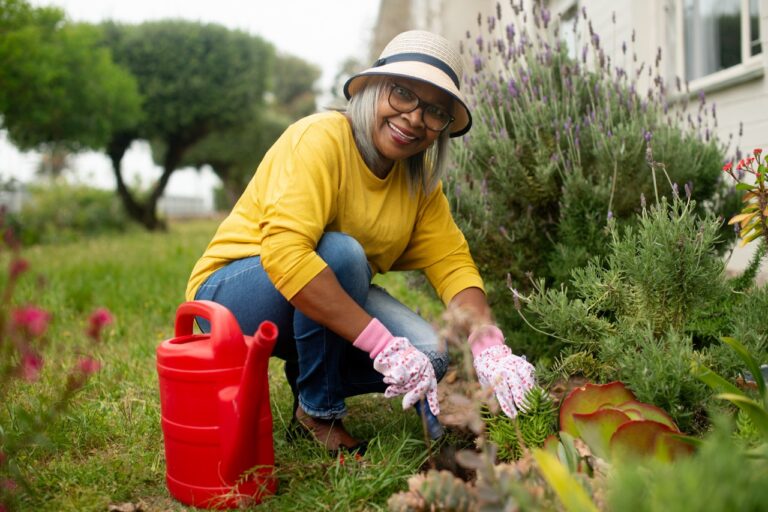
As late spring opens into early summer, the world seems to invite us outside. The days grow longer, the soil warms, and gardens begin to take shape in window boxes, raised beds, community plots, balconies, and backyards. For many people, gardening is a seasonal pleasure. But it can also be something more: a meaningful practice of vibrant living.

At Sage Collective®, we believe vibrant living is rooted in the everyday choices that help us stay engaged with our bodies, minds, communities, and sense of purpose. Gardening touches each of these dimensions. It asks us to move, observe, nurture, wait, and begin again. It connects us to the rhythms of nature while offering tangible benefits for physical, mental, and emotional well-being.

Movement with Meaning
Gardening is a form of physical activity, but it rarely feels like exercise in the traditional sense. Planting, watering, pruning, raking, digging, carrying soil, and harvesting all invite the body into gentle, purposeful movement. For older adults, these actions can help support mobility, flexibility, strength, and balance.

The Centers for Disease Control & Prevention  recommends that adults 65 and older aim for at least 150 minutes of moderate-intensity aerobic activity each week, along with muscle-strengthening and balance-supporting activities. Gardening can be one accessible way to add more movement into the week, especially because it can be adapted to a person’s energy level, mobility, and environment.

Raised beds, container gardens, kneeling benches, lightweight tools, and shaded work areas can make gardening more comfortable and accessible. Even a few minutes of tending herbs on a patio or watering flowers near a window can become part of a steady rhythm of care.

A Natural Boost for Mental Well-Being
Gardening also offers benefits for the mind. A 2017 meta-analysis found that gardening was associated with reductions in depression, anxiety, and body mass index, as well as increases in life satisfaction, quality of life, and sense of community.

Part of gardening’s power may come from the way it combines movement, fresh air, sensory engagement, and routine. The scent of basil, the feel of soil, the color of a new bloom, or the satisfaction of seeing a seedling take root can bring attention into the present moment. Gardening encourages us to slow down and notice small changes over time.

That kind of noticing can be restorative. In a world that often moves quickly, the garden reminds us that growth happens gradually. It asks for patience, care, and trust.

Purpose, Responsibility, and Joy
One of the most meaningful benefits of gardening is the sense of purpose it can provide. A review of research on home and community gardening among older adults found that gardening offered opportunities for connection with nature, productive activity, environmental care, and the responsibility of nurturing living things.

That responsibility matters. To tend a garden is to know that something depends on your attention. A plant needs watering. A tomato vine needs support. A flower bed needs weeding. These small acts create structure and meaning, especially during seasons of transition, retirement, or shifting routines.

Gardening also offers the joy of visible progress. A bare patch of soil becomes green. A small sprout becomes a meal. A forgotten corner becomes a place of beauty. These transformations can remind us that renewal remains possible at every age.

Connection in the Garden
Gardening can be deeply personal, but it can also be social. Community gardens, neighborhood planting days, shared herb pots, and informal conversations over fences all create opportunities for connection. Research on gardening and well-being has noted its relationship to social connectedness and community cohesion.

For older adults, these connections are especially valuable. A garden can become a place to exchange stories, seeds, recipes, advice, and encouragement. It can bring generations together, as grandparents teach children how to plant, harvest, and care for the natural world. In this way, gardening becomes more than a hobby. It becomes a bridge.

Growing Into Vibrant Living
The beauty of gardening is that it does not require perfection. A garden can be large or small, carefully designed or delightfully improvised. It can produce vegetables, flowers, herbs, or simply a few moments of peace. What also matters is the act of engagement it offers.

As we head into the prime months of late spring, gardening offers a gentle invitation to step outside, use the body, quiet the mind, and participate in the living world. It reminds us that care is reciprocal: we tend the garden, and in many ways, the garden tends us.

For Sage Collective®, this is the heart of vibrant living — remaining open to growth, grounded in purpose, and connected to beauty in every season of life.

› Back to top
« back
04.29.26 | Arts & Culture

International Jazz Day: Improvisation, Connection, and the Art of Vibrant Living

Every year on April 30, International Jazz Day invites the world to celebrate a musical form that has long stood for creativity, resilience, freedom, and connection. UNESCO proclaimed the day in 2011, recognizing jazz not only as an art form, but as a force for peace, dialogue, and mutual understanding across cultures. In 2026, the global celebration takes on special resonance in Chicago, which has been named the host city for the International Jazz Day All-Star Global Concert at the Lyric Opera of Chicago.

At Sage Collective®, International Jazz Day feels especially meaningful. Jazz is a living expression of many values that shape vibrant aging: curiosity, adaptability, collaboration, self-expression, and the confidence to keep discovering something new. Jazz reminds us that mastery and improvisation can coexist. It shows us that structure matters, but so does freedom. And perhaps most importantly, it demonstrates that every voice has a place in the larger composition.

There is something deeply affirming about that idea as we age. Later life is often described in overly fixed terms, as if growth belongs only to the young. Jazz offers another model. In jazz, experience matters. Listening matters. Timing matters. What you have lived through changes what you hear and what you play. The beauty is not in perfection, but in interpretation. A standard played at seventy does not mean the same thing it did at twenty. It carries more memory, more nuance, more feeling. That is not decline. That is depth.

Jazz also speaks to the value of improvisation in everyday life. Aging, like jazz, asks us to remain responsive. Plans change. Circumstances shift. We learn to adjust tempo, find new rhythms, and stay open to surprise. That kind of flexibility is not always easy, but it can be deeply life-giving. Jazz teaches us that improvisation is not chaos. It is presence. It is paying close attention to what is happening now and answering it with creativity.

That is a powerful lesson for older adults, and for all of us.

International Jazz Day was created in part to highlight jazz as an educational tool and as a way to bring people and communities together. UNESCO describes jazz as a universal language that crosses borders and fosters dialogue. That spirit of connection aligns beautifully with Sage Collective®’s commitment to meaningful engagement, lifelong learning, and the rich exchange of ideas across generations.

Jazz is also communal by nature. Even in a solo, someone is listening. Someone is supporting. Someone is preparing to respond. The music depends on relationship. For older adults, that offers a powerful reminder that creative life does not happen in isolation. Whether we are listening to a recording, attending a local performance, sharing favorite songs with friends, or learning more about the history of jazz, we are participating in a cultural conversation that is both personal and collective. And there is joy in that participation.

This International Jazz Day, Sage Collective® celebrates jazz not only for its sound, but for what it represents: lifelong creativity, cultural memory, emotional vitality, and the courage to keep improvising. Jazz tells us that expression can deepen with age. It tells us that listening is as important as speaking. It tells us that individuality and community are not opposites, but partners.

To live vibrantly is not to follow a rigid score. It is to stay awake to possibility, to remain in dialogue with the world around us, and to trust that our voice still belongs in the music. On April 30, that is something worth celebrating.


› Back to top
« back
04.22.26 | Lifestyle

Why Feeling Needed Matters More Than Ever as We Age

Healthy aging is often framed in practical terms: eat well, stay active, get enough sleep, keep your mind sharp. Those habits matter. But a growing body of research suggests that something less tangible may be just as important: the way we think about aging, our sense of purpose, and whether we feel that we still matter in the lives of others. Recent reporting in The New York Times highlighted evidence linking optimism, purpose, and volunteering with better health and longevity outcomes in later life.

There is a quiet question that can emerge as people grow older, especially after major life transitions like retirement, relocation, or the loss of familiar routines: Am I still needed?

It is a tender question, but also a profoundly important one. Because to feel needed is to feel connected to life beyond ourselves. It is to know that our presence carries weight, that our wisdom has value, and that our contribution — whether large or small — still matters. At Sage Collective®, we believe this feeling is not peripheral to vibrant living. It is central to it.

Purpose in later life doesn’t require launching a new career, writing a memoir, or becoming busier than ever. More often, it reveals itself in smaller, steadier ways: mentoring someone younger, checking in on a neighbor, tending a garden, joining a choir, volunteering in the community, helping a grandchild with homework, showing up for a friend. These acts may seem ordinary, but they create the threads that keep us tied to meaning. And meaning has power.

When we feel connected to something larger than ourselves, we are often more motivated to care for our bodies, protect our peace, and remain engaged with the world around us. Purpose can help create structure. It can give shape to the day. It can remind us that we’re still growing, still contributing, still part of the larger human story. Research on volunteering in older adulthood has linked it with better well-being and a range of healthier outcomes, reinforcing what many people know intuitively: contribution nourishes the contributor, too, and is just as important as mindset.

How we speak to ourselves about aging matters. If aging is seen only as decline, loss, or narrowing possibility, it becomes harder to imagine a future filled with joy, relevance, and discovery. But when aging is understood as an ongoing season of becoming — one that still holds room for curiosity, creativity, and connection — we create space for a different experience altogether. Research highlighted this spring found that positive views of aging were associated with better physical and cognitive trajectories over time.

We’re not advocating to deny life’s challenges or pretend that optimism erases difficulty. Rather, we recognize that our need to belong, to contribute, and to be seen doesn’t fade with age. In many ways, it becomes even more essential. At Sage Collective®, we celebrate aging as a dynamic, creative, deeply human stage of life. — not a closing chapter. To age well is to remain in relationship with possibility, and to keep finding ways to offer what only you can offer.


› Back to top
« back
10.29.25 | Health & Wellness

The Grace in Grit: A Reflection on Resilient Living

In the language of vibrant living, grittiness is not about being hard or unyielding. It’s about staying soft enough to keep growing, steady enough to keep moving, and brave enough to keep beginning again. At Sage Collective®, we believe that living vibrantly isn’t about avoiding friction — it’s about finding meaning and movement within it.

Redefining Grit
Psychologist Angela Duckworth, a University of Pennsylvania professor and 2013 MacArthur “Genius Grant” recipient, popularized the concept of grit through her groundbreaking research and her 2016 book, Grit: The Power of Passion and Perseverance. Her studies explored why success so often depends not on raw talent, but on sustained effort — on the ability to stay committed to long-term goals even in the face of difficulty.

But within the context of aging and community, grit takes on a more soulful dimension. It’s less about ambition and achievement, and more about endurance — the quiet, daily persistence that allows us to continue living with purpose, even when life’s terrain becomes steep or uncertain.

For older adults, grit can mean returning to watercolor painting after years away from a studio, walking daily despite arthritis, or learning to navigate new technology to stay connected with family. These acts may seem ordinary, but they are, in truth, acts of courage — small, repeated commitments to staying engaged in life.

Grit and Grace
At Sage Collective®, we see grit and grace as twin forces that shape the experience of vibrant living. Grace provides the softness that tempers determination; grit gives structure to hope. Together, they allow us to persist with compassion — toward ourselves and others.

In our community, we often see how these qualities intertwine: when someone finds new purpose through volunteering, returns to a beloved craft after loss, or steps back into connection after a season of solitude. These moments reveal the essence of grit — not stoicism, but re-engagement. Not merely endurance, but renewal.

The Everyday Practice of Grit
Grittiness can also be cultivated through daily habits that reinforce purpose and connection. In community gardens, residents learn patience with the soil and the seasons. In movement or yoga classes, they rediscover balance through repetition and release. In book clubs or creative workshops, they flex mental and emotional resilience — staying open to new ideas, new people, and new ways of seeing.

Grit doesn’t always roar. Sometimes, it whispers — “keep going.” It shows up in consistency, in curiosity, in the willingness to show up for oneself and for community, even on days when energy feels low. It’s persistence paired with perspective, a refusal to let difficulty define the horizon.

The Texture of Vibrant Living
Vibrancy, after all, isn’t a glossy state of perpetual joy. It’s a textured one — full of contrast, light and shadow, rest and renewal. Grittiness gives that texture its depth. It helps transform obstacles into opportunities for growth and creativity. It keeps us engaged with life’s dynamic rhythms, and reminds us that living fully means participating in the full spectrum of experience — the easy and the hard, the known and the unknown.

At Sage Collective®, we often say that vibrant living is a choice. Grit makes that choice sustainable. It allows us to meet the moment — whatever it brings — with heart, humor, and faith in our own capacity to adapt and thrive.

Closing Thought
Grit, then, is not about hardening. It’s about fortifying — strengthening our inner life so that we can continue to live outwardly with vibrancy, curiosity, and joy. It is the quiet strength behind every act of creative resilience, every step toward connection, every renewed commitment to live life fully — no matter our age.

› Back to top
« back
08.07.25 | Healthy Eating

Joyspan: Measuring Life in Moments, Not Years

At Sage Collective®, we believe that vibrant living isn’t measured solely by how many years we have—but by how fully we live in those years. Just as we talk about lifespan and healthspan, there’s another equally essential, if less frequently named, concept: joyspan.

Joyspan is the measure of how much joy we experience and sustain throughout our lives. It’s not about momentary happiness or fleeting pleasures. It’s about the deep, sustaining joy that comes from meaningful connections, a sense of purpose, curiosity, and the freedom to be our full selves—especially as we age.

Beyond Lifespan and Healthspan
Modern medicine and lifestyle changes have helped extend our lifespan—the number of years we live—and increasingly, our healthspan—the number of those years we live in good health. But neither of those measures captures the richness of human experience. That’s where joyspan comes in.

Joyspan is qualitative, not quantitative. It invites us to ask, Am I making space for joy in my life? What fills me up? What lifts my spirit?

 Joy Matters—Especially As We Age
We live in a world that often underestimates the emotional and creative lives of older adults. There’s a quiet but damaging narrative that says joy belongs to the young. But we know from experience—and from the beautiful lives of those in our communities—that joy can flourish at any age. In fact, many people report a renewed sense of joy in their later years, when priorities shift, distractions fall away, and we’re finally able to savor what matters most.

Joy isn’t frivolous—it’s foundational. Research shows that joy supports mental health, bolsters our immune system, and helps build resilience. It improves relationships, sharpens cognitive function, and even enhances longevity. But beyond the science, joy connects us to our humanity. It allows us to experience gratitude, wonder, and awe.

Cultivating Joyspan: Daily Practices
Unlike lifespan, which is out of our control, joyspan is something we can grow—intentionally and continuously. Here are a few practices we encourage at Sage Collective®:

  • Savor small pleasures: A cup of tea, the bloom of a flower, a warm sunbeam on your shoulder. Joy is often tucked into the ordinary.
  • Stay curious: Explore new interests, revisit old passions, take a class, or start a creative project. Curiosity opens the door to joy.
  • Connect deeply: Spend time with people who see you, love you, and make you laugh. Whether it’s family, friends, or community, joy grows in connection.
  • Practice gratitude: Take a moment each day to reflect on what brings you peace or pleasure. Gratitude enhances awareness of joy.
  • Move your body: Gentle movement, walking, dancing—these are not just physical exercises but expressions of life and aliveness.

A Joyspan Philosophy
At Sage Collective®, we are reimagining aging by prioritizing wellness, creativity, and community. Embracing joyspan means honoring the emotional dimension of wellness. It invites us to be present, to celebrate beauty in the everyday, and to believe that joy doesn’t have to fade—it can deepen.

Our joyspan is not determined by the absence of hardship, but by how often we can return to joy, even amidst challenge. As we age, joy becomes not just a possibility, but a practice. And in that practice, we find hope.

So we invite you to ask yourself—not how many years you’ve lived, or even how many healthy ones—but how much joy you’ve let in. Because joy is not the icing on life—it’s the nourishment that makes life worth living.

› Back to top