« back
07.08.21 | Sage Advice®

Visiting the Obama Portraits at the Art Institute of Chicago

This summer, the beautiful and inspiring Obama portraits – depicting 44th president of the United States, Barack Obama, and first lady, Michelle Obama – will be gracing the walls of the Art Institute of Chicago for just eight brief weeks. With such a limited viewing period, below we’re outlining how to plan your visit to see these seminal works of art ASAP!

Visiting the Portraits

Access to viewing The Obama Portraits is included in General Admission for all Art Institute visitors. However, the exhibition does have a capacity-limit, and entry is first-come, first-served.

Tickets must be reserved in advance online, and entry to the exhibit on the day of your visit will be managed via virtual lines. General Admission tickets are being released in limited, timed batches, as outlined below:

  • Tickets for July 1–15 will be available on June 24.
  • Tickets for July 16–31 will be available on July 8.
  • Tickets for August 1–8 will be available on July 22.
  • Tickets for August 9–15 will be available on August 2.

A limited quantity of tickets will also be available onsite for qualifying groups. Learn more about free admission guidelines at the Art Institute of Chicago here.

Remarkable Works

While many other Presidential Portraits in the Smithsonian National Portrait Gallery have been traditional, head-and-shoulders portraits painted in classical styles, President Barack Obama took a notably different approach.

Barack Obama commissioned Kehinde Wiley to create his portrait. Wiley is an American portrait artist known for his placement of contemporary (typically African American) figures in the guise of powerful historical figures. Meanwhile, Michelle Obama commissioned Amy Sherald to create her portrait. Sherald is an American artist known for her arresting, otherworldly portraits that document the contemporary African-American experience.

Wiley and Sherald are the first African Americans to be commissioned by the National Portrait Gallery to create official portraits of a president or first lady. The resulting works are remarkably contemporary.

In the larger-than-life, head-to-toe portrait created by Wiley, a seated Obama is set against a backdrop of lush greenery. Each plant in the background holds a special significance, including chrysanthemums, the official flower of Chicago. The portrait of Michelle Obama, created by Sherald, was based on a posed photograph and is intentional down to every last detail, from the grey-scaling of Michelle’s skin to the intensity of her direct gaze.

You can visit the Obama Portraits at the Art Institute of Chicago now through August 15, 2021; tickets are available for purchase here.

And for those interested in a fascinating, rich conversation between Michelle Obama and Amy Sherald, hosted by The Studio Museum of Harlem Director + Chief Curator Thelma Golden, you’ll find it here.
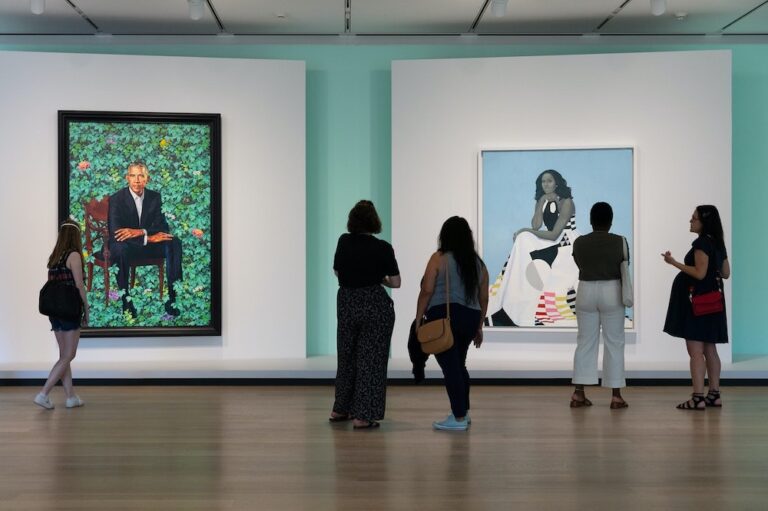
 

Photo of Obama Portraits
(L) Kehinde Wiley. Barack Obama, 2018. Oil on canvas. (R) Amy Sherald. Michelle LaVaughn Robinson Obama (detail), 2018. Oil on linen. Photo courtesy of the Art Institute of Chicago.
› Back to top
« back
07.06.21 | Community

What we mean when we say “vibrant, high-quality, affordable housing”

There’s a lot of language we use at Sage Collective that’s uncommon for the world of senior living. For example, we prefer to use the phrase “older adults” rather than “seniors” – more on that in this blog post here. When discussing our vision for Sage Collective’s residences, we also use the phrase “vibrant, high-quality, affordable housing.” But just what exactly does that mean?

Everything we do at Sage Collective – from the partners we choose, the programming we design, to the residences we develop – is built upon our foundational philosophy: 9 Ways of Vibrant Living. Read more about this philosophy and how we intend to bring it to older adults in our Vibrant Living Manifesto here. Ultimately, we believe that older adulthood is just another in a series of life’s chapters, and that seniors deserve to live just as joyfully, vibrantly, and fully as their intergenerational counterparts.

Too often, senior housing lacks the passion and joy of this belief we hold so dear. Based on limited resources, and often bogged down by limited imagination, affordable senior housing is all too commonly not the enjoyable experience that it should be. We’re here to rewrite that narrative.

At Sage Collective, we encourage our residents and neighbors to experience the freedom and joy of choice by providing them with wellness support, cultural exploration, and spiritual enrichment. We’re in a privileged position to deliver on this promise based on the legacy we come from – more on that in this blog post here. From our past experience, we’ve learned the powerful impact that a strong vision and an even stronger culture has on the services and housing products we’re able to provide.

We can’t wait to share this vision with you. Our first residences, 4108 and 4112 South King Drive in the Bronzeville community on Chicago’s Southside, will bring affordable and market competitive housing units to our community, and will be set apart by our vibrant living philosophy and attention to detail and quality. Stay tuned for more details to come.


Photo of contemporary residential interior
› Back to top
« back
06.29.21 | Community

Harness the power of awe by taking “awe walks”

Vibrant life encompasses a variety of experiences, from healthy eating to regular fitness to engaging with the world around us. One particularly effective – and unusual – way to pursue vibrant living is to take “awe walks.” The end-goal of these walks is simple:  to simply inspire awe in those who participate. Let’s dig in.

How to take awe walks

“Awe walks” are a more intentional way to approach something as simple as a stroll around the block. The idea is to go for a walk and seek to experience awe along the way. How the walker chooses to experience awe is entirely up to them. Awe can be found in even the smallest of everyday moments, such as appreciating the flight path of a v of migrating geese above, or marveling at the many colors that make up fall foliage.

The study of awe – how it’s inspired, and the impact it has on a person’s wellbeing – has been a primary area of focus for psychologists since the early 2000s. Just recently, a 2020 study was published in the journal Emotion examining the impact of awe walks on a population of older adults.

In the study, sixty older adults took 15-minute awe walks for a period of eight weeks. Perhaps the most exciting finding of the study was the increasing feelings of compassion and gratitude in the control group that took such awe walks. Compared to the normal-walk-talking counterparts, the awe walkers were much more focused on observing the world around them.

“One of the key features of awe is that it promotes what we call ‘small self,’ a healthy sense of proportion between your own self and the bigger picture of the world around you,” explained Dr. Virginia Sturm, lead investigator and associate professor of neurology and psychiatry and behavioral sciences at the University of California at San Francisco.

You can trust the science – or you can just as easily try it out for yourself and see what awe you uncover.

View from above of people taking a walk
› Back to top
« back
06.21.21 | Sage Advice®

Can going to church or the art museum extend your life expectancy?

At Sage Collective, we champion 9 Ways of Vibrant Living, an inspired model that champions a full, happy and high-quality life. And while we’re focused on the quality of life, it’s possible that the quantity of life (aka life expectancy) is also intrinsically linked to it. So when we talk about components to vibrant living such as engagement in spirituality or religion and engagement in social life, can these components really bring about a longer life? Science says yes.

A Swedish study in 1996 of more than 12,000 people in Sweden found that “attending cultural events correlated with increased survival, while people who rarely attended cultural events had a higher risk of mortality.” A follow-up study in 2000 reported similar findings, stating: “We found a higher mortality risk for those people who rarely visited the cinema, concerts, museums, or art exhibitions compared with those visiting them most often.”

You can also find a comprehensive list of studies conducted to test similar hypotheses on the impact of social connectedness and cultural immersion on an individual’s health and overall mortality rate here. These studies include considerations of social and cultural immersion across a broad swath of types – including number of relationships, depth of social support, types of activities and their social involvement. 

However, the findings ring the same across the broad spectrum of social and cultural involvement: all these things are truly good for one’s health and life expectancy. As strong believers in the power of vibrant living, we’re not surprised. It is vitally important to live a life filled with curiosity, purpose, joy, and love. Participating in cultural events such as going to the museum or attending church regularly provide all these things and more – and they just might provide a boost to your overall health, too.

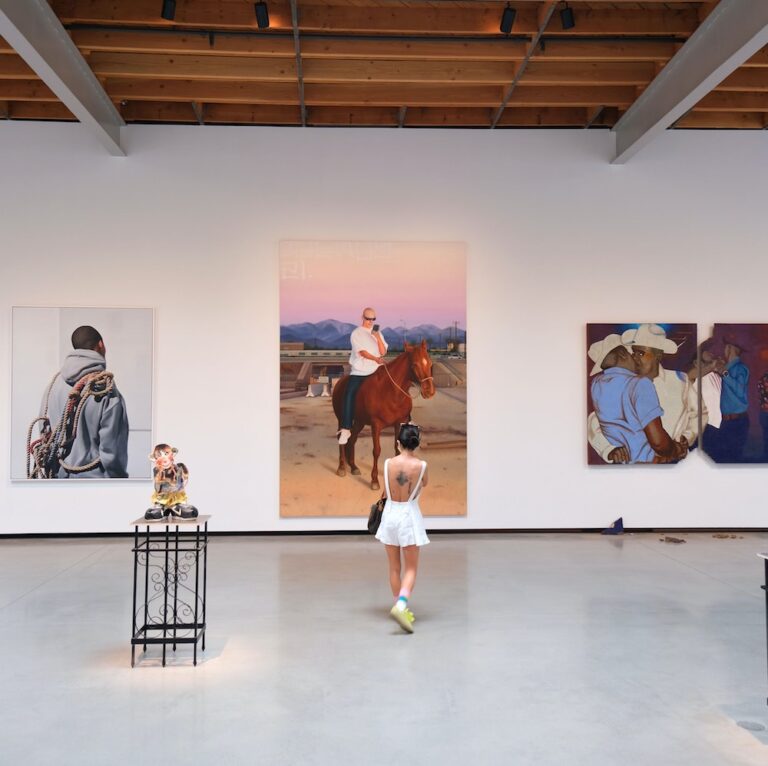
A girl stands in front of a series of paintings on a gallery wall
› Back to top
« back
05.11.21 | Sage Advice®

Announcing Sage Collective’s Vibrant Living Manifesto

Sage Collective is thrilled to unveil our Vibrant Living Manifesto. This manifesto lays clear our approach to vibrant living, and invites all those who think and do similarly to join us. Read the full manifesto below: 

Aging isn’t just a biological process — it’s also a cultural process. Our cultural perceptions of aging have a profound impact on the experience of growing older.

We rebuke the traditional American model of valuing novelty and youth above age, experience and wisdom. We instead call upon other exemplary models for inspiration: Native Americans herald their elders as the keepers of tradition and storytelling, and in many Eastern civilizations, filial piety (to be good to one’s parents) is deemed an essential duty. 

At Sage Collective, we believe that humanity is at its very best when we connect and engage with one another. We believe that elders have boundless knowledge to share with youth, and vice versa — because we believe that life is a constant, collaborative journey for all ages. 

So we’re here to disrupt the status quo, to catalyze change in the way people understand the role of older adults in society. We’re here to create an innovation lab — to test new ideas, processes and products and expand our ways of thinking and doing — as a way of establishing a radical new framework where older adults are valued and engaged, where they experience a life lived vibrantly.

Freedom, flexibility and joy… access to high-quality, affordable and vibrant living… We believe these are rights, not privileges. That’s why Sage Collective is providing residences, programming and ancillary services to manifest our vision. 

As with any vision, ours is nothing without the support that translates ideas into action. We need residents and participants who share our commitment to vibrant living and want to be a part of it. If you’re a collaborator, a disruptor, a changemaker, a change-seeker… we invite you to do better, for ourselves and others, to live more vibrantly, to be a part of the collective.

Graphic reads: Sage Collective Vibrant Living Manifesto. Aging isn't just a biological process — it's also a cultural process — and our cultural perceptions of aging have a profound impact on the experience of growing older.
› Back to top
« back
02.09.21 | Sage Advice®

A Brief History of Bronzeville

Sage Collective has begun the process of renovating the first two properties we acquired, since selling Willa Rawls Manor, a 123-unit property we owned and operated for more than 40 years. The two properties are located at  4108 S King Drive and 4112 S King Drive. With the buildings located side-by-side in Chicago’s historic Bronzeville neighborhood, it will provide a tangible benefit to the community by celebrating and uplifting Bronzeville’s dynamic history, current-day culture and residents alike. In honor of this effort and of Black History Month, today we take a moment to look at a brief history of Bronzeville.

Becoming Bronzeville

With the Great Migration beginning in 1916, African Americans fled lynchings and oppression in the rural South for brighter opportunities in cities in the North. Though segregation was outlawed after the Civil War, racist practices in hiring and housing practices remained steadfast. Many African Americans in Chicago landed in what became the Bronzeville area, there facing higher rent prices and population density (at its highest reaching 300,000 residents strong). 

Despite this, true to the African principle of ujamaa, Bronzeville residents created a tight-knit community that boasted a network of black-owned institutions and a cultural vivacity that, in its prime from the 1920s-1950s, even rivaled Harlem.

The community had been growing, but the name Bronzeville only entered the scene in the 1930s, suggested by theater editor for the Chicago Bee (an African American-led daily newspaper with national reach), James Gentry. Gentry posited that African American skin was closer to bronze than black, and selected the name as an empowering alternative to racist nicknames for the neighborhood that had emerged.

Center of Culture

Though the official boundaries of Bronzeville are often contested as spanning anywhere from 18th and 67th Street north-south to the Dan Ryan and Lake Michigan west-east, the pulsing heart of Bronzeville landed somewhere in the middle.

Dining, shopping, dance halls and nightclubs abounded. Jazz, blues and gospel were the sounds of Bronzeville, and when the Regal Theater opened in the 1920s, it attracted the country’s most glamorous and talented Black entertainers. Bronzeville also boasts being the home of renowned African American artists and intellectuals like journalist and social activist Ida B. Wells, jazz musician Louis Armstrong, poet Gwendolyn Brooks, women’s aviation pioneer Bessie Coleman, sociologist Horace Clayton and dancer Katherine Dunham.

WTTW put it best when they said businesses and community institutions like Provident Hospital (where Daniel Hale Williams, an African American, pioneered open-heart surgery), the Wabash YMCA (which established the first Black History Month), the George Cleveland Hall Library, Parkway Community House, Binga Bank (Chicago’s first Black-owned life insurance, realty, and financial institution), and more, “were more than alternatives to racially restricted establishments downtown”. They were pillars of the community which helped to instill pride and contribute to the upward mobility of African Americans.”

Through our vision for vibrant, high-quality and affordable housing for older adults, Sage Collective is proud to contribute to the legacy of African American culture, community and success that is the heart and soul of Bronzeville. 

Mural under the “El” tracks in Bronzeville
› Back to top
« back
01.21.21 | Sage Advice®

Why You (And Everyone Else) Should Read More Poetry

Many of us discovered poetry during mandatory school courses and our relationship with the genre ended swiftly after, never to be revisited again over the years. There’s this common misconception that poetry is in inaccessible art form, that it has to be understood to be enjoyed. But poetry is like singing — you don’t have to be good at it to do it or to enjoy it. Put simply: it’s good for the soul. That’s why today, we’re making an argument for why you (and everyone else) should read more poetry.

Why Read Poetry?

First of all, poetry is easy to incorporate into your daily schedule. A single poem doesn’t ask much of your time or attention. One Huffington post article describes how easy it is to consume poetry by saying, “You can flip through a book of poetry and eat the poems like popcorn.” In fact, you can even have the delectable treat of poetry delivered to your email daily by the Academy of American Poets’ Poem-A-Day or Poetry Foundation’s Poem of the Day

Rather than being intimidated by the idea of interpreting poetry, let’s consider how many possibilities are offered in the act of interpretation. Poetry, as an abstract language, stretches our imagination and the boundaries of what words can do. It appeals to heart logic over brain logic. Poetry shakes off literal interpretations or concreteness… the idea that there is just one way of seeing. Mirroring this logic (or lack thereof), in most arguments on why you should read poetry, instead of choosing just one reason why, the arguments simply end on the open-ended question: “well, why not?”

The Impact of a Poem

Though, of course, poems can teach us new things and offer us a new perspective, much of the beauty lies in how a person uniquely relates to the poem. In the TEDTalk “What Happens When We Read Poetry” they purport that it is this reacting-to that makes poetry so meaningful: “Though a poem doesn’t make things happen, it happens — every time someone reads it. Rather than a static item printed on a page, a poem is an event that occurs with each new reader and with each new reading.”

Further exploring the idea of what happens when we read poetry, The Cut describes a study conducted in Germany where the bodily response to poetry was measured using a “goosecam” (which shows the movement of skin and arm hairs as people listen to poetry). Participants in the study were also told to press a button each time they got chills during the reading of a poem. 40% of participants physically showed goosebumps.

But even more, the neurological impacts (those not tracked by the goosecam, but by brain scans throughout the process) showed the impacts of the slow-building pleasure of listening to poetry. The study dubbed this phenomenon, the “pre-chill,” a sensation synonymous with the buildup and anticipation of unwrapping a chocolate candy bar. Before study participants ever pressed the button indicating they had been given chills by the poem, the pre-chill had already been occurring within them.

Poetry contributes to vibrant living. And the best part about poetry: there’s something for everyone. If one poem doesn’t stir pre-chills in your heart and goosebumps on your arms, the next one most likely will.

A hand writes the word poetry on a vibrant wall of graffiti
› Back to top
« back
01.19.21 | Sage Advice®

What to Know About the COVID-19 Vaccine

The Pfizer and Moderna COVID-19 vaccines have both been authorized by the FDA for emergency use — and many more pharmaceutical companies will follow suit. According to the CDC, the COVID-19 vaccination is a vital tool in helping to stop the pandemic, building protection and keeping individuals from getting COVID-19. But what should you actually expect during your appointment to receive the COVID-19 vaccine?

It Will Take Time

For starters, it will take some time for the vaccine to become available to most people. As COVID-19 vaccine doses are being doled out across the United States, Chicago has already administered upwards of 60,000 vaccine shots. These administered shots have gone to health care workers and long-term care facilities as part of Phase 1A of Chicago’s vaccine rollout plan. Once completed, the city will move onto Phase 1B: where older Chicagoans and certain frontline workers will be vaccinated. 

Understanding How It Works

Both the Pfizer and Moderna vaccines use new mRNA technology. As the CDC explains, mRNA vaccines instruct our cells to create a (harmless) “spike protein.” The spike protein is found on the surface of the virus that causes COVID-19. Once your body creates the spike protein, it recognizes the protein does not belong and begins to build an immune response and antibodies. These antibodies stick around and will help fight off COVID-19, while the spike protein is eventually eliminated by your body. 

What to Expect 

Both the Pfizer and Moderna vaccines are injected in the upper arm muscle and require two injections, 21 days and 28 days apart, respectively. After getting vaccinated, you may experience flu-like symptoms, including fever, chills, tiredness and headache, as well as slight pain and swelling at the injection site. These side effects — if you do experience them at all (and many do not) — will subside in 1-2 days. 

When the time does come for your own vaccination appointment, always remember that routine processes and procedures are in place to ensure the utmost safety throughout the experience. It’s perfectly normal to experience anxiety and nerves, but being as informed as possible about the process will help to remedy that. 

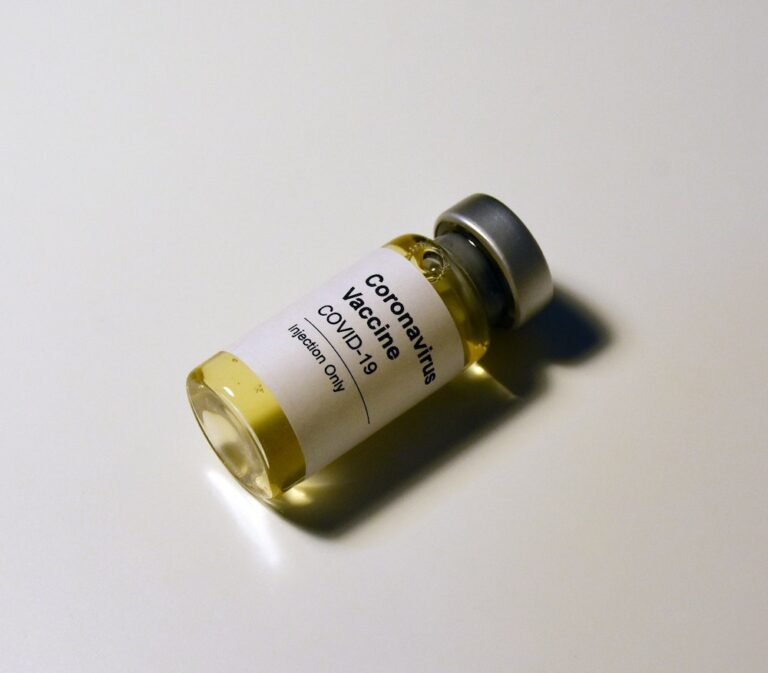
A small vial of liquid with a label reading "COVID-19 Vaccine"
› Back to top
« back
01.12.21 | Sage Advice®

Feeling Exhausted? The Science Behind Pandemic Burnout

As part of our 9 Ways of Vibrant Living, we at Sage Collective advocate for stress reduction. We recognize stress as a natural, regular occurrence and aim to help our followers learn to manage, to control and to minimize stress.

But we’ll be the first to admit that since the onset of the COVID-19 pandemic (in March of what’s officially become last year), stress levels have been higher than ever. If you’ve been feeling excessively stressed, burnt out and unable to focus — you’re not alone. Today, we’re taking a closer look at the science behind pandemic-related stress and burnout. 

There’s a reason everyone’s been referring to COVID-19 as “unprecedented.” We’ve never experienced anything quite like this in our lives. Worrying about a global pandemic, public health and safety, our personal wellbeing and the wellbeing of those we love, not to mention financial concerns, food security struggles and more — it’s an inordinate amount of stress for human beings to take on all at once. And the demand of feeling all these things at once is taking a toll on our bodies.

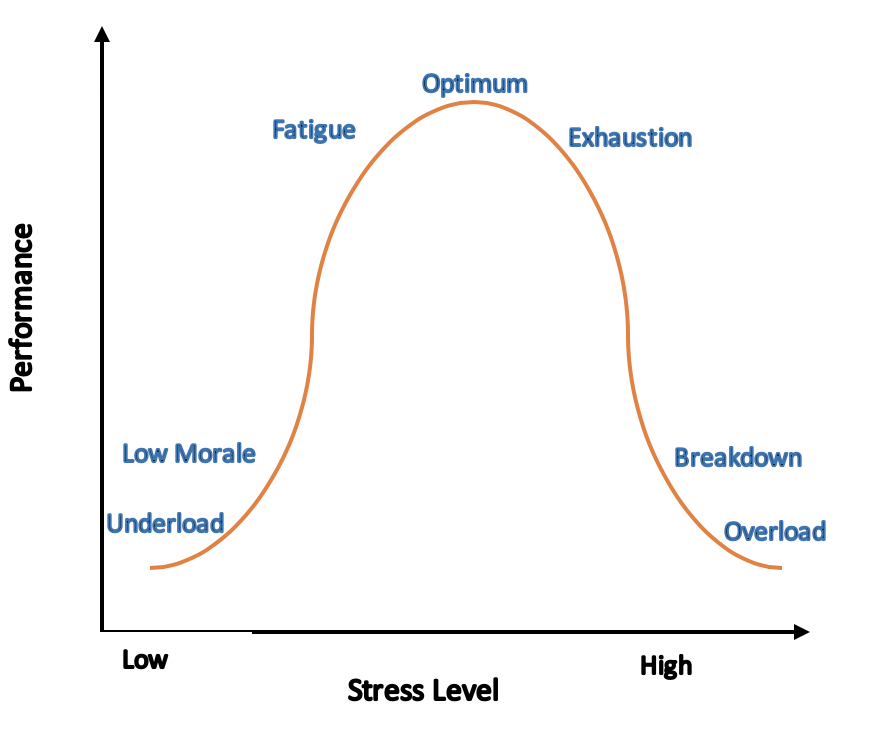
Allostatic load demonstrated visually

Allostatic load refers to the impact of cumulative wear and tear — the impact of carrying all that stress, for example. And allostatic overload refers to the point at which the demand of our stress overtakes the capability of our mind and body to keep up. As demonstrated above, we can look at our allostatic load as a bell curve. Too little stimulation from stress, we’ll be underloaded, understimulated and stagnant as  human beings. But too much stimulation from stress, and we’ll be overloaded, overstimulated and exhausted to the point of burnout.

Many of us are in the throes of allostatic overload. Our bodies have been constantly perceiving a potential threat, and therefore they’ve been producing hormones like adrenaline and cortisone, handy responses to temporary stressors.  However, in the case of a prolonged stressor such as the pandemic, our bodies continually overload themselves with these hormones, which are actually toxic to our physiological systems. 

So your feelings of stress, exhaustion and burnout — they’re only natural. But acknowledging the reality of the problem is only half the battle. How do we even begin to combat burnout and fatigue? 

First, self care is absolutely crucial. Prioritize taking care of your body through healthy habits like regular exercise, healthy diet and getting your best night’s sleep. Prioritize taking care of your mind, too, by making time to practice gratitude and indulge in doing things you love. And secondly, be mindful to take care of others, too. Finding ways to safely connect with friends, family and community will serve as a reminder that you’re not alone — we’re all in this together.

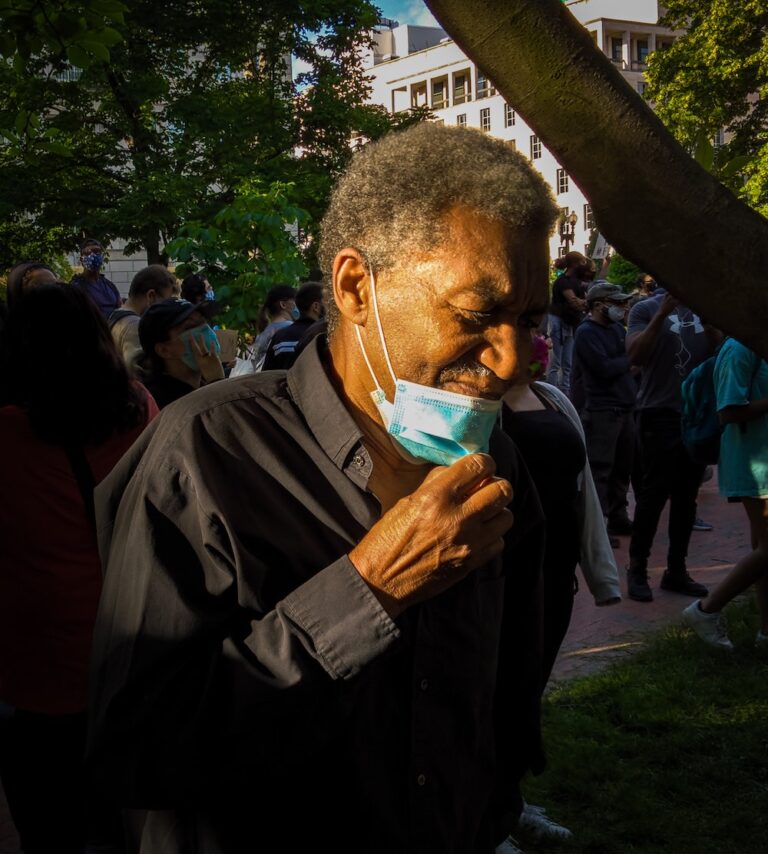
An older African American adult steps aside to take off his mask for a moment
› Back to top