« back
07.06.21 | Sage Advice®

What we mean when we say “vibrant, high-quality, affordable housing”

There’s a lot of language we use at Sage Collective that’s uncommon for the world of senior living. For example, we prefer to use the phrase “older adults” rather than “seniors” – more on that in this blog post here. When discussing our vision for Sage Collective’s residences, we also use the phrase “vibrant, high-quality, affordable housing.” But just what exactly does that mean?

Everything we do at Sage Collective – from the partners we choose, the programming we design, to the residences we develop – is built upon our foundational philosophy: 9 Ways of Vibrant Living. Read more about this philosophy and how we intend to bring it to older adults in our Vibrant Living Manifesto here. Ultimately, we believe that older adulthood is just another in a series of life’s chapters, and that seniors deserve to live just as joyfully, vibrantly, and fully as their intergenerational counterparts.

Too often, senior housing lacks the passion and joy of this belief we hold so dear. Based on limited resources, and often bogged down by limited imagination, affordable senior housing is all too commonly not the enjoyable experience that it should be. We’re here to rewrite that narrative.

At Sage Collective, we encourage our residents and neighbors to experience the freedom and joy of choice by providing them with wellness support, cultural exploration, and spiritual enrichment. We’re in a privileged position to deliver on this promise based on the legacy we come from – more on that in this blog post here. From our past experience, we’ve learned the powerful impact that a strong vision and an even stronger culture has on the services and housing products we’re able to provide.

We can’t wait to share this vision with you. Our first residences, 4108 and 4112 South King Drive in the Bronzeville community on Chicago’s Southside, will bring affordable and market competitive housing units to our community, and will be set apart by our vibrant living philosophy and attention to detail and quality. Stay tuned for more details to come.
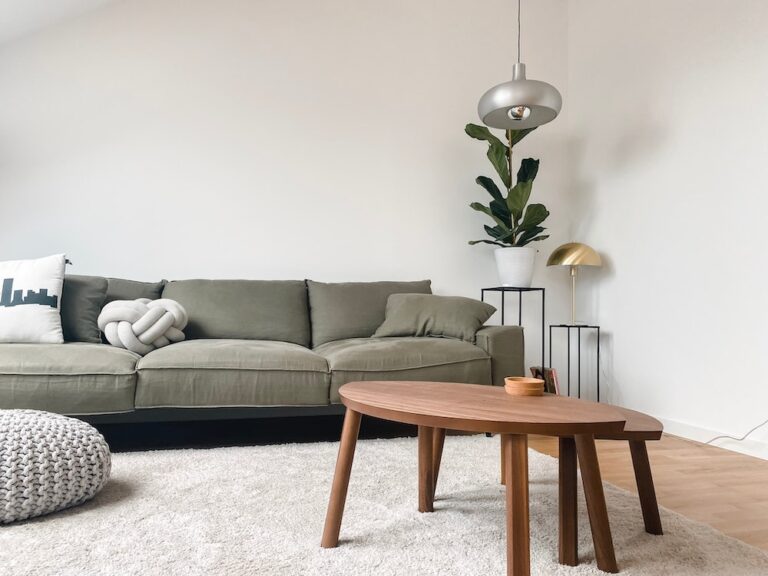

 

Photo of contemporary residential interior
› Back to top
« back
07.01.21 | Mental Wellbeing

Vibrant Living Breakdown: Engagement in Social Life

Nine Ways of Vibrant Living is Sage Collective’s innovative model that champions more meaningful, engaged lives for older adults, and that serves as the backbone of our philosophy. We celebrate and uplift components of vibrant living that span from health and wellness, to arts and culture, to spiritual enrichment — but what makes all these life experiences truly shine is our ability to share them with others. That’s why our ninth component is engagement in social life.

Older adults in particular are a population at high risk of experiencing social isolation. The flip side of that risk – and the negative impacts it has on one’s physical and mental well being – means that older adults who are more socially connected often report a better quality of life all around.

The benefits of healthy social connection for older adults are all encompassing and include disease prevention, fewer physical health problems, longevity/length of life, improved cognitive function, better self-esteem, sense of belonging, and maintained purpose of life.

Therefore, at Sage Collective, we strive to provide daily opportunities for social connection and community engagement, whether that’s through our programming or residences. We intend to partner with a host of community organizations, including but not limited to: churches, schools, businesses, and cultural institutions, to provide co-teaching, educational, entrepreneurial and employment opportunities that both enrich and empower our residents.


Stay tuned for all these opportunities and more, and in the meantime, you can stay connected with us and our community online through our social media via Facebook, Instagram, Twitter, and LinkedIn.

Friends gathering to socialize and paint
› Back to top
« back
06.29.21 | Mental Wellbeing

Harness the power of awe by taking “awe walks”

Vibrant life encompasses a variety of experiences, from healthy eating to regular fitness to engaging with the world around us. One particularly effective – and unusual – way to pursue vibrant living is to take “awe walks.” The end-goal of these walks is simple:  to simply inspire awe in those who participate. Let’s dig in.

How to take awe walks

“Awe walks” are a more intentional way to approach something as simple as a stroll around the block. The idea is to go for a walk and seek to experience awe along the way. How the walker chooses to experience awe is entirely up to them. Awe can be found in even the smallest of everyday moments, such as appreciating the flight path of a v of migrating geese above, or marveling at the many colors that make up fall foliage.

The study of awe – how it’s inspired, and the impact it has on a person’s wellbeing – has been a primary area of focus for psychologists since the early 2000s. Just recently, a 2020 study was published in the journal Emotion examining the impact of awe walks on a population of older adults.

In the study, sixty older adults took 15-minute awe walks for a period of eight weeks. Perhaps the most exciting finding of the study was the increasing feelings of compassion and gratitude in the control group that took such awe walks. Compared to the normal-walk-talking counterparts, the awe walkers were much more focused on observing the world around them.

“One of the key features of awe is that it promotes what we call ‘small self,’ a healthy sense of proportion between your own self and the bigger picture of the world around you,” explained Dr. Virginia Sturm, lead investigator and associate professor of neurology and psychiatry and behavioral sciences at the University of California at San Francisco.

You can trust the science – or you can just as easily try it out for yourself and see what awe you uncover.

View from above of people taking a walk
› Back to top
« back
06.21.21 | Lifestyle

Can going to church or the art museum extend your life expectancy?

At Sage Collective, we champion 9 Ways of Vibrant Living, an inspired model that champions a full, happy and high-quality life. And while we’re focused on the quality of life, it’s possible that the quantity of life (aka life expectancy) is also intrinsically linked to it. So when we talk about components to vibrant living such as engagement in spirituality or religion and engagement in social life, can these components really bring about a longer life? Science says yes.

A Swedish study in 1996 of more than 12,000 people in Sweden found that “attending cultural events correlated with increased survival, while people who rarely attended cultural events had a higher risk of mortality.” A follow-up study in 2000 reported similar findings, stating: “We found a higher mortality risk for those people who rarely visited the cinema, concerts, museums, or art exhibitions compared with those visiting them most often.”

You can also find a comprehensive list of studies conducted to test similar hypotheses on the impact of social connectedness and cultural immersion on an individual’s health and overall mortality rate here. These studies include considerations of social and cultural immersion across a broad swath of types – including number of relationships, depth of social support, types of activities and their social involvement. 

However, the findings ring the same across the broad spectrum of social and cultural involvement: all these things are truly good for one’s health and life expectancy. As strong believers in the power of vibrant living, we’re not surprised. It is vitally important to live a life filled with curiosity, purpose, joy, and love. Participating in cultural events such as going to the museum or attending church regularly provide all these things and more – and they just might provide a boost to your overall health, too.

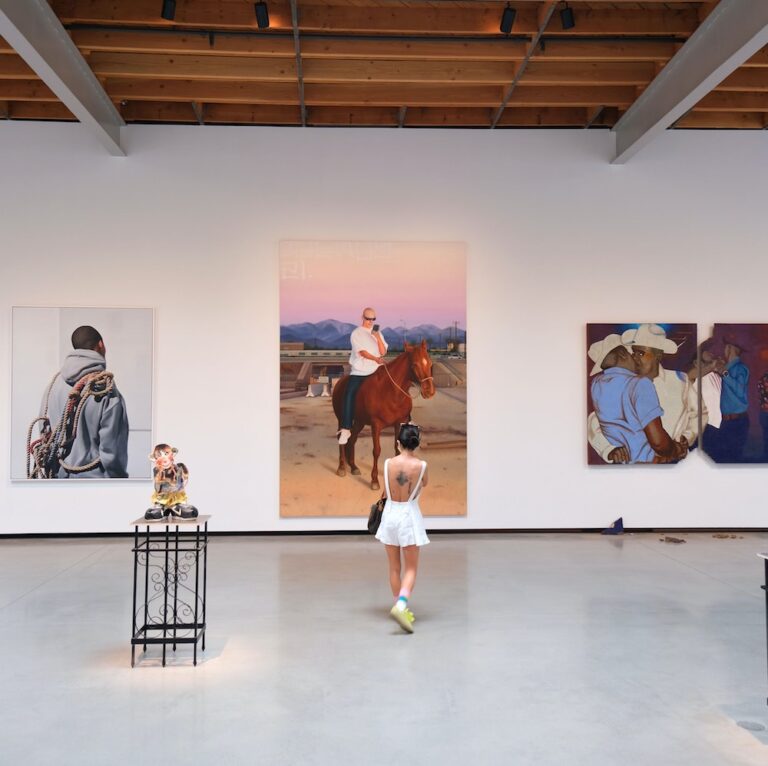
A girl stands in front of a series of paintings on a gallery wall
› Back to top
« back
06.17.21 | Arts & Culture

Juneteenth Officially Declared a National Holiday

After the protests in June 2020 that followed the murder of George Floyd, a national reckoning with racial justice has dominated conversations in governments, workplaces, schools, neighborhoods and homes alike. As part of that reckoning, America as a whole is asking itself: how do we better support, celebrate and uplift African Americans and African American culture? One way: making Juneteenth a recognized holiday.

Juneteenth – also known as Freedom Day, Jubilee Day, Liberation Day, and Emancipation Day – is a holiday celebrating the emancipation of those who had been enslaved in the United States. It’s an occasion that’s been long celebrated in African American communities, but now attention is being brought to the holiday at the national, state and local level.

In 2020, Cook County officially recognized Juneteenth as a paid holiday for its government employees. Cook County is the largest county in Illinois, and became the largest county in the country to make such a declaration. After this milestone event, the state of Illinois wanted to be the next to follow. 

Legislation was unanimously approved by the Illinois House and the state Senate to make June 19th a paid holiday off for all state employees, as well as a school holiday. The legislation states that if June 19th falls on a Saturday or Sunday, the holiday will be observed on the following Monday. After J.B. Pritzker officially signed off on the bill on June 16th, it became official. Juneteenth is an official state holiday in Illinois, beginning on January 1, 2022. Unfortunately, Juneteenth falls on a Sunday in 2022, and the holiday will have its first chance to be formally recognized in 2023 as a paid day off for state employees as well as a holiday off from school. 

The Illinois bill was first sponsored by Representative La Shawn Ford. He’s also sponsored similar legislation in the past, but told the Chicago Tribune, there “wasn’t an appetite” for passing the legislation previously. He then told the Tribune that all changed after the murder of George Floyd by a white police officer in Minnesota, saying, “Now, post-George Floyd, this is the time,” Ford said. “Some would say this is an African American holiday, but it’s an American holiday.”

Illinois isn’t the only one taking action. On Tuesday night (June 15th), The Senate unanimously passed a resolution on Tuesday establishing June 19 as Juneteenth National Independence Day, a US holiday commemorating the end of slavery in the United States.

The recognition of Juneteenth was a long time coming and hopefully marks a turning point in how the United States – on local, state, and national levels – begins to reckon with its history and present, and create a better future for all.

From Sage Collective to you and yours, Happy Juneteenth!

A photo of an African American woman in a dashiki with the African flag draped over her shoulders. She's walking down the street triumphantly. Text over the image reads Happy Juneteenth, with the Sage Collective logo
› Back to top
« back
06.15.21 | Community

Two Initiatives Celebrating the Historic Legacy of Bronzeville Today

Sage Collective has begun the process of renovating our first two new acquisitions, 4108 S King Drive and 4112 S King Drive, side-by-side buildings in Chicago’s historic Bronzeville neighborhood. We envision this development as providing tangible benefits to this community by providing high quality, affordable housing programmed to ensure safe, comfortable living there, as well as celebrating and uplifting Bronzeville’s dynamic history, current-day culture and residents alike – and we’re not alone in this effort.

Bronzeville has a long and storied history as the heart and soul of African American culture and vibrancy in Chicago. Contemporaneously, many organizations are doing incredible work on the ground to continue that legacy today. Here are two such initiatives:

The Forum in Bronzeville

Restoration of The Forum

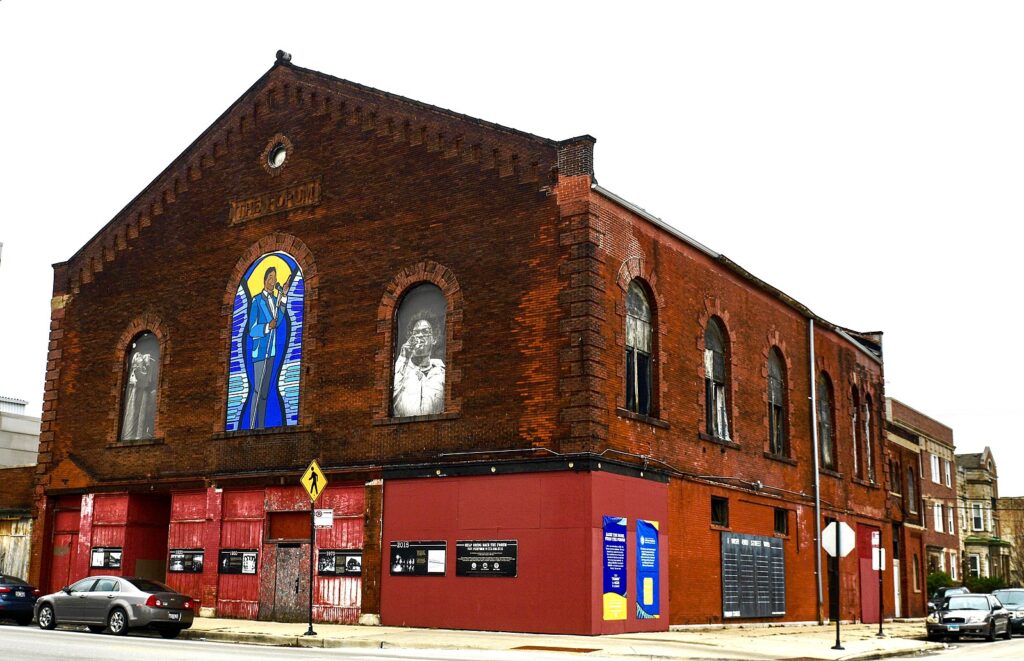
The Forum is a historical South Side building that was once the epicenter of Bronzeville nightlife, dating all the way back to the 19th century. Built in 1897 in the heart of the city’s blues district, the venue has hosted everything from concerts by names like Nat King Cole and Muddy Waters, to movement meetings in the 1970s.

The building, located at the corner of 43rd and Calumet in Bronzeville at 318 E. 43rd St, was previously zoned for residential use. Now, as part of recent renovation efforts, investors are rallying to rezone the project for commercial use. At the head of the initiative is Bernard Loyd, an entrepreneur and the founder of Urban Juncture, which focuses on community development work in Bronzeville.

Lloyd bought The Forum in 2011 days before the city planned to demolish it. Now, his vision is to restore the space as an “incubator space for Black creatives” and an overall cultural destination.

Archives of the Bronzeville Historical Society

The Bronzeville Historical Society has been preserving the stories, history and heritage of African American history and culture in Chicago since its founding in 1999. Led by South Side historian Sherry Williams, the Bronzeville Historical Society originally began with just Williams, her mother, and her daughter on task. 

They first set their sights on highlighting notable Bronzeville residents, publishing the book “100 Notable People and Places in Bronzeville – (Black Chicago)” in that same year. In the two decades since, the society’s archival work has expanded exponentially, despite challenges over the years.

Their collection includes records of 180,000 Chicago resident burials from the Jackson Funeral Home, gifted by the state of Illinois. From those records, volunteers from the African American Genealogy and Historical Society helped to reconfigure each person’s history, including their hometowns, church, and club affiliations. Bronzeville Historical Society also holds hundreds of photographs of Chicago from 1930-2000, documenting the architecture, landscape, and neighborhoods over the years. 

Sage Collective is proud to be part of the Bronzeville community and to live, work, and play side-by-side with so many other organizations doing the great work of preserving and celebrating our neighborhood’s great cultural legacy.

A mural in Bronzeville Chicago showcasing famous figures throughout history
› Back to top
« back
06.10.21 | Community

Sage Collective Partner Spotlight: Chicago Commons

At Sage Collective, our name serves as an indicator of how we work. We’re a collective because what we do, we do together. As part of our holistic approach, we work with local social service organizations and health and wellness professionals to create a vibrant ecosystem where resources, ideas and successes are shared. Since the beginning of this new era in our development, Chicago Commons has been a key partner and collaborator. In celebration of that partnership, today’s spotlight highlights their organization’s own important mission and work.

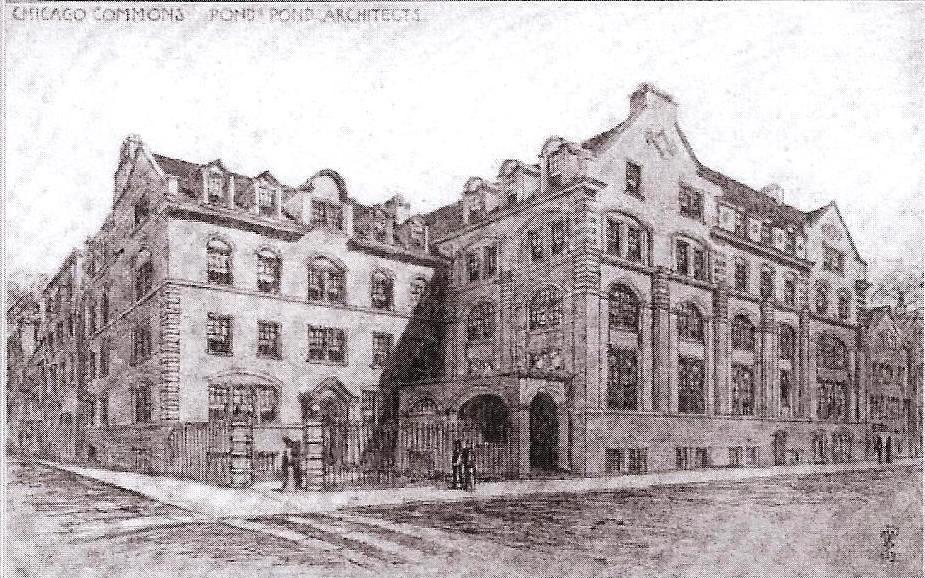
Architectural drawing, "Chicago Commons," Pond and Pond architects
Architectural drawing, “Chicago Commons,” Pond and Pond architects

Deep Community Roots

Chicago Commons has been serving residents of their community for over 125 years. Founded in 1894 by Graham Taylor, a Minister and key social reformer in Chicago. Originally, Chicago Commons began as a settlement house serving immigrants on Chicago’s northwest side. Its model was inspired by progressive social reformer and activist Jane Addams’ own Hull House – the two houses even shared the same architect, Pond & Pond.

Traditionally, settlement houses provided services such as daycare, education, and healthcare, with the goal of bringing equity and social connectedness to their communities. They had brought one of the earliest kindergartens to Chicago in 1897, and also provided programs for individuals of all ages through clubs and classes, and an open-forum discussion platform for local community events.

Graham Taylor was succeeded in 1922 by his eldest daughter and long term settlement house resident, Lea Demarest Taylor, who carried on his legacy. Even when local calls for segregation began during the racial strife of the 1940s, Taylor resisted and stood adamant that the organization’s services and programs would continue to serve all races.

Two African American women embrace and smile. One is an adult and one is an older adult
Photo courtesy of Chicago Commons website

Chicago Commons Today

Today, Chicago Commons carries on the historic legacy of settlement houses and stands as a leading provider of early childhood education, family centered adult education, and senior services on the South and West sides of Chicago. Their mission is to empower individuals, families, and communities to overcome poverty and systemic barriers, embrace opportunities, and thrive across generations.

Over the past 125+ years, their services (and reach) in Chicago have greatly expanded to include centers in Bucktown, Englewood, New City, West Humboldt Park, Back of the Yards, and of course, their headquarters in Bronzeville. 

During COVID-19, Chicago Commons has also partnered with leading health organizations and local institutions to bring informational, online events to their communities addressing common misconceptions and questions regarding the virus. Sage Collective was a proud partner in bringing one of these live Q&As to life – learn more about the past event here

You can also learn more about Chicago Commons, including how to get involved, on their website here

Chicago Commons logo
› Back to top
« back
06.08.21 | Arts & Culture

Where to go for scenic walks on Chicago’s South Side

We’ve previously shared how incorporating a 30-minute walk into your daily routine brings with it a surprising array of health benefits. While you enjoy those healthful benefits on your walk, why not enjoy a good view too? Some days it’ll be easier to take a walk around the block, but for those days where you want to elevate “taking a walk” into a special occasion: here is Sage Collective’s guide to the best scenic walks on Chicago’s South Side.

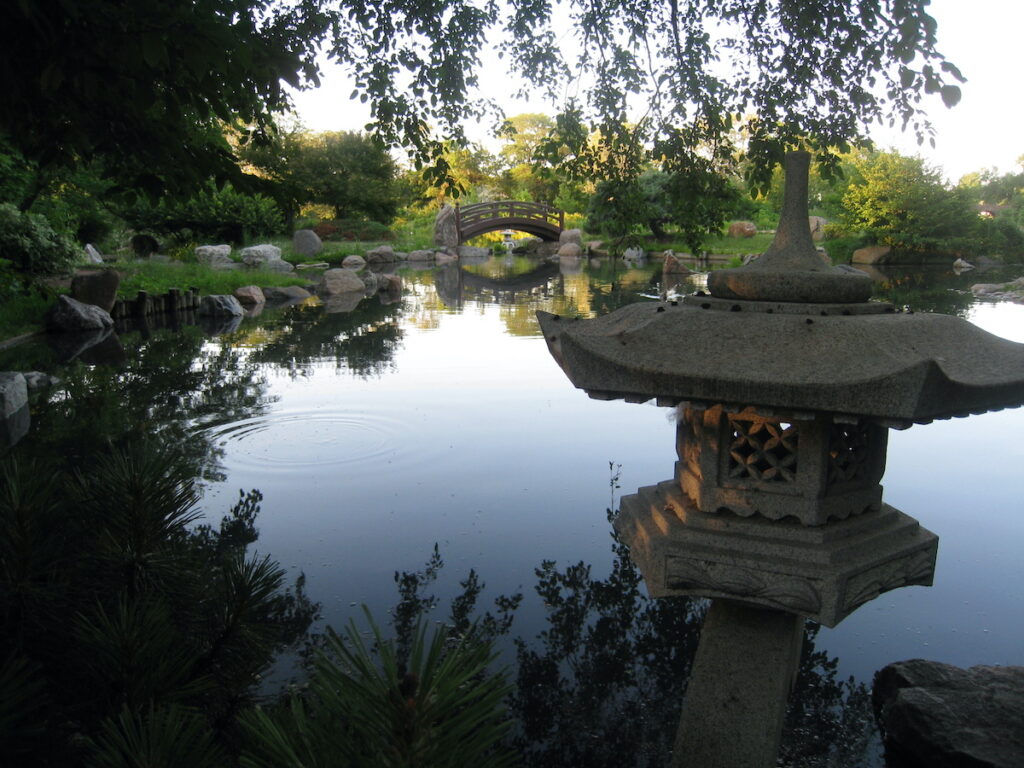
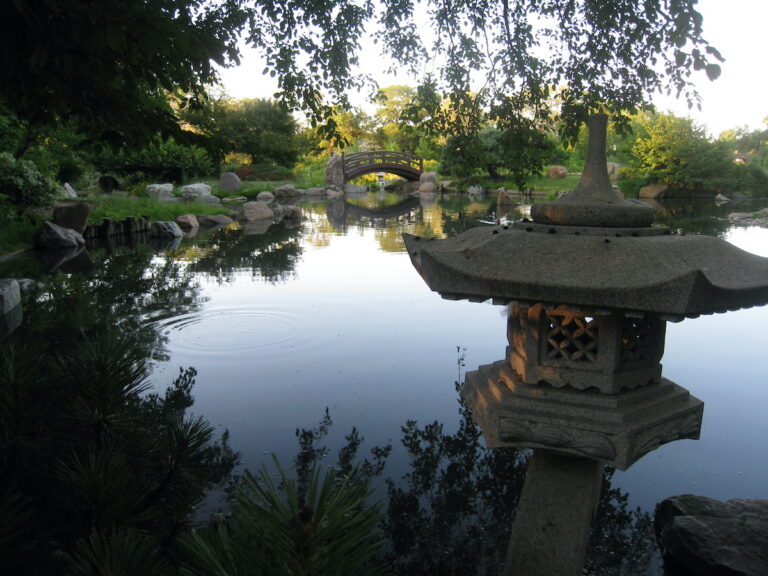
Japanese Garden, part of Jackson Park in Woodlawn, Chicago.

Jackson Park – Woodlawn

Jackson Park is a sprawling 551-acre park on Chicago’s South Side with an impressive history. Designed by the same names behind New York’s Central Park, and once home to the World’s Columbian Exposition, Jackson Park continues to bring exciting seasonal events and features to the Woodlawn community. Just this spring, the park’s 160-tree grove of cherry blossoms bloomed for the first time ever, attracting locals and tourists alike to see the beautiful display. 

The park is the perfect place for a short jaunt or longer “hike,” with landmarks like the lushly landscaped Japanese Garden and winding Bobolink Meadows lagoon-side trail serving as your backdrop.

View of the Chicago skyline from 31st Street Beach in Bronzeville, Chicago. Photo via Flickr.

31st Street Beach – Bronzeville

While most people know it as 31st Street Beach, the beach’s formal name became Margaret T. Burroughs Beach in 2015. Named for the accomplished artist, arts advocate, poet, teacher, civic leader, historian, and founder of the DuSable Museum of African American History, the beach’s official name serves as an homage to the history and vibrancy of both Burroughs herself, and the Bronzeville neighborhood overall.

The beach, which is nestled next to 31st Street Harbor, boasts sweeping views of Chicago’s city skyline, and invites swimmers, joggers and walkers alike to enjoy the beautiful scenery.  

When it comes time to plan your next weekend excursion, we hope these parks provide some inspiration and an exciting backdrop. After all, nothing makes a regular, leisurely workout more vibrant like a little bit of good scenery. 

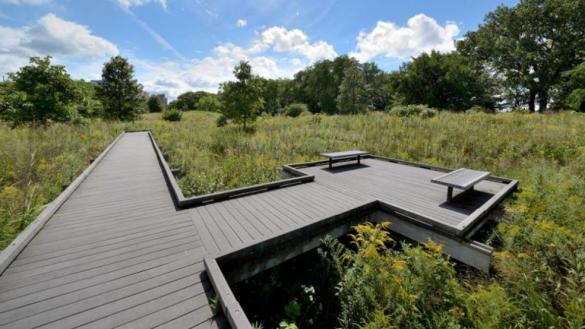
Burnham Nature Sanctuary. Photo courtesy of Chicago Park District
Burnham Nature Sanctuary. Photo courtesy of Chicago Park District.

Burnham Nature Sanctuary – Kenwood

Located at 1600 E 47th Street, Burnham Nature Sanctuary is just one serene pocket of a larger stretch known as the Burnham Wildlife Corridor. The corridor is a 100-acre ribbon of urban wilderness running through Burnham Park.

The sanctuary itself is the perfect location for novice and expert birdwatchers alike as they meander through the woodlands. These woodlands, full of native plants, attract many forms of wildlife for visitors to enjoy, from birds, to caterpillars, to butterflies. Beyond the woodland path, there’s also a boardwalk that winds through a hill and swale grassland. Overall, Burnham Nature Sanctuary is the perfect way to reconvene with nature all while remaining in the close confines of the city. 

Japanese Garden, part of Jackson Park in Woodlawn, Chicago.
› Back to top
« back
06.01.21 | Community

Starting an indoor herb garden is easy — here’s how

It’s easiest to eat healthy when you cook delicious, fresh, and flavorful food — and incorporating fresh herbs into your home cooking is a great way to add that extra burst of flavor. Lucky for us, you don’t need an advanced green thumb or even a backyard to grow these fresh, delicious herbs yourself, right from the comfort of your own kitchen – here’s how.

Picking Your Plants

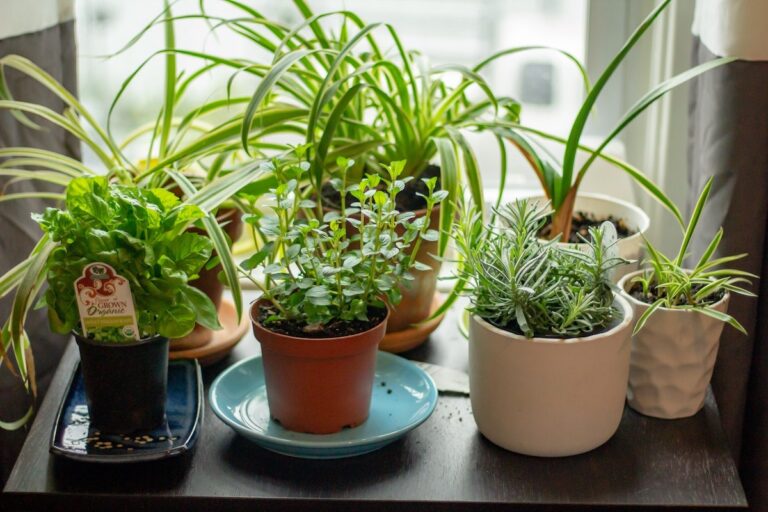
There’s a wide array of herbs that will grow and thrive indoors all year round. These plants include basil, chives, lemon balm, marjoram, mint, oregano, parsley, rosemary, sage, and thyme. Decide which flavors are your favorite to incorporate in your cooking, and start off with 3-4 different plants. Each plant’s needs will vary slightly, so be sure to plant each herb in its own separate pot so you can adjust your care routine accordingly. 

You’ll often find herb plants, such as basil, available to you in your local grocery store’s produce department. Alternatively, visit your local garden center (Home Depot, Lowes, and Menards are all great resources for this) for a wider array of herb plants to choose from.

The Right Conditions

There are several things that any plant needs to thrive. Before you begin the process of purchasing and planting your fresh herbs, you should determine where in your household the herbs will live. Herbs prefer a lot of sunlight — six hours of full sunlight each day is ideal. Therefore, you should choose the sunniest spot in your home as the location of your herb garden, prioritizing locations that are close to the window, rather than the center of the room. For example: window sills are the perfect spot for an indoor herb garden! Once that’s settled, you can move onto actually planting your herbs.

First you’ll need the right pot. For indoor herbs, be sure to choose a container with ample drainage. You can tell which pots have appropriate drainage by checking for holes in the bottom of the container; these holes will allow water to escape the soil as needed.

Second, it’s important to choose the right soil for your herb. Most herbs do best with a standard indoor potting mix, and will be even happier if that mix is one that advertises good drainage. 

As we mentioned above, be sure to plant all your herbs in separate, individual containers. This ensures that when it comes time to water, you can check the soil of each pot and only water the plants that are in need of added moisture at that time. Because most herbs live in loose, fast-draining soil, you should check your plant’s soil every day (or every other day) to see how much moisture it has retained. Herb plants do best when their soil is slightly moist, but not soggy. Too much watering, and you’ll drown your plant.

When it comes time to harvest and enjoy your fresh herbs, always take in moderation. Regular pruning is good for your plants, but too much at once, and your plant won’t be happy. 

Overall, the more time you spend caring for your herb garden, the better you’ll learn to understand your plants needs. And as you care for your plants, they’ll care for you too, by providing healthy and fresh flavor to all your meals!

A window sill herb garden
› Back to top
« back
05.27.21 | Community

Four Ways to Help Maintain Healthy Bones

As we age, bone health becomes increasingly important. Older adults often experience bone loss (low bone density that makes the bones weaker), which leads to increased risk of fractures. Luckily, to help combat this risk, there are habits and behaviors you can adopt to help protect your bone health. Here’s four ways for older adults to help maintain healthy bones:

Include physical activity in your daily routine

Those that are physically inactive are at higher risk of osteoporosis (a condition in which the bones become weak and brittle) compared to those that are more physically active. To help promote new bone growth and maintain existing bone density, doctors recommend physical activities, such as strength training and weight bearing exercises. For older adults, this translates to incorporating walking (whether leisurely or at a brisk pace) and using light dumbbells if possible.

Eat high-calcium foods throughout the day

Calcium is the main mineral in your bones, and the most important mineral for bone health. A diet low in calcium contributes to diminished bone density, early bone loss and an increased risk of fractures. Therefore, it’s important to eat high-calcium foods throughout the day. For men ages 51-70, the Recommended Dietary Allowance (RDA) is 1,000 milligrams (mg) of calcium a day. That recommendation increases to 1,200 mg a day for women age 51 and older and for men age 71 and older.

Maintain a stable, healthy weight

People who are underweight have a higher risk of developing bone disease, while excess body weight places added stress on a person’s bones. Dieting — and regularly gaining or losing weight — also places undue stress on your bone health. Additionally, low body weight is the main contributing factor for reduced bone density and bone loss in postmenopausal women, due to the loss of the bone-protecting effects of estrogen. This is why the best way to maintain healthy bones is to maintain a stable, healthy weight for your body.

Get plenty of Vitamin D and Vitamin K

Vitamin D and Vitamin K are both important when it comes to building strong bones. Vitamin D helps the body absorb calcium, while Vitamin K-2 aids in reducing calcium loss and helping minerals bind to the bone. You can get Vitamin D with plenty of sunlight exposure, as well as through a diet full of oily fish, mushrooms, eggs and fortified foods, such as milk and cereal. You can get Vitamin K-2 from foods such as dairy products (especially hard cheeses), fermented foods such as sauerkraut, natto (a Japanese soybean product), egg yolks, and chicken. You can also consult your doctor about taking vitamin supplements. 

With the right adjustments to your regular routine, you can help maintain healthy bones and enjoy the perks of a healthier fitness and food regimen. 

A dinner plate with salmon and a vibrant assortment of toppings and seasonings
› Back to top