« back
11.02.21 | Mental Wellbeing

Why You Should Start Journaling if You Aren’t Already

As part of our 9 Ways of Vibrant Living at Sage Collective, we are proponents of any activity that reduces stress and increases overall wellbeing. Burnout and stress are familiar to many of us, and it’s imperative to find someone or something to help manage, control and minimize these feelings. Journaling is one delightful distraction that diminishes those anxieties and comes with a handful of other benefits, particularly for older adults.

 Along with functioning as a means to escape the world around you, journaling is an enjoyable way to pass the time and alleviate any stressors that come with life. It’s difficult to separate the positive and negative experiences that happen to us daily. Conveying thoughts by putting pen to paper is one way to help release emotions while granting your mind and body relaxation from the tension you may have been feeling.

Many people who journal will often follow guides and roadmaps that help steer their process, but the brilliant thing about journaling is that the quality and subject of your writing are less important than the actual act. Having the opportunity to write about anything from daily stressors and positive affirmations to poetry increases creativity, along with numerous other cognitive benefits.

For many older adults, cultivating a routine can combat negative sleeping habits and feelings of isolation. Like any new habit, we recommend journaling at the same time each day to help create a routine, whether you start your day with a few morning pages or reflect before going to bed.

Along with improving sleep and reducing loneliness, jotting down experiences, emotions and everything in between helps older adults preserve their memories and sharpen their minds. Journaling acts as a memory aid and, with time, can generate more effective recollections for older adults.

Whether you prefer to write in a notebook or favor typing on your phone, journaling is a fantastic way to reduce the stressors of your daily life and sharpen your memory and mind. If you want to learn more about how to begin journaling or need a boost of creativity to start the process, check out the video below.

› Back to top
« back
10.28.21 | Community

Witness History at Pullman National Monument

At Sage Collective, we love spotlighting extraordinary moments throughout African American history and the local monuments that preserve those stories. Today we’re exploring Chicago’s first and only national monument, positioned only 30 minutes south of Bronzeville, where our 4108 and 4112 S. King Drive properties are located: Pullman National Monument. 

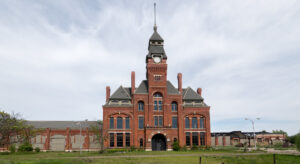
Pullman Clock Tower and Administration building
Pullman Clock Tower and Administration Building

Pullman Historic District

Nestled in another one of Chicago’s largest African American communities, Pullman National Monument, also known as Pullman Historic District, exhibits one of the country’s most historical sites. Developed by Goerge Pullman in the 1880s, Pullman Historic District originated as the nation’s first planned industrial community for his namesake business, Pullman Palace Car Company. The community, which had established regulations and living standards for all of their employees, contained workers’ living quarters, the Pullman factory, a grand clock tower and the once elegant Hotel Florence, among other buildings. 

The Pullman Company experienced the first of many disputes in 1894 with the Pullman Strike. After negotiations over decreased wages were discussed and shut down, Pullman’s workers organized a walk out of the train car factory. The boycott impacted railroad traffic across the whole nation. However, even with support from the American Railway Union, both the boycott and the union collapsed after local and federal governments intervened.   

A second conflict over inferior wages and lengthy hours arose in 1925. However, this time, all of those involved were Pullman’s African American workers, who, organized and created the nation’s first all-Black labor union, the Brotherhood of Sleeping Car Porters. Founder A. Philip Randolph and union members fought for more than ten years until finally, in 1937, the first major agreement between a company and an African American union was met. The agreement granted union members increased wages along with a cap of 240 hours per month. 

Pullman National Monument Mural, Created by students of the American Academy of Art in 1996

Visiting Pullman National Monument 

Today, after nearly 140 years of existence, Pullman National Monument is now open to the public. With help from the National Park Foundation, donors and Chicago Neighborhood Initiatives, the historic site underwent extensive renovation and restoration over the past few decades. 

The late-Victorian designed Pullman Clock Tower and Administration building act as the centerpiece for 12-acre monument grounds. Inside, guests are greeted in the newly designed visitor center, where information on the monuments’ numerous exhibits and tours is found. 

Visitors have the opportunity to gain knowledge about everything from Pullman’s vision for creating the company town to the Pullman Strike and the Brotherhood of Sleeping Car Porters establishment. Along with delving into the campus’ rich history, guests have a chance to learn more about how the latter Pullman community came together to preserve the significant site. 

The park is free to the public and open 9 to 5 on most days for those interested in exploring the momentous company town and reducing COVID-19 stress. You can find more information here!

› Back to top
« back
10.26.21 | Arts & Culture

Revolutionizing Bronzeville and the Construction World: A Conversation with Shevaz Freeman

As renovations continue at our 4108 and 4112 S King Drive properties located in the heart of Bronzeville, we sat down with the owner of Urban Intention Design and Build and general contractor for our project, Shevaz Freeman, to discuss her experiences in the world of construction and the progress of the projects. 

Urban Intention Design and Build is a Black woman-owned-and-operated company, which is rare in the general contractor domain. Tell us about your experience in the industry, and what has led you to where you are today. 

Running my own contracting company, Urban Intention Design and Build, as an African American woman absolutely comes with its struggles, but every experience I’ve had — good and bad — has led me to where I am today. Simple things like respect and recognition can be difficult to attain at times, and because of my gender, I have to maneuver within the environment with a whole different perspective. However, because of my significant experience in the field, I’ve discovered how best to navigate challenges I may encounter to my advantage. 

I’ve picked up numerous techniques and approaches that give me a leg up because I feel like I’ve had to work harder than a lot of other people in my field to get where I am. I’ve trained myself to have heightened attention to detail. Sometimes, contractors don’t have the “big picture” in mind and don’t fully pay attention to the endless little things happening on a project. Because I’ve been doing this for over ten years, I find it extremely easy to fully envision the outcome of every project from day one, which is a significant skill in contracting.

What does your role as General Contractor for Sage Collective Properties’ King Drive project involve? 

As the General Contractor for the King Drive projects, it’s my job to oversee and run almost everything. I am responsible for managing budgets, directing on-site subcontractors and conducting meetings with the Sage Collective Properties’ team. However, at the end of the day, my most important job is to make sure that the client gets what they envisioned at the beginning of the process. 

Who are the others who are involved in the renovation of these King Drive buildings, and how does your role fit in? How do you view the nature and value of the relationships you have been able to build with other professionals on this job?

Throughout the renovation, numerous people will walk in and out of the properties. Two people I’ve worked very closely with over the past few months are the Owner’s Rep and experienced General Contractor, Ernest Brown, and the Architect, Gregory Williams. Mr. Brown has provided me with incredible guidance and oversight throughout the project, and his rich expertise in the field has been remarkably beneficial and essential to our process. 

Overall, I’ve unquestionably developed relationships on this job that I believe will continue to provide immense value in the future. It’s so important in jobs like this that each party involved feels like they are valued as part of a larger team, and that is a feeling that is certainly present here. No matter who I am talking to daily, everyone understands that their role is essential for the project’s success.

Explain to us how you see Sage Collective’s vision of having “vibrant, high-quality, affordable living for older adults” come to life in the residences you are currently helping them rehab?

I originally went to school for interior design, so because of that training and the fact that I’m such a visual person, I’ve been able to envision Sage Collective’s concept since the project’s very early stages. As soon as I was introduced to the vision for “vibrant, high-quality, affordable living” and walked through the properties, there was no question that it was achievable, and day by day, I’m witness to its progress. 

Since we strive to make sure that every element is constructed with thought and care, the process behind bringing the vision to life is very meticulous. We discuss everything from the sizing of doors to the proportion of the showers to the type of lighting assembled in each room to make sure we specifically address the needs of older adults. All details throughout the process are constantly brought into question to ensure perfection. 

Do you think that there is enough emphasis by the government or social service organizations on meeting the need for affordable housing in this community? If so, please give other examples. If not, why not?

The need for affordable housing, especially in neighborhoods like Bronzeville, has been ignored by the government for the longest time. However, I think more and more organizations are finally stepping up, and we are moving in the right direction. One of the initiatives putting money into communities like Bronzeville that have essentially been ignored by the city for years is Mayor Lightfoot’s INVEST South/West.

The wonderful thing is that the initiative has encouraged even more developers to invest in affordable housing construction like the upcoming 43 Green projects. Having been born and raised on the south side, seeing the amount of interest currently being poured into the communities holds a special place in my heart. But with that said, the progress is long overdue, and there is still a long way to go until affordable housing needs are met. 

How does your perspective as a contractor inform your view of the future of the availability of affordable housing in Chicago?

In 2021 material costs for almost all aspects of home building and renovation skyrocketed, and they continue to go up. The shift over the past year also means that low-income families aren’t making the extra money they need to afford market-rate housing, making affordable housing even more in demand than ever before. Generally, historic properties like Sage Collective Properties’ buildings in the Bronzeville community are selling for very high prices. Some have been renovated, but others have either been abandoned for years or have not been preserved due to the high expenses that come with the process. 

With time, everything deteriorates. So, without any help, it’s hard to keep these properties affordable for residents. The sad reality is that without continued help from the city, state or federal government — and investments from organizations like Sage Collective Properties  —  it’s going to be hard to keep developing affordable housing in these neighborhoods. 

Have there been unexpected or unique issues that you’ve been challenged with on this project?

The King Drive properties are mature buildings in a very historic area that have been neglected for a long time, so of course, there have been surprises that we’ve come across throughout the renovation. We’re discovering issues now that I’m sure didn’t even cross the mind of the previous owners because development is so different now than it was back when these buildings were built. One specific uncovering was the deterioration in some of the exterior bricks. We found small trees, weeds and other plants vibrantly growing in the actual spaces between the bricks, so we’ve had to uproot all of those. 

The one thing I will say is that it is a solid building and has very healthy bones. So, we can still put it back together with ease. Overall, I’m just so happy to see the phenomenal progress we’ve made so far and can’t wait to see the finished product. I’m also very appreciative that Sage has allowed me the opportunity to work on this project and be able to help them create something so wonderful, especially since I’m in my own community doing it!

Shevaz Freeman, General Contractor for Sage Collective Properties’ King Drive Projects & Owner of Urban Intention Design and Build
› Back to top
« back
10.21.21 | Sage Advice®

A Brief History of Bronzeville’s Music Scene

Bronzeville has been home to several legendary performers and iconic venues throughout the neighborhood’s history. In celebration of Bronzeville’s rich past and to mark progress on our King Drive properties, we’re taking a moment to reflect on the unique venues and legendary artists that once filled Bronzeville’s music scene. 

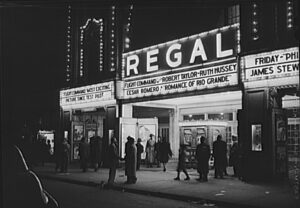
Regal Theatre, 1941, Courtesy of the Library of Congress

Significant Venues

As the century turned and more and more African Americans moved to Bronzeville from the rural South looking for brighter opportunities, several clubs and theatres emerged to meet entertainment needs. Several venues became community favorites and local treasures, including Grand Theater, Dreamland Café, The 708 Club, Pepper’s Lounge and the Vendome Theater. However, a number of these sites became well-known far beyond the boundaries of Bronzeville.

Widely recognized as one of the most important jazz clubs in the country during its prime, Sunset Cafe, also known as The Grand Terrace Cafe, was the city’s premier theatre from the 1920s to the 1940s. The club’s manager, Joe Glazer, invited several of the nation’s top jazz performers to entertain guests, including his client, Louis Armstrong. While the building experienced some remodels and reopenings, it became officially recognized as a landmark in 1998. Today, the venue, located at 315 East 35th Street, functions as an Ace Hardware. However, some of the original murals that filled the historic walls of the Sunset Cafe remain. 

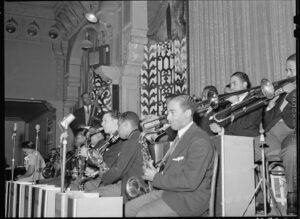
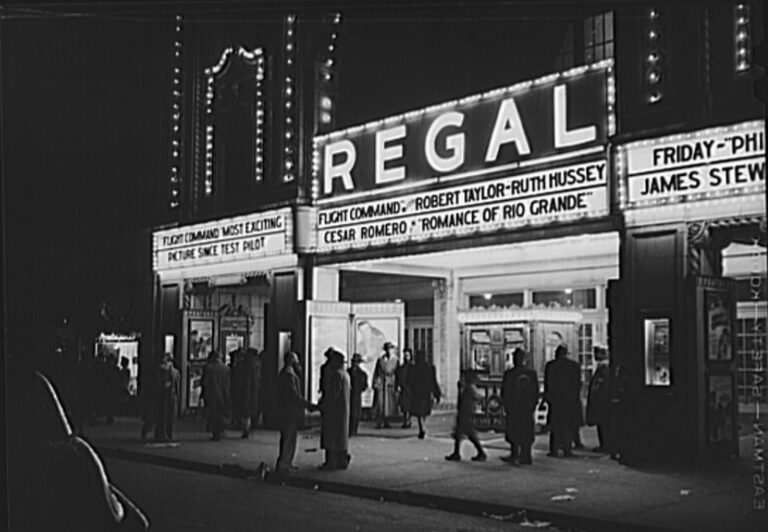
At the time, Savoy Ballroom and the neighboring Regal Theater, located only a few blocks South of our King Drive properties, were credited as some of the first major stakes in establishing a new center of gravity for the African American community in Chicago. Savoy’s half-acre ballroom and the Regal Theater’s opulent auditorium offered hard-to-find performance space. Top jazz, blues and soul performers across the country, including Duke Ellington, Billie Holiday, Ella Fitzgerald, Aretha Franklin and Stevie Wonder, left their mark on the famed clubs. The buildings were demolished in 1973 and are now home to the Harold Washington Cultural Center.

A band playing at the Savoy Ballroom, 1941, Courtesy of the Library of Congress

While the music scene thrived in Bronzeville for decades, the Great Depression brought unforeseen hardships to the community. Attendance in the top-tier theatres slipped for a time, but the 1940s brought back a resurgence in entertainment, with bebop music flourishing and nearly every big name in jazz returning. 

Uplifting Careers 

Throughout Bronzeville’s storied music history, multiple jazz, blues and soul legends visited the crowded theatres and clubs that filled the neighborhood. Music icons and various big band groups traveled the country to play the community’s numerous renowned venues. While many continued touring, countless others stayed in Bronzeville to expand their career and relish in the neighborhood’s rich culture.

As the jazz epicenter moved to Chicago from New Orleans in the late 1910s, so followed Joe Oliver — also known as King Oliver. Along with composing numerous celebrated works of music, Oliver played both individually on the cornet and in big bands along Chicago’s East 35th Street. He was also a pioneer in the field and mentored numerous young jazz artists throughout the city, including Louis Armstrong. After playing in Oliver’s band — the most influential jazz band in Chicago at the time — and earning a grand reputation competing in music contests throughout the neighborhood, Armstrong became recognized as perhaps the single most important jazz act during the genre’s heyday.

King Oliver’s Creole Jazz Band, 1923, Courtesy of the Library of Congress

Bronzeville native Nat “King” Cole was a legendary music personality and eventually became one of the neighborhood’s most well-known residents. Surrounded by a community rich with jazz and soul history, it didn’t take long for Cole to discover his passion for music. While living at 4023 South Vincennes Avenue, Cole took advantage of Bronzeville’s iconic venues and played at both the Savoy Ballroom and the Regal Theater before furthering his career around the United States. 

Through Sage Collective’s vision, we are proud to contribute to the legacy of African American culture, community and success that is, and always has been, the heart and soul of Bronzeville.

Regal Theatre, 1941, Courtesy of the Library of Congress
› Back to top
« back
10.19.21 | Community

How Museums Might Reduce Your COVID-19 Stress

One of the largest challenges in modern-day life is finding a treatment for the frequent burnout that most of us feel daily. At Sage Collective, one of our most cherished beliefs is that wellness, health and empowerment should be made priorities in every community. That’s why today, we’re exploring how museums might be the perfect answer to your post-pandemic stress and burnout. 

Many individuals, especially older adults, have faced higher stress levels over the past year and a half than ever before. Feelings of uncertainty and unpredictability due to COVID-19 have also led to many feeling alone, anxious and burnt out, with little reprieve. However, there is growing research that offers tangible steps toward alleviating these negative feelings. 

Often in the present day, many feel like time is limited, and burnout is constant. However, solace can be found in the relaxing and revitalizing spaces of a museum. For many, the knowledge that curated spaces of art and history can provide a wealth of benefits for mental and physical health is new.

Recently, doctors in Belgium received permission to prescribe museum visits to combat the mental health crisis in their country, and similar actions have been implemented in Canada. Patients who get the prescriptions can go anywhere from an intimate art gallery to a fashion exhibition at a history museum. 

The goal behind the three-month-long trial is to promote an engaging learning experience and shift people away from the stress of their daily routines in hopes of having a positive impact on mental and physical health. The museums and exhibitions act as safe and welcoming places for patients to unwind from their day-to-day responsibilities and explore new ideas and areas of interest. Not only does the time off allow patients to catch their breath and spend time with loved ones, but it also acts as a moment of respite from the harsh realities of the pandemic. 

Instead of relying on drug therapies, this mode of enrichment has the possibility to be expanded to other areas of mental health beyond pandemic-related stress and anxiety to alleviating symptoms of depression, psychiatric disorders, anxiety and more. 

Numerous museums, galleries and art centers around Bronzeville present the perfect opportunity for anyone looking to combat stress and relax — in person or virtually. The South Side Community Arts Center, Gallery Guichard, Smart Museum of Art, DuSable Museum of African American History, and Chicago’s Museum of Science and Industry are all wonderful choices to spend an afternoon enhancing your wellbeing and expanding your mind. 

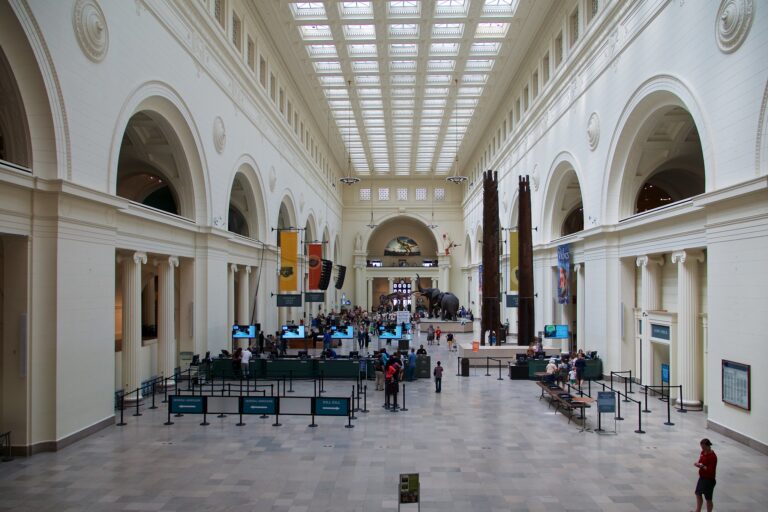
Furniture and a crowd of people fill a bright museum interior.
› Back to top
« back
10.14.21 | Healthy Eating

Pass Your Time With Podcasts: What You Should Be Listening to Right Now

While autumn is a favorite time for many to pick up new books and revisit forgotten ones, podcasts also serve as a great choice for those looking for a mix of entertainment, education and reflection. Podcasts are usually free to listeners and extend knowledge on everything from how to cook healthier meals to entertaining history facts to current government and public policy news. Here are the top five podcasts Sage Collective believes you should be listening to right now: 

Ten Percent Happier

Hosted by Dan Harris, a famed journalist who suffered a panic attack live on national television, Ten Percent Happier explores how keeping your spirits up is imperative to aging well. After his traumatic on-air experience, Harris discovered meditation and now invites experts on the subject, scientists and celebrities to share their own epiphanies and experiences of success. Topics on the show vary from What to do About Eco-Anxiety to Joy Vs. Happiness. Anyone interested in hearing motivational stories about coming back from what seems like life’s lowest points will enjoy this outstanding selection. 

Into America

Into America is a podcast that sheds light on what it’s like to be Black in America. Trymain Lee, Pulitzer Prize and Emmy Winning journalist hosts the enlightening show. The MSNBC-produced podcast explores how public policy and government action, and the lack thereof, affects Black Americans’ lives. Previous topics include The Vaccine Gap, Justice for Black Farmers and The Black Firefighters of 9/11. Into America produces an in-depth look into the continued injustice that Black Americans endure and what it means to hold the country to its obligations.

History Unplugged

A show that celebrates obscure historical facts and events, History Unplugged uncovers and revisits lost stories that changed the world. History buffs and amateurs alike will enjoy the unique narratives, expert interviews and call-ins that make up the podcast. Previous episodes of the show include The Japanese-Americans Who Fought Nazis in Europe, Electric City: Ford and Edison’s Vision of Creating a Steampunk Utopia and An Alternate History of the Lincoln Assassination Plot. Chocked full of amusement, myth-busting and a range of wisdom, almost everyone is guaranteed to relish over History Unplugged.

Not Old – Better

Award-winning journalist Paul Vogelzang hosts the fascinating, high-energy podcast, Not Old – Better. The inspiring show reminds its audience weekly that it is never too late to pursue your passion and purpose in life. Vogelzang invites a mix of well-known entertainers, intriguing role models and ordinary people to discuss aging and how to overcome the stereotypes and stigma that come with it. Previous guests have included actress Octavia Spencer, Dr. Anthony Fauci and activist Khary Lazarre-White. Listeners and critics alike have praised the podcast as a perfect choice for middle-aged and older adults.

Homemade

Homemade is the paramount podcast for anyone looking to explore the food world. Foodies and amateur cooks alike will enjoy the entertainment show hosted by industry insider Sabrina Medora and author Martie Duncan. Each week the hosts invite celebrated cooks from all walks of life to discuss and share their memories behind their favorite recipes. Past topics on the show include growing ingredients at home, delicious vegan options, repurposing leftovers and rethinking prep time. Get your cooking gear ready, put on your apron and prepare to join the fun with Homemade

Whether you need something to listen to on your way to work or while doing chores around the house, don’t hesitate to press PLAY on any of these wonderful podcasts. You can listen to each of the podcasts on their websites, Spotify, Apple Music, Amazon Music or Google Podcasts. 

› Back to top
« back
10.07.21 | Sage Advice®

October is Eat Better, Eat Together Month

October is National Eat Better, Eat Together Month, an annual tradition that celebrates a basic human need that many of us don’t think twice about — eating. While the history behind this special day is elusive, its aim is noble, and encourages us throughout the month to share meals with family and friends, and to promote healthier eating habits. 

When was the last time you ate a meal with your family? Today, it isn’t uncommon for families to take meals separately due to busy schedules and increasing commitments. However, making the time to share a meal with family and friends is something we should all make more of an effort to do. Breaking bread with others has long been associated with improved social skills and allows you to reconnect with the people you care about. Since engaging in social life and family life are part of our 9 Ways of Vibrant Living, we encourage you to make it a priority to carve time out of your month to plan a thoughtful meal (or two) with family, friends or for your community.

Dining together is also linked to better eating habits and reduced stress levels. Preparing meals with a number of food options encourages people to fill their plates with a mixture of nutritious eats. Previously, we explored a number of “superfoods” that can easily be incorporated into any meal, which you can read about here. For those concerned about time constraints, planning preparation for multiple meals is a perfect way to produce sizable servings of healthy meals without the added pressure of making them last minute. To discover more healthy eating tips to implement this month and throughout the future, explore one of our former blogs here

This month, Sage Collective encourages you to dedicate a few nights a week to eating better and eating together. Make a meal with your family, organize a community dinner or simply clean your cupboards of unhealthy snacks and replace them with smarter alternatives.

A family sits around a dinner table serving food to one another.
› Back to top
« back
10.05.21 | Community

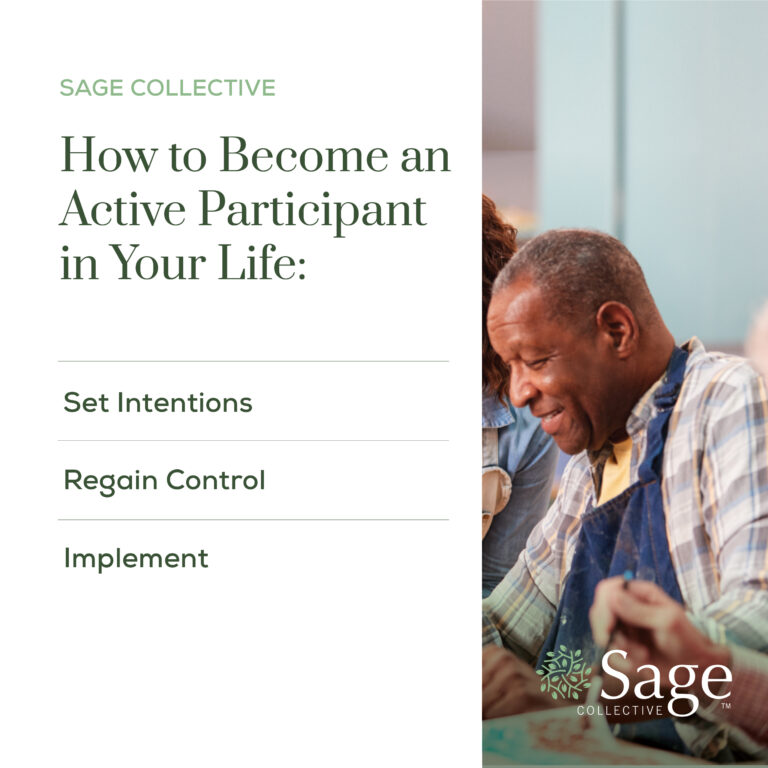
How to Become an Active Participant in Your Life

For many older adults, feeling like they’re losing control of their lives is all too common. While this can be a normal reaction to aging, it can also leave people feeling overwhelmed when confronted with the stigma of getting older. Actively participating in your life is a powerful way to combat these feelings and stigmas, leading to a more vibrant life. So, how can you learn to become an active participant in your life? Let’s take a look. 

Set Intentions

First, set goals to transition from a passive participant to an active participant in life. It can be challenging to reflect on what aspects of life might be obstructing your progress, but it’s imperative for regaining control. Your intentions and goals act as a foundation for the rest of the process for becoming active participants. So, honesty with yourself is essential.

To keep yourself motivated and engaged, write down each of your intentions and keep them in a place you will regularly see. Remember, each person’s intentions are unique to their own personal experience and goals. 

Regain Control

Adjusting your thought process to become less passive can be challenging, but the more you do it, the easier it becomes. By believing in yourself and your words, you regain control and take power away from negative thoughts.

Again, writing down your thoughts is an effective resource for change. Make a list of words that come to mind that diminish your power, confidence or ability. Once you have a few written down, modify the language to become active and uplifting. The next time you feel control shrinking, revisit the list and remind yourself that you have the power to enact change in any way.

Implement

It’s easier to enact change once you set intentions and understand that you can control involuntary thoughts. If wanting to go back to school is on your list, enroll in your first class. If eating more nutritious meals is your goal, start researching recipes with healthier foods. At first, taking steps to live actively may feel uncomfortable and daunting, but remember that years of passive living are being dismantled. 

While being an active participant in life is the ultimate goal, it’s important to be kind to yourself on the journey. Even if your path changes, the experiences and tools you learned along the way are something of which you can  be proud.

At Sage Collective, we believe actively participating in your life is an aspect of vibrant living that helps find purpose, shepherd confidence, and inspires goals for older adults. It’s never too late to become active participants in our lives.

› Back to top
« back
09.30.21 | Community

The Importance of Checking In

It’s easy to assume that someone may be happy just from the smile on their face. However, behind closed doors, many people are dealing with heightened feelings of isolation, anxiety and depression. At Sage Collective, we believe that connection, engagement and shared relationships are vital to our health and well-being, as well as that of many other folks in our community. Checking in on friends, family and neighbors can be an effective way of looking out for one another and fostering those connections.  

Checking in on someone you haven’t seen in a while, who works remotely or who recently lost a loved one is a powerful gift. The simplest way of checking in is just asking how someone is doing. Reaching out can be done in person, through text, email or phone, and these small efforts can go a long way to show support and invite them to share more with you.

Words are meaningful, but in many circumstances, actions can be even more powerful. Delivering meals is a thoughtful way of checking in during difficult times or extending a hand to those who may have trouble accessing healthy foods. Whether it’s some of your own leftovers or cookies you’ve baked, your thoughtfulness will bring joy and comfort. Offering a form of mutual aid, a topic we talk more about here, is another inspirational way to foster engagement and check in on neighbors, since we know that extending aid to others by sharing knowledge and skills is a great way to develop ‘care webs’ — an element of mutual aid — in the community.

It’s essential that while checking in on those around you, you do not forget about yourself. It can be dangerous to ignore your physical and mental health while helping others. Valuable practices to utilize for checking in on yourself include asking yourself how you are feeling, meditating and taking advantage of other mindful habits that benefit your health and happiness.

Cropped shot of a cheerful elderly woman hugging her husband who's in a wheelchair at home during the day
› Back to top