« back
02.09.21 | Sage Advice®

A Brief History of Bronzeville

Sage Collective has begun the process of renovating the first two properties we acquired, since selling Willa Rawls Manor, a 123-unit property we owned and operated for more than 40 years. The two properties are located at  4108 S King Drive and 4112 S King Drive. With the buildings located side-by-side in Chicago’s historic Bronzeville neighborhood, it will provide a tangible benefit to the community by celebrating and uplifting Bronzeville’s dynamic history, current-day culture and residents alike. In honor of this effort and of Black History Month, today we take a moment to look at a brief history of Bronzeville.

Becoming Bronzeville

With the Great Migration beginning in 1916, African Americans fled lynchings and oppression in the rural South for brighter opportunities in cities in the North. Though segregation was outlawed after the Civil War, racist practices in hiring and housing practices remained steadfast. Many African Americans in Chicago landed in what became the Bronzeville area, there facing higher rent prices and population density (at its highest reaching 300,000 residents strong). 

Despite this, true to the African principle of ujamaa, Bronzeville residents created a tight-knit community that boasted a network of black-owned institutions and a cultural vivacity that, in its prime from the 1920s-1950s, even rivaled Harlem.

The community had been growing, but the name Bronzeville only entered the scene in the 1930s, suggested by theater editor for the Chicago Bee (an African American-led daily newspaper with national reach), James Gentry. Gentry posited that African American skin was closer to bronze than black, and selected the name as an empowering alternative to racist nicknames for the neighborhood that had emerged.

Center of Culture

Though the official boundaries of Bronzeville are often contested as spanning anywhere from 18th and 67th Street north-south to the Dan Ryan and Lake Michigan west-east, the pulsing heart of Bronzeville landed somewhere in the middle.

Dining, shopping, dance halls and nightclubs abounded. Jazz, blues and gospel were the sounds of Bronzeville, and when the Regal Theater opened in the 1920s, it attracted the country’s most glamorous and talented Black entertainers. Bronzeville also boasts being the home of renowned African American artists and intellectuals like journalist and social activist Ida B. Wells, jazz musician Louis Armstrong, poet Gwendolyn Brooks, women’s aviation pioneer Bessie Coleman, sociologist Horace Clayton and dancer Katherine Dunham.

WTTW put it best when they said businesses and community institutions like Provident Hospital (where Daniel Hale Williams, an African American, pioneered open-heart surgery), the Wabash YMCA (which established the first Black History Month), the George Cleveland Hall Library, Parkway Community House, Binga Bank (Chicago’s first Black-owned life insurance, realty, and financial institution), and more, “were more than alternatives to racially restricted establishments downtown”. They were pillars of the community which helped to instill pride and contribute to the upward mobility of African Americans.”

Through our vision for vibrant, high-quality and affordable housing for older adults, Sage Collective is proud to contribute to the legacy of African American culture, community and success that is the heart and soul of Bronzeville. 

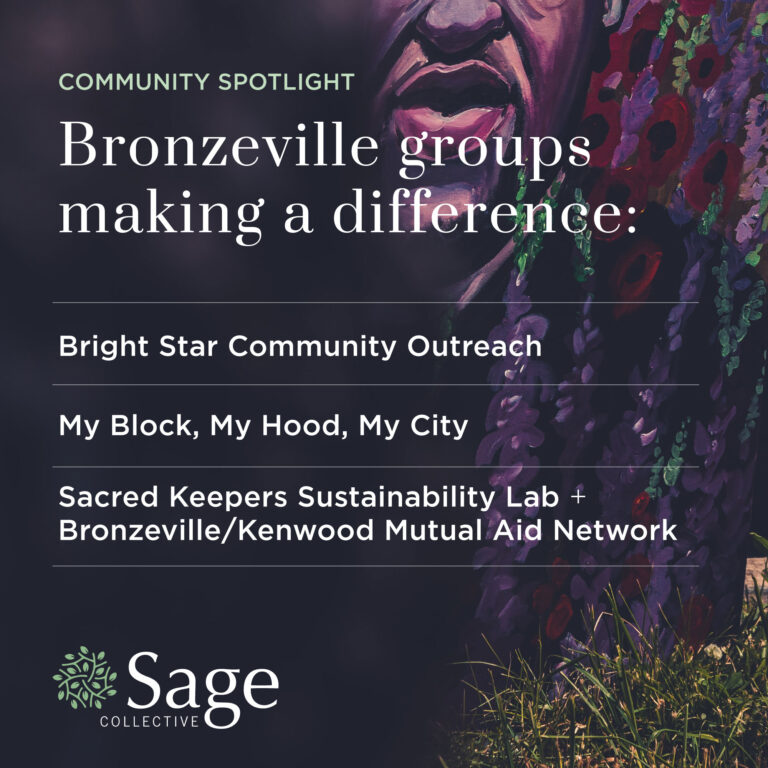
Mural under the “El” tracks in Bronzeville
› Back to top
« back
02.04.21 | Health & Wellness

How Better Self-Control Leads to Life Longevity

What does good behavior have to do with life expectancy? More than you might think.

U.S. News recently reported on a study conducted on 1,000 New Zealanders, from newborns to 45 years old, tracking the correlation between self control and health in middle age. The study tracked self-control through behaviors related to goal-orientation and restraint in thoughts, behavior and emotion. The study’s analysis of health in middle age took into account both body and brain.

Overall, the study concluded that those who practiced better self control “aged more slowly,” resulting in better health outcomes during their middle-aged years. So why exactly does this correlation occur? Self-control is also directly related to self-regulation. The study considered the impact of a person’s ability to delay gratification. For example, were participants able to forego short-term indulgences in favor of long-term rewards? (i.e., would they give up the immediate gratification of a ‘smoke break’ in order to have better lung health later on in life?) 

Most importantly, while self-control and self-regulation may also be influenced by DNA makeup and unique life circumstances, individuals do have the capability to learn better self-regulation skills. Knowing the long term effects of such behavior on one’s body and brain health, the development and cultivation of these skills throughout life becomes critical.

You can read more about the study and its findings in the U.S. News article here.

A doctor's stethoscope
› Back to top
« back
02.02.21 | Sage Advice®

What We Mean When We Say “Older Adults”

You’ve probably noticed that at Sage Collective, we use the term older adults to describe our audience. But if you’ve ever wondered why exactly we use the term older adults, today we’ll take a closer look at the language and what it means to us.

Contentious debate surrounds the usage of alternative phrases like seniors, senior citizens, elders and elderly. For example, what do you think when you hear the word elderly? For most, it conjures images of someone frail and dependent. While one older adult could have health that renders them bedridden, another older adult could just as easily be ready to run a marathon. Weighted terms like elderly render such distinctions meaningless. 

Overall, the term elderly is outdated and ageist. The word has created a stereotype around aging that negatively influences the way older adults are perceived and therefore treated in our society. Consider too, the implications of words like seniors and senior citizens — we don’t call the younger generation juniors or junior citizens, right? 

Older adults aptly captures that this is indeed a population that is older — but without the hard underscore of the word old. Categorically, the phrase also leaves room for the many nuances of older adults’ varied experiences. There is no implication or preconceived notions of health, disposition, etc., attached; it’s simply a way of classifying an age group overall.

We also use the term older adults to celebrate the next chapter in aging adults’ lives. We believe that like any stage in life, older adulthood brings with it exciting and unique opportunities to learn, grow and thrive. The phrase brings with it a liberty and freedom for older adults to divine their own fate and lifestyle — and to embrace a life of vibrant living (if they should so choose). 

We want to hear from you too — what do you think of the term older adults? What does it mean to you? Let us know over at Sage Collective’s profiles on Facebook, Twitter, Instagram and LinkedIn.

An older adult woman holds a DSLR camera with a hooded zoom lens up to her face, in the act of taking a photo
› Back to top
« back
01.26.21 | Sage Advice®

Vibrant Living Breakdown: Plant-Based Diet

9 Ways of Vibrant Living is Sage Collective’s guidebook to a full, happy and high-quality life. Building off our fourth component, moderate caloric intake, the fifth component of vibrant living is a plant-based diet. Notice we didn’t use the word “vegetarian.” That’s because the key to a plant-based diet is practicing moderation. We’ll discuss more below.

As we discussed in Healthy Eating Tips for Seniors, older adults require fewer calories, but the same, if not more, nutrients to maintain wellbeing. That’s why a nutrient-dense diet is more important than ever for those 55+. Foods like fresh fruit, vegetables and legumes constitute the basis of a healthy diet. 

While meat is a good source of protein, iron and vitamin B12, red meat in particular is often guilty of being high in saturated fat. Consuming saturated fat contributes to higher blood pressure and increased risk of heart disease. Meat products, therefore, are a double-edged sword. Depending on the cut of meat one chooses and the methods of cooking, that daily source of protein has the potential to do more harm than help. 

Meanwhile, plant-based alternatives to meat, such as beans, lentils, nuts, seeds and soy provide fiber and prebiotics (good for gut health) in addition to containing sustainable carbohydrates and healthy fats. The latter helps to balance blood sugars and lower the risk of heart and cardiovascular disease. While the old plant-based classics, such as tofu, tempeh, beans and lentil are all good choices, recent innovations in the plant-based meat industry have introduced options like plant-based burgers that “bleed”. With the right recipes and supplies, plant-based eating can be delicious and nutritious.

At Sage Collective, in addition to our programmatic focus on health and wellness, we aim to develop and curate culinary programs (such as nutrition education, cooking experiences and group dining experiences at our facility) that focus on fresh, healthy, primarily plant-based diets. While meat is welcome to remain a small part of the menu, we seek to prioritize diet, portion control and alternative (and delicious) plant-based options. 

Whether for dinner or in spirit, we invite you to join us on our journey to intentional, plant-based eating. Start small, like with meatless Mondays, and we’ll go from there together.

A bowl of couscous, tomatoes, greens and other delicious veggies sits on a marble background
› Back to top
« back
01.21.21 | Arts & Culture

Why You (And Everyone Else) Should Read More Poetry

Many of us discovered poetry during mandatory school courses and our relationship with the genre ended swiftly after, never to be revisited again over the years. There’s this common misconception that poetry is in inaccessible art form, that it has to be understood to be enjoyed. But poetry is like singing — you don’t have to be good at it to do it or to enjoy it. Put simply: it’s good for the soul. That’s why today, we’re making an argument for why you (and everyone else) should read more poetry.

Why Read Poetry?

First of all, poetry is easy to incorporate into your daily schedule. A single poem doesn’t ask much of your time or attention. One Huffington post article describes how easy it is to consume poetry by saying, “You can flip through a book of poetry and eat the poems like popcorn.” In fact, you can even have the delectable treat of poetry delivered to your email daily by the Academy of American Poets’ Poem-A-Day or Poetry Foundation’s Poem of the Day

Rather than being intimidated by the idea of interpreting poetry, let’s consider how many possibilities are offered in the act of interpretation. Poetry, as an abstract language, stretches our imagination and the boundaries of what words can do. It appeals to heart logic over brain logic. Poetry shakes off literal interpretations or concreteness… the idea that there is just one way of seeing. Mirroring this logic (or lack thereof), in most arguments on why you should read poetry, instead of choosing just one reason why, the arguments simply end on the open-ended question: “well, why not?”

The Impact of a Poem

Though, of course, poems can teach us new things and offer us a new perspective, much of the beauty lies in how a person uniquely relates to the poem. In the TEDTalk “What Happens When We Read Poetry” they purport that it is this reacting-to that makes poetry so meaningful: “Though a poem doesn’t make things happen, it happens — every time someone reads it. Rather than a static item printed on a page, a poem is an event that occurs with each new reader and with each new reading.”

Further exploring the idea of what happens when we read poetry, The Cut describes a study conducted in Germany where the bodily response to poetry was measured using a “goosecam” (which shows the movement of skin and arm hairs as people listen to poetry). Participants in the study were also told to press a button each time they got chills during the reading of a poem. 40% of participants physically showed goosebumps.

But even more, the neurological impacts (those not tracked by the goosecam, but by brain scans throughout the process) showed the impacts of the slow-building pleasure of listening to poetry. The study dubbed this phenomenon, the “pre-chill,” a sensation synonymous with the buildup and anticipation of unwrapping a chocolate candy bar. Before study participants ever pressed the button indicating they had been given chills by the poem, the pre-chill had already been occurring within them.

Poetry contributes to vibrant living. And the best part about poetry: there’s something for everyone. If one poem doesn’t stir pre-chills in your heart and goosebumps on your arms, the next one most likely will.

A hand writes the word poetry on a vibrant wall of graffiti
› Back to top
« back
01.19.21 | Sage Advice®

What to Know About the COVID-19 Vaccine

The Pfizer and Moderna COVID-19 vaccines have both been authorized by the FDA for emergency use — and many more pharmaceutical companies will follow suit. According to the CDC, the COVID-19 vaccination is a vital tool in helping to stop the pandemic, building protection and keeping individuals from getting COVID-19. But what should you actually expect during your appointment to receive the COVID-19 vaccine?

It Will Take Time

For starters, it will take some time for the vaccine to become available to most people. As COVID-19 vaccine doses are being doled out across the United States, Chicago has already administered upwards of 60,000 vaccine shots. These administered shots have gone to health care workers and long-term care facilities as part of Phase 1A of Chicago’s vaccine rollout plan. Once completed, the city will move onto Phase 1B: where older Chicagoans and certain frontline workers will be vaccinated. 

Understanding How It Works

Both the Pfizer and Moderna vaccines use new mRNA technology. As the CDC explains, mRNA vaccines instruct our cells to create a (harmless) “spike protein.” The spike protein is found on the surface of the virus that causes COVID-19. Once your body creates the spike protein, it recognizes the protein does not belong and begins to build an immune response and antibodies. These antibodies stick around and will help fight off COVID-19, while the spike protein is eventually eliminated by your body. 

What to Expect 

Both the Pfizer and Moderna vaccines are injected in the upper arm muscle and require two injections, 21 days and 28 days apart, respectively. After getting vaccinated, you may experience flu-like symptoms, including fever, chills, tiredness and headache, as well as slight pain and swelling at the injection site. These side effects — if you do experience them at all (and many do not) — will subside in 1-2 days. 

When the time does come for your own vaccination appointment, always remember that routine processes and procedures are in place to ensure the utmost safety throughout the experience. It’s perfectly normal to experience anxiety and nerves, but being as informed as possible about the process will help to remedy that. 

A small vial of liquid with a label reading "COVID-19 Vaccine"
› Back to top
« back
01.12.21 | Sage Advice®

Feeling Exhausted? The Science Behind Pandemic Burnout

As part of our 9 Ways of Vibrant Living, we at Sage Collective advocate for stress reduction. We recognize stress as a natural, regular occurrence and aim to help our followers learn to manage, to control and to minimize stress.

But we’ll be the first to admit that since the onset of the COVID-19 pandemic (in March of what’s officially become last year), stress levels have been higher than ever. If you’ve been feeling excessively stressed, burnt out and unable to focus — you’re not alone. Today, we’re taking a closer look at the science behind pandemic-related stress and burnout. 

There’s a reason everyone’s been referring to COVID-19 as “unprecedented.” We’ve never experienced anything quite like this in our lives. Worrying about a global pandemic, public health and safety, our personal wellbeing and the wellbeing of those we love, not to mention financial concerns, food security struggles and more — it’s an inordinate amount of stress for human beings to take on all at once. And the demand of feeling all these things at once is taking a toll on our bodies.

Allostatic load demonstrated visually

Allostatic load refers to the impact of cumulative wear and tear — the impact of carrying all that stress, for example. And allostatic overload refers to the point at which the demand of our stress overtakes the capability of our mind and body to keep up. As demonstrated above, we can look at our allostatic load as a bell curve. Too little stimulation from stress, we’ll be underloaded, understimulated and stagnant as  human beings. But too much stimulation from stress, and we’ll be overloaded, overstimulated and exhausted to the point of burnout.

Many of us are in the throes of allostatic overload. Our bodies have been constantly perceiving a potential threat, and therefore they’ve been producing hormones like adrenaline and cortisone, handy responses to temporary stressors.  However, in the case of a prolonged stressor such as the pandemic, our bodies continually overload themselves with these hormones, which are actually toxic to our physiological systems. 

So your feelings of stress, exhaustion and burnout — they’re only natural. But acknowledging the reality of the problem is only half the battle. How do we even begin to combat burnout and fatigue? 

First, self care is absolutely crucial. Prioritize taking care of your body through healthy habits like regular exercise, healthy diet and getting your best night’s sleep. Prioritize taking care of your mind, too, by making time to practice gratitude and indulge in doing things you love. And secondly, be mindful to take care of others, too. Finding ways to safely connect with friends, family and community will serve as a reminder that you’re not alone — we’re all in this together.

An older African American adult steps aside to take off his mask for a moment
› Back to top
« back
01.07.21 | Sage Advice®

Vibrant Living Breakdown: Moderate Caloric Intake

9 Ways of Vibrant Living is Sage Collective’s guidebook to a full, happy and high-quality life. Our fourth component of vibrant living is moderate caloric intake. Healthy eating is an integral part to ensuring both our bodies and minds are at their best. Today, we’re taking a closer look at how to embrace this component in your own life and why it’s so important.

Diet Requirements for Older Adults

According to the Estimated Energy Requirements (EER) from the Institute of Medicine Dietary Reference Intakes macronutrients report, older adults (ages 55+) require less calories than the average adult. For moderately active women 55+, the recommended amount is 1,800 calories daily, while for moderately active men 55+, the recommended amount is 2,200-2,400 calories daily. (For less active individuals, the EER recommends 1,600 calories daily for women and 2,000 calories daily for men). However, requirements can vary with respect to height, weight and other factors. 

Older adults require less calories as they age due to dropping basal metabolic rates and decreasing muscle mass. Though as we discussed before, while older adults require less calories than the average adult, they still require the same (if not more) nutrients. That’s why eating fresh, healthy meals is more important than ever as we age. 

Vibrant Living Through Fresh, Healthy Eating

At Sage Collective, we believe in helping older adults learn how to prepare and eat more fresh, healthy food in order to get ample nutrients and consume less calories. In the vision for our residential campus, we intend to incorporate trained nutritionists and nutrition aids to provide seminars and other educational activities to help our older adult residents establish these healthy eating habits.

Fresh, healthy eating and moderate caloric intake is important for older adults for numerous reasons. Naturally, health is one of them. Eating well provides your body with the necessary energy and nutrients to do its job. It also helps regulate weight and can even aid in the prevention of diseases such as osteoporosis, high blood pressure, heart disease, type 2 diabetes, and certain cancers. Eating well is also great for the mind, leading to a better night’s sleep, the mediation of moods and even the inhibition of pain. Try eating clean for just two weeks and see the impact it has! 

For those looking to practice moderate caloric intake at home, we’ve put together this guide to healthy eating for seniors. Like any goal, change to your diet doesn’t happen overnight, but making small, conscious decisions regarding what you eat daily will build up to have a great impact.

A spread of food demonstrating moderate caloric intake, including rice with tomato, green beans and fish
› Back to top
« back
12.30.20 | Sage Advice®

2020: A Year in Review

2020 has been a tumultuous year for the world to say the least. But amidst everything, we’ve been hard at work bringing our vision for Sage Collective to life. This year has been one full of successes and exciting milestones for our organization. So today, we’re taking a look back at the year and sharing our proudest moments:

Launched our website and blog

Sage Collective officially came out to the world with the launch of our brand new website in May. Through the website, we share with our audience who we are, what our story is and what we’re here to do. We’ll also be providing timely updates on Sage Collective programming and residences as each initiative progresses. 

The Sage Collective website is also home to our blog, Sage Advice, where we share engaging and enriching original content. Blog topics run the gamut from health + wellness advice to cultural insights for living a more vibrant life. We’ve also interviewed many members from our excellent team, who dispel industry-expert insights into topic s such as advice for older adult caretakers and ways to overcome the challenges of COVID-19.

Kicked off social media

To more directly engage with our community, Sage Collective kicked off its social media identity in the fall. Through our profiles on LinkedIn, Facebook, Twitter and Instagram, we post twice a week to share insights from the Sage Advice blog alongside other updates on our organization’s projects. There, we’re continuing to build online relationships with other industry leaders, health + wellness institutions, cultural organizations and community stakeholders + members in order to create real, collective impact. 

Acquired our first properties

In the beginning of the year, we were thrilled to purchase our first two properties: 4108 South King Drive and 4112 South King Drive in the Bronzeville neighborhood of Chicago. These beautiful and historic side-by-side buildings  will become the first manifestation of our vision for vibrant and affordable housing for older adults. Construction on these projects is slated to begin in early 2021; stay tuned for more updates coming soon.

Continued strengthening our team + vision

We wouldn’t be where we are today without our amazing team. The Sage Collective Board of Directors and Leadership Team regularly convened throughout 2020 to further align our vision and upcoming project plans. Together, we bring a collective wealth of knowledge about older adults, senior housing, health + wellness and more to create forward-thinking, innovative strategies for older adult programming, residences and lifestyles. 

The successes of this year are just the beginning. We can’t wait to continue learning, growing and doing in 2021 and beyond — and sharing the journey with you.

Image is a background photo of presents with text overlaid reading: 2020: Year in Review
› Back to top
« back
12.28.20 | Spirituality & Religion

The Importance of Practicing Gratitude

Gratitude is both a way of thinking and a way of doing. By definition, it’s the quality of being thankful, as well as the readiness and willingness to show appreciation for and to return kindness. And by practicing gratitude, we open ourselves up to being more connected, more happy and more healthy.

Finding the Good

According to American psychologist Robert Emmons, there are two parts to gratitude. Firstly, it’s “an affirmation of goodness. We affirm that there are good things in the world, gifts and benefits we’ve received,” he says. While this doesn’t overwrite challenges or frustrations in our lives, it allows us to look at our lives wholly and to always find balance and goodness. Finding good in the world helps us to feel more positive emotions, relish good experiences, deal with adversity and even improve mental and physical health.

Becoming More Connected

Secondly, says Emmons, “we recognize that the sources of this goodness are outside of ourselves…. We acknowledge that other people—or even higher powers, if you’re of a spiritual mindset—gave us many gifts, big and small, to help us achieve the goodness in our lives.” In this way, Emmons describes gratitude as a “relationship-strengthening emotion, because it requires us to see how we’ve been supported and affirmed by other people.” Therefore, practicing gratitude allows us to feel more connected with our surroundings, whether that be nature, our spirituality or the people in our lives. This in turn leads to stronger, more positive relationships.

Practicing Gratitude

So how do we cultivate and strengthen our practice of gratitude?

First, we must notice our surroundings. What or who makes you feel good? This reflection can happen in-the-moment throughout your daily experiences, or later when you have a private moment to yourself for meditation. Many experts recommend keeping a gratitude journal and regularly listing things you’re grateful for.

Savor and absorb the things for which you’re grateful. Once you acknowledge the good things in your life, make sure you enjoy those experiences to the fullest and treat them with the utmost appreciation.

And finally, express your gratitude. Happiness is best when shared — and everyone likes to feel appreciated. Take the time to write a thank you note or voice your gratitude verbally. 

We all experience gratitude, but taking the time to acknowledge the feeling and become more intentional with how we engage with it and share with others will make all the difference in the world. 

White and green text over a dark green background, with quotation marks and the Sage Collective logo. Text reads: Gratitude is an affirmation of goodness. We affirm that there are good things in the world.
› Back to top