« back
11.09.21 | Sage Advice®

How to Age Gracefully

Aging is a unique experience that has no set rules or guidelines. Previously, we’ve explored how to embrace the process of aging and talked to Sage Collective Board Members about aging in place.

Contrary to what many presume, aging gracefully isn’t about transforming into your best physical self; instead, the transformation is focused on feeling and acting as your best self. Similar to our 9 Ways of Vibrant Living, aging gracefully pulls from numerous principles that champion a joyful and enduring life. Here is Sage Collective’s advice for how to age gracefully and establish essential support as you become older:

Be Mindful

Mindfulness is a critical skill required to carry through life, as it helps you become more focused on the present and less on the future or the past. With time and practice, mindful thinking reduces stress, improves memory and heightens emotional responses. Meditation is one favored technique many use to train themselves in mindfulness. 

Get Involved in Things You Love

As we age, discovering a meaningful hobby helps maintain a sense of purpose and encourages engagement in life. Whether you find passion in participating in politics, mentoring others or engaging in faith-based services, evidence shows that people who engage in something they love experience greater happiness and a longer life. 

Connect With Others

Fostering a sense of connection with those by whom you are surrounded  helps enrich the process of aging. Families, friends and communities can serve as powerful resources with varying types of assistance. Genuine support systems have dramatic effects on your connection to your physical environment, which considerably affects the quality of your personal experience with aging.

Take Care of Your Body

One of the most crucial ways to age gracefully is by supporting your body’s health through actions such as nutritious eating, plentiful sleep and routine exercise. Actively caring for your body lowers the risk of numerous diseases and greatly improves balance and mobility.  

Don’t Forget About Your Mind

In addition to taking care of your body, tending to your mind and mental health can dramatically shift the aging process. Surrounding yourself with things and people you love boosts positive moods and fuels feelings of  prosperity. And while aging is a complex process, it can be a beautiful thing when embraced and celebrated.

Though inevitable, aging doesn’t have to be strenuous. Taking the time to learn how to age gracefully and successfully incorporating these tips into your life can have wonderful effects on your future.

Cropped shot of a senior woman holding a cane in a retirement home
› Back to top
« back
11.04.21 | Health & Wellness

Practicing Empathy: How it Can Create a More Vibrant World

Empathy is a universal tool for understanding. By definition, it’s a way of emotionally recognizing and validating what someone else is feeling. At Sage Collective, we approach all of our work with empathy, and believe that with practice, exhibiting empathy improves communication, heightens creativity and enhances appreciation.

What the Science Says

Empathy has always been an essential skill for communication and understanding. However, it’s more important now than ever, in light of the enormous levels of stress many confront today. Displaying empathy serves as an antidote for burnout and anxiety — producing beneficial effects on wellbeing and supporting positive social interactions for individuals and groups alike.

According to a recent study published by the Journal of Social and Personal Relationships, empathy in older adults may play a sizable role in shaping the regularity and types of support they exchange within social networks and the ramifications associated with the exchanges. The study concludes that empathetic older adults grant emotional and instrumental support more often than older adults who display less empathy. Furthermore, those who are more empathetic enjoy greater levels of emotional comfort from their networks and uphold more positive moods throughout the day, producing significant exchanges of care and more powerful controls over temperament. 

Practicing Empathy

Because empathy is a crucial element for collective support, everyone can benefit from improving their skills, whether practicing empathy comes naturally or must be learned. However, with time, an empathetic approach to all situations becomes instinctive. Here are three kinds of empathy that a person may encounter and should strive to understand:

Cognitive empathy consists of putting yourself in someone else’s situation to try and
comprehend what they might be going through at that moment. Even if it involves
something unfamiliar, the effort of understanding can transform anyone’s perspective. 

Somatic empathy requires the ability to experience someone else’s feelings. It usually
includes physical reactions to situations like feeling sick, sweating or blushing.

Active listening is a large part of being empathetic, but taking action and giving appropriate feedback takes the skill a step further. Affective empathy entails understanding the emotion someone else is feeling and answering accordingly. The awareness establishes personal connections and leads to a more profound concern for others’ feelings. 

As more and more people recognize the power of using empathetic techniques, a mutual understanding and compassion will blossom, empowering our communities to become more vibrant and rich in emotional support.

› Back to top
« back
11.02.21 | Sage Advice®

Why You Should Start Journaling if You Aren’t Already

As part of our 9 Ways of Vibrant Living at Sage Collective, we are proponents of any activity that reduces stress and increases overall wellbeing. Burnout and stress are familiar to many of us, and it’s imperative to find someone or something to help manage, control and minimize these feelings. Journaling is one delightful distraction that diminishes those anxieties and comes with a handful of other benefits, particularly for older adults.

 Along with functioning as a means to escape the world around you, journaling is an enjoyable way to pass the time and alleviate any stressors that come with life. It’s difficult to separate the positive and negative experiences that happen to us daily. Conveying thoughts by putting pen to paper is one way to help release emotions while granting your mind and body relaxation from the tension you may have been feeling.

Many people who journal will often follow guides and roadmaps that help steer their process, but the brilliant thing about journaling is that the quality and subject of your writing are less important than the actual act. Having the opportunity to write about anything from daily stressors and positive affirmations to poetry increases creativity, along with numerous other cognitive benefits.

For many older adults, cultivating a routine can combat negative sleeping habits and feelings of isolation. Like any new habit, we recommend journaling at the same time each day to help create a routine, whether you start your day with a few morning pages or reflect before going to bed.

Along with improving sleep and reducing loneliness, jotting down experiences, emotions and everything in between helps older adults preserve their memories and sharpen their minds. Journaling acts as a memory aid and, with time, can generate more effective recollections for older adults.

Whether you prefer to write in a notebook or favor typing on your phone, journaling is a fantastic way to reduce the stressors of your daily life and sharpen your memory and mind. If you want to learn more about how to begin journaling or need a boost of creativity to start the process, check out the video below.

› Back to top
« back
10.28.21 | News

Witness History at Pullman National Monument

At Sage Collective, we love spotlighting extraordinary moments throughout African American history and the local monuments that preserve those stories. Today we’re exploring Chicago’s first and only national monument, positioned only 30 minutes south of Bronzeville, where our 4108 and 4112 S. King Drive properties are located: Pullman National Monument. 

Pullman Clock Tower and Administration building
Pullman Clock Tower and Administration Building

Pullman Historic District

Nestled in another one of Chicago’s largest African American communities, Pullman National Monument, also known as Pullman Historic District, exhibits one of the country’s most historical sites. Developed by Goerge Pullman in the 1880s, Pullman Historic District originated as the nation’s first planned industrial community for his namesake business, Pullman Palace Car Company. The community, which had established regulations and living standards for all of their employees, contained workers’ living quarters, the Pullman factory, a grand clock tower and the once elegant Hotel Florence, among other buildings. 

The Pullman Company experienced the first of many disputes in 1894 with the Pullman Strike. After negotiations over decreased wages were discussed and shut down, Pullman’s workers organized a walk out of the train car factory. The boycott impacted railroad traffic across the whole nation. However, even with support from the American Railway Union, both the boycott and the union collapsed after local and federal governments intervened.   

A second conflict over inferior wages and lengthy hours arose in 1925. However, this time, all of those involved were Pullman’s African American workers, who, organized and created the nation’s first all-Black labor union, the Brotherhood of Sleeping Car Porters. Founder A. Philip Randolph and union members fought for more than ten years until finally, in 1937, the first major agreement between a company and an African American union was met. The agreement granted union members increased wages along with a cap of 240 hours per month. 

Pullman National Monument Mural, Created by students of the American Academy of Art in 1996

Visiting Pullman National Monument 

Today, after nearly 140 years of existence, Pullman National Monument is now open to the public. With help from the National Park Foundation, donors and Chicago Neighborhood Initiatives, the historic site underwent extensive renovation and restoration over the past few decades. 

The late-Victorian designed Pullman Clock Tower and Administration building act as the centerpiece for 12-acre monument grounds. Inside, guests are greeted in the newly designed visitor center, where information on the monuments’ numerous exhibits and tours is found. 

Visitors have the opportunity to gain knowledge about everything from Pullman’s vision for creating the company town to the Pullman Strike and the Brotherhood of Sleeping Car Porters establishment. Along with delving into the campus’ rich history, guests have a chance to learn more about how the latter Pullman community came together to preserve the significant site. 

The park is free to the public and open 9 to 5 on most days for those interested in exploring the momentous company town and reducing COVID-19 stress. You can find more information here!

› Back to top
« back
10.26.21 | Arts & Culture

Revolutionizing Bronzeville and the Construction World: A Conversation with Shevaz Freeman

As renovations continue at our 4108 and 4112 S King Drive properties located in the heart of Bronzeville, we sat down with the owner of Urban Intention Design and Build and general contractor for our project, Shevaz Freeman, to discuss her experiences in the world of construction and the progress of the projects. 

Urban Intention Design and Build is a Black woman-owned-and-operated company, which is rare in the general contractor domain. Tell us about your experience in the industry, and what has led you to where you are today. 

Running my own contracting company, Urban Intention Design and Build, as an African American woman absolutely comes with its struggles, but every experience I’ve had — good and bad — has led me to where I am today. Simple things like respect and recognition can be difficult to attain at times, and because of my gender, I have to maneuver within the environment with a whole different perspective. However, because of my significant experience in the field, I’ve discovered how best to navigate challenges I may encounter to my advantage. 

I’ve picked up numerous techniques and approaches that give me a leg up because I feel like I’ve had to work harder than a lot of other people in my field to get where I am. I’ve trained myself to have heightened attention to detail. Sometimes, contractors don’t have the “big picture” in mind and don’t fully pay attention to the endless little things happening on a project. Because I’ve been doing this for over ten years, I find it extremely easy to fully envision the outcome of every project from day one, which is a significant skill in contracting.

What does your role as General Contractor for Sage Collective Properties’ King Drive project involve? 

As the General Contractor for the King Drive projects, it’s my job to oversee and run almost everything. I am responsible for managing budgets, directing on-site subcontractors and conducting meetings with the Sage Collective Properties’ team. However, at the end of the day, my most important job is to make sure that the client gets what they envisioned at the beginning of the process. 

Who are the others who are involved in the renovation of these King Drive buildings, and how does your role fit in? How do you view the nature and value of the relationships you have been able to build with other professionals on this job?

Throughout the renovation, numerous people will walk in and out of the properties. Two people I’ve worked very closely with over the past few months are the Owner’s Rep and experienced General Contractor, Ernest Brown, and the Architect, Gregory Williams. Mr. Brown has provided me with incredible guidance and oversight throughout the project, and his rich expertise in the field has been remarkably beneficial and essential to our process. 

Overall, I’ve unquestionably developed relationships on this job that I believe will continue to provide immense value in the future. It’s so important in jobs like this that each party involved feels like they are valued as part of a larger team, and that is a feeling that is certainly present here. No matter who I am talking to daily, everyone understands that their role is essential for the project’s success.

Explain to us how you see Sage Collective’s vision of having “vibrant, high-quality, affordable living for older adults” come to life in the residences you are currently helping them rehab?

I originally went to school for interior design, so because of that training and the fact that I’m such a visual person, I’ve been able to envision Sage Collective’s concept since the project’s very early stages. As soon as I was introduced to the vision for “vibrant, high-quality, affordable living” and walked through the properties, there was no question that it was achievable, and day by day, I’m witness to its progress. 

Since we strive to make sure that every element is constructed with thought and care, the process behind bringing the vision to life is very meticulous. We discuss everything from the sizing of doors to the proportion of the showers to the type of lighting assembled in each room to make sure we specifically address the needs of older adults. All details throughout the process are constantly brought into question to ensure perfection. 

Do you think that there is enough emphasis by the government or social service organizations on meeting the need for affordable housing in this community? If so, please give other examples. If not, why not?

The need for affordable housing, especially in neighborhoods like Bronzeville, has been ignored by the government for the longest time. However, I think more and more organizations are finally stepping up, and we are moving in the right direction. One of the initiatives putting money into communities like Bronzeville that have essentially been ignored by the city for years is Mayor Lightfoot’s INVEST South/West.

The wonderful thing is that the initiative has encouraged even more developers to invest in affordable housing construction like the upcoming 43 Green projects. Having been born and raised on the south side, seeing the amount of interest currently being poured into the communities holds a special place in my heart. But with that said, the progress is long overdue, and there is still a long way to go until affordable housing needs are met. 

How does your perspective as a contractor inform your view of the future of the availability of affordable housing in Chicago?

In 2021 material costs for almost all aspects of home building and renovation skyrocketed, and they continue to go up. The shift over the past year also means that low-income families aren’t making the extra money they need to afford market-rate housing, making affordable housing even more in demand than ever before. Generally, historic properties like Sage Collective Properties’ buildings in the Bronzeville community are selling for very high prices. Some have been renovated, but others have either been abandoned for years or have not been preserved due to the high expenses that come with the process. 

With time, everything deteriorates. So, without any help, it’s hard to keep these properties affordable for residents. The sad reality is that without continued help from the city, state or federal government — and investments from organizations like Sage Collective Properties  —  it’s going to be hard to keep developing affordable housing in these neighborhoods. 

Have there been unexpected or unique issues that you’ve been challenged with on this project?

The King Drive properties are mature buildings in a very historic area that have been neglected for a long time, so of course, there have been surprises that we’ve come across throughout the renovation. We’re discovering issues now that I’m sure didn’t even cross the mind of the previous owners because development is so different now than it was back when these buildings were built. One specific uncovering was the deterioration in some of the exterior bricks. We found small trees, weeds and other plants vibrantly growing in the actual spaces between the bricks, so we’ve had to uproot all of those. 

The one thing I will say is that it is a solid building and has very healthy bones. So, we can still put it back together with ease. Overall, I’m just so happy to see the phenomenal progress we’ve made so far and can’t wait to see the finished product. I’m also very appreciative that Sage has allowed me the opportunity to work on this project and be able to help them create something so wonderful, especially since I’m in my own community doing it!

Shevaz Freeman, General Contractor for Sage Collective Properties’ King Drive Projects & Owner of Urban Intention Design and Build
› Back to top
« back
10.14.21 | Arts & Culture

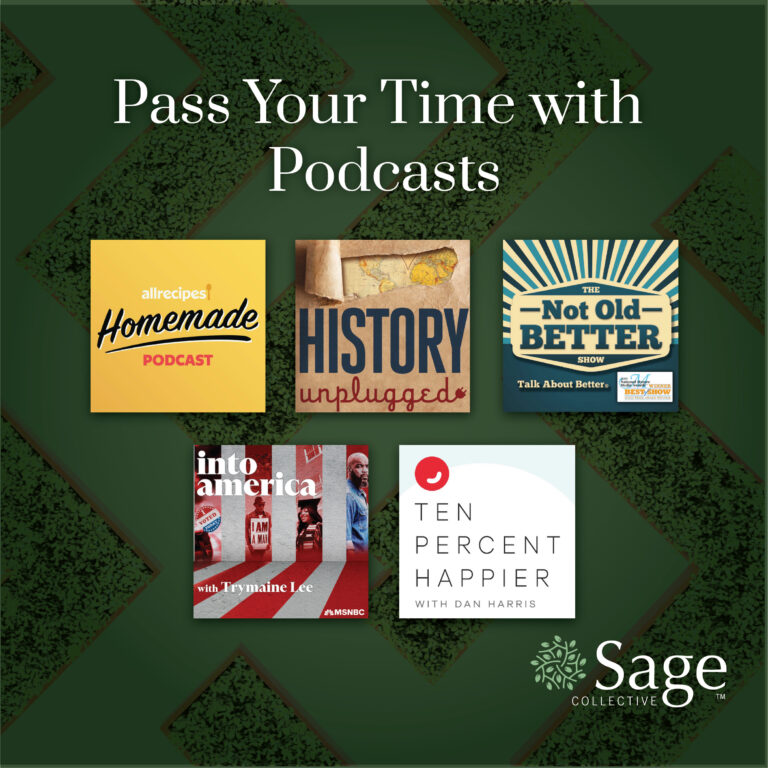
Pass Your Time With Podcasts: What You Should Be Listening to Right Now

While autumn is a favorite time for many to pick up new books and revisit forgotten ones, podcasts also serve as a great choice for those looking for a mix of entertainment, education and reflection. Podcasts are usually free to listeners and extend knowledge on everything from how to cook healthier meals to entertaining history facts to current government and public policy news. Here are the top five podcasts Sage Collective believes you should be listening to right now: 

Ten Percent Happier

Hosted by Dan Harris, a famed journalist who suffered a panic attack live on national television, Ten Percent Happier explores how keeping your spirits up is imperative to aging well. After his traumatic on-air experience, Harris discovered meditation and now invites experts on the subject, scientists and celebrities to share their own epiphanies and experiences of success. Topics on the show vary from What to do About Eco-Anxiety to Joy Vs. Happiness. Anyone interested in hearing motivational stories about coming back from what seems like life’s lowest points will enjoy this outstanding selection. 

Into America

Into America is a podcast that sheds light on what it’s like to be Black in America. Trymain Lee, Pulitzer Prize and Emmy Winning journalist hosts the enlightening show. The MSNBC-produced podcast explores how public policy and government action, and the lack thereof, affects Black Americans’ lives. Previous topics include The Vaccine Gap, Justice for Black Farmers and The Black Firefighters of 9/11. Into America produces an in-depth look into the continued injustice that Black Americans endure and what it means to hold the country to its obligations.

History Unplugged

A show that celebrates obscure historical facts and events, History Unplugged uncovers and revisits lost stories that changed the world. History buffs and amateurs alike will enjoy the unique narratives, expert interviews and call-ins that make up the podcast. Previous episodes of the show include The Japanese-Americans Who Fought Nazis in Europe, Electric City: Ford and Edison’s Vision of Creating a Steampunk Utopia and An Alternate History of the Lincoln Assassination Plot. Chocked full of amusement, myth-busting and a range of wisdom, almost everyone is guaranteed to relish over History Unplugged.

Not Old – Better

Award-winning journalist Paul Vogelzang hosts the fascinating, high-energy podcast, Not Old – Better. The inspiring show reminds its audience weekly that it is never too late to pursue your passion and purpose in life. Vogelzang invites a mix of well-known entertainers, intriguing role models and ordinary people to discuss aging and how to overcome the stereotypes and stigma that come with it. Previous guests have included actress Octavia Spencer, Dr. Anthony Fauci and activist Khary Lazarre-White. Listeners and critics alike have praised the podcast as a perfect choice for middle-aged and older adults.

Homemade

Homemade is the paramount podcast for anyone looking to explore the food world. Foodies and amateur cooks alike will enjoy the entertainment show hosted by industry insider Sabrina Medora and author Martie Duncan. Each week the hosts invite celebrated cooks from all walks of life to discuss and share their memories behind their favorite recipes. Past topics on the show include growing ingredients at home, delicious vegan options, repurposing leftovers and rethinking prep time. Get your cooking gear ready, put on your apron and prepare to join the fun with Homemade

Whether you need something to listen to on your way to work or while doing chores around the house, don’t hesitate to press PLAY on any of these wonderful podcasts. You can listen to each of the podcasts on their websites, Spotify, Apple Music, Amazon Music or Google Podcasts. 

› Back to top
« back
10.05.21 | Community

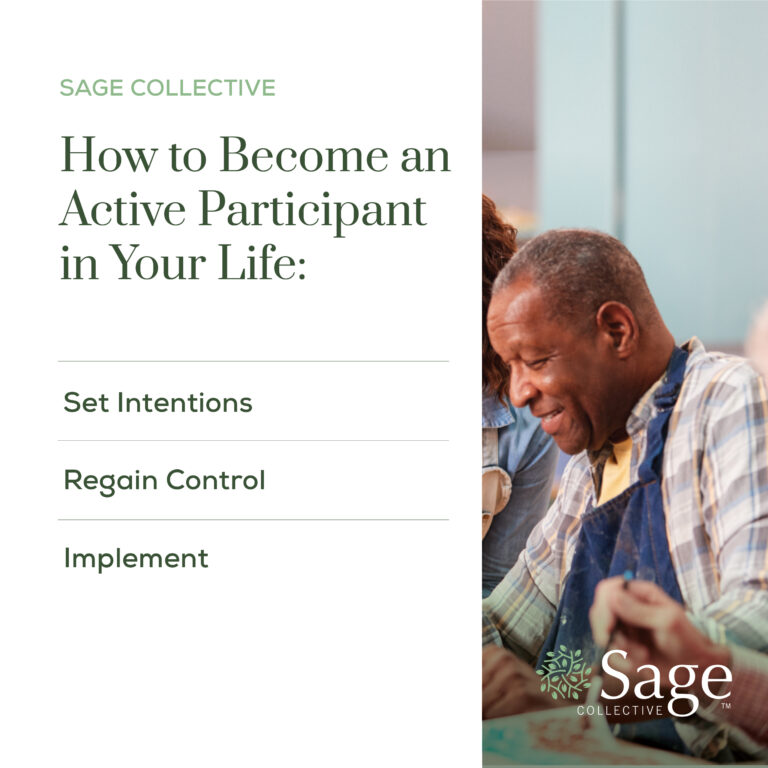
How to Become an Active Participant in Your Life

For many older adults, feeling like they’re losing control of their lives is all too common. While this can be a normal reaction to aging, it can also leave people feeling overwhelmed when confronted with the stigma of getting older. Actively participating in your life is a powerful way to combat these feelings and stigmas, leading to a more vibrant life. So, how can you learn to become an active participant in your life? Let’s take a look. 

Set Intentions

First, set goals to transition from a passive participant to an active participant in life. It can be challenging to reflect on what aspects of life might be obstructing your progress, but it’s imperative for regaining control. Your intentions and goals act as a foundation for the rest of the process for becoming active participants. So, honesty with yourself is essential.

To keep yourself motivated and engaged, write down each of your intentions and keep them in a place you will regularly see. Remember, each person’s intentions are unique to their own personal experience and goals. 

Regain Control

Adjusting your thought process to become less passive can be challenging, but the more you do it, the easier it becomes. By believing in yourself and your words, you regain control and take power away from negative thoughts.

Again, writing down your thoughts is an effective resource for change. Make a list of words that come to mind that diminish your power, confidence or ability. Once you have a few written down, modify the language to become active and uplifting. The next time you feel control shrinking, revisit the list and remind yourself that you have the power to enact change in any way.

Implement

It’s easier to enact change once you set intentions and understand that you can control involuntary thoughts. If wanting to go back to school is on your list, enroll in your first class. If eating more nutritious meals is your goal, start researching recipes with healthier foods. At first, taking steps to live actively may feel uncomfortable and daunting, but remember that years of passive living are being dismantled. 

While being an active participant in life is the ultimate goal, it’s important to be kind to yourself on the journey. Even if your path changes, the experiences and tools you learned along the way are something of which you can  be proud.

At Sage Collective, we believe actively participating in your life is an aspect of vibrant living that helps find purpose, shepherd confidence, and inspires goals for older adults. It’s never too late to become active participants in our lives.

› Back to top
« back
09.30.21 | Community

The Importance of Checking In

It’s easy to assume that someone may be happy just from the smile on their face. However, behind closed doors, many people are dealing with heightened feelings of isolation, anxiety and depression. At Sage Collective, we believe that connection, engagement and shared relationships are vital to our health and well-being, as well as that of many other folks in our community. Checking in on friends, family and neighbors can be an effective way of looking out for one another and fostering those connections.  

Checking in on someone you haven’t seen in a while, who works remotely or who recently lost a loved one is a powerful gift. The simplest way of checking in is just asking how someone is doing. Reaching out can be done in person, through text, email or phone, and these small efforts can go a long way to show support and invite them to share more with you.

Words are meaningful, but in many circumstances, actions can be even more powerful. Delivering meals is a thoughtful way of checking in during difficult times or extending a hand to those who may have trouble accessing healthy foods. Whether it’s some of your own leftovers or cookies you’ve baked, your thoughtfulness will bring joy and comfort. Offering a form of mutual aid, a topic we talk more about here, is another inspirational way to foster engagement and check in on neighbors, since we know that extending aid to others by sharing knowledge and skills is a great way to develop ‘care webs’ — an element of mutual aid — in the community.

It’s essential that while checking in on those around you, you do not forget about yourself. It can be dangerous to ignore your physical and mental health while helping others. Valuable practices to utilize for checking in on yourself include asking yourself how you are feeling, meditating and taking advantage of other mindful habits that benefit your health and happiness.

Cropped shot of a cheerful elderly woman hugging her husband who's in a wheelchair at home during the day
› Back to top
« back
09.16.21 | Community

Why It’s Never Too Late to Go Back to School

As part of Sage Collective’s 9 Ways of Vibrant Living, we encourage everyone to take advantage of their unique talents and interests to help others in meaningful ways. However, for some, finding a purpose and exploring interests can be overwhelming or somehow inaccessible. Going back to school is one effective way for older adults to discover purpose, increase knowledge and realize a dream.

Today, the typical college student is starting to look less like a 20-year-old running late to class after a night out and more like a middle-aged adult seriously interested in furthering their education. In fact, according to the Lumina Foundation, almost half of the undergraduates from for-profit institutions and one in five undergraduates from four-year universities are over the age of 30. 

Flexibility is one of the key reasons why older adults are choosing now to return to school. Encouraged by COVID-19, many universities have adopted and significantly improved their online learning programs. Often, online programs encourage their students to take classes and earn their degrees at their own pace.

Furthering their education isn’t always the main reason older adults choose to go back to school. Changing career directions, cultivating purpose and interests, and even retaining a sharp brain are all motives for older adults to go back to school. Research has shown that continued intellectual engagement for seniors, like going back to school, can help protect them from certain cognitive disabilities like dementia. 

Going back to school for older adults is also more affordable than ever. Many states are now offering free or low-cost opportunities for older adults to access academic classes. AARP has assembled a list of financial assistance offered by each state that you can learn more about here

Universities across the country are welcoming older populations with open arms now more than ever enabling these ‘new’ students to experience the rewarding and self-validating experience of revisiting education. Whether you’re looking to further a career, explore your purpose, or want to learn something new, it is never too late to go back to school.

A group of older adults celebrate with high fives around a table.
› Back to top
« back
09.09.21 | Sage Advice®

5 Books You Have to Pick Up This Fall

Autumn is a perfect time to revisit books you may have forgotten about while enjoying the warm summer months — or to pick up a few new books that may be on your radar. Reading is an excellent opportunity to escape the world around us, discover a new interest, de-stress and find enjoyment in others’ stories. Whether you’re a fan of poetry, memoirs, mysteries or romance, we have some picks that you might enjoy.

Poet Warrior by Joy Harjo

Poet Warrior, Joy Harjo 

As the first Native American to hold the U.S. Poet Laureate, Joy Harjo returns to her roots with Poet Warrior, sharing her relationship with poetry and music. Her new memoir is a mix between eloquently written poetry and intimately written prose. Harjo explores the music and stories that she grew up hearing and reflects on the connections poetry, her ancestry and her community share with each other. For lovers of poetry, introspection and culture, this book is a great read for you.

Unbound by Tarana Burke

Unbound: My Story of Liberation and the Birth of the Me Too Movement, Tarana Burke

Burke dissects her childhood, from growing up as a Black girl in the Bronx to becoming one of the most influential people in America as the founder of the Me Too movement. The personal memoir exposes parts of the trauma Burke experienced after being sexually assaulted. However, her story is largely positive as she shares how she used this experience to create positive change. Anyone looking for motivation and inspiration will find it in this book.

Smile: The Story of A Face by Sarah Ruhl

Smile: The Story of a Face, Sarah Ruhl

After giving birth to her twins, author, and playwright Sarah Ruhl realized that she couldn’t move half of her face. Ruhl later discovered she had developed Bell’s palsy. Smile is Ruhl’s intimate story of learning to live with a disability later in life. Ruhl’s emotional essays offer insights into what it feels like to learn to maneuver through the difficulties of life. Smile is a fabulous read for anyone wanting to learn more about the deeply personal relationships humans have with their bodies.

The Sentence by Louise Erdrich

The Sentence, Louise Erdrich

The Pulitzer Prize and National Book Award-winning author’s new darkly humorous story takes place in Minneapolis in 2020. The Sentence follows a previously-incarcerated Indigenous woman working at a bookstore haunted by one of their most annoying customers. The worker tries to solve the haunting mystery while exploring the difficulties of racism and corruption that infests the city. The Sentence is a fantastic choice for those looking to smile at a story reflecting on the year of racial injustice in a dark, comical style. 

Five Tuesdays In Winter by Lily King

Five Tuesdays in Winter: Stories, Lily King

Five Tuesdays in Winter examines the good and bad of human connection. Lily writes about meaningful relationships that can form from the most minute of bonds. The book of stories — formulated with previously published and new work — finds characters grappling with change, all yearning to be loved. Five Tuesdays in Winter is a terrific choice for those interested in learning more about the power and importance of human connection. 

Whether you prefer reading alone, with a companion or in a book club, don’t hesitate to pick one or two of these books up for yourself this fall. You can find them at your neighborhood libraries, local bookstore or online. And as with all good reads, spread the word to friends and family when you finish a book you really love!

› Back to top