« back
03.17.22 | Sage Advice®

Why Technology Can Help You Discover Your Purpose

While the internet offers an endless amount of affordances, it often comes with a sense of overwhelming. Often, people will approach this matter by disengaging with the medium. But what if we started looking at it from a different perspective, thinking about how we can take advantage of technology to better our wellbeing and find our purpose?

For most, the meaning of life lies in the relationship we build with our family and community or through the application of various goals and values we assign to ourselves with time. As a significant element of Sage Collective’s 9 Ways of Vibrant Living, we believe that discovering a purpose is an essential component of living vibrantly. 

What many people often forget is that our purpose isn’t set. It ebbs and flows and changes as we do. Throughout these shifts of perspective, we find ourselves lost and without direction, which is why it’s so critical to experience a sense of connection, an affordance technology offers.

Because of technology, we are more connected and informed than ever before, but it’s also more difficult than ever for us to hide from negative behaviors. “Technology has to be utilized to bridge the gap that it has created. When so much of our lives are played out through technology; the best way to enhance them might just be through it,” says Constellation AI, one of the leading companies building technology to enhance human wellbeing. 

Because of technology’s various resources, including access to new communities, activities and knowledge, it has the potential to empower individuals and better our ability to find purpose. Discover how you can use technology to better yourself, find a way to live in harmony with both your physical and digital environment, and through that connectedness, you’re sure to discover your inner purpose. 

› Back to top
« back
02.10.22 | Sage Advice®

5 Podcasts to Help You Start the Year off Great

With the new year comes a plethora of rich podcasts for audiences to dive into. As our Vibrant Learning Program with Chicago Commons continues to explore the affordances of modern technology, we wanted to share a few tips of our own. Last autumn, we spotlighted five of our favorite podcasts at the time, and today, we’re spotlighting five more that are sure to bring you joy and an excess of knowledge throughout the year:

Hidden Brain

Hidden Brains

Hidden Brains prides itself on being “a conversation about life’s unseen patterns”. Each week, the stimulating show explores deep questions that lay at the heart of the changing world to help listenings not only better understand their surroundings but also themselves. Episodes range from discussions on the psychology of self-doubt, working from home, difficulties of apologizing and everything in between. Archived episodes of the beloved podcast can be found on NPR, and new episodes can be found on Spotify, Apple Podcasts and more. 

Reply All 

For some of us, the internet is an unexplored world and for others, it’s a comforting tool. And while those audiences seem distant, Reply All provides a perfect place for everyone – novice or expert – to listen and learn. The tech podcast does an amazing job of exploring stories involving complex technologies in accessible ways, explaining what they are talking about as they go. Previous episodes have included investigating online scams to the best accounts you should follow on various social media platforms. You can listen to Reply All on Spotify, Apple Podcasts and more.  

Grief Cast

While a podcast all about the process of grief might not sound fun, Grief Cast explores themes hard to find anywhere else in the podcast world. Cariad Lloyd, the podcast’s host, brings a new comedian guest to the show each week, which helps transform the discussion into a dark comedy at times. Wandering through discussions of grief, loss, and the “weirdness that happens when someone passes”, Grief Cast is a perfect podcast for anyone looking to feel a little better during a hard time. You can listen to the podcast on Spotify, Apple Podcasts and more. 

How to Fail With Elizabeth Day

With so many podcasts filled with stories of success, it’s sometimes just nice to hear how some people’s failures led to a larger impact than their largest success. How to Fail With Elizabeth Day provides just that; Day shares her platform to interview a variety of guests on how their failures have shaped who they have become today. The inspiring, comforting and relatable podcast showcases just how when we think we’ve hit rock bottom, there is always a way up. You can find the podcast on Spotify, Apple Podcasts and more. 

The Daily

Known as one of the most popular podcasts around, The Daily covers all you need to know about world news in less than 20 minutes. The New York Times produced podcast covers one in-depth news story each weekday. Michael Barbaro, journalist and the host of the show, provides listeners with the top story of the day paired with guests that include Maggie Haberman and Glenn Thrush, other acclaimed journalists. The archived episodes are easy to explore for listeners, and there are many ways to listen, including on Apple Podcasts, Amazon Echo or simply from The New York Time’s Website.  

While podcasts may be an unknown area for many, the audio stories afford amazing resources, tools and manners of entertainment for both newcomers and natives alike. You can listen to each of the podcasts on their websites, Spotify, Apple Music, Amazon Music or Google Podcasts. 

› Back to top
« back
12.30.21 | Sage Advice®

Resolutions for 2022

One of the best ways to set yourself up for success in a new year is by making a list of resolutions before it starts. This tradition is a powerful way to articulate your values and can hold you accountable for your goals heading into the new year. In case you’re unsure of what to add to your to-do list, here are some resolutions you can take into 2022 to continue championing a vibrant lifestyle.

Start Something You’ve Always Dreamed About

Heading into the new year, make it a priority to make an ambitious dream come true. Not only is it essential to set goals for yourself throughout the new year, but achieving them leads to significantly rewarding experiences. Whether you want to head back to school, discover a new hobby or change career paths, don’t be afraid to take initiative of your life. Fulfilling dreams helps give your life purpose, control and meaning. And, if this isn’t the year to do it, when is?

Put Your Health First

Putting your health first encompasses a variety of choices that you can make throughout the year. It’s important to remember that your body’s health consists of both physical and mental elements. So, while making sure you try to incorporate moderate, regular physical activity into your life along with a variety of nutritious foods, taking care of your mental health is just as important. And, lucky enough, sometimes specific actions will go hand in hand with helping both areas of wellness. 

Live in the Moment

If the past few years have taught us anything, it’s that we shouldn’t take anything for granted. We believe one of the most significant goals you should have in the new year is to live in the present. To do so, you must focus on the now. A few great ways to do this are by practicing mindfulness, performing meditation or simply performing random acts of kindness in your community.  

We’re thankful to keep learning from the lessons that 2021 has taught us and couldn’t be more excited to see how our resolutions will play out in the upcoming year!

› Back to top
« back
11.30.21 | Community

How Spirituality and Religious Involvement Can Help You Age Better

With aging comes many difficulties and moments of emotional turbulence, leaving some to believe they are alone on their journey. However, the aging process also introduces many people to new hobbies, fulfilling purposes and other approaches to life that they had never experienced before. Vibrant living is always at the forefront of our vision at Sage Collective, and one chief aspect of our inspired model is engagement in spirituality and religion. Today, we’re the significant impact that spiritual and religious involvement can have on the aging process.

Sometimes as you age, a sense of community and support is all you need. Churches, and other places of worship, are hubs for mutual respect and are the perfect places to discover connections, engage in thoughtful discussion and participate in meaningful action. 

Despite the anxieties that come with aging, like increased loneliness and isolation, religious attendance has been found to establish a stronger feeling of community support. A recent study published by Geriatrics Journal found that religion and spirituality played a variety of roles in the lives of older adults who participated in them, including strengthening emotional connections and enhancing feelings of comfort and hope during hard times. 

Because religious and spiritual institutions often encourage connecting with those around you, they are one of the best ways for older adults to immerse themselves in a supportive social network and embrace vibrant living. Many religious institutions practice a “door’s always open” policy and will gladly welcome anyone who walks through their entrance. 

Because of these uplifting benefits and more, we encourage you to explore your community and discover a faith of your own if you haven’t already. And no matter the religion, we’re sure that a vibrant community full of love will welcome you with open arms and help produce essential support that will lead to better aging. 

› Back to top
« back
10.19.21 | Community

How Museums Might Reduce Your COVID-19 Stress

One of the largest challenges in modern-day life is finding a treatment for the frequent burnout that most of us feel daily. At Sage Collective, one of our most cherished beliefs is that wellness, health and empowerment should be made priorities in every community. That’s why today, we’re exploring how museums might be the perfect answer to your post-pandemic stress and burnout. 

Many individuals, especially older adults, have faced higher stress levels over the past year and a half than ever before. Feelings of uncertainty and unpredictability due to COVID-19 have also led to many feeling alone, anxious and burnt out, with little reprieve. However, there is growing research that offers tangible steps toward alleviating these negative feelings. 

Often in the present day, many feel like time is limited, and burnout is constant. However, solace can be found in the relaxing and revitalizing spaces of a museum. For many, the knowledge that curated spaces of art and history can provide a wealth of benefits for mental and physical health is new.

Recently, doctors in Belgium received permission to prescribe museum visits to combat the mental health crisis in their country, and similar actions have been implemented in Canada. Patients who get the prescriptions can go anywhere from an intimate art gallery to a fashion exhibition at a history museum. 

The goal behind the three-month-long trial is to promote an engaging learning experience and shift people away from the stress of their daily routines in hopes of having a positive impact on mental and physical health. The museums and exhibitions act as safe and welcoming places for patients to unwind from their day-to-day responsibilities and explore new ideas and areas of interest. Not only does the time off allow patients to catch their breath and spend time with loved ones, but it also acts as a moment of respite from the harsh realities of the pandemic. 

Instead of relying on drug therapies, this mode of enrichment has the possibility to be expanded to other areas of mental health beyond pandemic-related stress and anxiety to alleviating symptoms of depression, psychiatric disorders, anxiety and more. 

Numerous museums, galleries and art centers around Bronzeville present the perfect opportunity for anyone looking to combat stress and relax — in person or virtually. The South Side Community Arts Center, Gallery Guichard, Smart Museum of Art, DuSable Museum of African American History, and Chicago’s Museum of Science and Industry are all wonderful choices to spend an afternoon enhancing your wellbeing and expanding your mind. 

Furniture and a crowd of people fill a bright museum interior.
› Back to top
« back
10.14.21 | Arts & Culture

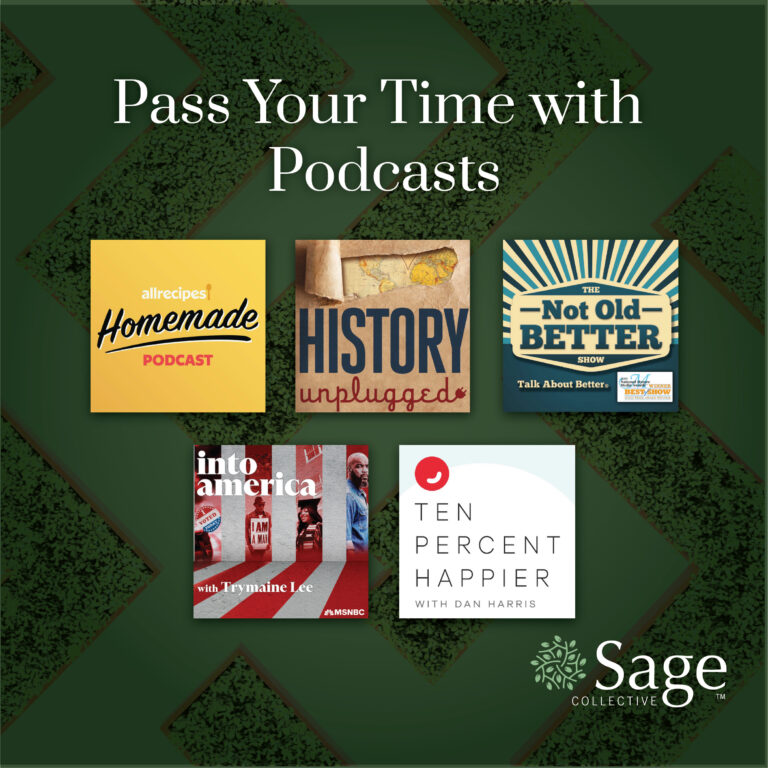
Pass Your Time With Podcasts: What You Should Be Listening to Right Now

While autumn is a favorite time for many to pick up new books and revisit forgotten ones, podcasts also serve as a great choice for those looking for a mix of entertainment, education and reflection. Podcasts are usually free to listeners and extend knowledge on everything from how to cook healthier meals to entertaining history facts to current government and public policy news. Here are the top five podcasts Sage Collective believes you should be listening to right now: 

Ten Percent Happier

Hosted by Dan Harris, a famed journalist who suffered a panic attack live on national television, Ten Percent Happier explores how keeping your spirits up is imperative to aging well. After his traumatic on-air experience, Harris discovered meditation and now invites experts on the subject, scientists and celebrities to share their own epiphanies and experiences of success. Topics on the show vary from What to do About Eco-Anxiety to Joy Vs. Happiness. Anyone interested in hearing motivational stories about coming back from what seems like life’s lowest points will enjoy this outstanding selection. 

Into America

Into America is a podcast that sheds light on what it’s like to be Black in America. Trymain Lee, Pulitzer Prize and Emmy Winning journalist hosts the enlightening show. The MSNBC-produced podcast explores how public policy and government action, and the lack thereof, affects Black Americans’ lives. Previous topics include The Vaccine Gap, Justice for Black Farmers and The Black Firefighters of 9/11. Into America produces an in-depth look into the continued injustice that Black Americans endure and what it means to hold the country to its obligations.

History Unplugged

A show that celebrates obscure historical facts and events, History Unplugged uncovers and revisits lost stories that changed the world. History buffs and amateurs alike will enjoy the unique narratives, expert interviews and call-ins that make up the podcast. Previous episodes of the show include The Japanese-Americans Who Fought Nazis in Europe, Electric City: Ford and Edison’s Vision of Creating a Steampunk Utopia and An Alternate History of the Lincoln Assassination Plot. Chocked full of amusement, myth-busting and a range of wisdom, almost everyone is guaranteed to relish over History Unplugged.

Not Old – Better

Award-winning journalist Paul Vogelzang hosts the fascinating, high-energy podcast, Not Old – Better. The inspiring show reminds its audience weekly that it is never too late to pursue your passion and purpose in life. Vogelzang invites a mix of well-known entertainers, intriguing role models and ordinary people to discuss aging and how to overcome the stereotypes and stigma that come with it. Previous guests have included actress Octavia Spencer, Dr. Anthony Fauci and activist Khary Lazarre-White. Listeners and critics alike have praised the podcast as a perfect choice for middle-aged and older adults.

Homemade

Homemade is the paramount podcast for anyone looking to explore the food world. Foodies and amateur cooks alike will enjoy the entertainment show hosted by industry insider Sabrina Medora and author Martie Duncan. Each week the hosts invite celebrated cooks from all walks of life to discuss and share their memories behind their favorite recipes. Past topics on the show include growing ingredients at home, delicious vegan options, repurposing leftovers and rethinking prep time. Get your cooking gear ready, put on your apron and prepare to join the fun with Homemade

Whether you need something to listen to on your way to work or while doing chores around the house, don’t hesitate to press PLAY on any of these wonderful podcasts. You can listen to each of the podcasts on their websites, Spotify, Apple Music, Amazon Music or Google Podcasts. 

› Back to top
« back
10.05.21 | Community

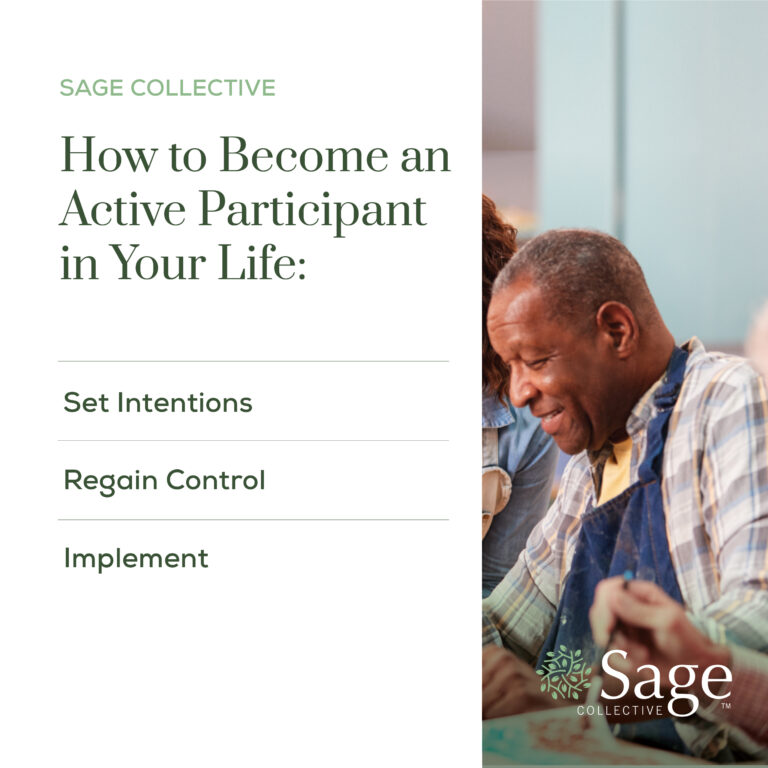
How to Become an Active Participant in Your Life

For many older adults, feeling like they’re losing control of their lives is all too common. While this can be a normal reaction to aging, it can also leave people feeling overwhelmed when confronted with the stigma of getting older. Actively participating in your life is a powerful way to combat these feelings and stigmas, leading to a more vibrant life. So, how can you learn to become an active participant in your life? Let’s take a look. 

Set Intentions

First, set goals to transition from a passive participant to an active participant in life. It can be challenging to reflect on what aspects of life might be obstructing your progress, but it’s imperative for regaining control. Your intentions and goals act as a foundation for the rest of the process for becoming active participants. So, honesty with yourself is essential.

To keep yourself motivated and engaged, write down each of your intentions and keep them in a place you will regularly see. Remember, each person’s intentions are unique to their own personal experience and goals. 

Regain Control

Adjusting your thought process to become less passive can be challenging, but the more you do it, the easier it becomes. By believing in yourself and your words, you regain control and take power away from negative thoughts.

Again, writing down your thoughts is an effective resource for change. Make a list of words that come to mind that diminish your power, confidence or ability. Once you have a few written down, modify the language to become active and uplifting. The next time you feel control shrinking, revisit the list and remind yourself that you have the power to enact change in any way.

Implement

It’s easier to enact change once you set intentions and understand that you can control involuntary thoughts. If wanting to go back to school is on your list, enroll in your first class. If eating more nutritious meals is your goal, start researching recipes with healthier foods. At first, taking steps to live actively may feel uncomfortable and daunting, but remember that years of passive living are being dismantled. 

While being an active participant in life is the ultimate goal, it’s important to be kind to yourself on the journey. Even if your path changes, the experiences and tools you learned along the way are something of which you can  be proud.

At Sage Collective, we believe actively participating in your life is an aspect of vibrant living that helps find purpose, shepherd confidence, and inspires goals for older adults. It’s never too late to become active participants in our lives.

› Back to top
« back
09.30.21 | Community

The Importance of Checking In

It’s easy to assume that someone may be happy just from the smile on their face. However, behind closed doors, many people are dealing with heightened feelings of isolation, anxiety and depression. At Sage Collective, we believe that connection, engagement and shared relationships are vital to our health and well-being, as well as that of many other folks in our community. Checking in on friends, family and neighbors can be an effective way of looking out for one another and fostering those connections.  

Checking in on someone you haven’t seen in a while, who works remotely or who recently lost a loved one is a powerful gift. The simplest way of checking in is just asking how someone is doing. Reaching out can be done in person, through text, email or phone, and these small efforts can go a long way to show support and invite them to share more with you.

Words are meaningful, but in many circumstances, actions can be even more powerful. Delivering meals is a thoughtful way of checking in during difficult times or extending a hand to those who may have trouble accessing healthy foods. Whether it’s some of your own leftovers or cookies you’ve baked, your thoughtfulness will bring joy and comfort. Offering a form of mutual aid, a topic we talk more about here, is another inspirational way to foster engagement and check in on neighbors, since we know that extending aid to others by sharing knowledge and skills is a great way to develop ‘care webs’ — an element of mutual aid — in the community.

It’s essential that while checking in on those around you, you do not forget about yourself. It can be dangerous to ignore your physical and mental health while helping others. Valuable practices to utilize for checking in on yourself include asking yourself how you are feeling, meditating and taking advantage of other mindful habits that benefit your health and happiness.

Cropped shot of a cheerful elderly woman hugging her husband who's in a wheelchair at home during the day
› Back to top
« back
09.07.21 | Sage Advice®

The Cognitive Benefits of Scrapbooking

What might seem like an old-fashioned and outdated mode of documenting the past, scrapbooking is a pastime that can celebrate and relive memories while getting one’s creative juices flowing — especially for older adults. It is also a great way to curate family heirlooms for all to appreciate. Today, we’re sharing how immensely beneficial scrapbooking can be for improving cognitive function and reinforcing relationships. 

Scrapbooking provides a wealth of mental, emotional and physical benefits for older adults. Research has shown that the process of scrapbooking helps expand new neural pathways in the brain, a process called neuroplasticity. The hobby is a fantastic way for those suffering from dementia or memory loss to train their brains to be grounded in the present while still reflecting on the past. 

Scrapbooking is also a creative outlet, allowing participants to express emotions they might usually refrain from expressing. It permits people to revisit their past experiences, relieving their  negative emotions and regaining a sense of purpose. Scrapbooking also offers advantages for relieving stress as cognitive abilities deteriorate. 

Scrapbooking can also be fun to do with others. As a social experience, it fosters communication, lightening the effects of loneliness and creating the opportunity to explore common interests with others. Scrapbooking is also a marvelous way to bring families together and engage in an intergenerational activity that strengthens bonds. By helping older adults sort through the memorabilia of the past — photos, letters, drawings, etc. — to build scrapbooks from their own documented memories, younger generations also have the opportunity to establish their own connections to their family histories that will last long after the scrapbook is finished. 

When looking for engaging, emotionally-rich and creative activities to keep your mind active and revel in the past, put scrapbooking at the top of the list!

If you want to learn more about how to scrapbook, check out the video below.


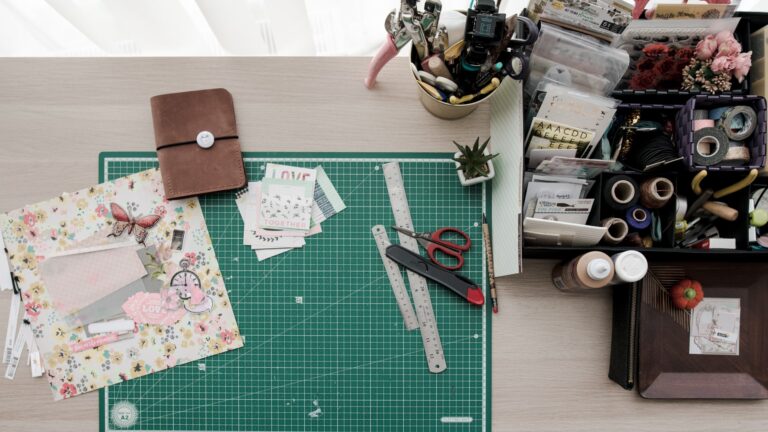
A table is laid out with material used for scrapbooking.
› Back to top
« back
08.31.21 | Sage Advice®

The art of meditation and how you can benefit from it

In today’s fast-paced society, rife with uncertainty and change, devoting time to self-care and introspection is more important than ever. At Sage Collective, we support and encourage participating in spiritual or religious experiences as part of our 9 Ways of Vibrant Living. Meditating can be one such practice, revealing a sense of discovery and heightened mindfulness. 

What is meditation?

Meditation is an ancient technique used by many for more than 3,500 years; historians have traced its utilization back to the formation of many world religions. The purpose of meditation is to help train oneself in practicing mindfulness while learning to better understand feelings and emotions to create a healthy perspective. 

Meditating can feel uncomfortable and challenging at first, since it uses techniques that may be unfamiliar. However, this ancient tradition can lead to immense personal growth and understanding for those who find their groove in the routine.

Health benefits

Research suggests that meditating can have enormous positive effects on managing symptoms of anxiety and depression and reducing stress. Other conditions that can benefit from meditation include chronic pain, insomnia, high blood pressure and IBS. And while experts have yet to completely understand how meditation works, research clearly demonstrates the holistic impact it has on one’s health and well-being.    

Tips for how to meditate 

  • Get comfortable. Find a place to sit upright with legs crossed instead of laying down, as it can be easy to find yourself falling asleep. However, comfort is key for meditation, so avoid positions that may prove uncomfortable after several minutes.
  • Keep a timer. It can be easy to worry about time as you start meditating; setting a timer for small increments of 5 to 10 minutes of meditation can be an easy way to avoid that. Scheduling a specific time of the day to meditate can also help with consistency — leading to more beneficial results. 
  • Focus on breathing. It can be an easy way to get into the flow of meditation. As you breathe, observe what it feels like as air enters your body and then leaves it. 
  • Be open-minded. As a new experience, it may be hard to empty your mind during meditation. Emotions and feelings that might be uncomfortable may arise, but don’t ignore them; acknowledge their presence and slowly bring your focus back to breathing. 
  • Don’t give up. It’s also important to remember that meditating takes time and practice to build as a habit, and expecting too much too fast can lead to disappointment. Hang in there, and discover just how much of a life-changer meditation can be!

There is no “right way” to meditate — it is a practice meant to be personalized for each individual and will feel different for everyone. For those looking to become more mindful, self-aware and gain better control over feelings such as anxiety and stress, meditation may be the technique for you. 

If the art of meditation interests you, check out the video below. The 10-minute tutorial guides beginners through their first meditation and is narrated by a mindfulness coach and teacher,  John Davisi.


A woman sits cross legged with her hands resting on the top of her legs – meditating.
› Back to top