Play Is Serious Business: How Games Keep Minds Sharp and Hearts Connected
For older adults, “play” isn’t a luxury—it’s a wellness strategy. With vibrant living as the north star for our Sage Collective®community, games light up memory and attention, spark laughter, and create regular reasons to gather. They turn ordinary afternoons into moments of joy and connection, while quietly strengthening cognitive skills we use every day. Games also align beautifully with our values of mindfulness, cultural arts, and lifelong learning—inviting curiosity, creativity, and community into the weekly routine.
Why games work
Games ask our brains to plan, recall, focus, and adapt—all in a low-stakes, high-fun setting. Shuffling strategies in spades or solving a puzzle nudges working memory. Learning a new rule set challenges flexibility. Even light competition boosts alertness and motivation. Add conversation across the table, and you’ve got a powerful recipe for reducing isolation and lifting mood—key ingredients of a vibrant life.
What to play (and why)
- Card classics: Spades, bid whist, bridge, gin rummy, and UNO encourage tactics, teamwork, and table talk.
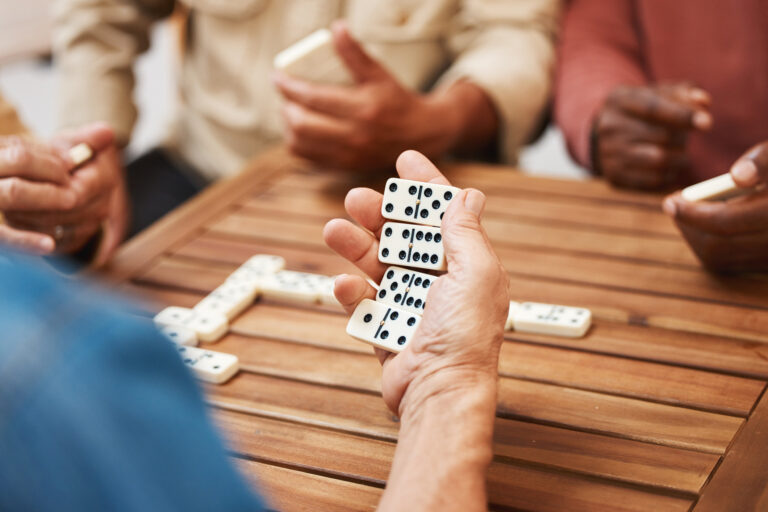
- Tiles and numbers: Dominoes, mahjong, and Rummikub build pattern recognition and quick mental math.
Word lovers’ picks: Scrabble, Bananagrams, and Quiddler exercise vocabulary and recall.
Strategy—gentle to grand: Qwirkle and Ticket to Ride are approachable; chess offers deeper study with clubs and online lessons. - Cooperative options: Try Pandemic or Forbidden Island where players team up—ideal for mixed skill levels.
- Puzzles and trivia: Jigsaws, crosswords, and trivia nights are perfect for drop-in participation.
- Digital delights: Tablet apps (solitaire, crosswords, word games) or online platforms like Trickster Cards or Board Game Arena let you play with friends across town—or grandkids across the country.
Make it social on purpose
Treat games as appointments with joy. Rotate hosts, pair play with tea or a simple potluck, and keep the vibe welcoming with “table rules” like time limits and quick demos for newcomers. Intergenerational play is especially rich: invite teens to teach a new title, or ask elders to pass down dominoes strategy. The exchange of skills becomes its own conversation—mindful, mutual, and alive.
Start your own game circle
Where: Libraries, community and senior centers, faith communities, or building common rooms.
When: Pick a consistent time (e.g., Wednesdays at 2 PM) so participation becomes habit.
How: Begin with 2–3 easy-to-learn games, set up a sign-in sheet, and assign light roles—host, rules coach, scorekeeper.
Grow: Add theme days (word games, tile games), small tournaments, or “teach-and-play” sessions. Consider a “bring a friend” month to welcome new faces.
Access for every body and brain
- See it clearly: Use large-print cards, high-contrast boards, and good lighting.
- Hear it well: Choose quieter rooms; add soft surfaces to absorb sound.
- Stay comfortable: Chairs with arms, tables at the right height, and scheduled stretch breaks.
- Pace matters: Keep rounds short, celebrate participation over points, and offer cooperative games to lower pressure.
- Inclusive rules: House-rule tricky mechanics; allow note cards for memory aids.
Keep the momentum
Create a group chat or simple email list to share schedules and easy tutorials. Snap photos (with permission) to celebrate wins and welcome newcomers. For remote friends, set up a monthly online game hour—camera on, snacks encouraged.
In the spirit of Sage Collective®—where vibrant living means engaging mind, body, and spirit—games are a practical pathway to sharper minds, steadier moods, and stronger community. Whether you’re shuffling a well-worn deck or learning a brand-new strategy, you’re investing in your health and your sense of belonging. Pick one game this week, call a friend, and deal yourself into connection.