« back
04.01.26 | Health & Wellness

The Life You Want Isn’t Behind You

A new book by British psychoanalyst Adam Phillips, The Life You Want, arrived March 31, 2026, from Farrar, Straus and Giroux. In it, Phillips explores a deceptively simple set of questions: Where do our ideas about the lives we want come from? Why is it often so hard to claim them? And what happens when we stop merely enduring life and begin taking our own desires seriously?

At Sage Collective®, those questions feel especially resonant. We observe over and over that one of the great misunderstandings about aging is that the person you are should already be settled and complete. That by later life, ambitions should recede and experimentation should narrow. But lived experience tells a different story.

Later life often brings clearer longing, not less longing. It also brings a more honest relationship to possibility and becoming, offering up the chance to ask: What do I want now? What feels alive to me now? What kind of life am I still shaping?

Phillips’s work offers a powerful corrective to the idea that growth belongs only to the young. His argument is that many of us are preoccupied with having lives we genuinely want and enjoy, rather than lives we merely tolerate, but that this becomes more difficult in cultures that constantly sell enjoyment while often making real fulfillment harder to access.

This insight lands with particular force in American society, which tends to flatten older adulthood into maintenance, decline, or retrospection.

Sage Collective® has long offered another vision: later life can be a period of creativity, contribution, discovery, and renewed self-definition. Not because aging is easy or uncomplicated, but because it can free us from certain performances and bring us closer to what matters.

The Difference Between the Life You’re Given and the Life You Choose
One of Phillips’s recurring concerns is the tension between the life we say we want and the life we may actually want underneath habit, expectation, or cultural scripting. In a 2024 essay that anticipates themes of the new book, he writes that “the life you want” may be partly hidden from you, shaped by unconscious desire and by the values your culture has handed you.

That idea feels especially meaningful for older adults, many of whom have spent decades fulfilling roles with devotion and integrity: raising families, building careers, caregiving, providing stability, doing what was necessary rather than what was always most wanted.

Then, at some point, a new question arrives: Now that I am no longer defined entirely by obligation, what is calling me?

For some, the answer is creative. Painting. Writing. music. Gardening. Dance. For others, it is intellectual: finally studying a subject long deferred, joining a discussion group, returning to language learning, engaging in civic life. For still others, it is relational or spiritual: deepening friendships, mentoring younger generations, volunteering, reconnecting to joy.

These are expressions of selfhood, and they remind us that the life you want isn’t necessarily a dramatic reinvention. Sometimes it is a subtle but profound realignment that embraces more honesty and room for delight.

Wanting Is Not a Problem to Solve
One of the most compelling ideas in Phillips’s new book is the notion that wanting itself shouldn’t always be treated as a problem to eliminate. Rather, it is a condition of being alive, something that keeps life open and unfinished. This is a beautiful idea for any stage of life, but especially in later life. Too often, older adults are expected to be realistic in ways that are really a demand to become smaller, and to settle into what is. But vibrant living requires something else. It asks us to stay in relationship with curiosity, protecting the part of ourselves that still leans toward experience, meaning, surprise, connection, beauty, challenge, and growth.

At Sage Collective®, we might call this an ethic of aliveness. Not chasing novelty for its own sake or denying loss. But remaining open to the unfinishedness of being human. We think there is dignity and wisdom in that openness.

Beyond Self-Improvement
Phillips hasn’t written a conventional self-help book. Reviewers note that The Life You Want avoids easy formulas and prescriptive advice in favor of focusing on the complexity of inner life, contradiction, and desire. Older adults don’t need lectures on how to optimize every hour, improve every habit, or turn every year into a productivity project. What many people need instead is permission to reflect, to revise, to listen inwardly, to question inherited scripts, and to imagine a future that still belongs to them.

The Wisdom of Unfinishedness
There is a subtle pressure in our culture to arrive at a final version of ourselves. To become fixed, explained, complete. But human beings aren’t finished projects. Phillips’s work often pushes against rigid prescriptions, and one recent review of the book describes his sensibility as anti-authoritarian, skeptical of premature conclusions, and interested in conversation over dogma. At Sage Collective®, that feels profoundly aligned with the spirit of lifelong learning. To grow older wisely is to become more spacious in questions, not to have all the answers. And perhaps that is one of the gifts of later life: greater freedom to live the questions with intention.

A More Expansive View of Aging
If Phillips’s thesis suggests that many of us are still trying to discern the life we truly want, Sage Collective® would add this: there is no age limit on that discovery.

The life you want may not look like the one you imagined at 30 or 50. It may be quieter, richer, stranger, more communal, more creative, more local, more spacious, more purpose-filled. It may involve service. It may involve art. It may involve rest. It may involve beginning again. What matters is whether your life feels inhabited by you, not one that mirrors someone else’s template of success.

That is part of the wisdom older adults carry: the growing ability to distinguish what is culturally prescribed from what is personally meaningful. To know that fulfillment lives in engagement, in curiosity, in relationships, in contribution, in joy, and in the ongoing courage to become more fully oneself.

In this sense, The Life You Want speaks to possibility. And for those of us committed to vibrant living, that possibility remains gloriously, necessarily unfinished.


› Back to top
« back
03.04.26 | Spirituality & Religion

Belonging as Brain Protection

We often think of brain health in personal terms: diet, exercise, sleep, mental stimulation. But one of the most powerful protective factors for cognitive vitality is not found in a supplement bottle or fitness tracker. It is belonging.

At Sage Collective®, we’ve been speaking about joyspan — measuring life in moments, not just years. Yet joy rarely flourishes in isolation. It grows in relationship. And neuroscience now confirms what many older adults have always known: Connection isn’t optional.  It is neurological protection.

The Brain Is Wired for Relationship
Human beings are biologically social. Our nervous systems co-regulate with one another. When we sit with someone who listens deeply, our heart rate slows. When we laugh together, stress hormones decrease. When we feel seen and valued, the brain’s reward pathways activate.

Belonging releases oxytocin, often called the bonding hormone,  which reduces inflammation and buffers stress. It supports memory formation and emotional regulation.In contrast, chronic loneliness elevates cortisol, increases cardiovascular strain, and accelerates cognitive decline. This is why public health experts now recognize social isolation as a major health risk. In other words, belonging isn’t sentimental. It is structural.

Cognitive Protection Through Community
Research increasingly shows that social engagement helps build cognitive reserve — the brain’s ability to adapt as it ages. Regular conversation challenges memory recall. Shared storytelling stimulates language networks. Group activities demand attention, coordination, and flexibility. Even navigating social nuance exercises executive function.

In short: community is cognitive cross-training. But it’s not only about mental stimulation. It’s about emotional safety. When we feel that we matter, we are more likely to remain engaged with life. Engagement protects the brain.

The Loneliness Paradox
Many older African Americans report that their social networks shrink with age — through retirement, relocation, or the loss of peers. Yet at the same time, later life can offer deeper, more meaningful relationships when the focus is on intention, not proximity.

Belonging is built through:

  • Regular rituals of connection
  • Shared purpose
  • Intergenerational exchange
  • Cultural continuity
  • Spaces that encourage participation rather than spectatorship

Belonging thrives where people are invited not just to attend, but to contribute.

Intergenerational Relationships as Neural Bridges
One of the most powerful forms of belonging may be intergenerational connection. When older adults mentor, teach, or simply share stories with younger people, something remarkable happens. Wisdom meets curiosity. Experience meets imagination. Both brains benefit. In this way, older adults experience renewed purpose and activation of long-term memory networks. Younger individuals gain empathy and perspective.

The brain does not age out of relevance. It deepens in narrative richness because belonging bridges generations, strengthening neural pathways in both directions.

Designing for Belonging
If belonging protects the brain, then it becomes a design question. How do we design communities, programs, and daily rhythms that encourage interaction?

At Sage Collective®, vibrant living is not a solo pursuit. It is relational. Belonging happens when:

The goal becomes meaningful exchange, not busyness.

Micro-Moments That Matter
Belonging does not require a large network. It requires consistency and authenticity.

A weekly coffee with a neighbor.
A standing phone call.
A book club conversation.
A choir rehearsal.
A shared walk.

Small, repeated interactions strengthen neural pathways associated with trust and reward. The brain begins to anticipate connection, and that anticipation itself releases dopamine.

From Isolation to Invitation
Aging narratives often emphasize independence. Independence matters, of course. But interdependence may matter more. To belong is not to lose autonomy. It is to gain reinforcement. It is to know that one’s presence changes the room.

Belonging tells the brain: You are safe. You are valued. You are needed. These messages ripple through physiology.

A Protective Equation
If stress accelerates aging, and connection buffers stress, then belonging becomes a protective layer around cognitive health. Not as a luxury or as an afterthought, but as a pillar.

Lifespan gives us time. Healthspan gives us capacity. Belonging gives us resilience. And resilience sustains the brain. At Sage Collective®, we believe life expands with age. Belonging is one of the ways it expands — outward into community and inward into neural strength.

Consider, then, that the future of brain health may not lie solely in what we do alone, but in how deeply we connect.

› Back to top
« back
01.21.26 | Uncategorized

Winter is a Season of Inner Strength

Winter is often spoken about as something to endure. The cold. The darkness. The waiting. Yet at Sage Collective®, we see winter differently—not as a season of absence, but as a season of inner strength.

In nature, winter is not a pause in life. It is a shift in strategy. Trees drop their leaves to conserve energy. Roots grow deeper beneath frozen ground. Systems adjust to protect what matters most. Growth continues, though it is quieter and less visible.

This seasonal wisdom offers a powerful metaphor for aging well.

Later in life, strength is no longer defined by constant motion or outward productivity. Instead, it shows up as adaptability, discernment, and care. Winter invites us to practice these forms of strength—to move more intentionally, to listen more closely, and to honor the rhythms of both body and mind.

Inner strength, in this season, may look like adjusting expectations. Choosing warmth over speed. Selecting activities that sustain energy rather than deplete it. It might mean embracing shorter days as an invitation to read, reflect, or learn—without pressure to optimize every hour.

For many older adults, winter also brings emotional terrain. Memories surface more easily in quiet months. Loneliness can feel sharper. Yet these moments, too, can become sources of strength when met with compassion rather than resistance. Sitting with reflection—rather than rushing past it—builds emotional resilience. It affirms that our inner lives deserve attention.

At Sage Collective®, we believe vibrant living includes stillness. It includes seasons of consolidation, not just expansion. Winter supports this work by encouraging practices that strengthen us from the inside out: meaningful conversation, creative engagement, intellectual curiosity, and restorative rest.

Consider the older adult who continues daily movement—not to chase fitness goals, but to maintain balance and confidence. Or the one who joins a lecture series or discussion group during winter months, discovering that learning brings light into shorter days. Or the friend who makes a habit of checking in—recognizing that connection is as essential as warmth.

These are acts of winter strength. They are quiet, intentional, and sustaining.

Importantly, inner strength is not cultivated alone. Community plays a vital role—especially in winter. Shared spaces, gatherings, and conversations offer warmth that extends beyond temperature. They remind us that resilience is collective, built through interdependence and care.

Rather than resisting winter, Sage Collective® invites you to partner with it. To allow its slower pace to guide you inward. To ask what needs tending beneath the surface. To trust that strength does not diminish when life grows quieter—it often becomes clearer.

As this season unfolds, may you recognize winter not as a time of waiting, but as a time of preparation. A season that strengthens roots, sharpens awareness, and supports the ongoing work of becoming—steady, resilient, and deeply alive.

› Back to top
« back
01.15.26 | Health & Wellness

The Courage to Rest

Rest is often misunderstood. In a culture that prizes productivity and momentum, rest is framed as a reward—something earned only after effort—or worse, as a sign of disengagement. At Sage Collective®, we see rest differently. We see it as an essential practice of vibrant living, and one that requires real courage.

The courage to rest begins with listening. To the body’s signals and emotional needs, recognizing that constant activity is not the same as vitality. For older adults, rest is not an absence from life—it is a way of staying meaningfully present within it.

As we age, rest becomes less optional and more intentional. It supports physical health, cognitive clarity, and emotional resilience. But beyond these benefits, rest carries a deeper wisdom: it allows us to shift from striving to attunement—from doing to being.

Choosing rest often means unlearning a lifetime of messages that equate worth with output. It may mean saying no without justification. Letting a day unfold without a checklist. Sitting quietly with a book, a memory, or a view, allowing time to soften and expand. These choices can feel surprisingly brave.

Rest is also deeply restorative for the mind. In stillness, reflection becomes possible. Thoughts settle. Feelings surface without demand. Creativity often returns—not through effort, but through space. Many people find that their most meaningful insights arrive not while pushing forward, but while pausing.

At Sage Collective®, we believe vibrant living includes honoring rhythm. Just as nature moves through cycles of activity and dormancy, so do we. Rest is the season that allows integration—of experience, learning, and emotion. Without it, even the most meaningful engagement becomes unsustainable.

Importantly, rest is not a solitary act alone. It is supported by environments and communities that value care over constant productivity. Spaces that welcome pause. Relationships that respect limits. Cultures that understand that renewal strengthens participation rather than diminishes it.

Consider the older adult who protects quiet mornings as a form of self-respect. Or the one who schedules rest with the same intention as social time, recognizing both as essential. Or the community that creates room for reflection, conversation, and shared calm.

These acts are not retreats from life. They are investments in it.

As the year begins, Sage Collective® invites a reframing: rest not as a reward for endurance, but as a rhythm that sustains engagement, curiosity, and connection. The courage to rest is the courage to trust that life does not slip away when we pause—that it often becomes clearer.

Rest, practiced with intention, is not the opposite of vibrant living. It is one of its most powerful expressions.

› Back to top
« back
01.07.26 | Mental Wellbeing

The Gentle Art of Beginning Again

January arrives quietly. Light lingers a little longer on windowsills. The world exhales after the rush of the holidays. At Sage Collective®, we see this moment as an invitation to begin again.

So much of the new year narrative is built on urgency: fix what’s broken, set bigger goals, become something else. But vibrant living, as we understand it, is not about erasing who we’ve been. It’s about staying open to who we are still becoming.

Beginning again, later in life, carries a different wisdom. It is less about speed and more about discernment. Less about proving and more about aligning. It honors continuity—recognizing that experience, memory, and perspective are not obstacles to growth, but its foundation.

For some, beginning again may be as simple as returning to a practice once loved. A woman who hasn’t touched a piano in decades sits down to play—not to perform, but to remember how music feels in her hands. A man joins a discussion group after years of hesitation, discovering that curiosity still thrives in conversation. Another reframes a daily walk—not as exercise to complete, but as a ritual for noticing light, weather, and thought.

These are not dramatic transformations. They are meaningful renewals.

Earlier in life, beginnings often feel expansive and outward-facing—new careers, new cities, new identities. With time, beginnings take on a quieter power. They move inward, toward clarity, sustainability, and purpose. They ask not “What should I do next?” but “What deserves my attention now?”

At Sage Collective®, we believe aging is an active, dynamic process. Growth doesn’t end—it evolves. Beginning again might mean learning for the joy of learning, without pressure to master. It might mean listening more deeply in relationships, offering presence rather than advice. It might mean letting go of expectations that no longer serve, making room for what does.

Importantly, beginnings rarely happen alone. They are shaped and sustained by community. A shared meal that turns into a meaningful conversation. A class, lecture, or creative gathering that reawakens curiosity. A space where one feels welcome to arrive exactly as they are. Interdependence—the give and take of encouragement, reflection, and belonging—makes gentle beginnings possible.

As we step into a new year, Sage Collective® invites you to consider a different posture toward January. Not one of self-improvement, but of self-attunement. Not urgency, but intention.

You might ask yourself:

  • What feels quietly inviting right now?
  • What part of my life is asking for renewed attention—not pressure?
  • What can I begin again with patience and care?

Beginning again does not require a perfect moment, a clean slate, or a bold declaration. It happens in small choices, repeated with kindness. Vibrant living begins not with becoming someone new, but with honoring who you are—and taking the next gentle step forward.

› Back to top
« back
11.23.22 | Sage Advice®

The Marvelous Benefits of Joining a Book Club

Whether you like spending your evenings escaping into your favorite novel or you only get to read a book a few times a year, there’s no question that reading is good for you. Regardless if you’re a devotee of reading or not, one of the best ways to elevate your experience – and keep yourself accountable – is by joining a book club. That’s why today, we’re exploring the benefits that come with book clubs and how you can join your own. 

There are plenty of reasons you should join a book club, but one of the most alluring is the opportunity to make new friends or engage with old ones. If you’re looking to meet others throughout your community, joining a book club is a great way to do so. Beyond engaging with a new crowd, book clubs provide safe spaces to observe and understand new perspectives from the books you read and those around you. 

Not only are you able to engage with others, but book clubs promote brain health! If you’re the type who rushes through books, this will help challenge you to engage deeper with the content and digest what you’re reading better. And by doing so, you and your group will encourage each other to practice critical thinking skills in the discussion!

Book clubs can be great for anyone who loves reading but isn’t the best at making time for it. By joining a book club, you’re automatically committing to reading a book within a specific time limit, and you’ll have a whole team of people to keep you accountable. And hopefully, throughout the process, you’ll be able to foster a continuing love of literature. 

If you’re interested in joining a book club but not sure where to find one, ask friends, search local Facebook Groups, head to your local library or bookshop, or start one yourself! 

› Back to top
« back
03.09.21 | Sage Advice®

Vibrant Living Breakdown: Engagement in Family Life

Nine Ways of Vibrant Living is Sage Collective’s innovative model that champions more meaningful, engaged lives for older adults, and that serves as the backbone of our philosophy. We celebrate and uplift components of vibrant living that span from health and wellness, to arts and culture, to spiritual enrichment — but tying it all together is an underlying feeling of connectedness, care and love. That’s why our eighth component is engagement in family life.

We believe in the deeply transformative power of being part of a community. At Sage Collective, we are committed to providing a genuine sense of community for everyone involved with us, from program participants to building residents to our partners and beyond. Family doesn’t just refer to the bloodlines you’re born into; it also incorporates the loving connections you make throughout a lifetime and the people that you choose to surround yourself with. 

When it comes to our plan for programming and housing, we want to take an active role in developing meaningful friendships and embracing existing family ties. To do so, we intend to provide opportunities such by creating camaraderie-generating participant activities, offering family support activities and policies for our residents as well as the incorporating intergenerational teaching, learning and cultural activities.

The latter piece of this, intergenerational teaching, is particularly important to us when we think about engagement in family and community life. Older adults have a wealth of wisdom and experience to pass onto younger generations — but in the other direction, so too do the youth have much to teach their elders. We believe that honoring and encouraging relationships across generations is the key to creating more unified, meaningful lives for all.

From interpersonal family dynamics, to a more expansive view of community, we’re excited to begin fostering these relationships with and for our participants.

A young African American woman embraces an older African American woman who wears a silk headscarf
› Back to top
« back
03.04.21 | Sage Advice®

Vibrant Living Breakdown: Engagement in Spirituality or Religion

At Sage Collective, we believe in meaningful and engaged lives for older adults. Nine Ways of Vibrant Living is our innovative model that champions just that. Our model incorporates everything from health and wellness to cultural immersion to spiritual enrichment — and today, we’re diving deep into the last of those three key elements. Take a closer look at our seventh component of vibrant living, engagement in spirituality or religion:

Religious Roots

Religion is part of our history. You can read our full story here, but before we were Sage Collective, we were Tabernacle Senior Citizens Project (TSCP). TSCP was started in 1978 by Reverend Louis Rawls, founder and pastor of Tabernacle Missionary Baptist Church on Chicago’s South Side. Rev. Rawls founded both Willa Rawls Manor (a high-quality housing development for older adults) and TSCP in an effort to better support the aging members of his congregation. Today, we carry on his legacy and tradition by continuing to build upon his concern and care for the community. 

The Impact of Engagement

As Rev. Rawls demonstrated, the church is the center of many African American communities. It’s not just a place to practice worship; it’s also a vital hub for civic engagement, for participating in and finding community and for discovering meaningful connections with one another.

Engagement in spirituality or religion touches on all parts of vibrant living. It brings with it life purpose, inner peace and a greater sense of connection to both the people and the world around you. In fact, studies have shown that those who engage in spiritual or religious activities live longer — some claiming even up to four years longer.

For all these reasons and more, we’ve included engagement in spirituality or religion in our Nine Ways of Vibrant Living. We support and encourage participation in spiritual and religious experiences for followers of all faiths residing in Sage facilities, or involved in Sage programs. 

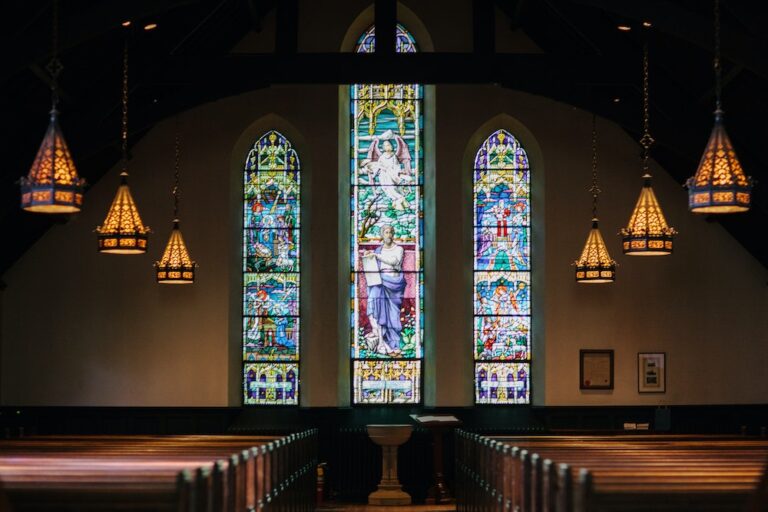
The inside of a church, with rows of pews before large stained glass windows
› Back to top