« back
12.28.21 | News

2021: A Year in Review

2021 was a year of growth for Sage Collective, as we continued evolving and celebrating exciting milestones. Today, we’re reflecting on the past year and sharing our proudest achievements:

Breaking Ground on Our King Drive Properties

In 2020 we acquired our first two properties located in the Bronzeville community at 4108 and 4112 South King Drive. This year, we were proud to officially break ground on the project. In September 2021, Sage Collective’s Board of Directors and various members of our wonderful construction crew including, the General Contractor Shevaz Freeman, Owner’s Rep Ernest Brown and the Architect Gregory Williams, gathered to celebrate the event. In addition to the groundbreaking, we sat down with Board Member and VP for Legal & Development Dwain Kyles to learn more about the project and how it contributes to Sage’s vision for the future.  

Partnership With Chicago Commons

At the beginning of April, Sage Collective collaborated with Chicago Commons, a longstanding trailblazer of change in our community. The two-part live Q&A event addressed both facts and myths regarding the COVID-19 virus and vaccination that was new to everyone at the time. Rear Admiral (Ret) James M. Galloway, MD, FACP, FACC, who is one of the brilliant minds on our leadership team, helped answer a variety of questions and addressed the medical inequity in Black and Brown communities. Stay tuned for upcoming events with Chicago Commons in the new year.

Expanding our Vision

Following the launch of our website, blog and social media platforms in 2020, we have continued to share engaging material that enlightens audiences with our rich vision for the future. Along with elaborating on our 9 Vibrant Ways of Living, we were able to have meaningful conversations that amplified our work as we continue celebrating the historic community of Bronzeville. With the wealth of knowledge and experience from everyone on our team, we have broadened a collective understanding of older adult living, health and wellness that has led us to become changemakers in our community, where we are focused on creating innovative strategies for older adult programming, residences and lifestyles. 

We can’t wait to continue sharing this journey with you and see what 2022 brings!
› Back to top
« back
12.21.21 | Community

A Brief History of The Chicago Bee

The promotion of Bronzeville’s rich history is something we continuously advocate for and give voice to at Sage Collective. That’s why today, we’re spreading the word about The Chicago Bee, a local paper that dominated the press for decades while distinguishing itself by its promotion of Black history.

History

The Chicago Bee, often referred to as Chicago Sunday Bee, was founded by Anthony Overton in 1925. Overton was a successful banker and manufacturer, and the first African American to lead a major conglomerate (Overton Hygienic Company, which was a cosmetics business). After its founding, the Bee moved into the now-famous Art Deco building located at 3647-55 S. State St., which is now on the U.S. National Register of Historic Places and recognized as a Chicago Landmark. 

The Bee’s staff included many esteemed members of Chicago’s community of writers and journalists at the time. Chandler Owen, a talented writer, became editor of the Bee after moving to Chicago in the 1920s and worked with other savvy editors including Ida B. Wells and Olive Diggs. During the World War II years, when men were in active military duty, the majority of the writing staff were women, which allowed them unprecedented autonomy and opportunity for advancement. 

The Bee covered a wide range of issues of the day. It was the first newspaper to support the efforts of the Brotherhood of Sleeping Car Porters, the nation’s first all-Black labor union created during conflicts at The Pullman Company. It also supported and covered the Black women’s club movement, and gained distinction from other newspapers in the Chicago press in their publicity of Black history and literature.  

Following Overton’s passing in 1946, the Bee was briefly run by his two sons but ceased operation in 1947. Even though very little of the historic newspaper has survived today, it is still recognized as one of the most influential and acclaimed papers of the 20th century. 

Through Sage Collective’s vision, we are proud to contribute to the legacy of African American culture, community and success that is, and always has been, the heart and soul of Bronzeville.

The Chicago Bee front page from May 4, 1941
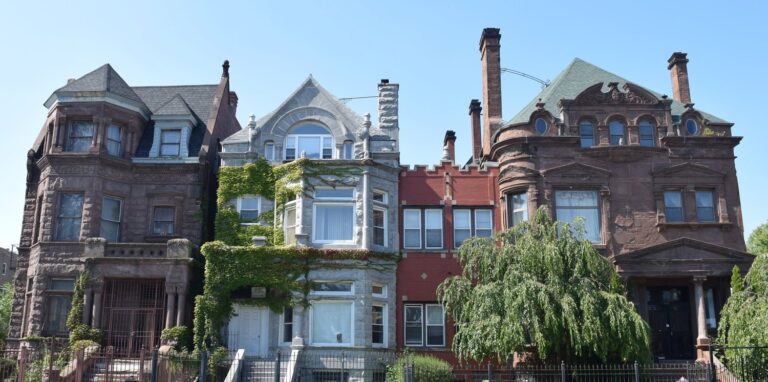
The Chicago Bee Building
› Back to top
« back
11.11.21 | News

A Brief History of The South Side Community Arts Center

Widely recognized for its vibrant arts and music scenes, the Bronzeville neighborhood takes pride in its rich past. Throughout history, various venues around the neighborhood have been essential for Black artists across the community. One of Chicago’s Historic Landmarks, The South Side Community Arts Center, is one of those precious places that has had a lasting impact. 

Making History

Determined to overcome the seemingly never-ending hardships brought by the Great Depression, President Franklin Roosevelt introduced the New Deal and its Work Progress Administration (WPA) to the country. Sponsored by the WPA, The Federal Arts Project (FAP) acted as a subsidiary program to the larger workforce development effort by expanding community art centers across the country. 

In 1938, FAP agents visited Chicago in hopes of creating an arts center focused on exhibiting the work of African American artists. Progress on the center’s development advanced once South Side businessman Golden B. Darby emerged as a champion for the project. With his insistence that the center reside on Chicago’s South Side, Darby organized the Community Arts Center Committee to advocate for the center’s location. Members of the committee included local leaders and artists from the Arts and Craft Guild, the lone group for African American artists in the community, including Margaret Burroughs, Eldzier Cortor, Bernard Goss, Charles White, William Carter, Joseph Kersey and Archibald Motley, Jr. 

An exhibition at South Side Community Arts Center, Courtesy of Tony Smith

After extensive fundraising through various lavish events, including Margaret Burroughs’ famous “Mile of Dimes” and considerable philanthropy from the Bronzeville community, a property was finally secured at 3831 S Michigan Ave. Originally serving as a residence, the grand brownstone building was nearly 50 years old and in need of considerable renovations and rehabilitation. 

After years of remodeling under the careful direction of Bauhaus designers Hin Bredendieck and Nathan Lerner, the restored structure became the South Side Community Arts Center (SSCAC) and featured classrooms, performance and lecture halls and a marvelous gallery. The grand opening showcased an exhibition of the work of numerous local African American artists’ including Charles White, Eldzier Cortor and Archibald Motley Jr, — finally allowing space for artists in the community to thrive.

Following its inauguration, the SSCAC was host to numerous celebrity guests, including First Lady Elenor Roosevelt, who visited the SSCAC in May 1941 to deliver its dedication speech. The address received widespread media attention and was broadcast nationwide via CBS Radio. Less than a year later, the United States entered World War II, and funding for the FAP was significantly reduced. 

A Community Hub

Throughout The SSCAC’s history, a rich, diverse range of art has graced its famous walls. In 1944, accomplished artist Rex Goreleigh became the SSCAC’s administrative director. Goreleigh furthered the center’s programming, introducing workshops on drawing, painting, sculpture, performing arts, photography and more to the community. Famous writers, including Gwendolyn Brooks, became associated with the SSCAC’s writing center, and legendary musicians like Nat King Cole and his Trio performed there often. 

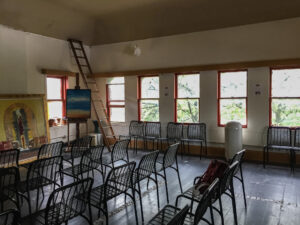
A classroom inside of The South Side Community Arts Center, Courtesy of Eric Allix Rogers

More than 80 years after the center’s founding, The SSCAC stands proud in the Bronzeville neighborhood. After countless renowned exhibitions from distinguished artists, the SSCAC continues to thrive, and has been named a National Treasure and added to the National Register of Historic Places. 

Today, The SSCAC remains the only arts center opened by the WPA centered on African American art that is still open in its original building. Permanent collections from the center’s founding artists reside alongside new artwork from emerging artists. A staple of the Bronzeville community, The SSCAC serves as an inspiration for artists and communities across the nation,  and remains vital and relevant as a very special place where connections blossom and relationships prosper. 

You can visit The South Side Community Arts Center Tuesday through Saturday from 12 to 4 p.m. Admission is free. However, donations are strongly encouraged to support the center’s future. You can also visit their website here to discover their local events, exhibitions and collections. 

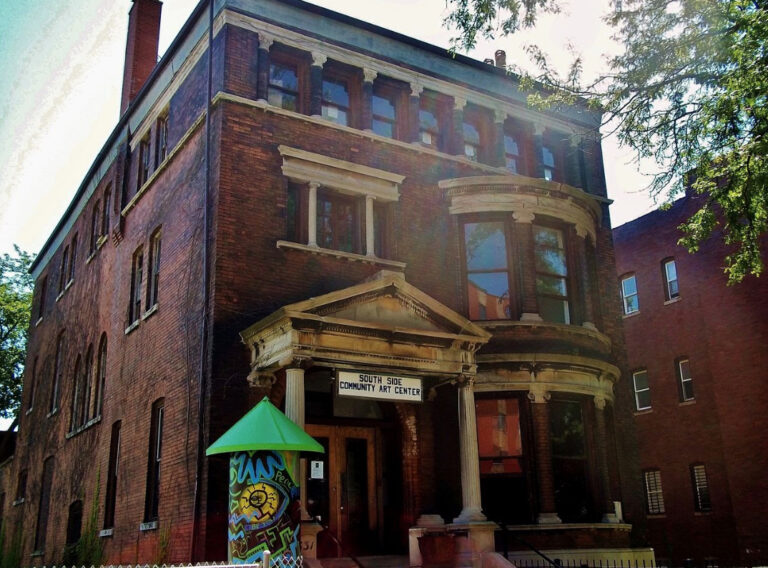
Bronzeville’s South Side Community Arts Center
› Back to top
« back
11.04.21 | Community

Practicing Empathy: How it Can Create a More Vibrant World

Empathy is a universal tool for understanding. By definition, it’s a way of emotionally recognizing and validating what someone else is feeling. At Sage Collective, we approach all of our work with empathy, and believe that with practice, exhibiting empathy improves communication, heightens creativity and enhances appreciation.

What the Science Says

Empathy has always been an essential skill for communication and understanding. However, it’s more important now than ever, in light of the enormous levels of stress many confront today. Displaying empathy serves as an antidote for burnout and anxiety — producing beneficial effects on wellbeing and supporting positive social interactions for individuals and groups alike.

According to a recent study published by the Journal of Social and Personal Relationships, empathy in older adults may play a sizable role in shaping the regularity and types of support they exchange within social networks and the ramifications associated with the exchanges. The study concludes that empathetic older adults grant emotional and instrumental support more often than older adults who display less empathy. Furthermore, those who are more empathetic enjoy greater levels of emotional comfort from their networks and uphold more positive moods throughout the day, producing significant exchanges of care and more powerful controls over temperament. 

Practicing Empathy

Because empathy is a crucial element for collective support, everyone can benefit from improving their skills, whether practicing empathy comes naturally or must be learned. However, with time, an empathetic approach to all situations becomes instinctive. Here are three kinds of empathy that a person may encounter and should strive to understand:

Cognitive empathy consists of putting yourself in someone else’s situation to try and
comprehend what they might be going through at that moment. Even if it involves
something unfamiliar, the effort of understanding can transform anyone’s perspective. 

Somatic empathy requires the ability to experience someone else’s feelings. It usually
includes physical reactions to situations like feeling sick, sweating or blushing.

Active listening is a large part of being empathetic, but taking action and giving appropriate feedback takes the skill a step further. Affective empathy entails understanding the emotion someone else is feeling and answering accordingly. The awareness establishes personal connections and leads to a more profound concern for others’ feelings. 

As more and more people recognize the power of using empathetic techniques, a mutual understanding and compassion will blossom, empowering our communities to become more vibrant and rich in emotional support.

› Back to top
« back
11.02.21 | Community

Why You Should Start Journaling if You Aren’t Already

As part of our 9 Ways of Vibrant Living at Sage Collective, we are proponents of any activity that reduces stress and increases overall wellbeing. Burnout and stress are familiar to many of us, and it’s imperative to find someone or something to help manage, control and minimize these feelings. Journaling is one delightful distraction that diminishes those anxieties and comes with a handful of other benefits, particularly for older adults.

 Along with functioning as a means to escape the world around you, journaling is an enjoyable way to pass the time and alleviate any stressors that come with life. It’s difficult to separate the positive and negative experiences that happen to us daily. Conveying thoughts by putting pen to paper is one way to help release emotions while granting your mind and body relaxation from the tension you may have been feeling.

Many people who journal will often follow guides and roadmaps that help steer their process, but the brilliant thing about journaling is that the quality and subject of your writing are less important than the actual act. Having the opportunity to write about anything from daily stressors and positive affirmations to poetry increases creativity, along with numerous other cognitive benefits.

For many older adults, cultivating a routine can combat negative sleeping habits and feelings of isolation. Like any new habit, we recommend journaling at the same time each day to help create a routine, whether you start your day with a few morning pages or reflect before going to bed.

Along with improving sleep and reducing loneliness, jotting down experiences, emotions and everything in between helps older adults preserve their memories and sharpen their minds. Journaling acts as a memory aid and, with time, can generate more effective recollections for older adults.

Whether you prefer to write in a notebook or favor typing on your phone, journaling is a fantastic way to reduce the stressors of your daily life and sharpen your memory and mind. If you want to learn more about how to begin journaling or need a boost of creativity to start the process, check out the video below.

› Back to top
« back
09.30.21 | Community

The Importance of Checking In

It’s easy to assume that someone may be happy just from the smile on their face. However, behind closed doors, many people are dealing with heightened feelings of isolation, anxiety and depression. At Sage Collective, we believe that connection, engagement and shared relationships are vital to our health and well-being, as well as that of many other folks in our community. Checking in on friends, family and neighbors can be an effective way of looking out for one another and fostering those connections.  

Checking in on someone you haven’t seen in a while, who works remotely or who recently lost a loved one is a powerful gift. The simplest way of checking in is just asking how someone is doing. Reaching out can be done in person, through text, email or phone, and these small efforts can go a long way to show support and invite them to share more with you.

Words are meaningful, but in many circumstances, actions can be even more powerful. Delivering meals is a thoughtful way of checking in during difficult times or extending a hand to those who may have trouble accessing healthy foods. Whether it’s some of your own leftovers or cookies you’ve baked, your thoughtfulness will bring joy and comfort. Offering a form of mutual aid, a topic we talk more about here, is another inspirational way to foster engagement and check in on neighbors, since we know that extending aid to others by sharing knowledge and skills is a great way to develop ‘care webs’ — an element of mutual aid — in the community.

It’s essential that while checking in on those around you, you do not forget about yourself. It can be dangerous to ignore your physical and mental health while helping others. Valuable practices to utilize for checking in on yourself include asking yourself how you are feeling, meditating and taking advantage of other mindful habits that benefit your health and happiness.

Cropped shot of a cheerful elderly woman hugging her husband who's in a wheelchair at home during the day
› Back to top
« back
09.23.21 | Community

Bronzeville’s Renaissance

Bronzeville’s dynamic history is ever-shifting as time progresses. Originating in the early 20th century, the neighborhood became an epicenter for Black culture, a topic you can read more about here. Today, Bronzeville is experiencing a renaissance, and Sage Collective is proud to be a part of it. The community is growing in numbers that haven’t been seen for decades and it’s welcoming businesses that add a breath of fresh air to the neighborhood’s enduring culture.

Data provided by the 2020 Census show that while the larger city of Chicago continues to grow at slow rates, neighborhoods in and around Bronzeville are embracing populations at much faster rates. Between 2010 and 2020, Bronzeville and its surrounding communities increased their populations by nearly 15%. And while Black populations in Chicago decreased by nearly 10% over the decade, there is a resurgence of Black middle class communities contributing to the population boom in neighborhoods like Bronzeville. 

It’s not hard to understand why both individuals and families are choosing to make Bronzeville their next home. The epicenter of culture and arts not only continues to celebrate its historic roots through revitalization projects like the transformation of the old Marshall Fields Building, but it also welcomes new businesses, developments and organizations with open arms. Sage Collective, as an organization with deep roots in Bronzeville, is excited about this trend, even as upscale, luxury housing moves steadily into the neighborhood, our goal remains the same — providing vibrant, high-quality living through affordable housing for older adults.

Unprecedented developments like Hatch 41, a new coworking space, and future projects like Bronzeville Lakefront act as catalysts for the neighborhood’s expansion. And with each new development, the intersecting goals of exploration, enrichment and celebration are present. 

As we shepherd new families, entrepreneurs, artists and changemakers back to Bronzeville, our values remain clear; we are a neighborhood where relationships are nurtured, community thrives and culture prevails. The renaissance of Bronzeville is upon us, and Sage Collective is proud to be a leader in it, inspiring neighbors and residents alike to participate in our movement.

A sign reads, "Welcome to Bronzeville"
› Back to top
« back
09.09.21 | Sage Advice®

5 Books You Have to Pick Up This Fall

Autumn is a perfect time to revisit books you may have forgotten about while enjoying the warm summer months — or to pick up a few new books that may be on your radar. Reading is an excellent opportunity to escape the world around us, discover a new interest, de-stress and find enjoyment in others’ stories. Whether you’re a fan of poetry, memoirs, mysteries or romance, we have some picks that you might enjoy.

Poet Warrior by Joy Harjo

Poet Warrior, Joy Harjo 

As the first Native American to hold the U.S. Poet Laureate, Joy Harjo returns to her roots with Poet Warrior, sharing her relationship with poetry and music. Her new memoir is a mix between eloquently written poetry and intimately written prose. Harjo explores the music and stories that she grew up hearing and reflects on the connections poetry, her ancestry and her community share with each other. For lovers of poetry, introspection and culture, this book is a great read for you.

Unbound by Tarana Burke

Unbound: My Story of Liberation and the Birth of the Me Too Movement, Tarana Burke

Burke dissects her childhood, from growing up as a Black girl in the Bronx to becoming one of the most influential people in America as the founder of the Me Too movement. The personal memoir exposes parts of the trauma Burke experienced after being sexually assaulted. However, her story is largely positive as she shares how she used this experience to create positive change. Anyone looking for motivation and inspiration will find it in this book.

Smile: The Story of A Face by Sarah Ruhl

Smile: The Story of a Face, Sarah Ruhl

After giving birth to her twins, author, and playwright Sarah Ruhl realized that she couldn’t move half of her face. Ruhl later discovered she had developed Bell’s palsy. Smile is Ruhl’s intimate story of learning to live with a disability later in life. Ruhl’s emotional essays offer insights into what it feels like to learn to maneuver through the difficulties of life. Smile is a fabulous read for anyone wanting to learn more about the deeply personal relationships humans have with their bodies.

The Sentence by Louise Erdrich

The Sentence, Louise Erdrich

The Pulitzer Prize and National Book Award-winning author’s new darkly humorous story takes place in Minneapolis in 2020. The Sentence follows a previously-incarcerated Indigenous woman working at a bookstore haunted by one of their most annoying customers. The worker tries to solve the haunting mystery while exploring the difficulties of racism and corruption that infests the city. The Sentence is a fantastic choice for those looking to smile at a story reflecting on the year of racial injustice in a dark, comical style. 

Five Tuesdays In Winter by Lily King

Five Tuesdays in Winter: Stories, Lily King

Five Tuesdays in Winter examines the good and bad of human connection. Lily writes about meaningful relationships that can form from the most minute of bonds. The book of stories — formulated with previously published and new work — finds characters grappling with change, all yearning to be loved. Five Tuesdays in Winter is a terrific choice for those interested in learning more about the power and importance of human connection. 

Whether you prefer reading alone, with a companion or in a book club, don’t hesitate to pick one or two of these books up for yourself this fall. You can find them at your neighborhood libraries, local bookstore or online. And as with all good reads, spread the word to friends and family when you finish a book you really love!

› Back to top
« back
09.07.21 | Sage Advice®

The Cognitive Benefits of Scrapbooking

What might seem like an old-fashioned and outdated mode of documenting the past, scrapbooking is a pastime that can celebrate and relive memories while getting one’s creative juices flowing — especially for older adults. It is also a great way to curate family heirlooms for all to appreciate. Today, we’re sharing how immensely beneficial scrapbooking can be for improving cognitive function and reinforcing relationships. 

Scrapbooking provides a wealth of mental, emotional and physical benefits for older adults. Research has shown that the process of scrapbooking helps expand new neural pathways in the brain, a process called neuroplasticity. The hobby is a fantastic way for those suffering from dementia or memory loss to train their brains to be grounded in the present while still reflecting on the past. 

Scrapbooking is also a creative outlet, allowing participants to express emotions they might usually refrain from expressing. It permits people to revisit their past experiences, relieving their  negative emotions and regaining a sense of purpose. Scrapbooking also offers advantages for relieving stress as cognitive abilities deteriorate. 

Scrapbooking can also be fun to do with others. As a social experience, it fosters communication, lightening the effects of loneliness and creating the opportunity to explore common interests with others. Scrapbooking is also a marvelous way to bring families together and engage in an intergenerational activity that strengthens bonds. By helping older adults sort through the memorabilia of the past — photos, letters, drawings, etc. — to build scrapbooks from their own documented memories, younger generations also have the opportunity to establish their own connections to their family histories that will last long after the scrapbook is finished. 

When looking for engaging, emotionally-rich and creative activities to keep your mind active and revel in the past, put scrapbooking at the top of the list!

If you want to learn more about how to scrapbook, check out the video below.


A table is laid out with material used for scrapbooking.
› Back to top