« back
08.27.25 | Sage Advice®

Labor Day 2025: Honoring the Legacy, Lifting the Future

Labor Day is more than a long weekend or a signal that summer is winding down. For African American older adults—many of whom broke barriers, bent norms, and built lives through hard-won labor—it remains a powerful reminder of pride, perseverance, and progress.

Last year, we reflected on the historical struggle for workplace justice and the vital role African Americans played in shaping labor movements. This year, we return to those themes with a renewed focus on legacy—how the labor of Black elders continues to ripple through families, communities, and history.

The Work Beneath the Work
For many older African Americans, the jobs they held were more than sources of income—they were acts of resistance and care. Domestic workers, Pullman porters, teachers, assembly-line workers, civil servants, postal employees, and union stewards not only contributed to the economy—they held communities together.

They showed up early and stayed late. They wore uniforms pressed with quiet pride. They saved paychecks to send children to college, support churches, and fund movements. And often, they did this while being paid less, respected less, and expected to do more.

Their labor was not only physical—it was emotional, cultural, and deeply relational. It forged a sense of identity, purpose, and dignity, even when external validation was absent.

The Inheritance of Resilience
Today, many younger generations carry with them the values instilled by those elders: discipline, self-respect, a belief in collective advancement. These are the invisible inheritances passed down alongside well-worn tools, family recipes, and framed union cards.

This Labor Day, we honor not just the work African American seniors did—but the spirit with which they did it. Their legacy shows up in every Black-owned business, every first-generation graduate, every grandchild who now has the freedom to pursue work fueled by passion rather than necessity.

Progress, Still in Motion
Even as we celebrate the strides made, we must also recognize the labor injustices that persist. African American seniors are disproportionately affected by inadequate retirement savings, rising healthcare costs, and limited access to age-friendly employment opportunities. In many ways, the fight they once waged on picket lines and office floors continues in policy debates and caregiving systems today.

At Sage Collective®, we believe in honoring labor not just with words—but with action. That means advocating for equitable access to meaningful work, dignified aging, and intergenerational opportunity. It means listening to the stories of our elders, and letting their experiences shape our pursuit of justice.

This Labor Day, Let Us Remember:

  • The mop and broom wielded by Ella Watson in Gordon Parks’ iconic American Gothic were symbols of both oppression and pride.
  • The hands that built railroads, cleaned schools, and cared for children also wrote poetry, organized unions, and sowed the seeds of cultural flourishing.
  • And that labor, in all its forms, is worthy of honor—not just one day a year, but every day we benefit from its fruits.

To our elders: thank you for your labor, your legacy, and your love. May we carry your example forward with reverence and resolve.
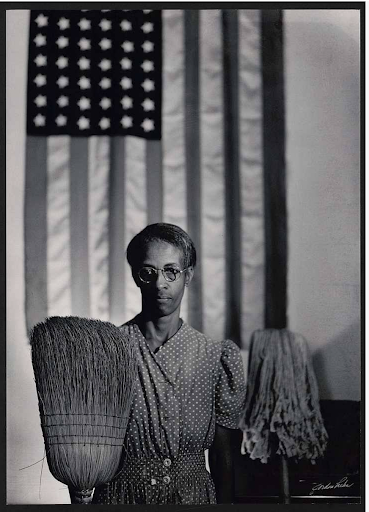
Gordon Parks, American Gothic, Washington, D.C., 1942. Photograph shows Farm Security Administration employee Ella Watson standing with mop and broom in front of American flag. The Gordon Parks Archives in the Library of Congress.
› Back to top
« back
12.15.22 | Health & Wellness

The Benefits of Befriending Your Neighbors

At Sage Collective, we strive to foster feelings of value and community. And, with engagement in social life as one of the pillars in our 9 Ways of Vibrant Living, it should come as no surprise that we believe in the impact and importance of neighborliness within communities. That’s why today, we’re highlighting the significance behind knowing your neighbor.

Drawing data from a Pew Research Center study conducted in 2019, research shows that a majority of Americans don’t know most of their neighbors — and they barely talk to the ones they do know. Over the last several decades, our connections with our neighbors have been fraying. Because we’re leaving our homes with screens in our hands, and since the pandemic made us even less likely than we were before to stop and chat with new folks, most of the people living around us are strangers.

Befriending neighbors ensures a helping hand in times of need, provides new friends to explore your larger neighborhood and builds strong communities, which leads to healthier, happier and longer lives. Whether you know everything about your neighbor or they’re a stranger to you, here are a few actions you can take to ensure an enriching relationship in your community: 

The simplest way to start a friendship is by sharing a smile. Because smiling is a mood-enhancing action, not only will you feel better and less stressed, but those around you will perceive you as a welcoming person. The easy effort is the best way to start an introduction or continue a conversation where it left off. 

Small talk is something we all love to hate, but embracing the awkwardness of not knowing someone helps a ton with getting to know them! Don’t shy to chit-chat about everything from food and drinks to the latest movies and television shows to find shared interests. 

The bottom line is there’s no downside to knowing your neighbor. Befriending your neighbor only comes with a wealth of benefits. So step outside and start a conversation today!

› Back to top
« back
08.24.21 | Community

The power of collective impact

Sage Collective was founded in 1978 as the Tabernacle Senior Citizens Project, Inc. (You can learn more about our story here.)  As the focus of our work has evolved over time, we took the opportunity to rebrand as Sage Collective in 2019.

Sage refers to the great wisdom and spiritual connection we strive to claim. Collective defines the sense of community engagement and interaction we seek, but it means much more than that. 

When we say “collective,” we make reference to the positive ways we can address the systemic challenges and inequities in our society — by forging connections among people and ideas. Joined together, we function as catalysts for change to lighten individual burdens, creating stronger and more purposeful communities along the way.

Moving forward from the essential meaning of “collective,” we embrace the powerful idea of collective impact, which recognizes the diverse strengths and weaknesses of communities, while working with neighborhood leaders and resources to achieve a more just and equitable future … particularly for older adults.  We are always seeking to align ourselves with conceptual frameworks and organizations that are taking bold and efficacious approaches to transformative change through collective impact. We believe that Together Chicago is such an organization:

Together Chicago came into being in 2017 as a mix of local leaders in business, faith, nonprofit and government questioning how they could do more to address the root cause of violence the city was experiencing.

The organization’s vision is to prevail as a catalyst of change and inspire hope within underserved and underrepresented Chicago communities. Together Chicago has five main areas of focus for creating change through the methodology of collective impact: economic development, education, violence reduction, gospel justice and faith community mobilization. Concentrating on these different areas, Together Chicago partners with a variety of local businesses, nonprofits, churches and schools to achieve equitable justice and further their mission of collective impact.

If you’re out and about the last weekend in August, Together Chicago is participating in Chicago Peace Week’s Peach Walk & Festival, to be held at the Dusable Museum of African American History on Saturday, August 28. The event will start at 9 a.m. at the museum’s sculpture garden with a gathering of faith leaders throughout the city for a Peace Walk, directly followed by the Peace Festival. You can learn about the Peace Walk & Festival here.

Collective impact is more of a movement than it is a phrase, providing a roadmap for communities to enable change by inviting everyone to take action together. And as we have seen in communities across our country and around the world, empowering and uplifting all voices is critical to ensuring the success of a collective goal.

Functioning as more than just part of our name, the term “collective” celebrates our rich identity and codifies our beliefs into a framework of mutual engagement for an equitable future.

Text overlay reads "At Sage Collective, we believe that humanity is at its very best when we empower and uplift all voices in pursuit of a collective goal."
› Back to top