« back
10.26.21 | Community

Revolutionizing Bronzeville and the Construction World: A Conversation with Shevaz Freeman

As renovations continue at our 4108 and 4112 S King Drive properties located in the heart of Bronzeville, we sat down with the owner of Urban Intention Design and Build and general contractor for our project, Shevaz Freeman, to discuss her experiences in the world of construction and the progress of the projects. 

Urban Intention Design and Build is a Black woman-owned-and-operated company, which is rare in the general contractor domain. Tell us about your experience in the industry, and what has led you to where you are today. 

Running my own contracting company, Urban Intention Design and Build, as an African American woman absolutely comes with its struggles, but every experience I’ve had — good and bad — has led me to where I am today. Simple things like respect and recognition can be difficult to attain at times, and because of my gender, I have to maneuver within the environment with a whole different perspective. However, because of my significant experience in the field, I’ve discovered how best to navigate challenges I may encounter to my advantage. 

I’ve picked up numerous techniques and approaches that give me a leg up because I feel like I’ve had to work harder than a lot of other people in my field to get where I am. I’ve trained myself to have heightened attention to detail. Sometimes, contractors don’t have the “big picture” in mind and don’t fully pay attention to the endless little things happening on a project. Because I’ve been doing this for over ten years, I find it extremely easy to fully envision the outcome of every project from day one, which is a significant skill in contracting.

What does your role as General Contractor for Sage Collective Properties’ King Drive project involve? 

As the General Contractor for the King Drive projects, it’s my job to oversee and run almost everything. I am responsible for managing budgets, directing on-site subcontractors and conducting meetings with the Sage Collective Properties’ team. However, at the end of the day, my most important job is to make sure that the client gets what they envisioned at the beginning of the process. 

Who are the others who are involved in the renovation of these King Drive buildings, and how does your role fit in? How do you view the nature and value of the relationships you have been able to build with other professionals on this job?

Throughout the renovation, numerous people will walk in and out of the properties. Two people I’ve worked very closely with over the past few months are the Owner’s Rep and experienced General Contractor, Ernest Brown, and the Architect, Gregory Williams. Mr. Brown has provided me with incredible guidance and oversight throughout the project, and his rich expertise in the field has been remarkably beneficial and essential to our process. 

Overall, I’ve unquestionably developed relationships on this job that I believe will continue to provide immense value in the future. It’s so important in jobs like this that each party involved feels like they are valued as part of a larger team, and that is a feeling that is certainly present here. No matter who I am talking to daily, everyone understands that their role is essential for the project’s success.

Explain to us how you see Sage Collective’s vision of having “vibrant, high-quality, affordable living for older adults” come to life in the residences you are currently helping them rehab?

I originally went to school for interior design, so because of that training and the fact that I’m such a visual person, I’ve been able to envision Sage Collective’s concept since the project’s very early stages. As soon as I was introduced to the vision for “vibrant, high-quality, affordable living” and walked through the properties, there was no question that it was achievable, and day by day, I’m witness to its progress. 

Since we strive to make sure that every element is constructed with thought and care, the process behind bringing the vision to life is very meticulous. We discuss everything from the sizing of doors to the proportion of the showers to the type of lighting assembled in each room to make sure we specifically address the needs of older adults. All details throughout the process are constantly brought into question to ensure perfection. 

Do you think that there is enough emphasis by the government or social service organizations on meeting the need for affordable housing in this community? If so, please give other examples. If not, why not?

The need for affordable housing, especially in neighborhoods like Bronzeville, has been ignored by the government for the longest time. However, I think more and more organizations are finally stepping up, and we are moving in the right direction. One of the initiatives putting money into communities like Bronzeville that have essentially been ignored by the city for years is Mayor Lightfoot’s INVEST South/West.

The wonderful thing is that the initiative has encouraged even more developers to invest in affordable housing construction like the upcoming 43 Green projects. Having been born and raised on the south side, seeing the amount of interest currently being poured into the communities holds a special place in my heart. But with that said, the progress is long overdue, and there is still a long way to go until affordable housing needs are met. 

How does your perspective as a contractor inform your view of the future of the availability of affordable housing in Chicago?

In 2021 material costs for almost all aspects of home building and renovation skyrocketed, and they continue to go up. The shift over the past year also means that low-income families aren’t making the extra money they need to afford market-rate housing, making affordable housing even more in demand than ever before. Generally, historic properties like Sage Collective Properties’ buildings in the Bronzeville community are selling for very high prices. Some have been renovated, but others have either been abandoned for years or have not been preserved due to the high expenses that come with the process. 

With time, everything deteriorates. So, without any help, it’s hard to keep these properties affordable for residents. The sad reality is that without continued help from the city, state or federal government — and investments from organizations like Sage Collective Properties  —  it’s going to be hard to keep developing affordable housing in these neighborhoods. 

Have there been unexpected or unique issues that you’ve been challenged with on this project?

The King Drive properties are mature buildings in a very historic area that have been neglected for a long time, so of course, there have been surprises that we’ve come across throughout the renovation. We’re discovering issues now that I’m sure didn’t even cross the mind of the previous owners because development is so different now than it was back when these buildings were built. One specific uncovering was the deterioration in some of the exterior bricks. We found small trees, weeds and other plants vibrantly growing in the actual spaces between the bricks, so we’ve had to uproot all of those. 

The one thing I will say is that it is a solid building and has very healthy bones. So, we can still put it back together with ease. Overall, I’m just so happy to see the phenomenal progress we’ve made so far and can’t wait to see the finished product. I’m also very appreciative that Sage has allowed me the opportunity to work on this project and be able to help them create something so wonderful, especially since I’m in my own community doing it!


Shevaz Freeman, General Contractor for Sage Collective Properties’ King Drive Projects & Owner of Urban Intention Design and Build
› Back to top
« back
10.19.21 | Arts & Culture

How Museums Might Reduce Your COVID-19 Stress

One of the largest challenges in modern-day life is finding a treatment for the frequent burnout that most of us feel daily. At Sage Collective, one of our most cherished beliefs is that wellness, health and empowerment should be made priorities in every community. That’s why today, we’re exploring how museums might be the perfect answer to your post-pandemic stress and burnout. 

Many individuals, especially older adults, have faced higher stress levels over the past year and a half than ever before. Feelings of uncertainty and unpredictability due to COVID-19 have also led to many feeling alone, anxious and burnt out, with little reprieve. However, there is growing research that offers tangible steps toward alleviating these negative feelings. 

Often in the present day, many feel like time is limited, and burnout is constant. However, solace can be found in the relaxing and revitalizing spaces of a museum. For many, the knowledge that curated spaces of art and history can provide a wealth of benefits for mental and physical health is new.

Recently, doctors in Belgium received permission to prescribe museum visits to combat the mental health crisis in their country, and similar actions have been implemented in Canada. Patients who get the prescriptions can go anywhere from an intimate art gallery to a fashion exhibition at a history museum. 

The goal behind the three-month-long trial is to promote an engaging learning experience and shift people away from the stress of their daily routines in hopes of having a positive impact on mental and physical health. The museums and exhibitions act as safe and welcoming places for patients to unwind from their day-to-day responsibilities and explore new ideas and areas of interest. Not only does the time off allow patients to catch their breath and spend time with loved ones, but it also acts as a moment of respite from the harsh realities of the pandemic. 

Instead of relying on drug therapies, this mode of enrichment has the possibility to be expanded to other areas of mental health beyond pandemic-related stress and anxiety to alleviating symptoms of depression, psychiatric disorders, anxiety and more. 

Numerous museums, galleries and art centers around Bronzeville present the perfect opportunity for anyone looking to combat stress and relax — in person or virtually. The South Side Community Arts Center, Gallery Guichard, Smart Museum of Art, DuSable Museum of African American History, and Chicago’s Museum of Science and Industry are all wonderful choices to spend an afternoon enhancing your wellbeing and expanding your mind. 

Furniture and a crowd of people fill a bright museum interior.
› Back to top
« back
10.14.21 | Healthy Eating

Pass Your Time With Podcasts: What You Should Be Listening to Right Now

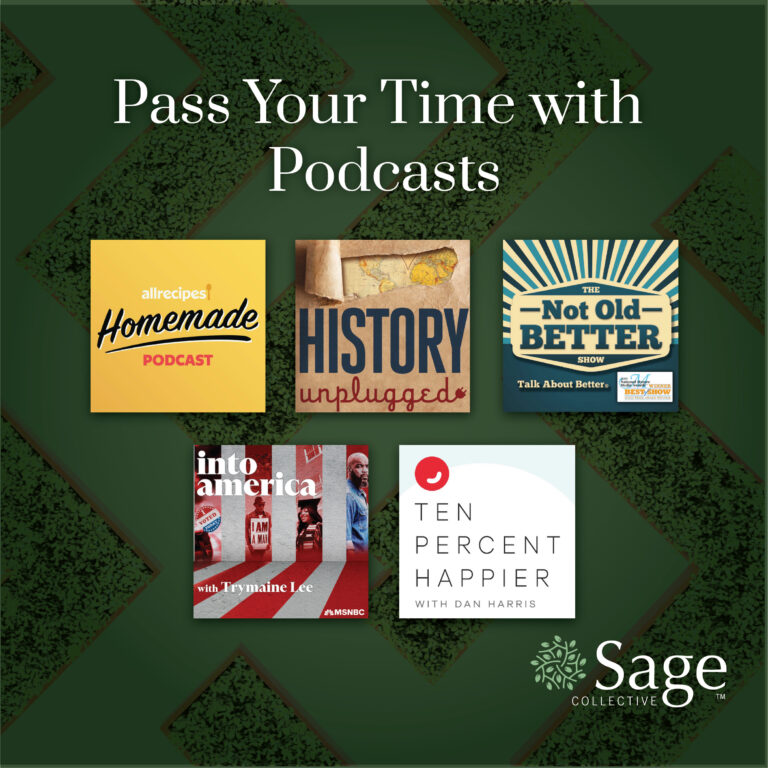
While autumn is a favorite time for many to pick up new books and revisit forgotten ones, podcasts also serve as a great choice for those looking for a mix of entertainment, education and reflection. Podcasts are usually free to listeners and extend knowledge on everything from how to cook healthier meals to entertaining history facts to current government and public policy news. Here are the top five podcasts Sage Collective believes you should be listening to right now: 

Ten Percent Happier

Hosted by Dan Harris, a famed journalist who suffered a panic attack live on national television, Ten Percent Happier explores how keeping your spirits up is imperative to aging well. After his traumatic on-air experience, Harris discovered meditation and now invites experts on the subject, scientists and celebrities to share their own epiphanies and experiences of success. Topics on the show vary from What to do About Eco-Anxiety to Joy Vs. Happiness. Anyone interested in hearing motivational stories about coming back from what seems like life’s lowest points will enjoy this outstanding selection. 

Into America

Into America is a podcast that sheds light on what it’s like to be Black in America. Trymain Lee, Pulitzer Prize and Emmy Winning journalist hosts the enlightening show. The MSNBC-produced podcast explores how public policy and government action, and the lack thereof, affects Black Americans’ lives. Previous topics include The Vaccine Gap, Justice for Black Farmers and The Black Firefighters of 9/11. Into America produces an in-depth look into the continued injustice that Black Americans endure and what it means to hold the country to its obligations.

History Unplugged

A show that celebrates obscure historical facts and events, History Unplugged uncovers and revisits lost stories that changed the world. History buffs and amateurs alike will enjoy the unique narratives, expert interviews and call-ins that make up the podcast. Previous episodes of the show include The Japanese-Americans Who Fought Nazis in Europe, Electric City: Ford and Edison’s Vision of Creating a Steampunk Utopia and An Alternate History of the Lincoln Assassination Plot. Chocked full of amusement, myth-busting and a range of wisdom, almost everyone is guaranteed to relish over History Unplugged.

Not Old – Better

Award-winning journalist Paul Vogelzang hosts the fascinating, high-energy podcast, Not Old – Better. The inspiring show reminds its audience weekly that it is never too late to pursue your passion and purpose in life. Vogelzang invites a mix of well-known entertainers, intriguing role models and ordinary people to discuss aging and how to overcome the stereotypes and stigma that come with it. Previous guests have included actress Octavia Spencer, Dr. Anthony Fauci and activist Khary Lazarre-White. Listeners and critics alike have praised the podcast as a perfect choice for middle-aged and older adults.

Homemade

Homemade is the paramount podcast for anyone looking to explore the food world. Foodies and amateur cooks alike will enjoy the entertainment show hosted by industry insider Sabrina Medora and author Martie Duncan. Each week the hosts invite celebrated cooks from all walks of life to discuss and share their memories behind their favorite recipes. Past topics on the show include growing ingredients at home, delicious vegan options, repurposing leftovers and rethinking prep time. Get your cooking gear ready, put on your apron and prepare to join the fun with Homemade

Whether you need something to listen to on your way to work or while doing chores around the house, don’t hesitate to press PLAY on any of these wonderful podcasts. You can listen to each of the podcasts on their websites, Spotify, Apple Music, Amazon Music or Google Podcasts. 

› Back to top
« back
10.07.21 | Sage Advice®

October is Eat Better, Eat Together Month

October is National Eat Better, Eat Together Month, an annual tradition that celebrates a basic human need that many of us don’t think twice about — eating. While the history behind this special day is elusive, its aim is noble, and encourages us throughout the month to share meals with family and friends, and to promote healthier eating habits. 

When was the last time you ate a meal with your family? Today, it isn’t uncommon for families to take meals separately due to busy schedules and increasing commitments. However, making the time to share a meal with family and friends is something we should all make more of an effort to do. Breaking bread with others has long been associated with improved social skills and allows you to reconnect with the people you care about. Since engaging in social life and family life are part of our 9 Ways of Vibrant Living, we encourage you to make it a priority to carve time out of your month to plan a thoughtful meal (or two) with family, friends or for your community.

Dining together is also linked to better eating habits and reduced stress levels. Preparing meals with a number of food options encourages people to fill their plates with a mixture of nutritious eats. Previously, we explored a number of “superfoods” that can easily be incorporated into any meal, which you can read about here. For those concerned about time constraints, planning preparation for multiple meals is a perfect way to produce sizable servings of healthy meals without the added pressure of making them last minute. To discover more healthy eating tips to implement this month and throughout the future, explore one of our former blogs here

This month, Sage Collective encourages you to dedicate a few nights a week to eating better and eating together. Make a meal with your family, organize a community dinner or simply clean your cupboards of unhealthy snacks and replace them with smarter alternatives.

A family sits around a dinner table serving food to one another.
› Back to top
« back
10.05.21 | Sage Advice®

How to Become an Active Participant in Your Life

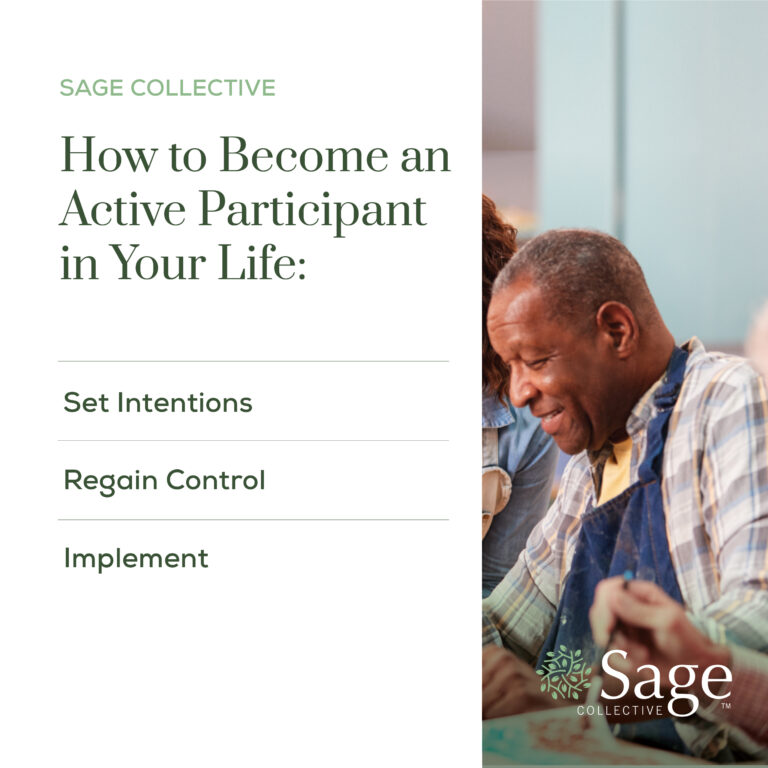
For many older adults, feeling like they’re losing control of their lives is all too common. While this can be a normal reaction to aging, it can also leave people feeling overwhelmed when confronted with the stigma of getting older. Actively participating in your life is a powerful way to combat these feelings and stigmas, leading to a more vibrant life. So, how can you learn to become an active participant in your life? Let’s take a look. 

Set Intentions

First, set goals to transition from a passive participant to an active participant in life. It can be challenging to reflect on what aspects of life might be obstructing your progress, but it’s imperative for regaining control. Your intentions and goals act as a foundation for the rest of the process for becoming active participants. So, honesty with yourself is essential.

To keep yourself motivated and engaged, write down each of your intentions and keep them in a place you will regularly see. Remember, each person’s intentions are unique to their own personal experience and goals. 

Regain Control

Adjusting your thought process to become less passive can be challenging, but the more you do it, the easier it becomes. By believing in yourself and your words, you regain control and take power away from negative thoughts.

Again, writing down your thoughts is an effective resource for change. Make a list of words that come to mind that diminish your power, confidence or ability. Once you have a few written down, modify the language to become active and uplifting. The next time you feel control shrinking, revisit the list and remind yourself that you have the power to enact change in any way.

Implement

It’s easier to enact change once you set intentions and understand that you can control involuntary thoughts. If wanting to go back to school is on your list, enroll in your first class. If eating more nutritious meals is your goal, start researching recipes with healthier foods. At first, taking steps to live actively may feel uncomfortable and daunting, but remember that years of passive living are being dismantled. 

While being an active participant in life is the ultimate goal, it’s important to be kind to yourself on the journey. Even if your path changes, the experiences and tools you learned along the way are something of which you can  be proud.

At Sage Collective, we believe actively participating in your life is an aspect of vibrant living that helps find purpose, shepherd confidence, and inspires goals for older adults. It’s never too late to become active participants in our lives.

› Back to top
« back
09.09.21 | Arts & Culture

5 Books You Have to Pick Up This Fall

Autumn is a perfect time to revisit books you may have forgotten about while enjoying the warm summer months — or to pick up a few new books that may be on your radar. Reading is an excellent opportunity to escape the world around us, discover a new interest, de-stress and find enjoyment in others’ stories. Whether you’re a fan of poetry, memoirs, mysteries or romance, we have some picks that you might enjoy.

Poet Warrior by Joy Harjo

Poet Warrior, Joy Harjo 

As the first Native American to hold the U.S. Poet Laureate, Joy Harjo returns to her roots with Poet Warrior, sharing her relationship with poetry and music. Her new memoir is a mix between eloquently written poetry and intimately written prose. Harjo explores the music and stories that she grew up hearing and reflects on the connections poetry, her ancestry and her community share with each other. For lovers of poetry, introspection and culture, this book is a great read for you.

Unbound by Tarana Burke

Unbound: My Story of Liberation and the Birth of the Me Too Movement, Tarana Burke

Burke dissects her childhood, from growing up as a Black girl in the Bronx to becoming one of the most influential people in America as the founder of the Me Too movement. The personal memoir exposes parts of the trauma Burke experienced after being sexually assaulted. However, her story is largely positive as she shares how she used this experience to create positive change. Anyone looking for motivation and inspiration will find it in this book.

Smile: The Story of A Face by Sarah Ruhl

Smile: The Story of a Face, Sarah Ruhl

After giving birth to her twins, author, and playwright Sarah Ruhl realized that she couldn’t move half of her face. Ruhl later discovered she had developed Bell’s palsy. Smile is Ruhl’s intimate story of learning to live with a disability later in life. Ruhl’s emotional essays offer insights into what it feels like to learn to maneuver through the difficulties of life. Smile is a fabulous read for anyone wanting to learn more about the deeply personal relationships humans have with their bodies.

The Sentence by Louise Erdrich

The Sentence, Louise Erdrich

The Pulitzer Prize and National Book Award-winning author’s new darkly humorous story takes place in Minneapolis in 2020. The Sentence follows a previously-incarcerated Indigenous woman working at a bookstore haunted by one of their most annoying customers. The worker tries to solve the haunting mystery while exploring the difficulties of racism and corruption that infests the city. The Sentence is a fantastic choice for those looking to smile at a story reflecting on the year of racial injustice in a dark, comical style. 

Five Tuesdays In Winter by Lily King

Five Tuesdays in Winter: Stories, Lily King

Five Tuesdays in Winter examines the good and bad of human connection. Lily writes about meaningful relationships that can form from the most minute of bonds. The book of stories — formulated with previously published and new work — finds characters grappling with change, all yearning to be loved. Five Tuesdays in Winter is a terrific choice for those interested in learning more about the power and importance of human connection. 

Whether you prefer reading alone, with a companion or in a book club, don’t hesitate to pick one or two of these books up for yourself this fall. You can find them at your neighborhood libraries, local bookstore or online. And as with all good reads, spread the word to friends and family when you finish a book you really love!

› Back to top
« back
09.07.21 | Sage Advice®

The Cognitive Benefits of Scrapbooking

What might seem like an old-fashioned and outdated mode of documenting the past, scrapbooking is a pastime that can celebrate and relive memories while getting one’s creative juices flowing — especially for older adults. It is also a great way to curate family heirlooms for all to appreciate. Today, we’re sharing how immensely beneficial scrapbooking can be for improving cognitive function and reinforcing relationships. 

Scrapbooking provides a wealth of mental, emotional and physical benefits for older adults. Research has shown that the process of scrapbooking helps expand new neural pathways in the brain, a process called neuroplasticity. The hobby is a fantastic way for those suffering from dementia or memory loss to train their brains to be grounded in the present while still reflecting on the past. 

Scrapbooking is also a creative outlet, allowing participants to express emotions they might usually refrain from expressing. It permits people to revisit their past experiences, relieving their  negative emotions and regaining a sense of purpose. Scrapbooking also offers advantages for relieving stress as cognitive abilities deteriorate. 

Scrapbooking can also be fun to do with others. As a social experience, it fosters communication, lightening the effects of loneliness and creating the opportunity to explore common interests with others. Scrapbooking is also a marvelous way to bring families together and engage in an intergenerational activity that strengthens bonds. By helping older adults sort through the memorabilia of the past — photos, letters, drawings, etc. — to build scrapbooks from their own documented memories, younger generations also have the opportunity to establish their own connections to their family histories that will last long after the scrapbook is finished. 

When looking for engaging, emotionally-rich and creative activities to keep your mind active and revel in the past, put scrapbooking at the top of the list!

If you want to learn more about how to scrapbook, check out the video below.


A table is laid out with material used for scrapbooking.
› Back to top
« back
09.02.21 | Sage Advice®

6 “superfoods” you can incorporate to boost your health

As we continue to change with age, eating healthy can be a vital step in caring for your future self. Taking inspiration from our 9 Ways of Vibrant Living, which you can read more about here, we compiled a list of our favorite “superfoods” you can easily introduce into your diet. These highly nutritious items can be added to a larger meal or snack to boost your health and help to achieve a balanced diet.

Tea

Not only is tea low in calories, it is also a refreshing alternative to coffee, soda and other beverages. Notably high in antioxidants, tea can be a tool for weight management and has anti-inflammatory and anti-carcinogenic (cancer-suppressing) benefits. One study suggested that the regular consumption of white and green teas resulted in a vast reduction of stress for most participants.

Avocados

Avocados are much more than the brunch staple or spread for toast that they’ve become over the last decade. As a great addition to a salad, guacamole or being eaten simply with a pinch of salt and pepper, avocados provide numerous health benefits. Rich in fiber and and healthy fats, avocados can be a great substitute for eggs, mayonnaise, sour cream and even butter.. 

Mushrooms

Mushrooms have been used in Eastern medicine and culture for millennia. They are known to increase the health of the immune system through their many therapeutic properties. After much scientific research, we are learning more about the dramatic positive effects mushrooms can have on preventing cancer, lowering blood pressure and overall increasing well-being. You can incorporate mushrooms into your diet by cooking them along with other vegetables, adding them to salads and pasta or simply frying them with healthy oil. Some of the most popular mushrooms you should look out for at the farmer’s market or grocery store are Portabella, Shiitake, Buttons, Oyster, Enoki and Lion’s Mane. 

Dark Leafy Greens & Cruciferous Vegetables

There is a wide consensus among nutritionists that vibrant green vegetables and those in the cabbage family offer some of the best nutrients and vitamins. These include arugula, kale, collard greens, kohlrabi, radishes and turnips. Most of these are full of zinc, calcium, iron, magnesium, vitamin C, fiber, and what seems like a never-ending list of enriching minerals that can reduce the chances of heart disease and diabetes while lowering blood pressure and preventing some cancers. 

Salmon

Salmon is both tasty and full of healthy protein, B vitamins, potassium and omega-3 fatty acids. Because of its abundance of rich nutrients, salmon has more health benefits compared to other animal products and is known to help prevent heart disease and diabetes. One way you can enjoy this hearty fish is by baking it with lemons, herbs and a healthy (oil, avocado or sesame).  

Garlic

Garlic packs a punch in flavor and delivers huge nutritional benefits, too. Each clove of garlic contains magnesium, vitamin C and fiber, which are all essential to a balanced diet. Research indicates its effectiveness to support the immune system while reducing cholesterol and blood pressure. One study even found that garlic provides antibacterial and antiviral characteristics. 

However you incorporate these superfoods into your meal planning and cooking regimen, they offer delicious and easy ways to boost your overall health and well-being.

A dinner plate contains salmon, mushrooms, tomatoes, broccoli, and a mix of other vegetables and sauce.
› Back to top
« back
08.31.21 | Mental Wellbeing

The art of meditation and how you can benefit from it

In today’s fast-paced society, rife with uncertainty and change, devoting time to self-care and introspection is more important than ever. At Sage Collective, we support and encourage participating in spiritual or religious experiences as part of our 9 Ways of Vibrant Living. Meditating can be one such practice, revealing a sense of discovery and heightened mindfulness. 

What is meditation?

Meditation is an ancient technique used by many for more than 3,500 years; historians have traced its utilization back to the formation of many world religions. The purpose of meditation is to help train oneself in practicing mindfulness while learning to better understand feelings and emotions to create a healthy perspective. 

Meditating can feel uncomfortable and challenging at first, since it uses techniques that may be unfamiliar. However, this ancient tradition can lead to immense personal growth and understanding for those who find their groove in the routine.

Health benefits

Research suggests that meditating can have enormous positive effects on managing symptoms of anxiety and depression and reducing stress. Other conditions that can benefit from meditation include chronic pain, insomnia, high blood pressure and IBS. And while experts have yet to completely understand how meditation works, research clearly demonstrates the holistic impact it has on one’s health and well-being.    

Tips for how to meditate 

  • Get comfortable. Find a place to sit upright with legs crossed instead of laying down, as it can be easy to find yourself falling asleep. However, comfort is key for meditation, so avoid positions that may prove uncomfortable after several minutes.
  • Keep a timer. It can be easy to worry about time as you start meditating; setting a timer for small increments of 5 to 10 minutes of meditation can be an easy way to avoid that. Scheduling a specific time of the day to meditate can also help with consistency — leading to more beneficial results. 
  • Focus on breathing. It can be an easy way to get into the flow of meditation. As you breathe, observe what it feels like as air enters your body and then leaves it. 
  • Be open-minded. As a new experience, it may be hard to empty your mind during meditation. Emotions and feelings that might be uncomfortable may arise, but don’t ignore them; acknowledge their presence and slowly bring your focus back to breathing. 
  • Don’t give up. It’s also important to remember that meditating takes time and practice to build as a habit, and expecting too much too fast can lead to disappointment. Hang in there, and discover just how much of a life-changer meditation can be!

There is no “right way” to meditate — it is a practice meant to be personalized for each individual and will feel different for everyone. For those looking to become more mindful, self-aware and gain better control over feelings such as anxiety and stress, meditation may be the technique for you. 

If the art of meditation interests you, check out the video below. The 10-minute tutorial guides beginners through their first meditation and is narrated by a mindfulness coach and teacher,  John Davisi.


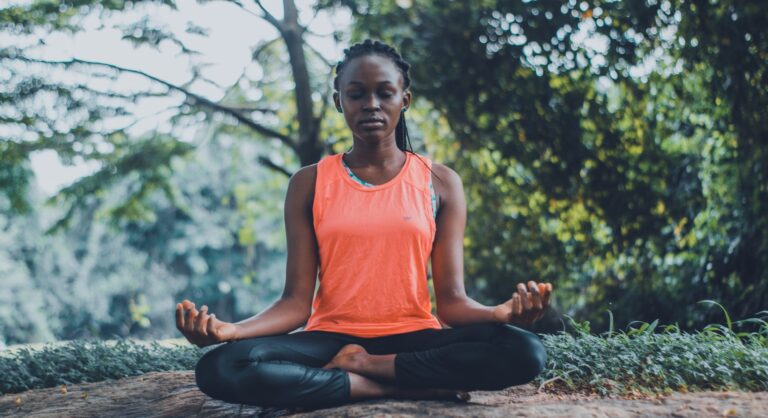
A woman sits cross legged with her hands resting on the top of her legs – meditating.
› Back to top
« back
08.24.21 | Community

The power of collective impact

Sage Collective was founded in 1978 as the Tabernacle Senior Citizens Project, Inc. (You can learn more about our story here.)  As the focus of our work has evolved over time, we took the opportunity to rebrand as Sage Collective in 2019.

Sage refers to the great wisdom and spiritual connection we strive to claim. Collective defines the sense of community engagement and interaction we seek, but it means much more than that. 

When we say “collective,” we make reference to the positive ways we can address the systemic challenges and inequities in our society — by forging connections among people and ideas. Joined together, we function as catalysts for change to lighten individual burdens, creating stronger and more purposeful communities along the way.

Moving forward from the essential meaning of “collective,” we embrace the powerful idea of collective impact, which recognizes the diverse strengths and weaknesses of communities, while working with neighborhood leaders and resources to achieve a more just and equitable future … particularly for older adults.  We are always seeking to align ourselves with conceptual frameworks and organizations that are taking bold and efficacious approaches to transformative change through collective impact. We believe that Together Chicago is such an organization:

Together Chicago came into being in 2017 as a mix of local leaders in business, faith, nonprofit and government questioning how they could do more to address the root cause of violence the city was experiencing.

The organization’s vision is to prevail as a catalyst of change and inspire hope within underserved and underrepresented Chicago communities. Together Chicago has five main areas of focus for creating change through the methodology of collective impact: economic development, education, violence reduction, gospel justice and faith community mobilization. Concentrating on these different areas, Together Chicago partners with a variety of local businesses, nonprofits, churches and schools to achieve equitable justice and further their mission of collective impact.

If you’re out and about the last weekend in August, Together Chicago is participating in Chicago Peace Week’s Peach Walk & Festival, to be held at the Dusable Museum of African American History on Saturday, August 28. The event will start at 9 a.m. at the museum’s sculpture garden with a gathering of faith leaders throughout the city for a Peace Walk, directly followed by the Peace Festival. You can learn about the Peace Walk & Festival here.

Collective impact is more of a movement than it is a phrase, providing a roadmap for communities to enable change by inviting everyone to take action together. And as we have seen in communities across our country and around the world, empowering and uplifting all voices is critical to ensuring the success of a collective goal.

Functioning as more than just part of our name, the term “collective” celebrates our rich identity and codifies our beliefs into a framework of mutual engagement for an equitable future.

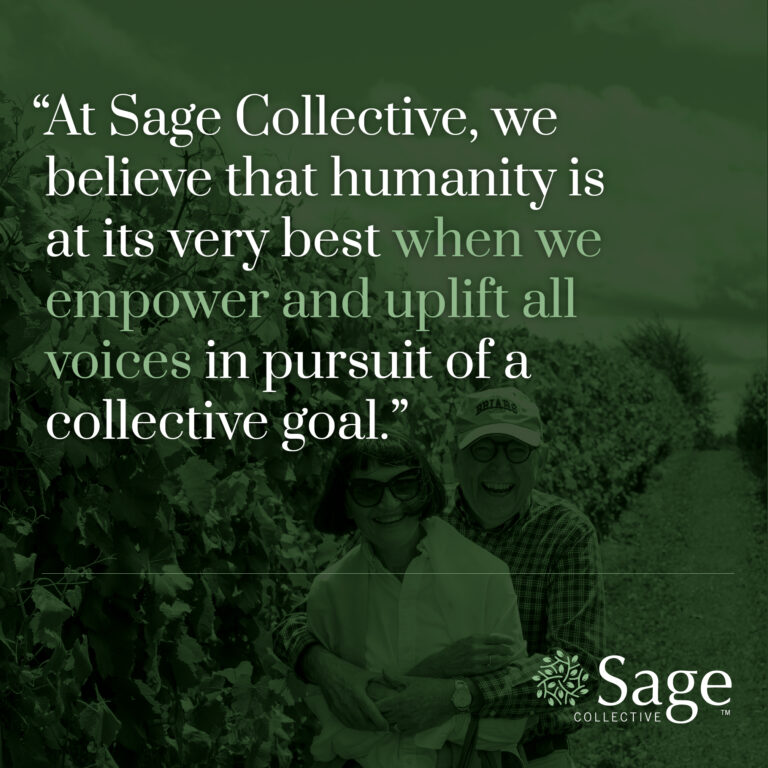
Text overlay reads "At Sage Collective, we believe that humanity is at its very best when we empower and uplift all voices in pursuit of a collective goal."
› Back to top