« back
11.30.21 | Mental Wellbeing

How Spirituality and Religious Involvement Can Help You Age Better

With aging comes many difficulties and moments of emotional turbulence, leaving some to believe they are alone on their journey. However, the aging process also introduces many people to new hobbies, fulfilling purposes and other approaches to life that they had never experienced before. Vibrant living is always at the forefront of our vision at Sage Collective, and one chief aspect of our inspired model is engagement in spirituality and religion. Today, we’re the significant impact that spiritual and religious involvement can have on the aging process.

Sometimes as you age, a sense of community and support is all you need. Churches, and other places of worship, are hubs for mutual respect and are the perfect places to discover connections, engage in thoughtful discussion and participate in meaningful action. 

Despite the anxieties that come with aging, like increased loneliness and isolation, religious attendance has been found to establish a stronger feeling of community support. A recent study published by Geriatrics Journal found that religion and spirituality played a variety of roles in the lives of older adults who participated in them, including strengthening emotional connections and enhancing feelings of comfort and hope during hard times. 

Because religious and spiritual institutions often encourage connecting with those around you, they are one of the best ways for older adults to immerse themselves in a supportive social network and embrace vibrant living. Many religious institutions practice a “door’s always open” policy and will gladly welcome anyone who walks through their entrance. 

Because of these uplifting benefits and more, we encourage you to explore your community and discover a faith of your own if you haven’t already. And no matter the religion, we’re sure that a vibrant community full of love will welcome you with open arms and help produce essential support that will lead to better aging. 

› Back to top
« back
02.25.21 | Sage Advice®

The Health Benefits of Tai Chi

Tai chi is an internal Chinese martial art, practiced for defense training, health benefits and meditation. As one of the most gentle martial art forms, tai chi is a great exercise option for older adults across the health and mobility spectrum — bringing with it a slew of benefits, healthful and otherwise. Let’s take a closer look:

Tai chi

Tai chi, short for T’ai chi ch’üan or Tàijí quán (太極拳), is an ancient Chinese martial arts practice, rooted in a deep history and philosophy. (You can read more about that on CultureTrip, here.) According to MayoClinic, tai chi “is a noncompetitive, self-paced system of gentle physical exercise and stretching. Each posture flows into the next without pause, ensuring that your body is in constant motion.” The movements emphasize deep breathing, encouraging participants to slow down and get in touch with their body and feelings.

Because tai chi is low-impact, slow-motion and emphasizes the mind-body connection, it’s become a popular practice globally, attracting a broad spectrum of participants. And thanks to its wide array of health benefits, it’s since been adopted as a common practice at hospitals, community centers, older adult facilities and the like.

Health Benefits

Tai chi is often described as “meditation in motion,” but because its health benefits are so great, Harvard Women’s Health Watch jokingly calls it “medication in motion.”

The low-impact exercise boasts physical health benefits such as improved lower- and upper-body strength, improved flexibility, improved balance (and possibly even decreased risk of falling), improved joint pain, enhanced immune system, enhanced quality of sleep, lowered blood pressure and healthy aerobic conditioning (where heart and lungs are trained to pump blood more efficiently, allowing more oxygen to be delivered to muscles and organs). All of the listed benefits are crucial to older adults seeking to maintain or better their health. 

In addition to its physical health benefits, the meditative aspect of tai chi brings with it an array of mental health benefits. These benefits include decreased stress, anxiety and depression; improved mood, energy and stamina and a general boost to wellness overall. 

Part of the appeal is that tai chi can be practiced independently or within a group setting, and it doesn’t require any equipment. If a low-impact, slow-motion and mindful form of exercise sounds like a good fit for you, then tai chi might just become part of your next fitness regimen routine.

Two people practice tai chi, silhouetted against a night sky and the moon
› Back to top
« back
12.28.20 | Sage Advice®

The Importance of Practicing Gratitude

Gratitude is both a way of thinking and a way of doing. By definition, it’s the quality of being thankful, as well as the readiness and willingness to show appreciation for and to return kindness. And by practicing gratitude, we open ourselves up to being more connected, more happy and more healthy.

Finding the Good

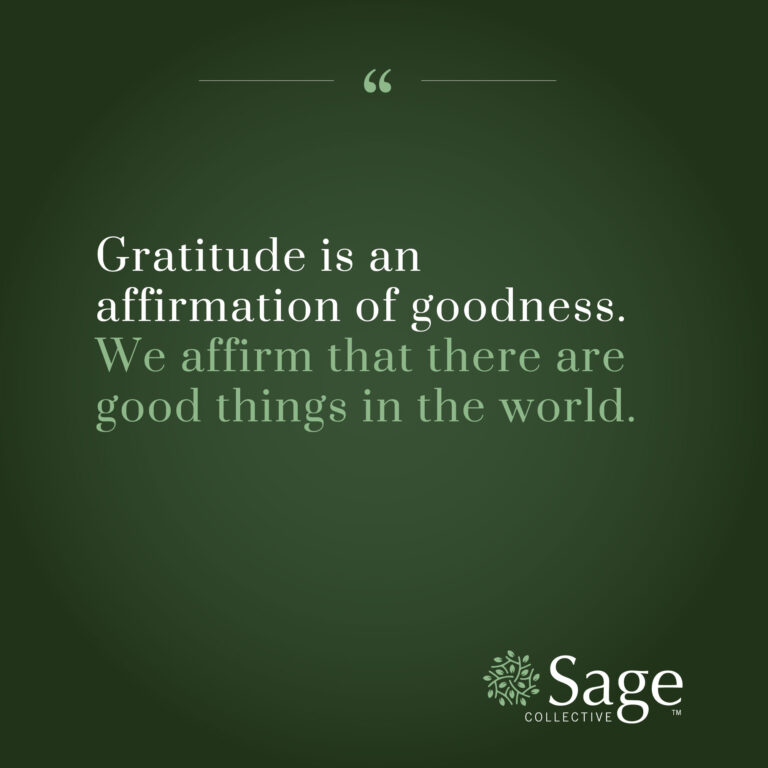
According to American psychologist Robert Emmons, there are two parts to gratitude. Firstly, it’s “an affirmation of goodness. We affirm that there are good things in the world, gifts and benefits we’ve received,” he says. While this doesn’t overwrite challenges or frustrations in our lives, it allows us to look at our lives wholly and to always find balance and goodness. Finding good in the world helps us to feel more positive emotions, relish good experiences, deal with adversity and even improve mental and physical health.

Becoming More Connected

Secondly, says Emmons, “we recognize that the sources of this goodness are outside of ourselves…. We acknowledge that other people—or even higher powers, if you’re of a spiritual mindset—gave us many gifts, big and small, to help us achieve the goodness in our lives.” In this way, Emmons describes gratitude as a “relationship-strengthening emotion, because it requires us to see how we’ve been supported and affirmed by other people.” Therefore, practicing gratitude allows us to feel more connected with our surroundings, whether that be nature, our spirituality or the people in our lives. This in turn leads to stronger, more positive relationships.

Practicing Gratitude

So how do we cultivate and strengthen our practice of gratitude?

First, we must notice our surroundings. What or who makes you feel good? This reflection can happen in-the-moment throughout your daily experiences, or later when you have a private moment to yourself for meditation. Many experts recommend keeping a gratitude journal and regularly listing things you’re grateful for.

Savor and absorb the things for which you’re grateful. Once you acknowledge the good things in your life, make sure you enjoy those experiences to the fullest and treat them with the utmost appreciation.

And finally, express your gratitude. Happiness is best when shared — and everyone likes to feel appreciated. Take the time to write a thank you note or voice your gratitude verbally. 

We all experience gratitude, but taking the time to acknowledge the feeling and become more intentional with how we engage with it and share with others will make all the difference in the world. 

White and green text over a dark green background, with quotation marks and the Sage Collective logo. Text reads: Gratitude is an affirmation of goodness. We affirm that there are good things in the world.
› Back to top