« back
10.08.20 | Sage Advice®

Overcoming Challenges Posed by COVID-19

COVID-19 poses many challenges particularly to vulnerable populations such as older adults but with every challenge is an opportunity to overcome it. We spoke with Dr. John K. Holton, PhD., to discuss lessons learned and positive outcomes during the pandemic. Holton is Director of Strategic Initiatives for Social Policy and Research at the Jane Addams School of Social Work at the University of Illinois at Chicago and board member at Sage Collective. 

Finding New Ways to Connect

With older adults at higher risk of being severely affected by COVID-19, many are taking CDC safety guidelines more seriously than the average American, which can lead to increased social isolation and loneliness. “While no one is happy to see the quality of life for older adults affected,” explains Holton, “increased awareness of the risk of social isolation has created a positive impact: people are now more concerned about the wellbeing of older adults than ever before.”

The increased attention and care for older adults in our communities has led to inventive, highly organized solutions. “We’ve seen responses raised, like setting up phone banks or block-by-block check-ins on homes led by local faith institutions,” says Holton. “These solutions are being used to blanket communities with networks that were always there informally, but that have now taken on a more formal responsibility of influence.”

Holton goes on to say: “During the pandemic, the slogan we’re all in this together has arisen. But what should go hand-in-hand with that slogan is the additional call to action: and here’s how you can be helpful. That kind of thinking is what takes the spirit from passive connection to fruitful action, making the power of the collective come alive.”

Graphic reads During the pandemic, the slogan We're all in this together has arisen, but what should go hand in hand with that slogan is the additional call to action: and here's how you can be helpful

Making Solutions Accessible

Every challenge (and subsequent solution) is a learning experience. Holton echoes this sentiment: “There are lessons we’re learning from experiencing this pandemic, and best practices we’re evolving for the years to come, because while this is the first pandemic in over a hundred years, it certainly won’t be the last, and we need to be prepared. We’re gaining invaluable understanding and insight as we go, as this pandemic continues to reshape our economy and our social practices.” 

But as we invent new solutions, they can’t be one size fits all. Different circumstances call for different approaches, and Holton stresses the importance of accessibility and consideration for more vulnerable populations (such as older adults). “In other words, as we develop best practices writ large, are we making sure to adapt them to apply to our most vulnerable populations?” challenges Holton.

Learning Lessons, New and Old

One example Holton uses is the 1995 Chicago heat wave. Over a period of five days, 739 heat-related deaths occurred in the city, with the majority of victims being elderly residents. Many could not afford air conditioning or were unable to open windows in their homes, and as a community we failed to check in on them and ensure their needs were being met. “That was a wake-up call for everybody,” reflects Holton, “including city government. We knew then we had to do better. Failing to meet that challenge led to posthumous solutions like cooling stations and phone banks organized by the Illinois Department of Human Services [IDHS]. In these periods of extended crisis, we learn to create solutions that fit the needs of our most vulnerable populations, because we have to, to do better as a public body.”

Another example comes from widespread criticism of the Federal Emergency Management Agency (FEMA) response after Hurricane Katrina hit in 2005. Many felt FEMA did an inadequate job of encouraging evacuation in target areas before the hurricane hit. “What we learned from FEMA,” explains Holton, “is that the protocols it had in place to help people understand the urgency of the situation only worked for a certain class of folks — in other words, folks who had transportation and were able to organize belongings and jump in their cars. Meanwhile, folks who weren’t in that position needed other types of assistance to help them evacuate. Borrowing from that example, we learned then and will learn now what does and doesn’t work with certain pockets of our population.” 

We’re facing parallel challenges today: meeting the needs of nursing homes and skilled care facilities during the pandemic. Early on, many were hit hard and were scary places to be for vulnerable populations. But as time goes on and we learn more, communities are taking more civic responsibility for the health and safety of each and every person, because as Holton says, we’re all in this together, and we need to do what we can to help. And when we do work together for a better future, wonderful things arise from it. 
JOHN HOLTON
› Back to top
« back
10.06.20 | Community

Sage Collective: A Distinguished Model

Sage Collective is a fiercely nimble, adaptable and, above all else, intentional player in the field of older adult living. To illuminate just what makes the Sage Collective model so distinctive, from framework to funding, we sat down with Marc J. Lane, a nationally recognized business and tax attorney, pioneer behind the Advocacy Investing® approach to socially responsible and mission-related investing, and member of the Sage Collective Leadership Team

What sets Sage Collective’s approach to affordable housing apart from others?

ML: For Sage Collective, It’s not just about housing it’s about life enrichment, life extension and living better longer. So from architectural design to programming to wraparound services, Sage Collective is developing a unique and unprecedented program to serve older adults, looking at housing as healthcare that focuses not just on health, but on the whole person. That framework therefore expands and includes arts and culture: dance, yoga, massage, computer skills, gardening. You name it, whatever contributes to the lifestyle and wellbeing of the residents, it will be there. 

Not only will there be services of the highest quality, but the residents themselves will have an advocate. Sage Collective will pursue public policy initiatives, setting themselves up as a trusted advisor, convener, collaborator and catalyst to ensure that older adults get the best possible treatment across the entire board, with an impact that goes far beyond what Sage Collective themselves implements.

Image reads Sage Collective is synergetic, it's innovative, it's disruptive over an image of elderly hands

How does Sage Collective fall into the category of a mission-driven venture?

ML: Every nonprofit is mission-driven by law, but not every nonprofit is a mission-driven venture. Sage Collective is not (and will not be) wholly dependent upon philanthropy, government contracts and grants. It’s pursuing market-based strategies to be self-reliant and financially sustainable. Sage Collective relies largely on earned revenue, delivering market-based solutions driven by the older adult audience Sage serves what they need, what they want and how they receive the support that’s being provided. The resulting wraparound living services have a wide scope, from campus-style residences to intergenerational programming to research, data-sharing and advocacy. And underscoring every single one of those offerings is Sage’s desire to serve its older adult population and promote vibrant, engaged living. 

Simultaneously, Sage Collective values leveraging its thought leadership and collaborating with other nonprofits, for-profits, investors and even government agencies whose interests and values align with those of the organization. So Sage Collective is synergetic, it’s innovative, it’s disruptive.

As a nonprofit with 40+ years under its belt, how do you see the mission of Sage Collective as being highly evolved?

ML: There’s an extraordinary history here. Donna Gaines and Dwain Kyles, who lead the board, were intimately involved in the management of Sage Collective’s affordable housing community, Willa Rawls Manor. There were lessons learned, but having sold that asset, they now have the rare opportunity to reimagine their vision guided by that experience. Donna and Dwain (along with the other members of the board) have decades of experience and expertise that is unmatched anywhere else. The population they serve will be empowered by virtue of that commitment and the compassion they have demonstrated over these decades.

And about the Sage Collective board: Donna and Dwain put together a national leadership team which is highly unusual, if not unique, bringing together experts in all of the relevant disciplines — gerontology, medicine, law, finance, customer experience and others. With that kind of collective knowledge, experience, relationships and the platform all of those folks leverage, Sage Collective will set the standard to which other affordable housing initiatives will aspire. 

How is Sage Collective’s model built to scale, and be replicable nationally?

ML: Market-driven decisions, when done right, are driven by evidence and by data. For Sage Collective, data will be used not only to determine effectiveness of programming and services — ensuring these services are impactful and well-received by the target population — but data will also be deployed for the public good. Yielding its expertise in data development, translation and deployment, Sage Collective will be able to scale up.

So when it comes to creating measurable social impact as a social venture, this data and its deployment also ensure Sage is held accountable to the financial returns on investment and the social returns on investment, too. When Sage Collective’s findings are made available to a wide range of other parties, public and private, then with a powerful bottom line: the older adult population will be the beneficiary of all those better-informed decisions now being made within society. This becomes an all-hands-on-deck venture, a movement where Sage Collective is the spearhead, and in which all of us benefit, because all of us are touched by the older adults in our lives; how they live and how successful they are.

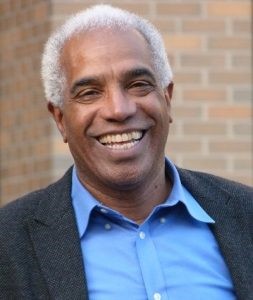
MARC LANE
Marc J. Lane
› Back to top
« back
10.01.20 | Sage Advice®

Understanding the Role of Smart Design in Our Lives

As a leader in older adult living, Sage Advice prides itself on cultivating an extensive library of knowledge on relevant trends and best practices in the field of senior living and wellness. One such trend, smart design, is a uniquely adaptable, constantly evolving concept that grows with new findings daily. Today, we’re exploring what exactly smart design is, what role it plays in older adults’ lives and how its unique adaptability makes it suitable for any home.

What is it and who is it for?

Smart design is anything that combines research, technology and creativity to develop devices that improve user experience. Although a prevalent tool used to provide solutions for older adults, smart design is not limited to one specific age group — it is just coincidental that many challenges smart design seeks to address are ones that come with age. 

Smart design is employed in private residences and communal homes alike. In both, smart design (which often involves smart technology) creates an environment that is safer and more accessible for its residents, often focusing on challenging areas such as kitchens and bathrooms. Design solutions can be as simple as installing grab bars or shower benches, or as complex as wearable, data-tracking technology. 

Ultimately, resident (and caregiver) preferences determine which smart design solutions are a best fit for each unique situation. Everyone’s physical, cognitive, financial and emotional needs vary, and smart design solutions can be made custom to match.

The end goal

Meanwhile, why we pursue smart design is quite nuanced. Smart design seeks to address a broad continuum of unique challenges: from basic physical safety and functionality needs, to more high level goals such as mental wellbeing and the ability to flourish and be happy in one’s environment. 

Smart design pursues these end results in a triage-like manner. In following the hierarchy of needs, safety needs are always the first to be addressed. If a person is not fundamentally safe in their environment, nothing else matters initially. Once those safety needs are met, then concerns can move up the scale to address things such as mental wellness. At this stage, it becomes a question of how smart design can enhance a person’s quality of life, from their ability to remain connected and engaged to even how their environment influences their self-image. 

Smart design, technology and the future

Naturally, smart design evolves in parallel with technology. These days, smart design can do everything from remotely controlling lighting to providing video surveillance to utilizing data sensors to predict fall risks or other health factors. The ability of smart design tech to transfer information to caretakers streamlines many previously archaic processes and provides increased security and protection but with it comes potential privacy concerns. 

Voice-activated smart technology (like Amazon Echo and Alexa) can provide increased capability and convenience. Smartphone assistants like Siri also give access to incredibly handy apps able to assist with shopping, banking and making appointments. While this technology has benefits, it is not without its challenges. Some smart design users are tech averse and prefer not to go this route, while for others still this type of tech is inaccessible or unaffordable. There are also concerns that a person’s reliance on tech can potentially decrease their independence. 

When looking towards the future of smart design, these will be the field’s biggest challenges: retaining balance, and overcoming issues of equity and spatial justice. But in the world of smart design, where every solution is person-specific, that flexibility provides degrees of freedom and space for inventive thought as we continually seek how to live our best lives and support best lives for others. 

As Sage Collective continues to pursue its mission of building a vibrant, affordable housing campus on Chicago’s South Side, smart design will become integral to our vision of comfortable, convenient and inclusive homes. Whether a resident of our future community or a follower of our vibrant living manifesto, we’ll always champion best-in-class knowledge and practices to be shared with our audience.

Graphic reads "Smart design is anything that combines research, technology and creativity to develop devices that improve user experience."
› Back to top