« back
05.13.21 | Sage Advice®

Formulating an Innovation Lab with Kathy Watkins-Richardson

“Getting things off the ground” is often a nonlinear process. As Sage Collective continues to expand its service offerings to include virtual and in-person programming, we’re learning, reflecting, and adapting as we go along. This ability to remain agile and constantly innovate is how we operate — and what will ultimately set us apart as a “Model for Social Innovation.”

In this installment of our Interview with an Expert series, we talk to Sage Collective’s latest team member, Program Coordinator Kathy Watkins-Richardson. We are thrilled to have Kathy Watkins-Richardson as part of our team, and to celebrate her pivotal role in making this progress happen. Let’s dive in:


With your extensive background in marketing and strategic planning, what aspects of your experience and skills do you anticipate bringing to your work with Sage Collective? 

KWR: I have always leaned toward challenges in every aspect of my life. Sage Collective presented itself to me more than a year ago, when I operated as a facilitator for an annual meeting. I was at the time, and still am, working on my PhD in conflict resolution studies, which really lends itself to the whole mission for Sage. I recall being so impressed with the leadership present at that weekend workshop, and I was greatly inspired by what Sage (Tabernacle) has done and aspires to do.

Donna Gaines and I continued to stay in touch and late in 2020, she asked me to come on board as a contractor to assist with multiple projects. Having been in this role for several months, I am now finding great use for that marketing and strategic planning background, as well as aspects of conflict resolution that relate to issues of equity in underserved communities. In combining my skills, 27+ years’ experience, and interests, I find I am driven by the challenge and desire to help Sage achieve its goals.

We are carving out new paths that require an eye toward identifying the appropriate goals and building execution plans that will get us there. Conflict skills and relevant theories deepen my perspective—and inform strategy, as well. My marketing comes in handy in that we write a good amount of material, so I must use creative words to convey our meaning and to inspire or persuade the given audience. So, I guess you might say this is a great fit.


You were a pivotal player in planning and executing Sage Collective’s latest live, virtual roundtable discussion on COVID-19. What was that process like — from initial concepting, to executing the event, to the follow-up with event attendees? What lessons have you learned from the process, and how do you plan to apply these new insights to future programming at Sage Collective?

KWR: To operate in Sage’s entrepreneurial environment, one must be flexible. From the initial idea of launching a COVID campaign, to having two experts discuss vaccination perceptions and issues relevant to our audience, to the day of the event, things were evolving rather fast in the national arena.

President Biden was in major gear to accelerate vaccination. We had secured our moderator, Monique Caradine, and panelists, Dr. James Galloway, and Dr. Joseph West, early. Working with our speakers, we designed content to portray a story “from virus to vaccine.” Questions were crafted for their expert response. But as the planning proceeded, national issues of vaccine access and how to sign up to get vaccinated changed to “vaccine hesitancy.”

It may seem difficult to understand, but that was a major shift of the narrative, so as we plan future webinars and events we want to make sure that we are in a position to stay on top of the changing landscape, and that we are delivering on the promise of representing the needs of our community with the most credible sources of information.

I can say, too, that I have gone back to an old marketing adage: let’s build one customer at a time, so we will slowly cultivate our audience. That is, while we are delivering great virtual discussions, we also must get known, so people will come. This requires the follow-through you mentioned—the thanking of our attendees—and much multitasking as we continue to develop programming.


How do you see the arc of that experience — implementing a program, learning as you go, and coming away more experienced and informed than before — as being reflective of Sage Collection’s larger “Model for Social Innovation”? In that same vein, can you give us a brief overview of what it means for Sage Collective to be an “innovation lab”?

When the idea arose of comparing Sage Collective to an innovation lab, I must tell you that it took me back to the time I worked in the aerospace field. Major manufacturers were designing innovation labs and think tanks in the 1980s to foster high technology competition—spaceships, unmanned aerial vehicles, supersonic jet engines.

However, I did my research and found that a “social innovation lab” is something unique, and something with which academia is quite familiar. Thinking of Sage as this kind of entity requires a visionary mindset that enables experimentation, ability to move quickly, and perception of failure as a way forward. Success isn’t bad either, don’t get me wrong!

Further, a social innovation lab is not necessarily going to produce tangible objects (like rocket engines), but holistic concepts intended to evolve (in our case) into housing as health, social enterprises, social movements, and eventual policy impact. We are shaping Sage into a model for social innovation that has the potential to create change.

The lab mindset emphasizes the need to strive for ways to get better, to value timing and learning, and to enable the organization freedom and responsibility for choice between feasible options. So we shall conduct intentional experimentation, as we’ve come to call it, that requires ideation, evaluation, and validation. The word Collective in our name is key to our effort, as it portrays Sage’s invitation to a host of organizations to participate in the challenge with us—thus manifesting a certain culture for innovation and change that can have greater impact.
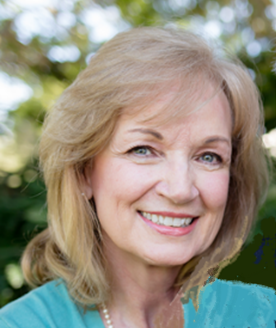
Headshot of Kathy Watkins-Richardson
› Back to top
« back
05.11.21 | Community

Announcing Sage Collective’s Vibrant Living Manifesto

Sage Collective is thrilled to unveil our Vibrant Living Manifesto. This manifesto lays clear our approach to vibrant living, and invites all those who think and do similarly to join us. Read the full manifesto below: 

Aging isn’t just a biological process — it’s also a cultural process. Our cultural perceptions of aging have a profound impact on the experience of growing older.

We rebuke the traditional American model of valuing novelty and youth above age, experience and wisdom. We instead call upon other exemplary models for inspiration: Native Americans herald their elders as the keepers of tradition and storytelling, and in many Eastern civilizations, filial piety (to be good to one’s parents) is deemed an essential duty. 

At Sage Collective, we believe that humanity is at its very best when we connect and engage with one another. We believe that elders have boundless knowledge to share with youth, and vice versa — because we believe that life is a constant, collaborative journey for all ages. 

So we’re here to disrupt the status quo, to catalyze change in the way people understand the role of older adults in society. We’re here to create an innovation lab — to test new ideas, processes and products and expand our ways of thinking and doing — as a way of establishing a radical new framework where older adults are valued and engaged, where they experience a life lived vibrantly.

Freedom, flexibility and joy… access to high-quality, affordable and vibrant living… We believe these are rights, not privileges. That’s why Sage Collective is providing residences, programming and ancillary services to manifest our vision. 

As with any vision, ours is nothing without the support that translates ideas into action. We need residents and participants who share our commitment to vibrant living and want to be a part of it. If you’re a collaborator, a disruptor, a changemaker, a change-seeker… we invite you to do better, for ourselves and others, to live more vibrantly, to be a part of the collective.

Graphic reads: Sage Collective Vibrant Living Manifesto. Aging isn't just a biological process — it's also a cultural process — and our cultural perceptions of aging have a profound impact on the experience of growing older.
› Back to top
« back
12.30.20 | News

2020: A Year in Review

2020 has been a tumultuous year for the world to say the least. But amidst everything, we’ve been hard at work bringing our vision for Sage Collective to life. This year has been one full of successes and exciting milestones for our organization. So today, we’re taking a look back at the year and sharing our proudest moments:

Launched our website and blog

Sage Collective officially came out to the world with the launch of our brand new website in May. Through the website, we share with our audience who we are, what our story is and what we’re here to do. We’ll also be providing timely updates on Sage Collective programming and residences as each initiative progresses. 

The Sage Collective website is also home to our blog, Sage Advice, where we share engaging and enriching original content. Blog topics run the gamut from health + wellness advice to cultural insights for living a more vibrant life. We’ve also interviewed many members from our excellent team, who dispel industry-expert insights into topic s such as advice for older adult caretakers and ways to overcome the challenges of COVID-19.

Kicked off social media

To more directly engage with our community, Sage Collective kicked off its social media identity in the fall. Through our profiles on LinkedIn, Facebook, Twitter and Instagram, we post twice a week to share insights from the Sage Advice blog alongside other updates on our organization’s projects. There, we’re continuing to build online relationships with other industry leaders, health + wellness institutions, cultural organizations and community stakeholders + members in order to create real, collective impact. 

Acquired our first properties

In the beginning of the year, we were thrilled to purchase our first two properties: 4108 South King Drive and 4112 South King Drive in the Bronzeville neighborhood of Chicago. These beautiful and historic side-by-side buildings  will become the first manifestation of our vision for vibrant and affordable housing for older adults. Construction on these projects is slated to begin in early 2021; stay tuned for more updates coming soon.

Continued strengthening our team + vision

We wouldn’t be where we are today without our amazing team. The Sage Collective Board of Directors and Leadership Team regularly convened throughout 2020 to further align our vision and upcoming project plans. Together, we bring a collective wealth of knowledge about older adults, senior housing, health + wellness and more to create forward-thinking, innovative strategies for older adult programming, residences and lifestyles. 

The successes of this year are just the beginning. We can’t wait to continue learning, growing and doing in 2021 and beyond — and sharing the journey with you.

Image is a background photo of presents with text overlaid reading: 2020: Year in Review
› Back to top
« back
10.22.20 | Arts & Culture

The Sage Collective Story: From TSCP to Now

Sage Collective emerged in 2019 with the intention of pursuing affordable, vibrant and high-quality living for older adults. But before we were Sage Collective, we were Tabernacle Senior Citizens Project (TSCP) — and we wouldn’t be where we are today without the history that precedes us. To unpack the TSCP legacy, we spoke with Donna Gaines and Dwain J. Kyles, founding members of the Sage Collective Board of Directors.

TSCP: Faith Leads the Way

Tabernacle Senior Citizens Project began in 1978 as the brainchild of Reverend Louis Rawls, founder and pastor of Tabernacle Missionary Baptist Church on Chicago’s South Side. “Rev. Rawls was a prolific pastor and entrepreneur,” says Dwain J. Kyles. “In his efforts to address the needs of his congregation and the broader community, he established everything from hospitals to hotels to funeral homes. As Rev. Rawls grew older, his focus turned to elderly members of the congregation; and it was then that he decided to create a housing development that would offer safe, affordable and high-quality living for seniors.” Named after his wife, Dr. Rawls built Willa Rawls Manor, a 123-unit housing development adjacent to the Church.

“To say I was connected to Rev. Rawls would be an understatement,” says Kyles. “In the mid- 1950s, my father was the first youth pastor at Tabernacle Missionary Baptist Church, and Rev. Rawls and his wife Willa were my godparents! My mother later moved to Willa Rawls Manor in her golden years.” Deeply invested in the work and its caring intentions, Kyles was quick to jump into action when he realized Rev. Rawls was becoming overwhelmed by the enormity of work required to manage all of the church’s projects in the community.. 

“Willa Rawls Manor became my passion project,” explains Kyles. “I was working pro-bono, looking to reinvest the time, energy and resources necessary to reinvigorate a building that was falling behind. Luckily, I was dating this amazing woman at the time… Donna had been President of the Board and provided operational oversight for a co-op of considerable size on the South Side, and was a person perfectly equipped to help lead the project, not just with experience, but more importantly, with a strong sense of passion and integrity.”

Willa Rawls Manor: Developing Culture

In inheriting Willa Rawls Manor, Dwain Kyles and Donna Gaines also inherited a building that was in disrepair and a team that was struggling to keep pace with inadequate resources. “I knew we could fix the building’s physical infrastructure,” says Gaines, “but it didn’t mean we could immediately fix how people felt about themselves or how they were living. With my background in social work, and being certified in change management, I knew true changemaking begins and ends with culture. And so that’s where we had to start.” 

“We worked tirelessly to get our staff invested in the work they were doing, and to get our residents engaged in the activities and efforts aimed at improving the conditions where they were living. We wanted everyone to have a voice, to feel they were contributing to a broader vision and to invest themselves in that experience. So as we made proactive investments to improve building maintenance and care, we also began to cultivate a culture of staff and residents that really believed in what we did,” tells Gaines.

The impact was tangible: “When we eventually sold Willa Rawls Manor after several decades, what remained was a new culture, one rooted in genuine mutual respect and love,” reflects Gaines. “When we had Christmas parties, rather than hightailing it out of there at five, the maintenance staff would stick around and dance with the older women. It was just pure joy. And when we built a rec room and added a flatscreen TV and nice recliners, we saw the pride residents took in having that space, and caring for it. The culture began at the top with our phenomenal Board Members, but it trickled down and permeated every part of the building — and affected every person.”

Sage Collective: An Evolved Vision

“We made the decision to sell Willa Rawls Manor because we saw a greater need. Working within the operational parameters of the Department of Housing and Urban Development limited how far our innovation could go,” explains Gaines. “We had been good stewards of TSCP’s funds and had built up a solid replacement reserve, and there was now appreciable equity in the building. We saw an opportunity to utilize these existing assets, to take the vision of Rev. Rawls to the next level and, with the money acquired from selling Willa Rawls, to design and develop the kind of housing and ancillary programming we know residents need. Having ample finances to do so gave us a greater degree of freedom to be truly expansive in our thinking, and to unleash our vision creatively, passionately and fully.” 

Thus, Sage Collective was born. Building on the legacy of TSCP and Rev. Rawls’ vision for safe, affordable, high-quality housing for older adults, Sage Collective seeks to enhance the older adult experience by introducing more vibrant ways of living and experiencing culture, while inviting intergenerational involvement for all to thrive together. 

“The intergenerational component is vital to us,” says Gaines, “because just as we continue to carry the torch for Rev. Rawls, we hope to share our gained knowledge and experience with those who follow. Legacy is important to us; people and culture are important to us; and we hope to develop a movement with Sage Collective — a movement that brings like-minded people together as a collective, and a movement that people everywhere can share in and benefit from.”

Quote reads: Legacy is important to us; people and culture are important to us; and we hope to develop a movement with Sage Collective."
› Back to top
« back
10.06.20 | Community

Sage Collective: A Distinguished Model

Sage Collective is a fiercely nimble, adaptable and, above all else, intentional player in the field of older adult living. To illuminate just what makes the Sage Collective model so distinctive, from framework to funding, we sat down with Marc J. Lane, a nationally recognized business and tax attorney, pioneer behind the Advocacy Investing® approach to socially responsible and mission-related investing, and member of the Sage Collective Leadership Team

What sets Sage Collective’s approach to affordable housing apart from others?

ML: For Sage Collective, It’s not just about housing it’s about life enrichment, life extension and living better longer. So from architectural design to programming to wraparound services, Sage Collective is developing a unique and unprecedented program to serve older adults, looking at housing as healthcare that focuses not just on health, but on the whole person. That framework therefore expands and includes arts and culture: dance, yoga, massage, computer skills, gardening. You name it, whatever contributes to the lifestyle and wellbeing of the residents, it will be there. 

Not only will there be services of the highest quality, but the residents themselves will have an advocate. Sage Collective will pursue public policy initiatives, setting themselves up as a trusted advisor, convener, collaborator and catalyst to ensure that older adults get the best possible treatment across the entire board, with an impact that goes far beyond what Sage Collective themselves implements.

Image reads Sage Collective is synergetic, it's innovative, it's disruptive over an image of elderly hands

How does Sage Collective fall into the category of a mission-driven venture?

ML: Every nonprofit is mission-driven by law, but not every nonprofit is a mission-driven venture. Sage Collective is not (and will not be) wholly dependent upon philanthropy, government contracts and grants. It’s pursuing market-based strategies to be self-reliant and financially sustainable. Sage Collective relies largely on earned revenue, delivering market-based solutions driven by the older adult audience Sage serves what they need, what they want and how they receive the support that’s being provided. The resulting wraparound living services have a wide scope, from campus-style residences to intergenerational programming to research, data-sharing and advocacy. And underscoring every single one of those offerings is Sage’s desire to serve its older adult population and promote vibrant, engaged living. 

Simultaneously, Sage Collective values leveraging its thought leadership and collaborating with other nonprofits, for-profits, investors and even government agencies whose interests and values align with those of the organization. So Sage Collective is synergetic, it’s innovative, it’s disruptive.

As a nonprofit with 40+ years under its belt, how do you see the mission of Sage Collective as being highly evolved?

ML: There’s an extraordinary history here. Donna Gaines and Dwain Kyles, who lead the board, were intimately involved in the management of Sage Collective’s affordable housing community, Willa Rawls Manor. There were lessons learned, but having sold that asset, they now have the rare opportunity to reimagine their vision guided by that experience. Donna and Dwain (along with the other members of the board) have decades of experience and expertise that is unmatched anywhere else. The population they serve will be empowered by virtue of that commitment and the compassion they have demonstrated over these decades.

And about the Sage Collective board: Donna and Dwain put together a national leadership team which is highly unusual, if not unique, bringing together experts in all of the relevant disciplines — gerontology, medicine, law, finance, customer experience and others. With that kind of collective knowledge, experience, relationships and the platform all of those folks leverage, Sage Collective will set the standard to which other affordable housing initiatives will aspire. 

How is Sage Collective’s model built to scale, and be replicable nationally?

ML: Market-driven decisions, when done right, are driven by evidence and by data. For Sage Collective, data will be used not only to determine effectiveness of programming and services — ensuring these services are impactful and well-received by the target population — but data will also be deployed for the public good. Yielding its expertise in data development, translation and deployment, Sage Collective will be able to scale up.

So when it comes to creating measurable social impact as a social venture, this data and its deployment also ensure Sage is held accountable to the financial returns on investment and the social returns on investment, too. When Sage Collective’s findings are made available to a wide range of other parties, public and private, then with a powerful bottom line: the older adult population will be the beneficiary of all those better-informed decisions now being made within society. This becomes an all-hands-on-deck venture, a movement where Sage Collective is the spearhead, and in which all of us benefit, because all of us are touched by the older adults in our lives; how they live and how successful they are.

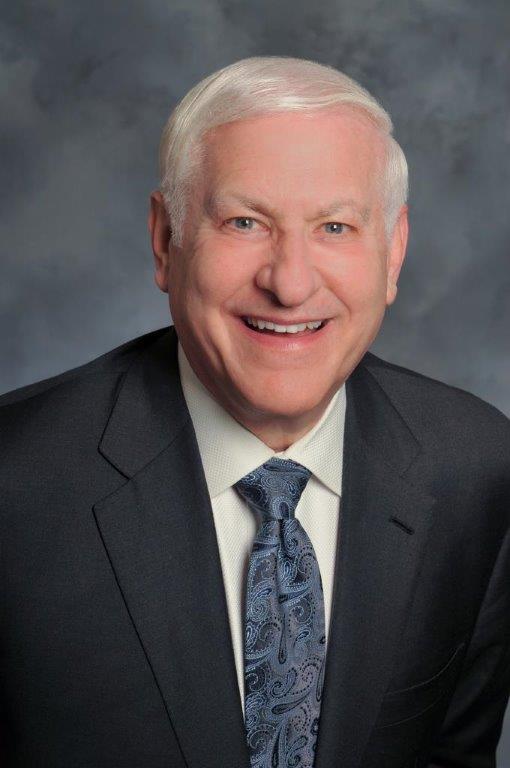
MARC LANE
Marc J. Lane
› Back to top