« back
08.11.22 | Arts & Culture

National Black Business Month

At Sage Collective, we embrace the powerful idea of collective impact and empowering those around us to achieve a more just and equitable future for everyone in our community. One aspect of this includes supporting the local businesses throughout the year, especially now, during National Black Business Month in August!

Created in 2004 by historian John William Templeton and engineer Frederick E. Jordan Sr., National Black Business Month was organized to celebrate the more than two million Black-owned businesses throughout the country. Throughout the United States, countless Black-owned businesses are essential pillars of their community and Black Business Month provides the perfect opportunity for local consumers to exhibit support. 

There are countless ways you can support your local Black-owned business; from simple tasks like leaving a positive review to discovering how you can advocate for them beyond their product. What matters most, however, is mindset and intent. 

Small businesses have always been economic drivers behind local economies, and supporting your local Black-owned business can leave an impact beyond the business’ walls. Be intentional about your support throughout the entire year; refer friends, share on social media, forge relationships with the owner or discover how you can uplift them further. 

We encourage you to support the Black businesses throughout your community no matter where you are throughout the month! To discover more Chicago Black-owned businesses head here.

› Back to top
« back
06.03.22 | Sage Advice®

Introducing Our Newest Board Member: Camille Love

With a passion for the empowerment and health of her community, Camille Love always knew that she would thrive in the healthcare field. And today, with more than 16 years of experience under her belt, she continues to search for opportunities where she can lend her expertise in community healthcare. The transition of long-time member Angela Higginbotham from our Board recently created such an opportunity for Camille Love and added to the related expertise of Sage Collective as it pursues ways of encouraging the adoption of healthier lifestyle choices among older adults in underserved communities. We couldn’t be more thrilled to announce Camille Love as the newest addition to the Sage Collective Board of Directors. Get to know Camille in her introduction below: 

Can you talk a bit about your professional background and how it has added to your expertise in your field?

I originally started my nursing career when I was very young, around 16, when I decided to become a certified nursing assistant. I’ve never been in any other field besides nursing. From starting as a CNA, to becoming a registered nurse and now a nurse practitioner, I recognize that I have been completely focused for nearly two decades in work that is meaningful and fulfilling every day.

I transitioned into being a nurse practitioner when I felt that I wanted to broaden my scope of work. And now, I’m at a point in my career where I’m ready to take on leadership roles where I can empower and mentor other nurses and healthcare providers.  

What should those outside of the healthcare ecosystem know about the community caregiving experience?

Overall, I feel that there are two factors that everyone should keep in mind. On one side, I see the need for more compassion, which I say because we often see people now who have compassion fatigue. In general, we all need to show more sympathy and compassion to one another because you never know what others are going through at that moment. They might be a very fatigued healthcare provider, or if they aren’t a healthcare provider, they may be completely isolated. 

The second point is to practice safe behaviors. It’s easy to brush little things off of your shoulder when they might not affect you, but try to keep in mind that your actions could, in turn, affect someone else. If you’re possibly exposed to something like COVID-19, be considerate and make the smart decision to stay home and wear a mask so you don’t accidentally expose anyone else. 

Sage Collective believes that a sense of ‘care for the collective’ is essential for not only individual health but the health of a community. How does this belief translate through your own work and past experiences?

My experience has taught me that the health literacy of those outside of healthcare is very low, and I feel  that if we did a better job of communicating within our communities, that simple act of just talking to one another lessens the burden of providers and relieves some anxiety for community members. For example, parents need to understand that if their child has a temperature and a runny nose, it’s not something out of the ordinary and often doesn’t require attention from us in the hospital. 

If someone in that parent’s family had told them that this level of illness is normal, that would help create literacy in the community. So, in turn, they wouldn’t be burdening the providers to address a set of symptoms, which, in their eyes, is a simple matter. 

I also deal with older adults who have chronic illnesses like diabetes. In the African American community, we traditionally go heavy on salt, which leads to high blood pressure and other conditions. In the Latinx community, we have patients whose diets rely on tortillas, beans and other high-carb foods. Communication within these communities is essential when talking about wellness, since it completely changes the game when it comes to the knowledge and decisions people make about their diet. So, if you have a simple conversation amongst family, friends or community members, you could change a whole community’s health based on word of mouth and education. So, the healthcare-focused component of my work completely aligns with the community component that Sage provides.

What other unique values held by Sage Collective have drawn you to join the Board?

I’m currently working for an organization that is a federally-qualified health center, so our objective is to provide excellent quality healthcare to underserved communities. This has always been my mission in healthcare since that population is, well, underserved in nearly every aspect of life. So, working with Sage Collective, I can help populations that are both underserved and overlooked. 

Within the Sage ecosystem, you have people of color, and you have the elderly, and then you have people who face financial hardships, so these circumstances are not affording them luxuries that other persons would normally get. My fuel is to always target and give the best to underserved communities, so I was immediately drawn to Sage Collective because of our parallels. 

What is the significance of having intergenerational relationships in the healthcare world? Specifically in community health?

Intergenerational relationships are integral to the success of communities. They offer the opportunity to bring together the tried-and-true conventions that exist within the healthcare field with the energy, innovations and new perspectives of younger generations. 

What are you most looking forward to as a new member of Sage Collective’s board? 

I’m very excited to be working with the other leaders on the Sage Collective Board, and to have the opportunity to learn from them, pick their brains, and of course, contribute to the organization itself. I’m also eager to serve and have the opportunity to continue the work that has inspired me for so long, but in a different capacity, through housing and programming.

› Back to top
« back
05.05.22 | Health & Wellness

May is National Mental Health Awareness Month

Every year, millions of people deal with the daily struggle of living with a mental illness. One in five adults in the United States live with a mental illness, and because they are so prevalent today, the spotlight is beginning to shift to explore just how society collectively can work together to setback the concerning numbers. 

Throughout May, we will be celebrating National Mental Health Awareness Month. First celebrated in 1949, Mental Health Awareness Month remains as significant as ever for a myriad of reasons. Mental illness often goes ignored unless tragedy strikes. This month-long observation helps shed a spotlight on the importance of caring for mental health and the weight of taking it just as seriously as any other disease. 

Not only is it critical to care for your own mental well-being, but also those around you. Regularly checking in on family, friends, and even neighbors can leave a profound impact on each of their lives. However, maintaining good mental health includes everything from your food choices and physical activity to your sleep schedule and stress management

By taking the initiative to care for yourself and your loved ones and being open to discussing mental health with others, the more normalized it will become, creating a healthier, more vibrant world. Although the stigma around mental health treatment still exists, thanks to celebrations like National Mental Health Awareness Month, more and more people are beginning to learn to be more open about their mental well-being. 

Because mental health is even less commonly discussed in adult communities, we encourage you to celebrate Mental Health Awareness Month and help pilot the movement for a healthier, more vibrant world where mental well-being is at our forefront.

› Back to top
« back
01.20.22 | Arts & Culture

National Bills Look to Recognize Bronzeville as a National Heritage Area

At Sage Collective, Bronzeville has always held a significantly special place in our hearts and identity. And, even as we continue to expand beyond our neighborhood’s borders, one of our favorite things is to spotlight the achievements and impacts that the community leaves on Chicago and the rest of the country. Today we’re exploring our neighborhood’s latest recognition: the national bills seeking to honor Bronzeville as a National Heritage Area.

Over the past few years, Bronzeville has seen a true renaissance; welcoming new businesses, families and cultures while still showing deep respect and appreciation for its vibrant history. As one of the most thriving Black communities throughout the early 20th century, Bronzeville set itself apart as a hub for talented artists and musicians, stunning architecture, booming businesses and more. 

Introduced by US Representative Bobby Bush and Senator Dick Durban, the bills intend to identify a new national heritage site within Bronzeville because of its rich contribution to the country’s culture. Although a similar bill in 2016 proved unsuccessful in passing, the latest version is backed by extensive planning and organizing.

If passed, the exciting recognition would welcome a breath of energy to the community. With more and more developments blooming each day, the implementation of the bills would further expand the resurgence within the community. They now head to the subcommittee on National Parks, where they get reviewed before being voted on by the United States House and Senate. 

With only two other National Historic Areas in the state, Bronzeville would continue to set itself apart as a cultural landmark not only within Illinois but throughout the country. You can find updates on the progress of the House of Representatives’ bill here and the Senate’s bill here

› Back to top
« back
12.30.21 | Community

Resolutions for 2022

One of the best ways to set yourself up for success in a new year is by making a list of resolutions before it starts. This tradition is a powerful way to articulate your values and can hold you accountable for your goals heading into the new year. In case you’re unsure of what to add to your to-do list, here are some resolutions you can take into 2022 to continue championing a vibrant lifestyle.

Start Something You’ve Always Dreamed About

Heading into the new year, make it a priority to make an ambitious dream come true. Not only is it essential to set goals for yourself throughout the new year, but achieving them leads to significantly rewarding experiences. Whether you want to head back to school, discover a new hobby or change career paths, don’t be afraid to take initiative of your life. Fulfilling dreams helps give your life purpose, control and meaning. And, if this isn’t the year to do it, when is?

Put Your Health First

Putting your health first encompasses a variety of choices that you can make throughout the year. It’s important to remember that your body’s health consists of both physical and mental elements. So, while making sure you try to incorporate moderate, regular physical activity into your life along with a variety of nutritious foods, taking care of your mental health is just as important. And, lucky enough, sometimes specific actions will go hand in hand with helping both areas of wellness. 

Live in the Moment

If the past few years have taught us anything, it’s that we shouldn’t take anything for granted. We believe one of the most significant goals you should have in the new year is to live in the present. To do so, you must focus on the now. A few great ways to do this are by practicing mindfulness, performing meditation or simply performing random acts of kindness in your community.  

We’re thankful to keep learning from the lessons that 2021 has taught us and couldn’t be more excited to see how our resolutions will play out in the upcoming year!

› Back to top
« back
12.28.21 | News

2021: A Year in Review

2021 was a year of growth for Sage Collective, as we continued evolving and celebrating exciting milestones. Today, we’re reflecting on the past year and sharing our proudest achievements:

Breaking Ground on Our King Drive Properties

In 2020 we acquired our first two properties located in the Bronzeville community at 4108 and 4112 South King Drive. This year, we were proud to officially break ground on the project. In September 2021, Sage Collective’s Board of Directors and various members of our wonderful construction crew including, the General Contractor Shevaz Freeman, Owner’s Rep Ernest Brown and the Architect Gregory Williams, gathered to celebrate the event. In addition to the groundbreaking, we sat down with Board Member and VP for Legal & Development Dwain Kyles to learn more about the project and how it contributes to Sage’s vision for the future.  

Partnership With Chicago Commons

At the beginning of April, Sage Collective collaborated with Chicago Commons, a longstanding trailblazer of change in our community. The two-part live Q&A event addressed both facts and myths regarding the COVID-19 virus and vaccination that was new to everyone at the time. Rear Admiral (Ret) James M. Galloway, MD, FACP, FACC, who is one of the brilliant minds on our leadership team, helped answer a variety of questions and addressed the medical inequity in Black and Brown communities. Stay tuned for upcoming events with Chicago Commons in the new year.

Expanding our Vision

Following the launch of our website, blog and social media platforms in 2020, we have continued to share engaging material that enlightens audiences with our rich vision for the future. Along with elaborating on our 9 Vibrant Ways of Living, we were able to have meaningful conversations that amplified our work as we continue celebrating the historic community of Bronzeville. With the wealth of knowledge and experience from everyone on our team, we have broadened a collective understanding of older adult living, health and wellness that has led us to become changemakers in our community, where we are focused on creating innovative strategies for older adult programming, residences and lifestyles. 

We can’t wait to continue sharing this journey with you and see what 2022 brings!

› Back to top
« back
12.21.21 | Arts & Culture

A Brief History of The Chicago Bee

The promotion of Bronzeville’s rich history is something we continuously advocate for and give voice to at Sage Collective. That’s why today, we’re spreading the word about The Chicago Bee, a local paper that dominated the press for decades while distinguishing itself by its promotion of Black history.

History

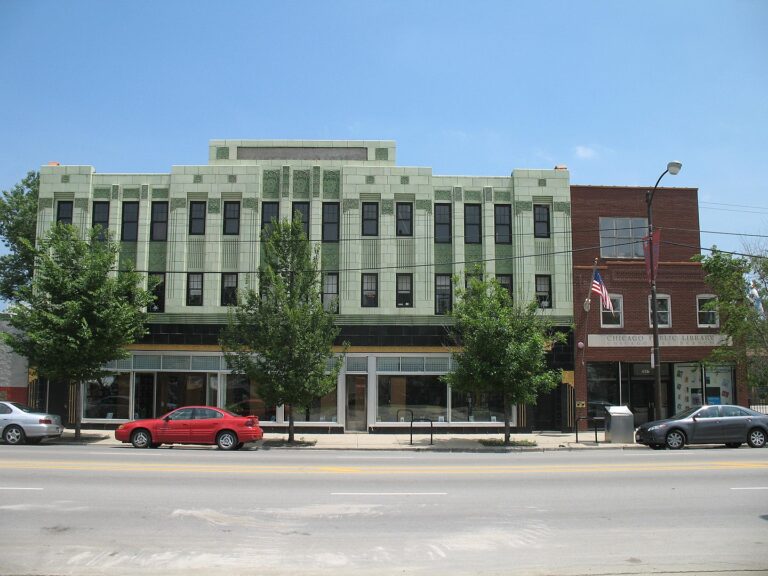
The Chicago Bee, often referred to as Chicago Sunday Bee, was founded by Anthony Overton in 1925. Overton was a successful banker and manufacturer, and the first African American to lead a major conglomerate (Overton Hygienic Company, which was a cosmetics business). After its founding, the Bee moved into the now-famous Art Deco building located at 3647-55 S. State St., which is now on the U.S. National Register of Historic Places and recognized as a Chicago Landmark. 

The Bee’s staff included many esteemed members of Chicago’s community of writers and journalists at the time. Chandler Owen, a talented writer, became editor of the Bee after moving to Chicago in the 1920s and worked with other savvy editors including Ida B. Wells and Olive Diggs. During the World War II years, when men were in active military duty, the majority of the writing staff were women, which allowed them unprecedented autonomy and opportunity for advancement. 

The Bee covered a wide range of issues of the day. It was the first newspaper to support the efforts of the Brotherhood of Sleeping Car Porters, the nation’s first all-Black labor union created during conflicts at The Pullman Company. It also supported and covered the Black women’s club movement, and gained distinction from other newspapers in the Chicago press in their publicity of Black history and literature.  

Following Overton’s passing in 1946, the Bee was briefly run by his two sons but ceased operation in 1947. Even though very little of the historic newspaper has survived today, it is still recognized as one of the most influential and acclaimed papers of the 20th century. 

Through Sage Collective’s vision, we are proud to contribute to the legacy of African American culture, community and success that is, and always has been, the heart and soul of Bronzeville.

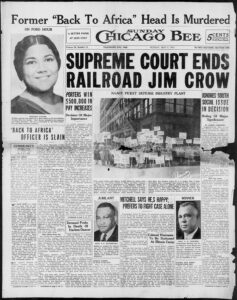
The Chicago Bee front page from May 4, 1941
The Chicago Bee Building
› Back to top
« back
12.16.21 | Sage Advice®

Chicago’s Adopt-A-Landmark Grant Makes Way for Repairs at Historic Bronzeville Church

In recent months, the city of Chicago has shown a growing interest in developing affordable housing and restoring historical structures across the city, and with the Citywide Adopt-A-Landmark Fund, they’re doing just that in Bronzeville. Located only a few blocks from our King Drive Properties, Bronzeville’s Ebenezer Missionary Baptist Church, found at 4501 S. Vincennes Avenue is one of the 12  landmarks chosen by the city to receive the grant. 

For more than 100 years, Ebenezer Missionary Baptist Church has served its membership in the heart of Bronzeville. The beloved church is said to have been one of the birthplaces of gospel music and has hosted a number of distinguished guests over the years, including the Rev. Dr. Martin Luther King Jr., Olympian and Congressman Ralph Metcalfe, Congressman Adam Clayton Powell, as well as renowned singers Dinah Washington and Mahalia Jackson. 

Thanks to unprecedented federal support from the Biden Administration, the Citywide Adopt-A-Landmark Fund, which is supporting Ebenezer Missionary Baptist Church’s renovation with a $900,000 grant,  will be awarding several Chicago landmarks with millions of dollars annually for essential renovation and preservation upgrades. Once funds approved by the City Council, the money will be awarded to these landmark buildings to cover extensive interior and exterior restoration and improvements,

Ebenezer Missionary Baptist Church’s elaborate, historic interior

For the nearly 120-year-old church, this means that its roof and damaged  stained glass windows, that have endured harsh weather for decades, can finally be restored to their original beauty. As with other churches, Ebenezer’s membership has dwindled since the beginning of the pandemic almost two years ago. The church hopes that with the new renovations, more community members will be incentivized to visit the historic site and participate in their services. 

An exciting undertaking in the Bronzeville neighborhood, the restoration is not only one of the many developments that are part of Bronzeville’s renaissance, but proves that the city is showing more interest in improving the quality of life in communities like ours. To learn more about other Citywide Adopt-A-Landmark Fund projects happening throughout the city, visit their website here

Ebenezer Missionary Baptist Church’s exterior
› Back to top
« back
12.02.21 | News

Exploring Bronzeville: The Little Black Pearl’s New C47 Work and Experiment Lounge

Bronzeville is a community whose residents are known to appreciate and demonstrate their love for their community. Sage Collective has been a part of Bronzeville since 1978, and we certainly aren’t the only organization that shares a deep respect for the historic persons and events that lived and transpired there.  Little Black Pearl, a thriving nonprofit found near Kenwood, is just one of the many other organizations actively engaged in bringing inspired change to the people of Bronzeville and its surrounding areas. 

The Little Black Pearl is popularly known as a ground-breaking educational program that provides youth with a safe environment within which to learn new skills, explore various programming and be surrounded by positive leaders and role models. The organization has been at the forefront of change on Chicago’s South Side for nearly 30 years. 

With this track record now established, Little Black Pearl is using its experience,  knowledge and appreciation for its community, to expand its programming initiatives to an older audience. Little Black Pearl’s founder Monica Haslap led the organization in its launch of  C47 Work and Experiment Lounge in November 2021. 

The lounge, which is found at 1060 East 47th Street, invites adults into a collaborative space to inspire creativity and explore new passions. Built with innovation in mind, this new environment includes fully operational workshops that range from culinary classes, to art projects and office spaces where anyone looking to escape the hardships of the past two years will gladly find tranquility.

Members who join the C47 Work and Experiment Lounge will be exposed to numerous creative visionaries and experts in music, technology, fashion and finance. For adults interested in becoming a member, memberships range from $50-$200 per month, and all offer a variety of different opportunities within the lounge. 

With hopes of serving longtime members of the community as a safe, creative space where unconventional ideas can thrive, C47 Work and Experiment Lounge embodies the values that Little Black Pearl has demonstrated for decades. And, like Sage Collective, the organization will likely continue leading change in the community for decades to come.

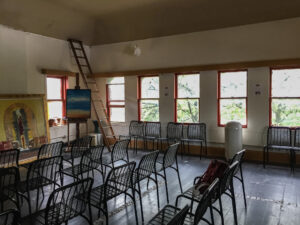
C47 Work and Experiment Lounge Interior, Photo Courtesy of Armand Morris
› Back to top
« back
11.11.21 | Sage Advice®

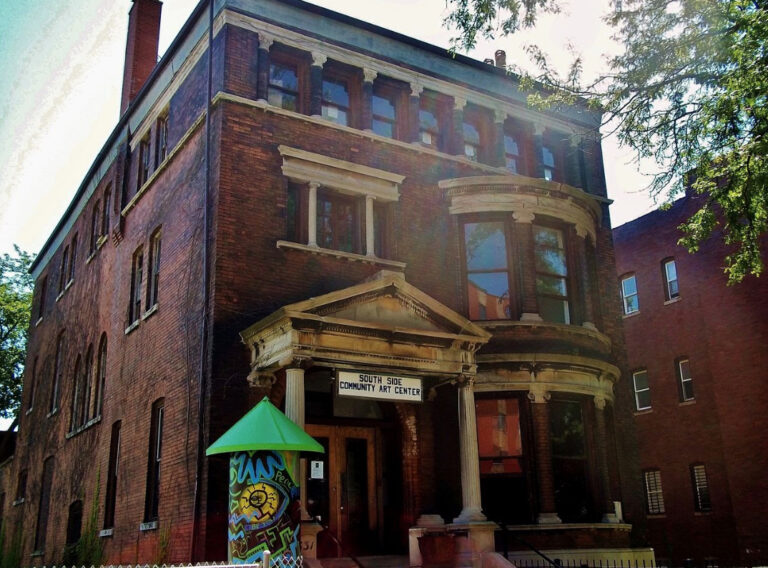
A Brief History of The South Side Community Arts Center

Widely recognized for its vibrant arts and music scenes, the Bronzeville neighborhood takes pride in its rich past. Throughout history, various venues around the neighborhood have been essential for Black artists across the community. One of Chicago’s Historic Landmarks, The South Side Community Arts Center, is one of those precious places that has had a lasting impact. 

Making History

Determined to overcome the seemingly never-ending hardships brought by the Great Depression, President Franklin Roosevelt introduced the New Deal and its Work Progress Administration (WPA) to the country. Sponsored by the WPA, The Federal Arts Project (FAP) acted as a subsidiary program to the larger workforce development effort by expanding community art centers across the country. 

In 1938, FAP agents visited Chicago in hopes of creating an arts center focused on exhibiting the work of African American artists. Progress on the center’s development advanced once South Side businessman Golden B. Darby emerged as a champion for the project. With his insistence that the center reside on Chicago’s South Side, Darby organized the Community Arts Center Committee to advocate for the center’s location. Members of the committee included local leaders and artists from the Arts and Craft Guild, the lone group for African American artists in the community, including Margaret Burroughs, Eldzier Cortor, Bernard Goss, Charles White, William Carter, Joseph Kersey and Archibald Motley, Jr. 

An exhibition at South Side Community Arts Center, Courtesy of Tony Smith

After extensive fundraising through various lavish events, including Margaret Burroughs’ famous “Mile of Dimes” and considerable philanthropy from the Bronzeville community, a property was finally secured at 3831 S Michigan Ave. Originally serving as a residence, the grand brownstone building was nearly 50 years old and in need of considerable renovations and rehabilitation. 

After years of remodeling under the careful direction of Bauhaus designers Hin Bredendieck and Nathan Lerner, the restored structure became the South Side Community Arts Center (SSCAC) and featured classrooms, performance and lecture halls and a marvelous gallery. The grand opening showcased an exhibition of the work of numerous local African American artists’ including Charles White, Eldzier Cortor and Archibald Motley Jr, — finally allowing space for artists in the community to thrive.

Following its inauguration, the SSCAC was host to numerous celebrity guests, including First Lady Elenor Roosevelt, who visited the SSCAC in May 1941 to deliver its dedication speech. The address received widespread media attention and was broadcast nationwide via CBS Radio. Less than a year later, the United States entered World War II, and funding for the FAP was significantly reduced. 

A Community Hub

Throughout The SSCAC’s history, a rich, diverse range of art has graced its famous walls. In 1944, accomplished artist Rex Goreleigh became the SSCAC’s administrative director. Goreleigh furthered the center’s programming, introducing workshops on drawing, painting, sculpture, performing arts, photography and more to the community. Famous writers, including Gwendolyn Brooks, became associated with the SSCAC’s writing center, and legendary musicians like Nat King Cole and his Trio performed there often. 

A classroom inside of The South Side Community Arts Center, Courtesy of Eric Allix Rogers

More than 80 years after the center’s founding, The SSCAC stands proud in the Bronzeville neighborhood. After countless renowned exhibitions from distinguished artists, the SSCAC continues to thrive, and has been named a National Treasure and added to the National Register of Historic Places. 

Today, The SSCAC remains the only arts center opened by the WPA centered on African American art that is still open in its original building. Permanent collections from the center’s founding artists reside alongside new artwork from emerging artists. A staple of the Bronzeville community, The SSCAC serves as an inspiration for artists and communities across the nation,  and remains vital and relevant as a very special place where connections blossom and relationships prosper. 

You can visit The South Side Community Arts Center Tuesday through Saturday from 12 to 4 p.m. Admission is free. However, donations are strongly encouraged to support the center’s future. You can also visit their website here to discover their local events, exhibitions and collections. 

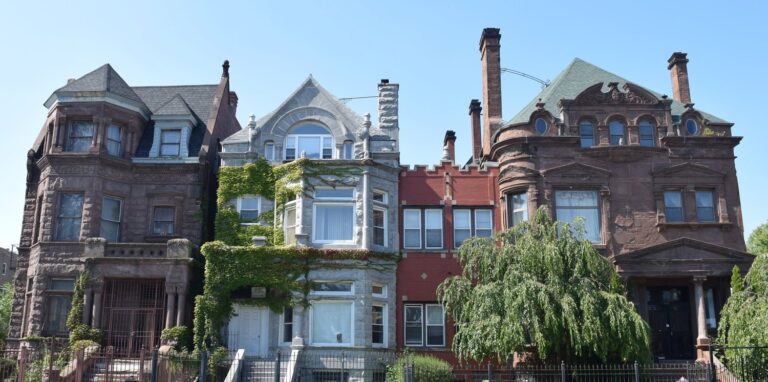
Bronzeville’s South Side Community Arts Center
› Back to top