« back
08.10.21 | Sage Advice®

Embracing the cultural process of aging

As we articulate in the Sage Vibrant Living Manifesto, cultural perceptions of aging have an enormous impact on individuals and their communities. As we continue to fight ageism and the traditional American notions of aging that many of us still experience today, we look to the wisdom of others to share new ways of thinking and doing.

Carl Honoré, writer and activist, argues that in order to age better we must feel better about the process. Learning how to age better in a world where aging is presented in a negative frame can be extremely hard, but it only takes a few minutes to change your perspective. In his TED Talk, Honoré explains how to embrace the aging process. Honoré also delves into his method for combating ageist traditions and practices within our lives. Watch below to learn more:

A quote sits on top of an image of two older adults laughing. The quote reads "We need to feel better about aging in order to age better," and is attributed to Carl Honore. The sage logo sits in the bottom right corner.
› Back to top
« back
07.13.21 | Community

How to become a “joyspotting” expert

Similar to taking an awe walk, joyspotting is the intentional act of going out into the world to look for things that spark joy in you. While the word may sound unusual, it’s actually amassed quite a cult following – with entire online groups dedicated to sharing in joyspotting (and their subsequent findings) together. Even if you’re not ready to join an online group just yet, find out how to become a joyspotting expert using our tips below.

The Origins of Joyspotting

Joyspotting is a term first coined by Ingrid Fetell Lee. As a designer, Lee began to notice the relationship between one’s surroundings and their mental health. For example: living in a home filled with bright prints and patterns provides an immediate mood booster. Lee knew this was a counterintuitive principle. So often, society tells us not to derive joy from the things that surround us, but from what’s within us.

In contradiction to this view, Lee sheds light on the relationship between our environment and our emotions, and shares inspiration and resources for living a more joyful life through design in her book, The Aesthetics of Joy. She has also created a website dedicated to this viewpoint, that shares the same name. There is also an online Facebook group that we referenced above, The Joyspotters’ Society.

As Lee became more and more tuned into what caused her joy from her surroundings, she began to develop the habit of intentionally seeking out – or looking to consciously observe – these causes of joy. And hence, joyspotting was born. As she says, “The world seemed to be teeming with tiny, joyful surprises. All I had to do was look for them… It was like I had a pair of rose-colored glasses, and now that I knew what to look for, I was seeing it everywhere. It was like these little moments of joy were hidden in plain sight.” Instead of seeing the world around us as beset with distractors, joyspotting is a way of creating a reservoir of positivity.

Twelve Ways of Joyspotting

To become an avid joyspotter is simple. Look around you and determine something that causes you joy. It could be a pair of colorful, patterned socks worn by the man next to you on the train, or the unexpected sidewalk chalk drawings on a walk around the block. But just in case you need a little bit of help getting started, Lee put together The Joyspotter’s Guide, which outlines her twelve tips for joyspotting. Below, we offer a brief description of those tips.

Look up. Joy often comes from things that float or fly in the sky, whether that’s shapes you find in the clouds, or a stray red balloon. Look down. Maybe you discover a rainbow in a puddle, or a vibrant pair of shoes on a passing pair of feet. Keep an eye out for color. What flashes of blue catch your eye? How does an abundance of green transform the environment? Follow the curve. Life is full of hardness, so where do things get soft around the edges?

Go where the wild things are. There’s always joy to be found in nature, whether it’s enjoying the smell of a rosebush, or listening to birdsong. Seek out symmetry. Where there are mirror patterns, there’s often a surprising sensation of randomness or harmony. Search for signs of abundance. Where do things feel lush and full? It could be a fruit bowl on a family member’s kitchen counter, or a few too many Christmas lights at the neighbor’s house. Joy has a way of spilling over. Watch for weirdness. Where are things out of place, or just out of the ordinary? It’s those standout details that often feel most special.

Zoom in. Focus your attention on the tiniest of details. Notice the invisible. What joy surrounds you that can be felt or heard, but not seen? These sightless observations hold a magic of their own. Similarly, use all your senses! And finally, take the scenic route. The paths you wouldn’t normally take often hold the most surprises, and within those, there’s much joy to discover.


Photo of man looking through a spotting scope
› Back to top
« back
06.21.21 | Sage Advice®

Can going to church or the art museum extend your life expectancy?

At Sage Collective, we champion 9 Ways of Vibrant Living, an inspired model that champions a full, happy and high-quality life. And while we’re focused on the quality of life, it’s possible that the quantity of life (aka life expectancy) is also intrinsically linked to it. So when we talk about components to vibrant living such as engagement in spirituality or religion and engagement in social life, can these components really bring about a longer life? Science says yes.

A Swedish study in 1996 of more than 12,000 people in Sweden found that “attending cultural events correlated with increased survival, while people who rarely attended cultural events had a higher risk of mortality.” A follow-up study in 2000 reported similar findings, stating: “We found a higher mortality risk for those people who rarely visited the cinema, concerts, museums, or art exhibitions compared with those visiting them most often.”

You can also find a comprehensive list of studies conducted to test similar hypotheses on the impact of social connectedness and cultural immersion on an individual’s health and overall mortality rate here. These studies include considerations of social and cultural immersion across a broad swath of types – including number of relationships, depth of social support, types of activities and their social involvement. 

However, the findings ring the same across the broad spectrum of social and cultural involvement: all these things are truly good for one’s health and life expectancy. As strong believers in the power of vibrant living, we’re not surprised. It is vitally important to live a life filled with curiosity, purpose, joy, and love. Participating in cultural events such as going to the museum or attending church regularly provide all these things and more – and they just might provide a boost to your overall health, too.

A girl stands in front of a series of paintings on a gallery wall
› Back to top
« back
12.17.20 | Health & Wellness

A Vibrant Living Guide to Aging in Place

How does vibrant living play into aging in place? “Aging in place” describes the process of growing older at home. It’s a process rooted in independence and comfort; a way for older adults to maintain normalcy and their sense of community.

We recently spoke with Angela Higginbotham about her expertise on aging in place, learned from assisting her 93-year-old mother at her mother’s home. Higginbotham is a CPS educator, Lead Speech Pathologist and a member of the Sage Collective Board of Directors.

Maintaining Independence 

“First off, I feel grateful to have the opportunity to care for my mom,” reflects Higginbotham. “I saw the sacrifices she made for my family growing up and I’m happy it’s my turn to do that now. As for how our caretaking occurs: it’s a family affair where my mother is directly involved in the decision-making process. My brother, sister, mother and I all sit down and have a conversation about how she’s feeling, what her needs are and how we can support her as long as we can in an independent setting.” 

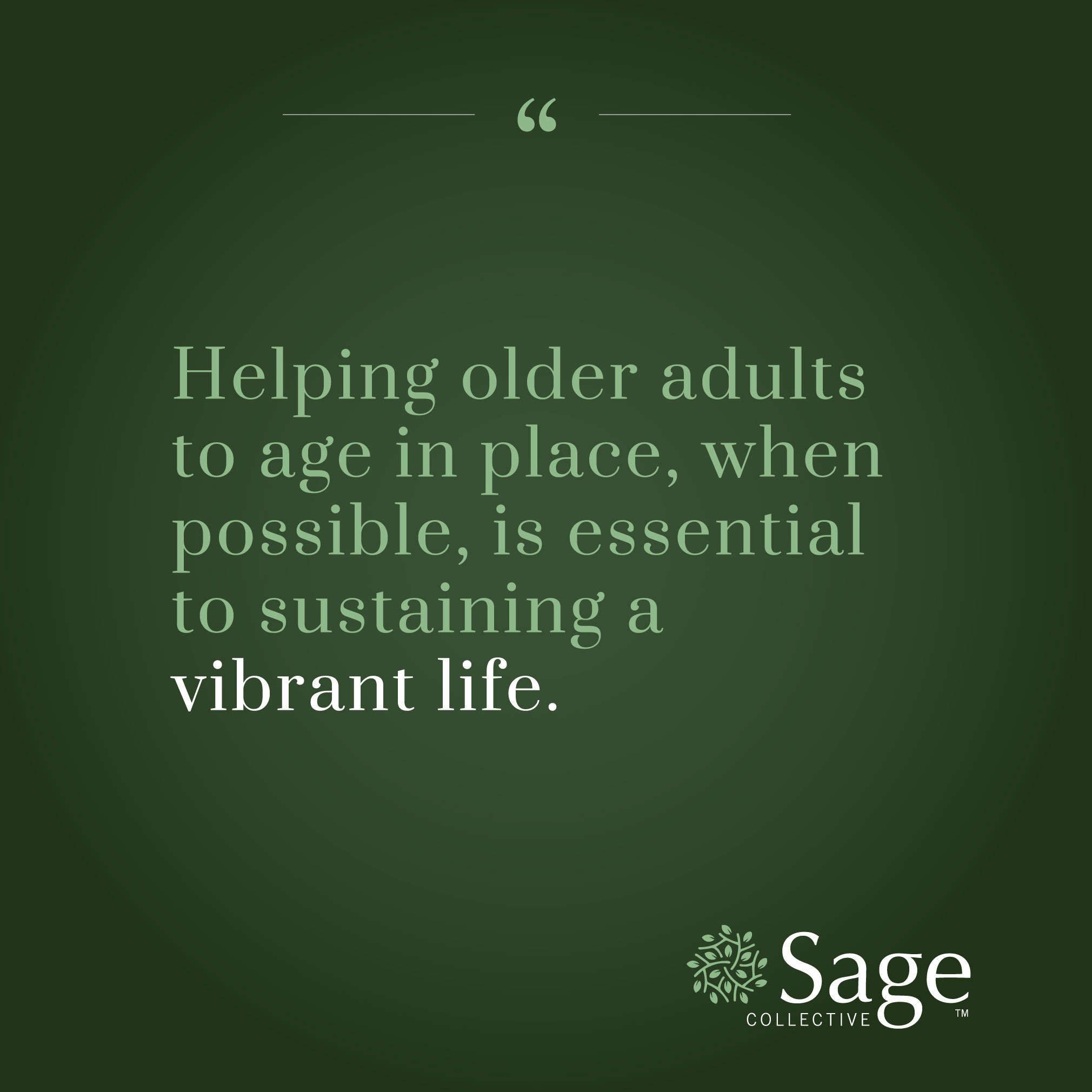
Though aging in place isn’t a viable option for everyone, it’s important for older adults with the mental and physical capacity to maintain that level of independence. “As long as people are able to take care of themselves, they’ll be able to take care of themselves longer,” explains Higginbotham. “So helping older adults to age in place, when possible, is essential to sustaining a vibrant life. Because I believe that once people stop maintaining their independence, it affects them psychologically and emotionally.” 

Text over a green background, with quotation marks at the top and the Sage Collective logo at the bottom. Text reads: Helping older adults to age in place, when possible, is essential to sustaining a vibrant life.

Staying Engaged Through Community

“My mom still has her driver’s license — she’s smart about it and only drives between 10-2, when everyone else is at work and when it’s safest — but she still goes to church and out to see friends,” says Higginbotham. For older adults, social isolation and loneliness are often big hurdles to overcome. Staying engaged with family, friends and community members, then, plays a vital role in supporting a more vibrant lifestyle.

Higginbotham goes on to say: “My mom also personally knows many of my friends. From time to time, they’ll give her a phone call or even go and visit, which is something I so appreciate. It means she’s connecting with people and that’s so important.” Though maintaining independence is a large part of aging in place, it is these moments of human connection and care that help the experience feel even more comfortable and warm.

Staying Engaged Through Culture

Social engagement is one thing — but finding things to do for oneself is vital, too. We’ve emphasized before the importance of older adults discovering activities they love. Higginbotham reinforces this perspective, sharing: “One of my mom’s favorite hobbies is quilting. In the spring, we’ll also go to the nursery and pick out plants for both her place and my place together. I’ll keep her company at her house while she plants hers and then she’ll come over while I do mine. We also — pre-COVID times, of course — loved to go to the theater. We’d get lunch or dinner and see different plays across the city. It gave my mom something to talk about, too, because she’d go back and tell her girlfriend all about it.” 

Higginbotham reflects on this, saying, “It’s important for people to get out and see what’s going on in the world. As people age, their ability to transport themselves to new places is limited, and they know about, what they know about. But, if there are people around who can expose them to new experiences, it enriches their lives.” 

Aging in place is just one way to live a more vibrant life. But, whether at a personal home or a care facility, both experiences share a commonality: community and cultural experiences have the ability to engage older adults and enrich them, leading to more vibrant living for all.

Angela Higginbotham
› Back to top
« back
12.10.20 | Arts & Culture

Discover Your New Winter Hobby for Seniors

Cultivating hobbies in older adulthood is a vital part of staying enriched and engaged. We’ve spent our entire lives making others happy, from partners to kids to bosses to friends. Now is the perfect time to indulge in activities for personal happiness and enjoyment, too. That’s why today, we’re talking about the benefits of finding a hobby that suits you — and sharing a few ideas to help get you started.

Fitness Hobbies

As we’ve discussed before, it’s vital that older adults partake in regular, moderate physical activity. Hobbies such as yoga, tai chi, swimming and even gardening are great ways to get those minutes in while also enjoying the task. Choosing these forms of exercise will help transform the experience of working out from a chore to a treat. 

Social Activities

Loneliness and social isolation are major challenges older adults face. Incorporating social activities into your life is a great way to meet new people and learn new things at the same time. Consider joining a choir, a local senior bowling (or other leisurely sport) league, taking a dancing class or even getting together for a game of cards every once and awhile.

Mental Engagements

One major benefit of hobbies is the opportunity to stimulate and engage your mind. For those that love a good challenge, or like to be whisked away in a story, try picking up a good novel from your library or grappling with a puzzle in the newspaper. Mentally engaging hobbies and activities are even proven to help keep your memory sharp.

Artistic Pursuits

For those seeking to express their artistic side, there are many artist hobbies available. For those that are good with their hands, knitting, crocheting or quilting are all exciting pursuits. Painting, drawing and scrapbooking are great ways to get creative and to create keepsakes, too. And for the wordsmiths among us, writing counts as an artform too!

There’s a hobby out there for everyone. Keep looking and trying new things until you find one that’s the right fit for you!

Three African American older adults smile together, wearing aprons at a painting class
› Back to top
« back
11.25.20 | Sage Advice®

Growing Your Green Thumb — With Indoor Houseplants

With winter quickly approaching, in many parts of the country, it’s time to bring the great outdoors… indoors. Keeping houseplants is the perfect way to incorporate nature into your everyday life, even on those days when getting outside isn’t an option. Houseplants also make for lovely additions to home design, help improve indoor air quality and even serve to boost your mood. So today, we’re talking about how you can grow your green thumb indoors by sharing some houseplant 101 tips.

Consider Sunlight

Whenever deciding to add a new houseplant to your home, you first have to consider two primary factors: where will the houseplant go, and how much sunlight will it receive? If your new leafy friend is going to live on a bookshelf by an eastern facing window, you can expect ample sunlight exposure. But if the plant is going in a room without windows that receives little sunlight, be prepared to choose a plant that can thrive in those lowlight conditions.

A good way to gauge whether your houseplant is getting the appropriate amount of light is to inspect the leaves. Yellow leaves signify either a lack of sunlight, or a lack of water. Leaves that begin to brown on the edges, as if burned, are being scorched by too much sunlight.

Watering Regularly

All plants will need regular watering. A good rule of thumb is to water your houseplants once per week, but this may change depending on sunlight and the time of year. Many store-bought houseplants will come with specific instructions.

It’s good practice to choose a specific day for watering (say a Saturday morning) in order to make it into a regular habit. You can also check if your plant needs water by sticking an index finger into the soil. Even if the top of the soil appears wet, if the soil half an inch below is dry, your plant may require more water.

Beginner-Friendly Plants

Choosing what plant will fare best in your home’s specific conditions is an important part of the process. Take the time to do your research before buying a houseplant, or ask a clerk at the store for their help and advice. Those new to keeping houseplants will do best to choose from a list of beginner-friendly options, including pothos, spider plants, snake plants, succulents and cacti. 

Whether you start with just one houseplant, or grow your collection to become an indoor jungle, indoor gardening is the perfect way to introduce vibrant living to your winter months — and beyond.

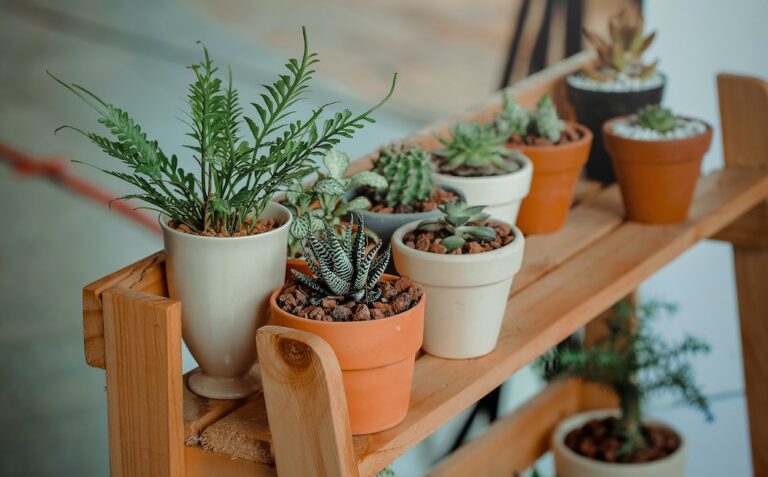
A wooden shelf is lined with pots of succulents and other potted houseplants
› Back to top
« back
10.01.20 | Sage Advice®

Understanding the Role of Smart Design in Our Lives

As a leader in older adult living, Sage Advice prides itself on cultivating an extensive library of knowledge on relevant trends and best practices in the field of senior living and wellness. One such trend, smart design, is a uniquely adaptable, constantly evolving concept that grows with new findings daily. Today, we’re exploring what exactly smart design is, what role it plays in older adults’ lives and how its unique adaptability makes it suitable for any home.

What is it and who is it for?

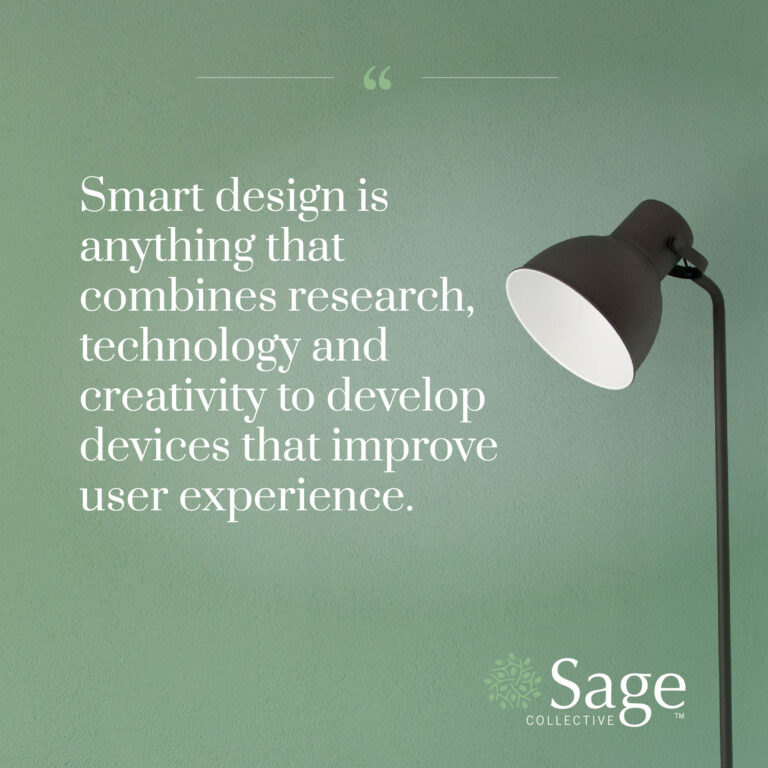
Smart design is anything that combines research, technology and creativity to develop devices that improve user experience. Although a prevalent tool used to provide solutions for older adults, smart design is not limited to one specific age group — it is just coincidental that many challenges smart design seeks to address are ones that come with age. 

Smart design is employed in private residences and communal homes alike. In both, smart design (which often involves smart technology) creates an environment that is safer and more accessible for its residents, often focusing on challenging areas such as kitchens and bathrooms. Design solutions can be as simple as installing grab bars or shower benches, or as complex as wearable, data-tracking technology. 

Ultimately, resident (and caregiver) preferences determine which smart design solutions are a best fit for each unique situation. Everyone’s physical, cognitive, financial and emotional needs vary, and smart design solutions can be made custom to match.

The end goal

Meanwhile, why we pursue smart design is quite nuanced. Smart design seeks to address a broad continuum of unique challenges: from basic physical safety and functionality needs, to more high level goals such as mental wellbeing and the ability to flourish and be happy in one’s environment. 

Smart design pursues these end results in a triage-like manner. In following the hierarchy of needs, safety needs are always the first to be addressed. If a person is not fundamentally safe in their environment, nothing else matters initially. Once those safety needs are met, then concerns can move up the scale to address things such as mental wellness. At this stage, it becomes a question of how smart design can enhance a person’s quality of life, from their ability to remain connected and engaged to even how their environment influences their self-image. 

Smart design, technology and the future

Naturally, smart design evolves in parallel with technology. These days, smart design can do everything from remotely controlling lighting to providing video surveillance to utilizing data sensors to predict fall risks or other health factors. The ability of smart design tech to transfer information to caretakers streamlines many previously archaic processes and provides increased security and protection but with it comes potential privacy concerns. 

Voice-activated smart technology (like Amazon Echo and Alexa) can provide increased capability and convenience. Smartphone assistants like Siri also give access to incredibly handy apps able to assist with shopping, banking and making appointments. While this technology has benefits, it is not without its challenges. Some smart design users are tech averse and prefer not to go this route, while for others still this type of tech is inaccessible or unaffordable. There are also concerns that a person’s reliance on tech can potentially decrease their independence. 

When looking towards the future of smart design, these will be the field’s biggest challenges: retaining balance, and overcoming issues of equity and spatial justice. But in the world of smart design, where every solution is person-specific, that flexibility provides degrees of freedom and space for inventive thought as we continually seek how to live our best lives and support best lives for others. 

As Sage Collective continues to pursue its mission of building a vibrant, affordable housing campus on Chicago’s South Side, smart design will become integral to our vision of comfortable, convenient and inclusive homes. Whether a resident of our future community or a follower of our vibrant living manifesto, we’ll always champion best-in-class knowledge and practices to be shared with our audience.

Graphic reads "Smart design is anything that combines research, technology and creativity to develop devices that improve user experience."
› Back to top