« back
03.10.22 | Arts & Culture

Most Beneficial Mobile Apps for Adults & Seniors

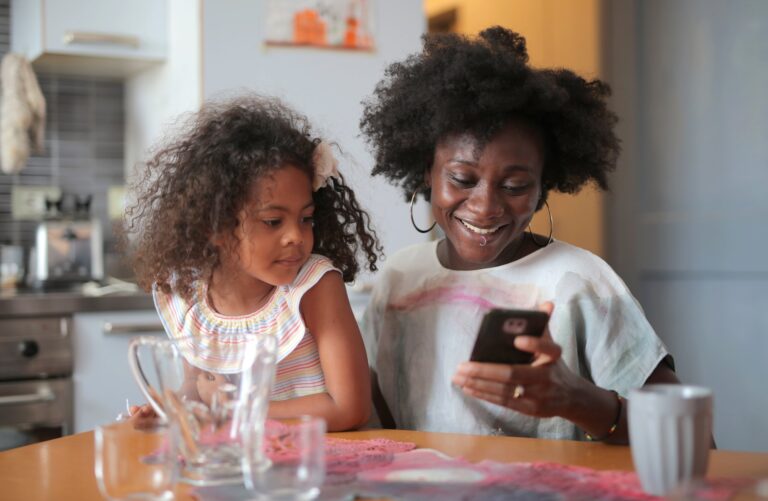
As we continue our Vibrant Living Programming, we also want to resume sharing rich content that compliments our spirited training, and this month’s theme is discovery. Because the online world is so vast, no matter how experienced your knowledge is, there’s always more to uncover. Today, we’re exploring some of the most beneficial mobile apps that every adult should consider discovering for themself. Learn more about them here:

ShopWell

One of the best ways to curate a vibrant lifestyle is by following a healthy diet that includes moderate caloric intake and plant-based eating. The ShopWell app is a great way to assist you on your journey and help you match foods to your dietary needs. After creating a profile the app will help you create a nutritious shopping list full of everything your body needs, making anyone more confident with their cooking. ShopWell is available to download for free on all IOS and Android devices. 

NPR

Along with producing one of our favorite podcasts in 2022, NPR provides instant access to all of their breaking news through their NPR and NPR One apps. The NPR application allows users to read the latest stories and listen to public radio stations from the convenience of their phones. For those who prefer audio stories, NPR’s partner app, NPR One, offers the organization’s best podcasts and shows. NPR’s mobile apps are available to download on all devices.

Lumosity

For those searching for a unique form of entertainment that can still stimulate your brain, look no further than Lumosity. This brain training app is a great way to exercise your mind with various exciting, interactive games that focus on memory, speed, flexibility and problem-solving. The app is free to download, but also comes with a paid option for anyone wanting to look for an even more challenging and rewarding experience. 

Pocket Yoga

Another beneficial way anyone can live more vibrantly is by regularly being active and reducing stress, and thankfully, practicing yoga is an excellent activity to cover both. Yoga is an extremely valuable exercise for anyone searching to improve muscle strength, balance, mobility and flexibility. My Pocket Yoga is an amazing resource for yoga lovers, providing graphics for over 200 poses and videos led by certified yoga instructors. The app is downloadable on any IOS or Android device. 

Zoom

As much as many of us love to admit we are tired of Zoom, the application has provided an accessible way for everyone, from coworkers to family members, to connect throughout the pandemic. Zoom’s mobile application is nearly identical to its computer version, so anyone familiar with its companion should have no problem feeling comfortable maneuvering through its mobile version. 

The application still remains extremely relevant today, connecting loved ones across the world. In addition to audio and video calls, Zoom conveniently also allows users to share their screens and record conversations. Zoom is free to download on all IOS and Android devices.

› Back to top
« back
02.03.22 | Sage Advice®

Why It’s Imperative to Learn and Understand Modern Technology

It seems like every day, a new form of technology attracts the masses to its platform, which can be frustrating for those of us who are still trying to understand channels like Facebook or, more recently, Zoom. In celebration of the launch of our Vibrant Learning Program in partnership with Chicago Commons Adults Day Services, we’re highlighting just how important it is for people of all ages to understand modern technology.

Although the process of learning about today’s technology may seem daunting, the result of doing so comes with a variety of benefits that many look past. 

Connectivity

One of the most important reasons why we should embrace technology is because of the amazing ways it allows us to connect with others. For those of us who have long-distance family and friends, applications like Facetime and Zoom make it easy to reach them no matter how far away they are. Social platforms like Facebook and Instagram also make it easier to reach those in your network and others who might share interests with you.

A Hub for Entertainment and Other Conveniences

Along with the various connectivity features many modern technologies offer, many also provide users with accessible forms of entertainment and other conveniences. While TV and movies can be easily found through apps like Netflix and Hulu, other applications provide spaces to complete puzzles, explore new books and listen to your favorite podcast. 

Online shopping is another amazing affordance computers and smartphones offer to their users. With almost anything you want at your fingertips, not only are these technologies convenient, but they also help users make more informed decisions. 

Improve Health and Wellness 

Another great reason why you shouldn’t stray away from exploring new technology is that they provide resources to improve your health and wellness in accessible ways. For those of us who don’t like leaving our house to work out, we can have any exercise at our fingertips with the touch of a button. Platforms like Youtube and Google supply thousands of helpful materials and videos that anyone case you to increase their fitness. 

With other resources like health monitors being built into new technologies like Apple Watches and Fitbits, along with various health-related research websites and platforms, modern technology has advanced the way almost everyone has access to health needs.

Whether you enjoy using various modern technologies or not, taking a step out of your comfort zone to explore the vast benefits they can provide is worth the experience.

› Back to top
« back
12.30.21 | Health & Wellness

Resolutions for 2022

One of the best ways to set yourself up for success in a new year is by making a list of resolutions before it starts. This tradition is a powerful way to articulate your values and can hold you accountable for your goals heading into the new year. In case you’re unsure of what to add to your to-do list, here are some resolutions you can take into 2022 to continue championing a vibrant lifestyle.

Start Something You’ve Always Dreamed About

Heading into the new year, make it a priority to make an ambitious dream come true. Not only is it essential to set goals for yourself throughout the new year, but achieving them leads to significantly rewarding experiences. Whether you want to head back to school, discover a new hobby or change career paths, don’t be afraid to take initiative of your life. Fulfilling dreams helps give your life purpose, control and meaning. And, if this isn’t the year to do it, when is?

Put Your Health First

Putting your health first encompasses a variety of choices that you can make throughout the year. It’s important to remember that your body’s health consists of both physical and mental elements. So, while making sure you try to incorporate moderate, regular physical activity into your life along with a variety of nutritious foods, taking care of your mental health is just as important. And, lucky enough, sometimes specific actions will go hand in hand with helping both areas of wellness. 

Live in the Moment

If the past few years have taught us anything, it’s that we shouldn’t take anything for granted. We believe one of the most significant goals you should have in the new year is to live in the present. To do so, you must focus on the now. A few great ways to do this are by practicing mindfulness, performing meditation or simply performing random acts of kindness in your community.  

We’re thankful to keep learning from the lessons that 2021 has taught us and couldn’t be more excited to see how our resolutions will play out in the upcoming year!

› Back to top
« back
10.05.21 | Community

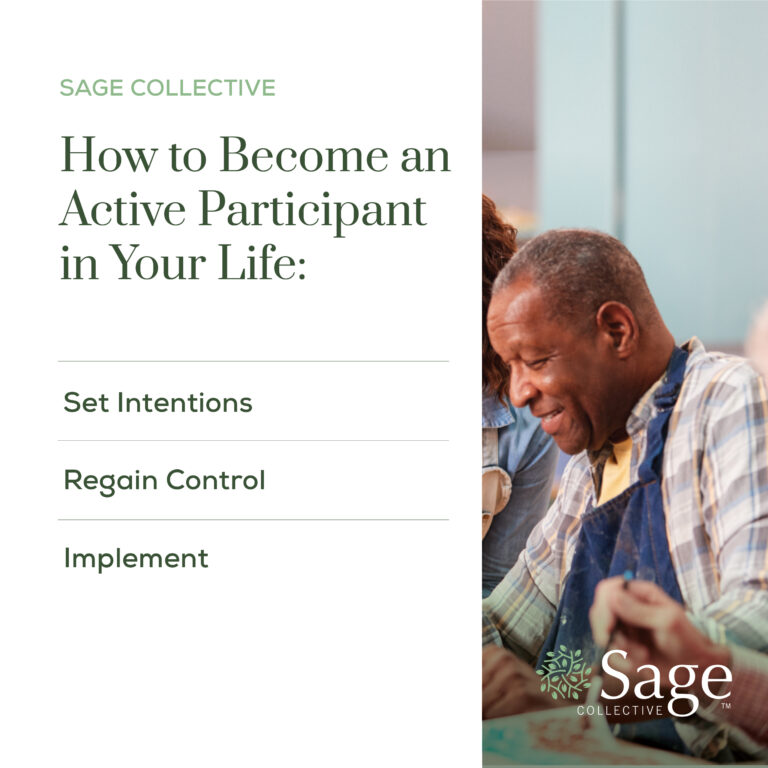
How to Become an Active Participant in Your Life

For many older adults, feeling like they’re losing control of their lives is all too common. While this can be a normal reaction to aging, it can also leave people feeling overwhelmed when confronted with the stigma of getting older. Actively participating in your life is a powerful way to combat these feelings and stigmas, leading to a more vibrant life. So, how can you learn to become an active participant in your life? Let’s take a look. 

Set Intentions

First, set goals to transition from a passive participant to an active participant in life. It can be challenging to reflect on what aspects of life might be obstructing your progress, but it’s imperative for regaining control. Your intentions and goals act as a foundation for the rest of the process for becoming active participants. So, honesty with yourself is essential.

To keep yourself motivated and engaged, write down each of your intentions and keep them in a place you will regularly see. Remember, each person’s intentions are unique to their own personal experience and goals. 

Regain Control

Adjusting your thought process to become less passive can be challenging, but the more you do it, the easier it becomes. By believing in yourself and your words, you regain control and take power away from negative thoughts.

Again, writing down your thoughts is an effective resource for change. Make a list of words that come to mind that diminish your power, confidence or ability. Once you have a few written down, modify the language to become active and uplifting. The next time you feel control shrinking, revisit the list and remind yourself that you have the power to enact change in any way.

Implement

It’s easier to enact change once you set intentions and understand that you can control involuntary thoughts. If wanting to go back to school is on your list, enroll in your first class. If eating more nutritious meals is your goal, start researching recipes with healthier foods. At first, taking steps to live actively may feel uncomfortable and daunting, but remember that years of passive living are being dismantled. 

While being an active participant in life is the ultimate goal, it’s important to be kind to yourself on the journey. Even if your path changes, the experiences and tools you learned along the way are something of which you can  be proud.

At Sage Collective, we believe actively participating in your life is an aspect of vibrant living that helps find purpose, shepherd confidence, and inspires goals for older adults. It’s never too late to become active participants in our lives.

› Back to top
« back
09.16.21 | Sage Advice®

Why It’s Never Too Late to Go Back to School

As part of Sage Collective’s 9 Ways of Vibrant Living, we encourage everyone to take advantage of their unique talents and interests to help others in meaningful ways. However, for some, finding a purpose and exploring interests can be overwhelming or somehow inaccessible. Going back to school is one effective way for older adults to discover purpose, increase knowledge and realize a dream.

Today, the typical college student is starting to look less like a 20-year-old running late to class after a night out and more like a middle-aged adult seriously interested in furthering their education. In fact, according to the Lumina Foundation, almost half of the undergraduates from for-profit institutions and one in five undergraduates from four-year universities are over the age of 30. 

Flexibility is one of the key reasons why older adults are choosing now to return to school. Encouraged by COVID-19, many universities have adopted and significantly improved their online learning programs. Often, online programs encourage their students to take classes and earn their degrees at their own pace.

Furthering their education isn’t always the main reason older adults choose to go back to school. Changing career directions, cultivating purpose and interests, and even retaining a sharp brain are all motives for older adults to go back to school. Research has shown that continued intellectual engagement for seniors, like going back to school, can help protect them from certain cognitive disabilities like dementia. 

Going back to school for older adults is also more affordable than ever. Many states are now offering free or low-cost opportunities for older adults to access academic classes. AARP has assembled a list of financial assistance offered by each state that you can learn more about here

Universities across the country are welcoming older populations with open arms now more than ever enabling these ‘new’ students to experience the rewarding and self-validating experience of revisiting education. Whether you’re looking to further a career, explore your purpose, or want to learn something new, it is never too late to go back to school.

A group of older adults celebrate with high fives around a table.
› Back to top
« back
08.10.21 | Health & Wellness

Embracing the cultural process of aging

As we articulate in the Sage Vibrant Living Manifesto, cultural perceptions of aging have an enormous impact on individuals and their communities. As we continue to fight ageism and the traditional American notions of aging that many of us still experience today, we look to the wisdom of others to share new ways of thinking and doing.

Carl Honoré, writer and activist, argues that in order to age better we must feel better about the process. Learning how to age better in a world where aging is presented in a negative frame can be extremely hard, but it only takes a few minutes to change your perspective. In his TED Talk, Honoré explains how to embrace the aging process. Honoré also delves into his method for combating ageist traditions and practices within our lives. Watch below to learn more:

A quote sits on top of an image of two older adults laughing. The quote reads "We need to feel better about aging in order to age better," and is attributed to Carl Honore. The sage logo sits in the bottom right corner.
› Back to top
« back
07.20.21 | Personal Development

How to Become a Better Listener

Becoming an engaged listener can give you the power to strengthen relationships, validate feelings and empower others. It takes more than just sitting down with someone and hearing what they say to become a better listener, however. Listening is a skill that takes time to practice and master in order to fully appreciate its influence and capability within conversations.

The three C’s of effective listening: compassion, curiosity and courage 

When practicing to become better and more effective listeners, many follow a guide focusing on three main components: compassion, curiosity and courage. The ingredients in this recipe work independently as well as collectively to strengthen the skills needed to become a better listener. Let’s take a closer look.

One of the most important things to show when listening to others in an open and safe environment is compassion. Showing things such as empathy and understanding for someone’s situation—  instead of apathy or disregard — welcomes the opportunity for those sharing to feel more comfortable with the listener, but with their own story and experience, as well.

The presence of curiosity within conversation is also key for displaying interest and affection. Showing your interest and craving to learn more from those speaking can further the feeling of validation and in turn encourage them to continue being open and vulnerable.

You might be wondering how courage comes into play when practicing listening and instead may think it’s more important for speaking. Yet, having the courage to effectively listen to someone often require courage and vulnerability, more so than sharing your own voice. In fact, Winston Churchil famously once said, Courage is what it takes to stand up and speak; courage is also what it takes to sit down and listen.”

Beyond the three C’s, we should also all aim to apply compassionate witnessing and active listening to become a better and more effective listener.

Compassionate witnessing

Compassionate witnessing, an essential element in effective listening, goes one step beyond being empathetic and compassionate.

Compassionate witnesses understand the act of understanding as key to being a better listener. As a listener, your role isn’t to judge, interrupt or share your thoughts. Your main goal is to create a connecting and welcoming environment where you make the other person feel seen and important. By including compassionate witnessing into your listening environment, feelings and reactions of validity start becoming more familiar to all.

It is also important to enact compassionate witnessing techniques into how we treat ourselves. By making ourselves and others’ words visible and important, we have the opportunity to mold and revolutionize all relationships.

Active listening

Although being a compassionate witness and including the three C’s into your listening habits help you become a better listener, it isn’t enough to just simply sit and listen. Active listening is being fully engaged in the conversation you are a part of, going beyond being a compassionate witness.

There are many aspects of being an active listener, including the use of engaging body language. Opening your body up (not crossing arms and legs, for example) and showing assurance by leaning forward, nodding your head and smiling can all be signs to the speaker you are actively engaging and listening to them.

Another aspect of actively listening includes clarifying and paraphrasing without interrupting the speaker. Clarifying involves asking the speaker for additional information related to what you find interesting or unique in what they are sharing. And in the process of paraphrasing, you have the opportunity to summarize what was said in order to get confirmation and demonstrate that you are understanding the content of the conversation in real time. Both of these techniques are helpful and engaging for those listening, but for the speaker as well.

One of the last things you can offer as an active listener is giving feedback, especially if the person you’re conversing with is open to this kind of change. If they are looking for feedback, it’s important to actively share your thoughts, feelings and constructive advice if you have any.

Becoming a better listener is an ongoing process of building a toolkit of skills and actions, and continuing to draw upon these tools in ways that are uniquely appropriate to any given conversation. And as your listening improves, you’ll come to internalize the mechanics and have endless opportunities to experience the power of reciprocity — the simple pleasure of giving and receiving.

› Back to top
« back
02.19.21 | Personal Development

Resilience is a Skill You Can Build — Here’s How

Throughout a lifetime, everyone experiences trauma, grief, failures, challenges and setbacks. Resilience is the essential skill needed to help us overcome these experiences. Some people have a better grip on the skill than others, but luckily resilience is something we’re all capable of building — today, we’ll take a look at how:

Understanding Resilience

At Sage Collective, we recognize that everyone faces adversity in life, and that stress is a natural component of the human experience. Rather than the complete elimination of stress (which would be unrealistic), we take a more pragmatic approach, advocating for stress reduction as part of our 9 Ways of Vibrant Living. Resilience is an essential tool for stress reduction. 

According to the American Psychological Association, psychologists define resilience as “the process of adapting well in the face of adversity, trauma, tragedy, threats, or significant sources of stress—such as family and relationship problems, serious health problems, or workplace and financial stressors.” Resilience isn’t just about getting through a challenge, but about emerging on the other side feeling more confident and empowered in your ability to cope and overcome adversity. 

Building Your Resilience

There are four core components that build resilience. 

The first component is easy enough to tackle: take care of your physical wellness. Often, when we take care of our body, our mind will follow suit. Taking care of your physical wellness includes maintaining a healthy diet, participating in moderate, regular physical activity and getting a good night’s sleep. If you incorporate these physical wellness habits into your daily lifestyle, you’ll begin experiencing elevated energy levels and improved moods, both of which will help you become more resilient.

The second component that follows suit is: take care of your mental wellness too. When building resilience, it’s important to both get in touch with your emotions and to learn how to control them. Mindfulness practices such as meditation, yoga and breathing exercises can help with this. Practicing gratitude, developing a self-care routine and engaging in activities you love are all great ways to restore balance and wellbeing to your mind.

The third component that will help you build resilience: seek out connection. You don’t have to go through trials and tribulations alone. Rather than isolating yourself, instead build a network of trusted friends, family and community members that you rely on to validate the troubles you’re going through and to help uplift you when needed. You can also find a sense of connection and support in more structured environments such as support groups, civic groups or faith-based organizations.

And finally, the fourth component: find meaning. Going through a traumatic experience often overwhelms us with negative feelings like despair and hopelessness. Combatting these feelings with a sense of life purpose helps us maintain our groundedness and to hold onto hope and optimism. Whether you’re driven by a desire to help others or to pursue opportunities for self-discovery and improvement, finding meaning through your life purpose — and taking the steps needed to reach your goals and objectives — helps us maintain the problem-solving, motivation and drive that’s key to resilience.

Challenges will continue to come our way. With these tools to help build resilience, we hope you’re left feeling more prepared for the next time adversity comes your way.

Two hands reach out from a bright yellow field of flowers
› Back to top
« back
02.04.21 | Sage Advice®

How Better Self-Control Leads to Life Longevity

What does good behavior have to do with life expectancy? More than you might think.

U.S. News recently reported on a study conducted on 1,000 New Zealanders, from newborns to 45 years old, tracking the correlation between self control and health in middle age. The study tracked self-control through behaviors related to goal-orientation and restraint in thoughts, behavior and emotion. The study’s analysis of health in middle age took into account both body and brain.

Overall, the study concluded that those who practiced better self control “aged more slowly,” resulting in better health outcomes during their middle-aged years. So why exactly does this correlation occur? Self-control is also directly related to self-regulation. The study considered the impact of a person’s ability to delay gratification. For example, were participants able to forego short-term indulgences in favor of long-term rewards? (i.e., would they give up the immediate gratification of a ‘smoke break’ in order to have better lung health later on in life?) 

Most importantly, while self-control and self-regulation may also be influenced by DNA makeup and unique life circumstances, individuals do have the capability to learn better self-regulation skills. Knowing the long term effects of such behavior on one’s body and brain health, the development and cultivation of these skills throughout life becomes critical.

You can read more about the study and its findings in the U.S. News article here.

A doctor's stethoscope
› Back to top
« back
12.17.20 | Sage Advice®

A Vibrant Living Guide to Aging in Place

How does vibrant living play into aging in place? “Aging in place” describes the process of growing older at home. It’s a process rooted in independence and comfort; a way for older adults to maintain normalcy and their sense of community.

We recently spoke with Angela Higginbotham about her expertise on aging in place, learned from assisting her 93-year-old mother at her mother’s home. Higginbotham is a CPS educator, Lead Speech Pathologist and a member of the Sage Collective Board of Directors.

Maintaining Independence 

“First off, I feel grateful to have the opportunity to care for my mom,” reflects Higginbotham. “I saw the sacrifices she made for my family growing up and I’m happy it’s my turn to do that now. As for how our caretaking occurs: it’s a family affair where my mother is directly involved in the decision-making process. My brother, sister, mother and I all sit down and have a conversation about how she’s feeling, what her needs are and how we can support her as long as we can in an independent setting.” 

Though aging in place isn’t a viable option for everyone, it’s important for older adults with the mental and physical capacity to maintain that level of independence. “As long as people are able to take care of themselves, they’ll be able to take care of themselves longer,” explains Higginbotham. “So helping older adults to age in place, when possible, is essential to sustaining a vibrant life. Because I believe that once people stop maintaining their independence, it affects them psychologically and emotionally.” 

Text over a green background, with quotation marks at the top and the Sage Collective logo at the bottom. Text reads: Helping older adults to age in place, when possible, is essential to sustaining a vibrant life.

Staying Engaged Through Community

“My mom still has her driver’s license — she’s smart about it and only drives between 10-2, when everyone else is at work and when it’s safest — but she still goes to church and out to see friends,” says Higginbotham. For older adults, social isolation and loneliness are often big hurdles to overcome. Staying engaged with family, friends and community members, then, plays a vital role in supporting a more vibrant lifestyle.

Higginbotham goes on to say: “My mom also personally knows many of my friends. From time to time, they’ll give her a phone call or even go and visit, which is something I so appreciate. It means she’s connecting with people and that’s so important.” Though maintaining independence is a large part of aging in place, it is these moments of human connection and care that help the experience feel even more comfortable and warm.

Staying Engaged Through Culture

Social engagement is one thing — but finding things to do for oneself is vital, too. We’ve emphasized before the importance of older adults discovering activities they love. Higginbotham reinforces this perspective, sharing: “One of my mom’s favorite hobbies is quilting. In the spring, we’ll also go to the nursery and pick out plants for both her place and my place together. I’ll keep her company at her house while she plants hers and then she’ll come over while I do mine. We also — pre-COVID times, of course — loved to go to the theater. We’d get lunch or dinner and see different plays across the city. It gave my mom something to talk about, too, because she’d go back and tell her girlfriend all about it.” 

Higginbotham reflects on this, saying, “It’s important for people to get out and see what’s going on in the world. As people age, their ability to transport themselves to new places is limited, and they know about, what they know about. But, if there are people around who can expose them to new experiences, it enriches their lives.” 

Aging in place is just one way to live a more vibrant life. But, whether at a personal home or a care facility, both experiences share a commonality: community and cultural experiences have the ability to engage older adults and enrich them, leading to more vibrant living for all.

Angela Higginbotham
› Back to top