« back
08.27.25 | Community

Labor Day 2025: Honoring the Legacy, Lifting the Future

Labor Day is more than a long weekend or a signal that summer is winding down. For African American older adults—many of whom broke barriers, bent norms, and built lives through hard-won labor—it remains a powerful reminder of pride, perseverance, and progress.

Last year, we reflected on the historical struggle for workplace justice and the vital role African Americans played in shaping labor movements. This year, we return to those themes with a renewed focus on legacy—how the labor of Black elders continues to ripple through families, communities, and history.

The Work Beneath the Work
For many older African Americans, the jobs they held were more than sources of income—they were acts of resistance and care. Domestic workers, Pullman porters, teachers, assembly-line workers, civil servants, postal employees, and union stewards not only contributed to the economy—they held communities together.

They showed up early and stayed late. They wore uniforms pressed with quiet pride. They saved paychecks to send children to college, support churches, and fund movements. And often, they did this while being paid less, respected less, and expected to do more.

Their labor was not only physical—it was emotional, cultural, and deeply relational. It forged a sense of identity, purpose, and dignity, even when external validation was absent.

The Inheritance of Resilience
Today, many younger generations carry with them the values instilled by those elders: discipline, self-respect, a belief in collective advancement. These are the invisible inheritances passed down alongside well-worn tools, family recipes, and framed union cards.

This Labor Day, we honor not just the work African American seniors did—but the spirit with which they did it. Their legacy shows up in every Black-owned business, every first-generation graduate, every grandchild who now has the freedom to pursue work fueled by passion rather than necessity.

Progress, Still in Motion
Even as we celebrate the strides made, we must also recognize the labor injustices that persist. African American seniors are disproportionately affected by inadequate retirement savings, rising healthcare costs, and limited access to age-friendly employment opportunities. In many ways, the fight they once waged on picket lines and office floors continues in policy debates and caregiving systems today.

At Sage Collective®, we believe in honoring labor not just with words—but with action. That means advocating for equitable access to meaningful work, dignified aging, and intergenerational opportunity. It means listening to the stories of our elders, and letting their experiences shape our pursuit of justice.

This Labor Day, Let Us Remember:

  • The mop and broom wielded by Ella Watson in Gordon Parks’ iconic American Gothic were symbols of both oppression and pride.
  • The hands that built railroads, cleaned schools, and cared for children also wrote poetry, organized unions, and sowed the seeds of cultural flourishing.
  • And that labor, in all its forms, is worthy of honor—not just one day a year, but every day we benefit from its fruits.

To our elders: thank you for your labor, your legacy, and your love. May we carry your example forward with reverence and resolve.
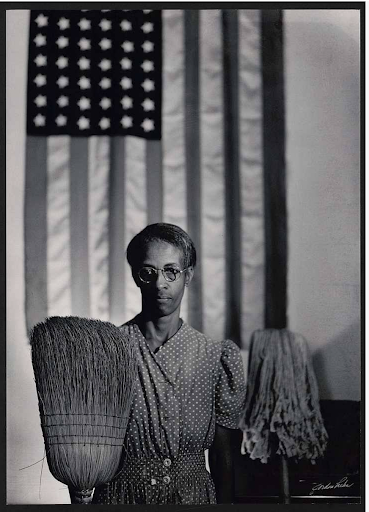
Gordon Parks, American Gothic, Washington, D.C., 1942. Photograph shows Farm Security Administration employee Ella Watson standing with mop and broom in front of American flag. The Gordon Parks Archives in the Library of Congress.
› Back to top
« back
08.21.25 | Caregiver Support

Beyond the Headset: New Frontiers in Virtual Reality for Dementia Care

One year ago, we explored how virtual reality (VR) was beginning to enhance the lives of those living with dementia, offering calming, stimulating, and emotionally resonant experiences. Since then, the field has continued to evolve—driven by advances in immersive technology, deeper understanding of cognitive health, and the creative collaboration of technologists, therapists, and caregivers.

At Sage Collective®, we remain committed to amplifying innovative approaches that support vibrant, connected living for older adults. As extended reality tools like VR and AR continue to mature, so too does their potential to foster joy, memory, and dignity in the lives of those with dementia.

The Rise of Personalized VR Therapy
One of the most exciting developments over the past year is the emergence of personalized VR therapy—programs that adapt to a person’s life history, preferences, and needs. Developers and clinicians are increasingly incorporating biographical information into custom-built experiences. Rather than offering a one-size-fits-all beach or garden, these platforms might recreate a specific neighborhood someone grew up in, or a hometown church, drawing on family photos, regional landmarks, or even personal anecdotes.

This deeply individualized approach can evoke stronger emotional responses, help trigger dormant memories, and build a sense of self-continuity that dementia often threatens to erode.

AI + VR: Smarter Support in Real Time
Artificial intelligence is also making its way into VR dementia care. Some newer platforms now use real-time monitoring to gauge a user’s emotional or cognitive state—subtly adjusting the environment in response. If someone appears stressed or agitated, the system might shift the lighting, sound, or pace of the experience. These AI-enhanced environments act as gentle companions, offering dynamic support tailored to the individual’s mood and moment.

VR as a Social Connector
Isolation remains one of the greatest challenges facing those with dementia—and their caregivers. In response, several VR platforms are now incorporating multi-user capabilities. With just a headset and an internet connection, someone can “walk” on the beach with a distant loved one, play a virtual game with a grandchild, or sit in a familiar living room recreated for shared storytelling.

These shared virtual experiences offer more than novelty. They provide connection, presence, and a powerful antidote to loneliness.

The Emerging Role of Augmented Reality (AR)
Alongside the growth of virtual reality, augmented reality (AR) is gaining traction as a supportive tool in dementia care. Unlike VR, which immerses the user in a fully virtual environment, AR layers digital elements—images, sounds, or prompts—onto the real world through a screen or glasses.

In practice, AR can assist individuals with dementia by providing gentle, real-time cues in their environment. For example, an AR-enabled tablet might guide someone through preparing a meal by projecting visual step-by-step instructions on the countertop. Smart glasses might help identify family members by displaying names or relationship tags above faces.

These subtle interventions promote independence, confidence, and dignity i—and they do so without requiring users to leave their physical surroundings. As AR becomes more user-friendly and affordable, we expect to see it complement VR as part of a holistic, tech-supported approach to aging in place.

Training for Caregivers, Too
The evolution of VR isn’t just benefiting those living with dementia—it’s reshaping how caregivers are trained. New VR modules immerse caregivers in simulated scenarios that mimic the sensory and emotional experience of dementia. By “walking in the shoes” of someone with cognitive decline, caregivers can develop greater empathy, patience, and insight—leading to more compassionate and effective support.

Looking Ahead: Toward Holistic, Home-Based Care
As immersive technologies become more affordable and user-friendly, we’re beginning to see a shift from facility-based care to home-based options. This democratization of tools like VR and AR has the potential to empower more families to integrate them into daily life—whether as a source of relaxation, cognitive stimulation, or connection.

At Sage Collective®, we are encouraged by the creativity and care shaping the next generation of dementia-supportive technologies. As we move forward, we’ll continue to explore how innovation can deepen well-being—not by replacing human touch, but by enhancing the moments of beauty, memory, and meaning that define a life well-lived.

› Back to top
« back
08.14.25 | Health & Wellness

Black Genius: Tre Johnson Reclaims Brilliance in the Everyday

Tre Johnson’s newly-published Black Genius: Essays on an American Legacy is a smart‑talking, deeply felt celebration of Black ingenuity that redefines genius for the Sage Collective® audience. Across 30 polished essays, Johnson dives into the daily, the personal, the unexpected—to show us a broader American excellence rooted in Black creativity, survival, resistance, and joy.

The Genius of the Everyday
Johnson opens with a central provocation: “We’re utterly amazing, yet Black folks are… left out of conversations about genius.” Rejecting the narrow focus on recognized luminaries, he instead draws attention to the brilliance embedded in everyday experiences—from his auntie’s weekend bus trips to Atlantic City to the bold designs of ’90s airbrush tees, and the razor‑sharp, profanity‑laced monologues of Dick Gregory. These essays invite readers to ask: is this not genius too?

Cultural Critique with Humor and Heart
Johnson’s writing is chatty, witty, and fiercely observant. He moves fluidly between family reminiscence, pop culture deconstructions, and historical reflection. Whether tracing his uncle’s path from Black Trenton to the University of Pennsylvania in 1977, spotlighting the Odunde festival in Philadelphia, or exploring comic‑book narratives and streetwear trends, Johnson’s voice remains grounded, urgent, and alive.

Depth and Range
What sets Black Genius apart is the thematic cohesion across distinct essays: appropriation and cultural extraction; communal structures and Black Paranoia™ (Johnson’s coined term for racialized surveillance); institutional failure versus grassroots creativity; and generational memory as inheritance and resistance. Published reviews affirm that each piece stands alone, yet the essays build a richer tapestry when read together—“astute and deeply felt,” with “thematic threads” that elevate the collection as a whole.

A Love Letter and a Call to Action
At its heart, the book serves both as a love letter to Black brilliance and a wake‑up call to readers of all backgrounds. Johnson challenges us to expand our definitions of genius beyond metrics, accolades, and dominant culture narratives. In doing so, he invites vigilance about how culture is appropriated, how language is policed, and how Black communities define their own legacies on their own terms.

About Tre Johnson
A Philadelphia native, Tre Johnson is an acclaimed essayist and cultural critic whose work has appeared in The New York Times, Washington Post Magazine, Rolling Stone, and Vanity Fair, among others. Known for his incisive explorations of race, identity, and pop culture, Johnson rose to national prominence with his viral 2020 essay, “When Black People Are in Pain, White People Just Join Book Clubs,” published in The Washington Post. His voice is both intellectually rigorous and emotionally resonant—qualities that have earned him a devoted readership. Black Genius marks his debut as a book author, and it solidifies his place as a leading voice in the contemporary conversation around cultural justice and collective memory.

Final Take for Sage Collective® Readers
Black Genius is perfect for readers seeking thoughtful cultural criticism infused with joy, wit, and ancestral wisdom. It’s a timely riposte to exclusionary narratives—rooting genius in ordinary moments and collective memory rather than mythology. While Johnson’s perspective is steeped in Black American experience, his assertions resonate across culture, race, and academic inquiry.

Some essays close with lingering questions rather than tidy conclusions—fitting for a work that asks readers to continue the conversation rather than just receive it. For those in Sage Collective®’s audience who engage teaching, civic life, or creative work, Johnson’s reframing of intelligence and brilliance offers a powerful toolset.

In short: vibrant, thought‑provoking, and unflinchingly honest, Black Genius is exactly the kind of book you will want to discuss, reference, and carry forward.

Black Genius: Essays on an American Legacy was published by Dutton in July, 2025. You can find it in local libraries, bookstores, and online.

https://www.facebook.com/DuttonPenguin/posts/chatty-yet-profound-black-genius-by-tre-johnson-subverts-expectations-from-the-v/1138186201657053/
› Back to top
« back
08.07.25 | Community

Joyspan: Measuring Life in Moments, Not Years

At Sage Collective®, we believe that vibrant living isn’t measured solely by how many years we have—but by how fully we live in those years. Just as we talk about lifespan and healthspan, there’s another equally essential, if less frequently named, concept: joyspan.

Joyspan is the measure of how much joy we experience and sustain throughout our lives. It’s not about momentary happiness or fleeting pleasures. It’s about the deep, sustaining joy that comes from meaningful connections, a sense of purpose, curiosity, and the freedom to be our full selves—especially as we age.

Beyond Lifespan and Healthspan
Modern medicine and lifestyle changes have helped extend our lifespan—the number of years we live—and increasingly, our healthspan—the number of those years we live in good health. But neither of those measures captures the richness of human experience. That’s where joyspan comes in.

Joyspan is qualitative, not quantitative. It invites us to ask, Am I making space for joy in my life? What fills me up? What lifts my spirit?

 Joy Matters—Especially As We Age
We live in a world that often underestimates the emotional and creative lives of older adults. There’s a quiet but damaging narrative that says joy belongs to the young. But we know from experience—and from the beautiful lives of those in our communities—that joy can flourish at any age. In fact, many people report a renewed sense of joy in their later years, when priorities shift, distractions fall away, and we’re finally able to savor what matters most.

Joy isn’t frivolous—it’s foundational. Research shows that joy supports mental health, bolsters our immune system, and helps build resilience. It improves relationships, sharpens cognitive function, and even enhances longevity. But beyond the science, joy connects us to our humanity. It allows us to experience gratitude, wonder, and awe.

Cultivating Joyspan: Daily Practices
Unlike lifespan, which is out of our control, joyspan is something we can grow—intentionally and continuously. Here are a few practices we encourage at Sage Collective®:

  • Savor small pleasures: A cup of tea, the bloom of a flower, a warm sunbeam on your shoulder. Joy is often tucked into the ordinary.
  • Stay curious: Explore new interests, revisit old passions, take a class, or start a creative project. Curiosity opens the door to joy.
  • Connect deeply: Spend time with people who see you, love you, and make you laugh. Whether it’s family, friends, or community, joy grows in connection.
  • Practice gratitude: Take a moment each day to reflect on what brings you peace or pleasure. Gratitude enhances awareness of joy.
  • Move your body: Gentle movement, walking, dancing—these are not just physical exercises but expressions of life and aliveness.

A Joyspan Philosophy
At Sage Collective®, we are reimagining aging by prioritizing wellness, creativity, and community. Embracing joyspan means honoring the emotional dimension of wellness. It invites us to be present, to celebrate beauty in the everyday, and to believe that joy doesn’t have to fade—it can deepen.

Our joyspan is not determined by the absence of hardship, but by how often we can return to joy, even amidst challenge. As we age, joy becomes not just a possibility, but a practice. And in that practice, we find hope.

So we invite you to ask yourself—not how many years you’ve lived, or even how many healthy ones—but how much joy you’ve let in. Because joy is not the icing on life—it’s the nourishment that makes life worth living.

› Back to top
« back
07.30.25 | Arts & Culture

Summer Reads: 6 New Novels by Black Authors

At Sage Collective®, we embrace the power of storytelling to inspire reflection, joy, and connection. Summer offers us a unique opportunity to slow down, seek shade, and stretch our imaginations. Whether you’re traveling or porch-sitting, a beautifully crafted novel can provide both escape and insight.

This season, we’re highlighting six compelling new works from Black authors, featured in The Guardian’s “Summer Sizzlers” list. These books span romance, family drama, queer identity, and cultural critique—offering fresh perspectives that align deeply with our values of vibrant living, cultural appreciation, and lifelong learning.

Here are six page-turners to enrich your summer:

Sweet Heat by Bolu Babalola
A radiant return from the queen of contemporary romcoms. In Sweet Heat, we reunite with Kiki and Malakai—former university lovers—now forced back into each other’s orbit as best man and maid of honor at the same wedding. Babalola masterfully explores how old flames reignite with both warmth and heat. It’s a story about second chances, emotional growth, and the vulnerability of love. For anyone who’s ever wondered what it would be like to revisit the one that got away, this novel will feel at once familiar and electrifying.

Great Black Hope by Rob Franklin
A deeply moving debut that confronts grief, class, and identity. After the death of his roommate, Smith—raised in Atlanta’s Black professional elite—retreats home, only to find solace elusive. Drawn once more into New York’s nightlife and its dangers, Smith’s story offers a searing examination of respectability politics and the myth of affluence as a buffer from pain. With sharp insight and vulnerability, Franklin invites us to consider how societal expectations shape—and sometimes distort—our grief, our choices, and our sense of self.

 Absence by Issa Quincy
A poetic, memory-rich meditation on family and loss. At the center of Quincy’s lyrical novel is a poem, shared between mother and son, that echoes across a lifetime. As letters, memories, and ghosts surface, the narrator reconstructs a life shaped by absence and fleeting connections. Quincy writes with a haunting clarity, reminiscent of Teju Cole and Rachel Cusk. This is a novel for lovers of introspective fiction—an invitation to sit with the quiet echoes of our past.

Necessary Fiction by Eloghosa Osunde
Set in Lagos, this vibrant and necessary novel explores queer identity, chosen family, and survival in a city of contradictions. Osunde, celebrated for Vagabonds!, captures the kinetic energy of a metropolis where art, struggle, and love intermingle. Through richly drawn characters navigating sexuality, spirituality, and resilience, Necessary Fiction reveals how imagination becomes essential to survival. Osunde’s storytelling is radical, affirming, and achingly beautiful.

The Catch by Yrsa Daley-Ward
Daley-Ward’s literary thriller blends family mystery with lyrical elegance. After the disappearance of their mother, twin sisters Clara and Dempsey have lived in emotional limbo. Years later, a chance sighting of a woman who looks exactly like their mother disrupts their fragile stability. Is Serene a stranger—or the return of a ghost? The Catch is an arresting exploration of grief, estrangement, and the unknowable spaces within families. With Daley-Ward’s poetic precision, each page is loaded with suspense and grace.

Sunstruck by William Rayfet Hunte
A queer summer romance meets class critique in this dazzling debut. When a mixed-heritage university student falls for his friend’s wealthy brother, he’s pulled into a sun-drenched world of affluence and allure—only to find himself disoriented by race and class tension. Set between the south of France and Notting Hill, Sunstruck captures the intoxicating thrill of desire and the ache of cultural dislocation. Smart, sexy, and psychologically astute, this novel is a beach read with bite.

From Beach Bags to Book Clubs
At Sage Collective®, we see summer reading as an act of vibrant engagement with the world around us. These six novels illuminate personal transformation, cultural identity, and the power of language to heal and stir. As you savor this season’s warmth, we invite you to dive into these powerful stories—and let them move, challenge, and inspire you.

Book selections sourced from The Guardian’s “Summer Sizzlers: Six Must-Read Books by Black Authors”.

Credit: Anne Adrian on Flickr Creative Commons (https://www.flickr.com/photos/aafromaa/3003188568). Licensed under CC BY 2.0 (https://creativecommons.org/licenses/by/2.0/deed.en)
› Back to top
« back
06.12.25 | Health & Wellness

It’s Never Too Late to Explore Love

At Sage Collective®, we believe in the possibility of living a life full of love, something that happens at any age. Whether it’s a budding romance, a deepening of existing bonds, or simply enjoying an emotional connection, love is not reserved for the young—it’s a lifelong journey. Yet, for many, the idea of finding or exploring love later in life is often stained by outdated narratives that say romance exclusively exists at a specific time in your life. We’re here to challenge that, exploring why love is always within reach, how to embrace it at any stage, and why it’s never too late to open your heart.

Myths About Age and Romance
Often there is the stereotype that love is only for the youth and once you age you lose any notion of romance. The myth goes that people stop kissing, hugging, going on dates and exploring their sensuality with their partners once they reach a certain age. That is simply not true.

Love does not fade with time, it evolves. It deepens, matures, and takes on new meaning. As we grow older, we gain the wisdom, confidence, and emotional clarity to experience love in its purest forms. It can be argued that the greatest form of love is not the one where you meet in your youth but the one you maintain in your later years. This love exists after a life of experiences making it less about petty issues and more about who you are as people and how you can love each other and yourselves simultaneously. If you can maintain a love at this stage in your life, then it is anything but irrelevant.

Real-Life Stories of Later-in-Life Love
First, there is Yvette Nicole Brown and Anthony Davis who married at 53 years old. The couple first met in their 20s but lost touch for several years. It was after Davis had sent his condolences to Brown in the wake of losing her mother that the couple reconnected and found a match.

Then there is Jeanne Gustaven and Stephen Watts who dated when they were in college but eventually broke up because Gustaven’s family was against their interracial relationship. After 42 years separated, Jeanne Gustaven set out to find Stepehen Watts as she viewed him as the one true love in her life. After a long search, she found him in a nursing home. They rekindled their love immediately and made the decision to move in together at 62 years old to live out the rest of their lives together, making up for lost time.

Tips for Exploring Love at Any Age
There is no time like the present to explore the many facets that love has to offer.  If you need a starting point, use these steps:

  • Start with self-love: Be proud of who you are and how far you have come in your life. Credit yourself for all of your life experiences.
  • Let go of societal pressure: There is no need to follow a traditional timeline. Either you found the love of your life at 25 or at 65, either way both stories are constantly evolving.
  • Communicate clearly and honestly: Be clear about your values, needs and any sort of changes you are feeling/needing. It does not matter how long you have known someone, there is always room for more communication.
  • Stay curious and adventurous: Dating and love is about exploration of the person and yourself, be open to new things by letting go of control and expectations.
  • Be patient and kind to yourself: It’s okay to take things slow or to take breaks, remember love does not have a time limit.

Aging is not a reason to give up on love, it is a sign to explore the new depths of it.

At  Sage Collective® we believe it is never too late to explore your feelings and relationships. We know that vibrant living means staying open to growth and to love. Whether it’s a new romance, a deepened friendship, or a renewed sense of self-appreciation, love can take many forms. You are not defined by your age, but by your ability and boldness to constantly be open to exploration.

› Back to top
« back
06.05.25 | Sage Advice®

It’s Never Too Late to Change Your Mind

At Sage Collective®, we believe that aging is an opportunity to discover new depths of your evolution. One of the most liberating truths we come to understand with time is this: it’s never too late to change your mind. Whether it’s a shift in perspective, a change in attitude towards people, or a complete reinvention of self, the ability to change your mind is not a weakness but a superpower.

Because we believe that vibrant living doesn’t mean standing still, it means challenging yourself to never stop  evolving.

Why Changing Your Mind Is a Strength, Not a Weakness
We are under the impression that age equates to certainty. We expect that once we arrive at this stage in our lives we should be able to know ourselves fully, have our set beliefs that do not change, and continue to live our life exactly the same. Although, we forget that the various life stages can be the reason for growth and change.

Changing your mind does not mean you are indecisive, it means you have enough security to reevaluate certain aspects of your life. Maybe you had an opinion years ago that caused you and someone you love to drift apart, or you thought someone was your soulmate but it turns out your story ran its course, or maybe the shirt you used to be obsessed with is hideous to you now. Whatever it may be, it is emotionally intelligent to always be questioning who you are and where you stand on certain decisions. Growth can be about sticking to your guns and advocating for what you believe in but it can also be the humble act of reassessing the past.

Real-Life Examples of Late-in-Life Pivots
Nina Simone is one powerful example. Known early in her career as a classically trained pianist and acclaimed jazz and blues singer, Simone experienced a profound shift after attending the 1961 American Society of African Culture conference in Lagos, Nigeria. The trip was life-changing. It awakened a deeper connection to her identity and political purpose. From that point on, she became a fierce voice for civil rights—performing at protest rallies, writing political anthems, and lending her artistry to the movement. She changed her mind about what her platform was for—and in doing so, changed the world.

Another remarkable story is that of Iyanla Vanzant, who initially rose to public attention as a lawyer and spiritual teacher. But her true transformation came later in life. After facing personal hardships, including the death of her daughter and the dissolution of her marriage, Vanzant stepped into her power as a healer. She became a celebrated author, spiritual counselor, and host of Iyanla: Fix My Life—a role she took on in her late 50s. Her shift wasn’t just a career pivot—it was a complete reimagining of how she would use her voice.

And consider Ron Finley, the South Central Los Angeles fashion designer who, in his 50s, decided to change his life—and his neighborhood—by planting vegetables in abandoned lots. Now known as the “Gangsta Gardener,” Finley’s work has become a movement, promoting food justice, sustainability, and self-reliance. He changed his mind about where power and purpose come from, and discovered a new form of activism in the soil beneath his feet.

Reframing Your Story
There are multiple ways to stay on your feet and remain open to change:

  • Stay curious: Read books, watch films, and listen to music that challenge your thinking.
  • Embrace dialogue: Spend time with people who see the world differently.
  • Reflect often: Journal without judgment, allowing space for evolving insights.

At Sage Collective®, we believe aging is about stepping fully into your own wisdom and embracing that wisdom. Changing your mind in your later years isn’t a sign that you’ve lost your way; it’s often proof that you’ve finally found it.

We as humans make the mistake of thinking that there is a final destination when, in reality, we never stop growing. Therefore, it is our responsibility to treat that evolution with mindful reflection and openness to the change it can inflict.

You’re never too old to change your mind—because you’re never too old to grow.

The Gangsta Gardener, Ron Finley. Credit: U.S. Embassy New Zealand (https://www.flickr.com/people/46907600@N02). Wikimedia Commons, licensed under the Creative Commons Attribution 2.0 Generic license.
› Back to top
« back
05.29.25 | Health & Wellness

Step Into the Future: Support Our VR Giving Challenge for Vibrant Learning

At Sage Collective®, we are always seeking new and meaningful ways to elevate the experience of vibrant living for older adults—through culture, technology, education, and community. As part of that mission, we’re excited to announce an upcoming Giving Challenge with a focused goal and powerful impact.

The Challenge: $1,000 in 7 Days
From June 1 through June 7, we’re inviting our community—friends, partners, and supporters—to help us raise $1,000 in just seven days. These funds will directly support the purchase of Virtual Reality (VR) headsets for our Vibrant Learning programs.

Why virtual reality? Because the future of healthy aging is immersive—and it’s here now.

Why VR Matters for Older Adults
The idea of older adults using VR might surprise some, but the science is compelling. Research has shown that immersive VR experiences can play a critical role in mitigating cognitive decline, especially among individuals with memory care needs. VR can stimulate the brain, reduce stress and anxiety, and evoke powerful memories through lifelike experiences—all of which support emotional and cognitive well-being.

Imagine standing in the middle of the Louvre, strolling a beach in Jamaica, or walking through your childhood neighborhood—all from the comfort of a chair. These are not distant dreams. They are moments of presence, connection, and healing made possible through the technology of virtual reality.

At Sage Collective®, we believe in meeting our community at the intersection of innovation and intention. We’ve already begun incorporating VR into our programming with powerful results. But to expand this effort and ensure more participants can access these experiences, we need your help.

How Your Support Helps
Every dollar raised during this giving challenge will go toward the purchase of VR headsets to be used during Sage Collective’s Vibrant Learning sessions—programming that brings arts, education, culture, and wellness to older adults in deeply engaging ways.

Your contribution directly fuels our efforts to remain a pioneer in the use of emerging technologies for aging adults—ensuring our community members aren’t just aging, but aging boldly.

Join Us at the Forefront of Vibrant Aging
The Sage Collective® community is built on innovation, compassion, and the belief that every stage of life deserves richness and depth. Our commitment to expanding horizons—whether through lifelong learning, cultural engagement, or tech-forward health solutions—means we’re always exploring what’s possible.

We know we can meet this challenge together. Whether you give $5, $50, or help us spread the word, you become part of a story that’s changing the future of aging.

To contribute, go to our Donate page.
To share the campaign with your network, follow us on Instagram, Facebook, LinkedIn, and X.

Together, we can bring more joy, discovery, and connection into the lives of our elders—one virtual experience at a time.

Let’s make it happen.

› Back to top
« back
05.15.25 | Fitness & Activity

It’s Never Too Late to Reinvent Yourself

We live in a world that too often suggests we’re on a clock—that there’s a “right” time to start a new career, learn a new skill, fall in love, or rediscover joy. But at Sage Collective®, we believe life doesn’t come with an expiration date on possibility. “It’s Never Too Late” is a blog series dedicated to celebrating the bold truth that growth, reinvention, and adventure belong to every stage of life. Whatever your age, there is always room to dream bigger, live deeper, and embrace change—not as a concession, but as a courageous choice. Aging isn’t about limitation; it’s about opening new doors, on your own timeline.

Have you ever caught yourself thinking, “It’s too late for me”? Maybe it came after turning 50—or 70. Maybe it was when someone asked what you do for fun or what your next dream is, and you didn’t know how to answer. Society has a way of feeding us the narrative that there’s an expiration date on growth, adventure, love, or reinvention. But at Sage Collective®, we’re here to remind you: reinvention has no age limit.

In fact, the second half of life can be the most rewarding chapter yet—when your confidence is earned, your values are clear, and your story still has room to surprise you.

Challenging the Myth of “Too Late”
From a young age, we are taught to measure life by milestones: graduate by this age, marry by that one, retire by another. And once those boxes are checked—or missed—we’re left wondering what’s next. Too often, mainstream culture glamorizes youth while ignoring the power, resilience, and wisdom that come with age. For older African Americans, especially, there’s an added layer of resistance—of having lived through systemic barriers and expectations that tried to limit what was possible.

But the truth is this: aging can be a superpower. By the time you reach midlife and beyond, you’ve gathered experience, perspective, and an assured sense of self. That clarity makes reinvention not only possible, but powerful. You know what matters. You know what you’re capable of. And you know that your worth doesn’t decline with age—it expands.

Real-Life Examples of Reinvention
Take Barbara Hillary, a Harlem-born nurse who beat breast and lung cancer before deciding—at age 75—to travel to the North Pole. Then at 79, she became the first Black woman to stand at the South Pole. Her story is a reminder that exploration doesn’t expire.

Or consider Ernestine Shepherd, who didn’t begin her fitness journey until she was 56 years old, and didn’t enter her first bodybuilding competition until she was 71. With determination, discipline, and a lot of early mornings, she became a competitive bodybuilder, personal trainer, and motivational speaker—and earned the title of “world’s oldest competitive female bodybuilder” in the Guinness Book of World Records.

Love, too, has no deadline. Maya Angelou once said, “Love recognizes no barriers. It jumps hurdles, leaps fences, penetrates walls to arrive at its destination full of hope.” And she lived that truth—continually redefining herself as a poet, activist, actress, and icon throughout her life.

Whether it’s falling in love, going back to school, starting a business, or finally giving yourself permission to dream differently—reinvention is not just for the young. It’s for the bold.

How to Start Reinventing Yourself
Ask yourself:

  • What part of my life feels unfulfilled?
  • What have I always wanted to try?
  • What stories am I still longing to tell?
  • What lights me up?

From there, set small, meaningful goals—whether it’s enrolling in a class, journalling daily, starting a walking group, or signing up for a Sage Vibrant Learning session.

Give yourself permission to be a beginner again. To not have all the answers. To try, to fail, and to grow.

You’re Right on Time
At Sage Collective®, we believe that every stage of life is rich with potential. Reinvention doesn’t mean discarding who you are—it means building on everything you’ve lived through to become something even fuller. So the next time you wonder if it’s too late, remember: it’s not. It never is.

You’re not behind. You’re right on time.


Barbara Hillary. @unearthwomen Instagram (https://www.instagram.com/p/C4BGMBfMUWl/)
› Back to top
« back
05.01.25 | Health & Wellness

Flipping the Script on Aging: Celebrating Older Americans Month 2025​

At Sage Collective®, we believe that aging is not an endpoint but a vibrant, evolving journey filled with wisdom, opportunity, and continued growth. Each May, Older Americans Month offers a national opportunity to celebrate these truths. In 2025, the Administration for Community Living (ACL) has selected a particularly powerful theme: “Flip the Script on Aging.” This year’s theme challenges outdated stereotypes and invites all of us to reshape the way we view aging — not as a period of decline, but as a dynamic, enriching phase of life.

Challenging Age-Related Stereotypes
For too long, societal perceptions of aging have been framed by limitation and loss. Older adults are often portrayed as fragile or disconnected, rather than as the vibrant, experienced, and resilient individuals they are. “Flipping the script” means pushing back against those narrow images and showcasing the full, diverse range of experiences older adults embody—from lifelong learning and professional achievements to leadership in community activism, artistic expression, and innovation.

At Sage Collective®, we see older African Americans especially as cultural stewards, historians, advocates, and everyday heroes whose wisdom and contributions continue to shape our communities. This month, we celebrate the truth: aging is not a story of endings, but of new beginnings and endless possibilities.

Embracing Intergenerational Connections
An important part of flipping the script involves fostering stronger intergenerational relationships. A recent episode of The Atlantic’s podcast, “How to Age Up Together,” explored how communities benefit when older and younger generations collaborate and connect. These relationships not only combat isolation among older adults but also offer younger people valuable mentorship, perspective, and emotional support.

Simple acts — like attending community events together, storytelling across generations, or partnering on volunteer projects — strengthen the social fabric. By encouraging these connections, we can break down age-based silos and build richer, more compassionate communities.

Celebrating Contributions and Promoting Engagement
Throughout May, communities nationwide will honor the accomplishments of older Americans through a variety of creative initiatives: art shows featuring older artists, storytelling festivals where seniors share their life journeys, and wellness fairs focused on active aging.

At Sage Collective®, we encourage older adults to see themselves as lifelong contributors — and to seek out opportunities for engagement that fuel passion and purpose. Whether it’s mentoring a young entrepreneur, joining a new class through our Vibrant Learning Series, or participating in civic leadership, there is no limit to what older adults can achieve and inspire.

How You Can Flip the Script
Everyone has a role to play in shifting the narrative around aging. Here are a few ways you can get involved:

  • Engage in Intergenerational Activities: Organize or join programs that connect people of different ages. Book clubs, dance classes, or mentorship programs are great ways to bridge generational gaps.
  • Highlight Positive Aging Stories: Use social media, community newsletters, or neighborhood events to spotlight older adults living vibrant, impactful lives.
  • Promote Lifelong Learning: Encourage friends and loved ones to explore new hobbies, pursue further education, or share their skills and wisdom with others.
  • Advocate for Inclusion: Support policies and initiatives that make communities more inclusive and accessible for older adults, ensuring they remain connected and empowered.

Moving Forward Together
At Sage Collective®, we are proud to stand at the forefront of a movement that celebrates aging as a source of strength and wisdom. This Older Americans Month, and every day, we reaffirm our commitment to uplifting older African Americans by amplifying their voices, supporting their dreams, and honoring their legacies.

Together, we can “flip the script” — and in doing so, inspire a new, more vibrant vision of what it means to grow older.

For more information and resources on Older Americans Month 2025, visit the ACL’s official page.

› Back to top