« back
02.19.21 | Community

Resilience is a Skill You Can Build — Here’s How

Throughout a lifetime, everyone experiences trauma, grief, failures, challenges and setbacks. Resilience is the essential skill needed to help us overcome these experiences. Some people have a better grip on the skill than others, but luckily resilience is something we’re all capable of building — today, we’ll take a look at how:

Understanding Resilience

At Sage Collective, we recognize that everyone faces adversity in life, and that stress is a natural component of the human experience. Rather than the complete elimination of stress (which would be unrealistic), we take a more pragmatic approach, advocating for stress reduction as part of our 9 Ways of Vibrant Living. Resilience is an essential tool for stress reduction. 

According to the American Psychological Association, psychologists define resilience as “the process of adapting well in the face of adversity, trauma, tragedy, threats, or significant sources of stress—such as family and relationship problems, serious health problems, or workplace and financial stressors.” Resilience isn’t just about getting through a challenge, but about emerging on the other side feeling more confident and empowered in your ability to cope and overcome adversity. 

Building Your Resilience

There are four core components that build resilience. 

The first component is easy enough to tackle: take care of your physical wellness. Often, when we take care of our body, our mind will follow suit. Taking care of your physical wellness includes maintaining a healthy diet, participating in moderate, regular physical activity and getting a good night’s sleep. If you incorporate these physical wellness habits into your daily lifestyle, you’ll begin experiencing elevated energy levels and improved moods, both of which will help you become more resilient.

The second component that follows suit is: take care of your mental wellness too. When building resilience, it’s important to both get in touch with your emotions and to learn how to control them. Mindfulness practices such as meditation, yoga and breathing exercises can help with this. Practicing gratitude, developing a self-care routine and engaging in activities you love are all great ways to restore balance and wellbeing to your mind.

The third component that will help you build resilience: seek out connection. You don’t have to go through trials and tribulations alone. Rather than isolating yourself, instead build a network of trusted friends, family and community members that you rely on to validate the troubles you’re going through and to help uplift you when needed. You can also find a sense of connection and support in more structured environments such as support groups, civic groups or faith-based organizations.

And finally, the fourth component: find meaning. Going through a traumatic experience often overwhelms us with negative feelings like despair and hopelessness. Combatting these feelings with a sense of life purpose helps us maintain our groundedness and to hold onto hope and optimism. Whether you’re driven by a desire to help others or to pursue opportunities for self-discovery and improvement, finding meaning through your life purpose — and taking the steps needed to reach your goals and objectives — helps us maintain the problem-solving, motivation and drive that’s key to resilience.

Challenges will continue to come our way. With these tools to help build resilience, we hope you’re left feeling more prepared for the next time adversity comes your way.

Two hands reach out from a bright yellow field of flowers
› Back to top
« back
02.04.21 | Sage Advice®

How Better Self-Control Leads to Life Longevity

What does good behavior have to do with life expectancy? More than you might think.

U.S. News recently reported on a study conducted on 1,000 New Zealanders, from newborns to 45 years old, tracking the correlation between self control and health in middle age. The study tracked self-control through behaviors related to goal-orientation and restraint in thoughts, behavior and emotion. The study’s analysis of health in middle age took into account both body and brain.

Overall, the study concluded that those who practiced better self control “aged more slowly,” resulting in better health outcomes during their middle-aged years. So why exactly does this correlation occur? Self-control is also directly related to self-regulation. The study considered the impact of a person’s ability to delay gratification. For example, were participants able to forego short-term indulgences in favor of long-term rewards? (i.e., would they give up the immediate gratification of a ‘smoke break’ in order to have better lung health later on in life?) 

Most importantly, while self-control and self-regulation may also be influenced by DNA makeup and unique life circumstances, individuals do have the capability to learn better self-regulation skills. Knowing the long term effects of such behavior on one’s body and brain health, the development and cultivation of these skills throughout life becomes critical.

You can read more about the study and its findings in the U.S. News article here.

A doctor's stethoscope
› Back to top
« back
12.17.20 | Health & Wellness

A Vibrant Living Guide to Aging in Place

How does vibrant living play into aging in place? “Aging in place” describes the process of growing older at home. It’s a process rooted in independence and comfort; a way for older adults to maintain normalcy and their sense of community.

We recently spoke with Angela Higginbotham about her expertise on aging in place, learned from assisting her 93-year-old mother at her mother’s home. Higginbotham is a CPS educator, Lead Speech Pathologist and a member of the Sage Collective Board of Directors.

Maintaining Independence 

“First off, I feel grateful to have the opportunity to care for my mom,” reflects Higginbotham. “I saw the sacrifices she made for my family growing up and I’m happy it’s my turn to do that now. As for how our caretaking occurs: it’s a family affair where my mother is directly involved in the decision-making process. My brother, sister, mother and I all sit down and have a conversation about how she’s feeling, what her needs are and how we can support her as long as we can in an independent setting.” 

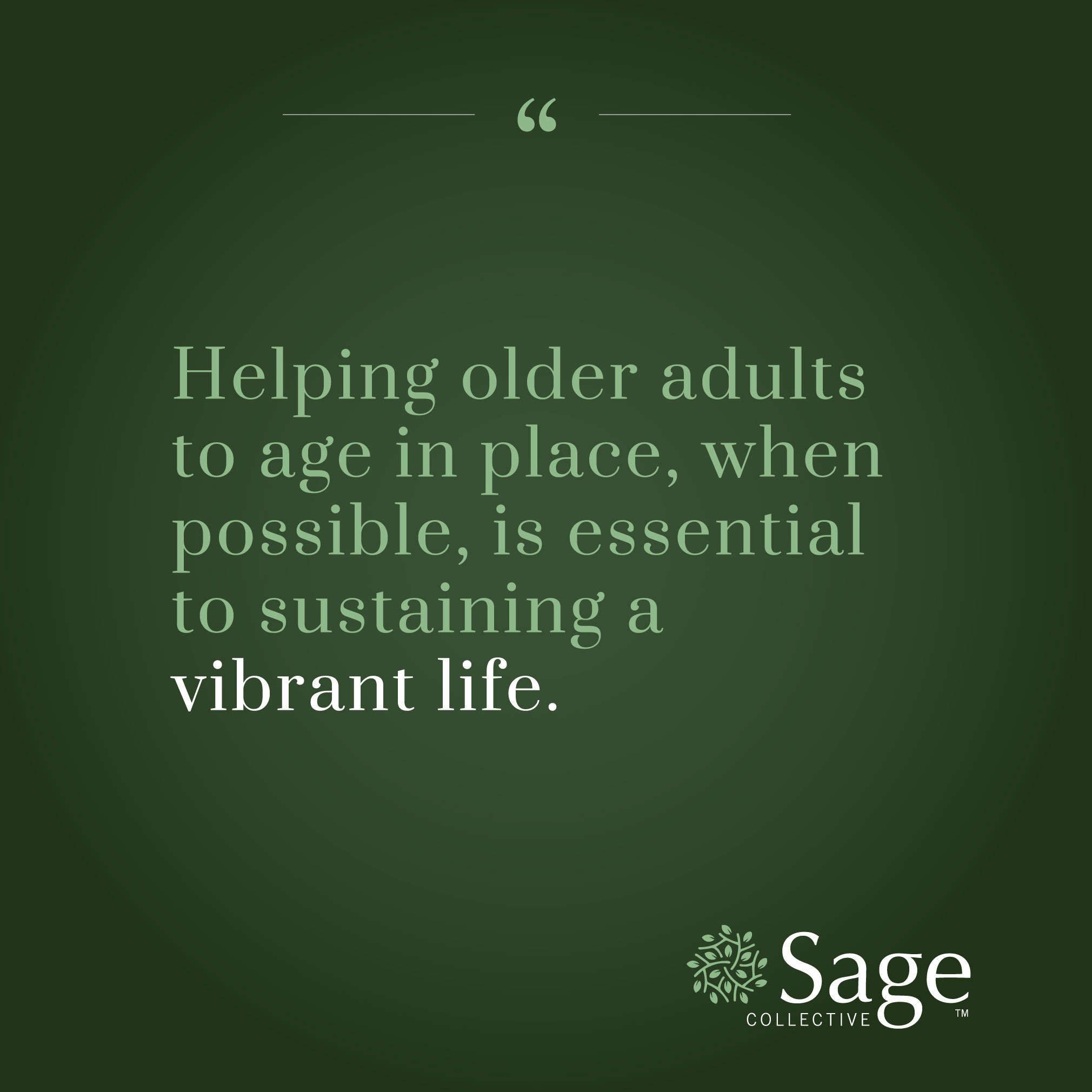
Though aging in place isn’t a viable option for everyone, it’s important for older adults with the mental and physical capacity to maintain that level of independence. “As long as people are able to take care of themselves, they’ll be able to take care of themselves longer,” explains Higginbotham. “So helping older adults to age in place, when possible, is essential to sustaining a vibrant life. Because I believe that once people stop maintaining their independence, it affects them psychologically and emotionally.” 

Text over a green background, with quotation marks at the top and the Sage Collective logo at the bottom. Text reads: Helping older adults to age in place, when possible, is essential to sustaining a vibrant life.

Staying Engaged Through Community

“My mom still has her driver’s license — she’s smart about it and only drives between 10-2, when everyone else is at work and when it’s safest — but she still goes to church and out to see friends,” says Higginbotham. For older adults, social isolation and loneliness are often big hurdles to overcome. Staying engaged with family, friends and community members, then, plays a vital role in supporting a more vibrant lifestyle.

Higginbotham goes on to say: “My mom also personally knows many of my friends. From time to time, they’ll give her a phone call or even go and visit, which is something I so appreciate. It means she’s connecting with people and that’s so important.” Though maintaining independence is a large part of aging in place, it is these moments of human connection and care that help the experience feel even more comfortable and warm.

Staying Engaged Through Culture

Social engagement is one thing — but finding things to do for oneself is vital, too. We’ve emphasized before the importance of older adults discovering activities they love. Higginbotham reinforces this perspective, sharing: “One of my mom’s favorite hobbies is quilting. In the spring, we’ll also go to the nursery and pick out plants for both her place and my place together. I’ll keep her company at her house while she plants hers and then she’ll come over while I do mine. We also — pre-COVID times, of course — loved to go to the theater. We’d get lunch or dinner and see different plays across the city. It gave my mom something to talk about, too, because she’d go back and tell her girlfriend all about it.” 

Higginbotham reflects on this, saying, “It’s important for people to get out and see what’s going on in the world. As people age, their ability to transport themselves to new places is limited, and they know about, what they know about. But, if there are people around who can expose them to new experiences, it enriches their lives.” 

Aging in place is just one way to live a more vibrant life. But, whether at a personal home or a care facility, both experiences share a commonality: community and cultural experiences have the ability to engage older adults and enrich them, leading to more vibrant living for all.

Angela Higginbotham
› Back to top
« back
12.10.20 | Arts & Culture

Discover Your New Winter Hobby for Seniors

Cultivating hobbies in older adulthood is a vital part of staying enriched and engaged. We’ve spent our entire lives making others happy, from partners to kids to bosses to friends. Now is the perfect time to indulge in activities for personal happiness and enjoyment, too. That’s why today, we’re talking about the benefits of finding a hobby that suits you — and sharing a few ideas to help get you started.

Fitness Hobbies

As we’ve discussed before, it’s vital that older adults partake in regular, moderate physical activity. Hobbies such as yoga, tai chi, swimming and even gardening are great ways to get those minutes in while also enjoying the task. Choosing these forms of exercise will help transform the experience of working out from a chore to a treat. 

Social Activities

Loneliness and social isolation are major challenges older adults face. Incorporating social activities into your life is a great way to meet new people and learn new things at the same time. Consider joining a choir, a local senior bowling (or other leisurely sport) league, taking a dancing class or even getting together for a game of cards every once and awhile.

Mental Engagements

One major benefit of hobbies is the opportunity to stimulate and engage your mind. For those that love a good challenge, or like to be whisked away in a story, try picking up a good novel from your library or grappling with a puzzle in the newspaper. Mentally engaging hobbies and activities are even proven to help keep your memory sharp.

Artistic Pursuits

For those seeking to express their artistic side, there are many artist hobbies available. For those that are good with their hands, knitting, crocheting or quilting are all exciting pursuits. Painting, drawing and scrapbooking are great ways to get creative and to create keepsakes, too. And for the wordsmiths among us, writing counts as an artform too!

There’s a hobby out there for everyone. Keep looking and trying new things until you find one that’s the right fit for you!

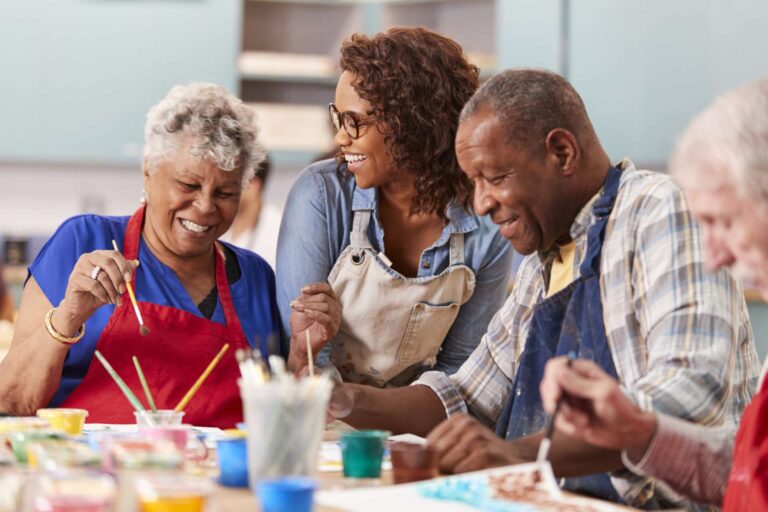
Three African American older adults smile together, wearing aprons at a painting class
› Back to top