« back
06.09.22 | Community

Sage Collective’s Guide to Summer Wellness

We believe supporting healthy eating, outdoor activity, and self-care is always important, but summer is arguably the best time to practice all of the above! The warm weather and all that comes with it makes the season the perfect time to focus on individual wellbeing. Today, we’re sharing what you should be focusing on this season to guarantee nothing but the best for your body and mind:

Hydration

The key to a healthy and enjoyable summer is staying hydrated. While hydration is consequential during any season, it’s especially important to pay attention to in the summer months. Daily fluid intakes vary by the body, health condition, medications and even daily activity, but the consensus is that drinking water should become part of everyone’s daily routine throughout the summer. 

While drinking water is an amazing way to keep hydrated, there are plenty of other ways you can do so. Eating foods with high water content, like cucumbers, watermelon, strawberries, grapefruit and peppers, and taking probiotics are great ways to prohibit dehydration. And, if you aren’t a water drinker, try adding a few different ingredients like fresh lemons, berries or other fruits to add delicious flavor without the artificial preservatives or sweets!

Skincare

Protection from the sun and its harmful UV rays are essential for everyone during the summer months. While it does come with its benefits, like Vitamin D, when exposed to the sunlight for too long without protection, your body becomes more prone to wrinkles, dryness, age spots and even forms of skin cancer. 

That’s why it’s critical to protect your skin with anything from sunscreen to the clothes you wear. The key to skincare in the summer begins with sunscreen. SPF levels of 30 or higher are usually recommended, as well as reapplying throughout the day, but what’s most important is that you like what you’re putting on your body. Other ways to help avoid the sun’s harmful rays is by wearing lip balms, hats, sunglasses and other skin-protecting cosmetics. 

Practice Self-care

Because of the warm weather, longer days and more energy we feel during the summer in general, it’s the perfect time to start adding more self-care into your routine. Find some time in the long day to begin developing your exercise routine or encourage yourself to eat healthier by planting fresh fruits and vegetables in your garden. 

This is the best time to begin any new healthy lifestyle habits that can keep running through the end of the year and spend more time focusing on yourself. 

The bright sunlight, fresh air, and longer days are just some of the reasons why summertime is one of the most fulfilling times of the year. But don’t forget to focus on your health and wellness throughout the season!

› Back to top
« back
11.09.21 | Community

How to Age Gracefully

Aging is a unique experience that has no set rules or guidelines. Previously, we’ve explored how to embrace the process of aging and talked to Sage Collective Board Members about aging in place.

Contrary to what many presume, aging gracefully isn’t about transforming into your best physical self; instead, the transformation is focused on feeling and acting as your best self. Similar to our 9 Ways of Vibrant Living, aging gracefully pulls from numerous principles that champion a joyful and enduring life. Here is Sage Collective’s advice for how to age gracefully and establish essential support as you become older:

Be Mindful

Mindfulness is a critical skill required to carry through life, as it helps you become more focused on the present and less on the future or the past. With time and practice, mindful thinking reduces stress, improves memory and heightens emotional responses. Meditation is one favored technique many use to train themselves in mindfulness. 

Get Involved in Things You Love

As we age, discovering a meaningful hobby helps maintain a sense of purpose and encourages engagement in life. Whether you find passion in participating in politics, mentoring others or engaging in faith-based services, evidence shows that people who engage in something they love experience greater happiness and a longer life. 

Connect With Others

Fostering a sense of connection with those by whom you are surrounded  helps enrich the process of aging. Families, friends and communities can serve as powerful resources with varying types of assistance. Genuine support systems have dramatic effects on your connection to your physical environment, which considerably affects the quality of your personal experience with aging.

Take Care of Your Body

One of the most crucial ways to age gracefully is by supporting your body’s health through actions such as nutritious eating, plentiful sleep and routine exercise. Actively caring for your body lowers the risk of numerous diseases and greatly improves balance and mobility.  

Don’t Forget About Your Mind

In addition to taking care of your body, tending to your mind and mental health can dramatically shift the aging process. Surrounding yourself with things and people you love boosts positive moods and fuels feelings of  prosperity. And while aging is a complex process, it can be a beautiful thing when embraced and celebrated.

Though inevitable, aging doesn’t have to be strenuous. Taking the time to learn how to age gracefully and successfully incorporating these tips into your life can have wonderful effects on your future.

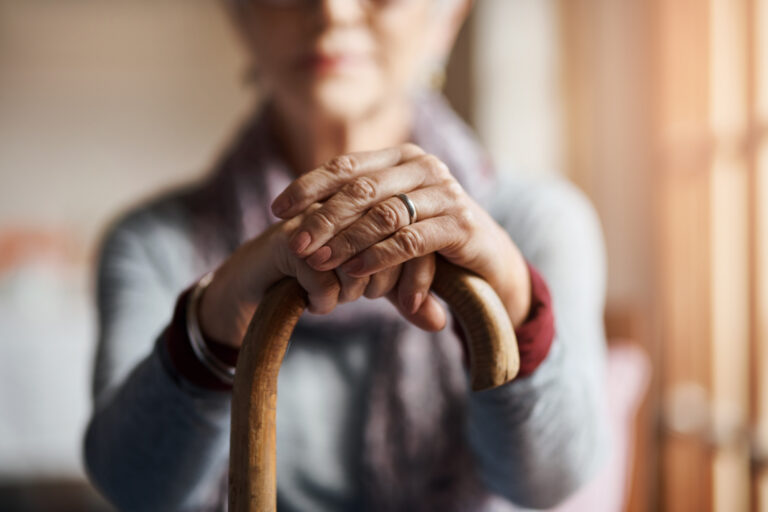
Cropped shot of a senior woman holding a cane in a retirement home
› Back to top
« back
08.19.21 | Community

Find the future of efficient workouts in “exercise snacks”

As part of our 9 Ways of Vibrant Living, Sage Collective advocates for moderate and regular physical activity. Developed in pandemic times when it was challenging to find ways to stay active, “exercise snacks” — a new and effective set of movements was born, and has become increasingly popular among older adults. Interestingly, research is demonstrating these snippets of exercise are equally or more effective than traditional workouts!

How to perform exercise snacks

“Exercise snacks” are short bursts of movement anyone can perform throughout the day, allowing people to arrange exercise as their time permits. Because the movements don’t require a fixed or dedicated location to “work out” as we normally define the act of exercising, you can find a host of spaces in your home or office to do squats, sit-ups, walking in place, lunges and more.  

Professor of Kinesiology Dr. Martin Gibala, argues that these brief bursts of exercise throughout the day can trigger the same reaction from our bodies that traditional workouts produce. In his study published by the International Journal of Exercise Science, Gibala and his partners introduced an 11-minute workout consisting of walking and running in place, lunges and other light calisthenics that improve cardiovascular health. One of the many thrilling findings was that the conditioning improved cardiovascular fitness by 7% for those who participated. 

Gibala explains that being rigorous with each movement is fundamental for exercise snacks. It is essential, however, to remember to cater to what works best for your body. 

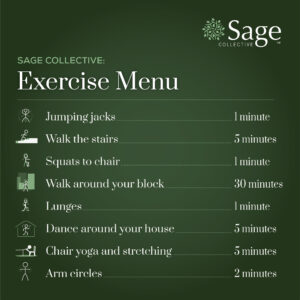
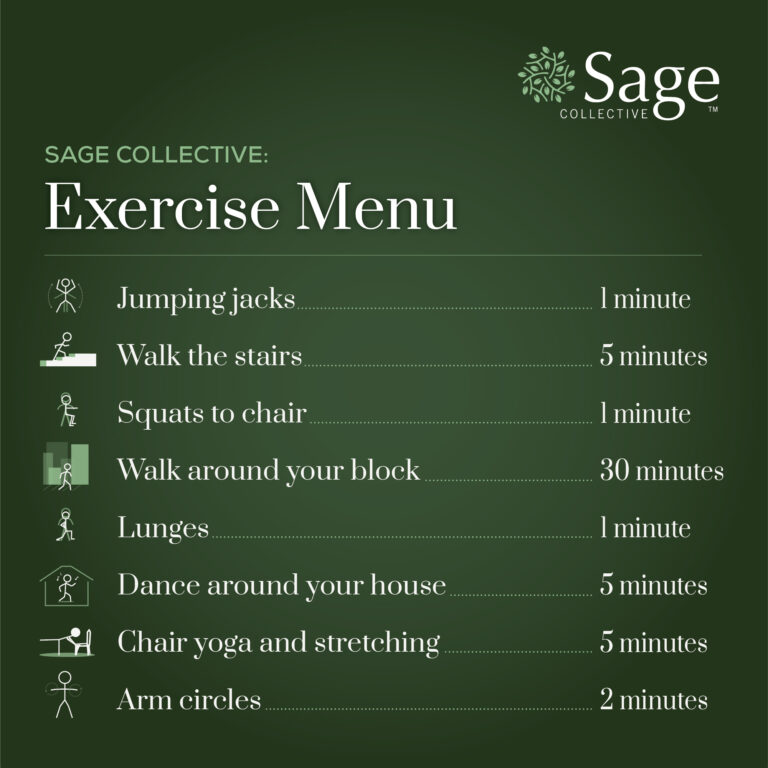
Sage Collective believes that incorporating exercise snacks into the lives of older adults and anyone looking to fulfill fitness needs can be a fundamental – and easy – way to live vibrantly. That’s why we produced our exercise snack menu based on Dr. Gibala’s workout plan below!


A graphic titled "Sage Collective: Exercise Menu" lists eight different "exercise snacks" and times allotted for people to take part in throughout their days.

A graphic titled "Sage Collective: Exercise Menu" lists eight different "exercise snacks" and times allotted for people to take part in throughout their days.
Sage Collective: Exercise Menu
› Back to top
« back
06.21.21 | Sage Advice®

Can going to church or the art museum extend your life expectancy?

At Sage Collective, we champion 9 Ways of Vibrant Living, an inspired model that champions a full, happy and high-quality life. And while we’re focused on the quality of life, it’s possible that the quantity of life (aka life expectancy) is also intrinsically linked to it. So when we talk about components to vibrant living such as engagement in spirituality or religion and engagement in social life, can these components really bring about a longer life? Science says yes.

A Swedish study in 1996 of more than 12,000 people in Sweden found that “attending cultural events correlated with increased survival, while people who rarely attended cultural events had a higher risk of mortality.” A follow-up study in 2000 reported similar findings, stating: “We found a higher mortality risk for those people who rarely visited the cinema, concerts, museums, or art exhibitions compared with those visiting them most often.”

You can also find a comprehensive list of studies conducted to test similar hypotheses on the impact of social connectedness and cultural immersion on an individual’s health and overall mortality rate here. These studies include considerations of social and cultural immersion across a broad swath of types – including number of relationships, depth of social support, types of activities and their social involvement. 

However, the findings ring the same across the broad spectrum of social and cultural involvement: all these things are truly good for one’s health and life expectancy. As strong believers in the power of vibrant living, we’re not surprised. It is vitally important to live a life filled with curiosity, purpose, joy, and love. Participating in cultural events such as going to the museum or attending church regularly provide all these things and more – and they just might provide a boost to your overall health, too.

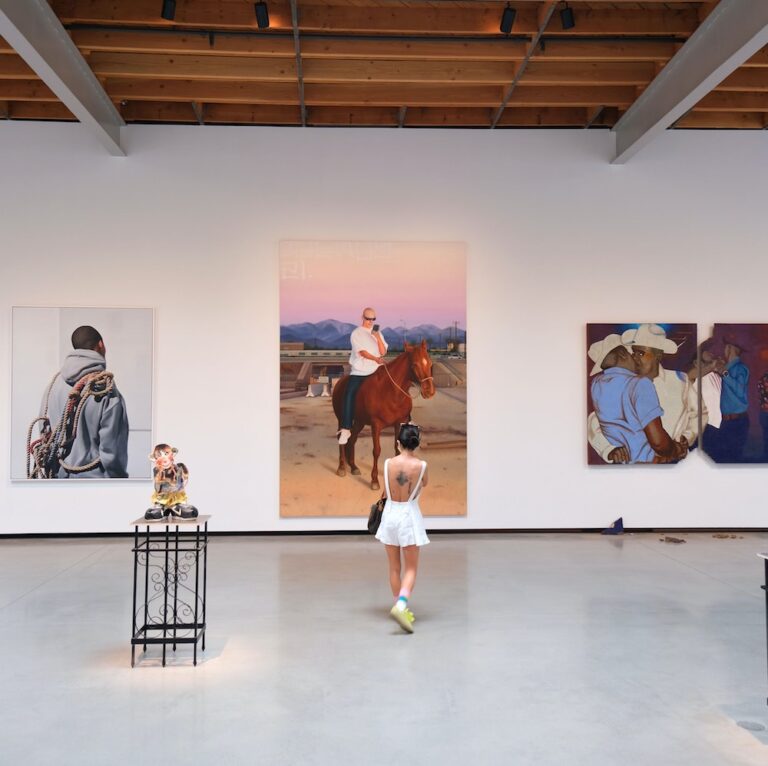
A girl stands in front of a series of paintings on a gallery wall
› Back to top
« back
02.25.21 | Spirituality & Religion

The Health Benefits of Tai Chi

Tai chi is an internal Chinese martial art, practiced for defense training, health benefits and meditation. As one of the most gentle martial art forms, tai chi is a great exercise option for older adults across the health and mobility spectrum — bringing with it a slew of benefits, healthful and otherwise. Let’s take a closer look:

Tai chi

Tai chi, short for T’ai chi ch’üan or Tàijí quán (太極拳), is an ancient Chinese martial arts practice, rooted in a deep history and philosophy. (You can read more about that on CultureTrip, here.) According to MayoClinic, tai chi “is a noncompetitive, self-paced system of gentle physical exercise and stretching. Each posture flows into the next without pause, ensuring that your body is in constant motion.” The movements emphasize deep breathing, encouraging participants to slow down and get in touch with their body and feelings.

Because tai chi is low-impact, slow-motion and emphasizes the mind-body connection, it’s become a popular practice globally, attracting a broad spectrum of participants. And thanks to its wide array of health benefits, it’s since been adopted as a common practice at hospitals, community centers, older adult facilities and the like.

Health Benefits

Tai chi is often described as “meditation in motion,” but because its health benefits are so great, Harvard Women’s Health Watch jokingly calls it medication in motion.”

The low-impact exercise boasts physical health benefits such as improved lower- and upper-body strength, improved flexibility, improved balance (and possibly even decreased risk of falling), improved joint pain, enhanced immune system, enhanced quality of sleep, lowered blood pressure and healthy aerobic conditioning (where heart and lungs are trained to pump blood more efficiently, allowing more oxygen to be delivered to muscles and organs). All of the listed benefits are crucial to older adults seeking to maintain or better their health. 

In addition to its physical health benefits, the meditative aspect of tai chi brings with it an array of mental health benefits. These benefits include decreased stress, anxiety and depression; improved mood, energy and stamina and a general boost to wellness overall. 

Part of the appeal is that tai chi can be practiced independently or within a group setting, and it doesn’t require any equipment. If a low-impact, slow-motion and mindful form of exercise sounds like a good fit for you, then tai chi might just become part of your next fitness regimen routine.

Two people practice tai chi, silhouetted against a night sky and the moon
› Back to top
« back
10.20.20 | Sage Advice®

The Surprising Health Benefits of Walking

Walking is a great way to spend reflective time alone, to enjoy your neighborhood with a loved one and even to accomplish a workout. But how often do you say “let’s go for a walk around the block”? While walking is just a normal part of most of our lives, the act of going for a 30-minute walk each day actually brings with it a surprising array of health benefits. 

Walking Improves Physical Health

According to health and fitness experts, walking is far more than simply an ordinary way to get moving. Going for a walk at a moderate to brisk pace can even have health benefits parallel to that of running. According to one study conducted over six years, both the practice of going for a moderate walk and vigorous run result in reductions in risk for high blood pressure, high cholesterol, diabetes and heart disease.

That’s because walking increases cardiovascular and pulmonary (heart and lung) fitness. It can also benefit your bone health; aiding in joint or bone stiffness and in the establishment of stronger, healthier bones. Other physical health benefits include improved balance, increased muscle strength and endurance, boosted immune function and — for those of us who may be watching our figures — decreased body fat. 

It Also Boosts Mental Health

Your physical health won’t be the only thing improved by developing a regular walking habit. Immediate impacts can be seen in increased energy levels and elevated moods — one study even suggested that going for a morning walk is more invigorating than a cup of coffee. That’s because walking improves oxygen flow throughout the body, sparking increased production of cortisol, epinephrine and norepinephrine, hormones that help elevate energy levels.

And when it comes to your mood: walking has been demonstrated to help combat depression and anxiety, reduce symptoms of social withdrawal and even help to boost self image. Walking also encourages creative thinking — up to 60%, according to a study conducted by Stanford University. 

Maintaining this low-stress fitness regimen is also proven to slow down mental decline, improve memory and lower Alzheimer’s risk. Even further, research suggests that going for a daily walk can extend your life by reducing the risk of overall death up to 24%. 

At Sage Collective, we believe in the power of vibrant living. As a way to boost your body and mind, we see walking as an integral part of that practice, and encourage our residents to develop their own 30-minute a day habit. 

Two African-American women exercising together in the city, jogging or power walking, laughing and conversing. Buildings and trees are out of focus in the background. The one in pink is in her 60s and her friend is in her 50s.
› Back to top