« back
02.25.21 | Health & Wellness

The Health Benefits of Tai Chi

Tai chi is an internal Chinese martial art, practiced for defense training, health benefits and meditation. As one of the most gentle martial art forms, tai chi is a great exercise option for older adults across the health and mobility spectrum — bringing with it a slew of benefits, healthful and otherwise. Let’s take a closer look:

Tai chi

Tai chi, short for T’ai chi ch’üan or Tàijí quán (太極拳), is an ancient Chinese martial arts practice, rooted in a deep history and philosophy. (You can read more about that on CultureTrip, here.) According to MayoClinic, tai chi “is a noncompetitive, self-paced system of gentle physical exercise and stretching. Each posture flows into the next without pause, ensuring that your body is in constant motion.” The movements emphasize deep breathing, encouraging participants to slow down and get in touch with their body and feelings.

Because tai chi is low-impact, slow-motion and emphasizes the mind-body connection, it’s become a popular practice globally, attracting a broad spectrum of participants. And thanks to its wide array of health benefits, it’s since been adopted as a common practice at hospitals, community centers, older adult facilities and the like.

Health Benefits

Tai chi is often described as “meditation in motion,” but because its health benefits are so great, Harvard Women’s Health Watch jokingly calls it medication in motion.”

The low-impact exercise boasts physical health benefits such as improved lower- and upper-body strength, improved flexibility, improved balance (and possibly even decreased risk of falling), improved joint pain, enhanced immune system, enhanced quality of sleep, lowered blood pressure and healthy aerobic conditioning (where heart and lungs are trained to pump blood more efficiently, allowing more oxygen to be delivered to muscles and organs). All of the listed benefits are crucial to older adults seeking to maintain or better their health. 

In addition to its physical health benefits, the meditative aspect of tai chi brings with it an array of mental health benefits. These benefits include decreased stress, anxiety and depression; improved mood, energy and stamina and a general boost to wellness overall. 

Part of the appeal is that tai chi can be practiced independently or within a group setting, and it doesn’t require any equipment. If a low-impact, slow-motion and mindful form of exercise sounds like a good fit for you, then tai chi might just become part of your next fitness regimen routine.

Two people practice tai chi, silhouetted against a night sky and the moon
› Back to top
« back
10.20.20 | Sage Advice®

The Surprising Health Benefits of Walking

Walking is a great way to spend reflective time alone, to enjoy your neighborhood with a loved one and even to accomplish a workout. But how often do you say “let’s go for a walk around the block”? While walking is just a normal part of most of our lives, the act of going for a 30-minute walk each day actually brings with it a surprising array of health benefits. 

Walking Improves Physical Health

According to health and fitness experts, walking is far more than simply an ordinary way to get moving. Going for a walk at a moderate to brisk pace can even have health benefits parallel to that of running. According to one study conducted over six years, both the practice of going for a moderate walk and vigorous run result in reductions in risk for high blood pressure, high cholesterol, diabetes and heart disease.

That’s because walking increases cardiovascular and pulmonary (heart and lung) fitness. It can also benefit your bone health; aiding in joint or bone stiffness and in the establishment of stronger, healthier bones. Other physical health benefits include improved balance, increased muscle strength and endurance, boosted immune function and — for those of us who may be watching our figures — decreased body fat. 

It Also Boosts Mental Health

Your physical health won’t be the only thing improved by developing a regular walking habit. Immediate impacts can be seen in increased energy levels and elevated moods — one study even suggested that going for a morning walk is more invigorating than a cup of coffee. That’s because walking improves oxygen flow throughout the body, sparking increased production of cortisol, epinephrine and norepinephrine, hormones that help elevate energy levels.

And when it comes to your mood: walking has been demonstrated to help combat depression and anxiety, reduce symptoms of social withdrawal and even help to boost self image. Walking also encourages creative thinking — up to 60%, according to a study conducted by Stanford University. 

Maintaining this low-stress fitness regimen is also proven to slow down mental decline, improve memory and lower Alzheimer’s risk. Even further, research suggests that going for a daily walk can extend your life by reducing the risk of overall death up to 24%. 

At Sage Collective, we believe in the power of vibrant living. As a way to boost your body and mind, we see walking as an integral part of that practice, and encourage our residents to develop their own 30-minute a day habit. 

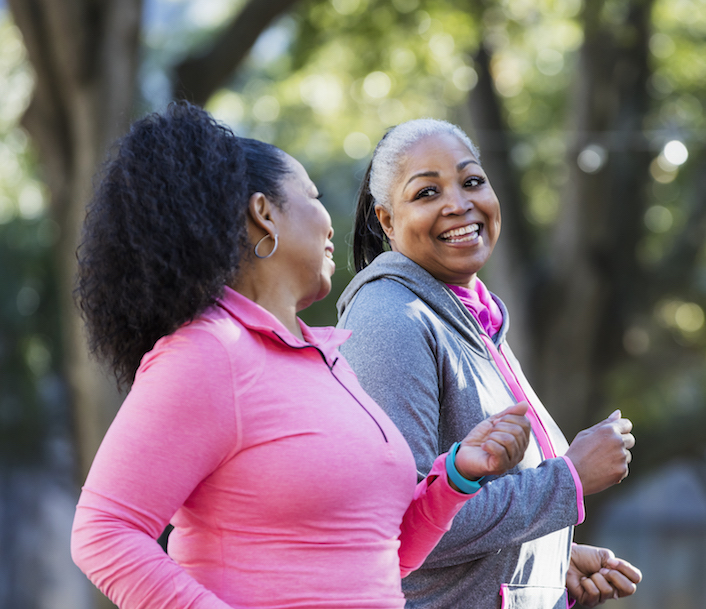
Two African-American women exercising together in the city, jogging or power walking, laughing and conversing. Buildings and trees are out of focus in the background. The one in pink is in her 60s and her friend is in her 50s.
› Back to top