« back
02.04.21 | Sage Advice®

How Better Self-Control Leads to Life Longevity

What does good behavior have to do with life expectancy? More than you might think.

U.S. News recently reported on a study conducted on 1,000 New Zealanders, from newborns to 45 years old, tracking the correlation between self control and health in middle age. The study tracked self-control through behaviors related to goal-orientation and restraint in thoughts, behavior and emotion. The study’s analysis of health in middle age took into account both body and brain.

Overall, the study concluded that those who practiced better self control “aged more slowly,” resulting in better health outcomes during their middle-aged years. So why exactly does this correlation occur? Self-control is also directly related to self-regulation. The study considered the impact of a person’s ability to delay gratification. For example, were participants able to forego short-term indulgences in favor of long-term rewards? (i.e., would they give up the immediate gratification of a ‘smoke break’ in order to have better lung health later on in life?) 

Most importantly, while self-control and self-regulation may also be influenced by DNA makeup and unique life circumstances, individuals do have the capability to learn better self-regulation skills. Knowing the long term effects of such behavior on one’s body and brain health, the development and cultivation of these skills throughout life becomes critical.

You can read more about the study and its findings in the U.S. News article here.

A doctor's stethoscope
› Back to top
« back
02.02.21 | Community

What We Mean When We Say “Older Adults”

You’ve probably noticed that at Sage Collective, we use the term older adults to describe our audience. But if you’ve ever wondered why exactly we use the term older adults, today we’ll take a closer look at the language and what it means to us.

Contentious debate surrounds the usage of alternative phrases like seniors, senior citizens, elders and elderly. For example, what do you think when you hear the word elderly? For most, it conjures images of someone frail and dependent. While one older adult could have health that renders them bedridden, another older adult could just as easily be ready to run a marathon. Weighted terms like elderly render such distinctions meaningless. 

Overall, the term elderly is outdated and ageist. The word has created a stereotype around aging that negatively influences the way older adults are perceived and therefore treated in our society. Consider too, the implications of words like seniors and senior citizens — we don’t call the younger generation juniors or junior citizens, right? 

Older adults aptly captures that this is indeed a population that is older — but without the hard underscore of the word old. Categorically, the phrase also leaves room for the many nuances of older adults’ varied experiences. There is no implication or preconceived notions of health, disposition, etc., attached; it’s simply a way of classifying an age group overall.

We also use the term older adults to celebrate the next chapter in aging adults’ lives. We believe that like any stage in life, older adulthood brings with it exciting and unique opportunities to learn, grow and thrive. The phrase brings with it a liberty and freedom for older adults to divine their own fate and lifestyle — and to embrace a life of vibrant living (if they should so choose). 

We want to hear from you too — what do you think of the term older adults? What does it mean to you? Let us know over at Sage Collective’s profiles on Facebook, Twitter, Instagram and LinkedIn.

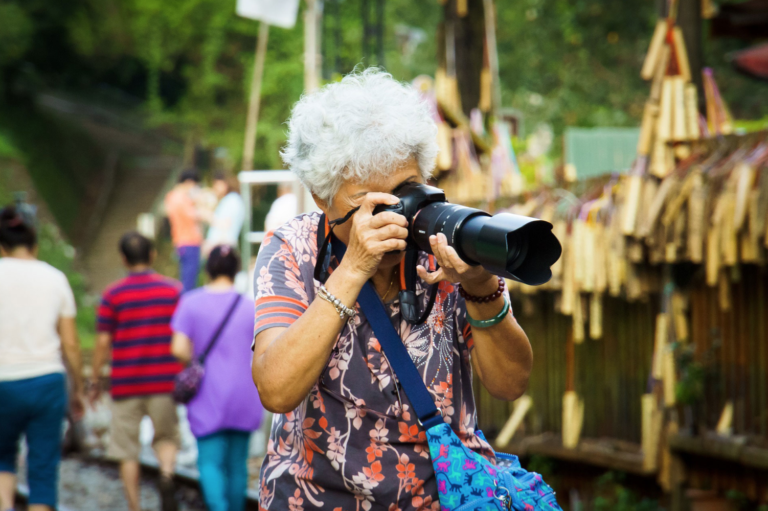
An older adult woman holds a DSLR camera with a hooded zoom lens up to her face, in the act of taking a photo
› Back to top
« back
01.14.21 | Community

Watching the 59th Presidential Inauguration Virtually

Though 2020 may be behind us, many of the changes we became accustomed to in the past year are here to stay (at least for a little while longer). The COVID-19 pandemic still rages, and we’re still encouraged to practice safety protocols such as wearing a mask, social distancing and staying home whenever possible.

That also means that large gatherings, like the upcoming Presidential Inauguration Ceremony, are looking a little different this time around. And in light of events at Capitol Hill last week, it’s now more important than ever to honor institutions of democracy and uphold our civic powers. That’s why today, we’re taking a closer look at how you can watch the Presidential Inauguration virtually.

The 59th Presidential Inauguration

President-Elect Joe Biden and Vice President-Elect Kamala Harris will be sworn in at the 59th Presidential Inauguration on January 20th. The inaugural ceremony is a tradition with an over 200-year-old history, but this year, a limited number of tickets were made available to congressional offices and Americans are being dissuaded from traveling to the nation’s capital to witness the event in person. Instead, the celebrations are going virtual. “This isn’t about politics,” said Biden. “This is about saving lives.” (You can read more about the in-process plans for the inauguration here.)

However the capitol decides to revise its typical celebrations, the majority of us will be watching the 59th presidential inauguration virtually from the comfort (and safety) of our couches at home. But how do we continue to keep this virtual viewing as celebratory as ever? 

Watching Along

The televised inauguration will kick off at noon EST on January 20th, with pre-event festivities beginning as early as 9:30 AM EST. The event will be televised on all major cable networks, news channel websites as well as aired live on the White House streaming website. (You can find an even more detailed list of places to watch the live streamed event here.) 

Following the official swearing-in, the traditional parade down Pennsylvania Avenue and through Washington D.C. has been transformed in a “virtual, nationwide parade.” Parade organizers promise that by going virtual, the parade will be more inclusive than ever, serving to “celebrate America’s heroes, highlight Americans from all walks of life in different states and regions and reflect on the diversity, heritage, and resilience of the country as we begin a new American era.” According to the parade’s organizing committee, it will feature “diverse, dynamic” performances in communities across the country.

To “watch along” with family, friends and community members virtually, we recommend taking advantage of video-chatting services such as Facebook video chat or Zoom. 

While much about our present circumstances remain the same, this is one concrete change we recommend celebrating safely and joyously. 

› Back to top
« back
01.12.21 | Sage Advice®

Feeling Exhausted? The Science Behind Pandemic Burnout

As part of our 9 Ways of Vibrant Living, we at Sage Collective advocate for stress reduction. We recognize stress as a natural, regular occurrence and aim to help our followers learn to manage, to control and to minimize stress.

But we’ll be the first to admit that since the onset of the COVID-19 pandemic (in March of what’s officially become last year), stress levels have been higher than ever. If you’ve been feeling excessively stressed, burnt out and unable to focus — you’re not alone. Today, we’re taking a closer look at the science behind pandemic-related stress and burnout. 

There’s a reason everyone’s been referring to COVID-19 as “unprecedented.” We’ve never experienced anything quite like this in our lives. Worrying about a global pandemic, public health and safety, our personal wellbeing and the wellbeing of those we love, not to mention financial concerns, food security struggles and more — it’s an inordinate amount of stress for human beings to take on all at once. And the demand of feeling all these things at once is taking a toll on our bodies.

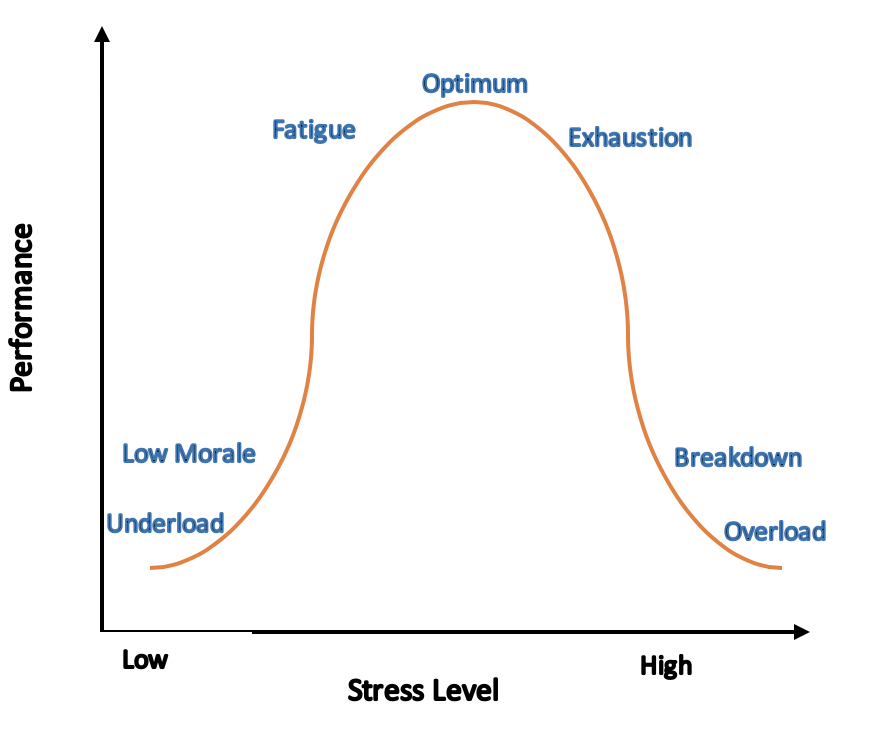
Allostatic load demonstrated visually

Allostatic load refers to the impact of cumulative wear and tear — the impact of carrying all that stress, for example. And allostatic overload refers to the point at which the demand of our stress overtakes the capability of our mind and body to keep up. As demonstrated above, we can look at our allostatic load as a bell curve. Too little stimulation from stress, we’ll be underloaded, understimulated and stagnant as  human beings. But too much stimulation from stress, and we’ll be overloaded, overstimulated and exhausted to the point of burnout.

Many of us are in the throes of allostatic overload. Our bodies have been constantly perceiving a potential threat, and therefore they’ve been producing hormones like adrenaline and cortisone, handy responses to temporary stressors.  However, in the case of a prolonged stressor such as the pandemic, our bodies continually overload themselves with these hormones, which are actually toxic to our physiological systems. 

So your feelings of stress, exhaustion and burnout — they’re only natural. But acknowledging the reality of the problem is only half the battle. How do we even begin to combat burnout and fatigue? 

First, self care is absolutely crucial. Prioritize taking care of your body through healthy habits like regular exercise, healthy diet and getting your best night’s sleep. Prioritize taking care of your mind, too, by making time to practice gratitude and indulge in doing things you love. And secondly, be mindful to take care of others, too. Finding ways to safely connect with friends, family and community will serve as a reminder that you’re not alone — we’re all in this together.

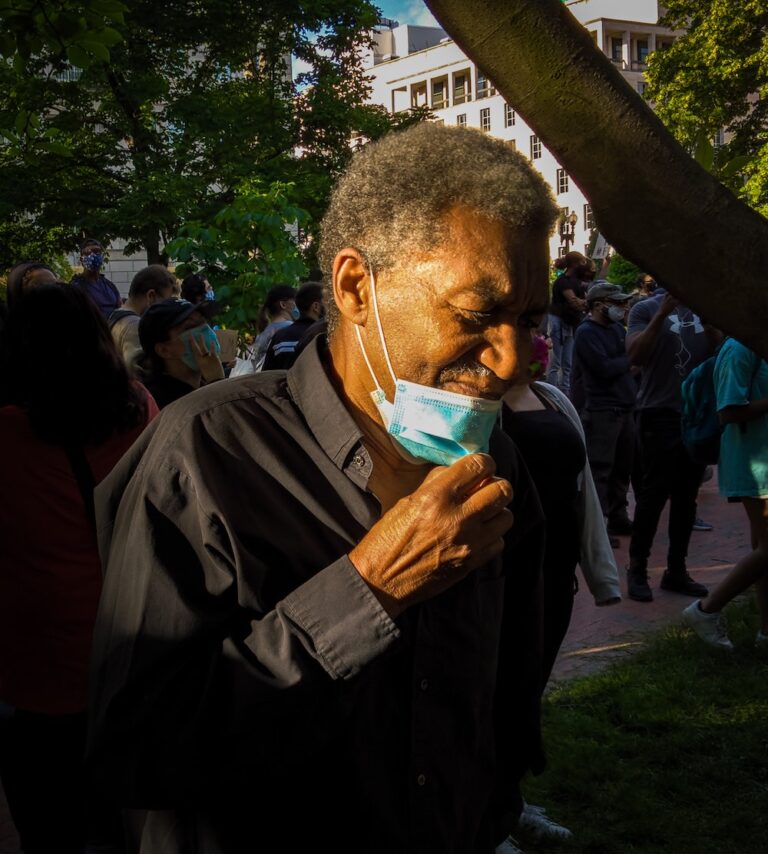
An older African American adult steps aside to take off his mask for a moment
› Back to top
« back
01.05.21 | Community

Sticking To Your New Year’s Resolutions

Just when you think the hard part is done — deciding on New Year’s resolutions — the clock strikes midnight and it’s time to follow through. You’re not alone, though. We all struggle to stick with our New Year’s resolutions. And luckily, with determination and the right strategy, you can keep your resolutions alive far past January’s gym membership. Here’s just a few helpful tips:

Make Incremental Goals

We often struggle to keep resolutions because they’re simply too daunting. A big-picture goal like “eat healthier” is much easier to tackle when broken down into small, digestible actions. Try making incremental goals, such as “include veggies in one meal per day.” This way, you have a tangible action to work towards, and once the action is completed, a victory to celebrate, too. 

Utilize Your Support System

Whether it’s an accountability buddy or just a loved one lending an ear, sharing your successes and struggles is an important part of the journey. Having a support system means others are there to share motivation and advice along the way, as well as helping to hold you accountable. 

Practice Patience + Forgiveness

Of course nobody is perfect. There will be days where your resolution falls to the wayside, and that’s okay, too. It’s important to practice patience and forgiveness, and not to beat yourself up for an off day (or two). Ups and downs are just a part of the journey. Studies even confirm: those who succeed in sticking with their resolutions actually slip up an average of 14 times.

Take Time to Reflect

Throughout the year, remember to take a step back and reflect. What made you choose this resolution in the first place? What does achieving this goal mean to you? Moments of meditation and mindfulness such as these help us realign with our own wants and desires.  

Keeping resolutions, like making any change occur, isn’t an overnight affair. But with the right approach, you’ll be able to stick to your goals all through 2021.

A pink planner with 2021 emblazoned on its cover in gold, next to an assortment of pens, notebooks and other desk supplies
› Back to top
« back
12.28.20 | Community

The Importance of Practicing Gratitude

Gratitude is both a way of thinking and a way of doing. By definition, it’s the quality of being thankful, as well as the readiness and willingness to show appreciation for and to return kindness. And by practicing gratitude, we open ourselves up to being more connected, more happy and more healthy.

Finding the Good

According to American psychologist Robert Emmons, there are two parts to gratitude. Firstly, it’s “an affirmation of goodness. We affirm that there are good things in the world, gifts and benefits we’ve received,” he says. While this doesn’t overwrite challenges or frustrations in our lives, it allows us to look at our lives wholly and to always find balance and goodness. Finding good in the world helps us to feel more positive emotions, relish good experiences, deal with adversity and even improve mental and physical health.

Becoming More Connected

Secondly, says Emmons, “we recognize that the sources of this goodness are outside of ourselves…. We acknowledge that other people—or even higher powers, if you’re of a spiritual mindset—gave us many gifts, big and small, to help us achieve the goodness in our lives.” In this way, Emmons describes gratitude as a “relationship-strengthening emotion, because it requires us to see how we’ve been supported and affirmed by other people.” Therefore, practicing gratitude allows us to feel more connected with our surroundings, whether that be nature, our spirituality or the people in our lives. This in turn leads to stronger, more positive relationships.

Practicing Gratitude

So how do we cultivate and strengthen our practice of gratitude?

First, we must notice our surroundings. What or who makes you feel good? This reflection can happen in-the-moment throughout your daily experiences, or later when you have a private moment to yourself for meditation. Many experts recommend keeping a gratitude journal and regularly listing things you’re grateful for.

Savor and absorb the things for which you’re grateful. Once you acknowledge the good things in your life, make sure you enjoy those experiences to the fullest and treat them with the utmost appreciation.

And finally, express your gratitude. Happiness is best when shared — and everyone likes to feel appreciated. Take the time to write a thank you note or voice your gratitude verbally. 

We all experience gratitude, but taking the time to acknowledge the feeling and become more intentional with how we engage with it and share with others will make all the difference in the world. 

White and green text over a dark green background, with quotation marks and the Sage Collective logo. Text reads: Gratitude is an affirmation of goodness. We affirm that there are good things in the world.
› Back to top
« back
12.23.20 | Sage Advice®

Learning From the Seven Principles of Kwanzaa

Kwanzaa is an annual African American and Pan-African holiday that brings people together globally to celebrate their cultural and ancestral roots. The holiday, created in 1966 by Dr. Maulana Karenga, derives its name from the Swahili phrase “matunday ya kwanza,” or “first fruits,” and was inspired by the harvest traditions of the Ashanti and Zulu. In honor of this culturally-rich event, today we’re exploring more of the holiday’s history and traditions.

The History of Kwanzaa

Dr. Karenga created Kwanzaa after the Watts riots in Los Angeles. As a major figure in the Black Power movement of the 1960s and 1970s, Dr. Karenga saw the celebration as a way to bring African Americans together as a community and to uplift Black Power. While the holiday began as a radical alternative to mainstream denominations, in a 1997 address, Dr. Karenga revised his stance so as not to alienate practicing Christians. Today, many African Americans celebrate Kwanzaa alongside their own religious holidays. 

The celebration of Kwanzaa takes place across a period of seven days from December 26 to January 1. Families gather to light the Kwanzaan candelabra, the Kinara, which holds seven candles, one for each night. The seven candles correspond to the seven principles of Kwanzaa, or Nguzo Saba. There are numerous other celebratory symbols and traditions in addition to the lighting of the Kinara.

The Seven Principles, Nguzo Saba

The Seven Principles, or Nguzo Saba, are reflective of important values in African culture. When lighting the Kinara each night, families reflect upon the principle that corresponds with that day. Nguzo Saba includes the following:

Umoja, or unity, means to strive for and maintain unity in the family, community, nation, and race.

Kujichagulia, or self-determination, means to define ourselves, name ourselves, create for ourselves for ourselves and speak for ourselves.

Ujima, or collective work and responsibility, means to build and maintain our community together and make our brother’s and sister’s problems our problems and to solve them together.

Ujamaa, or cooperative economics, means to build and maintain our own stores, shops and other businesses and to profit from them together.

Nia, or purpose, means to make our collective vocation the building and developing of our community in order to restore our people to their traditional greatness.

Kuumba, or creativity, means to always do as much as we can, in the way we can, in order to leave our community more beautiful and beneficial than we inherited it.

And Imani, or faith, means to believe with all our heart in our people, our parents, our teachers, our leaders and the righteousness and victory of our struggle.

As strong believers in the power of community and the collective, we at Sage Collective believe there is much to be learned from Nguzo Saba. To learn more about Kwanzaa, you can visit the website created for the holiday by Dr. Karenga here.

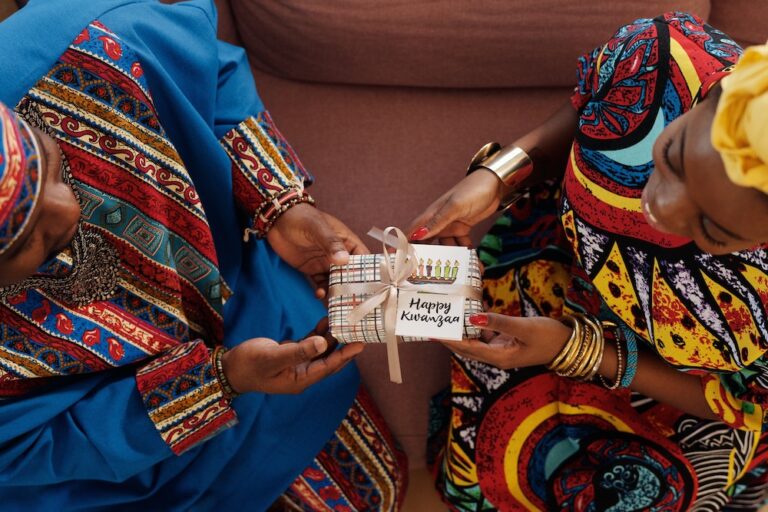
Two African American people wearing batik fabric hold a gift together that says Happy Kwanzaa
› Back to top
« back
12.17.20 | Sage Advice®

A Vibrant Living Guide to Aging in Place

How does vibrant living play into aging in place? “Aging in place” describes the process of growing older at home. It’s a process rooted in independence and comfort; a way for older adults to maintain normalcy and their sense of community.

We recently spoke with Angela Higginbotham about her expertise on aging in place, learned from assisting her 93-year-old mother at her mother’s home. Higginbotham is a CPS educator, Lead Speech Pathologist and a member of the Sage Collective Board of Directors.

Maintaining Independence 

“First off, I feel grateful to have the opportunity to care for my mom,” reflects Higginbotham. “I saw the sacrifices she made for my family growing up and I’m happy it’s my turn to do that now. As for how our caretaking occurs: it’s a family affair where my mother is directly involved in the decision-making process. My brother, sister, mother and I all sit down and have a conversation about how she’s feeling, what her needs are and how we can support her as long as we can in an independent setting.” 

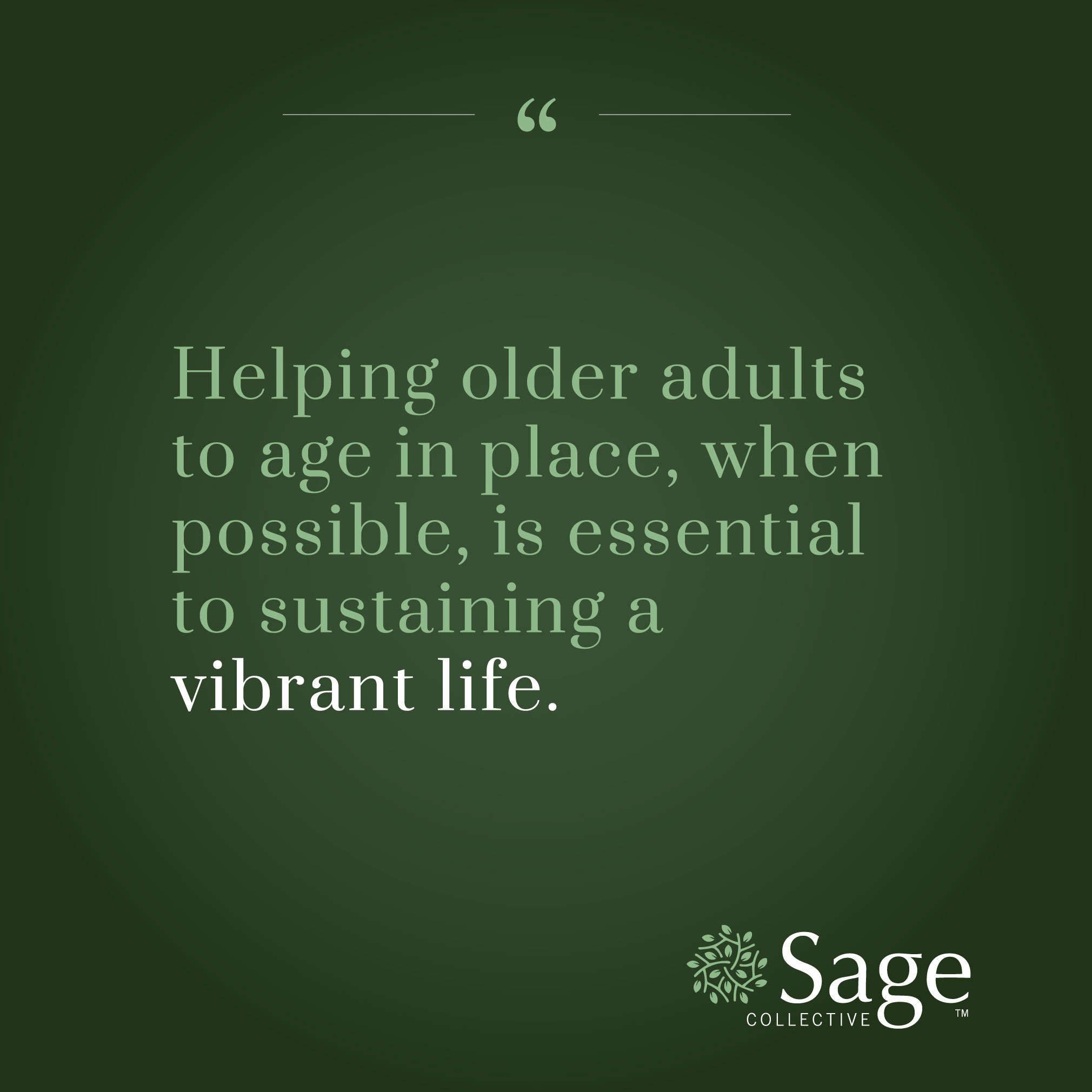
Though aging in place isn’t a viable option for everyone, it’s important for older adults with the mental and physical capacity to maintain that level of independence. “As long as people are able to take care of themselves, they’ll be able to take care of themselves longer,” explains Higginbotham. “So helping older adults to age in place, when possible, is essential to sustaining a vibrant life. Because I believe that once people stop maintaining their independence, it affects them psychologically and emotionally.” 

Text over a green background, with quotation marks at the top and the Sage Collective logo at the bottom. Text reads: Helping older adults to age in place, when possible, is essential to sustaining a vibrant life.

Staying Engaged Through Community

“My mom still has her driver’s license — she’s smart about it and only drives between 10-2, when everyone else is at work and when it’s safest — but she still goes to church and out to see friends,” says Higginbotham. For older adults, social isolation and loneliness are often big hurdles to overcome. Staying engaged with family, friends and community members, then, plays a vital role in supporting a more vibrant lifestyle.

Higginbotham goes on to say: “My mom also personally knows many of my friends. From time to time, they’ll give her a phone call or even go and visit, which is something I so appreciate. It means she’s connecting with people and that’s so important.” Though maintaining independence is a large part of aging in place, it is these moments of human connection and care that help the experience feel even more comfortable and warm.

Staying Engaged Through Culture

Social engagement is one thing — but finding things to do for oneself is vital, too. We’ve emphasized before the importance of older adults discovering activities they love. Higginbotham reinforces this perspective, sharing: “One of my mom’s favorite hobbies is quilting. In the spring, we’ll also go to the nursery and pick out plants for both her place and my place together. I’ll keep her company at her house while she plants hers and then she’ll come over while I do mine. We also — pre-COVID times, of course — loved to go to the theater. We’d get lunch or dinner and see different plays across the city. It gave my mom something to talk about, too, because she’d go back and tell her girlfriend all about it.” 

Higginbotham reflects on this, saying, “It’s important for people to get out and see what’s going on in the world. As people age, their ability to transport themselves to new places is limited, and they know about, what they know about. But, if there are people around who can expose them to new experiences, it enriches their lives.” 

Aging in place is just one way to live a more vibrant life. But, whether at a personal home or a care facility, both experiences share a commonality: community and cultural experiences have the ability to engage older adults and enrich them, leading to more vibrant living for all.

Angela Higginbotham
› Back to top
« back
12.15.20 | Arts & Culture

Celebrating the December Holiday Season Safely

The December holiday season (like everything else this year) is looking different than usual. With COVID-19 cases spiking this winter, it’s more important than ever to practice safety: always wear a mask, maintain social distance and stay home whenever possible. Traveling and large group gatherings are highly discouraged during COVID-19 — which means many of us are glumly accepting that seeing our family in person isn’t the safest option. But like every challenge this year, there are creative ways we can overcome this obstacle. Below are a few joy-filled ideas on how to celebrate the December holiday season safely:

Get Creative (and Passionate) with Baking

Nothing better fills at-home time (and our bellies) than baking. This holiday season, revisit the family cookbooks for some inspiration and whip up a feast of delicious goods. The best thing about food — it’s meant to be shared. Try organizing a cookie swap with the neighbors on your block by asking everyone to bake their favorites and to drop it off at each other’s doorsteps. Sharing food is a great way to feel like we’re together, even when we’re apart. 

Enjoy Festive Decorations

Holiday decorations are another way we share our joy and excitement with others. Take a walk or drive around the neighborhood to see how your community’s decorative cheer is being displayed. Or join in on the festivities and hang decorations around your own home to express yourself. Going to see festive decorations can also become an exciting excursion with this TimeOut list of lights to see in Chicago.

Make and Exchange Holiday Cards

Holiday cards are an exciting occasion every year, but this year especially, there’s an extra exhilaration to sending and receiving snail mail. Whether it’s a family photo, a fun drawing or a personally written note, make an event out of creating your holiday cards this year. And when they’re done, share them with friends, family and more. Veterans, children’s hospitals and incarcerated folks are also great recipients for holiday cards!

Host a Video-Chat Party

We’re no strangers to Zoom this year. Video chatting platforms are perfect for hosting virtual holiday parties safely. There’s nothing you can’t do with a well-positioned camera — cook together virtually, have dinner together virtually or just hang out. Try spicing up your virtual holiday party with activities like holiday-theme bingo, trivia or sing-alongs. 

No matter the circumstances, people will always find a way to celebrate special moments together. From the Sage Collective team to you, have a happy and safe holiday season!

An array of holiday celebration items, including handmade cards, hot chocolate and seasonal ornaments
› Back to top