« back
04.15.26 | Arts & Culture

National Poetry Month 2026

Every April, National Poetry Month invites us to return to language in one of its most concentrated, expressive forms. Launched by the Academy of American Poets in 1996, the observance is now held each April across the United States, with readings, workshops, community events, and programs like “Poem in Your Pocket Day,” which will take place on April 30 in 2026. This year also marks the 30th anniversary of National Poetry Month.

At Sage Collective®, we love the idea that poetry gets an entire month. But for older adults especially, poetry offers something more than celebration. It offers a meaningful practice for vibrant living.

Poetry asks us to pay attention. It slows us down just enough to notice sound, memory, rhythm, emotion, and image. In a culture that often rewards speed and efficiency, poetry makes space for reflection. It reminds us that a few carefully chosen words can hold an entire world. This kind of attention can be deeply nourishing in later life.

A growing body of research suggests that arts engagement can support healthy aging in important ways. Reviews of the literature have found that participatory arts activities are associated with benefits in areas such as memory, creativity, problem solving, quality of life, and overall well-being in older adults. Other recent reviews have found that active and receptive engagement with the arts can help support cognitive health and quality of life as people age.

Poetry fits beautifully within that larger picture. Reading a poem engages attention, interpretation, and memory. Writing one invites reflection, self-expression, and imagination. Shared reading programs with older adults have been linked to improved psychosocial well-being, reduced depressive symptoms, and stronger social connection, while literary and writing-based interventions have also shown promise for supporting well-being in later life.

Just as importantly, poetry honors the richness of lived experience. Older adulthood is filled with memory, perspective, contradiction, humor, grief, tenderness, and hard-won insight. Poetry can hold all of that. It does not ask us to flatten our experience into something neat or simplified. It welcomes complexity. A short poem can make room for longing, delight, regret, gratitude, and wonder all at once. That can be especially powerful for older adults, whose lives contain decades of stories, relationships, and transformation.

Poetry can also be communal. Reading a poem aloud with others, discussing a favorite line, or writing together in response to a prompt can create connection without pressure. One study describing a poetry program for very elderly adults, including some with dementia, observed beneficial effects from simply hearing and engaging with poems in a shared setting.

And perhaps that is part of poetry’s quiet genius: it meets us exactly where we are. You do not need to be an expert. You do not need to write for publication. You do not need to “understand” every poem in order to be moved by one. You only need to be open to language that surprises you, comforts you, or helps you name something you have felt but never quite said.

This National Poetry Month, older adults might celebrate by reading one poem a day, copying a favorite poem into a notebook, attending a local reading, sharing a poem with a friend, or trying a few lines of their own. These small acts are not small at all. They are ways of keeping curiosity alive. Ways of exercising memory and imagination. Ways of affirming that creativity doesn’t belong to youth alone.

At Sage Collective®, we believe vibrant living includes creativity, reflection, and lifelong discovery. Poetry offers all three. And in every season of life, that is something worth celebrating.

› Back to top
« back
02.18.26 | Arts & Culture

It’s Never Too Late to Tell Your Story

There comes a moment in life when you realize that your story is not behind you—it is within you. Every lesson learned, every obstacle overcome, every joy experienced, and every unexpected turn has shaped a narrative unlike any other. At Sage Collective®, we believe that telling your story is one of the most powerful acts of vibrant living. And perhaps most importantly, it’s never too late to begin.

For older African Americans, storytelling carries an even deeper significance. For generations, stories have been a way to preserve truth, transmit wisdom, and affirm identity in a world that did not always document—or honor—those lived experiences. Stories were shared at kitchen tables, on front porches, in barbershops, in beauty salons, and in places of worship. They carried history forward when history books did not.

Your story is part of that continuum.

Your Story Has Value—Right Now
It is easy to assume that storytelling belongs to the past—that it is something reserved for professional writers, public figures, or historians. But storytelling is not about performance. It is about presence. It is about honoring your life as it has been lived. You do not need to have lived a famous life to have lived a meaningful one.

The courage it took to navigate segregation. The pride of building a career or raising a family. The quiet reinventions. The risks taken. The losses endured. The dreams pursued. These experiences are rich with wisdom—not only for younger generations, but for yourself. Telling your story allows you to see your life more clearly. It reveals patterns of resilience, growth, and strength that may have been invisible while you were busy living them. And sometimes, in the act of telling, we discover that our story is still unfolding.

Storytelling Is an Act of Legacy
When you tell your story, you offer a gift that extends beyond your lifetime. Your children, grandchildren, and community members may never fully know what it was like to live in your time—to witness the changes you witnessed, to carry the responsibilities you carried, or to experience the world through your eyes. Your story becomes a bridge between generations. It preserves not only what happened, but how it felt.

This is how legacy is built—not only through accomplishments, but through reflection, honesty, and voice.

And storytelling today takes many forms. It can be spoken, written, recorded, or shared through conversation. Some people journal. Others record video messages. Some participate in oral history projects or simply share memories during family gatherings. There is no single right way to begin. There is only the decision to start.

Telling Your Story Strengthens Your Sense of Self
Storytelling is not only about looking back—it is about understanding who you are now. When you reflect on your life, you reconnect with your strength. You remember how much you have overcome. You reclaim moments that shaped you. You honor the younger version of yourself who kept going, even when the path was uncertain. This process can bring clarity, healing, and renewed purpose.

It can also inspire others. Your story may give someone else permission to persevere. To begin again. To believe that growth does not end with age.

Your Voice Matters
At Sage Collective®, we believe that vibrant living includes honoring your voice and your lived experience. Your story is not complete simply because time has passed. In many ways, it becomes more powerful with age—tempered by wisdom, perspective, and truth.

You do not need to wait for the “right time.” You do not need perfect words. You only need to begin. Because it’s never too late to tell your story, and the world is better when you do.

› Back to top
« back
07.30.25 | Mental Wellbeing

Summer Reads: 6 New Novels by Black Authors

At Sage Collective®, we embrace the power of storytelling to inspire reflection, joy, and connection. Summer offers us a unique opportunity to slow down, seek shade, and stretch our imaginations. Whether you’re traveling or porch-sitting, a beautifully crafted novel can provide both escape and insight.

This season, we’re highlighting six compelling new works from Black authors, featured in The Guardian’s “Summer Sizzlers” list. These books span romance, family drama, queer identity, and cultural critique—offering fresh perspectives that align deeply with our values of vibrant living, cultural appreciation, and lifelong learning.

Here are six page-turners to enrich your summer:

Sweet Heat by Bolu Babalola
A radiant return from the queen of contemporary romcoms. In Sweet Heat, we reunite with Kiki and Malakai—former university lovers—now forced back into each other’s orbit as best man and maid of honor at the same wedding. Babalola masterfully explores how old flames reignite with both warmth and heat. It’s a story about second chances, emotional growth, and the vulnerability of love. For anyone who’s ever wondered what it would be like to revisit the one that got away, this novel will feel at once familiar and electrifying.

Great Black Hope by Rob Franklin
A deeply moving debut that confronts grief, class, and identity. After the death of his roommate, Smith—raised in Atlanta’s Black professional elite—retreats home, only to find solace elusive. Drawn once more into New York’s nightlife and its dangers, Smith’s story offers a searing examination of respectability politics and the myth of affluence as a buffer from pain. With sharp insight and vulnerability, Franklin invites us to consider how societal expectations shape—and sometimes distort—our grief, our choices, and our sense of self.

 Absence by Issa Quincy
A poetic, memory-rich meditation on family and loss. At the center of Quincy’s lyrical novel is a poem, shared between mother and son, that echoes across a lifetime. As letters, memories, and ghosts surface, the narrator reconstructs a life shaped by absence and fleeting connections. Quincy writes with a haunting clarity, reminiscent of Teju Cole and Rachel Cusk. This is a novel for lovers of introspective fiction—an invitation to sit with the quiet echoes of our past.

Necessary Fiction by Eloghosa Osunde
Set in Lagos, this vibrant and necessary novel explores queer identity, chosen family, and survival in a city of contradictions. Osunde, celebrated for Vagabonds!, captures the kinetic energy of a metropolis where art, struggle, and love intermingle. Through richly drawn characters navigating sexuality, spirituality, and resilience, Necessary Fiction reveals how imagination becomes essential to survival. Osunde’s storytelling is radical, affirming, and achingly beautiful.

The Catch by Yrsa Daley-Ward
Daley-Ward’s literary thriller blends family mystery with lyrical elegance. After the disappearance of their mother, twin sisters Clara and Dempsey have lived in emotional limbo. Years later, a chance sighting of a woman who looks exactly like their mother disrupts their fragile stability. Is Serene a stranger—or the return of a ghost? The Catch is an arresting exploration of grief, estrangement, and the unknowable spaces within families. With Daley-Ward’s poetic precision, each page is loaded with suspense and grace.

Sunstruck by William Rayfet Hunte
A queer summer romance meets class critique in this dazzling debut. When a mixed-heritage university student falls for his friend’s wealthy brother, he’s pulled into a sun-drenched world of affluence and allure—only to find himself disoriented by race and class tension. Set between the south of France and Notting Hill, Sunstruck captures the intoxicating thrill of desire and the ache of cultural dislocation. Smart, sexy, and psychologically astute, this novel is a beach read with bite.

From Beach Bags to Book Clubs
At Sage Collective®, we see summer reading as an act of vibrant engagement with the world around us. These six novels illuminate personal transformation, cultural identity, and the power of language to heal and stir. As you savor this season’s warmth, we invite you to dive into these powerful stories—and let them move, challenge, and inspire you.

Book selections sourced from The Guardian’s “Summer Sizzlers: Six Must-Read Books by Black Authors”.

Credit: Anne Adrian on Flickr Creative Commons (https://www.flickr.com/photos/aafromaa/3003188568). Licensed under CC BY 2.0 (https://creativecommons.org/licenses/by/2.0/deed.en)
› Back to top
« back
03.06.25 | Sage Advice®

Mastering Video Creation with Your Smartphone: An Interview with Demetri Williams

At Sage Collective®, we believe that technology should be accessible, engaging, and empowering—especially for older adults looking to stay connected with their families and communities. That’s why we’re excited to feature Demetri Williams, a seasoned video producer and editor, as part of our Vibrant Learning Series. With over a decade of experience in video storytelling, Demetri is on a mission to help older adults capture, edit, and share their stories through smartphone video creation.

Demetri shares his journey into video production, the transformative power of storytelling, and how learning video recording, editing, and sharing can open new creative doors for older adults.

What first sparked your interest in video storytelling?
“I first discovered my passion for videography when my father introduced me to my first digital camcorder. He was always capturing moments—taking photos and recording family memories—and that fascinated me. But it wasn’t until I studied broadcast at Winthrop University that I truly grasped the impact of video. One defining moment was my first video editing project, where I created a music video featuring a few friends. That project earned the highest grade in class and became an example for future students. That’s when I knew I had a special talent for video production.”

You spent a decade creating corporate video content. How has that shaped your approach to storytelling?
Working in corporate video production taught me that every experience holds a compelling story—even in structured business settings. I learned to approach storytelling from different angles and to always consider how a video can inspire, educate, or make an impact. Whether you’re filming a corporate message or capturing a personal moment, storytelling is key.”

What do you love most about video production and editing?
“The editing process is what excites me the most. There’s something almost magical about watching an idea come to life on screen. Taking raw footage and transforming it into a powerful visual story is incredibly rewarding.”

What inspired you to teach these video skills as part of Sage Collective’s Vibrant Learning program?
Video creation is an invaluable skill, and I believe older adults should have access to it. We live in a world where technology is rapidly evolving, and knowing how to record, edit, and share videos allows people to stay connected and preserve their memories and legacy. My goal is to help seniors embrace technology and use it as a creative tool.

Your first class taught participants how to use their smartphone as a personal recording tool. Why is this such a valuable skill?
“Most people own a smartphone, but few maximize its camera features. Learning how to frame shots, adjust lighting, and use smartphone settings can elevate video quality dramatically. With the right skills, participants can document family memories, record life stories, and even create mini-documentaries.”

Do you have favorite apps or tools that make mobile video recording easier?
“Absolutely! The basic camera app on a smartphone is great, but apps like Instagram and Snapchat allow you to experiment with filters and effects. I also recommend using a small, portable tripod for stabilizing shots—it makes a huge difference in video quality.”

Editing can seem intimidating. How do you make it feel approachable?
I start with the basics—trimming clips, rearranging sequences, and adjusting audio. Once you shape the story, you can explore transitions, effects, and sound enhancements.

Tips for beginners:
✔ Familiarize yourself with basic editing tools like cutting and trimming.
✔ Organize your footage and focus on key moments.
✔ Experiment with music and sound effects to enhance your story.”

Once someone has created a video, what’s the best way to share it?
“It depends on your audience. If you want to share with family and friends, Facebook is a great choice. If you’re promoting a creative project or small business, Instagram is ideal. The key is to choose a platform that aligns with your goals.”

What privacy or security settings should people be aware of when sharing videos online?
“Be mindful of personal information—avoid sharing home addresses, license plates, or school locations. Once something is posted online, it can stay there indefinitely, so it’s important to control what you share and with whom.”

Many older adults may not see themselves as “content creators.” What advice do you have for them?
“You don’t have to be a professional to create meaningful videos. Video is a way to document family history, preserve cultural traditions, and share wisdom with future generations. Your stories matter, and video allows you to keep them alive.”

What excites you most about teaching these classes?
“I love seeing people unlock their creativity and gain confidence in using technology. It’s incredibly rewarding to help participants connect with their families and communities in new ways.”

What do you hope participants take away from your classes?
“I hope they embrace their creativity and curiosity. Learning is lifelong, and video production is an exciting way to explore storytelling, preserve memories, and engage with the digital world. My message to participants is simple: Don’t be afraid to create. Your stories deserve to be told.”


› Back to top
« back
04.03.24 | Arts & Culture

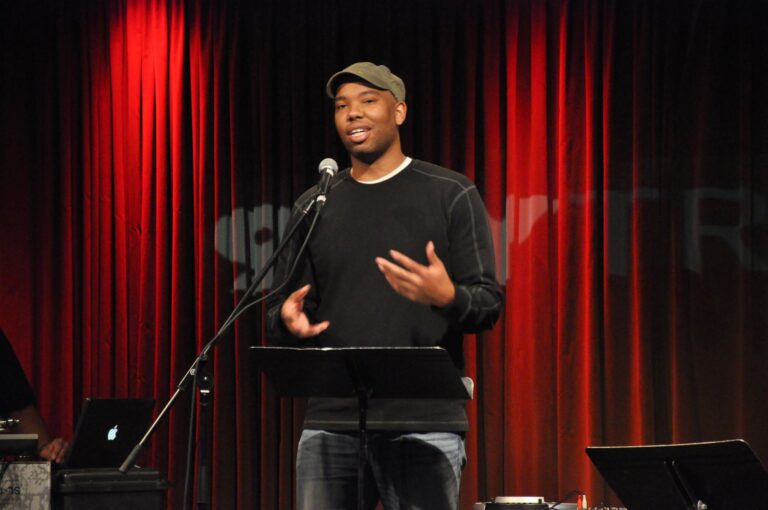
Ta-Nehisi Coates: Mastering the Art of Storytelling Through Reflection and Reality

In the rich landscape of contemporary storytelling, few voices are as compelling and influential as that of Ta-Nehisi Coates. As part of our ongoing exploration into the art of storytelling, Sage Collective is delighted to spotlight Coates, a writer who masterfully weaves together narratives of race, identity, and the American experience with both grace and unflinching honesty. Coates’ work not only captivates readers but also invites profound reflection on the society we inhabit and the changes we aspire to see.

A Voice for Our Times
Ta-Nehisi Coates emerged as a powerful voice in American literature and journalism through his thought-provoking essays and books. His ability to articulate complex issues related to race and society has made him a pivotal figure in national conversations about racism, democracy, and historical memory. Coates’s writing is characterized by its depth of insight, lyrical quality, and the personal perspective he brings to bear on topics of public concern.

The Beautiful Struggle: A Personal Odyssey
In The Beautiful Struggle, Coates offers a vivid glimpse into his formative years in Baltimore, navigating the complexities of boyhood within the broader context of racial and economic strife. This memoir is not only a tale of personal growth and familial bonds but also a reflection on the broader struggle for Black identity and liberation. Coates’ relationship with his father, a figure steeped in the legacy of the Black Panther movement, serves as a powerful narrative thread, illustrating the impact of history and activism on individual lives.

Between the World and Me: An Intimate Letter
Between the World and Me expands Coates’ exploration of America’s racial history through a deeply personal lens, structured as a letter to his teenage son. This work captures the fears, hopes, and realities of being Black in America, weaving personal narrative with historical analysis. Coates’ use of the epistolary form creates an intimate conversation on race, identity, and the quest for understanding in a country marked by systemic injustice.

The Water Dancer: Merging Fiction with History
Coates’ foray into fiction with his debut novel, The Water Dancer, further cements his status as a versatile and imaginative storyteller. The novel combines historical elements with magical realism to tell a captivating story of slavery and resistance in the antebellum South. Through the eyes of his protagonist, Hiram Walker, Coates explores themes of memory, freedom, and the unbreakable bonds of family. The Water Dancer showcases Coates’ skill in creating rich, immersive worlds that illuminate the struggles and resilience of the human spirit.

We Were Eight Years in Power: Reflecting on an Era
In We Were Eight Years in Power, Coates assembles a collection of essays that chronicle the Obama presidency’s significance against the backdrop of America’s racial landscape. The title, echoing a lament from the Reconstruction era, frames the book as a meditation on the cyclical nature of racial progress and backlash in American history. Through essays that examine the cultural and political implications of Obama’s presidency and the subsequent rise of Donald Trump, Coates offers a critical analysis of the forces that shape American society and the ongoing struggle for racial justice.

Across his works, Coates’ storytelling artistry lies in his ability to blend the deeply personal with the sweepingly historical. His narratives invite readers into a space of reflection, challenging them to consider the intricate tapestry of American identity and the indelible impact of race on the nation’s conscience. Through his incisive analysis, lyrical prose, and unflinching honesty, Coates has crafted a body of work that is essential reading for anyone seeking to understand the complexities of contemporary America.

As we celebrate Ta-Nehisi Coates’ contributions to the art of storytelling, we are reminded of the power of literature to illuminate the darkest corners of society, to heal, and to inspire change. His voice is a clarion call for awareness, empathy, and action — a testament to the enduring strength of the written word to move hearts and minds.

TA-NEHISI_COATES
Ta-Nehisi Coates at The Anthology of Rap, 92YTribeca. Photo: 92YTribeca, Flickr Creative Commons, CC BY-NC 2.0 Deed
› Back to top
« back
12.28.23 | Sage Advice®

2023: A Year in Review

As we bid farewell to another remarkable year, we at Sage Collective are thrilled to share the highlights of 2023, a year marked by innovation, growth, and deeper connections within our community.

Continued Success of the Vibrant Learning Program

Our journey with the Vibrant Learning Program, in collaboration with Chicago Commons, has flourished throughout 2023. This year, we’ve deepened our relationship with the community, witnessing firsthand the transformative power of learning and engagement. From exploring the intricacies of new technologies to delving into diverse cultures, our program participants have embarked on an enriching journey.

Themes of tradition, storytelling, family connection, and freedom have remained at the heart of our curriculum. Our activities, including armchair travel and digital painting, have not only been educational but also immensely enjoyable, fostering a sense of joy and wonder among all participants.

Expanding Our Horizons

2023 was a milestone year for Sage Collective as we embraced innovative ways to connect with our audience. One of our most exciting initiatives was the integration of Facebook Live into our communication strategy. This platform allowed us to reach new digital audiences and strengthen ties with our existing community.

Our Facebook Live sessions, focusing on updates about Sage Collective’s activities, healthy eating discussions, and more, garnered significant engagement. The enthusiastic response from our audience has been truly inspiring, and we eagerly anticipate continuing these interactive sessions in the coming year.

Looking Ahead: The Vibrant Living Podcast

In our constant effort to innovate and inspire, we are excited to announce the upcoming launch of our ‘Vibrant Living Podcast’ in the new year. Building on the themes explored in our Sage Advice blog, this podcast will dive deeper into the power of storytelling. We believe that stories have the ability to connect, heal, and empower, and our podcast will be a testament to this belief. Stay tuned for this exciting new venture!

As we reflect on the year gone by, we feel immense gratitude for the continued support and enthusiasm of our community. The journey of Sage Collective is one of continuous learning and growth, and we can’t wait to see what the new year brings. Here’s to a vibrant and fulfilling 2024!

› Back to top
« back
12.21.23 | Sage Advice®

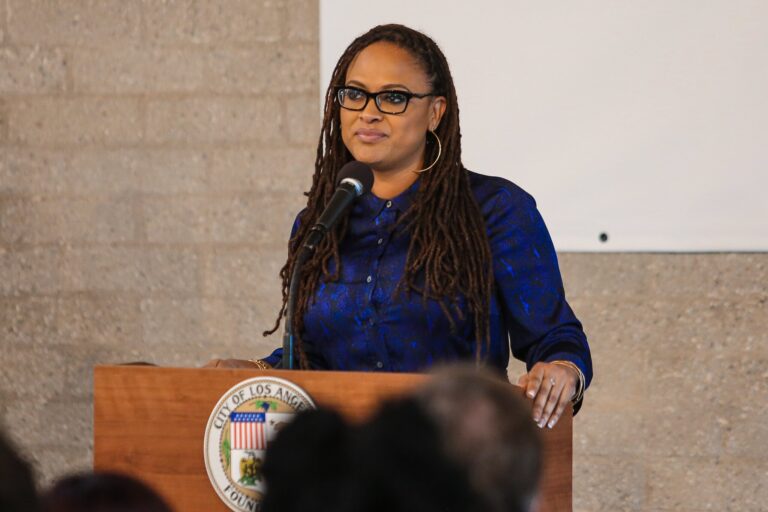
The Art of Storytelling: Ava DuVernay

In our celebration of the art of storytelling, it’s impossible to overlook the profound impact of Ava DuVernay, a filmmaker who has redefined the landscape of American cinema. At Sage Collective, we not only appreciate storytelling in its traditional forms but also how it transcends into different mediums, like film, to evoke emotion, inspire change, and challenge perspectives.

Ava DuVernay, an American filmmaker, and director, has become a household name, known for her powerful storytelling that often centers on social issues, particularly those affecting the Black community. Her work is a testament to the power of film as a medium for storytelling, shedding light on pivotal but often overlooked aspects of history and contemporary society.

DuVernay’s journey in the film industry is one of resilience and perseverance. Initially working as a publicist, DuVernay transitioned into writing, producing, and directing. Her early works set the stage for what would become a career marked by impactful storytelling. It was her second feature film, “Middle of Nowhere,” that won her the Best Director Prize at the Sundance Film Festival in 2012, making her the first Black woman to win this award.

One of DuVernay’s most notable works is “Selma” (2014), a historical drama about the 1965 Selma to Montgomery voting rights marches led by Martin Luther King Jr. and other prominent figures. The film was not just a retelling of history; it was a resonant, powerful piece that connected past struggles to contemporary social issues.

Another significant work is the documentary “13th” (2016), which explored the intersection of race, justice, and mass incarceration in the United States. Through this documentary, DuVernay brought to light how inequality and racial injustice have been systematically embedded into the fabric of American society.

DuVernay’s work extends beyond the screen. She has been instrumental in advocating for diversity and inclusion in Hollywood, both in front of and behind the camera. Her commitment to these causes is evident in her work with ARRAY, a film collective dedicated to amplifying the voices of people of color and women filmmakers.

Ava DuVernay’s approach to storytelling aligns with the core values we hold dear at Sage Collective. Her work reminds us that stories have the power to effect change, connect us, and deepen our understanding of the human experience. DuVernay’s artistry in film inspires us to look at stories not just as a form of entertainment, but as a vehicle for enlightenment, empathy, and empowerment.

Ava DuVernay
Ava DuVernay
› Back to top
« back
10.26.23 | Sage Advice®

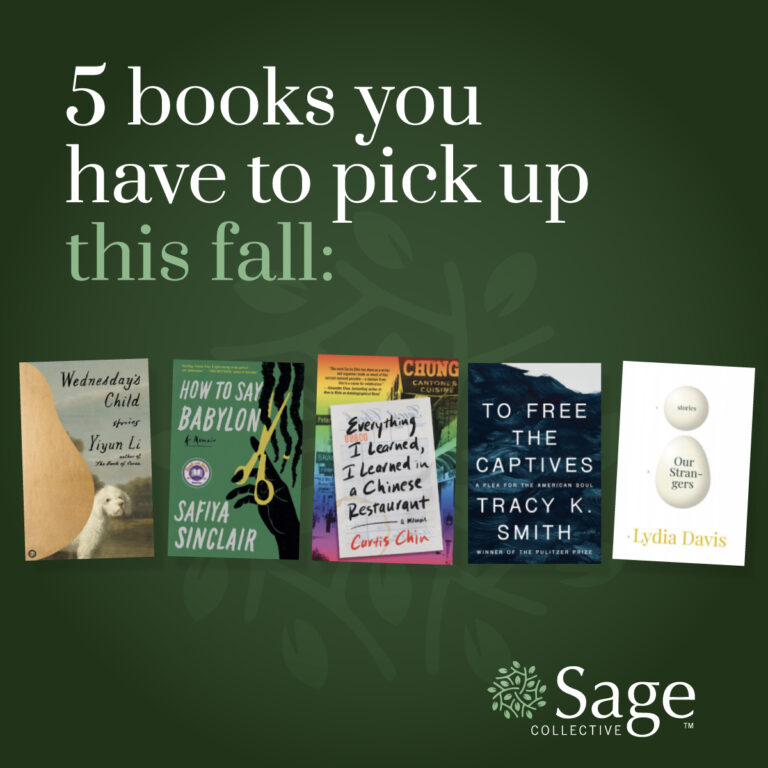
5 More Books You Have to Read This Fall

With autumn back again, there’s no better time to dive back into the art of reading. Last year, we recommended 5 books to enhance your fall reading, and this time around, we’re back with five more. Our selection this season includes captivating memoirs, enthralling collections of stories, and thought-provoking manifestos. These literary treasures are your passport to new worlds, fresh perspectives, and endless inspiration. So, let’s dive into this season’s must-reads:

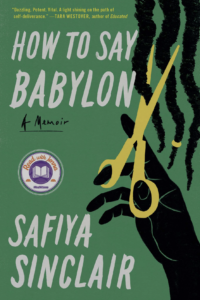
How to Say Babylon, Safiya Sinclair

How to Say Babylon, Safiya Sinclair

Found on nearly everyone’s fall book list, How to Say Babylon is a story that resonates deeply with our values at Sage Collective. Sinclair’s memoir illustrates a powerful story of a young Jamaican girl, who, even through a life of strict abuse, discovers her voice and the power of sharing her story. For anyone who loves a tale of liberation and one rich in moving storytelling, this is the book for you.

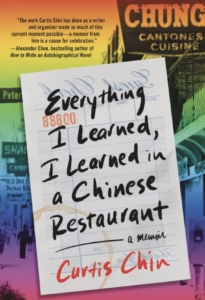
Everything I Learned, I Learned in a Chinese Restaurant, Curtis Chin

Everything I Learned, I Learned in a Chinese Restaurant, Curtis Chin

In another recently acclaimed memoir, Curtis Chin shares his experience growing up as a gay Chinese American in 1980’s Detroit. The memoir is filled with laughs, heartfelt moments and vivid memories of Chin’s past. For anyone who holds an appreciation to the community around them and belief in its power to shape us throughout life, this should be at the top of your list. 

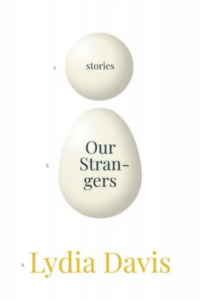
Our Strangers: Stories, Lydia Davis

Our Strangers: Stories, Lydia Davis

Author Lydia Davis’ latest collection of short fiction stories poetically explores a variety of topics from marriage to what we put in our coffee. Anyone who loves the ability to revisit the same story a handful of times and with each time, coming out with a new perspective will appreciate Our Strangers: Stories. And in a move to support small businesses, the book is only available to purchase form online independent retailers and bookstores. 

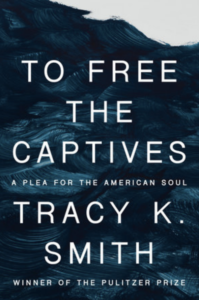
To Free The Captives, Tracy K. Smith

To Free The Captives, Tracy K. Smith

Smith bluntly shares her views on where the state of the Nation is in her latest novel. Exploring every topic from the pandemic and Black Lives Matter movement in 2020 to her own experience as a Black woman, mother and educator in the 21st century, she presents a manifesto on how our country could come to a new, shared perspective of recent history. 

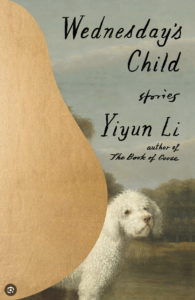
Wednesday’s Child, Yiyun Li

Wednesday’s Child, Yiyun Li

Award winning Author, Yiyun Li explores the unexplainable feelings of aging, alienation and grief in her latest collection of stories. Each piece, previously published as singular works by The New Yorker, Zoetrope and other publications over a span of a decade, shares a different perspective on the cost of living. 

Whether you prefer reading alone, with a companion or in a book club, don’t hesitate to pick one or two of these books up for yourself this fall. You can find them at your neighborhood libraries, local bookstore or online. And as with all good reads, spread the word to friends and family when you finish a book you really love!

› Back to top
« back
10.12.23 | Sage Advice®

The Art of Storytelling: Nat King Cole

At Sage Collective, we’re all about the stories that shape our lives, and when an artist like Nat King Cole pours his heart into his music, it’s impossible not to be drawn in. Cole, with his smooth voice and heartfelt storytelling, teaches us invaluable lessons in the art of expression.

Cole’s storytelling prowess comes from a place of genuine authenticity. Take his iconic song “Unforgettable,” for instance. It’s not just a love song; it’s a moving tale of love’s enduring power. It’s a reminder that the most potent storytelling springs from the heart, conveying the raw, unfiltered truth of our experiences.

One thing that sets Cole apart is his ability to turn personal stories into something universal. Whether he’s singing about love, heartbreak, or everyday life, his songs resonate with people from all walks of life. Cole shows us the magic of finding the threads that connect our individual experiences to the larger tapestry of humanity.

While Amanda Gorman uses poetry, Cole does it through music. His songs like “Mona Lisa” and “The Christmas Song” enchant with their rhythms and reflective lyrics. When sharing your own story, consider adding a touch of the poetic. It’s not about composing verses but using language in an artful way to add depth and emotion to your narrative, just as Cole did with his timeless melodies.

Nat King Cole’s work isn’t just about beautiful music; it’s about stories that make a difference. Songs like “Nature Boy” and “Smile” carry messages of love, empathy, and hope. These narratives aren’t relics of the past; they’re catalysts for inspiring change. Cole teaches us that our stories can foster empathy, understanding, and action. Through storytelling, you too can inspire others and ignite transformation, just as he did with his timeless classics.

Exploring storytelling through Nat King Cole’s music reveals narratives that capture the essence of the human experience. Taking a page from his book, let’s believe that our stories, told with authenticity and purpose, have the potential to touch and change lives, just as his music has done for generations.

› Back to top