« back
02.04.26 | Caregiver Support

Black History Month 2026: A Century of Commemoration, A Future in Bloom

This year marks a powerful milestone: A Century of Black History Commemorations. Since the inaugural celebration of Negro History Week in 1926—conceived by historian and visionary Carter G. Woodson—Black communities have carried forward a sacred tradition of honoring their past, celebrating their culture, and building toward a brighter future.

As we observe Black History Month 2026, we honor not only a century of remembrance—but also a century of resilience, resistance, joy, and boundless creativity. At Sage Collective®, we celebrate this history not as something behind us, but as something alive within us. Because for us, life doesn’t shrink with age—it expands.

100 Years of Storytelling, Healing, and Uplift
The past century has seen the world transformed by the influence of Black artists, thinkers, caregivers, and changemakers. From the Harlem Renaissance to the Civil Rights Movement, from kitchen-table organizing to tech innovation, Black history has never been static—it has always moved, evolved, and deepened.

Each February since 1926, this rich and dynamic history has been elevated, thanks to community leaders, educators, clergy, elders, and families who kept the flame alive. They gathered in schools, churches, living rooms, and libraries—not only to reflect on where we’ve been, but to pass on wisdom, pride, and possibility to new generations.

An Intergenerational Celebration
Sage Collective® believes that vibrant aging means staying connected—to others, to purpose, and to culture. That’s why Black History Month is so essential: it’s a reminder that legacy lives in conversation. Whether it’s a grandson hearing about his grandmother’s first march, or a neighbor recalling the music that shaped their youth, these stories bind us. They bring healing. They spark pride. And they ensure that Black excellence is never forgotten.

Let’s use this centennial moment to ask questions, to listen more deeply, and to amplify voices—especially those of our elders—who have lived history and made it.

Honoring Joy, Not Just Struggle
This year, as we celebrate a century of commemorations, we also celebrate a century of Black joy. Because joy has always been a radical act of resistance. It is in the rhythm of the drum, the laughter around the dinner table, the bold colors of Sunday fashion, the poetry scribbled in the margins.

While it’s important to remember injustice, it’s equally vital to remember how Black communities have thrived in spite of it. With love. With brilliance. With style. With imagination.

History in the Making
The truth is, Black history doesn’t only live in museums or archives. It’s being made right now—by the innovators, artists, caregivers, educators, and dreamers shaping our neighborhoods and our nation.

Sage Collective® stands proudly at the intersection of this legacy and this future. Through our focus on cultural arts, health equity, digital learning, and intergenerational connection, we uplift the values that have long defined Black excellence—and ensure they live on in vibrant, contemporary ways.

A Call to Remember, A Call to Expand
A century after the first formal Black History observance, we continue to honor those who came before us, while investing in those who will come next.

This month, we invite our community to:

  • Share your stories and memories with younger generations.
  • Read a novel, watch a documentary, or attend a local event that centers Black voices.
  • Support Black-owned businesses and creators.
  • Reflect on how you’re helping to build a future worthy of this legacy.

Let us mark this 100th year not only with reflection, but with commitment—to justice, to culture, to wellness, to vibrant living.
› Back to top
« back
08.27.25 | Lifestyle

Labor Day 2025: Honoring the Legacy, Lifting the Future

Labor Day is more than a long weekend or a signal that summer is winding down. For African American older adults—many of whom broke barriers, bent norms, and built lives through hard-won labor—it remains a powerful reminder of pride, perseverance, and progress.

Last year, we reflected on the historical struggle for workplace justice and the vital role African Americans played in shaping labor movements. This year, we return to those themes with a renewed focus on legacy—how the labor of Black elders continues to ripple through families, communities, and history.

The Work Beneath the Work
For many older African Americans, the jobs they held were more than sources of income—they were acts of resistance and care. Domestic workers, Pullman porters, teachers, assembly-line workers, civil servants, postal employees, and union stewards not only contributed to the economy—they held communities together.

They showed up early and stayed late. They wore uniforms pressed with quiet pride. They saved paychecks to send children to college, support churches, and fund movements. And often, they did this while being paid less, respected less, and expected to do more.

Their labor was not only physical—it was emotional, cultural, and deeply relational. It forged a sense of identity, purpose, and dignity, even when external validation was absent.

The Inheritance of Resilience
Today, many younger generations carry with them the values instilled by those elders: discipline, self-respect, a belief in collective advancement. These are the invisible inheritances passed down alongside well-worn tools, family recipes, and framed union cards.

This Labor Day, we honor not just the work African American seniors did—but the spirit with which they did it. Their legacy shows up in every Black-owned business, every first-generation graduate, every grandchild who now has the freedom to pursue work fueled by passion rather than necessity.

Progress, Still in Motion
Even as we celebrate the strides made, we must also recognize the labor injustices that persist. African American seniors are disproportionately affected by inadequate retirement savings, rising healthcare costs, and limited access to age-friendly employment opportunities. In many ways, the fight they once waged on picket lines and office floors continues in policy debates and caregiving systems today.

At Sage Collective®, we believe in honoring labor not just with words—but with action. That means advocating for equitable access to meaningful work, dignified aging, and intergenerational opportunity. It means listening to the stories of our elders, and letting their experiences shape our pursuit of justice.

This Labor Day, Let Us Remember:

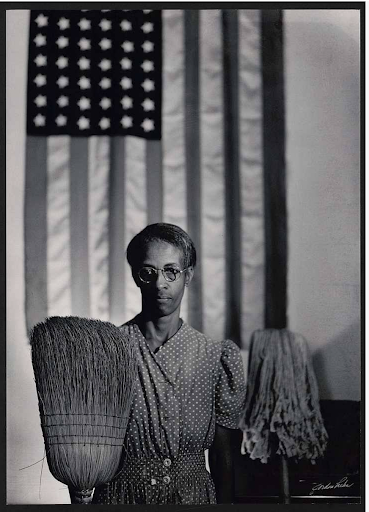
  • The mop and broom wielded by Ella Watson in Gordon Parks’ iconic American Gothic were symbols of both oppression and pride.
  • The hands that built railroads, cleaned schools, and cared for children also wrote poetry, organized unions, and sowed the seeds of cultural flourishing.
  • And that labor, in all its forms, is worthy of honor—not just one day a year, but every day we benefit from its fruits.

To our elders: thank you for your labor, your legacy, and your love. May we carry your example forward with reverence and resolve.

Gordon Parks, American Gothic, Washington, D.C., 1942. Photograph shows Farm Security Administration employee Ella Watson standing with mop and broom in front of American flag. The Gordon Parks Archives in the Library of Congress.
› Back to top
« back
08.14.25 | Community

Black Genius: Tre Johnson Reclaims Brilliance in the Everyday

Tre Johnson’s newly-published Black Genius: Essays on an American Legacy is a smart‑talking, deeply felt celebration of Black ingenuity that redefines genius for the Sage Collective® audience. Across 30 polished essays, Johnson dives into the daily, the personal, the unexpected—to show us a broader American excellence rooted in Black creativity, survival, resistance, and joy.

The Genius of the Everyday
Johnson opens with a central provocation: “We’re utterly amazing, yet Black folks are… left out of conversations about genius.” Rejecting the narrow focus on recognized luminaries, he instead draws attention to the brilliance embedded in everyday experiences—from his auntie’s weekend bus trips to Atlantic City to the bold designs of ’90s airbrush tees, and the razor‑sharp, profanity‑laced monologues of Dick Gregory. These essays invite readers to ask: is this not genius too?

Cultural Critique with Humor and Heart
Johnson’s writing is chatty, witty, and fiercely observant. He moves fluidly between family reminiscence, pop culture deconstructions, and historical reflection. Whether tracing his uncle’s path from Black Trenton to the University of Pennsylvania in 1977, spotlighting the Odunde festival in Philadelphia, or exploring comic‑book narratives and streetwear trends, Johnson’s voice remains grounded, urgent, and alive.

Depth and Range
What sets Black Genius apart is the thematic cohesion across distinct essays: appropriation and cultural extraction; communal structures and Black Paranoia™ (Johnson’s coined term for racialized surveillance); institutional failure versus grassroots creativity; and generational memory as inheritance and resistance. Published reviews affirm that each piece stands alone, yet the essays build a richer tapestry when read together—“astute and deeply felt,” with “thematic threads” that elevate the collection as a whole.

A Love Letter and a Call to Action
At its heart, the book serves both as a love letter to Black brilliance and a wake‑up call to readers of all backgrounds. Johnson challenges us to expand our definitions of genius beyond metrics, accolades, and dominant culture narratives. In doing so, he invites vigilance about how culture is appropriated, how language is policed, and how Black communities define their own legacies on their own terms.

About Tre Johnson
A Philadelphia native, Tre Johnson is an acclaimed essayist and cultural critic whose work has appeared in The New York Times, Washington Post Magazine, Rolling Stone, and Vanity Fair, among others. Known for his incisive explorations of race, identity, and pop culture, Johnson rose to national prominence with his viral 2020 essay, “When Black People Are in Pain, White People Just Join Book Clubs,” published in The Washington Post. His voice is both intellectually rigorous and emotionally resonant—qualities that have earned him a devoted readership. Black Genius marks his debut as a book author, and it solidifies his place as a leading voice in the contemporary conversation around cultural justice and collective memory.

Final Take for Sage Collective® Readers
Black Genius is perfect for readers seeking thoughtful cultural criticism infused with joy, wit, and ancestral wisdom. It’s a timely riposte to exclusionary narratives—rooting genius in ordinary moments and collective memory rather than mythology. While Johnson’s perspective is steeped in Black American experience, his assertions resonate across culture, race, and academic inquiry.

Some essays close with lingering questions rather than tidy conclusions—fitting for a work that asks readers to continue the conversation rather than just receive it. For those in Sage Collective®’s audience who engage teaching, civic life, or creative work, Johnson’s reframing of intelligence and brilliance offers a powerful toolset.

In short: vibrant, thought‑provoking, and unflinchingly honest, Black Genius is exactly the kind of book you will want to discuss, reference, and carry forward.

Black Genius: Essays on an American Legacy was published by Dutton in July, 2025. You can find it in local libraries, bookstores, and online.

https://www.facebook.com/DuttonPenguin/posts/chatty-yet-profound-black-genius-by-tre-johnson-subverts-expectations-from-the-v/1138186201657053/
› Back to top