« back
02.25.26 | Health & Wellness

Healthspan is the Goal. Joyspan is the Engine.

In recent times, the national conversation around aging has sharpened its focus. We’re hearing more about brain health. About mobility. About dementia prevention. About anti-inflammatory diets and strength training and sleep optimization.

The word of the moment is healthspan — the number of years we live in good health. It’s an important shift. But at Sage Collective®, we’ve been asking a parallel question for some time now:

What makes those healthy years feel worth living?

Last year, we named it joyspan — measuring life in moments, not years. And now, as longevity science evolves, something beautiful is becoming clear: Joy isn’t separate from healthspan.  Joy may be one of its strongest predictors.

The Science is Catching Up to the Spirit
Research increasingly confirms what many older African Americans already know intuitively:

  • Social connection protects cognitive function.
  • Purpose reduces risk of decline.
  • Movement boosts mood and memory.
  • Laughter lowers stress hormones.
  • Optimism correlates with longevity.

In other words, joy isn’t decorative. It’s neurological. When we speak about preventing dementia, we’re also speaking about engagement. When we speak about mobility, we’re also speaking about dignity. When we speak about nutrition, we’re also speaking about culture and memory.

Healthspan may be measured in years. Joyspan is measured in vitality. And the two are deeply intertwined.

Joy as a Brain-Healthy Practice
Consider this:

  • A walking group isn’t just fall prevention. It’s friendship.
  • A dance class isn’t just cardio. It’s expression.
  • Learning to use new technology isn’t just cognitive training. It’s confidence.
  • Cooking a traditional meal isn’t just nutrition. It’s continuity.

Joy stimulates the brain’s reward system. It encourages participation. It builds resilience against stress — one of the quiet accelerants of aging. A life that feels meaningful is a life we stay engaged in. And engagement is protective.

From Prevention to Participation
The modern longevity movement often emphasizes avoidance:  Avoid decline. Avoid disease. Avoid frailty. But what if we shifted toward participation? Participate in curiosity. In creativity. In community.

Participation builds joy. Joy builds resilience. Resilience supports healthspan. This isn’t wishful thinking. It’s behavioral science.

Joyspan as a Design Principle
If healthspan asks, How long can I remain healthy?  Joyspan asks, What makes me want to?

That question reframes everything. It moves us beyond metrics into meaning. Beyond survival into significance. Beyond prevention into presence.

At Sage Collective®, vibrant living has never been about chasing youth. It’s about expanding aliveness, so that joy becomes the infrastructure, not the icing.

A New Longevity Equation
Perhaps the future of aging is not lifespan vs. healthspan vs. joyspan. Perhaps it’s this:

Lifespan gives us time.
Healthspan gives us capacity.
Joyspan gives us reason.

And when all three align, aging becomes a deepening, not a narrowing.

› Back to top
« back
01.28.26 | Spirituality & Religion

What Still Feels Possible: Reclaiming Optimism in Later Life

Optimism is often portrayed as a youthful trait—an untested belief that anything can happen. But at Sage Collective®, we recognize another form of optimism: one shaped by experience, reflection, and resilience.

This later-life optimism doesn’t deny hardship or loss. It doesn’t gloss over complexity. Instead, it asks a quieter, more powerful question: What still feels possible?

Unlike the expectations of earlier life, this question doesn’t demand reinvention or constant forward motion. It invites agency without pressure. It honors the truth that possibility changes shape over time—and that this evolution is not a diminishment, but a refinement.

For many older adults, possibility no longer lives in sweeping plans or distant milestones. It shows up in meaningful engagement. In learning something new for the pleasure of discovery, not mastery. In deepening relationships through presence rather than performance. In contributing wisdom, care, or creativity to a community that values lived experience.

Reclaiming optimism at this stage of life means redefining success. It shifts from accumulation to meaning, from speed to depth. It allows curiosity to replace urgency. And it acknowledges that becoming does not end—it continues, differently.

At Sage Collective®, we believe vibrant living is sustained by curiosity and connection at every age. Optimism, in this context, is not blind hope—it is informed hope. It is the confidence that one can still participate fully in life: intellectually, socially, culturally, and emotionally.

Consider the older adult who enrolls in a class simply because the topic sparks interest. Or the one who volunteers, mentors, or shows up consistently for conversations that matter. Or the person who finds renewed optimism not in doing more, but in doing what feels aligned.

This form of optimism is grounded. It respects limits while refusing resignation. It recognizes that while some doors close, others open—often leading inward, toward clarity and purpose.

Community plays an essential role here. Possibility is easier to imagine when it is reflected back to us by others—through dialogue, shared learning, and belonging. When older adults are invited to engage, to contribute, and to be seen as vital participants, optimism becomes collective.

Asking What still feels possible? is not about measuring what remains. It is about affirming what endures: curiosity, connection, meaning, and care.

This question does not require an immediate answer. It simply asks for attention.

And in that attention—gentle, honest, and ongoing—optimism finds its way back in. Not as a promise of endless futures, but as a reminder that even now, life is still offering invitations worth accepting.

› Back to top
« back
01.21.26 | Uncategorized

Winter is a Season of Inner Strength

Winter is often spoken about as something to endure. The cold. The darkness. The waiting. Yet at Sage Collective®, we see winter differently—not as a season of absence, but as a season of inner strength.

In nature, winter is not a pause in life. It is a shift in strategy. Trees drop their leaves to conserve energy. Roots grow deeper beneath frozen ground. Systems adjust to protect what matters most. Growth continues, though it is quieter and less visible.

This seasonal wisdom offers a powerful metaphor for aging well.

Later in life, strength is no longer defined by constant motion or outward productivity. Instead, it shows up as adaptability, discernment, and care. Winter invites us to practice these forms of strength—to move more intentionally, to listen more closely, and to honor the rhythms of both body and mind.

Inner strength, in this season, may look like adjusting expectations. Choosing warmth over speed. Selecting activities that sustain energy rather than deplete it. It might mean embracing shorter days as an invitation to read, reflect, or learn—without pressure to optimize every hour.

For many older adults, winter also brings emotional terrain. Memories surface more easily in quiet months. Loneliness can feel sharper. Yet these moments, too, can become sources of strength when met with compassion rather than resistance. Sitting with reflection—rather than rushing past it—builds emotional resilience. It affirms that our inner lives deserve attention.

At Sage Collective®, we believe vibrant living includes stillness. It includes seasons of consolidation, not just expansion. Winter supports this work by encouraging practices that strengthen us from the inside out: meaningful conversation, creative engagement, intellectual curiosity, and restorative rest.

Consider the older adult who continues daily movement—not to chase fitness goals, but to maintain balance and confidence. Or the one who joins a lecture series or discussion group during winter months, discovering that learning brings light into shorter days. Or the friend who makes a habit of checking in—recognizing that connection is as essential as warmth.

These are acts of winter strength. They are quiet, intentional, and sustaining.

Importantly, inner strength is not cultivated alone. Community plays a vital role—especially in winter. Shared spaces, gatherings, and conversations offer warmth that extends beyond temperature. They remind us that resilience is collective, built through interdependence and care.

Rather than resisting winter, Sage Collective® invites you to partner with it. To allow its slower pace to guide you inward. To ask what needs tending beneath the surface. To trust that strength does not diminish when life grows quieter—it often becomes clearer.

As this season unfolds, may you recognize winter not as a time of waiting, but as a time of preparation. A season that strengthens roots, sharpens awareness, and supports the ongoing work of becoming—steady, resilient, and deeply alive.

› Back to top
« back
12.11.25 | Health & Wellness

Wu Jin Qi Yong: The Infinite Usefulness of a Life Well-Lived

In classical Chinese philosophy, the phrase wu jin qi yong translates loosely to “inexhaustible usefulness” or “an endless capacity to give.” It describes something whose value continually expands the more it is used—a wellspring that replenishes itself, an energy that grows through expression.

For the Sage Collective® community, this ancient idea speaks directly to the heart of vibrant living. It offers a powerful reframe for aging—less as a narrowing of possibilities and more as a deepening well of presence, wisdom, creativity, and connection.

A Philosophy of Limitless Potential
The traditional meaning of wu jin qi yong suggests that the most enduring sources of value come from within:

  • One’s inner resources
  • One’s cultivated purpose,
  • One’s lifelong capacity to learn, adapt, and contribute

These qualities do not diminish with age; often, they strengthen. Older adults accumulate experiences, insights, and practices that—when activated—create a ripple effect across families, neighborhoods, and communities.

In this way, wu jin qi yong becomes a beautiful metaphor for the Sage Collective® ethos: a life’s usefulness is never spent; it continues to unfold in ways both subtle and profound.

Endless Usefulness Through Vibrant Living
At Sage Collective®, vibrant living means embracing life’s later chapters with intention, curiosity, and joy. When paired with the lens of wu jin qi yong, vibrant living becomes a practice of continually activating one’s inner abundance.

Creativity that Expands with Use. Whether through calligraphy, painting, storytelling, music, or digital exploration, creative practice embodies wu jin qi yong. The more you use your creativity, the more you have. This is why Sage Collective® champions creative arts as essential to well-being: they replenish the spirit and spark new discoveries long after traditional “productivity” fades.

Wisdom as an Infinite Resource. Older adults hold generational knowledge—cultural, emotional, practical, and spiritual. Sharing that wisdom through conversation, mentoring, or community engagement multiplies its value. In the spirit of wu jin qi yong, every story told, every insight offered, every memory shared becomes part of a collective inheritance.

Connection That Grows Through Generosity. Relationships flourish when tended. Acts of kindness, presence, and empathy enrich both the giver and the receiver. Sage Collective®’s programs—which encourage gathering, dialogue, and shared creative pursuits—highlight the truth that connection is an inexhaustible resource. The more we offer, the more we receive.

Curiosity That Never Runs Dry. Lifelong learning—whether through technology exploration, cultural education, wellness practices, or tactile crafts—embodies wu jin qi yong by demonstrating that the mind retains its ability to expand at any age. Curiosity keeps the world large, colorful, and full of possibility.

Purpose That Evolves, But Never Ends. Purpose isn’t fixed; it adapts across a lifetime. For older adults, purpose might be found in caregiving, creative expression, advocacy, spirituality, or community involvement.

The philosophy of wu jin qi yong reminds us that purpose deepens with age.

A New Narrative for Aging
In Western culture, aging is often framed as decline or diminishment. Wu jin qi yong offers an entirely different narrative:

  • Aging is an ever-renewing source of value.
  • Aging expands a person’s capacity to give.
  • Aging reveals the boundless energy that comes from inner cultivation.

This perspective harmonizes beautifully with Sage Collective®’s mission to uplift older African Americans and foster environments where they can flourish physically, emotionally, culturally, and spiritually.

Living the “Inexhaustible Life”
To embody wu jin qi yong in daily life is to trust that:

  • The spirit replenishes itself
  • One’s gifts grow through use
  • Aging brings forth a deeper reservoir of meaning

It is to live with an open heart and a willingness to engage with the world—whether through art, learning, leadership, or simple acts of presence. For the Sage Collective® community, wu jin qi yong is an invitation to embrace a life that remains abundant, useful, and full of purpose at every age. A life that is, in every sense, vibrantly inexhaustible.

› Back to top
« back
11.27.25 | Arts & Culture

Giving Tuesday 2025: The Gift of Connection, The Promise of Community

Every year, after we gather in gratitude with loved ones, Giving Tuesday invites us into a different kind of celebration—one rooted in generosity, shared purpose, and the belief that our collective actions can transform lives. Since its founding in 2012, the movement has reminded us to shift our focus from what we acquire to what we contribute. And at Sage Collective®, this message resonates deeply.

Giving Tuesday has always aligned with our mission to foster vibrant, connected communities for older African Americans. Many of the systemic challenges faced by older adults—social isolation, technological barriers, limited access to wellness resources—are not just individual circumstances but community-wide inequities. When we give, we don’t simply fund programs; we expand opportunity, dignity, and joy.

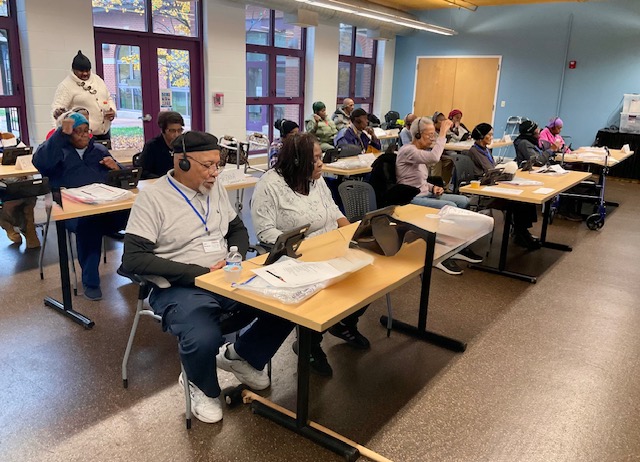
This year, we turn our focus to one of the most essential building blocks of connection: access to technology. As our Vibrant Living Program grows, so does the demand from older adults across the Chicagoland area who want to participate. We are currently at capacity, and many individuals are waiting for the tools they need to join us—tablets, training support, and, increasingly, VR headsets that will enable us to share immersive learning experiences, including at our national conference in April.

On Giving Tuesday 2025, we invite you to help us meet that need by supporting our Vibrant Living Kit Drive. Because connection shouldn’t be a privilege. It should be a pathway all older adults can walk with confidence.

The Gift of Connection: Vibrant Living Technology Toolkits
Connection is a gift that lasts beyond the season.

A Vibrant Living Technology Toolkit (tablet + case + charger + onboarding support) offers an older adult far more than a device. It opens the door to discovery, creativity, community, and conversations that nourish the spirit. For someone who may feel disconnected or unseen, it can be a lifeline.

And for us, this initiative is about more than technology. It’s about equity. It’s about ensuring older African Americans—so often excluded from digital innovation—have full access to life-enhancing tools that support health, wellness, and joyful engagement.

Because underserved does not mean undeserving.

Your Giving Tuesday Impact
Every contribution brings someone new into our community:

  • $100 —    Provides program materials and tech support for one person annually
  • $150 —     Sponsors a tablet and a case
  • $250 —    Funds a Vibrant Living Technology Kit that includes a tablet, case, program materials, and tech support
  • $500 —    Provides a Virtual Reality headset for one older adult
  • $1,000 — Supports a small-group tech workshop

Your generosity today helps ensure that when we gather this spring to share the power of VR and digital learning on a national stage, every participant who wants to be part of that moment can be.

Giving doesn’t just enrich the receiver—it uplifts the giver, too. Research shows that generosity fosters purpose, connection, and well-being. On Giving Tuesday, all of us—regardless of age—are invited into that exchange of mutual care.

A Future Rooted in Generosity
As December 2 approaches, we invite you to reflect on the enduring impact of giving: how one tablet can bridge generations, how one workshop can spark confidence, how one act of generosity can ripple outward into a more equitable future for older African Americans.

Your support ensures that vibrant living isn’t just an aspiration—it becomes a reality, shared across our community and carried forward into the year ahead.

This Giving Tuesday, help us turn connection into possibility. Join us in placing Vibrant Living Technology Toolkits  into the hands of those who are ready to learn, thrive, and belong. Click the link here to donate.

› Back to top
« back
06.05.25 | Sage Advice®

It’s Never Too Late to Change Your Mind

At Sage Collective®, we believe that aging is an opportunity to discover new depths of your evolution. One of the most liberating truths we come to understand with time is this: it’s never too late to change your mind. Whether it’s a shift in perspective, a change in attitude towards people, or a complete reinvention of self, the ability to change your mind is not a weakness but a superpower.

Because we believe that vibrant living doesn’t mean standing still, it means challenging yourself to never stop  evolving.

Why Changing Your Mind Is a Strength, Not a Weakness
We are under the impression that age equates to certainty. We expect that once we arrive at this stage in our lives we should be able to know ourselves fully, have our set beliefs that do not change, and continue to live our life exactly the same. Although, we forget that the various life stages can be the reason for growth and change.

Changing your mind does not mean you are indecisive, it means you have enough security to reevaluate certain aspects of your life. Maybe you had an opinion years ago that caused you and someone you love to drift apart, or you thought someone was your soulmate but it turns out your story ran its course, or maybe the shirt you used to be obsessed with is hideous to you now. Whatever it may be, it is emotionally intelligent to always be questioning who you are and where you stand on certain decisions. Growth can be about sticking to your guns and advocating for what you believe in but it can also be the humble act of reassessing the past.

Real-Life Examples of Late-in-Life Pivots
Nina Simone is one powerful example. Known early in her career as a classically trained pianist and acclaimed jazz and blues singer, Simone experienced a profound shift after attending the 1961 American Society of African Culture conference in Lagos, Nigeria. The trip was life-changing. It awakened a deeper connection to her identity and political purpose. From that point on, she became a fierce voice for civil rights—performing at protest rallies, writing political anthems, and lending her artistry to the movement. She changed her mind about what her platform was for—and in doing so, changed the world.

Another remarkable story is that of Iyanla Vanzant, who initially rose to public attention as a lawyer and spiritual teacher. But her true transformation came later in life. After facing personal hardships, including the death of her daughter and the dissolution of her marriage, Vanzant stepped into her power as a healer. She became a celebrated author, spiritual counselor, and host of Iyanla: Fix My Life—a role she took on in her late 50s. Her shift wasn’t just a career pivot—it was a complete reimagining of how she would use her voice.

And consider Ron Finley, the South Central Los Angeles fashion designer who, in his 50s, decided to change his life—and his neighborhood—by planting vegetables in abandoned lots. Now known as the “Gangsta Gardener,” Finley’s work has become a movement, promoting food justice, sustainability, and self-reliance. He changed his mind about where power and purpose come from, and discovered a new form of activism in the soil beneath his feet.

Reframing Your Story
There are multiple ways to stay on your feet and remain open to change:

  • Stay curious: Read books, watch films, and listen to music that challenge your thinking.
  • Embrace dialogue: Spend time with people who see the world differently.
  • Reflect often: Journal without judgment, allowing space for evolving insights.

At Sage Collective®, we believe aging is about stepping fully into your own wisdom and embracing that wisdom. Changing your mind in your later years isn’t a sign that you’ve lost your way; it’s often proof that you’ve finally found it.

We as humans make the mistake of thinking that there is a final destination when, in reality, we never stop growing. Therefore, it is our responsibility to treat that evolution with mindful reflection and openness to the change it can inflict.

You’re never too old to change your mind—because you’re never too old to grow.

The Gangsta Gardener, Ron Finley. Credit: U.S. Embassy New Zealand (https://www.flickr.com/people/46907600@N02). Wikimedia Commons, licensed under the Creative Commons Attribution 2.0 Generic license.
› Back to top
« back
05.15.25 | Mental Wellbeing

It’s Never Too Late to Reinvent Yourself

We live in a world that too often suggests we’re on a clock—that there’s a “right” time to start a new career, learn a new skill, fall in love, or rediscover joy. But at Sage Collective®, we believe life doesn’t come with an expiration date on possibility. “It’s Never Too Late” is a blog series dedicated to celebrating the bold truth that growth, reinvention, and adventure belong to every stage of life. Whatever your age, there is always room to dream bigger, live deeper, and embrace change—not as a concession, but as a courageous choice. Aging isn’t about limitation; it’s about opening new doors, on your own timeline.

Have you ever caught yourself thinking, “It’s too late for me”? Maybe it came after turning 50—or 70. Maybe it was when someone asked what you do for fun or what your next dream is, and you didn’t know how to answer. Society has a way of feeding us the narrative that there’s an expiration date on growth, adventure, love, or reinvention. But at Sage Collective®, we’re here to remind you: reinvention has no age limit.

In fact, the second half of life can be the most rewarding chapter yet—when your confidence is earned, your values are clear, and your story still has room to surprise you.

Challenging the Myth of “Too Late”
From a young age, we are taught to measure life by milestones: graduate by this age, marry by that one, retire by another. And once those boxes are checked—or missed—we’re left wondering what’s next. Too often, mainstream culture glamorizes youth while ignoring the power, resilience, and wisdom that come with age. For older African Americans, especially, there’s an added layer of resistance—of having lived through systemic barriers and expectations that tried to limit what was possible.

But the truth is this: aging can be a superpower. By the time you reach midlife and beyond, you’ve gathered experience, perspective, and an assured sense of self. That clarity makes reinvention not only possible, but powerful. You know what matters. You know what you’re capable of. And you know that your worth doesn’t decline with age—it expands.

Real-Life Examples of Reinvention
Take Barbara Hillary, a Harlem-born nurse who beat breast and lung cancer before deciding—at age 75—to travel to the North Pole. Then at 79, she became the first Black woman to stand at the South Pole. Her story is a reminder that exploration doesn’t expire.

Or consider Ernestine Shepherd, who didn’t begin her fitness journey until she was 56 years old, and didn’t enter her first bodybuilding competition until she was 71. With determination, discipline, and a lot of early mornings, she became a competitive bodybuilder, personal trainer, and motivational speaker—and earned the title of “world’s oldest competitive female bodybuilder” in the Guinness Book of World Records.

Love, too, has no deadline. Maya Angelou once said, “Love recognizes no barriers. It jumps hurdles, leaps fences, penetrates walls to arrive at its destination full of hope.” And she lived that truth—continually redefining herself as a poet, activist, actress, and icon throughout her life.

Whether it’s falling in love, going back to school, starting a business, or finally giving yourself permission to dream differently—reinvention is not just for the young. It’s for the bold.

How to Start Reinventing Yourself
Ask yourself:

  • What part of my life feels unfulfilled?
  • What have I always wanted to try?
  • What stories am I still longing to tell?
  • What lights me up?

From there, set small, meaningful goals—whether it’s enrolling in a class, journalling daily, starting a walking group, or signing up for a Sage Vibrant Learning session.

Give yourself permission to be a beginner again. To not have all the answers. To try, to fail, and to grow.

You’re Right on Time
At Sage Collective®, we believe that every stage of life is rich with potential. Reinvention doesn’t mean discarding who you are—it means building on everything you’ve lived through to become something even fuller. So the next time you wonder if it’s too late, remember: it’s not. It never is.

You’re not behind. You’re right on time.


Barbara Hillary. @unearthwomen Instagram (https://www.instagram.com/p/C4BGMBfMUWl/)
› Back to top