Building What Comes Next: A Conversation With Sage Collective®’s New Leaders in Partnerships, Programs, and Innovation
At Sage Collective®, vibrant living has always been a practice shaped by connection, purpose, wellness, creativity, lifelong learning, and community. It asks us to imagine aging as a stage of continued growth, contribution, and possibility.
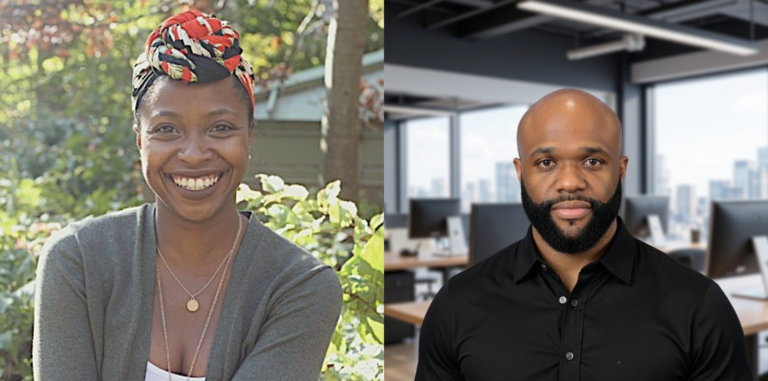
As we continue to expand our reach and deepen our impact, two new leaders are helping carry our vision forward: Phillip Bennett, Director of Strategic Partnerships & Community Impact, and Brittney Autry, DSW, LCSW, Director of Program Experience & Innovation.
Together, their work reflects an important next chapter for Sage Collective®: building meaningful partnerships, designing transformative programs, listening closely to older adults, advancing the Social Innovation Lab, and creating new pathways for our community members to live vibrant, connected, and purposeful lives.
Reimagining Aging Through Partnership
For Phillip Bennett, the path to Sage Collective® began with a phrase that stayed with him: reimagining what aging looks like.
Throughout his career, Phillip has worked with older adults, community partners, and organizations focused on bridging gaps to resources. When he learned more about Sage Collective® and its mission, he saw a natural alignment with his own experience and values.
“I saw the opportunity and reached for it,” he shared.
As Director of Strategic Partnerships & Community Impact, Phillip’s work centers on relationship-building. But for him, partnership is not transactional. It begins with shared values, trust, and a commitment to solving problems together.
A strong partnership, he explained, is not simply about what organizations can get from one another. It is about what they can create together for the benefit of the community.
That approach is especially important in work that serves older adults. Sage Collective®’s mission depends not only on strong programs, but on the relationships that help those programs reach people where they are — in neighborhoods, faith communities, libraries, community organizations, health systems, and other trusted spaces.
Phillip sees faith-based organizations as especially powerful partners because of their deep roots, spirit of service, and existing relationships with older adults. In many communities, churches and faith-based groups already offer connection, trust, volunteer energy, and care. They are often close to the lived realities of older adults who may be navigating loneliness, cognitive changes, caregiving needs, or barriers to services.
His goal is to build partnerships that last beyond a single event. A successful collaboration might lead to a caregiver support group, a recurring program, or a steady pathway to resources that older adults and families can rely on over time.
For Phillip, strategic partnerships and community impact are inseparable. To make an impact, an organization must understand the community. To understand the community, it must know the people, leaders, institutions, and relationships already shaping daily life.
“You can’t have one without the other,” he explained.
Designing With Older Adults, Not Just For Them
Brittney Autry was drawn to Sage Collective® for a related reason: the opportunity to design programs with intentionality, creativity, and deep respect for older adults themselves.
As a social worker, Brittney brings a holistic lens to the work. She is trained to see the larger ecosystem surrounding a person’s life — health, finances, relationships, family, social support, access, stress, and environment. That perspective shapes how she understands healthy aging and vibrant living.
“We don’t exist, we don’t thrive in silos,” she said. “We really need to make sure that we have a holistic perspective in delivering wellness.”
For Brittney, program experience and innovation belong together because meaningful programs cannot be designed in isolation from the people they are meant to serve. Older adults should not simply receive programming after decisions have been made. They should be part of the process, helping shape what is created, how it feels, and whether it truly supports their lives.
That belief is already guiding her early work at Sage Collective®, which includes helping shape Sage Collective®’s Social Innovation Lab, a space envisioned for collaboration, research, experimentation, and co-creation. For Brittney, the Lab offers a way to bring the right community partners, university partners, and mission-aligned collaborators into the process of designing new approaches for older adults.
The goal is not innovation for its own sake. It is to create a space that is innovative, creative, engaging, and fun — while remaining grounded in the real lives, strengths, and aspirations of the people Sage Collective® serves. Whether the work leads to new programs, digital tools, learning experiences, or technological supports, the Social Innovation Lab represents the same principle Brittney brings to program design: the people most affected by innovation should help shape it.
This approach reflects a broader principle: innovation should not happen to people. It should happen with them.
From Pilot Programs to a Shared Experience
Brittney is also focused on expanding Sage Collective®’s programming in a way that preserves quality as the organization grows.
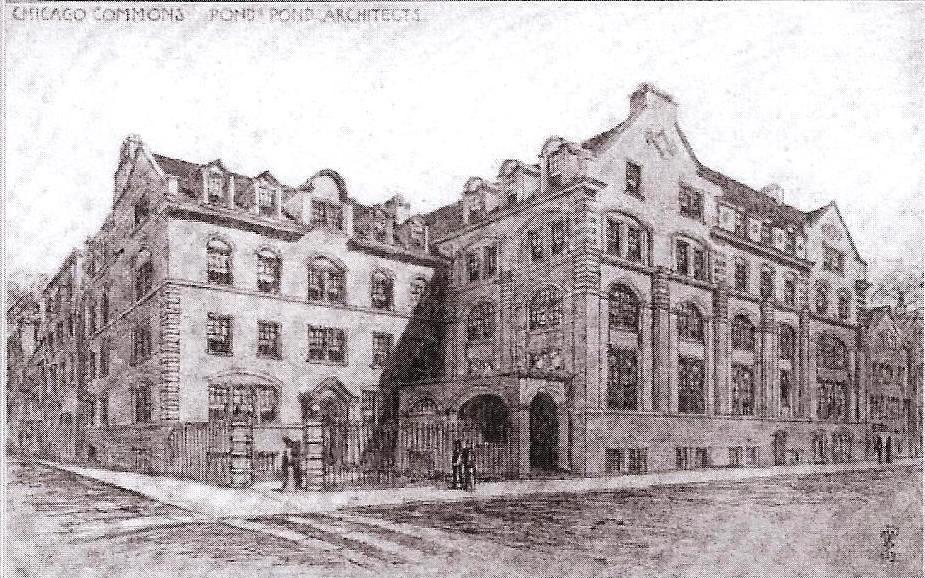
That work includes studying data from existing pilot sites, listening to participants, and developing a framework that can serve as a blueprint across different locations. Whether a program takes place at Chicago Commons, the Chicago Public Library, or another community setting, the goal is for participants to experience something robust, welcoming, and aligned with Sage Collective®’s mission.
The question of scale is central. How does an organization grow without losing the care, warmth, and quality that made the work meaningful in the first place?
For Brittney, the answer isn’t choosing between in-person and virtual programming, but understanding how both can work together. In-person programs often create deep connection. Digital tools may expand reach and access. The challenge is to design a hybrid model that feels consistent, human, and responsive no matter where someone participates.
She imagines a future where an older adult in Chicago and an older adult in Milwaukee could have a shared Sage Collective® experience — shaped by the same values, quality, and sense of belonging.
That will require research, experimentation, participant feedback, and flexibility. It also requires humility: the understanding that innovation is an ongoing process, not a fixed destination.
Community as the Foundation
Both Phillip and Brittney speak about Sage Collective®’s future in terms of connection.
Phillip focuses on the relationships that allow Sage Collective® to meet older adults through trusted community partners. Brittney focuses on designing programs and tools that reflect the whole person and invite older adults to participate in shaping their own experiences.
Together, their roles form a powerful bridge between outreach and experience, between partnership and programming, between community needs and organizational response — and between the daily work of service and the larger work of social innovation.
Their work also reflects something essential about Sage Collective®’s philosophy: vibrant living is not created by one program, one app, one event, or one organization alone. It grows through ecosystems of care, requiring partners who understand the community. Programs that honor lived experience. Technology designed with dignity. Opportunities for learning, wellness, creativity, and connection. And a willingness to listen before building.
Looking Ahead
When Phillip thinks about success, he thinks long term. He imagines looking back five or ten years from now and being able to see the outcomes of work done together — the partnerships formed, the programs created, the communities strengthened, and the lives touched.
Brittney’s vision is similarly expansive. She is thinking about how Sage Collective® can create models that are innovative, creative, engaging, and grounded in the realities of older adults’ lives. Through the Wisdom Circle app, expanded programming, and the Social Innovation Lab, she is helping build structures that invite older adults, caregivers, community partners, and university collaborators into the work of imagining what vibrant aging can become. She is also thinking about wellness across generations, recognizing that caregivers, families, and communities need support in order for older adults to thrive.
At Sage Collective®, reimagining aging means creating the conditions for older adults to remain connected, visible, supported, and full of possibility. With Phillip Bennett and Brittney Autry helping lead this work, Sage Collective® is deepening its commitment to vibrant living — not as an abstract ideal, but as something built every day through partnership, program design, innovation, and care.