« back
05.13.26 | Lifestyle

How to Start a Creative Ritual

The notion of “being creative”  often brings with it the idea that creativity belongs to the bold, the gifted, or the professionally artistic. But creativity has never been  reserved for painters, poets, designers, or performers. It is a human capacity that can be nurtured at any age, in any season of life.

At Sage Collective®, we believe creativity is one of the essential practices of vibrant living. It keeps us engaged, curious, expressive, and connected to ourselves and to the world around us. And perhaps most importantly, creativity does not have to begin with a masterpiece. It can begin with a ritual.

A creative ritual is not about pressure or performance. It is simply a small, repeatable act that makes room for imagination. It might last ten minutes or an hour. It might happen every morning, every Sunday afternoon, or whenever the house grows quiet. What matters is not scale. What matters is returning to it.

Begin Small Enough to Begin
One of the biggest obstacles to creativity is the feeling that we need a grand plan before we start. We imagine we need the right supplies, the right talent, the right amount of time, or a fully formed idea. In reality, creativity often begins much more modestly.

A creative ritual can start with a notebook and a pen. A basket of old photographs. A favorite song played at the same time each day. A few colored pencils left out on the table. A daily habit of taking one photograph on a walk. A small collage made from magazine clippings. A paragraph written before bed.

The goal isn’t to impress anyone. The goal is to create a gentle structure that invites expression.

Choose a Form That Feels Alive to You
Not every creative practice has to look like traditional art. Creativity can take many forms, and the most sustaining rituals are often the ones that feel personally meaningful rather than externally impressive.

For some, creativity lives in words — journaling, storytelling, letter-writing, or recording memories. For others, it may emerge through color, texture, music, gardening, cooking, photography, sewing, or arranging objects in a beautiful way. Innovation does not always mean inventing something new. Sometimes it means seeing familiar things differently, or allowing yourself to make something with your own hands and your own eye.

The best creative ritual is the one that makes you want to return tomorrow.

Make It Easy to Return
Rituals work because they reduce friction. When something is easy to begin, we are more likely to continue. That means it helps to set up your creative practice in a way that feels inviting rather than demanding.

Leave your materials where you can see them. Choose a time of day when your energy feels steady. Pair the ritual with something already familiar, like morning coffee or the hour just after lunch. Protect it not as a chore, but as a form of nourishment.

This is especially important because creativity thrives on repetition. Not rigid repetition, but gentle continuity. The act of returning again and again builds momentum. What feels uncertain at first begins to feel natural. Over time, the ritual becomes less about effort and more about rhythm.

Let Curiosity Be More Important Than Skill
Many people stop themselves from creative expression because they believe they are not good at it. But creativity is not a test, and a ritual is not a performance review. It is a practice of paying attention.

What happens if you write down a memory you have never told before? What if you photograph the same tree every morning for a month? What if you make a small sketch without worrying whether it is “good”? What if you collect colors, textures, or phrases that catch your attention? What if you allow yourself to experiment without needing to justify the result?

Curiosity is often a better starting place than confidence. In fact, creativity frequently grows by following interest first and skill second.

Honor the Meaning, Not Just the Outcome
A creative ritual can do more than fill time. It can help us reflect, process, remember, and connect. It can bring shape to a day. It can restore a sense of agency. It can offer pleasure, surprise, and even calm. In later life, creativity can also become a powerful way of affirming that growth has not stopped, that expression still matters, and that there are always new ways to know ourselves.

This is one reason creative rituals can be so meaningful for older adults. They are not about productivity for its own sake. They are about presence. They remind us that there is still something to discover, still something to make, still a way to participate in the unfolding of our own lives.

Start with Just One Thing
If you are wondering how to begin, begin simply. Choose one small act and one regular moment. That is enough.

Write for ten minutes each morning. Take a photo on your daily walk. Keep a notebook of overheard lines, family stories, or questions you want to explore. Make a small collage each week. Sing. Sketch. Arrange flowers. Try a new recipe and plate it beautifully. Read something inspiring, then respond to it in your own words.

A creative ritual does not have to be ambitious to be meaningful. It simply has to be yours.

Creativity as a Way of Staying Open
At Sage Collective®, we see creativity not as a luxury, but as a way of staying open to life. It invites us to notice more, imagine more, and express more. It reminds us that innovation is not only the domain of technology or industry. It is also found in the quiet reinvention of a day, a habit, a perspective, or a self.

So when you’re ready to start your own creative ritual, consider what small creative ritual you might begin. A life of vibrant living is built, in part, through these acts of return — small openings through which something new can enter.


 

› Back to top
« back
04.15.26 | Spirituality & Religion

National Poetry Month 2026

Every April, National Poetry Month invites us to return to language in one of its most concentrated, expressive forms. Launched by the Academy of American Poets in 1996, the observance is now held each April across the United States, with readings, workshops, community events, and programs like “Poem in Your Pocket Day,” which will take place on April 30 in 2026. This year also marks the 30th anniversary of National Poetry Month.

At Sage Collective®, we love the idea that poetry gets an entire month. But for older adults especially, poetry offers something more than celebration. It offers a meaningful practice for vibrant living.

Poetry asks us to pay attention. It slows us down just enough to notice sound, memory, rhythm, emotion, and image. In a culture that often rewards speed and efficiency, poetry makes space for reflection. It reminds us that a few carefully chosen words can hold an entire world. This kind of attention can be deeply nourishing in later life.

A growing body of research suggests that arts engagement can support healthy aging in important ways. Reviews of the literature have found that participatory arts activities are associated with benefits in areas such as memory, creativity, problem solving, quality of life, and overall well-being in older adults. Other recent reviews have found that active and receptive engagement with the arts can help support cognitive health and quality of life as people age.

Poetry fits beautifully within that larger picture. Reading a poem engages attention, interpretation, and memory. Writing one invites reflection, self-expression, and imagination. Shared reading programs with older adults have been linked to improved psychosocial well-being, reduced depressive symptoms, and stronger social connection, while literary and writing-based interventions have also shown promise for supporting well-being in later life.

Just as importantly, poetry honors the richness of lived experience. Older adulthood is filled with memory, perspective, contradiction, humor, grief, tenderness, and hard-won insight. Poetry can hold all of that. It does not ask us to flatten our experience into something neat or simplified. It welcomes complexity. A short poem can make room for longing, delight, regret, gratitude, and wonder all at once. That can be especially powerful for older adults, whose lives contain decades of stories, relationships, and transformation.

Poetry can also be communal. Reading a poem aloud with others, discussing a favorite line, or writing together in response to a prompt can create connection without pressure. One study describing a poetry program for very elderly adults, including some with dementia, observed beneficial effects from simply hearing and engaging with poems in a shared setting.

And perhaps that is part of poetry’s quiet genius: it meets us exactly where we are. You do not need to be an expert. You do not need to write for publication. You do not need to “understand” every poem in order to be moved by one. You only need to be open to language that surprises you, comforts you, or helps you name something you have felt but never quite said.

This National Poetry Month, older adults might celebrate by reading one poem a day, copying a favorite poem into a notebook, attending a local reading, sharing a poem with a friend, or trying a few lines of their own. These small acts are not small at all. They are ways of keeping curiosity alive. Ways of exercising memory and imagination. Ways of affirming that creativity doesn’t belong to youth alone.

At Sage Collective®, we believe vibrant living includes creativity, reflection, and lifelong discovery. Poetry offers all three. And in every season of life, that is something worth celebrating.

› Back to top
« back
02.25.26 | Community

Healthspan is the Goal. Joyspan is the Engine.

In recent times, the national conversation around aging has sharpened its focus. We’re hearing more about brain health. About mobility. About dementia prevention. About anti-inflammatory diets and strength training and sleep optimization.

The word of the moment is healthspan — the number of years we live in good health. It’s an important shift. But at Sage Collective®, we’ve been asking a parallel question for some time now:

What makes those healthy years feel worth living?

Last year, we named it joyspan — measuring life in moments, not years. And now, as longevity science evolves, something beautiful is becoming clear: Joy isn’t separate from healthspan.  Joy may be one of its strongest predictors.

The Science is Catching Up to the Spirit
Research increasingly confirms what many older African Americans already know intuitively:

  • Social connection protects cognitive function.
  • Purpose reduces risk of decline.
  • Movement boosts mood and memory.
  • Laughter lowers stress hormones.
  • Optimism correlates with longevity.

In other words, joy isn’t decorative. It’s neurological. When we speak about preventing dementia, we’re also speaking about engagement. When we speak about mobility, we’re also speaking about dignity. When we speak about nutrition, we’re also speaking about culture and memory.

Healthspan may be measured in years. Joyspan is measured in vitality. And the two are deeply intertwined.

Joy as a Brain-Healthy Practice
Consider this:

  • A walking group isn’t just fall prevention. It’s friendship.
  • A dance class isn’t just cardio. It’s expression.
  • Learning to use new technology isn’t just cognitive training. It’s confidence.
  • Cooking a traditional meal isn’t just nutrition. It’s continuity.

Joy stimulates the brain’s reward system. It encourages participation. It builds resilience against stress — one of the quiet accelerants of aging. A life that feels meaningful is a life we stay engaged in. And engagement is protective.

From Prevention to Participation
The modern longevity movement often emphasizes avoidance:  Avoid decline. Avoid disease. Avoid frailty. But what if we shifted toward participation? Participate in curiosity. In creativity. In community.

Participation builds joy. Joy builds resilience. Resilience supports healthspan. This isn’t wishful thinking. It’s behavioral science.

Joyspan as a Design Principle
If healthspan asks, How long can I remain healthy?  Joyspan asks, What makes me want to?

That question reframes everything. It moves us beyond metrics into meaning. Beyond survival into significance. Beyond prevention into presence.

At Sage Collective®, vibrant living has never been about chasing youth. It’s about expanding aliveness, so that joy becomes the infrastructure, not the icing.

A New Longevity Equation
Perhaps the future of aging is not lifespan vs. healthspan vs. joyspan. Perhaps it’s this:

Lifespan gives us time.
Healthspan gives us capacity.
Joyspan gives us reason.

And when all three align, aging becomes a deepening, not a narrowing.

› Back to top
« back
02.18.26 | Arts & Culture

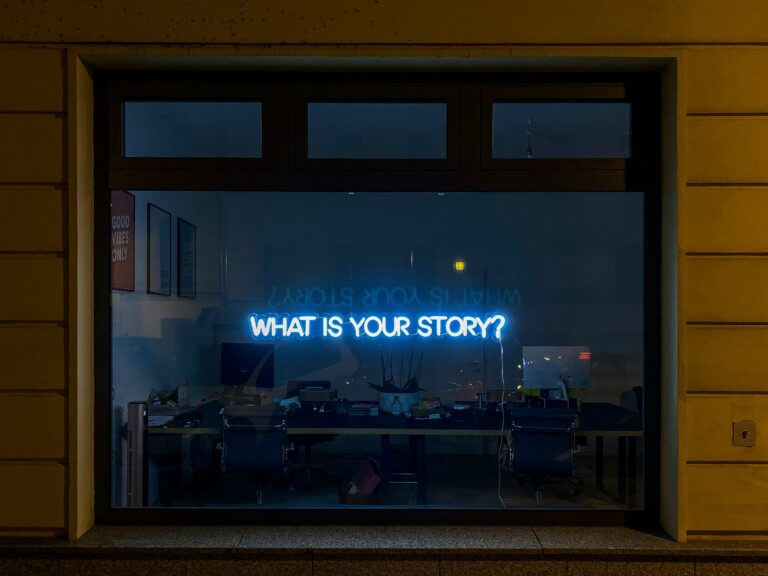
It’s Never Too Late to Tell Your Story

There comes a moment in life when you realize that your story is not behind you—it is within you. Every lesson learned, every obstacle overcome, every joy experienced, and every unexpected turn has shaped a narrative unlike any other. At Sage Collective®, we believe that telling your story is one of the most powerful acts of vibrant living. And perhaps most importantly, it’s never too late to begin.

For older African Americans, storytelling carries an even deeper significance. For generations, stories have been a way to preserve truth, transmit wisdom, and affirm identity in a world that did not always document—or honor—those lived experiences. Stories were shared at kitchen tables, on front porches, in barbershops, in beauty salons, and in places of worship. They carried history forward when history books did not.

Your story is part of that continuum.

Your Story Has Value—Right Now
It is easy to assume that storytelling belongs to the past—that it is something reserved for professional writers, public figures, or historians. But storytelling is not about performance. It is about presence. It is about honoring your life as it has been lived. You do not need to have lived a famous life to have lived a meaningful one.

The courage it took to navigate segregation. The pride of building a career or raising a family. The quiet reinventions. The risks taken. The losses endured. The dreams pursued. These experiences are rich with wisdom—not only for younger generations, but for yourself. Telling your story allows you to see your life more clearly. It reveals patterns of resilience, growth, and strength that may have been invisible while you were busy living them. And sometimes, in the act of telling, we discover that our story is still unfolding.

Storytelling Is an Act of Legacy
When you tell your story, you offer a gift that extends beyond your lifetime. Your children, grandchildren, and community members may never fully know what it was like to live in your time—to witness the changes you witnessed, to carry the responsibilities you carried, or to experience the world through your eyes. Your story becomes a bridge between generations. It preserves not only what happened, but how it felt.

This is how legacy is built—not only through accomplishments, but through reflection, honesty, and voice.

And storytelling today takes many forms. It can be spoken, written, recorded, or shared through conversation. Some people journal. Others record video messages. Some participate in oral history projects or simply share memories during family gatherings. There is no single right way to begin. There is only the decision to start.

Telling Your Story Strengthens Your Sense of Self
Storytelling is not only about looking back—it is about understanding who you are now. When you reflect on your life, you reconnect with your strength. You remember how much you have overcome. You reclaim moments that shaped you. You honor the younger version of yourself who kept going, even when the path was uncertain. This process can bring clarity, healing, and renewed purpose.

It can also inspire others. Your story may give someone else permission to persevere. To begin again. To believe that growth does not end with age.

Your Voice Matters
At Sage Collective®, we believe that vibrant living includes honoring your voice and your lived experience. Your story is not complete simply because time has passed. In many ways, it becomes more powerful with age—tempered by wisdom, perspective, and truth.

You do not need to wait for the “right time.” You do not need perfect words. You only need to begin. Because it’s never too late to tell your story, and the world is better when you do.

› Back to top
« back
01.21.26 | Uncategorized

Winter is a Season of Inner Strength

Winter is often spoken about as something to endure. The cold. The darkness. The waiting. Yet at Sage Collective®, we see winter differently—not as a season of absence, but as a season of inner strength.

In nature, winter is not a pause in life. It is a shift in strategy. Trees drop their leaves to conserve energy. Roots grow deeper beneath frozen ground. Systems adjust to protect what matters most. Growth continues, though it is quieter and less visible.

This seasonal wisdom offers a powerful metaphor for aging well.

Later in life, strength is no longer defined by constant motion or outward productivity. Instead, it shows up as adaptability, discernment, and care. Winter invites us to practice these forms of strength—to move more intentionally, to listen more closely, and to honor the rhythms of both body and mind.

Inner strength, in this season, may look like adjusting expectations. Choosing warmth over speed. Selecting activities that sustain energy rather than deplete it. It might mean embracing shorter days as an invitation to read, reflect, or learn—without pressure to optimize every hour.

For many older adults, winter also brings emotional terrain. Memories surface more easily in quiet months. Loneliness can feel sharper. Yet these moments, too, can become sources of strength when met with compassion rather than resistance. Sitting with reflection—rather than rushing past it—builds emotional resilience. It affirms that our inner lives deserve attention.

At Sage Collective®, we believe vibrant living includes stillness. It includes seasons of consolidation, not just expansion. Winter supports this work by encouraging practices that strengthen us from the inside out: meaningful conversation, creative engagement, intellectual curiosity, and restorative rest.

Consider the older adult who continues daily movement—not to chase fitness goals, but to maintain balance and confidence. Or the one who joins a lecture series or discussion group during winter months, discovering that learning brings light into shorter days. Or the friend who makes a habit of checking in—recognizing that connection is as essential as warmth.

These are acts of winter strength. They are quiet, intentional, and sustaining.

Importantly, inner strength is not cultivated alone. Community plays a vital role—especially in winter. Shared spaces, gatherings, and conversations offer warmth that extends beyond temperature. They remind us that resilience is collective, built through interdependence and care.

Rather than resisting winter, Sage Collective® invites you to partner with it. To allow its slower pace to guide you inward. To ask what needs tending beneath the surface. To trust that strength does not diminish when life grows quieter—it often becomes clearer.

As this season unfolds, may you recognize winter not as a time of waiting, but as a time of preparation. A season that strengthens roots, sharpens awareness, and supports the ongoing work of becoming—steady, resilient, and deeply alive.

› Back to top
« back
12.24.25 | Mental Wellbeing

Gratitude and the Art of Enjoying the Holidays

The holiday season arrives wrapped in familiar comforts: the scent of something warm in the oven, handwritten cards on the table, music that stirs old memories, and conversations that bridge the past and present. Yet for many older adults, these weeks can bring complicated emotions as well — joy intertwined with nostalgia, anticipation mixed with loss, celebration layered with the desire for more connection.

At Sage Collective®, we believe vibrant living includes embracing the full emotional landscape of this season. Gratitude, practiced with intention, becomes a powerful companion — one that can help us savor meaningful moments, connect more deeply with others, and experience the holidays with greater ease and fulfillment.

Understanding Gratitude as a Practice
Gratitude is far more than saying “thank you.” It’s a way of noticing, pausing, and appreciating. Research continues to show that regular gratitude practices support emotional resilience, reduce stress, and boost overall well-being — benefits that are especially meaningful as we navigate the rhythms of aging.

For many older adults, gratitude also becomes a bridge between memory and presence. It allows us to honor the stories that brought us here while remaining open to the pleasures of now. A holiday tradition may look different this year; a gathering may feel quieter; a familiar chair may be empty. Gratitude doesn’t erase these truths — it gently makes room for them while helping us see what is still vibrant, still sustaining.

Ways to Cultivate Gratitude During the Holidays
The holidays are full of small moments that can easily pass unnoticed. Slowing down, tuning in, and practicing gratitude can transform this season into something rich with meaning. Here are a few simple ways to begin:

  • Create a gratitude pause. Start or end each day with a brief moment of reflection. What brought comfort? What offered delight? What connection felt meaningful? Even noting one small moment — the glow of a candle, a phone call from a friend — can shift the emotional tone of a day.
  • Share gratitude with others. Expressing appreciation strengthens relationships and brings warmth to holiday gatherings. A handwritten note, a thoughtful email, or a shared memory can help loved ones feel seen and valued. Gratitude is deeply contagious — one expression often inspires another.
  • Revisit traditions with intention. Holiday rituals evolve over time. If certain traditions no longer fit your energy or needs, gratitude can help you gently reimagine them. Instead of focusing on what’s changed, reflect on what part of a tradition still brings joy — whether it’s a recipe, a song, or a simple moment of togetherness.
  • Give yourself the gift of rest. The holidays don’t have to be rushed. Gratitude for your own well-being means granting yourself permission to move at your own pace — to say no when you need to, to enjoy quiet moments, and to protect your emotional and physical energy.
  • Stay open to everyday wonder. This season is filled with small beauties: winter light moving across the room, the comfort of a familiar sweater, the sound of laughter in the background. Allow yourself to savor these moments, even — and especially — the unexpected ones.

A Season to Embrace With Grace
Gratitude doesn’t make the holidays perfect; it makes them honest, grounding, and deeply human. It invites us to approach each day with gentleness and to celebrate what is meaningful in ways that reflect our own stage of life. At Sage Collective®, we champion practices that nourish the mind, body, and spirit — and gratitude is one of the most powerful tools we have.

As you move through the holiday season, may you find pockets of joy, threads of connection, and moments of quiet appreciation that remind you: vibrant living begins not with what we do, but with how fully we choose to notice and cherish it.

› Back to top
« back
12.11.25 | Personal Development

Wu Jin Qi Yong: The Infinite Usefulness of a Life Well-Lived

In classical Chinese philosophy, the phrase wu jin qi yong translates loosely to “inexhaustible usefulness” or “an endless capacity to give.” It describes something whose value continually expands the more it is used—a wellspring that replenishes itself, an energy that grows through expression.

For the Sage Collective® community, this ancient idea speaks directly to the heart of vibrant living. It offers a powerful reframe for aging—less as a narrowing of possibilities and more as a deepening well of presence, wisdom, creativity, and connection.

A Philosophy of Limitless Potential
The traditional meaning of wu jin qi yong suggests that the most enduring sources of value come from within:

  • One’s inner resources
  • One’s cultivated purpose,
  • One’s lifelong capacity to learn, adapt, and contribute

These qualities do not diminish with age; often, they strengthen. Older adults accumulate experiences, insights, and practices that—when activated—create a ripple effect across families, neighborhoods, and communities.

In this way, wu jin qi yong becomes a beautiful metaphor for the Sage Collective® ethos: a life’s usefulness is never spent; it continues to unfold in ways both subtle and profound.

Endless Usefulness Through Vibrant Living
At Sage Collective®, vibrant living means embracing life’s later chapters with intention, curiosity, and joy. When paired with the lens of wu jin qi yong, vibrant living becomes a practice of continually activating one’s inner abundance.

Creativity that Expands with Use. Whether through calligraphy, painting, storytelling, music, or digital exploration, creative practice embodies wu jin qi yong. The more you use your creativity, the more you have. This is why Sage Collective® champions creative arts as essential to well-being: they replenish the spirit and spark new discoveries long after traditional “productivity” fades.

Wisdom as an Infinite Resource. Older adults hold generational knowledge—cultural, emotional, practical, and spiritual. Sharing that wisdom through conversation, mentoring, or community engagement multiplies its value. In the spirit of wu jin qi yong, every story told, every insight offered, every memory shared becomes part of a collective inheritance.

Connection That Grows Through Generosity. Relationships flourish when tended. Acts of kindness, presence, and empathy enrich both the giver and the receiver. Sage Collective®’s programs—which encourage gathering, dialogue, and shared creative pursuits—highlight the truth that connection is an inexhaustible resource. The more we offer, the more we receive.

Curiosity That Never Runs Dry. Lifelong learning—whether through technology exploration, cultural education, wellness practices, or tactile crafts—embodies wu jin qi yong by demonstrating that the mind retains its ability to expand at any age. Curiosity keeps the world large, colorful, and full of possibility.

Purpose That Evolves, But Never Ends. Purpose isn’t fixed; it adapts across a lifetime. For older adults, purpose might be found in caregiving, creative expression, advocacy, spirituality, or community involvement.

The philosophy of wu jin qi yong reminds us that purpose deepens with age.

A New Narrative for Aging
In Western culture, aging is often framed as decline or diminishment. Wu jin qi yong offers an entirely different narrative:

  • Aging is an ever-renewing source of value.
  • Aging expands a person’s capacity to give.
  • Aging reveals the boundless energy that comes from inner cultivation.

This perspective harmonizes beautifully with Sage Collective®’s mission to uplift older African Americans and foster environments where they can flourish physically, emotionally, culturally, and spiritually.

Living the “Inexhaustible Life”
To embody wu jin qi yong in daily life is to trust that:

  • The spirit replenishes itself
  • One’s gifts grow through use
  • Aging brings forth a deeper reservoir of meaning

It is to live with an open heart and a willingness to engage with the world—whether through art, learning, leadership, or simple acts of presence. For the Sage Collective® community, wu jin qi yong is an invitation to embrace a life that remains abundant, useful, and full of purpose at every age. A life that is, in every sense, vibrantly inexhaustible.

› Back to top
« back
12.04.25 | Health & Wellness

Third Spaces and the Art of Living Vibrantly

For most of our lives, we move between two primary spheres: home and work. These are our “first” and “second” spaces — familiar, structured, and essential. But as we age, and as work evolves or recedes from daily routines, a different kind of space becomes profoundly important: the third space.

Coined by sociologist Ray Oldenburg, third spaces are the places where community quietly but powerfully happens — cafés, libraries, community centers, art studios, gardens, walking paths, fitness rooms, spiritual spaces. They are the informal gathering places that sit between the private world of home and the purposeful world of work. And for older adults, they offer something indispensable: belonging, connection, and a renewed sense of possibility.

At Sage Collective®, we believe that vibrant living emerges from the interplay between individual purpose and shared experience. Third spaces are where that interplay comes alive.

A Sense of Belonging
As people move through later chapters of life, transitions — retirement, shifts in family roles, relocations, even changes in mobility — can quietly alter the contours of social life. Third spaces help counteract that by providing environments where presence alone is enough. No appointment necessary. No agenda required. You simply show up — and, over time, feel part of a place.

A familiar seat at a café. A welcoming nod at a weekly chair yoga class. The gentle camaraderie of a walking group that traces the same neighborhood path every morning. These recurring moments stitch together a sense of belonging that can anchor emotional well-being.

Micro-Connections that Matter
Third spaces invite small encounters — the kind that often seem inconsequential but shape the emotional climate of a day. A minute of laughter with someone in line. A shared comment about the weather. A compliment on a book someone is reading.

Research shows that these micro-connections boost mood, increase cognitive engagement, and reduce feelings of isolation. They keep minds stimulated and spirits buoyed. They remind us that community is not only built through deep relationships, but also through brief and meaningful human exchanges.

Spaces for Self-Expression
Third spaces offer more than social interaction — they offer pathways for creativity, curiosity, and lifelong learning. A pottery studio becomes a haven for experimentation. A local library hosts workshops that introduce a new skill or ignite a dormant interest. A community garden becomes a setting for tending not only plants, but purpose.

For many older adults, these spaces reignite passions or spark new ones, providing a sense of identity beyond traditional roles. They support resilience, growth, and joy — all hallmarks of vibrant living.

A Bridge to Wellness
Movement, mindfulness, and social engagement all play essential roles in healthy aging. Third spaces often combine these without ever calling them by name. A tai chi class in the park. A dance session at the senior center. A quiet reading nook that encourages calm and reflection. They invite older adults to stay active in ways that feel organic rather than prescriptive, and to cultivate wellness through experience rather than obligation.

Where Community and Purpose Meet
At their core, third spaces help people feel connected — to one another, to their communities, and to themselves. And connection is foundational to a fulfilling life at every age. For Sage Collective®, these spaces embody our belief that vibrant living is a holistic practice: mental, physical, emotional, and social well-being intertwined. They remind us that growth is lifelong, community is chosen as much as inherited, and purpose thrives where people gather with intention — or even with no intention at all.

Third spaces sustain us. They welcome us. And for older adults seeking to live fully, richly, and vibrantly, they offer an open door into a life of continued meaning.

› Back to top
« back
11.27.25 | Sage Advice®

Giving Tuesday 2025: The Gift of Connection, The Promise of Community

Every year, after we gather in gratitude with loved ones, Giving Tuesday invites us into a different kind of celebration—one rooted in generosity, shared purpose, and the belief that our collective actions can transform lives. Since its founding in 2012, the movement has reminded us to shift our focus from what we acquire to what we contribute. And at Sage Collective®, this message resonates deeply.

Giving Tuesday has always aligned with our mission to foster vibrant, connected communities for older African Americans. Many of the systemic challenges faced by older adults—social isolation, technological barriers, limited access to wellness resources—are not just individual circumstances but community-wide inequities. When we give, we don’t simply fund programs; we expand opportunity, dignity, and joy.

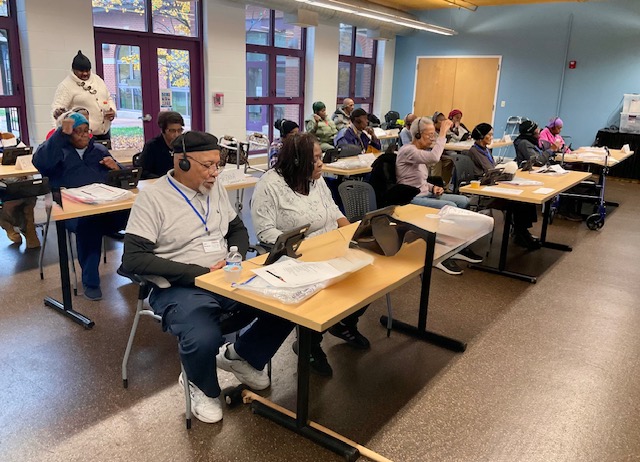
This year, we turn our focus to one of the most essential building blocks of connection: access to technology. As our Vibrant Living Program grows, so does the demand from older adults across the Chicagoland area who want to participate. We are currently at capacity, and many individuals are waiting for the tools they need to join us—tablets, training support, and, increasingly, VR headsets that will enable us to share immersive learning experiences, including at our national conference in April.

On Giving Tuesday 2025, we invite you to help us meet that need by supporting our Vibrant Living Kit Drive. Because connection shouldn’t be a privilege. It should be a pathway all older adults can walk with confidence.

The Gift of Connection: Vibrant Living Technology Toolkits
Connection is a gift that lasts beyond the season.

A Vibrant Living Technology Toolkit (tablet + case + charger + onboarding support) offers an older adult far more than a device. It opens the door to discovery, creativity, community, and conversations that nourish the spirit. For someone who may feel disconnected or unseen, it can be a lifeline.

And for us, this initiative is about more than technology. It’s about equity. It’s about ensuring older African Americans—so often excluded from digital innovation—have full access to life-enhancing tools that support health, wellness, and joyful engagement.

Because underserved does not mean undeserving.

Your Giving Tuesday Impact
Every contribution brings someone new into our community:

  • $100 —    Provides program materials and tech support for one person annually
  • $150 —     Sponsors a tablet and a case
  • $250 —    Funds a Vibrant Living Technology Kit that includes a tablet, case, program materials, and tech support
  • $500 —    Provides a Virtual Reality headset for one older adult
  • $1,000 — Supports a small-group tech workshop

Your generosity today helps ensure that when we gather this spring to share the power of VR and digital learning on a national stage, every participant who wants to be part of that moment can be.

Giving doesn’t just enrich the receiver—it uplifts the giver, too. Research shows that generosity fosters purpose, connection, and well-being. On Giving Tuesday, all of us—regardless of age—are invited into that exchange of mutual care.

A Future Rooted in Generosity
As December 2 approaches, we invite you to reflect on the enduring impact of giving: how one tablet can bridge generations, how one workshop can spark confidence, how one act of generosity can ripple outward into a more equitable future for older African Americans.

Your support ensures that vibrant living isn’t just an aspiration—it becomes a reality, shared across our community and carried forward into the year ahead.

This Giving Tuesday, help us turn connection into possibility. Join us in placing Vibrant Living Technology Toolkits  into the hands of those who are ready to learn, thrive, and belong. Click the link here to donate.

› Back to top
« back
11.13.25 | Personal Development

Plug-in to Care: Honoring National Family Caregivers Month 2025

Each November, we pause to honor the millions of family caregivers whose compassion, patience, and daily dedication sustain loved ones across generations. This year’s National Family Caregivers Month theme—“Plug-in to Care”invites all of us to connect more deeply: to one another, to resources, and to the networks that make caregiving more supported and sustainable.

At Sage Collective®, we believe that vibrant living thrives on connection. Our mission has always been to inspire older adults to live more fully—through community, creativity, and conscious care of mind, body, and spirit. The “Plug-in to Care” theme beautifully echoes those values, reminding us that no one should walk the caregiving journey alone.

The Meaning Behind “Plug-in to Care”
Caregiving today is more interconnected than ever before. The phrase “plug-in” highlights both the digital and human aspects of connection—using technology, education, and community to empower caregivers and reduce isolation. Whether that means joining a virtual support group, exploring a caregiving app, or simply reaching out for a conversation, the act of plugging in reinforces that support is available and community is near.

At its heart, this year’s theme is about recognition: seeing caregivers not only as helpers, but as vital members of our health and social ecosystems. When caregivers are equipped with tools and support, everyone benefits—from the person receiving care to the broader community around them.

Connection in Action
To “plug-in to care” means finding—and offering—connection in many forms:

  • Access tools and knowledge. Online workshops, educational videos, and caregiving platforms can offer practical skills, emotional reassurance, and inspiration.
  • Tap into networks. Community centers, local nonprofits, and organizations like Sage Collective® create spaces—both virtual and in-person—where caregivers can share stories, advice, and encouragement.
  • Seek emotional and spiritual nourishment. Caregiving can be as emotionally demanding as it is rewarding. Mindfulness, journaling, and meditation—practices we regularly explore at Sage Collective—can restore balance and resilience.
  • Celebrate the caregivers themselves. Recognition matters. Whether through a heartfelt note, shared meal, or public acknowledgment, expressing gratitude honors the humanity and strength behind caregiving.

Join Us: Caregiving & Self-Care — Finding Balance in the Journey
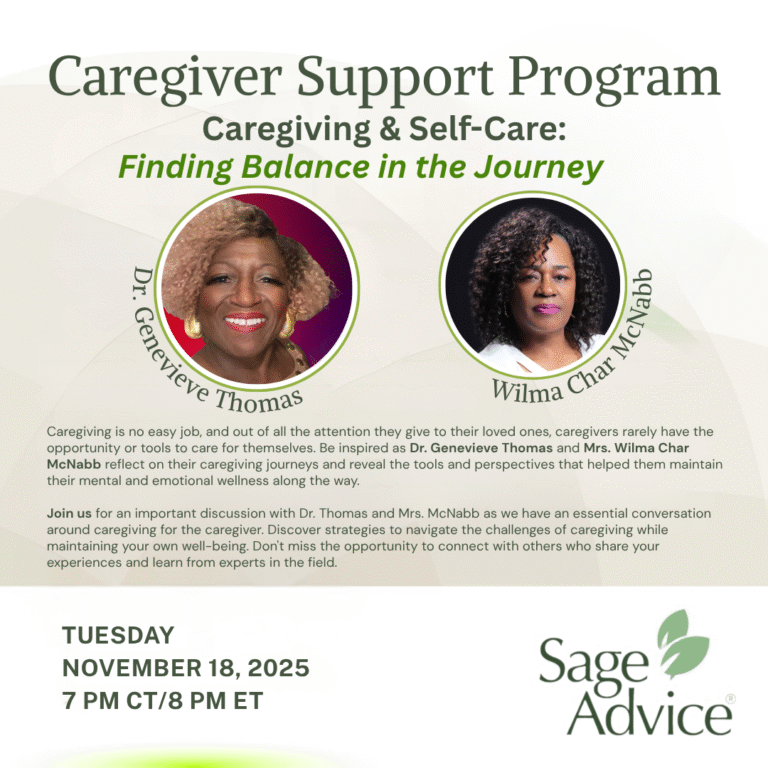
In honor of National Family Caregivers Month, Sage Collective® is hosting a special Facebook Live event: “Caregiving & Self-Care: Finding Balance in the Journey,” on November 18, 2025, at 7:00 PM CT / 8:00 PM ET.

Caregiving is no easy job, and out of all the attention they give to their loved ones, caregivers rarely have the opportunity or tools to care for themselves. Be inspired as Dr. Genevieve Thomas and Mrs. Wilma Char McNabb reflect on their caregiving journeys and share the tools and perspectives that helped them maintain mental and emotional wellness along the way.

Together, we’ll explore how caregivers can sustain their own health while caring for others—learning strategies for managing stress, fostering resilience, and nurturing a balanced sense of self. It’s an evening of connection, understanding, and encouragement—an essential conversation around caregiving for the caregiver.

Don’t miss the opportunity to connect with others who share your experiences and learn from experts in the field. RSVP today to join us for this meaningful dialogue on reflection, balance, and well-being.

Living the Message
Family caregivers are the quiet heroes who hold our communities together. “Plug-in to Care” reminds us that support, learning, and connection are not luxuries—they’re lifelines. This month and beyond, let’s honor caregivers by extending compassion, sharing knowledge, and building community.

At Sage Collective®, we celebrate caregivers as living embodiments of vibrant living—people whose strength, grace, and generosity reflect the very best of us all.

This November, and in every season that follows, may we each find new ways to plug in—to care, and to one another.

› Back to top