« back
10.15.20 | Sage Advice®

Understanding Telehealth, and The Challenges That Come With It
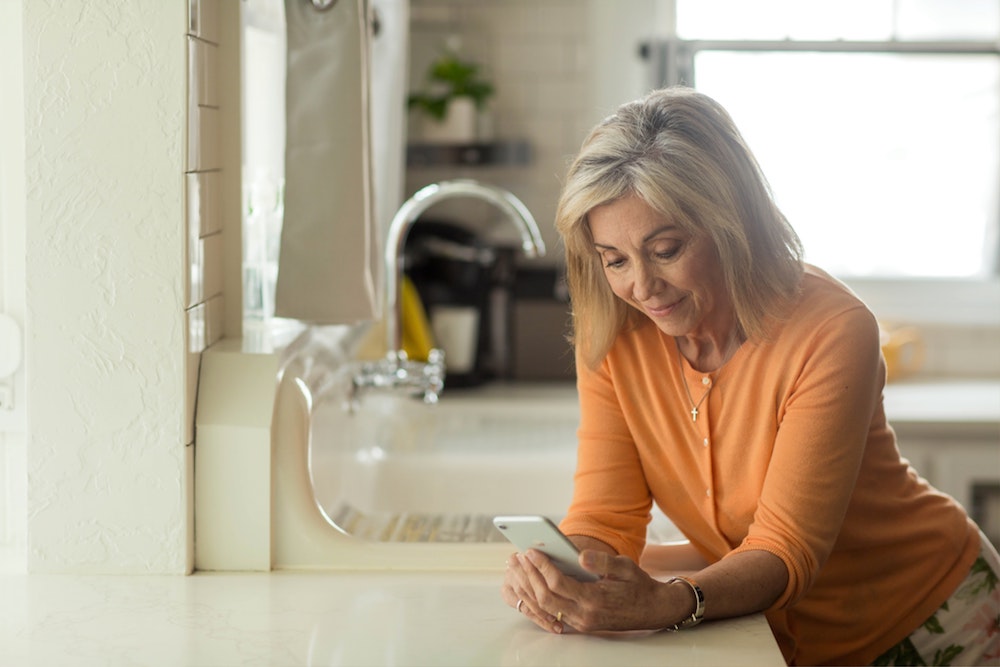
Though intended to streamline the doctor-patient interaction, telehealth can prove particularly challenging to a vulnerable population it otherwise has potential to serve: older adults. To unpack the topic of telehealth, and to address the challenges that come with it, we sat down with Dr. Joseph K. West. Dr. West is an epidemiologist, population health and data analytics leader with over 15 years of experience in healthcare, research, and enterprise consulting, as well as a member of the Sage Collective leadership team.

What Is Telehealth?

Telehealth (also called telemedicine) is the provision of healthcare through electronic communications. Dr. West describes in greater detail: “Telehealth is the opportunity to use technology (such as a tablet, mobile device or desktop computer) to connect any recipient, older adult or otherwise, to their care provider whether that’s a nurse, RN, physician or specialist.”

“This online connection allows healthcare providers and patients to do a couple things remotely: to conduct initial screenings, to ask and answer questions related to physical or mental health and to conduct medication adherence followup. And because telehealth appointments are conducted over video conferencing technology, it gives healthcare providers the ability to actually see the patient and assess how they’re doing more intimately,” explains Dr. West. 

Overall, Dr. West says, “telehealth is really an opportunity to expedite the physician patient interaction, which is of particular benefit when access to transportation may be an issue, or when patients have other safety concerns about physically going to their healthcare provider.” 

Particularly during the time of COVID-19, the ability to connect online rather than in-person has proved beneficial for many. But telehealth isn’t always an accessible option for all.

Challenges Related to Telehealth

Like any technology, telehealth is intended to streamline an oft complicated process, but the experience is only as seamless as one’s access to infrastructure and understanding of the technology. And access can be a barrier for some, says Dr. West: “For some areas, like high-concentration urban centers with strong Internet access, telehealth can be great. But we have to remember the extent of telehealth’s capability is built upon whether or not you have the right infrastructure, and in rural areas oftentimes where telehealth can be most necessary the infrastructure isn’t always there, and therefore, neither is access.”

Another hurdle to overcome, particularly for older adults, is building understanding and trust of the devices used in telehealth. “There’s a number of wearable devices, which can track anything from blood pressure to gait, that can further streamline telehealth communication between provider and patient. But for a generation that’s already weary of technology, many older adults see these devices as intrusive. And addressing those concerns can be tricky,” explains Dr. West.

And building trust is a challenge now more than ever. “Throughout the COVID-19 pandemic, we’re finding that people are more and more distrustful of their providers and of information. They’re trying to decipher what’s accurate and what’s in their best interest, and there are so many conflicting sources,” says Dr. West.

As telehealth’s popularity rises, many older adults have been receiving free tablets in the mail (or similar offers), from invested parties that see the device as an opportunity to hook business down the line, Dr. West tells us. For seniors, this becomes an increasing source of confusion, because they don’t know whether the third party truly has their best interest in mind. With so many players in the field, and so many different agendas, the subsequently bred mistrust flourishes amongst older adults, who feel they have no advocate to help them navigate a confusing new arena.

“When we think about finding solutions to these challenges, in telehealth and beyond,” reflects Dr. West, “the core issue is ensuring older adults have ample access to care and ample access to information. We have to build trust not just in providers, but in healthcare itself, and demonstrate that those in charge are invested in providing care that’s in older adults’ best interest. What older adults truly need are more people on their side, and more people advocating for them. Otherwise, we’re not providing the right kind of support for one of our most vulnerable populations.”

JOSEPH WEST
› Back to top
« back
10.13.20 | Sage Advice®

Advice for Older Adult Caretakers During the Pandemic

Caretakers shoulder a heavy responsibility; afterall, the health, wellbeing and happiness of another person is in their hands. Even on an ordinary day, caretaking can be an intense task — add a global pandemic on top of that, and many caretakers are feeling the weighty responsibility more than ever. We spoke with Rear Admiral (ret) James M. Galloway, MD, FACP, FACC, to compile advice (and helpful insights) to guide older adult caretakers through the COVID-19 pandemic. Dr. Galloway is a medical doctor and Public Health physician, as well as a member of the Sage Collective leadership team.

Starting with the Basics: Health and Safety

When working with vulnerable populations, like older adults, it’s more vital than ever to follow health and safety guidelines. “There are basic personal prevention practices that everyone should follow,” explains Dr. Galloway. “These include practicing social distancing, wearing masks at all times, isolating or quarantining when necessary and regularly cleaning your environment.” These are steps that many are familiar with, and the most up-to-date basic health and safety guidelines can always be found on the CDC website

However, many caretakers serve clients living in high-risk environments such as independent living facilities and retirement communities, and with increased risk, feel the need for increased precaution. Dr. Galloway provides a few additional tips and tricks: “Limiting the number of nonessential visitors is important. As we all know, the more people you interact with, the more at risk you are of encountering and contracting COVID-19. Beyond that, if you wear a reusable cloth mask, washing that mask regularly is vital. Another good practice is to increase indoor air circulation whenever possible by opening windows — but this of course can be a safety risk depending on your client.”

All in all, Dr. Galloway recognizes that each circumstance is unique. We’re all familiar with the risk COVID-19 poses and know the easiest way to prevent spread of the virus is total isolation. But of course, humans have other needs that conflict with basic health and safety — like our need to socialize with others and engage with the world to stay mentally well. “What we’ve outlined here are general guidelines,” Dr. Galloway explains, “but ultimately every decision we make is going to weigh the balance between risk and benefit, and that’s an individual decision.”

Balancing Emotional Wellbeing for Both Client and Caretaker

As addressed above, emotional wellbeing is a crucial component to a person’s overall health during the pandemic. For caretakers, ensuring their client remains engaged and connected has taken on new significance and importance. “It has become important for caretakers to take more time with their clients,” says Dr. Galloway, “to make a point to engage them in conversation and to help them stay connected with their loved ones. Caretakers have begun assisting clients in making regular phone calls or facilitating the use of FaceTime.” 

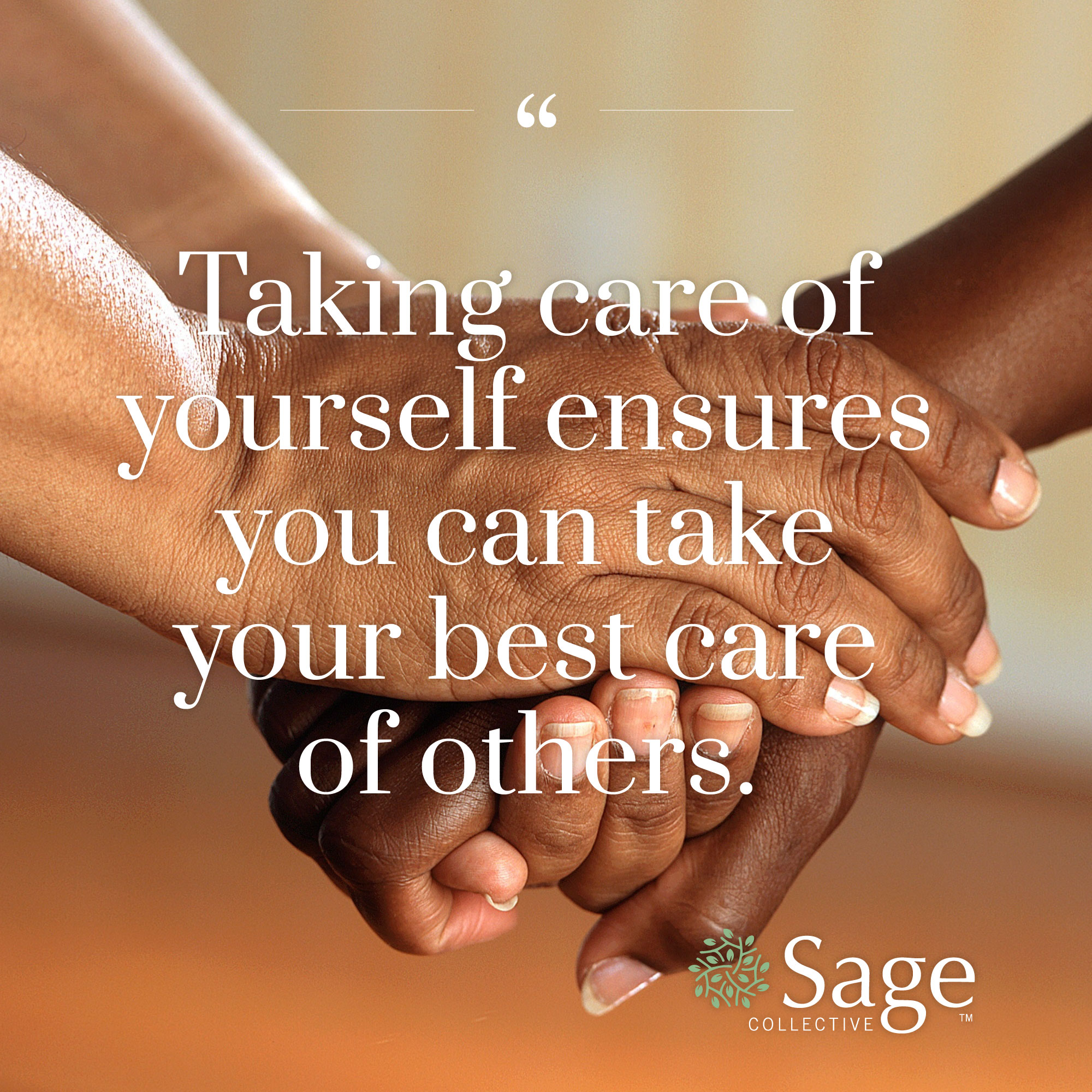
But for as much attention as caregivers put into ensuring the physical and emotional wellbeing of their client, it’s more important than ever to give that same attention to themselves. “Taking care of yourself ensures you can take your best care of others,” says Dr. Galloway. “Caring for a client or loved one can place stress on even the most resilient of people. So how can you take time to replenish your own wellbeing?”

Image of one person's hands holding another's, with text on top that reads Taking care of yourself ensures you can take your best care of others

In response to this question, Dr. Galloway has several pieces of advice. “First and most important: know the signs of unmanageable stress and know when to ask for help. Think about ways people you trust can help you, such as getting groceries for you during a long shift. Secondly, focus on what you’re able to provide. Nobody is perfect, even caregivers, so it’s important to acknowledge you’re doing the best you can. In that same vein: my third piece of advice is to set realistic goals. Creating a list of tasks allows you to check items off as you go, so you know you’re accomplishing things — and also, say no to tasks that are draining, like hosting Thanksgiving dinner!” 

There are many ways to self-manage stress, but Dr. Galloway also provides one other invaluable tip: “Get connected. Join a support group for caregivers! Many people see joining a support group as a weakness, but really it’s a strength. It’s an opportunity to gain new friends, and to develop your own strength and resiliency as you move forward. It’s so important to know you’re not alone in this struggle.”

Additional Resources:

JAMES GALLOWAY
› Back to top