« back
11.04.26 | Healthy Eating

Care Connects Us: Honoring the People Who Care for Others

Caregiving often begins without a formal announcement. A daughter starts accompanying her mother to medical appointments. A husband takes over the household routines his wife once managed. A sister begins calling every evening to make sure her brother has taken his medication. A neighbor starts bringing groceries to someone who can no longer shop easily.

At first, these may seem like small acts of kindness. Over time, they can become the structure around which another person’s daily life is organized.

Throughout November, National Family Caregivers Month recognizes the millions of Americans who provide care to family members, friends, and loved ones. This year’s theme, “Care Connects Us,” chosen by the Caregiver Action Network, celebrates the relationships that sustain caregiving while drawing attention to the information, resources, and community support caregivers need.

At Sage Collective®, we see caregiving as an essential part of vibrant living, not only for those receiving care but also for the people providing it. It is an expression of connection, responsibility, and love. But it is also demanding work, and recognizing its value means acknowledging the needs of caregivers themselves.

A Growing Part of American Life
Family caregiving is far more widespread than many people realize.

According to the 2025 Caregiving in the U.S. report from AARP and the National Alliance for Caregiving, approximately 63 million American adults — nearly one in four — provide ongoing care to someone with a medical condition or disability. That represents an increase of roughly 20 million caregivers since 2015.

The responsibilities involved can be extensive. Caregivers coordinate medical appointments, manage medications, prepare meals, provide transportation, assist with bathing and dressing, handle finances, communicate with healthcare providers, and respond to emergencies. Many are doing this while working, raising children, managing their own health conditions, or navigating the challenges of aging themselves.

The same AARP report found that one in five caregivers reported poor health, while approximately one-quarter were taking on debt because of caregiving. These findings remind us that the benefits of family care often come with significant personal costs. Caregiving may be motivated by love, but love doesn’t eliminate exhaustion, financial strain, or the need for help.

The Strength of Black Caregiving Traditions
Within African American communities, caregiving has long been sustained by networks that extend beyond the immediate household. Grandparents help raise grandchildren. Adult children support aging parents. Siblings share responsibilities. Churches organize visits and meals. Friends and neighbors provide transportation, companionship, and practical assistance. These relationships often reflect traditions of mutual care, collective responsibility, and intergenerational connection.

They also reflect a history in which Black families and communities have often had to create their own systems of support in response to unequal access to healthcare, financial resources, and institutional services.

These networks remain extraordinary sources of strength, but we should be careful not to romanticize the burden they sometimes carry. A family may be deeply committed to caring for an older relative while still struggling to find affordable professional assistance. An adult daughter may take pride in supporting her parents while quietly sacrificing career opportunities or her own retirement savings. A spouse may be devoted to a partner’s well-being while becoming increasingly isolated.

At Sage Collective®, our understanding of community recognizes both sides of this experience. The strength of our relationships matters. So does ensuring that the people holding those relationships together receive care themselves.

When the Caregiver Is an Older Adult
We often picture caregivers as middle-aged adults supporting aging parents. But many caregivers are older adults themselves. A husband in his seventies may be caring for a wife living with dementia. A grandmother may be raising grandchildren while also managing her own chronic health conditions. Two longtime friends may help one another navigate medical appointments, mobility limitations, or the loss of a spouse.

These relationships complicate the familiar distinction between caregiver and care recipient. Someone can be managing a health condition while also providing essential care to another person.

And caregiving relationships can change over time. The person who once provided support may eventually need support. The adult child who was cared for becomes the caregiver. Friends who have relied on one another for decades may find themselves exchanging new forms of help.

This is part of what makes caregiving such a meaningful expression of interdependence. Across the lifespan, most of us will experience both sides of care.

Caregivers Need Care, Too
One of the most persistent challenges in family caregiving is the tendency for caregivers to place their own well-being last. Medical appointments get postponed. Exercise routines disappear. Friendships receive less attention. Sleep becomes fragmented. Personal interests are set aside because there is always something more immediate to do.

These sacrifices can accumulate gradually, often without anyone noticing. This is why respite care deserves particular attention. Temporary relief, whether provided by another family member, a trusted friend, a community program, or a professional caregiver, can give someone time to rest, attend to personal responsibilities, reconnect with others, or simply experience a few hours without being responsible for someone else’s needs.

The same is true of emotional support. Caregivers benefit from having people with whom they can speak openly about frustration, uncertainty, grief, and fatigue without feeling that these emotions somehow diminish their love.

Making Support More Than a Gesture
National Family Caregivers Month offers an opportunity to express appreciation, but appreciation becomes more meaningful when it takes the form of practical support.

Rather than simply telling a caregiver to ask for help, we might offer something specific. Bring dinner on Thursday. Drive a loved one to an appointment. Pick up prescriptions. Spend an afternoon with the person receiving care so the caregiver can take a break. Help research community services or navigate an insurance question.

Faith communities, neighborhood organizations, senior centers, employers, and healthcare providers can also help create stronger networks of support. Caregiving shouldn’t depend entirely on the resources or endurance of one individual.

The Caregiver Action Network’s 2026 campaign offers educational resources, caregiver stories, and a November webinar series addressing the realities of balancing work, family, and long-term caregiving. These resources reinforce the month’s central message: connection should extend beyond the relationship between caregiver and care recipient to include the larger community.

Care Is Something We Share
At Sage Collective®, our commitment to vibrant living rests on the understanding that well-being is shaped by more than individual choices. It is also shaped by the relationships, environments, and communities that make healthy living possible.

Family caregiving brings that understanding into sharp focus. It reminds us that independence and interdependence are not opposites. That receiving care does not diminish dignity. That providing care should not require surrendering one’s own well-being. And that a strong community is one in which responsibility can be shared rather than carried alone.

During National Family Caregivers Month, we celebrate the people who show up, often quietly and consistently, for those who need them.


› Back to top
« back
08.19.26 | Sage Advice®

The Right to Rest: Why Respite Care Supports the Whole Family

Caregiving is often described through the language of devotion. We speak about love, duty, responsibility, patience, and sacrifice. All of those words can be true. But there is another word that belongs in the caregiving conversation just as much:

Rest.

For family caregivers, rest can be difficult to claim. When someone you love depends on you, stepping away may feel impossible. A break may feel selfish. Asking for help may feel like admitting that you cannot manage what love requires.

But rest is not a failure of care. It is one of the conditions that makes care sustainable.

At Sage Collective®, we believe caregiver support must include the well-being of the caregiver, not only the needs of the person receiving care. That is why respite care deserves more attention — not as a luxury, but as essential support for the whole family.

What Respite Care Means
Respite care provides temporary relief for family caregivers. It may take many forms: a few hours of in-home support, adult day services, short-term residential care, help from a trained volunteer, or a community-based program that gives a caregiver time to rest, work, attend appointments, run errands, or simply breathe.

The purpose is not to replace the caregiver. The purpose is to support them.

For some families, respite may mean a regular afternoon each week when a caregiver can step away. For others, it may mean a short-term arrangement after a hospitalization, during a period of caregiver illness, or when the demands of care become especially intense.

What matters is the recognition that caregiving cannot be sustained indefinitely without relief.

The Growing Need for Breaks
Across the United States, family caregiving is becoming more common, more complex, and more demanding. AARP and the National Alliance for Caregiving reported in 2025 that 63 million Americans provide ongoing care for an adult or child with a complex medical condition or disability — nearly one in four adults. The report also called for sustained action to expand supports such as respite services, paid leave, financial assistance, emotional support, and caregiver training.

AARP’s research on respite care has also found that caregivers often hesitate to use respite services because asking for help can feel like failure, and because the services may be difficult to find, afford, or trust. Yet respite has the potential to improve quality of life for both caregivers and the loved ones they support.

Public opinion is also moving toward greater recognition of respite as a necessary support. Pew Research Center’s 2026 polling found that 71% of Americans support paying for short-term care for aging adults so family caregivers can take a break.

These findings point to a cultural shift. More people are beginning to understand that caregivers need more than admiration. They need practical ways to recover.

Caregivers Need Care, Too
Family caregivers often hold many responsibilities at once. They may manage medication schedules, transportation, meals, bathing, finances, medical appointments, emotional support, household tasks, and constant decision-making. They may also be working, raising children, caring for a spouse, managing their own health, or navigating financial pressure.

Over time, the accumulation can be exhausting.

Caregiver strain is not only emotional. It can affect sleep, physical health, concentration, relationships, income, and mental well-being. Some caregivers become isolated because leaving the house becomes difficult. Others feel guilty for being tired, frustrated, or overwhelmed.

Respite creates space for the caregiver to remember that they are a person, too.

They may use that time to rest. Or to exercise. Or to sit quietly. Or to see a friend. Or to go to their own medical appointment. Or to do nothing at all. The activity matters less than the permission to step out of constant vigilance.

A caregiver who rests is not abandoning responsibility. They are protecting their ability to continue.

Why Rest Supports Better Care
When caregivers are supported, everyone benefits.

Rest can help caregivers return with more patience, clarity, and emotional steadiness. It can reduce the sense of crisis that builds when one person is responsible for everything all the time. It can also allow caregivers to maintain their own health, relationships, and sense of identity.

For the person receiving care, respite can create its own benefits. A well-designed respite experience can offer social engagement, stimulation, routine, and a change of environment. It can introduce new relationships and support systems. It can also reduce tension within the family by giving both caregiver and care recipient room to breathe.

This is an important point: respite is not only about stepping away from care. It can be part of expanding care.

The best respite models are built on trust, dignity, and continuity. They honor the preferences, routines, culture, and comfort of the person receiving care while also respecting the caregiver’s need for relief.

The Barriers to Respite
Despite its value, respite care can be hard to access.

Families may not know what services exist. They may worry about cost. They may struggle to find culturally responsive or trustworthy providers. They may feel uncomfortable allowing someone else into the home. They may fear that the person receiving care will resist the change. They may also carry the belief that a “good” caregiver should be able to do everything.

These barriers are real. They should not be minimized.

That is why respite cannot be treated only as an individual choice. It must also be part of a broader system of support. Communities, health providers, faith organizations, employers, aging-service networks, and policymakers all have a role to play in making respite more visible, affordable, and trusted.

Respite should be easy to ask about. Easy to explain. Easy to find. And available before caregivers reach a breaking point.

A Community Responsibility
At Sage Collective®, we understand vibrant living as something that grows through connection, dignity, purpose, and care. That vision includes older adults, and it also includes the families and caregivers who help make daily life possible.

Caregiving should not require one person to disappear into responsibility. It should not demand exhaustion as proof of love. And it should not leave families alone to navigate complex care needs without relief.

A community that values aging must also value the people who provide care. That means creating pathways to respite, normalizing rest, and recognizing that caregivers need care in order to continue caring.

The right to rest is not indulgent. It is humane.

Making Rest Part of the Care Plan
Perhaps the most important shift is to stop treating respite as something caregivers turn to only in crisis.

Rest should be part of the care plan from the beginning. That may mean identifying trusted backup support before it is urgently needed. It may mean exploring adult day programs, in-home respite services, faith-based volunteer networks, or community programs. It may mean having honest family conversations about shared responsibility. It may mean asking a doctor, social worker, care manager, or local aging organization what options are available.

Even small breaks can matter. A few hours of relief can help a caregiver sleep, think, reconnect, or tend to their own needs. Over time, those breaks can become part of what makes care sustainable.

At Sage Collective®, we believe the health of the caregiver and the health of the person receiving care are deeply connected. Supporting one supports the other. When caregivers are allowed to rest, families become stronger, care becomes more sustainable, and vibrant living becomes more possible for everyone involved.


› Back to top
« back
03.11.26 | Sage Advice®

Caregiver Resilience: Sustaining the Ones Who Sustain Us

There are millions of African American caregivers in this country — adult children supporting parents, spouses navigating chronic illness together, grandparents raising grandchildren, neighbors stepping in quietly and consistently.

And while caregiving is an act of love, it is also labor. At Sage Collective®, we know that vibrant living includes those who care as well as those being cared for. And right now, caregivers need care.

The Invisible Weight
Caregiving often unfolds gradually. A few appointments. A medication check. A ride to the doctor. Then more coordination. More advocacy. More responsibility. Many caregivers balance full-time work, financial pressure, and emotional strain. They may also be caring for children — part of what’s often called the “sandwich generation.” The work is meaningful, but it can also be isolating. Chronic stress among caregivers is linked to sleep disruption, weakened immune function, anxiety, and depression. Resilience, therefore, is not a personality trait. It is a practice.

Redefining Strength
Caregiver resilience does not mean endless endurance. It means sustainability, best made possible by:

  • Setting boundaries without guilt
  • Accepting help when it is offered
  • Seeking community with other caregivers
  • Protecting small pockets of rest
  • Allowing grief and complexity to coexist with love

Resilience grows in shared experience. When caregivers speak honestly about the strain, shame loosens its grip.

Cultural Wisdom and Collective Care
In many African American communities, caregiving has long been collective rather than individual, often involving extended family systems, church networks, and neighbor support to help distribute responsibility. This tradition of shared care offers a powerful model: resilience increases when care is communal, because no one was meant to carry the full weight alone.

Micro-Rest and Micro-Joy
We believe that resilience is built in small increments.

  • Five quiet minutes before the house wakes up
  • A walk around the block
  • A call with a friend who understands
  • Music in the car between appointments

These moments regulate the nervous system, interrupting chronic stress cycles to remind caregivers that they are people, not just roles. Joyspan applies here, too.

Supporting the Supporters
Communities can strengthen caregiver resilience by:

  • Offering respite programs
  • Hosting support circles
  • Providing financial literacy resources
  • Creating intergenerational volunteer networks
  • Designing programming that includes caregivers, not just care recipients

When we strengthen caregivers, we strengthen families and treat caregiver resilience as a public health priority, not a private matter.

A Sustainable Vision of Care
To care for another human being is sacred work. But sacred work still requires rest. At Sage Collective®, we believe vibrant living includes those in seasons of service, allowing them to regularly reset, recharge, and restore their sense of wholeness.


› Back to top
« back
11.13.25 | Community

Plug-in to Care: Honoring National Family Caregivers Month 2025

Each November, we pause to honor the millions of family caregivers whose compassion, patience, and daily dedication sustain loved ones across generations. This year’s National Family Caregivers Month theme—“Plug-in to Care”—invites all of us to connect more deeply: to one another, to resources, and to the networks that make caregiving more supported and sustainable.

At Sage Collective®, we believe that vibrant living thrives on connection. Our mission has always been to inspire older adults to live more fully—through community, creativity, and conscious care of mind, body, and spirit. The “Plug-in to Care” theme beautifully echoes those values, reminding us that no one should walk the caregiving journey alone.

The Meaning Behind “Plug-in to Care”
Caregiving today is more interconnected than ever before. The phrase “plug-in” highlights both the digital and human aspects of connection—using technology, education, and community to empower caregivers and reduce isolation. Whether that means joining a virtual support group, exploring a caregiving app, or simply reaching out for a conversation, the act of plugging in reinforces that support is available and community is near.

At its heart, this year’s theme is about recognition: seeing caregivers not only as helpers, but as vital members of our health and social ecosystems. When caregivers are equipped with tools and support, everyone benefits—from the person receiving care to the broader community around them.

Connection in Action
To “plug-in to care” means finding—and offering—connection in many forms:

  • Access tools and knowledge. Online workshops, educational videos, and caregiving platforms can offer practical skills, emotional reassurance, and inspiration.
  • Tap into networks. Community centers, local nonprofits, and organizations like Sage Collective® create spaces—both virtual and in-person—where caregivers can share stories, advice, and encouragement.
  • Seek emotional and spiritual nourishment. Caregiving can be as emotionally demanding as it is rewarding. Mindfulness, journaling, and meditation—practices we regularly explore at Sage Collective—can restore balance and resilience.
  • Celebrate the caregivers themselves. Recognition matters. Whether through a heartfelt note, shared meal, or public acknowledgment, expressing gratitude honors the humanity and strength behind caregiving.

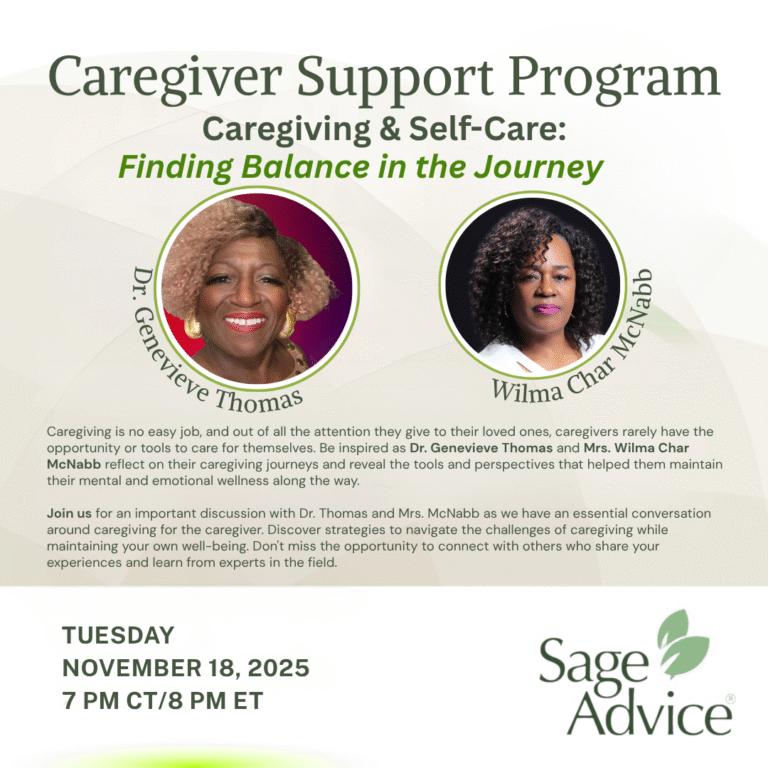
Join Us: Caregiving & Self-Care — Finding Balance in the Journey
In honor of National Family Caregivers Month, Sage Collective® is hosting a special Facebook Live event: “Caregiving & Self-Care: Finding Balance in the Journey,” on November 18, 2025, at 7:00 PM CT / 8:00 PM ET.

Caregiving is no easy job, and out of all the attention they give to their loved ones, caregivers rarely have the opportunity or tools to care for themselves. Be inspired as Dr. Genevieve Thomas and Mrs. Wilma Char McNabb reflect on their caregiving journeys and share the tools and perspectives that helped them maintain mental and emotional wellness along the way.

Together, we’ll explore how caregivers can sustain their own health while caring for others—learning strategies for managing stress, fostering resilience, and nurturing a balanced sense of self. It’s an evening of connection, understanding, and encouragement—an essential conversation around caregiving for the caregiver.

Don’t miss the opportunity to connect with others who share your experiences and learn from experts in the field. RSVP today to join us for this meaningful dialogue on reflection, balance, and well-being.

Living the Message
Family caregivers are the quiet heroes who hold our communities together. “Plug-in to Care” reminds us that support, learning, and connection are not luxuries—they’re lifelines. This month and beyond, let’s honor caregivers by extending compassion, sharing knowledge, and building community.

At Sage Collective®, we celebrate caregivers as living embodiments of vibrant living—people whose strength, grace, and generosity reflect the very best of us all.

This November, and in every season that follows, may we each find new ways to plug in—to care, and to one another.

› Back to top
« back
03.13.25 | Fitness & Activity

Launching the Sage Collective® Caregiver Support Program: A Lifeline for Those Who Care

Caregiving is an act of love, resilience, and dedication—but it can also be overwhelming. Many caregivers, especially those in underserved communities, find themselves navigating immense physical, emotional, and financial challenges with little support. Recognizing this, Sage Collective® is proud to launch the Caregiver Support Program, an initiative dedicated to empowering and uplifting caregivers through education, community, and self-care.

A Program Built for Caregivers
At Sage Collective, we understand that caregiving doesn’t come with an instruction manual. From managing a loved one’s medical needs to balancing work and personal responsibilities, caregivers often carry an invisible yet significant burden. The Sage Collective Caregiver Support Program is designed to provide the resources, tools, and emotional support caregivers need to thrive—not just survive—in their roles.

This program offers:

  • Educational workshops on caregiving techniques, stress management, and self-care
  • Support groups facilitated by professionals, providing a safe space for sharing experiences and advice
  • Access to community resources like healthcare services, respite care, and financial planning
  • Online forums and virtual support to ensure accessibility for all caregivers, no matter their location or schedule
  • Advocacy efforts aimed at influencing policy changes that benefit caregivers, particularly African American caregivers who play a vital role in family and community care

Through this holistic approach, caregivers gain the tools they need to provide the best care for their loved ones while also prioritizing their own well-being.

Join Us for the Caregiver Support Program Launch Event
To celebrate this new initiative, we invite you to our official launch event on March 18, 2025, at 7:00 PM. This evening will focus on Navigating the Emotional Challenges of Caregiving—a crucial conversation that acknowledges the stress, guilt, and exhaustion many caregivers experience.

Featured Speaker: Dr. Genevieve Thomas. Dr. Thomas will lead a discussion on how to manage the emotional weight of caregiving, offering strategies for building resilience, reducing stress, and maintaining a sense of self amid caregiving responsibilities.

Guided Meditation & Yoga Session: Maile Wicklander. To help caregivers reconnect with themselves, certified yoga and meditation instructor Maile Wicklander will guide a low-impact yoga and mindfulness session, providing techniques for relaxation and stress relief.

This free event is open to caregivers, family members, and anyone supporting a loved one through aging or illness. Attendees will leave with practical tools to improve their well-being and a stronger sense of community.

Why Caregivers Need Support Now More Than Ever
Caregiving can be isolating. Many caregivers report feeling overwhelmed, underappreciated, and stretched thin, often neglecting their own needs. Studies show that caregivers are at higher risk for stress-related illnesses, anxiety, and depression, yet many don’t seek support because they feel they “should” be able to handle it all alone.

At Sage Collective®, we believe no caregiver should have to navigate this journey alone. By offering access to community, expert guidance, and wellness practices, we are building a stronger, healthier network of caregivers who feel supported, informed, and valued.

Be Part of This Transformative Movement
If you are a caregiver—or know someone who is—this program is for you. Whether you attend workshops, join a support group, or take part in online discussions, you’ll gain the tools, confidence, and community you need to navigate caregiving with strength and grace.

Connect with fellow caregivers who understand your experiences. Gain valuable insights and strategies to help reduce stress and avoid burnout. Together, we can redefine what it means to care—not just for others, but for ourselves.

RSVP today to secure your spot for the launch event on March 18, 2025.
Visit our website for more details on Sage Collective’s Caregiver Support Program.

› Back to top